



Abstract
There has been a surge in textile and shoe product design innovation, introducing new products that merge design and technology in various domains. Decorative or functional patches on shoes are typically attached using stitching or adhesives, both of which present challenges: stitches often fail due to wear and tear, while adhesives involve toxic materials that are environmentally harmful. This study addresses these issues by exploring ultrasonic welding as a sustainable alternative for attaching patches to fabric shoes. The research aims to assess the impact of washing on the dimensional stability of the developed samples, investigate the ultrasonic seam strength of various fabric combinations, evaluate comfort properties, and examine the abrasion resistance of the attached patches. Results showed that PP-PP combinations exhibited the highest seam strength (55.3 N), as well as the highest air permeability (342 mm/s), making them ideal for application focused on strength and stability. However, PES-PES combinations demonstrated superior elongation (122.65%) and abrasion resistance (withstanding 35,000 cycles), proving suitable for flexibility and durability. Performance evaluation highlights ultrasonic welding as a more durable, environmentally friendly, and sustainable solution compared to conventional methods.
Introduction
Fabric manipulation techniques have witnessed a growing prominence in the fashion industry. The increased recognition of fabric manipulation methods in the fashion world underscores their importance and versatility. There has been a surge in innovation in textile and shoe product design, introducing new products that merge design and technology in various domains. Traditional techniques like beading, embroidery, and appliqué serve to enhance a fabric by adding extra elements of color, design, and texture. The production of the materials traditionally used, such as leather, cotton, synthetic fibers, and rubber, raises major environmental concerns. Conventional methods of enhancing textiles continue to be widely used alongside modern technologies like laser cutting and 3D printing techniques. 1 Over the past decade, consumption habits in Europe have shifted, leading to changes in the European creative industries, especially in fashion. One of the key trends is the growing demand from consumers for more sustainable production and consumption models. Meanwhile, the rise of tech startups focused on transforming the supply chain and international logistics, along with the use of environmentally friendly materials, is speeding up the introduction of eco-friendly solutions in the market. 2 These textiles have emerged through the combination of innovative materials and technical advancements, all while ensuring the comfort and integrity of the foot structure. Footwear production has witnessed the use of diverse materials, from fabrics to leather, often adorned with unique accessories. The use of adhesive techniques for joining shoe parts is prevalent in the footwear manufacturing industry. Adhesive methods have some drawbacks, For instance, the raw materials used in adhesives can be highly toxic, which goes against environmental regulations that mandate the use of reagents that are not hazardous to health, despite their high level of activity. 3 As shoes transitioned from traditional craftsmanship to industrial production, they opened new creative possibilities for designers. Instead, shoe textiles began to be crafted from a diverse range of fibers, available in various colors, weaves, and deniers. These shoe textiles can be made from different fiber types, such as cotton, wool, nylon, polyester, polypropylene, artificial silk, Lycra, and more, each offering unique appearances and physical properties. 4
The world of needlecrafts is a diverse realm, encompassing a wide array of needle and thread techniques, including embroidery, needlepoint, cross-stitch, tapestry, and quilting. Among these techniques, embroidery and patchwork stand out as forms of decorative needlework, typically created on fabrics with an open weave, often adorned with intricate artistic designs and patterns. 5 Every piece of fabric was repurposed in one way or another, either for mending or as part of decorative endeavors. The patchwork technique has been employed by numerous societies across the globe. Initially, these methods found their roots in North Africa, Turkey, Persia, Syria, and China, and later made their way to Europe during the eleventh century with the Crusades. 6 Patchwork is a form of needlework where several distinct and vibrant fabric pieces are positioned onto a larger background fabric and affixed to it. This method originally pertained to an embroidery technique employed to cover perforated sections of garments and other textile items. 7 The leather product industry, including footwear, has been facing significant environmental challenges in recent years. There will be a particular emphasis on the health risks and environmental concerns posed by prevalent adhesive methods. 8 Shoe manufacturing requires a lot of raw materials and resources, like water and energy. Even though there have been advancements in using materials more efficiently and reducing harmful substances in production, the environmental impact has still grown over the years. A shoe is made from many different materials, including the main parts like the upper, outsole, and liners, as well as reinforcements and glue. Each of these materials needs to be handled and disposed of in specific ways. 9 Even with these considerations, the combination of chemicals, glues, rubbers, and leather used in shoe production makes it important to address this waste. The chemicals from shoes can seriously harm the environment by polluting the soil, releasing harmful emissions, and affecting nearby ecosystems. 10
With evolving technical demands for assembling garment components and achieving the desired aesthetic quality of products, it is expected that traditional sewing approaches may no longer suffice. This necessitates an exploration of alternative methods to meet these changing demands. 11 When new materials are introduced, it becomes necessary to create and utilize modern production technologies, as the conventional methods of joining shoe parts (such as adhesive, thread, and combined methods) may not always be sufficient. This has been noted in various studies. The demand for higher footwear quality is increasing rapidly, with the external appearance of footwear playing a pivotal role in meeting these expectations. The external aspects of footwear also assume a pivotal role in this evolution. Both traditional and innovative materials find extensive application in modern footwear manufacturing. Innovations in the manufacturing process of footwear include the utilization of a constant magnetic field during the stabilization phase of adhesive bonding, the incorporation of a steam chemical active environment when preparing surfaces for bonding, and during the adhesive bonding phase. Techniques employing ultrasonic equipment hold a distinctive position in the field of shoemaking technology. 3
Ultrasonic welding
The research is based on enhancing the quality and appearance of patchwork for the upper part of fabric shoes through the application of ultrasonic welding. This study aims to explore the effectiveness of ultrasonic welding in enhancing the durability and visual appeal of patchwork on fabric shoe uppers, thereby advancing footwear design and manufacturing techniques. The technology being researched is ultrasonic seaming, which is considered to be a superior alternative to traditional sewing due to its numerous benefits Ultrasonic seaming is a modern method of joining fabrics that is particularly suitable for those containing a high proportion of thermoplastic fibers, at least 50%–60%. 12 The journey towards the development and utilization of ultrasonic technology in the field of contemporary fashion represents a significant advancement that paves the way for the future. It provides an alternative to traditional cut-and-sew methods. The materials that are suitable for ultrasonic processing have been identified as entirely synthetic fibers, including nylon, polyester, polypropylene, polyethylene, modified acrylics, acetates, spandex, some polyvinyl chlorides (PVC), and synthetic blends with up to 40%–50% non-synthetic fiber content. 13 Unlike many traditional welding methods, ultrasonic welding does not produce harmful by-products, nor does it pose health risks to workers, making it a safe and eco-friendly alternative. This growing popularity underscores benefits, applications, and technical aspects in greater detail. 14 Additionally, it offers exceptional environmental benefits. Adhesive techniques for assembling shoe components are extensively employed in footwear manufacturing, especially in the context of preparing production processes for adhesive footwear. Ultrasonic welding is being investigated as a means to enhance strength and durability. 3 Ultrasonic welding is one such alternative method that has been extensively studied and gained attention over the past decade. It has been used for nearly 20 years and offers unique benefits in terms of functionality and performance. The ultrasonic seaming method is not only an energy-efficient approach but also eliminates the need for conventional materials like needles and threads in the sewing process. 15 The machine used in this study, the Ultrasonic sewing machine, uses high-frequency mechanical vibrations (20–40 kHz) to generate frictional heat. This heat melts and bonds the synthetic fibers together. 16 Ultrasonic welding is a more automated process where heat and pressure work together to fuse materials, forming a strong bond. The method employs ultrasonic waves under pressure to achieve precise and reliable bonding, significantly enhancing the strength and quality of shoe components. Prime knit technology produces seamless, comfortable uppers with reduced friction, enhancing fit and performance for extended wear. 17 Ultrasonic sewing has several merits, including serving as an alternative for bonding fabrics made from synthetic fiber polymers. This method doesn’t require needles and is known for its efficiency, low cost, energy savings, and the ability to recycle products. USW surpasses traditional methods in sewing performance, offering superior seam strength, flexibility, and wrinkle resistance while reducing harmful waste and supporting environmental protection. 18 Ultrasonic welding has several key benefits: it’s simple, clean, fast, and consistent. It also creates seams that are both waterproof and durable. This method cuts sewing costs by using less power and eliminating the need for thread, bobbins, extra fabric, needles, and other supplies. It’s easier to recycle fabrics joined by ultrasonic welding because there are no foreign yarns involved. 19 Ultrasonic welding of thermoplastic polymer materials is gaining significant traction in modern manufacturing due to its numerous advantageous characteristics. This technique is distinguished by its comparatively low energy consumption per welded joint, fast welding speed, and high weld breaking force. This technique offers several merits, including shorter welding times, lower temperatures, and less force needed during the process. It also uses less material, extends tool life with minimal maintenance, reduces waste, and improves bonding strength, weld quality, and overall efficiency. Ultrasonic welding (USW) is a sustainable, efficient, and cost-effective manufacturing technology that uses less energy and generates minimal waste, avoiding harmful byproducts like sparks, dust, or fumes. This makes it an environmentally friendly solution aligned with green manufacturing practices, which promote sustainable development and provide a competitive edge globally. 20 Recent advancements in knitting technology, such as one-piece knitted uppers, have revolutionized footwear production by eliminating the need for traditional cut-and-sew methods. These innovations improve water resistance, durability, flexibility, and breathability, making them ideal for modern sports footwear. Polyester further contributes to footwear innovation with its low moisture absorption, resilience, dimensional stability, and exceptional wear resistance. Plating techniques applied to polyester fabrics enhance their aesthetic and functional properties, further expanding their utility in modern shoe designs. 21 Adidas’s Nonwoven materials, essential in footwear design, are widely used in both external and internal components due to their stability, resistance to fraying, and versatility. They are particularly valued for applications such as interlinings, linings, and upper construction. 22 In this study, we have used different combinations of fabrics, joined them through ultrasonic welding, and evaluated to see the potential of this technique for developing patches on the upper shoe sole.
Materials and methods
Materials
Polyester (knitted) and Polypropylene (nonwoven) were used as the base fabrics, while the patch fabrics consisted of polypropylene (nonwoven) and polyester (knitted), each in different colors because these are the most suitable fabric types for ultrasonic welding. The nonwoven polypropylene exhibited a stress of 13 kg in the machine direction and 8 kg in the cross direction, with corresponding strain values of 35% and 8%, respectively. For the interlock knitted polyester, the bursting strength values were 6.9 kPa for the green patch and 6.8 kPa for the red patch. Additionally, the grey rib knitted polyester base fabric demonstrated a significantly higher bursting strength of 460 kPa (Table 1).
Detailed specifications of fabrics to be used in the study.

Methods
Patches of different fabrics were welded together through an ultrasonic welding machine and then subjected to different washing cycles to check the strength and sustainability of the seamless stitch (Figure 1).

Schematic illustration of attachment/welding of fabric patches via ultrasonic welding machine.
The ultrasonic welding machine was used to attach patches for the upper part of fabric shoes because it offers a sustainable, efficient, and precise alternative to traditional methods like stitching and adhesives. Unlike stitching, which can weaken over time due to wear and tear, ultrasonic welding ensures strong, seamless bonds that enhance durability and overall product quality while reducing environmental impact. Different settings on the ultrasonic welding machine were set according to the content of the fabric, and speed was adjusted, as it completely depends on the type of fabric used. This approach minimizes energy consumption during the welding process, making it more environmentally friendly. The sample size for the base fabric was cut into 8 × 8 inches and the patch pieces into different geometrical shapes that included triangles, rectangles, and diamond shapes. These shapes were chosen not only for their aesthetic appeal but also for their efficient use of material, reducing waste. The production of samples using the ultrasonic welding machine involved specific parameter settings mentioned in Table 2 to ensure consistent and reliable results across all fabric combinations.
Parameters of ultrasonic welding machine.

Base fabric and patchwork pieces of different shapes were placed together and aligned with the edges or desired areas to be welded. Ultrasonic welding is used to attach patchwork for shoes to reinforce and increase their durability, which contributes to the longevity of the product and reduces the need for frequent replacements. The patchwork pieces were positioned between the horn and anvil of the ultrasonic welding machine, and pressure was applied to hold the fabrics in place. The ultrasonic welding machine was activated to generate high-frequency vibrations. These vibrations created localized heat and pressure, causing the fibers in the blended fabrics to melt and fuse. The welding process was maintained for the specified welding time, ensuring that the process is both energy-efficient and effective in creating a strong bond. The pressure was released, and the welded patchwork piece was removed from the machine, with minimal material waste and energy use, supporting the sustainability of the overall process. Adhesive bonding requires extensive heat and energy for surface preparation, application, and long curing times, resulting in weaker bonding strength. Furthermore, the joining process requires significant labor and time. Ultrasonic welding is considered one of the fastest joining methods compared to other techniques, and it simply involves stitching the fabric. This ultra-fast process offers excellent bonding strength and is more cost-effective than traditional adhesive, mechanical, or other joining methods. 23 To assess the performance of patchworking on shoes using ultrasonic welding, a set of sample configurations and testing conditions were created. Each sample consisted of a unique combination of base fabric and patch fabric and was exposed to different numbers of washing cycles to replicate real-life usage conditions. This testing approach not only evaluated the durability of the welded patches but also considered the sustainability of the product by simulating extended use and reducing the environmental impact associated with shorter product lifecycles.
Washing of ultrasonic welded fabric samples
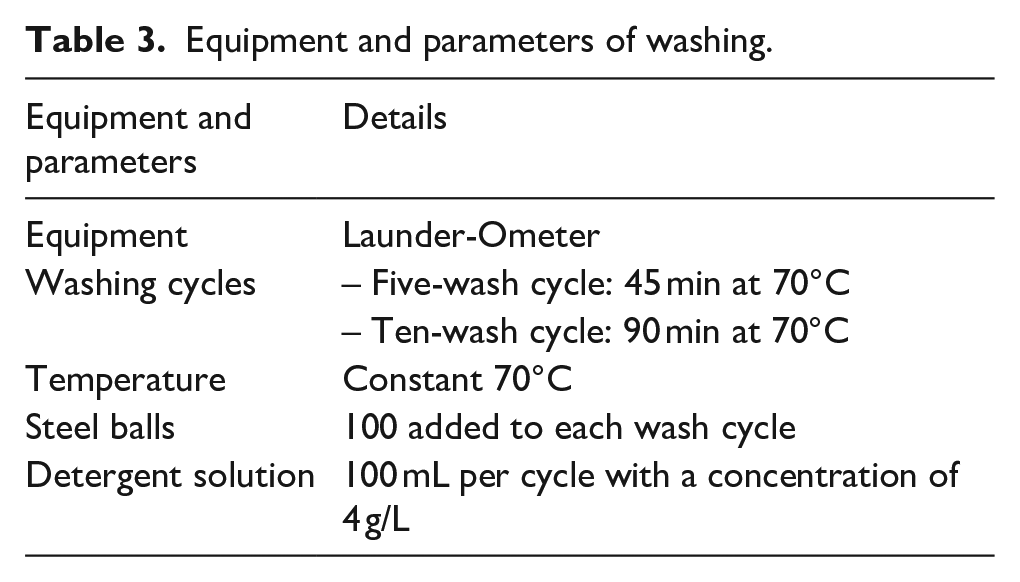
The washing procedure for the ultrasonic welded fabric samples was conducted according to the ISO 105-C06 (D1M) standard method, ensuring that the test conditions were controlled to yield consistent, reliable, and reproducible results. 24 The Launder-Ometer, a specialized device designed to simulate domestic washing conditions, was used to replicate the real-life laundering process that fabrics would undergo during regular use. This method was chosen to ensure the washing process accurately mimics the mechanical action and environmental factors encountered in home washing machines. Two sets of samples were exposed to different washing cycles to simulate various levels of wear and tear that might occur over time. For the five-wash cycle, six samples were subjected to a laundering process. For the ten-wash cycle, six different samples were exposed to a more prolonged washing process. The temperature was kept constant to standardize the conditions and focus on the effect of repeated washing on the fabric. To replicate the mechanical action typical of a domestic washing machine, steel balls were added to each wash cycle. These steel balls served to agitate the fabric samples, mimicking the frictional forces and tumbling action that fabric experiences during normal domestic washing. For each wash cycle, 100 ml of a detergent solution was added to the Launder-Ometer, with a detergent concentration of 4 g/L. This detergent concentration is commonly used in standardized textile testing to maintain consistency in the cleaning process and to ensure that the impact of the detergent on fabric properties was consistent across all samples. This washing procedure was specifically designed to evaluate the durability, dimensional stability, and overall performance of the ultrasonic welded fabric samples under conditions that replicate real-world usage (Table 3). 25
Equipment and parameters of washing.
Air permeability
The air permeability of the fabric utilized in patchworking was evaluated using the ASTM D 737 standard test method. 26 This evaluation involved a fabric sample area of 20 cm² and an applied air pressure of 100 Pa. This test aimed to determine how easily air flows through the fabric, which is an essential aspect in evaluating the breathability and comfort properties of various fabric combinations.
Dimensional stability
The dimensional stability of the fabric was assessed according to the ISO 6330 standard. 27 The washing was performed using a normal wash cycle at a temperature of 35°C, and the samples were dried using a tumble dryer to check the shrinkage in length and width of the samples. This test involved domestic washing and drying procedures. Test parameters included the use of an automatic washing machine, tumble dryers, and appropriate detergents. 28 The objective was to evaluate the shoe fabric’s capability to retain its dimensions and integrity after multiple washing and drying cycles. The shrinkage percentage is calculated using the equation (1).

Seam strength
To evaluate the seam strength of the ultrasonic-welded patches, the ISO 13935-1 standard test method was used. The testing environment was controlled at 21.4°C temperature and 64.0% relative humidity. This involved the strip method, which outlines a procedure for measuring the maximum force a sewn seam can endure when a perpendicular force is applied. The test employed a constant-rate-of-extension (CRE) testing machine to determine the seam’s maximum force, offering insights into the durability of ultrasonic welded patches. 29
Abrasion resistance
The fabric’s abrasion resistance was assessed using the ISO 12947-2 standard test method, also known as the Martindale method. 30 The temperature was kept at 21.5°C while the r. humidity level was 63.7%. This evaluation was conducted on fabric samples to check the attached patches’ resistance to wear and tear under standardized conditions. The statistical software Origin® was used to analyze the test results.
Results and discussion
Air permeability of patches
Air was passed through the combinations of fabric to check the strength of the combinations of the base and patch fabrics. The air permeability results indicate that the combination of polypropylene for both the base and patch fabric allows the highest airflow, attributed to the fiber structure and fabric construction. Polypropylene fibers, characterized by their low density, relatively open structure, facilitate easier air passage compared to denser fibers like polyester and nylon. Additionally, the nonwoven fabric construction of polypropylene enhances air permeability due to its larger pore sizes and better structural porosity. The hydrophobic nature of polypropylene enhances air permeability by preventing moisture absorption, which can otherwise reduce the space between fibers and restrict airflow. Polypropylene’s semi-crystalline nature and moderate molecular orientation ensure a balance between structural integrity and airflow, contributing to its high air permeability. The lower density and semi-crystalline nature of polypropylene creates a balance between rigidity and flexibility, which stabilizes its porous structure while allowing sufficient airflow. The material’s moderate tensile strength and strain properties further enhance its ability to maintain structural integrity and high permeability, even under repeated laundering cycles.
Figure 2 demonstrates that polypropylene-polypropylene combinations maintain consistently high air permeability values across all washing cycles, starting from 333 mm/s at 0 cycles and peaking at 342 mm/s after 5 cycles. This increase can be attributed to the washing-induced relaxation of fibers, which slightly opens the pore structures, enhancing airflow. However, a decrease to 314 mm/s after 10 cycles suggests that prolonged washing may lead to minor compaction or fiber deformation, reducing porosity. This high air permeability, measured at 342 mm/s in PP-PP combinations, not only enhances breathability but also reduces the need for additional synthetic ventilation systems, contributing to energy savings and a lower environmental footprint. The consistency in material properties across the layers ensures uniformity in their behavior, reducing disruptions to airflow. Furthermore, the tensile strength of polypropylene and its modulus ensure durability and resistance to deformation under stress, maintaining consistent porosity and air permeability over time. The semi-rigid structure, combined with polypropylene’s high melt flow index, supports better patch yield and performance. For polyester, the higher density and degree of crystallinity result in a compact structure with reduced air permeability compared to polypropylene. The rigidity of polyester fibers, reflected in their higher modulus and tensile strength, limits the flexibility and porosity needed for greater airflow. This difference in structural and mechanical properties explains the lower air permeability observed in polyester combinations. These properties support sustainability by requiring fewer resources for production and enabling easier recyclability.31,32 Conversely, the combination of polyester for both the base and patch fabrics results in the lowest air permeability, measured at 129 mm/s, tighter fabric structure, and potential moisture absorption of polyester fibers. Interlock knitted polyester is a type of double jersey fabric where two layers of fabric are tightly interwoven, creating a compact structure. 33 In the polyester red patch with a grey base, the polyester has high courses and wales, making it more compact because the loops are packed closely. This reduces air permeability and porosity. Polyester’s degree of crystallinity at the fiber level and higher tensile strength contribute to its dense, compact structure, which restricts airflow. Additionally, the modulus of polyester reflects its rigidity, further reducing the gaps available for air passage. The higher degree of molecular orientation and rigidity in polyester fibers makes them less porous and, therefore, less permeable to air. The back side of fabrics demonstrates only marginal variations in air permeability (332–333 mm/s), confirming the uniformity in structural behavior between fabric layers. These consistent values highlight the material’s resistance to deformation and shrinkage during laundering, preserving airflow pathways. The lower air permeability values for polyester-polyester combinations, starting at 159 mm/s at 0 cycles and decreasing steadily to 136 mm/s after 10 cycles as shown in Figure 3. This consistent decline suggests that repeated washing exacerbates fiber compaction, further reducing porosity and airflow. The decline in air permeability aligns with polyester’s tendency to absorb moisture, which can cause fibers to swell, tightening the structure and diminishing airflow. Permeability and porosity are closely connected. A fabric’s porosity, referring to the amount of open space within its structure, directly influences its permeability or the ability to allow air or fluids to pass through. High porosity typically leads to higher permeability, as larger pores create fewer obstructions for airflow. Conversely, fabrics with low porosity, such as densely woven or tightly knitted polyester fabrics, impede airflow due to insufficient gaps. This relationship is evident in the lower air permeability of polyester-polyester combinations. Polyester fibers’ smaller gaps, finer cross-sectional shapes, and tighter structure limit the space for air to pass through, negatively affecting breathability. The shape of the fiber cross-section also significantly impacts air permeability. Fabrics made from fibers with smooth, round cross-sections offer less resistance to airflow, while fibers with irregular or flattened cross-sections obstruct airflow more easily. Changes in surface characteristics, such as convolutions or striations, further impede air permeability by increasing friction and resistance to airflow. These surface features amplify the surface area, contributing to reduced permeability.34,35 The combination of these fiber properties highlights the complexity of fabric design and emphasizes the importance of selecting materials with suitable structural characteristics for optimal air permeability. Polypropylene, with its semi-crystalline structure, lower density, and higher flexibility, demonstrates superior performance in patchworking, as it combines structural and mechanical properties that support higher patch yield, improved air permeability, and durability. Polyester, on the other hand, provides greater mechanical strength but at the cost of reduced porosity and breathability, which limits its performance in applications where high airflow is essential.

Results of air permeability test of the face side of fabrics.

Results of air permeability test of the back side of fabrics.
Seam strength of ultrasonic welded patches
The seam strength of the base fabric and patch fabric was tested. Twelve samples were evaluated across three washing cycles (0, 5, and 10 washes) to assess the impact of washing on seam strength and to simulate the product’s long-term environmental performance. The consistently higher seam strength of 55.3 N observed in Polypropylene-Polypropylene (PP-PP) samples across washing cycles indicates a strong compatibility between polypropylene and ultrasonic welding as shown in Figure 4. Nonwoven fabrics made with polypropylene fibers exhibited the strongest seam strength. 19 Polypropylene (PP) is a type of thermoplastic material. Unlike thermosetting polymers, which cannot be reheated and reshaped, thermoplastics like PP can be reheated and remolded. However, once thermosetting polymers are hardened, they remain permanently solid and cannot be softened again. This suggests good compatibility between the materials for ultrasonic welding. Thermoplastics soften and eventually melt when heated above their glass transition temperature (approximately −18°C for PP) and melting point (160–170°C). Once cooled and solidified, they return to their original state with minimal changes in their properties. 36 This behavior supports the durability and strong bonding observed during ultrasonic welding, as the material’s ability to reflow at elevated temperatures allows for better seam formation. Polypropylene’s higher degree of crystallinity compared to polyester results in greater rigidity, which enhances seam strength and durability. The molecular orientation in polypropylene fibers contributes to their high tensile strength, ensuring strong and consistent bonding during ultrasonic welding. Polyester, by contrast, exhibits lower crystallinity and higher elasticity, which can lead to weaker weld interfaces under ultrasonic conditions, particularly in mixed fabric combinations. Dimensional changes during washing and drying were likely due to alterations in the loop shape rather than shrinkage in the yarn or loop length. The interlock fabric, with its balanced structure, experienced a negative change in loop shape factor when exposed to the agitation of the drying process. This caused the loops to stretch upward and become thinner, affecting the fabric’s dimensional stability. 37 The finer denier and lower density of the red and green polyester patches resulted in higher flexibility but lower rigidity, making them more prone to deformation and reduced seam strength. These attributes contribute to the material’s durability and its ability to withstand repeated washing cycles without significant degradation in seam strength. The lower density and melting point of polypropylene compared to polyester further facilitate efficient ultrasonic bonding, as less energy is required to achieve effective material fusion. In contrast, the higher density and melting point of polyester fabrics, particularly the grey base fabric, contribute to its superior bursting strength but can pose challenges in achieving consistent weld strength in mixed fabric combinations. Crystallinity influences the rigidity and structural integrity of the material, which contributes to the material’s ability to maintain seam strength after multiple washing cycles. Polypropylene possesses superior acoustic impedance, allowing for efficient energy transfer during ultrasonic welding, resulting in stronger bonds. Polypropylene has better acoustic properties as compared to polyester, that helps in achieving stronger and more durable seam bonds with less energy input, thus improving both the strength and efficiency of the welding process. The melting temperature of polypropylene is well-suited for the ultrasonic welding process, enabling effective material fusion at the seam interface that is both durable and energy efficient. The combination of crystallinity, rigidity, and molecular orientation enables polypropylene to perform well in ultrasonic welding, ensuring that seams formed remain durable even under stress and over time. These properties not only enhance the welding process but also reduce energy consumption, contributing to a lower environmental footprint. The patch yield, or the ability of a patch to retain its structural and functional properties after washing and mechanical stress, is closely linked to the material’s crystallinity and rigidity. Polypropylene-Polypropylene (PP-PP) combinations showed the highest patch yield due to their superior weld integrity and resistance to deformation. Polyester’s lower rigidity and tendency to absorb moisture can negatively impact its patch yield, particularly in mixed combinations, where the incompatibility between the fibers leads to weaker seam bonds. The key factors in ultrasonic welding include the amplitude and frequency of vibrations, welding time, speed, and pressure, all of which control the mechanical energy applied to the materials and how much of that energy is converted into heat. Additionally, the shape of the welding area and the gap between the anvil wheel and guide wheel also influence the welding quality. To achieve strong, impermeable seams, these settings should be adjusted based on the type of fibers, the characteristics of the fabric, and the intended use. 19

Impact of repeated washing cycles (0, 5, and 10) on the seam strength of patches made of polypropylene and polyester fabrics.
The surface texture and energy of polypropylene might be more favorable for creating robust ultrasonic welds compared to other materials, contributing to both the strength and longevity of the product, which is critical for sustainable design. There is a significant decrease in seam strength observed in samples involving Polypropylene-Polyester (PP-PES), which is 28.04, and Polyester-Polypropylene (PES-PP), which is 8.08, highlighting potential incompatibility issues. The acoustic impedance of polyester differs considerably from polypropylene, leading to inefficiencies in energy transfer during ultrasonic welding, resulting in weaker bonds. Polypropylene (PP) has a high level of both amorphous and crystalline structures, which play a significant role in its ability to weld efficiently under ultrasonic conditions. The crystalline regions contribute to its rigidity, which is essential for high tensile strength and welding integrity, contributing to robust welds with greater seam strength and patch yield. The quality of the weld is influenced by the changes in these regions, which include crystalline, amorphous, and semicrystalline areas. 36 However, these same regions may also make polypropylene less flexible compared to polyester, influencing elongation under mechanical stress. Polyester’s higher surface energy compared to polypropylene hinders the formation of strong intermolecular forces at the weld interface. Unlike hydrophobic polypropylene, polyester can absorb some moisture. This absorbed moisture could act as a barrier during ultrasonic welding, weakening the bond formation. Polyester-Polypropylene (PES-PP) samples showed the weakest seam strength, 8.08 N, after five washing cycles. Polyester’s crystalline and amorphous structure does not perform as efficiently as polypropylene under ultrasonic welding conditions. The high melting point and superior mechanical properties of the polyester grey base fabric, such as its tensile strength explain its enhanced bursting strength compared to patch fabrics, making it more resistant to wear and tear over time.
Polyester-Polyester (PES-PES) while showing reasonable initial seam strength (40.32 N), displayed a decrease with washing cycles, suggesting limitations in this combination. This is due to some level of welding occurring between polyester fibers; however, the overall compatibility is lower compared to Polypropylene-Polypropylene (PP-PP), leading to gradual weakening under stress. The rate and degree of crystallization (ordering of polymer chains) during ultrasonic welding might differ between PP and PES, potentially affecting long-term seam strength and thus the environmental sustainability of the product. The washing process introduces stress on the welded seams, leading to gradual weakening over multiple washes, which underscores the importance of choosing materials and welding processes that support both durability and sustainability. Higher elongation values indicate a greater ability to stretch before failure, which is essential for applications like footwear where flexibility is crucial in contributing to both comfort and the product’s longevity. The data presented shows clear variations in elongation based on the combination of base and patch fabrics, highlighting the importance of material selection for sustainable design. Polyester-Polyester (PES-PES) combinations exhibited the highest elongation values (122.65%) as shown in Figure 5. This superior performance can be attributed to the inherent elastic properties of polyester fibers, which contribute to extended wear life and reduced material waste, aligning with sustainability goals. Knitted fabrics generally stretch more than woven fabrics. Interlock knits made with compact yarns show greater bursting strength and elongation. 38 Polyester’s performance in terms of patch yield is reduced compared to polypropylene due to its moisture absorption and weaker intermolecular forces at the weld interface. Polyester is known for its elasticity and resilience, contributing to its ability to elongate significantly before breaking. Fibers that have high elongation tend to resist abrasion better due to various factors, including the type of fiber, material characteristics, final processing, and yarn structure. 39 The patch yield or the ability of the weld to maintain its strength and flexibility over time, directly correlates to the material’s structural properties like crystallinity, stiffness, and elasticity as well as performance metrics such as seam strength and elongation. Polypropylene-Polyester (PP-PES) combinations showed moderate elongation values, with the lowest elongation (12.25%) after 0 washes. This could be due to weaker bonding between the polypropylene base and polyester patch, leading to early failure. The reduced elongation in these combinations suggests a potential trade-off between material sustainability and performance, as polypropylene’s lower elasticity may limit the product’s flexibility. Elongation at break decreases as fabric weight, punch density, and depth of penetration increase. 40 The presence of polypropylene, which is generally less elastic than polyester, seems to have reduced the overall elongation of the seams. However, the variability in results within this group suggests that other factors, such as fabric construction or welding parameters, also influence elongation. Nonwoven Polypropylene-Polypropylene (PP-PP) combinations consistently displayed the lowest elongation values and reduced patch yield, which aligns with the material’s lower elasticity and higher rigidity. This can be directly linked to the inherent properties of polypropylene. As a relatively stiff and less elastic fiber, polypropylene limits the seam’s ability to stretch. Polyester is generally more flexible, whereas polypropylene is characterized by its stiffness fabric properties (polyester vs. polypropylene) influence elongation. The bonding strength between different fabrics may vary due to their chemical composition, which impacts the product’s durability and long-term sustainability. The ultrasonic welding process itself could affect elongation, especially at the seam interface. The elongation decreased with increasing washing cycles (0, 5, 10) for most fabric combinations. In terms of strength and durability, Polyester-Polyester (PES-PES) combinations show the highest elongation and improved patch yield performance, suggesting superior strength and durability due to better elasticity and flexibility. This combination not only ensures long-term performance but also contributes to sustainability by extending the product’s useful life and reducing the need for frequent replacements. Polypropylene-Polyester (PP-PES) and Polyester-Polypropylene (PES-PP) combinations show moderate to low elongation, indicating that mixed fabric seams might not perform as well as homogeneous fabric seams in terms of elasticity.

Analysis of elongation in base and patch fabrics polyester and polypropylene across (0, 5, and 10) washing cycles.
Shrinkage behavior of welded patches
The shrinkage of the base and patch fabrics was evaluated lengthwise and widthwise across three washing cycles (0, 5, and 10 washes). All samples showed 0% shrinkage in length, indicating that the ultrasonic welding process preserves fabric dimensions and contributes to sustainability by reducing material waste and prolonging the footwear’s lifespan. A minimal shrinkage of −0.66% was observed in the width of Polypropylene-Polypropylene (PP-PP) samples after 0 and 5 washes, as shown in Figure 6, demonstrating good dimensional stability and supporting sustainability by reducing the need for material replacements. Polypropylene’s resistance to shrinkage can be attributed to its low density and semi-crystalline nature, which impart rigidity and resistance to dimensional changes. Additionally, its high melt flow index (MFI) allows it to flow easily during ultrasonic welding, creating strong, stable bonds. The high tensile strength and modulus of polypropylene, along with its molecular orientation, contribute to its rigidity and ability to maintain its shape under mechanical and thermal stresses. Polypropylene-Polyester (PP-PES) samples showed similar minimal shrinkage, suggesting that the addition of polyester does not significantly affect dimensional stability. Polyester-Polyester (PES-PES) samples showed a slight shrinkage of −1.33% in width before washing, which is consistent with the known properties of polyester, as it tends to shrink less under washing conditions. 24 The structure of polyester, with a degree of crystallinity, imparts lower rigidity compared to polypropylene. Polyester’s higher tensile strength compared to polypropylene enables better resistance to deformation, but its lower degree of crystallinity makes it more prone to slight shrinkage. Polypropylene’s resistance to shrinkage is due to its inherent structure and dimensional stability, while polyester, though dimensionally stable, can show some shrinkage, particularly in knitted forms. However, the minimal shrinkage observed in polyester-based samples suggests that the knit structure contributed to improved stability. Knitted polyester patches exhibited different shrinkage behaviors depending on their density; for instance, the red patch with a higher density showed slightly better dimensional stability than the green patch, reflecting the influence of material structure on shrinkage resistance. The hydrophobic nature of polyester fibers, coupled with their high degree of orientation during fabric production, helps reduce shrinkage during washing, which is important for maintaining the footwear’s shape and supporting sustainability by reducing the need for replacements. Additionally, as polyester content increases, shrinkage tends to decrease, reflecting its ability to withstand thermal and mechanical stresses during washing cycles. 41 Both polypropylene and polyester fibers show good dimensional stability, indicating that patches made from these materials will retain their shape and size after multiple washes. Polypropylene’s higher crystallinity and rigidity directly contribute to its superior resistance to dimensional changes, while polyester’s higher tensile strength and elasticity compensate for its lower crystallinity, ensuring structural integrity. These material properties directly influence patch yield, as they ensure that patches made from these fibers retain their shape and size after multiple washes. This contributes to the durability and sustainability of footwear by reducing deformation, improving product longevity, and minimizing the environmental impact of replacements.

Effect of washing cycles on the dimensional stability of patches made from different fabric combinations.
Abrasion resistance measurement
The abrasion resistance test was performed to check the thread breakage of the ultrasonic welded fabrics. The number of cycles until thread breakage indicates the fabric’s resistance to abrasion. A higher number of cycles implies better abrasion resistance, which directly translates to a longer product lifespan, reducing the need for frequent replacements and contributing to sustainable consumption practices. Figure 7 indicates that Polypropylene-Polyester (PP-PES) and Polyester-Polyester (PES-PES) combinations exhibit excellent abrasion resistance and durability, showing no thread breaks up to 35,000 cycles across all washing cycles (0, 5, and 10). This superior performance can be attributed to polyester’s high tensile strength, and semi-crystalline structure, and tightly knitted fabric construction which provide greater resistance to friction and wear. Furthermore, polyester’s high molecular orientation and its hydrophobic nature prevent significant fiber degradation during washing, maintaining its durability. Fabrics with higher courses and wales in the grey base polyester create a more stable and resilient structure. Polypropylene low density, and semi-crystalline structure, polypropylene contributes to a lightweight fabric with sufficient rigidity to resist surface fiber deformation during abrasion. Furthermore, its high melt flow index (MFI) aids in creating robust ultrasonic bonds, which help maintain the structural stability of the fabric under abrasive forces. Abrasion is the physical wear and tear of fibers, yarns, and fabrics caused by friction between textile surfaces or with other materials, leading to fabric damage and loss of aesthetic quality. Polyester fabric is known for its high resistance to abrasion, which is essential for sustainability, as it reduces the frequency of product disposal and replacement, aligning with circular economy principles. The inclusion of polyester fibers in the fabric likely contributes to this excellent abrasion resistance, supporting sustainable product design by improving longevity. 24 Polyester’s higher modulus and crystallinity contribute to its dimensional stability under repetitive stress, while polypropylene’s rigidity and durability provide support, ensuring the fabric withstands long-term wear. This synergy between the materials enhances patch yield, as the welded patches maintain structural integrity and resist thread breakage even under intense abrasive conditions.
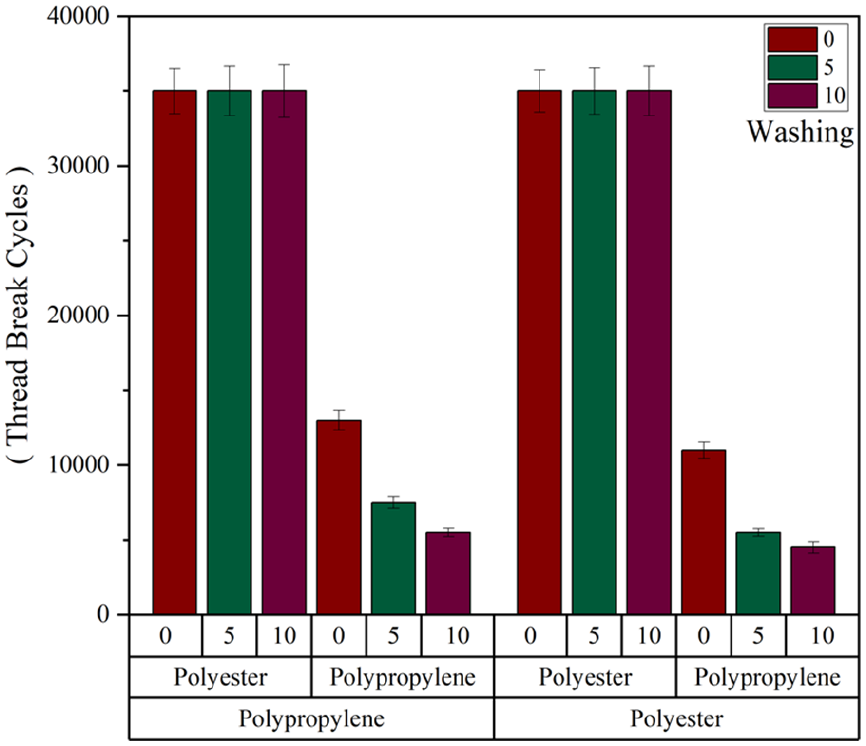
Fabric abrasion resistance to thread break cycles in different fabric combinations across (0, 5, and 10) washing cycles.
Polyester-Polypropylene (PES-PP) and Polypropylene-Polypropylene (PP-PP) combinations show lower abrasion resistance and moderate durability, with thread breaks occurring significantly earlier. Polypropylene, with a lower tensile strength and modulus, offers less resistance to friction compared to polyester. The higher melt flow index (MFI) of polypropylene aids in its processability but can compromise fiber bonding, particularly under mechanical stress. The lower courses and wales in these combinations reduces their ability to resist abrasion effectively, causing fibers to break down more easily under friction. The number of washing cycles generally decreases the abrasion resistance of Polypropylene-Polypropylene (PP-PP) and Polyester-Polypropylene (PES-PP) combinations, indicating that washing deteriorates their durability. Repeated washing can degrade fiber strength and reduce abrasion resistance, as evident in Polypropylene-Polypropylene (PP-PP) samples. Lower tensile properties and susceptibility to micro-damage reduce their patch yield. The lowest abrasion resistance was observed in Polypropylene-Polypropylene (PP-PP) samples after 10 washes, with thread breaks occurring at 5500 cycles. This is consistent with polypropylene’s higher melt flow index (MFI), which affects its fiber bonding under stress and friction. Polyester is known for its high abrasion resistance and durability, which are essential for creating sustainable footwear that can endure extended use and resist wear and tear. Tightly knitted fabrics typically exhibit better abrasion resistance. This explains why combinations involving Polyester-Polyester (PES-PES) and Polypropylene-Polyester (PP-PES) exhibit no thread breaks even after 35,000 cycles. The superior structural and mechanical properties of polyester result in outstanding patch yield, retaining integrity even after prolonged abrasion and washing cycles. Polyester likely provides a protective effect, distributing the abrasion forces more evenly and preventing premature thread breaks. The hydrophobic nature of polyester and its crystalline regions protect it against micro-damage from washing cycles. Polypropylene, by contrast, is more susceptible to mechanical action during washing, which likely introduces micro-damage, reducing the fabric’s ability to withstand abrasion. Combining polyester with polypropylene enhances the overall abrasion resistance compared to using polypropylene alone, making this combination more sustainable by improving durability. The combination benefits from polyester’s ability to resist fiber damage under stress and polypropylene’s flexibility, which helps distribute load during abrasion. These properties support sustainable material selection for footwear design. 40
Conclusions
With the growing demand for innovative and sustainable footwear, advanced manufacturing techniques like ultrasonic welding are essential. Ultrasonic welding reduces the reliance on traditional adhesives, which often contain harmful chemicals, and minimizes energy consumption due to its efficient bonding process. The study evaluated the performance of ultrasonic welding for patchworking on shoes, focusing on fabric combinations, washing cycles, and their effects on air permeability, seam strength, elongation, dimensional stability, and abrasion resistance. The main conclusion points are as follows:
Polypropylene-Polypropylene (PP-PP) combinations exhibited the highest seam strength and dimensional stability but lower elongation and abrasion resistance, making them suitable for applications requiring strength and stability.
Polyester-Polyester (PES-PES) combinations demonstrated superior elongation and abrasion resistance, making them suitable for applications requiring flexibility and durability.
These qualities contribute to the longevity of the product, reducing the need for frequent replacements, which aligns with sustainability goals by reducing waste and resource consumption. Using polypropylene for both base and patch fabrics is more sustainable and efficient for constructing the upper part of the shoe, particularly in applications where strength and stability are prioritized. This study highlights that the choice of fabric combinations significantly impacts the performance of ultrasonic welded seams. By carefully choosing materials and utilizing energy-efficient welding techniques, the footwear industry can move towards more sustainable and durable products. The findings suggest that while ultrasonic welding is a viable method for patchworking on shoes, the selection of appropriate fabric combinations is crucial to achieving the desired performance characteristics while also promoting sustainability.
Footnotes
Declaration of conflicting interests
The author(s) declared no potential conflicts of interest with respect to the research, authorship, and/or publication of this article.
Funding
The author(s) received no financial support for the research, authorship, and/or publication of this article.
