



Abstract
On Earth, there is an abundance of soil that has been utilized to build homes for millions of people. Manufacturing compacted stabilized adobe blocks requires adequate water added to the appropriate soil type that has been admixed with binders and fibers to attain maximum density. The mixture is then compressed using the appropriate adobe-forming machine. Currently, the major environmental and human health risks worldwide come from industrial and agricultural wastes because of disposal concerns. The production and use of cement and cement blocks bring numerous economic and environmental issues. Utilizing locally available resources and enhancing standard production and testing methods are two feasible options for sustainable growth. Researchers have seen the promise of earthen construction as an alternative building material, and it is becoming more popular in the context of sustainable development. Marble dust (MD) (Industrial waste), sugarcane bagasse ash (SBA), and paddy straw fiber (PSF) (Agricultural wastes) were utilized in this research to manufacture the unfired admixed soil blocks. This study utilizes marble dust composed up to 25%–35%, paddy straw fiber constituted 0.8%–1.2%, and bagasse ash made up 7.5%–12.5% of the soil. The marble-dust-bagasse-ash-soil mix was strongly adherent to PSF, according to SEM investigation. In addition, as is apparent from the image, the number of pores is insignificant. These images support the preceding conclusions regarding this sample’s increased flexural and tensile strength. The primary constituents discovered on the surface of an unfired ad-mixed soil block strengthened with PSF of length 75 mm were silica (Si) and oxygen (O), according to the EDS examination. Aluminum (Al) and magnesium (Mg) were found in trace amounts. The endurance characteristics of the block were determined by conducting different tests on the eighty-one (81) design mixes of the produced unfired ad-mixed adobe blocks, followed by modeling, optimization and microstructural analysis. The results show that the recommended technique improves the durability characteristics of admixed soil blocks without burning better than burnt bricks.
Introduction
Unfired admixed adobe blocks are compacted stabilized earth blocks that are less expensive and more ecologically friendly than traditional construction materials.1,2 In contrast to fired earth bricks, which employ a brick kiln and generate a lot of pollution, compacted soil stabilized blocks do not. The utilization of earth for making compacted stabilized soil blocks is more eco-friendly than that of using burnt earth bricks. The soil mix is laid over the molds in the pressing compartments for manufacturing blocks. Pressure applied to the soil-cement combination causes the material to compress, reducing the volume of air pockets and increasing the density. 3 The soil’s porosity decreases as density increases in the range that may be achieved. With the aid of the proctor test, the optimum moisture content and the correlation between the Maximum Dry Density and the Moisture Content can be ascertained. 4 The manufacturing of unfired ad-mixed soil blocks employs a wide range of binders and fibers.5–8 Some of these binders include but are not limited to, construction debris, limestone waste,bitumen emulsion, kaolin, cement, grit, 9 limestone residues, 10 demolition residue, 11 calcium silicate, 12 kaolin, Effective Microorganisms (EM), granite waste, lime, Bacillus pasteurii KCTC 3558, 13 sugarcane bagasse ash, 14 and fly ash. Studies employed both natural and synthetic fibers, wherein it was observed that coconut fiber was particularly prevalent. 15 discovered that the incorporation of sisal fiber led to a slight reduction in the density of the earth blocks. All the studies, with the exception of Ronoh et al., 16 suggest that water absorption levels are well within the acceptable range that is, <20%.17–20 Durability investigations were outlined in just a few of the total publications analyzed,21–24 implying that there were very few binders and fibers.
By employing compacted stabilized adobe blocks, which utilize soil for building construction, has been a long-standing practise on a global scale, providing housing for millions. 25 On the contrary, conventional building materials, including cement, present notable environmental and health hazards as a consequence of the waste generated during industrial and agricultural processes. 26 This study investigates unique resource-based approaches to sustainable environmentally friendly building practises in order to address the critical requirement for these practises. Previous study has acknowledged the potential of earthen construction; however, a substantial knowledge deficit continues regarding the most efficient incorporation of particular waste materials, including marble dust, sugarcane bagasse ash, and paddy straw fiber, into the soil matrix. By examining the implications of varying proportions of these materials on the physical, mechanical, structural, and microstructural characteristics of unfired admixed soil blocks, the current research fills this void. The research additionally seeks to emphasize the economic and environmental benefits of this innovative methodology in comparison to traditional cement-based building practises.
The utilization of marble dust, sugarcane bagasse ash, and paddy straw fiber in the manufacturing process of unfired admixed soil blocks is investigated in this study. A methodical variation is applied to the proportions of these materials in order to account for their influence on the physical and mechanical characteristics of the blocks. Material characterization, mix design, block manufacturing, and extensive testing, including abrasion and erosion tests to determine durability, are all aspects of the current research investigation.
The present investigation revolves on the formulation and development of unfired admixed soil blocks that include paddy straw fiber (PSF), sugarcane bagasse ash (MD), and marble dust (MD). The potential of these materials, which are obtained from industrial and agricultural byproducts, as an alternative substitute to traditional construction materials such as cement, is being investigated. The objective of the investigation is to enhance the existing processes for manufacturing and testing, with a particular focus on supporting sustainable development within the construction industry.
Additionally, this study not only investigates the immediate environmental issues associated with agricultural and industrial wastes; however, it also endeavors to fill in current scientific understanding deficits regarding earthen construction. The investigation highlights how an innovative blend of materials and an enhanced manufacturing method serve to advance the overarching objective of sustainable construction methodologies. In the light considering the environmental challenges facing the global construction industry, the findings of this research exhibit a prospective paradigm shift in the direction of economically feasible and environmentally sustainable building solutions. As a consequence, there’s a lot of room for experimenting with different combinations of binders and fibers in the soil block. As a prospective alternative building material, earthen construction is gaining traction in the context of sustainable development. The research utilizes a rigorous methodology, integrating MD (25%–35%), PSF (0.8%–1.2%), and SBA (7.5%–12.5%) into the combination of soil mix. The durability characteristics of the admixed soil blocks are evaluated via a series of experiments and microstructural analyses. All in all, this research has aimed to evaluate and optimize the effects of using a variety of waste materials, including marble dust (MD), PSF and bagasse ash (BA), on the durability characteristics of un-fired ad-mixed soil bricks. The unfired admixed soil block’s durability was determined using erosion and a wetting drying cycles test. The endurance characteristics of the block were determined by conducting different tests on the eighty-one (81) design mixes of the produced unfired ad-mixed adobe blocks, followed by modeling, optimization and microstructural analysis. The results show that the recommended technique improves the durability characteristics of admixed soil blocks without burning better than burnt bricks.
Materials and methods
Materials
The soil used in this study was obtained from the town of Gharuan in the Indian state of Kharar (Punjab). The PSF (paddy straw fiber) was obtained from farmland in Gharuan, close to Chandigarh University. According to the specifications, chops of paddy straw fiber (PSF) were made at 75, 100, and 125 mm. The study used paddy straw with an average width of 2 mm. The marble dust employed in this study had a specific gravity of 2.71. The BA (Bagasse Ash) utilized for the investigation had a specific gravity of 1.92.
Methodology
Table 1 illustrates the design mix that was formulated to investigate how different admixtures with varying proportions affected the final soil-block characteristics. The design mix for the study is outlined in Table 1, which details the ingredient proportions along with levels employed for the distinct design mixes. PSF length (mm), PSF content (%), bagasse ash (BA) (%), and marble dust (MD) (%) indicate the levels. The research investigates the implications of these constituent ingredients on the characteristics of unfired ad-mixed soil blocks. The amount of marble dust in the soils ranged from 25% to 35% by its dry weight, whereas percentages of PSF (0.8%–1.2%) and bagasse ash (7.5%–12.5%) also varied widely. Additionally, the size (length) of paddy straw fibers ranged between 75 and 125 mm. These percentages were arrived at after reviewing the relevant literature and discovering that the characteristics of compressed earth blocks were enhanced by incorporating these components with varying proportions.25–27 The literature has established that when 30% replacement of the virgin soil with marble dust is carried out, the compressive strength attained is maximum, 11 nonetheless, prior research has not experimented with the inclusion of 25% and 35% proportions of marble dust in adobe blocks. The optimal proportion for bagasse ash was obtained with a 10% soil replacement.24,25 No studies were conducted with paddy straw fiber, but studies with other natural fibers found that 1% fiber content of length 100 mm gave excellent results.6,8 As a result, 0.8%, 1%, and 1.2% fiber content were added to different mixes.
Proportions and levels of ingredients used for design mix.

The soil was prepared as per the specification laid down by BIS. 26 Marble dust and bagasse ash from sugarcane were both screened through a 300-micron IS sieve. A series of steps were followed to combine these components in a trolley thoroughly. Then, in accordance with the optimum moisture content obtained after performing the compaction characteristics test or Proctor’s test.28–30 Half portion of the total water required was added to the unique design mix initially, followed by the additional water added for thorough mixing.31,32 In this study, blocks with dimensions of 230 mm × 100 mm × 100 mm were manufactured. A machine (depicted in Figure 1) produced these uniform blocks, producing four un-fired ad-mixed soil blocks following every pressing movement.

Admixed soil bricks production utilizing the mold and pressing instrument.
The adobe bricks were cured using water sprinkles and covered with jute bags until the subsequent curing cycle. After curing for 28 days, the soil blocks were ready to be tested upon. This block was then put through additional testing of the durability requirements. The durability of the unfired adobe admixed block was measured using the abrasion test (wet and dry cycles test) and erosion test to check its resistance against erosion and adverse weather conditions.33–35 Wet and dry abrasion tests were carried out according to IS 4332 (Part 4): 1968. The blocks were immersed in water for 5 h, then removed and dried at 70°C for 42 h. The abrasion resistance of the blocks was assessed by measuring the percentage change in weights after administering around eighteen 13.3 N vertical steel brush strokes per side of the block and four strokes at the end of each cycle. The block’s durability characteristics were measured as a function of their initial weight, wherein the decrease in the %age weight of soil blocks after the completion of 12 repetitions (cycles) was compared with the initial weight of the block.36–38 The maximum allowable mass loss is 10% as per different recommended codes. The resistance to erosion of the unfired admixed adobe block is the measure to withstand erosion by the block.39,40 The erosion test in this study followed NZS 4298, Section D of New Zealand Standard. As illustrated in Figure 2, a shield board was immersed in a plastic tub bath while 50 kPa water pressure was applied to each block through a 100 mm diameter hole placed 470 mm from the board. The erosion rate was calculated using the pitting depth (mm) per minute of spray water exposure. 41 The maximum allowable erosion rate is 2 mm/min as per standard code.

Test set-up for estimating the erosion of the block.
Sample preparation for XRF and XRD analysis of marble dust and bagasse ash reinforcing materials
For XRF analysis of Marble dust and Bagasse ash reinforcing samples, prior to grinding, the reinforcing samples may be air-dried in an uncontaminated atmosphere in order to breakdown aggregates. Quartering is then utilized to subdivide the reinforcing sample. In order to obtain a satisfactory quantity of particulates representing each constituent of the material, the reinforcing sample acquired in this manner is once more reduced to a fine powder.
The excessive particles of Marble dust and Bagasse ash materials are reground into a powder until no particles larger than 60 µm remain after the reinforcing sample has been sieved through a 60 µm sieve. XRF analysis can be facilitated through diverse methods of further preparation of reinforcing samples.
In the context of XRF measurements, it is necessary to further pulverize, homogenize, and compact a reinforcing sample into a particle. Binder materials commonly employed include chromatographic cellulose, boric acid, or starch in a weight-to-weight ratio of 1:10. Generally, a particle of 150–200 mg with a diameter of 25 mm are formulated for the emission–transmission method. While its primary application is the analysis of minor and trace elements, XRF can also be employed to identify major elements through the appropriate dispersion with cellulose or starch (in a 1:1 weight ratio). To avoid contamination, even the most elementary reinforcing sample preparation must be performed meticulously and with the appropriate equipment. After a complete washing with tap water, they should be dried and then rinsed with distilled water. A more thorough cleansing can be achieved by employing a process involving grinding with pure quartz sand, succeeded by a meticulous rinse using tap water and distilled water.
The particle size effect can introduce an additional source of error in XRF analysis when dealing with reinforcing samples containing heavy elements in a light (low density) matrix. This effect can be mitigated through the process of pulverizing particles to a smaller dimension. Conversely, grinding processes yield varying degrees of particulate size reduction due to the fact that the hardness of the constituents reduces their sizes at distinct rates, potentially leading to segregation. Thorough mixing of a reinforcing sample is necessary to prevent segregation when diluents are introduced before pressing.
Applicable specifically to materials possessing a crystalline structure-whether monocrystalline or polycrystalline-X-ray diffraction is a technique of material characterization. To avoid a dispersion state from potentially varying between the reinforcing sample’s surface as well as its interior, the samples experienced polishing employing a comparable method as for the microscopic observations.
The test was conducted at 40 kV and 30 mA on powder reinforcing specimens that were examined at room-temp. For data collection at room-temp., a continuous mode was employed, utilizing a scanning-speed of 8.5°/min employing CuKα radiation across the two-theta range of 0°–100°. Utilizing match! software, the obtained data was identified in order to ascertain the composition at every peak.
Following demolding for a duration after few hours, the marble dust and Bagasse ash reinforcing materials were immersed in water to cure at a temperature of 20℃–22℃. The upper portions of marble dust and Bagasse ash reinforcing materials were cut into 10 mm thick pieces in preparation for XRD analysis. Because the reinforcements were directly exposed to the solutions, the initial piece of reinforcement materials from the apex was discarded. This was because its upper surface came into contact with the solutions. For XRD analysis, the second piece of reinforcement materials was utilized. A diamond-crusted blade cooled with deionized water was used to cut the center strip of reinforcements, which measured 10 mm in thickness, perpendicularly into a piece of reinforcement materials. Analysis was then conducted on the ends of the section of reinforcements close to the surface. Following this, a 1 mm reinforcement materials section was ground inward from the lateral surface in preparation for XRD analysis, which yielded results for various depths into the principal axis of the reinforcements.
Results and discussion
Materials
The characteristics of the soil employed throughout this study are outlined in Table 2. This includes the plasticity index, maximal dry density, optimal moisture content, specific gravity, plastic limit, and liquid limit. In addition, Table 2 comprises the specific gravities of the bagasse ash and marble dust employed in the study. In addition, the chemical characteristics of the marble dust are laid out in Table 3, which suggests the primary constituent element is calcium oxide (CaO).
Characteristics of soil.

Chemical properties of marble dust.

The principal basic material employed in the manufacturing process of unfired admixed soil blocks is soil. The density, moisture content, and additional engineering characteristics of the soil are significant factors in influencing the eventual characteristics of the soil blocks.
The engineering characteristics of the soil material tested as per standard codes are shown in Table 2. The specific gravity of the soil was determined by Pycnometer method in accordance with IS 2720 Part 2. The Liquid Limit and Plastic Limit test was performed in accordance with IS 2720 Part 5. The OMC and MDD values were determined from standard proctor compaction test in accordance with IS 2720 Part 7. Marble dust powder was analyzed using XRF analysis (Shimadzu EDX-700 equipment), and the chemical composition has been listed in Table 3.
For the production of soil blocks, bagasse ash, a byproduct of the sugarcane industry, is utilized as a supplementary byproduct. It influences the characteristics as well as composition of the components as a whole. The present study describes the utilization of bagasse ash in diverse proportions ranging from 7.5% to 12.5% in order to enhance the physico mechanical characteristics of the blocks.
Additionally, industrial byproduct, marble dust is utilized as a Supplemental Material in the study. It is utilized within the range of 25%–35%. The potential implications of marble dust on the mechanical and durability characteristics of soil blocks are being investigated in an effort to enhance their performance.
In the soil blocks, paddy straw fiber, which is obtained from agricultural residue, is utilized as a reinforcing material. Different percentages (0.8%–1.2%) and lengths (75 mm, 100 mm, 125 mm) are specified. The application of the PSF is anticipated to raise the soil blocks’ flexural and tensile strengths. Its function is to enhance the blocks’ structural integrity and durability.
The chemical characteristics of marble dust, a crucial component employed in the study, are summarized in Table 3. The analysis comprises the percentage content of a diverse array of elements present in marble dust, including however not limited to SiO2, Fe2O3, CaO, Al2O3, Na2O, MgO, K2O, SO3, P2O5, SrO, Cl−, and L.O. I (Loss on Ignition). The data presented in Table 3 demonstrate that the predominant component of marble dust is Calcium Oxide (CaO). The marble dust employed in this study had a specific gravity of 2.71.
Figure 3 displays the X-ray diffractogram (Model: Bruker D8 advance) of MD (marble dust), which was conducted to learn about its mineralogical composition. 42 The test was conducted at 40 kV and 30 mA on powder reinforcing specimens that were examined at room-temp. For data collection at room-temp., a continuous mode was employed, utilizing a scanning-speed of 8.5°/min employing CuKα radiation across the two-theta range of 0°–100°. Subsequent to their admixture with bagasse ash, marble dust, and paddy straw fiber, the soil samples experienced additional processing in preparation for XRD analysis. Optimal scan range as well as step size have been set up on the XRD equipment to facilitate comprehensive mineralogical characterization. The predominant minerals in carbonate rocks, Bustamite (CaMn(Si2O6) and dolomite (CaMg(CO3)2), are symbolized by the colors “Red” and “Blue,” respectively, in their typical peaks. This finding corroborates the data from the chemical analysis presented in Table 3.

X-ray diffraction (XRD) analysis of marble dust. 42
The samples of soil were collected in the Kharar, in the village of Gharuan. The samples received meticulous collection and processing. The proportions of marble dust, bagasse ash, and paddy straw fiber that were incorporated into the soil have been listed in Table 1.
Prior to analysis, the soil samples were homogenized and finely ground to assure that the findings were accurate, consistent, reliable, and representative. The results of an X-Ray Fluorescence analysis are presented in Table 4, which details the chemical properties of bagasse ash (BA). Table 4 demonstrates that silicon oxide (SiO2) makes up the majority of BA, with smaller amounts of Calcium Oxide (CaO), Potassium Oxide (K2O), and Magnesium Oxide (MgO). The BA utilized for the investigation had a specific gravity of 1.92.
SCBA chemical configuration.

Figure 4 displays the X-ray diffractogram of sugarcane bagasse ash, which was conducted to learn about its mineralogical composition. 42 It was revealed that the sugar-arcane bagasse ash contains a larger number of mineralogical elements. The significant proportion of the bagasse ash is composed of Tridymite (SiO2) denoted by the color “Red.” This is followed by Silicalith-1 (96SiO2.xIBr), which is represented by the color “Blue,” and Silicalite-1 (96SiO2.xICl), which is represented by the color “Green.” This finding corroborates the data from the chemical analysis presented in Table 5.

X-ray diffraction (XRD) analysis of Bagasse ash. 42
Optimized value of the mass loss for various parameters at optimized conditions.

Durability (mass loss) of unfired admixed adobe block
This segment examines the influence of BA and MD on the mass loss of soil block mixed with 0.8% PSF and measuring 75 mm in length. The findings from this investigation are depicted in Figure 5. At a fixed bagasse ash level, it was noted that mass loss (percentage) tended to decrease as marble dust concentrations increased.43–45 The mass loss (in percent) of the soil brick strengthened with PSF was 8.54% when the mix had 25% MD and 7.5% BA, but it dropped to 8.34% when the mix comprised 7.5%, 35% of bagasse ash and marble dust respectively. Bagasse ash at 10% and bagasse ash at 12.5% followed the same pattern. This can be attributed to unfired admixed adobe blocks possessing higher porosity. Similar observations were made by França et al. 11 A similar phenomenon was observed as bagasse ash concentration increased while maintaining a constant marble dust concentration. The mass loss (in per cent) of a soil brick reinforced with PSF was 8.54% when the mix consisted of 25% MD and 7.5% BA, but it dropped to 8.27% when the mix contained 12.5% and 25% proportion of BA and MD respectively. Similar trends were reported for 30% and 35% MD.

Effect of MD and BA on the percentage of mass loss in a block made of 0.8% PSF (75 mm).
Figure 6 illustrates the results of an investigation into how BA and MD affected the durability of soil brick that had been mixed with 1% PSF chopped to size of 75 mm. For constant bagasse ash content, mass loss (%) depicted a decreasing pattern with increase in proportion of MD. When 25% MD and 7.5% PSF were utilized, the mass loss (%) of the adobe block reinforced with PSF was 7.68%. When 7.5% BA and 35% MD were combined, this number dropped to 7.42%. Similar trends were seen for the fraction of BA that was 10% and 12.5%. Furthermore, the same trend was seen when the concentration of MD remained fixed while BA levels increased. The mass loss (in percentage) of an soil brick strengthened with PSF was 7.68% when the mix consisted of 25% MD and 7.5% BA, but it dropped to 7.38% when the mix contained 12.5% BA and 25% MD. A similar phenomenon could be seen for 35% and 30% marble dust concentration.

Influence of MD and BA on mass loss of bricks containing 1% PSF (75 mm).
Also, as shown in Figure 7, the impact of BA and MD upon the durability of soil blocks mixed with 1.2% PSF and measuring 75 mm in length was examined. It was discovered that for a constant bagasse ash content, mass loss (per cent) tended to decrease with increasing concentrations of marble dust.46,47 The mass loss (%) of the soil brick that was reinforced with PSF was 7.12% when 25% MD and 7.5% BA were used. This value decreased to 6.71% when 7.5% BA and 35% MD were used.

Influence of BA and MD on mass loss of bricks containing 1.2% PSF (75 mm).
Both 10% and 12.5% proportion of BA exhibited similar patterns. Also, the same relationship was noticed when the amount of MD remained constant while BA levels increased. The adobe block’s mass loss (%) strengthened with PSF was 7.12% when 25% MD and 7.5% BA were used. This value decreased to 6.62% when 12.5% BA was used in conjunction with 25% MD. The same variation was observed for 30% and 35% MD concentrations.
Similar results regarding MD and BD’s impact on mass loss were seen for both 100 and 125 mm lengths of PSF strands. As illustrated in Figure 8, the mass loss (%) of the adobe block that was strengthened with 0.8%, 100 mm paddy straw fiber was 8.21% when 25% marble dust and 7.5% bagasse ash were used. However, this value dropped to 7.98% when 35% marble dust along with 7.5% bagasse ash were utilized.
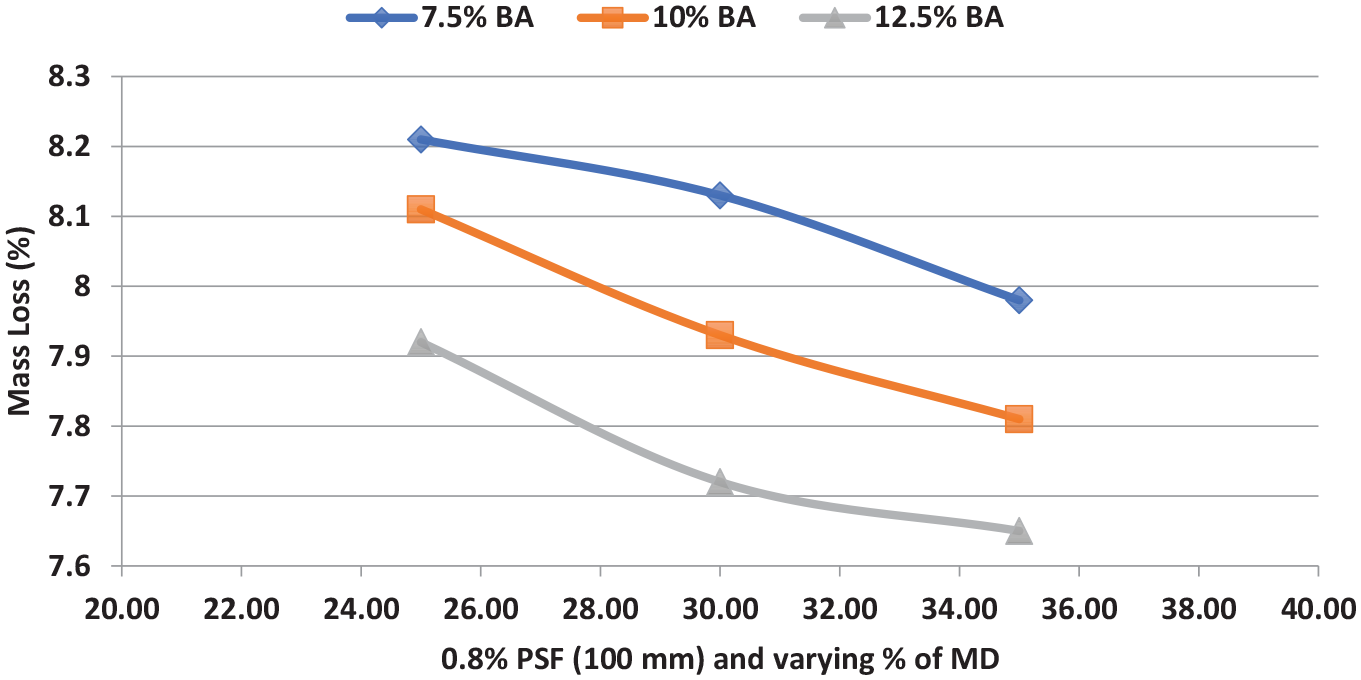
Influence of MD and BA on mass loss of brick containing 0.8% PSF (100 mm).
Furthermore, it was investigated how MD and BA would affect the loss of mass of an adobe block which had been mixed with 100 mm long paddy straw fiber at 1% and 1.2%, respectively as exhibited in Figures 9 and 10 respectively. It was observed that mass loss exhibited the same pattern with all of these PSF contents as well.48–50

Influence of BA and MD on mass loss of brick containing 1% PSF (100 mm).
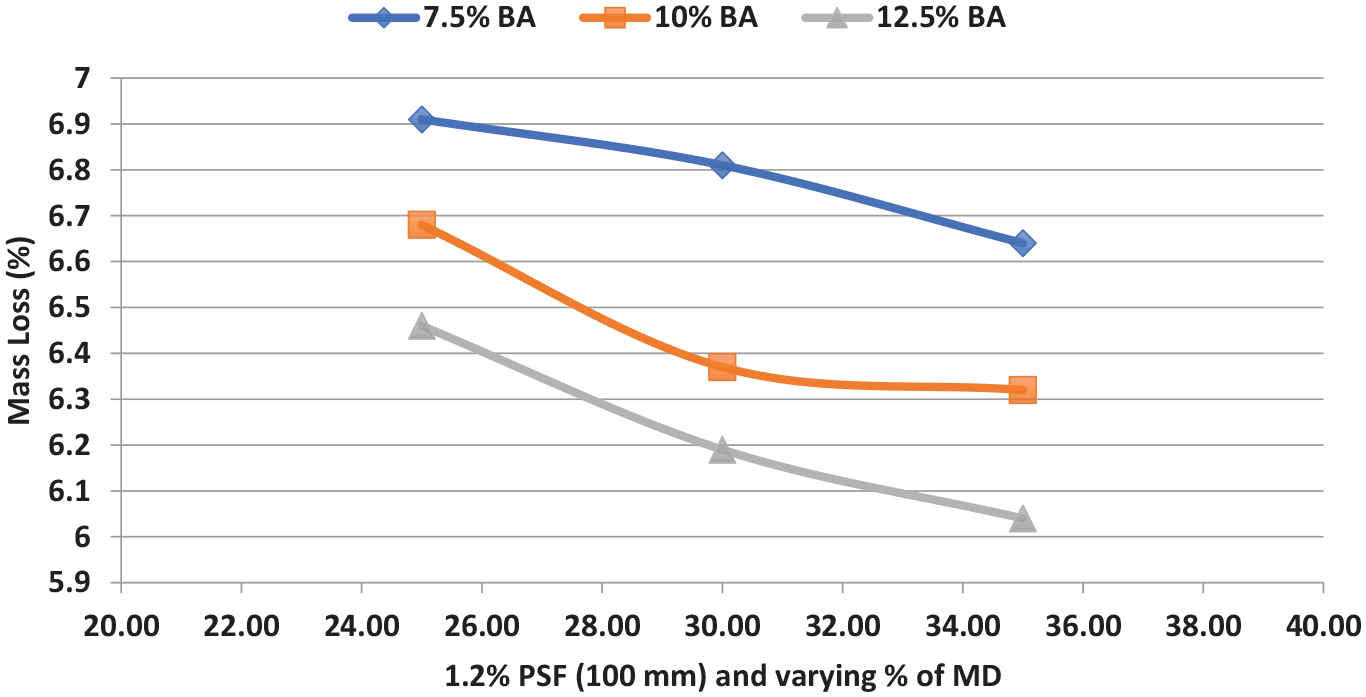
Influence of BA and MD on mass loss of brick containing 1.2% PSF (100 mm).
In addition, the influence of BA and MD on the mass loss of a soil brick mixed with 0.8% paddy straw fiber and measuring 125 mm in length was investigated, as depicted in Figure 11. It was revealed that for a constant bagasse ash concentration, the mass loss (%) tended to decrease with increasing proportions of marble dust.51,52 The adobe block’s mass loss (%) strengthened with paddy straw fiber was 8.02% when 25% MD and 7.5% BA were used. This value was reduced to 7.74% when 7.5% BA along with 35% MD were incorporated.

Influence of BA and MD on mass loss of brick containing 0.8% PSF (125 mm).
Similar characteristics were noticed for 10% and 12.5% bagasse ash. This is attributable to the porosity of the manufactured unfired admixed adobe blocks. Analogous results were reported by França et al. 11 Additionally, a similar phenomenon was noticed with increasing bagasse ash at a fixed concentration of marble dust. The mass loss (%) of the soil block reinforced with PSF was 8.02% when 25% MD and 7.5% BA were used. This magnitude fell to 7.74% when 12.5% bagasse ash was used in conjunction with 25% marble dust. Similar behavior could be noted for 30% and 35% marble dust concentrations. Furthermore, it was investigated how MD and BA would affect the mass loss of an adobe block that had been combined with 1% and 1.2% PSF of 125 mm in length. The results are depicted in Figures 12 and 13, respectively. It was revealed that mass loss exhibited the same trend, which was also consistent with these PSF contents.53–55

Influence of BA and MD on mass loss of brick containing 1% PSF (125 mm).

Influence of BA and MD on mass loss of brick containing 1.2% PSF (125 mm).
Erosion of unfired admixed adobe block
The influence of BA and MD on the erosion characteristics of soil block admixed with 0.8% PSF and measuring 75 mm in length has been investigated in this section. The results are depicted in Figure 14. An increment in marble dust concentration, relative to a fixed concentration of bagasse ash, increased the erodibility of the admixed soil block. The admixed soil brick’s erosion rate reinforced with PSF was 0.92 mm/min when 25% MD and 7.5% BA were used. 56 However, this rate increased to 0.95 mm/min when 35% marble dust and 7.5% bagasse ash were used. Similar findings were obtained for 10% and 12.5% bagasse ash, respectively.
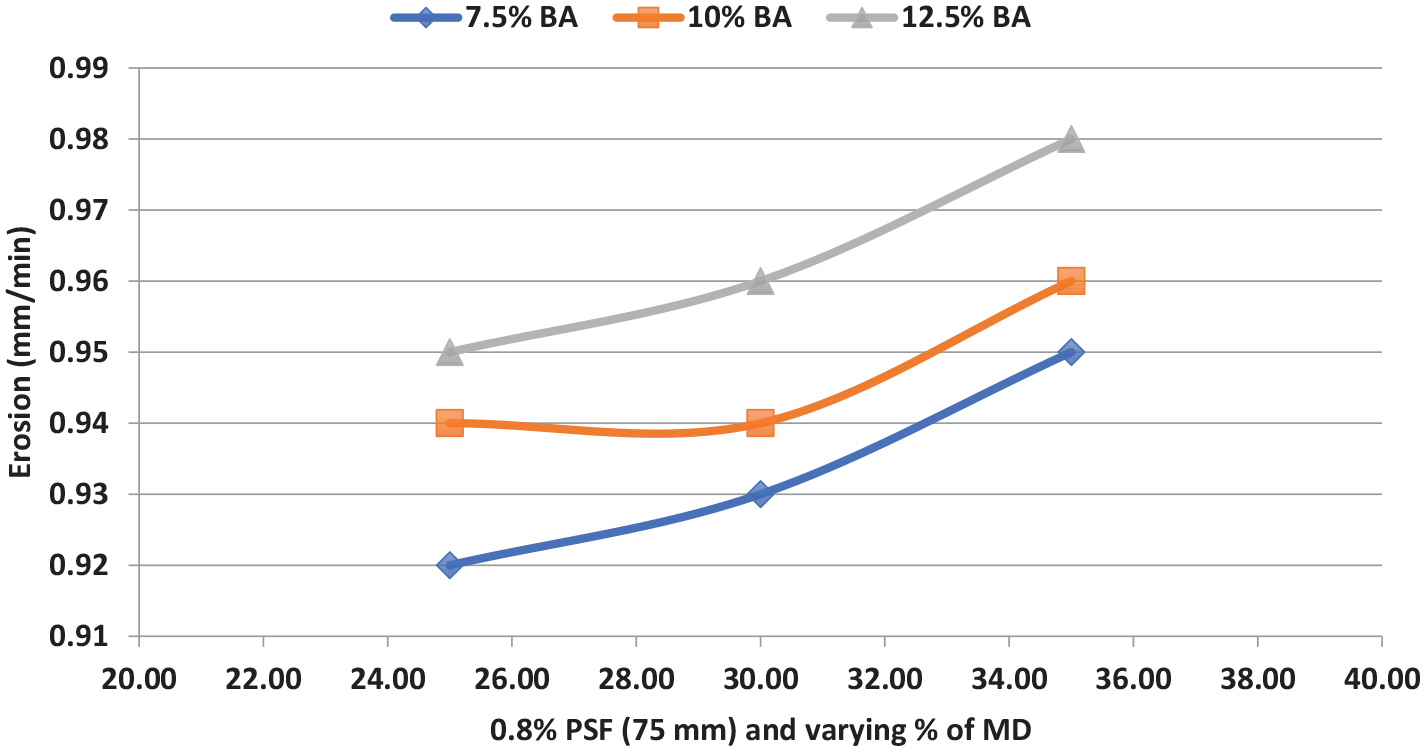
Influence of BA and MD on mass loss of brick containing 0.8% PSF (75 mm).
In addition, for a given concentration of marble dust, an increment in bagasse ash was associated with an enhancement in eroding characteristics. When 25% MD and 7.5% BA were employed, the erosion rate of the mixed earthen block that was strengthened with PSF was 0.92 mm/min. However, this rate increased to 0.95 mm/min when 12.5% BA and 25% MD were used. Similar trends were seen for 30% and 35% MD percentages. Additionally, as shown in Figure 15, the impact of BA and MD on the erosion of a soil brick mixed with 1% PSF was 75 mm long, was examined. It was discovered that, with fixed bagasse ash concentration, the erosion properties increased as the marble dust content did as well. 57 The admixed soil block’s erosion rate reinforced with PSF was 0.87 mm/min when 25% MD and 7.5% BA were used. However, this rate increased to 0.9 mm/min when 7.5% BA and 35% MD were used.
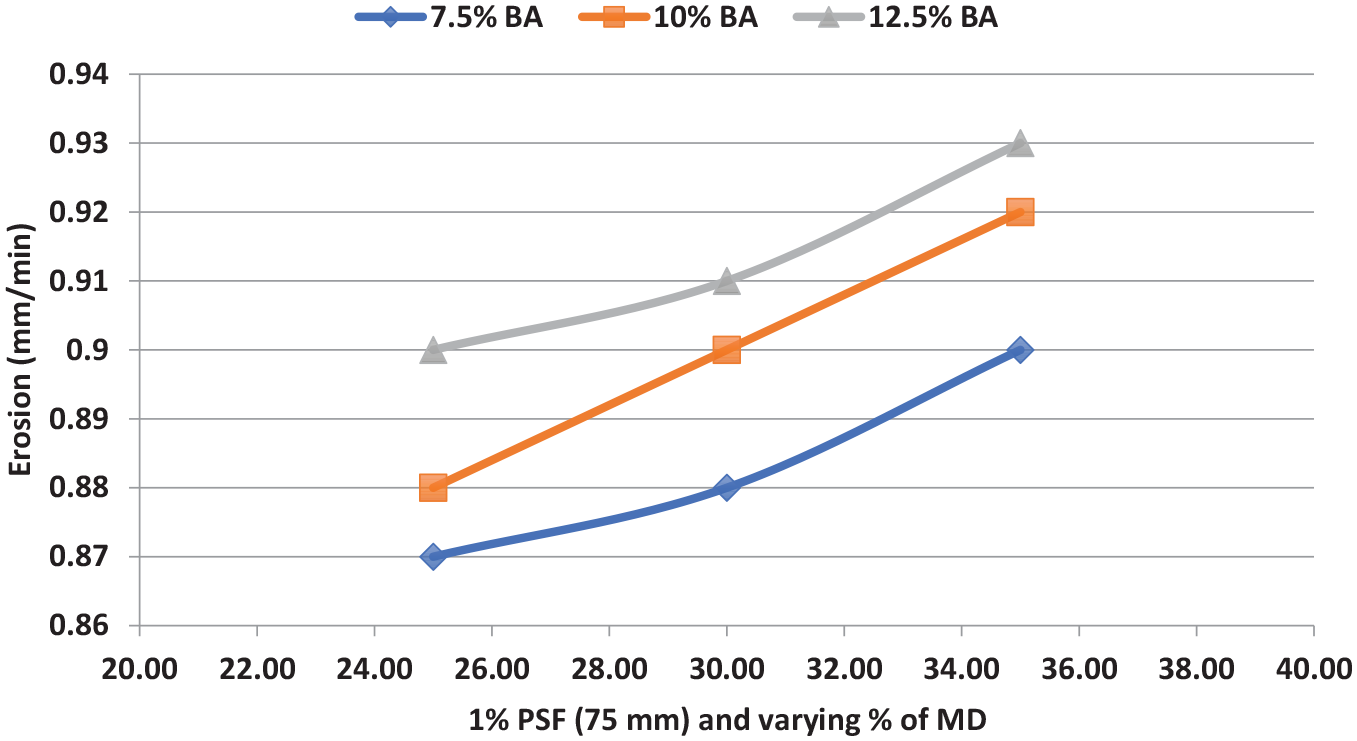
Influence of BA and MD on mass loss of brick containing 1% PSF (75 mm).
Analogous phenomenon was noticed for 10% and 12.5% bagasse ash, respectively. Additionally, as bagasse ash concentration increased for constant marble dust content, erosive characteristics showed an upward trend. The admixed earth block’s erosion rate reinforced with PSF was 0.87 mm/min when 25% MD and 7.5% BA were used. This rate increased to 0.9 mm/min when 12.5% BA was used with 25% MD. The same tendency was noted for 30% and 35% MD concentrations. The enhanced resilience of reinforced earth blocks can be attributed to the fibers’ capability to prevent soil particles from being washed away, reducing the eroding influence on the admixed soil blocks. 7 Similar to the way that tree roots connect the soil to resist erosion, fibers bind the soil matrix and accomplish the same objective. The blocks’ resistance to erosion indicates that they will hold up in the face of natural elements like precipitation. 17 Furthermore, as illustrated in Figure 16, the impact of MD and BA on the erosion of soil blocks mixed with 1.2% PSF and sized 75 mm in length was examined. It was revealed that erosive characteristics increased with increasing concentrations of marble dust for a given fixed percentage of bagasse ash.58–60 The admixed soil block’s erosion rate reinforced with PSF was 0.84 mm/min when 25% MD and 7.5% BA were used. However, this rate rose to 0.87 mm/min when 7.5% BA and 35% MD were used. A similar phenomenon was seen for 10% and 12.5% BA. Moreover, erosion characteristics increased with increasing bagasse ash for a fixed quantity of marble dust. The soil block’s erosion rate reinforced with PSF was 0.84 mm/min when 25% MD and 7.5% BA were used. This rate increased to 0.87 mm/min when 25% MD and 12.5% BA were used. The same behavior could be seen for 30% and 35% MD concentrations respectively.61,62

Influence of MD and BA on erosion of block containing 1.2% PSF (75 mm).
Additionally, for both 100 and 125 mm PSF, the similar impact of MD and BD on the erosion properties of soil blocks was observed. When 25% MD and 7.5% BA were utilized, the erosion rate of the admixed soil block containing 0.8% 100 mm PSF was 0.94 mm/min, as shown in Figure 17. When 7.5% BA and 35% MD were utilized, however, this rate climbed to 0.97 mm/min.

Influence of MD and BA on erosion of block containing 0.8% PSF (100 mm).
Figures 18 and 19 display the results of a study that analyzed how MD and BA affected the erosion of a soil block that had been admixed with paddy straw fibers of length 100 mm (1% and 1.2%, respectively). It was discovered that erosion characteristics exhibited a similar pattern with these PSF concentrations.63,64

Influence of MD and BA on erosion of block containing 1% PSF (100 mm).

Influence of MD and BA on erosion of block containing 1.2% PSF (100 mm).
Figure 20 has depicted the results of an investigation into how MD and BA affected the erosion characteristics of the soil block that had been admixed with 0.8% PSF sized 125 mm. It was observed that, with fixed bagasse ash level, the erosion characteristics increased as the marble dust content increased.65,66 The admixed soil block’s erosion rate reinforced with PSF was 0.96 mm/min when 25% MD and 7.5% BA were used. This rate increased to 0.99 mm/min when 7.5% BA and 35% MD were used.
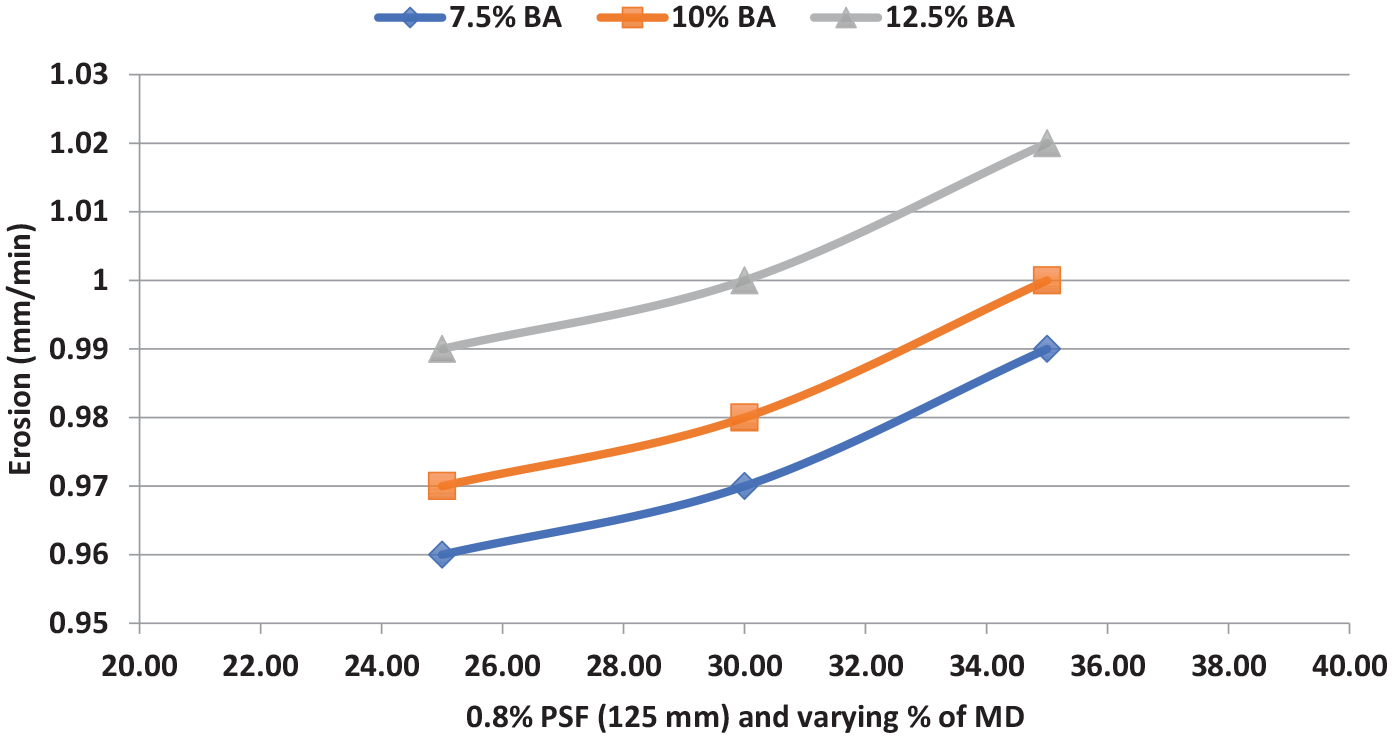
Influence of MD and BA on erosion of block containing 0.8% PSF (125 mm).
At 10% and 12.5% BA, the same trend was seen. Moreover, erosive properties increased when bagasse ash for constant marble dust concentration increased. When 35% MD and 7.5% BA were utilized, the admixed soil block reinforced with PSF had an erosion rate of 0.99 mm/min. When 12.5% BA and 35% MD were utilized, this pace accelerated to 1.02 mm/min. The same pattern was seen for 30% and 35% MD concentrations. The effects of MD and BA on the mass loss of a 125 mm long soil block mixed with 1.2% and 1% PSF are depicted in Figures 21 and 22. Comparable mass loss tendencies were seen for similar PSF contents.

Influence of MD and BA on erosion of block containing 1% PSF (125 mm).

Influence of MD and BA on erosion of block containing 1.2% PSF (125 mm).
Statistical analysis
Model equation: Mass loss versus A, B, C, D
The regression analysis that was used to determine the relationship between the parameters and the Mass Loss produced the outcome that has been displayed in equation (1). The model equation used to predict the mass loss of an unfired soil block that was admixed with varying proportions of paddy SF, MD, and BA is as follows:

Parameters are denoted by A, B, C, and D, where A is PSF length, B is PSF percentage, C is SCBA, and D is MD. Figure 23 shows the residual plots of Mass Loss (durability), with the independent variable shown along the horizontal axis and the residuals depicted along the vertical axis. The R2 score of 99.36% was calculated using statistical methods.

Residual plots of mass loss (durability).
Model equation: Erosion versus A, B, C, D
The relationship between the variables and erosion was calculated by conducting a regression analysis, the results of which are reflected in the expression shown in equation (2). Erosion of an unfired soil block containing variable amounts of paddy straw fiber, marble dust, and bagasse ash will be calculated using the following model equation:

The variables A, B, C, and D each stand in for a certain parameter; specifically, the length of the PSF, the proportion of the PSF, the SCBA, and the MD. Figure 24 illustrates the residual plots of erosion. The independent variable is depicted on the horizontal axis, and the residuals are presented on the vertical axis. The statistical analysis led to the determination of an R2 value of 99.45%.
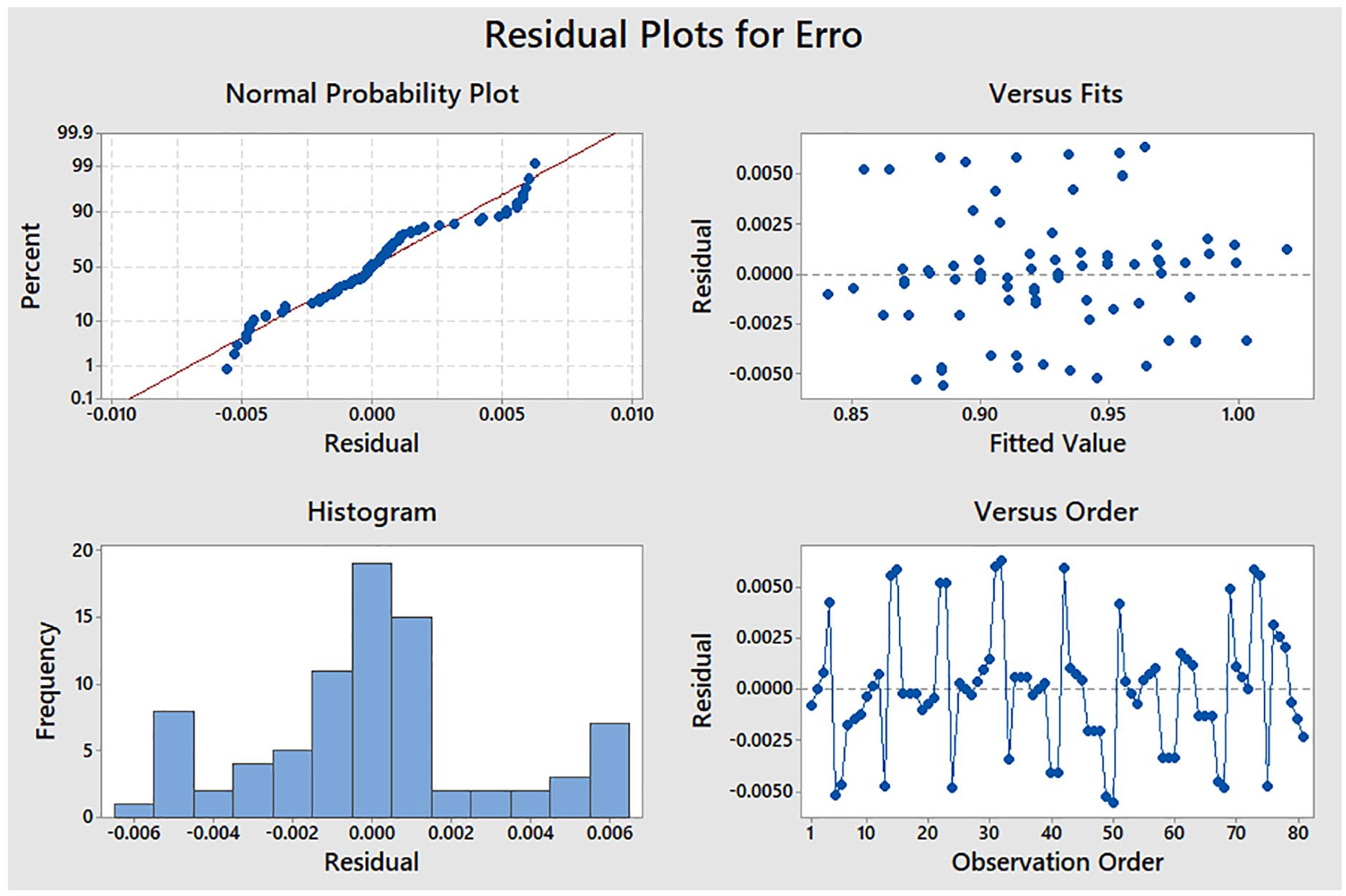
Residual plots of erosion.
Optimization
The values of the parameters and the response factor (here Mass Loss) under optimal conditions are presented in Table 5. The unfired soil block mixed with 113 mm length, 1.2% PSF, 12.5% BA, and 35% MD can achieve the highest value of mass loss of 5.99%, as indicated in this table.
In a similar fashion, Table 6 illustrates the metrics of the response factor namely Erosion and the other relevant variables at optimized conditions. This table shows that the earth blocks ad-mixed with 113 mm length and 1.2% PSF, 12.5% BA, and 35% MD can obtain the optimum parameters of erosion, which is 0.84 mm/min.
Optimized value of the erosion for various parameters at optimized conditions.

SEM (Scanning electron microscopy analysis)
A SEM analysis (Model: JSM IT500) was carried out to evaluate how the presence of bagasse ash and marble dust affected the composition of the soil as well as the interface between the soil and paddy straw fibers at UCRD, Chandigarh University.27,28 This section displays and discusses the many SEM images that were captured. Figure 25 depicts SEM pictures of soil block specimen strengthened with PSF measuring 100 mm in length. 42

SEM images of specimen of unfired admixed soil block containing PSF of length 100 mm (BA:MD:PSF: 12.5%:35%:1.2%). 42
This sample comprised 35% marble dust, 12.5% bagasse ash, and 1.2% PSF. In order to do the SEM examination, a tiny portion of the specimen is extracted. Therefore, a portion of the soil mixture that adhered to the block’s fibers was extracted for SEM examination. It is apparent by examining the pictures that the mixture of soil, bagasse ash, and marble dust adhered very well to the paddy straw fiber.29–31 The pores are also insignificant, as evidenced by the photograph. These pictures support the preceding findings on this sample’s increased flexural and tensile strength.67,68
Figure 26 depicts SEM pictures of an unfired admixed soil block specimen reinforced with 125 mm-long paddy straw fibers. 42 The composition of this specimen is 25% Marble Dust, 7.5% Bagasse ash and 1.2% PSF.

SEM images of specimen of unfired admixed soil block containing PSF of length 125 mm (BA:MD:PSF::7.5%:25%:1.2%). 42
A tiny piece of the sample is utilized for the SEM examination. Furthermore, the soil mixture with fiber from the soil mix attached to it was chosen as the sample for SEM examination.32–34 Pictures indicate that the soil-bagasse ash-marble dust mixture was not completely bonded to the fiber. The picture shows that the number of pores is also more significant. These pictures corroborate the preceding findings on this composite sample’s decreased flexural and tensile strength.69,70
EDS (energy dispersive X-Ray spectroscopy)
The SEM analysis (Model: JSM IT500) equipped with “Oxford ULTIM-MAX” Energy Dispersive X-Ray Spectroscopy (EDS) detector-based testing was used in this work to examine the elemental composition of the samples.35–37 This technique can determine the surface elemental composition of a sample. Figure 27 displays the EDS pictures of a distinct soil block strengthened with PSF measuring 75 mm long. This specimen contained 30% marble dust, 12.5% bagasse ash, and 1.2% PSF. A very tiny portion of the specimen is acquired for the EDS examination. The abscissa depicts Ionization energy on the graph, while the ordinate shows Intensity (Count). 23 The greater the concentration of a particular element, the more prominent that element will be at a given location.22,23 Figure 27 shows that silica (Si) and oxygen (O) are the two main elements found on the surface. Aluminum (Al) and magnesium (Mg) were found in trace amounts. 42

EDS of specimen of unfired admixed soil block containing PSF of length 75 mm (BA:MD:PSF: 12.5%:30%:1.2%). 42
The EDS pictures in Figure 28 depict a sample of soil brick strengthened with PSF of size 75 mm. Bagasse ash comprised 7.5% of this specimen, Marble Dust contributed 25%, and PSF made up 1.2%. Figure 28 shows that silica (Si) and oxygen (O) are the two main components found on the surface, while aluminum (Al) was only found in trace amounts. 42
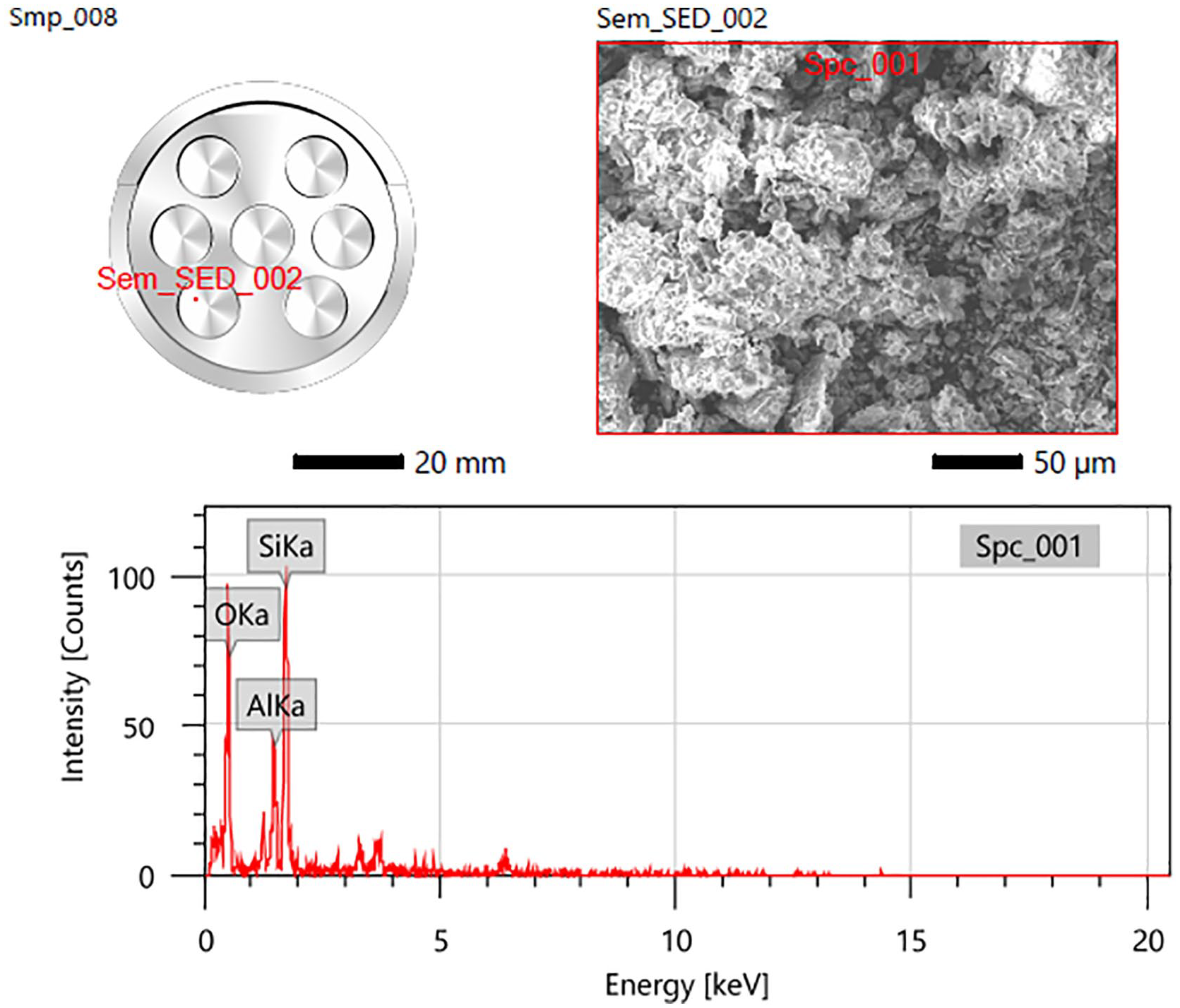
EDS of specimen of unfired admixed soil block containing PSF of length 75 mm (BA:MD:PSF:7.5%:25%:1.2%). 42
Conclusions
This study aimed to assess the durability of unfired earthen blocks incorporated with marble dust, paddy straw fiber, and bagasse ash. The purpose of the XRD test on bagasse ash and marble dust was to collect and validate information on the majority of minerals present in the material. A series of testing was carried out on eighty-one (81) distinct mix designs of the manufactured earth blocks per the relevant codes to ascertain their durability. Attributes of durability were estimated by analyzing mass loss and erosion characteristics. The findings were subjected to a linear regression evaluation and an optimization technique, and the modeling equations were used to compute the optimum values. The results of the tests and their implications have been explained below:
(a) With an increase in MD and BA, it was discovered that the mass loss of the soil block throughout durability cycles decreased for a definite proportion of PSF. Similarly, increasing the PSF’s length and content aided reduction in the mass loss rate with a constant proportion of MD and BA.
(b) This study established that the optimal Mass loss value of soil block was recorded with 113 mm length and 1.2% PSF, 12.5% BA, and 35% MD which is 5.99%, reported under optimized conditions for multiple soil block samples.
(c) It was revealed, throughout the experimentation process of estimating block erosion, that for a given constant proportion of PSF, the erosion characteristics increased with an increase in MD and BA. Furthermore, erosion characteristics tend to decrease as PSF content increases, but it increases as PSF length increases for a given BA and MD.
(d) The ideal erosion rate for the soil block was calculated at optimal circumstances to be 0.84 mm/min with a 75 mm length, 1.2% PSF, 7.5% BA, and 25% MD. This indicates that including PSF of optimal length minimizes the deterioration of the soil block.
(e) Models for erosion and mass loss were developed through regression analysis, utilizing the ratios of BA, MD, and PSF. The models exhibited substantial R2 values, and the optimization process recommended specified proportions for attaining the most favorable mass loss and erosion characteristics.
(f) Visual confirmation of the bonding between PSF, BA, and soil has been confirmed through SEM analysis. The images corroborated the findings of the research regarding the influence of these reinforced elements on the strength of the soil blocks.
(g) By utilizing EDX analysis, the elemental composition of the soil block’s surface was ascertained. The high percentage of Silica (Si) and Oxygen (O) corresponds to the expected composition.
Scope of future work
(a) Further investigation could be carried out into the influence of various natural and synthetic fiber types upon the characteristics of soil blocks incorporated with marble dust and bagasse ash. Some examples are Coconut coir, one-use plastic goods, banana fiber, and others. This would significantly increase the use of natural and plastic waste fibers in the construction industry.
(b) Further study may be conducted to determine the effects of different binding materials on the characteristics of unfired earth blocks strengthened with PSF.
(c) Further investigation may be required for investigating varied soil varieties, additional admixtures, and alternative proportions in order to broaden the comprehension of sustainable soil block construction. Further investigation into the real-world practical efficacy of these soil blocks over prolonged periods of time would be desirable.
Footnotes
Author contributions
Conceptualization, TS, Sandeep Singh (SS), Shubham Sharma (SS), US, PS, AG, AK; formal analysis, TS, Sandeep Singh (SS), Shubham Sharma (SS), US, PS, AG, AK, EM, MA; investigation, TS, Sandeep Singh (SS), Shubham Sharma (SS), US, PS, AG, AK, EM, MA; writing—original draft preparation, TS, Sandeep Singh (SS), Shubham Sharma (SS), US, PS, AG, AK; writing—review and editing, Shubham Sharma (SS), AK, EM, MA; supervision, Shubham Sharma (SS), AK, EM, MA; project administration, Shubham Sharma (SS), AK, EM, MA; funding acquisition, EM, MA. All authors have read and agreed to the published version of the manuscript.
Availability of data and material
My manuscript has no associate data.
Declaration of conflicting interests
The author(s) declared no potential conflicts of interest with respect to the research, authorship, and/or publication of this article.
Funding
The author(s) disclosed receipt of the following financial support for the research, authorship, and/or publication of this article: The authors extend their appreciation to the Deanship of Scientific Research at King Khalid University (KKU) for funding this research through the Research Group Program Under the Grant Number (R.G.P.2/592/44).
Ethical approval
Not applicable.
Consent to participate
Not applicable.
Consent to publish
All authors have read and approved this manuscript.
