



Abstract
The faded-on stains of cotton clothes are a common daily phenomenon. The desorption and adsorption of reactive dyes are theoretically responsible for the faded-on stains on cotton clothes in the washing microenvironment, especially when the light color cotton fabrics (LCFs) are washed together with the cotton fabrics dyed in highly saturated color (CFSCs). However, the effects of washing parameters on the desorption and adsorption kinetics of reactive dyes and the mitigation of faded-on stains in the washing microenvironment through washing parameter optimization are poorly understood. This study thoroughly discusses the desorption and adsorption behaviors of reactive red 195 in the washing microenvironment from the inhibition of color transfer. Firstly, CFSCs and LCFs were prepared by using reactive red 195 and cotton fabrics. Secondly, the effects of washing parameters, washing temperature, washing liquor ratio, and washing solution pH, on the dye desorption and adsorption rate were studied with the simulated washing device (SWD), followed by the response surface analysis of washing parameters. Thirdly, the modeling of desorption and adsorption kinetics and velocity were detailed. Finally, the model of dye desorption and adsorption was validated in a drum washing machine (DWM). The results are helpful for the design of scientific washing procedures to curb the faded-on stains of cotton clothes effectively.
Introduction
Reactive dyes are preferred for cotton dying because of their easy availability, low cost, high chroma, and ability to form covalent bonds with cotton fabrics. 1 However, the large active reactive dye groups will be hydrolyzed and inactivated during storage, dyeing, and washing. Thus, when clothes are washed, hydrolyzed dyes are produced and desorbed from fibers.2,3 The hydrolysis, desorption, and adsorption of various reactive dyes cause faded-on stains when cotton fabrics dyed in highly saturated color and light cotton fabrics are washed together. Fading and dye transfer of cotton textiles raised by desorption and adsorption of reactive dyes has been a major household washing problem in our daily life.4 –6
Some related researches indicate that parameters, such as the type of dyes, washing temperature, the volume of washing water, the weight of washing load, 7 and detergent pH, 8 affect the fading and dye transfer when cotton clothes are washed. 9 Therefore, the prevention and control of cotton fabrics dyed in highly saturated color (CFSCs) washing fading and dye transfer problems mainly focus on researching environmentally friendly color fixatives and anti-dye transfer adsorbents.10 –12 However, these studies have neglected the effect of different washing parameters on the desorption of dyes on CFSCs and the adsorption of dyes on light cotton fabrics (LCFs) in the washing microenvironment and the dynamic evolution of desorption and adsorption with the change of washing time. So, there is no effective prevention and control from the fading and dye transfer mechanism and washing process optimization perspective. In the study of Hang and He, the hydrolyzed reactive scarlet H-E3B dye was adsorbed onto cotton fabric. She studied the affecting factors of dye desorption from the cotton fabric and the desorption kinetics. The results showed that the temperature and pH greatly affected the dye desorption. The dye desorption velocity could be divided into fast and slow processes. The desorption process of the dye from cotton fabric follows the second-order exponential decay model. 13 Guo et al. pointed out that the dyeing temperature and alkali dosage would lead to the hydrolysis of dyes in the dyeing system when cotton fabrics are dyed with reactive dyes. The hydrolysis reaction velocity was faster than that of dyes and fibers, which would reduce the utilization rate of dyes and produce a large quantity of unfixed dye accumulation. Therefore, the color fastness of fabrics in the washing process is reduced. At the same time, the hydrolyzed dyes were adsorbed on light-colored fabrics, causing dye transfer. 14
Washing experiments are necessary to achieve the required high color saturation and color fastness and to explore the kinetic process of dye desorption and adsorption in a mixed washing environment. So, we studied the effects of some important washing parameters on dye desorption and adsorption, including washing temperature, washing liquor ratio, and washing solution pH.
The objectives of this study are to (1) Explore the effect of washing parameters on the dye desorption rate and adsorption rate through a single factor experiment and response surface analysis in the simulated washing device. (2) Establish the model of desorption kinetics and adsorption kinetics and the model of desorption velocity and adsorption velocity with the change of washing time. (3) Verify the accuracy of the dye desorption and adsorption model in the real drum washing machine to summarize the dynamic process of dye desorption and adsorption. This study can not only solve the fading and dye transfer problem but also provide a theoretical exploration of fading and dye transfer mechanisms in washing machines.
Materials and methods
Experimental materials
Bleached pure cotton fabric was used to prepare the cotton fabric dyed in highly saturated color (CFSC) and light color fabrics (LCF). The finesses of warp and weft yarn are both 27.8 ± 2.5 tex. Reactive Red 195 (CAS: 93050-79-4), reagent grade, is purchased from Zhejiang Runtu Co., Ltd.; the dye information is shown in Table 1. Glauber’s salt, soda ash, and DMF are analytically pure, purchased from Sinopharm Chemical Reagent Co., Ltd. A-502F soaping agent, purchased from Suzhou Liansheng Chemical Co., Ltd.
Structural and chemical information of reactive red 195.

Sample preparation
Preparation of desorption samples
Bleached pure cotton fabric was used to prepare CFSC and LCF, and reactive red 195 dye was used to dye the fabric. The fabric was put into a TD100-163WMUIATD Cygnet drum washing machine (Wuxi Little Swan Electric Appliance Co., Ltd.). The cotton and linen washing procedure was selected for pretreatment before dyeing to remove the residues on the fabric’s surface. After washing, the fabric was dried naturally and stored in a vacuum for later use.
The dye dosage is 2% (o. w. f), sodium sulfate concentration is 50 g/L, and sodium carbonate concentration is 20 g/L. Using Ahiba infrared dyeing sample machine (Datacolor, USA), the fabric was put into the dyeing cup according to the liquor ratio of 10:1. The dyeing program was set as the initial dyeing temperature was 30°C. The operation lasted for 30 min, the temperature was raised to 60°C at a velocity of 1°C/min, and the dyeing time was 60 min. At the end of the dyeing phase, the temperature was lowered to 30°C. Then, the fabric was washed twice, using a 2 g/L A-502F soaping agent at 90°C for 15 min. Finally, wash it once and dried for later use.
Preparation of adsorption samples
In household washing, the dye shed by CFSCs will be transferred to LCFs, causing fabric staining. Therefore, to explore the mechanism of LCFs adsorbing free dyes in the washing solution in the mixed washing system, the bleached pure cotton fabric with the same specification as the desorption sample was selected to simulate the LCFs in the household washing process. The bleached cotton fabric was washed in a drum washing machine with the cotton and linen washing program. The washing temperature and the volume of water in the washing stage are 40°C and 20 L, respectively. After washing, the fabric was naturally dried and stored in a vacuum for later usage.
Unfixed dyes test
To extract the hydrolyzed dye adsorbed on the fiber surface during the sample preparation process, the DMF extraction method was used to decolorize the CFCSs. The DMF extraction method decolorized the desorption sample to extract the hydrolyzable dye from the sample preparation. 15 Cut the 41 6 g sample into pieces, add 50% DMF solution, liquor ratio of 10:1, the temperature of 80°C for 15 min, remove the fabric, and wash it three times. Test the absorbance of the washing solution three times, and calculate the quantity of unfixed dyes by spectrophotometry.
Simulated washing experiment
Establishment of the standard curve
Reactive red 195, 0.1 g, was added to a certain volume of deionized water and dissolved completely. Then, it was diluted to 0.01 , 0.001 , 0.0015 , 0.002 , 0.0001, 0.0002, 0.0003, 0.0004, and 0.0005 mg/mL in turn. The absorbance was tested at 542 nm. The standard curves of dyes in the simulated washing device (SWD) and the drum washing machine (DWM) were fitted with the dye concentration as the abscissa and the absorbance as the ordinate, as shown in Figure 1. The fitting accuracy R2 was 0.99965 and 0.99979, respectively.

Standard curve of washing solution: (a) simulated washing device (SWD) and (b) drum washing machine (DWM).
Desorption performance characterization
According to the methods described in the standard ISO 105-C10: 2006 test of color fastness, a simulated washing device is set up to simulate the desorption behavior of the unbound dye on the CFSCs in the real washing environment, 16 as shown in Figure 2. Each desorption sample was cut into sizes (16 cm × 16 cm). The speed of the stirring device was set to 80 rpm. A certain weight of glass beads was put into the SWD to ensure that the device load weight in the single sample washing and mixed washing systems was consistent.

Simulated washing device for CFSCs.
The desorption rate was used to characterize the dye desorption degree on CFSCs. The washing residue was collected at 3, 5, 7, 12, 18, 25, 35, 45, and 55 min, respectively. Then, the collected liquid was filtered by a 0.45 μm filter head. The absorbance of the washing residue was tested at 542 nm. The desorption rate calculation formula is as shown in equation (1) 17 :

Where Pd is the desorption rate, %; C d is the concentration of the dye in the washing solution, mg/mL; V is the volume of the washing solution, mL; M is the quantity of unfixed dyes on the CFSCs, mg.
Adsorption performance characterization
A simulated mixed washing device is set up to simulate the dye adsorption behavior of LCFs, as shown in Figure 3. Put the desorption samples and the adsorption samples into the SWD simultaneously. The speed of the stirring device was set at 80 rpm. Take the dye desorption quantity of single washing as the parallel control experiment. The quantity of dye desorption at different washing times was tested in the mixed washing system.

Simulated mixed washing device (SWD) for CFSCs and LCFs.
The adsorption rate was used to characterize the adsorption degree of LCFs. The washing residues were collected at 3, 5, 7, 12, 18, 25, 35, 45, and 55 min, respectively. Then, the collected liquid was filtered by a 0.45 μm filter head. The calculation formula for adsorption rate is shown in equation (2), 18

Where Pa is the adsorption rate, %; C a,1 is the concentration of the dye in the washing solution before adsorption, mg/mL; C a,2 is the concentration of the dye in the washing solution after adsorption, mg/mL; V is the volume of the washing solution, mL; Md is the desorption quantity of the CFSCs, mg.
Desorption kinetics and desorption velocity
The desorption process of the unfixed dye adsorbed on the CFSCs in the washing solution was established through the molecular schematic, as shown in Figure 4.

Schematic diagram of dye molecular desorption simulation.
The unfixed dye and the cellulose fiber do not form covalent bonds, so it is only physically adsorbed on the surface of cellulose fibers by van der waals force. With the complex and comprehensive physicochemical and mechanical action of water, force, and energy, the dyes were desorbed into the washing solution. 19 There is an obvious dynamic change in the desorption process of dyes, and the desorbed dyes will show different degrees of desorption under the action of washing parameters. To simulate the dye desorption behavior of CFSCs, the size of the prepared desorption samples was cut into the size of 16 cm × 16 cm. Washing parameters were set as 20°C, 30°C, 40°C, 50°C, and 60°C, washing liquor ratio was set as 60:1, 80:1, 100:1, 120:1, and 140:1, and washing solution pH was set as 7, 8, 9, 10, and 11. The weight of the samples was fixed, and the volume of washing water was changed according to the set washing liquor ratio. When the desorption rate and adsorption rate were calculated, the dye’s desorption quantity and adsorption quantity were tested by spectrophotometry. The desorption velocity of the dye was obtained by differential calculation of the dye desorption quantity at different washing times.
Adsorption kinetics and adsorption velocity
The adsorption process of desorbed dye on the LCFs in the washing solution was established through the molecular schematic, as shown in Figure 5.
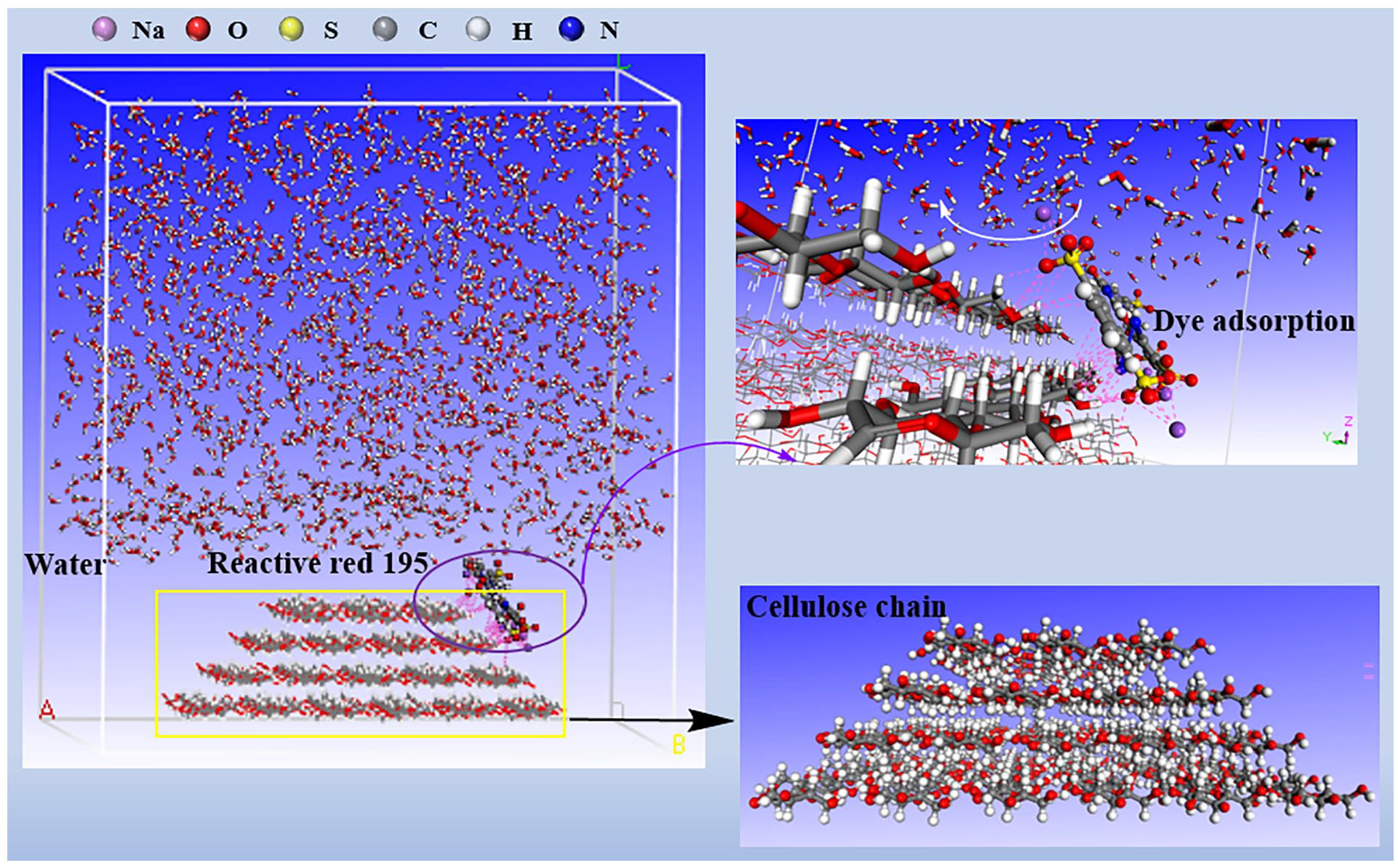
Schematic diagram of dye molecular adsorption simulation.
The reactive groups of the desorbed dye are replaced by hydroxyls, which are in a completely hydrolyzed state and will no longer be covalently bound to cellulose. So it is also physically adsorbed on the surface of cellulose fibers only by van der waals force. However, due to the balance of the concentration difference inside and outside the fiber pores, it is difficult for the dye adsorbed on the cellulose of LCFs to desorb again, thus causing the dye transfer problem. 20 To simulate the adsorption phenomenon and adsorption trend of LCFs in a real mixed washing environment, the desorption and adsorption samples were put into the SWD simultaneously. The parallel washing experiments of adsorption samples were carried out with the given parameters. The residual washing liquid was collected at 3, 5, 7, 12, 18, 25, 35, 45, and 55 min, respectively. The absorbance of the residual liquid was tested after filtration. The adsorption velocity of the dye was calculated by differential calculating the quantity of dye adsorption at different washing times.
Results and discussion
Single factor experiment
Washing temperature, washing water volume, and fabric weight are the three main parameters of home washing. The liquor ratio is often positively correlated with the drum load, which is also related to the volume of washing water and the weight of fabric input. Hence, the combination of washing temperature, fabric weight, and washing water volume is an important parameter in the washing process.21 –23 In addition, detergent pH is a key factor affecting stain removal, fabric fading, and dye transfer during fabric washing. 24 Therefore, in this paper, washing temperature, washing liquor ratio, and washing solution pH are used as washing parameters to investigate the effects of these three parameters on the desorption and adsorption behavior of CFSCs and LCFs. The washing parameters and the interval arrangement are shown in Table 2.
Washing parameters and parameter interval arrangement.

The effect of washing temperature on the dye desorption rate and adsorption rate is shown in Figure 6(a). As indicated, the dye desorption rate and adsorption rate increased with the increase in washing temperature, reaching the maximum desorption rate and adsorption rate at 60°C. The rapid increase of dye desorption rate in the initial stage can be attributed to the temperature increase. The internal expansion of cotton fabric and the increase of pore structure are conducive to the entry and exit of dye molecules into and out of the fiber pores, so the increase in temperature will lead to an increase in dye desorption rate. However, the hydrolyzed dye adsorbed on the fabric’s surface and inside the pores is limited. When the temperature increases to 50°C, the desorption rate increases slowly, and the dye gradually reaches the state of desorption saturation, which is consistent with the literature findings. 25 The rapid increase of dye adsorption rate in the initial stage is attributed to the increase of the fluidity of the dye in the aqueous washing solution and on the fabric with the increase of temperature, the increase in the kinetic energy obtained by the dye. In the washing solution, the interaction force between the dye and the active adsorption sites on the surface of the LCFs increases, so the adsorption rate gradually increases. 26

The effects of different washing parameters on the dyes’ desorption rate on CFCSs and dyes’ adsorption rate on LCFs. (a) Washing temperature. (b) Washing liquor ratio. (c) Washing solution pH. When one variable is studied, the other two variables are set to constants (i.e. washing temperature was 40°C, washing liquor ratio was 100:1, and washing solution pH was 9).
The effect of the washing liquor ratio on the dye desorption and adsorption rates is shown in Figure 6(b). The dye desorption rate increased with the increase of the washing liquor ratio and reached the maximum desorption rate when the washing liquor ratio was set to 140:1. The dye adsorption rate increased at first. And then decreased with the increase of the washing liquor ratio, and reached the maximum adsorption rate at 100:1. The rapid increase of dye desorption rate and adsorption rate in the initial stage can be attributed to the increase of washing liquor ratio, the volume of washing solution, the mechanical force provided by the drum, the kinetic energy required to hydrolyze the dye shedding fabric. At the same time, the dye transfer energy increased, so the dye desorption rate and adsorption rate show an upward trend at the initial stage. 27 As the desorption process proceeds, the desorbed dye reaches saturation, and the desorption rate slows down. When the washing liquor ratio exceeds 100:1, the initial concentration of the desorbed dye in the washing solution decreases, the driving force generated by the concentration gradient difference between the inside and outside of the fabric decreases, and the binding rate between the dye and the adsorption site of the light-colored fabric decreases, so the dye adsorption rate has a downward trend.
In Figure 6(c), with the increase of the washing solution pH, the dye’s desorption rate increased while the dye’s adsorption rate decreased. Between pH = 8 and pH = 9, the desorption rate and adsorption rate increased and decreased significantly, with an increase of 17. 76% in desorption rate and a decrease of 17. 72% in adsorption rate. The increase of washing solution pH will lead to increased negative charges on the surface of fabrics during the process of dye desorption on CFCSs. Reactive red 195 is an anionic dye. Therefore, when pH is greater than 7, the desorption rate of dyes will increase under the action of charge repulsion. 28 At the same time, the increase of pH will also make the surface of LCFs adsorb a large number of negative charges, which is not conducive to the adsorption of dyes on LCFs under the action of charge repulsion. On the other hand, due to the increase of alkaline ions, there is a “competition” with anionic dyes for adsorption sites, resulting in a decrease in dye adsorption rate.
Box-Behnken design and significance analysis
According to the results of single factor screening, washing temperature (X1), washing liquor ratio (X2), and washing solution pH (X3) was determined as the experimental parameters of the Box-Behnken design. Three significant experimental points were selected for each parameter and set as three median values, which were −1, 0, and 1, respectively. The desorption rate and adsorption rate were taken as the response values. Table 3 is the experiment parameter-coding level arrangement, and Table 4 shows the experimental design and results of 17 groups.
Box-Behnken design parameter and coding levels.

Box-Behnken experiment design and results.
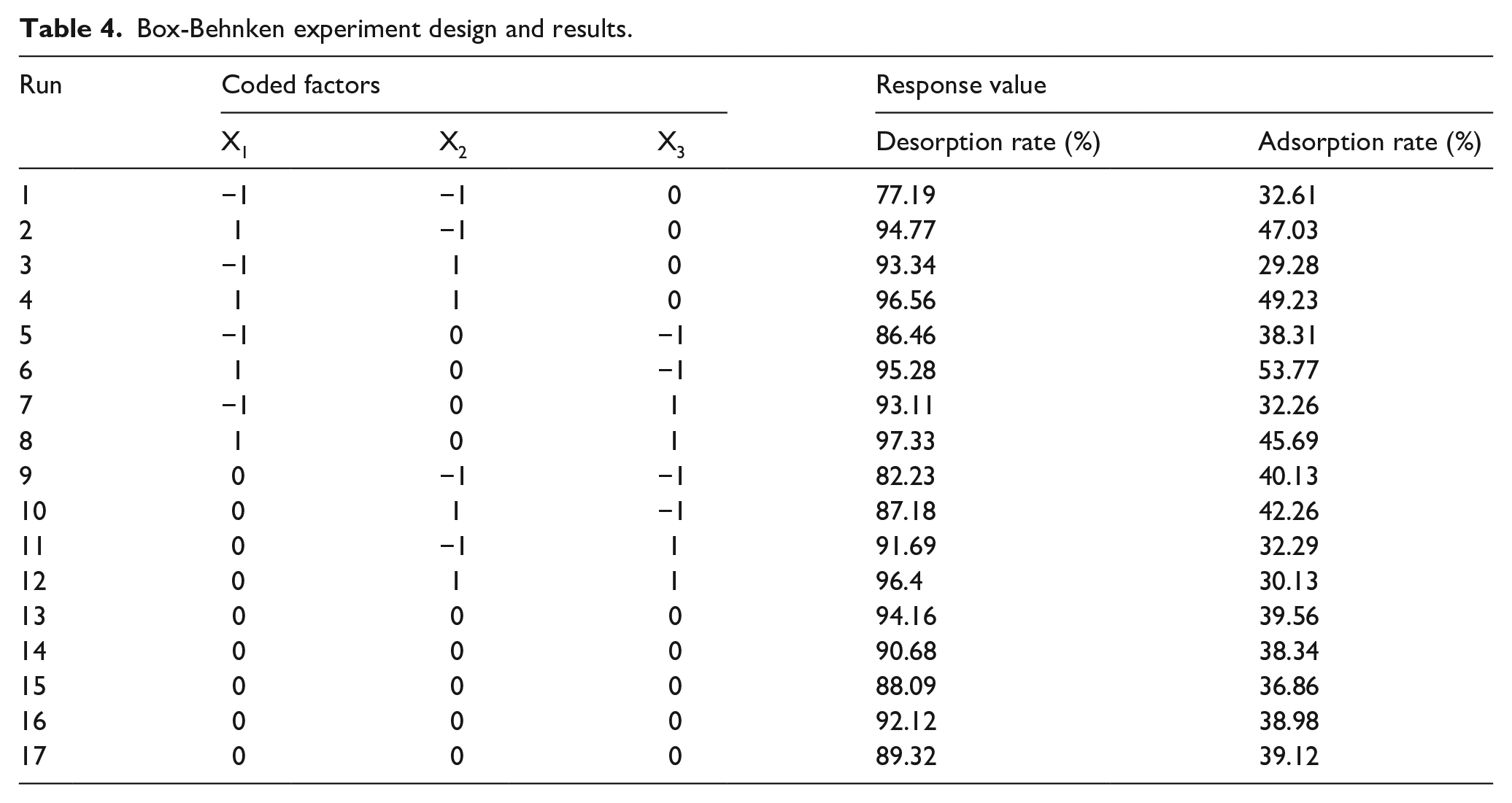
Table 4 shows the ANOVA results of the washing parameters. The results of variance analysis showed that the p values were all less than 0.05. Therefore, the washing parameters X1, X2, and X3 had significant effects on the response value R1. 29 The quadratic term X1X2 (p = 0. 0326) had a greater effect on the response value R1 than X1X3 (p = 0. 4228) and X2X3 (p = 0.9658). So, the interaction between washing temperature and washing solution pH significantly affected the response value R1. When the effects of washing parameters on the dye adsorption rate were studied, the primary terms X1 and X3 had significant effects on the response value R2, and the p values were all less than 0.0001. The quadratic term X1X2 (p = 0.0782) had more significant effects on the response value R2 than X1X2 (p = 0.4739) and X2X3 (p = 0.1538). The results showed that the interaction between washing temperature and washing liquor ratio significantly affected the response value R2.
The desorption rate and the adsorption rate were set as the response values shown in Figures 7 and 8, respectively. The highest dye desorption rate was observed when the washing temperature was increased to 50°C, the washing liquor ratio was increased to 120:1, and the washing solution pH was increased to 10. When the washing temperature increases to 50°C, the washing liquor ratio increases to 100:1, and the washing solution pH decreases to 8, the adsorption rate of the dye reaches the highest. Therefore, the effects of washing temperature, washing liquor ratio, and washing solution pH on the dye desorption rate are positively correlated. There is an optimal value for the effect on the dye adsorption rate. According to Table 5, F-value test and p-value significance results, 30 and the response surface and contour profile changes, the order of the primary terms significantly affecting the response values R1 and R2 is X1, X2, X3 and X1, X3, X2. The order of the quadratic terms significantly affecting the response value R1 is X1X2, X1X3, and X2X3. The order of the quadratic terms that significantly affected the response value R2 was X1X2, X2X3, and X1X3.
ANOVA analysis of dye desorption and adsorption rate.

Significant at 95% confidence, p < 0.05.

Response surface 3D plots of the interactive effects of washing temperature (X1), washing liquor ratio (X2), and washing solution pH (X3) on the desorption rate.

Response surface 3D plots of the interactive effects of washing temperature (X1), washing liquor ratio (X2), and washing solution pH (X3) on the adsorption rate.
Therefore, according to the variance analysis and the response surface 3D plots, the washing temperature, washing liquor ratio, and washing solution pH has significant effects on the dye desorption rate and adsorption rate, which can be used as the experimental basis to study the behavior of dye desorption and adsorption.
Dye desorption and adsorption kinetic modeling
Desorption kinetics and velocity model
In the washing system, the interaction between washing parameters leads to the desorption of dyes on CFSCs. While the washing parameters change the quantity of dye desorption, the velocity of dye desorption also shows a certain regularity. Therefore, to effectively optimize washing parameters and reduce the problems of fabric fading and wastewater pollution caused by dye desorption on CFSCs, the dye desorption kinetics and velocity model on CFSCs changing with washing parameters were established.
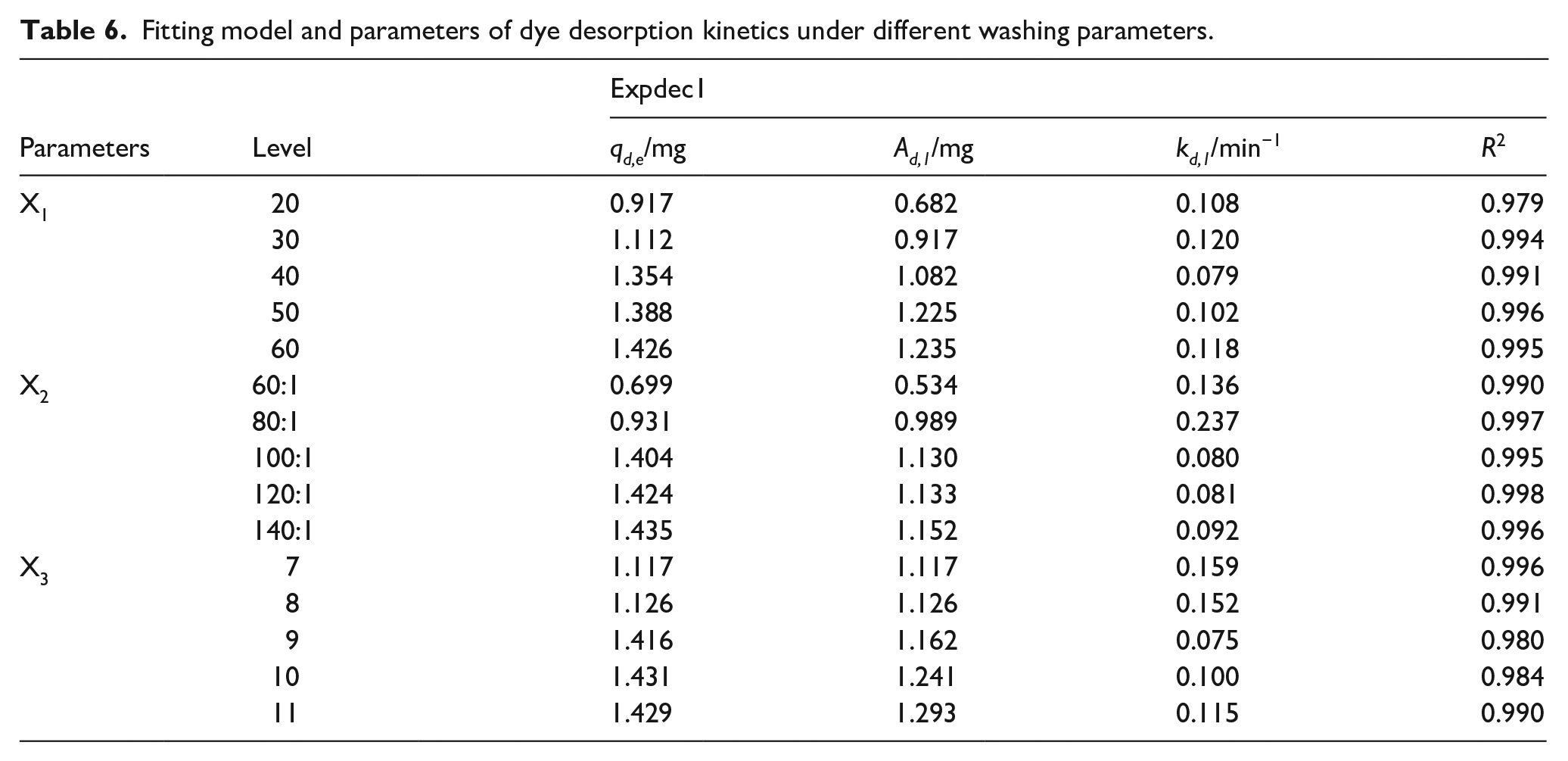
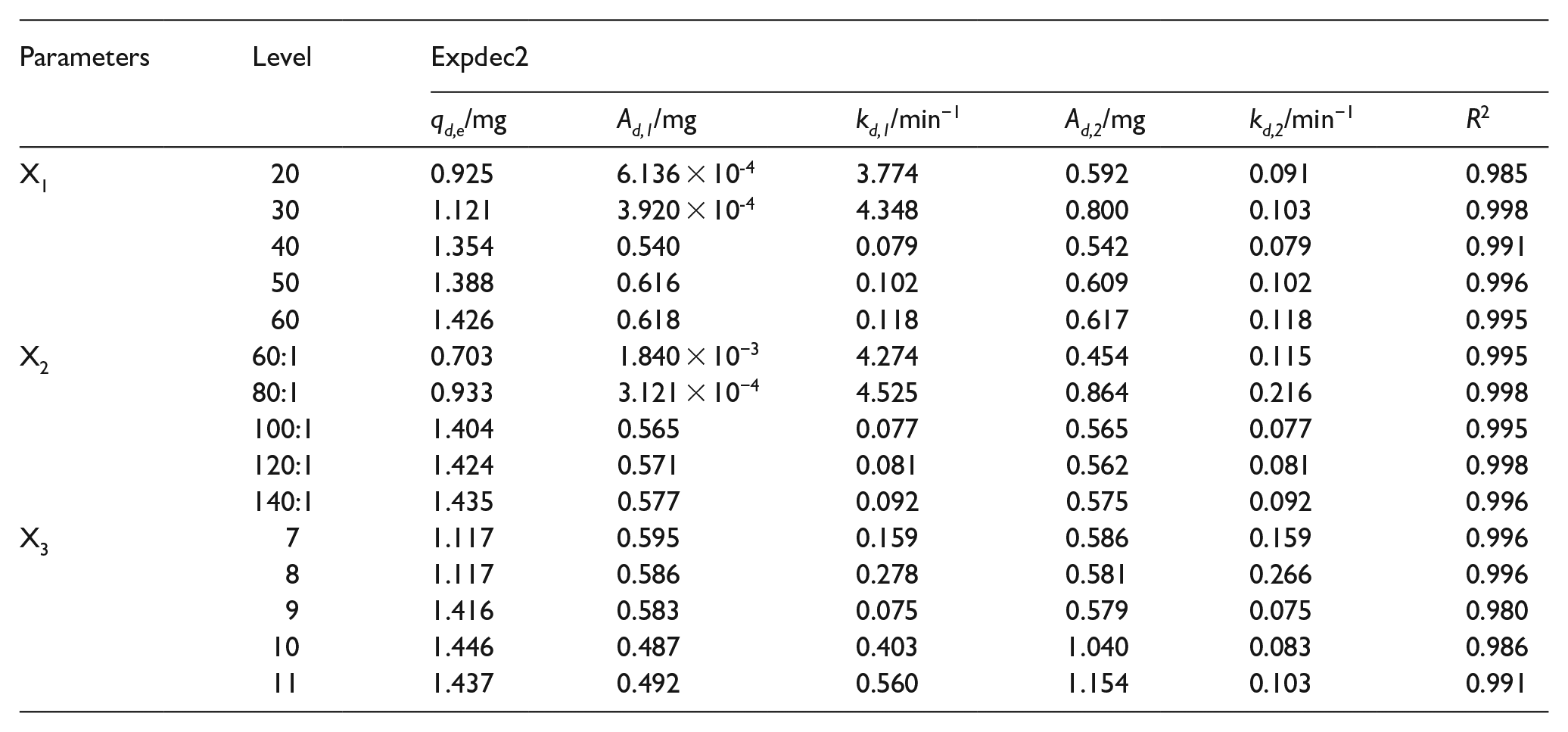
Figure 9(a) to (c) are respectively the curves of the quantity of dye desorption with the change of washing time. The experimental data are fitted by computer, and the fitting results show that the dye desorption curves under the three washing parameters can be fitted by a first-order exponential decay model (Expdec1). The model is modified according to the experimental parameter settings, and the modified first-order exponential decay model is shown in equation (3). To improve the fitting accuracy, the order of the exponential decay model is increased to the second order, which corresponds to the second-order exponential decay model (Expdec2), as shown in equation (4). 31 The kinetic fitting parameters of Expdec1 and Expdec2 are shown in Table 6.


Fitting model and parameters of dye desorption kinetics under different washing parameters.

Dye desorption kinetics curves at different washing parameters: (a) washing temperature, (b) washing liquor ratio, (c) washing solution pH. When one variable is studied, the other two variables are set to constants (i.e. washing temperature was 40°C, washing liquor ratio was 100:1, and washing solution pH was 9).
Where qd is the quantity of dye desorbed from the CFCSs at a washing time t, mg; qd, e is the quantity of dye in the washing solution at dye desorption equilibrium, mg; The pre-exponential amplitude terms Ad, 1 and Ad, 2 are the quantity of dye desorbed at different stages of the different orders of the exponential decay model, mg; kd, 1and kd, 2 are the desorption velocity constants at different stages of the exponential decay model of different orders, min-1.
In Table 6, the confidence level of Expdec2 is greater than 0.98, and the average confidence level is higher than Expdec1. According to the variation of the desorption rate constants kd,1 and kd,2 of the three groups of washing parameters, the desorption rate constant kd,2 (slow) of the dye is one to two orders of magnitude lower than that of kd,1 (fast) before desorption equilibrium. Therefore, the desorption of dyes from CFCSs is mainly divided into two stages, namely, the fast and slow stages before desorption equilibrium. Before 20 min, the desorption rate of the dye increased significantly with the increase of washing temperature, washing liquor ratio, and washing solution pH. For example, when the washing temperature increases from 20°C to 60°C, the desorption rate constants kd,1 and kd,2 of the dye before desorption equilibrium increase at first and then decrease and continue to increase because the higher temperature will increase the kinetic energy of dye diffusion and fiber expansion, and reach saturation after continuous desorption. The desorption rate increased slightly with time, which was related to the hydrolysis of the fixed dye. At the same time, the equilibrium adsorption capacity increased significantly with the increase in temperature. On the other hand, increasing the washing liquor ratio will increase the washing mechanical force, causing a much larger dye desorption rate. The washing solution pH will increase negative charges in the solution, charge repulsion, and the obvious desorption of dyes. However, with the extension of washing time, the desorption of dyes gradually reached equilibrium, so the desorption rate slowed down.
The differential calculation of dye desorption data at different washing times was carried out to explore further the dynamic process of dye desorption behavior in the washing process. The differential result was the dye desorption rate at the corresponding time.
Figure 10(a) to (c) respectively show the dye desorption velocity change curves. According to the dynamic process of desorption quantity (first fast and then slow), the change of desorption velocity should still follow the model. Therefore, the same model is selected to fit the computer data of dye desorption velocity at each washing time. According to the fitting results, the dye desorption velocity curves under the three washing parameters can also be fitted by Expdec1 (equation (5)). With the change in washing time, the dye desorption velocity decreases exponentially, which intuitively shows the dynamic process of dye desorption under different washing parameters. To improve the fitting accuracy of the model, the order of Expdec1 is increased to the second order, which corresponds to Expdec2 (equation (6)). The fitting parameters are shown in Table 7.
Fitting model and parameters of dye desorption velocity under different washing parameters.




Dye desorption velocity curves at different washing parameters. (a) Washing temperature. (b) Washing liquor ratio. (c) Washing solution pH. When one variable is studied, the other two variables are set to constants (i.e. washing temperature was 40°C, washing liquor ratio was 100:1, and washing solution pH was 9).
Where Vd is the desorption velocity of the dye on the CFCSs at the washing time t, mg/min; Vd, e is the desorption velocity of the dye at desorption equilibrium, mg/min; The pre-exponential amplitude terms L1, L2 are the desorption velocity of the dye at different stages of the exponential decay model of different orders, mg/min; C1, C2 are the dye desorption constants at different stages of the desorption velocity model, min-1.
According to the fitting parameters of the model, the fitting accuracy of the Expdec2 for the desorption velocity of dyes under different washing times is higher than that of the Expdec1, and the confidence level is greater than 0. 97. Therefore, the Expdec2 is more suitable for the dynamic fitting of the desorption velocity of dyes. In Table 7, according to the velocity constant change in Expdec2, it can be seen that C2 is lower than C1. This further reflects the dynamic change of the desorption process, which is fast at first and then slow. According to the desorption velocity curve in Figure 10 and the equilibrium desorption velocity Vd,e of the fitting model, it can be seen that under the combined effect of washing parameters, with the increase in washing time, the desorption velocity of dye will eventually reach an equilibrium state and will not change.
In Figure 10(a) and Table 7, the desorption velocity constant is the largest when the washing temperature is at 40℃, and the velocity is the largest when reaching desorption equilibrium. This is because when the washing temperature increases, the diffusion kinetic energy of the dye increases. 32 The dye dispersed on the fabric’s surface is desorbed first, and then the dye inside the pores is desorbed. The desorption quantity is saturated when the temperature increases, so the desorption velocity decreases.
In Figure 10(b), when the washing liquor ratio is 100:1, the dye desorption reaches the equilibrium fastest, but the time to get the desorption equilibrium is longer. When the washing liquor ratio is 80:1, the desorption velocity is the smallest before the desorption equilibrium is reached before 20 min. It is because the washing liquor ratio will increase the washing mechanical force. At the same time, the dye concentration difference inside and outside the fiber will be increased so that the dye desorption velocity will be accelerated. Therefore, the dye will continue to desorb with the continuous increase of the liquor ratio. Furthermore, that time for reaching desorption equilibrium is prolonged.
According to the fitting results, when the washing solution pH is 9, the desorption velocity constant of the dye is C1 = 0. 593, the desorption velocity of the dye is the fastest, and the duration before the desorption equilibrium is longer. The high washing solution pH will increase charge repulsion force, which is conducive to dye desorption, while the continuous increase of pH will lead to the earlier desorption equilibrium time. The time for the consistency of the concentration difference between the washing solution and the solution in the fiber pores is shortened, so the desorption velocity is slowed down. Therefore, according to the fitting results of the desorption velocity model, it can be further concluded that the process before the CFCSs reaches the dye desorption equilibrium under the three washing parameters can be divided into the fast desorption process and the slow desorption process.
Adsorption kinetics and velocity model
When CFSCs and LCFs are washed together, the dyes shed from the CFSCs are dissociated in the washing solution. Under the comprehensive action of washing parameters, the water molecules in the LCFs are exchanged with the dye molecules and adsorbed inside the LCFs under the action of concentration difference, resulting in the dye transfer phenomenon of the LCFs. Therefore, to reduce the dye transfer problem of mixed-washed fabrics, it is necessary to study the kinetics and velocity model of free dyes adsorbed on LCFs under the comprehensive action of washing parameters.
Figure 11 shows the curves of the quantity of dye adsorbed by LCFs with washing time. Modelings of the dye adsorption are shown in Table 8.33,34


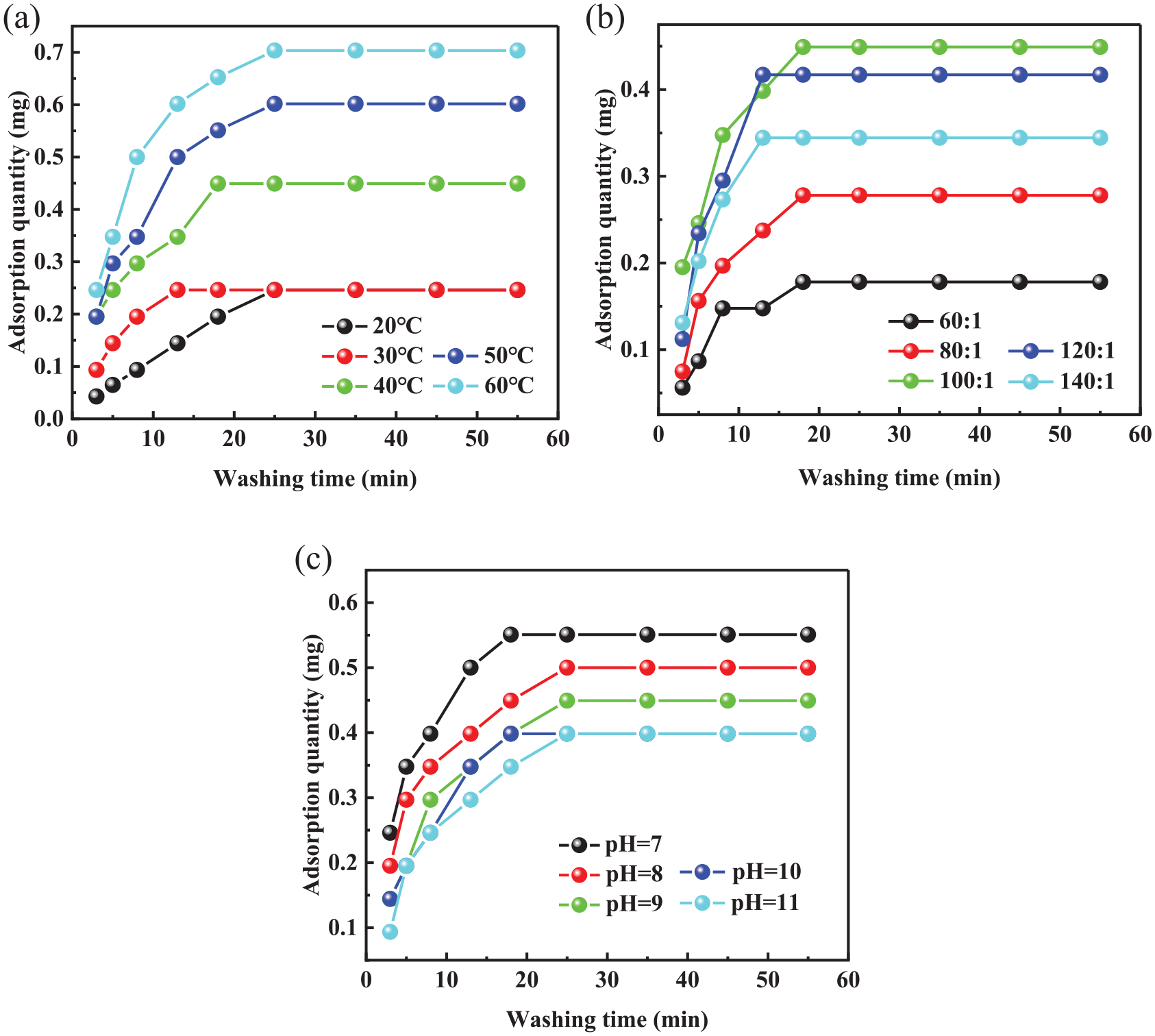
Dye adsorption kinetics curves at different washing parameters: (a) washing temperature, (b) washing liquor ratio, and(c) washing solution pH. When one variable is studied, the other two variables are set to constants (i.e. washing temperature was 40°C, washing liquor ratio was 100:1, and washing solution pH was 9).
Where qt is the quantity of dye adsorbed on the LCFs at a washing time of t, mg; qa, e is the equilibrium quantity of dye adsorbed on the LCFs, mg; ka, 1 and ka, 2 are the pseudo-first-order and pseudo-second-order adsorption velocity constants, respectively.
In Figure 11 and Table 8, the pseudo-first-order kinetic model has a high fitting accuracy for the change of dye adsorption, and the average confidence level of the three groups of washing parameters is greater than 0.95. Therefore, the pseudo-first-order kinetic model can better fit the dye adsorption data. According to the adsorption curves and the changes of adsorption rate constants ka, 1 under the pseudo-first-order kinetic model, the adsorption of dyes on LCFs can be divided into two main processes before desorption equilibrium, namely, the rapid adsorption stage and the slow adsorption stage.
Parameters of dye adsorption kinetic models under different washing conditions.
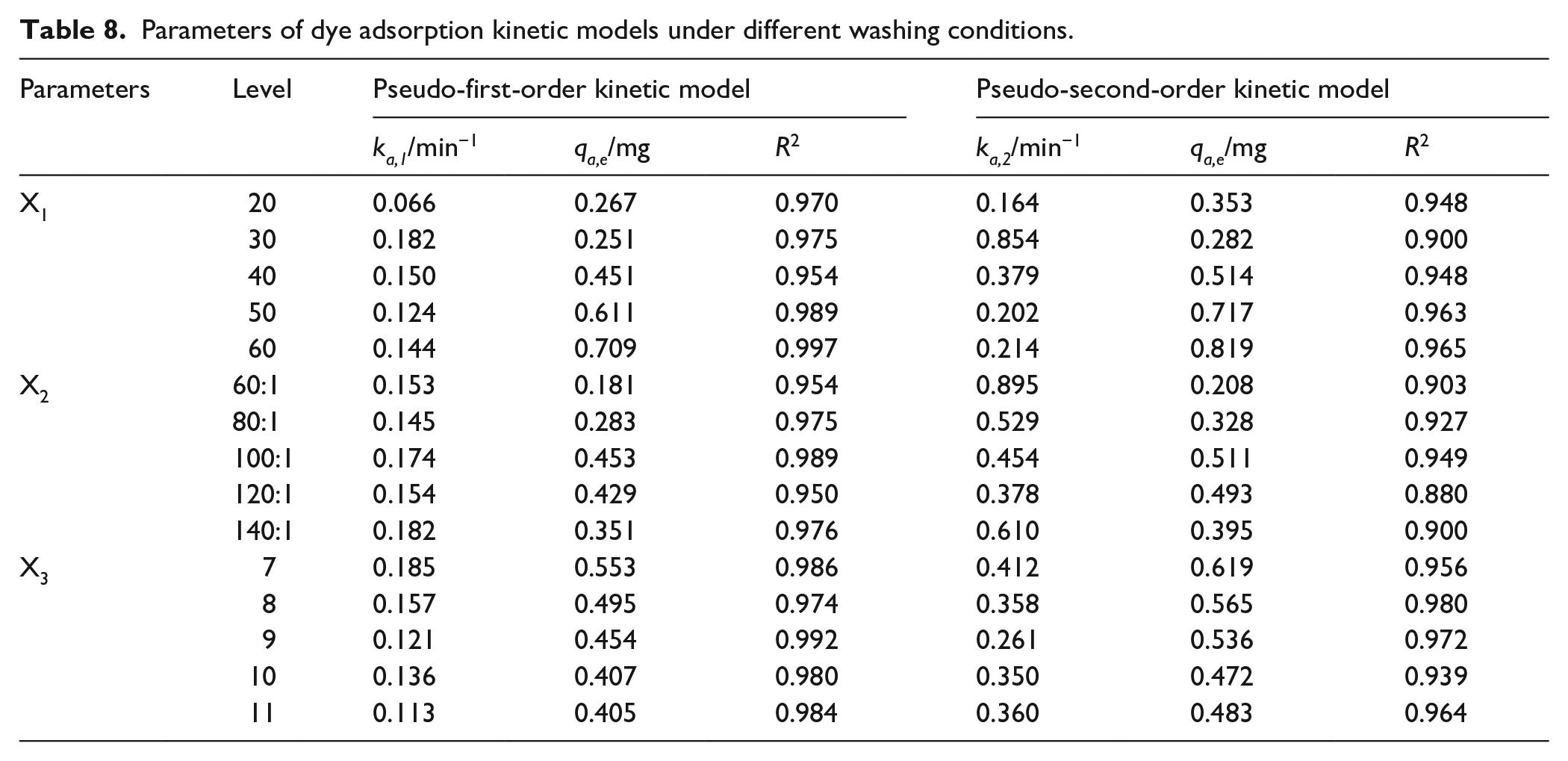
In Figure 11(a) and Table 8, with the increase of washing temperature, the time for the dye to reach adsorption equilibrium is prolonged, and the equilibrium adsorption quantity qa, e is increased. Before 10 min, with the increase of washing temperature, the adsorption velocity of the dye is significantly increased. After 10 min, the adsorption velocity is slowed down. This is similar to the dye desorption process. Under the influence of temperature, the kinetic energy of dye diffusion and fiber expansion increases, and the adsorption velocity of LCFs to dyes increases significantly in a short time. However, the velocity of dyes entering fiber pores is greatly affected by charge force and roller mechanical force.
In Figure 11(b) and Table 8, as the washing liquor ratio increases, the adsorption velocity of the dye first increases and then decreases. The equilibrium adsorption quantity qa,e first increases and then decreases. The increased washing liquor ratio will lead to increased washing water volume and the desorption of CFCSs. The adsorption velocity of LCFs to desorbed dyes will increase significantly in a short time under the action of concentration difference between inside and outside of fibers and charge force. However, the continuous increase of washing water will lead to the secondary desorption of dyes adsorbed on LCFs, which will reduce the equilibrium adsorption of dyes. At the same time, the increase of water quantity will lead to the decrease of dye concentration in the washing solution, the decrease of dye adsorption kinetic energy, and the decrease of adsorption velocity.
In Figure 11(c) and Table 8, as the washing solution pH increases, the adsorption velocity of the dye gradually decreases, and the equilibrium adsorption quantity also gradually decreases. This further shows that the charge force has a certain repulsion effect on the dye. With the increase of pH, the negative charge in the washing solution increases, while the surface of cellulose fiber is covered with a negative charge. Reactive red 195 is an anionic dye, so the dye’s adsorption capacity and velocity decrease gradually with the increase of pH.
To further explore the dynamic process of dye adsorption on LCFs, the dye adsorption data at different washing times were calculated by differential calculation. The differential results were the dye adsorption velocity at the corresponding time.
Figure 12 shows the dye adsorption velocity change curves under the action of different washing temperatures, washing liquor ratios, and washing solution pH. Through computer fitting, the adsorption velocity curves of LCFs to free dyes in the washing solution under three washing parameters can be fitted by an Expdec1 (equation (9)) and an Expdec2 (equation (10)). The fitting parameters are shown in Table 9.
Model of dye adsorption velocity under different washing parameters.


Dye adsorption velocity curves at different washing parameters: (a) washing temperature, (b) washing liquor ratio, (c) washing solution pH. When one variable is studied, the other two variables are set to constants (i.e. washing temperature was 40°C, washing liquor ratio was 100:1, and washing solution pH was 9).
Where Va is the dye adsorption velocity of the LCFs at the washing time t, mg/min; Va, e is the dye adsorption velocity at the adsorption equilibrium, mg/min; The pre-exponential amplitude terms La, 1, La, 2 are the dye adsorption velocity at different stages of the exponential decay model of different orders, mg/min; Ca, 1 and Ca, 2 are the dye adsorption rate constants at different stages of the adsorption rate model, min-1.
According to the adsorption velocity curve and model fitting parameters, the fitting accuracy of Expdec1 for dye adsorption velocity was higher than that of Expdec2, and the confidence level was greater than 0. 92. Therefore, by comparison, and screening, the Expdec1 is more suitable for the dynamic fitting of the change of dye adsorption velocity.
In Figure 12 and Table 9, the adsorption velocity of dyes on LCFs will gradually reach equilibrium and will not change as the washing time continues. In Figure 12(a), as the washing temperature increases, within the same washing time, the dye adsorption velocity at 60°C is the highest, the pre-exponential amplitude term La,1 is the largest, and the time to reach adsorption equilibrium is the longest. This is because the increase of washing temperature will lead to the expansion of fibers, the increase of fiber pore diameter, and the acceleration of dye entering the fiber interior. At the same time, the increase of temperature will lead to a continuous increase of dye desorption on CFCSs.
In Figure 12(b), as the washing liquor ratio increases, the dye adsorption velocity first increases and then decreases. When the washing time is less than 15 min, the dye adsorption velocity is the highest at the washing liquor ratio of 120:1. When the washing time is more than 15 min, the dye adsorption velocity is the highest at the washing liquor ratio of 100:1. This is because with the increase of the liquor ratio, the mechanical force of the drum increases. The kinetic energy of free dye diffusion in the washing solution increases. Still, the increase of the liquor ratio will also lead to a decrease of dye concentration, slow down the diffusion in the fabric, and weaken the adsorption velocity.
In Figure 12(c), the dye adsorption velocity tends to slow down with the increase of washing time and pH, and the time to reach the adsorption velocity equilibrium increases. Therefore, increasing washing solution pH is not conducive to the adsorption of reactive dyes on fabrics. According to the fitting results of the adsorption velocity model, it can be further concluded that the adsorption process of LCFs to dyes before adsorption equilibrium under three washing parameters can be divided into fast adsorption process and slow adsorption process.
Test of velocity model universality through actual experiments
To verify the applicability of the desorption kinetics model and desorption velocity model of dyes on CFCSs and the adsorption kinetics model and adsorption velocity model of dyes on LCFs in the actual drum washing environment, a group of washing parameters (washing temperature 40℃, washing liquor ratio 100:1, washing solution pH = 9) were selected to carry out the verification experiment in the actual washing environment. The results of applicability verification of the dye desorption kinetic model and adsorption kinetic model are shown in Figure 13 and Table 10.
Dye desorption and adsorption kinetic fitting models and parameters of simulated washing device (SWD) and drum washing machine (DWM).


Dye desorption quantity curves and fitting curves at different washing parameters in a drum washing machine (DWM) When one variable is studied, the other two variables are set to constants (i.e. washing temperature was 40°C, washing liquor ratio was 100:1, and washing solution pH was 9).
According to the applicability verification of the desorption and adsorption kinetics models, Expdec2 has a higher fitting accuracy for the desorption curve of dyes on CFCSs in the DWM. The confidence level is greater than 0.99. The pseudo-first-order kinetic model has a higher fitting accuracy for the dye adsorption curve in the mixed washing system of CFCSs and LCFs. The confidence level is greater than 0.98. Therefore, the kinetics model of dye desorption and adsorption obtained from the SWD can effectively describe the dynamic process of the quantity of dye desorption on CFCSs and the quantity of dye adsorption on LCFs in the real washing environment.
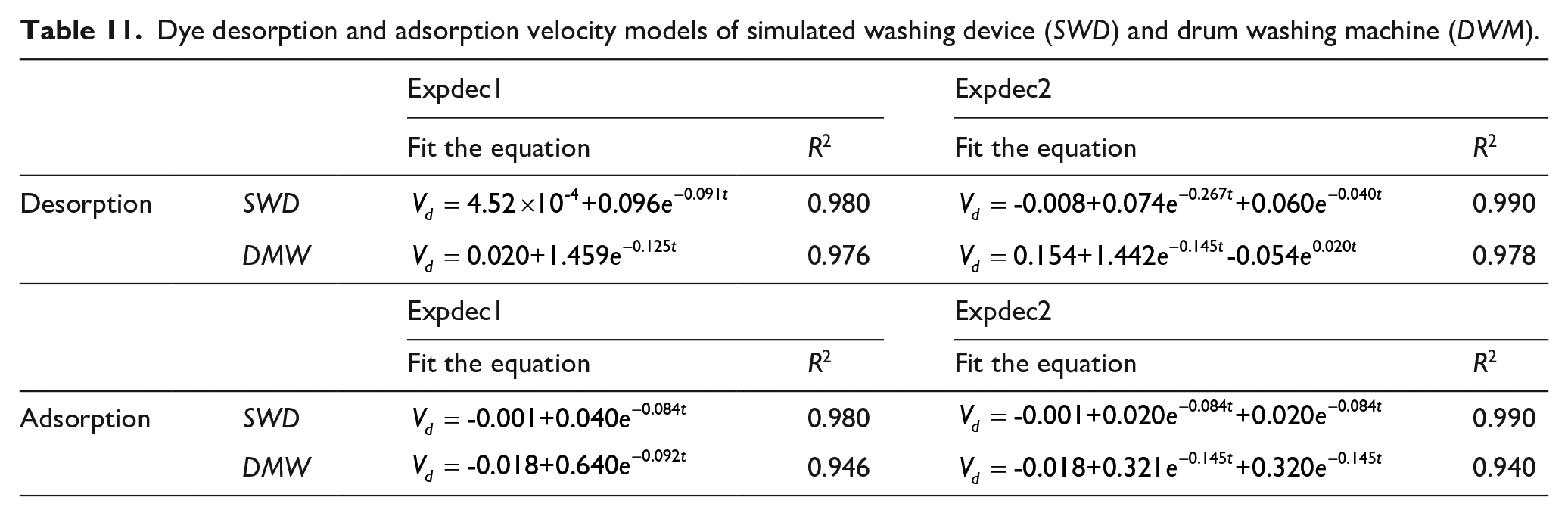
To further explore the dynamic process of dye desorption and adsorption velocity under the real washing environment and verify the applicability of the dye desorption and adsorption velocity model under the SWD, the differential calculation was carried out on the dye desorption and absorption data under different washing times. The differential results were the dye desorption velocity and absorption velocity under the corresponding time. Figure 14(a) and (b) are the curves of dye desorption and adsorption velocity change under the action of washing temperature, washing liquor ratio, and washing solution pH in the DWM. The adsorption velocity curves of desorbed dye in the washing solution by LCFs under different washing parameters can be fitted by Expdec1 and Expdec2. The fitting parameters are shown in Table 11.
Dye desorption and adsorption velocity models of simulated washing device (SWD) and drum washing machine (DWM).

Dye desorption velocity and adsorption velocity curves and fitting curves at different washing parameters in adrum washing machine (DWM).(a) Dye desorption velocity curves and fitting curves. (b) Dye adsorption velocity curves and fitting curves. When one variable is studied, the other two variables are set to constants (i.e. washing temperature was 40°C, washing liqu or ratio was 100:1, and washing solution pH was 9).
According to the results of the applicability verification of the desorption and adsorption velocity model, the Expdec2 decay model has a higher fitting accuracy for the desorption velocity curve of dyes on CFCSs in the DWM. The confidence level is greater than 0. 97. The Expdec1 decay model has a higher fitting accuracy for the dye adsorption velocity curve in the mixed washing system of CFCSs and LCFs. The confidence level is greater than 0.98. Therefore, the Expdec2 and the Expdec1 can better describe the change process of dye’s desorption velocity and adsorption velocity in the DWM, respectively. At the same time, according to the dynamic fitting results, the dye desorption and adsorption processes can be divided into fast and slow processes in the real washing environment. Therefore, the effective prevention and control of fabric fading and dye transfer can be realized from the perspective of washing parameter optimization, and the effective prediction of dye shedding and transfer process under certain washing conditions can be achieved.
Conclusions
The effects of washing temperature, washing liquor ratio, and washing solution pH on dyes’ desorption and adsorption rates were studied by single factor experiments and response surface analysis. The maximum desorption rate (95.45%) and adsorption rate (53.59%) were obtained at the washing temperature of 60°C. The maximum desorption rate (96.45%) and adsorption rate (36.87%) were obtained at the washing liquor ratio of 140:1 and 100:1, respectively. The increased washing solution pH would promote desorption and inhibit the adsorption process. The maximum desorption rate (102.23%) and adsorption rate (50.27%) were obtained at pH = 14 and pH = 7, respectively. Response surface analysis showed that washing temperature, washing liquor ratio, washing solution pH, and their interaction significantly affected the dye’s desorption and adsorption process.
Under different washing parameters, the curves of the quantity of desorption and adsorption of dyes with the change of washing time were drawn, and the kinetic model of the curves was fitted. The fitting results showed that the desorption curve of the dye followed the second-order exponential decay model (Expdec2) (R2 > 0.98), and the adsorption kinetics curve followed the pseudo-first-order kinetic model (R2 > 0.95). The dynamic changes of desorption velocity and adsorption velocity can be effectively fitted by Expdec2 (R2 > 0.97) and the first-order exponential decay model (Expdec1) (R2 > 0.92), respectively. Through curve fitting of the desorption and adsorption velocity, it was found that the desorption process of dyes from cotton fabrics dyed in highly saturated color (CFSCs) was very similar to the adsorption process of dyes from light color cotton fabrics (LCFs), which could be divided into fast stage and slow stage. With the increased washing time, the desorption and adsorption behavior gradually tended to equilibrium and did not change. At the same time, through the validation in the drum washing machine, it is found that the model’s applicability is good, and it can effectively characterize the desorption and adsorption behavior of dyes in the washing system. This study will establish a certain database for designing a scientific washing program and optimizing washing parameters to solve the problems of fading and dye transfer.
Footnotes
Authors’ contributions
X Z is responsible for the conception of the whole study, the design and implementation of the experiment, the collection and analysis of data, and the drafting of the first draft, L J is responsible for the planning of the paper, QBY are responsible for coordinating the research tasks and data analysis, BXW and JLL are responsible for data analysis and the revision of the first draft. All authors read and approved the final manuscript.
Declaration of conflicting interests
The author(s) declared no potential conflicts of interest with respect to the research, authorship, and/or publication of this article.
Funding
The author(s) disclosed receipt of the following financial support for the research, authorship, and/or publication of this article: This research was funded by the Industry-University-Research Project of Jiangnan University (191186).
