




Abstract
In visual inspection, the impact of different human factors on inspection performance has been evaluated in past. However, there is a need to study the effect of relevant factors and their interrelation in a single framework to monitor and improve inspection performance. This study aims to identify and evaluate such human factors for proposing a framework that indicates their interrelationship. After reviewing the literature, five constructs with their respective observed variables are selected to propose the framework. The survey instrument is developed using the suggested framework to collect data from industry professionals where human labor perform the inspection for products such as textiles. Finally, data are collected through an online survey and analyzed using confirmatory factor analysis to test the hypotheses. The results verify that the selected constructs are good measures of inspection skill, however, some variables are excluded from the model for being insignificant. Results show that the factors related to the constructs – personal, physical/mental, and organizational – are found more influencing than system and inspection-task factors. This study identifies and models the inspection-related significant factors into a framework that will help monitor and improve the performance of an individual or whole inspection station.
Keywords
Introduction
The current trend toward automation in the manufacturing and service industries is altering the nature of work. Plenty of work has been done in manufacturing industries to transform conventional/labor-dependent methods into advanced/automatic techniques.1,2 However, product quality and system reliability are still heavily influenced by humans. 3 Unlike task-specific and inflexible automatic systems, human labor is adaptable and capable of making quick decisions, 4 which is important in many manufacturing industries, such as leather goods, textile and garment, and sports items. 5 Most of the sectors of textile are shifting from conventional systems to automatic and advance system using latest techniques.6,7 Yet the importance of human labor is still alive as they play a vital role in some of the manufacturing processes like visual inspection. In a manufacturing context, human labor’s capacity to perform a certain job improves over time, which is measured in terms of skill. Human labor skill is necessary to attain high efficiency in various processes. Using Confirmatory Factor Analysis (CFA)We seek to identify and analyze the factors that influence human inspector skills.
At this time, the effective application of Quality Management Practices (QMP) not only improves employees’ performance and job satisfaction but also decreases their workload and work stress. 8 According to recent studies, quality, along with features like innovation and efficiency, is a significant criterion in evaluating product performance. 9 An important part of quality control activities, which decide whether a product is confirming or non-confirming, is inspection. Visual inspection by human labor mainly depends on the inspector’s searching and decision- making abilities. Thus, the success or failure of an inspection process, which can affect an organization’s prosperity, depends mainly on human inspection performance. Our focus in this research is to improve human inspection performance by highlighting the contribution of different influential factors through statistical techniques. Therefore, we propose the following research questions:
What are the factors that affect the performance of a quality inspector and how they are related?
How can those factors be measured statistically?
Literature review
Harris 10 presented a framework for understanding and improving industrial inspection performance in his ground-breaking work on the nature of the industrial inspection. Building on that framework, many researchers have evaluated factors that affect the performance of visual inspection.11 –15 Inspection performance can be maximized by focusing on visual search, decision-making ability, inspection strategy, etc. in online and offline trainings. 16
Organizational factors, like the organization’s overall behavior and support, act positively to increase the employee’s engagement toward work that ultimately improves performance. 17 Workplace training, methodologies, processes, policies, and social aspects are all covered. Tools, work aids, equipment, and the organization of the workplace are all physical components that help the inspection process. Interest, attitude, knowledge, and competence are all individual factors.16,18 Improvement in performance is dependent on learning behavior, which varies systematically for persons of various ages, genders, educational levels, and cultural backgrounds. 13 To identify disparities in inspection performance, researchers looked at the impact of gender and age on visual inspection, but no significant difference in accuracy for gender or age was found.13,19,20
Individual experience is another major aspect that influences inspection performance. Chan and Chiu 14 investigated the visual lobe shape and its impact on inspection performance with both experienced and inexperienced inspectors. They found no relationship between lobe shape and inspection performance. Lin et al. 12 studied visual fatigue problems to improve the inspection performance of a scanning electron microscope station.
The primary aim of training is to improve the skill of human inspectors in terms of visual searching and decision making by helping them to develop better inspection strategies. Companies attempt to improve the performance of their employees based on quality management practices like training, teamwork, and employee motivation, to increase organizational commitment and job satisfaction of employees. 21 When the quality of human inspection must be improved, training is considered the primary intervention strategy.22,23 The aim of training is to enable human labor to search for defects more efficiently and effectively. 15 Czaja and Drury 20 were the first to highlight training as a neglected area in the improvement of inspection performance. Since then, Different forms of visual inspection training methods have been developed, and their impacts on inspection performance have been assessed by researchers.15,24,25
Human inspectors’ performance is influenced by the nature of the work and the complexity of the activity, in addition to organizational and individual considerations. Gallwey and Drury 26 conducted a ground-breaking study on task difficulty in visual inspection. They investigated three types of inspection complexity based on distinct fault types and found that complexity reduces inspection performance, which has a substantial impact on search mistakes, fault size misjudgments, and decision errors. Pesante et al. 27 studied the effect of multitasking on inspection performance in an advanced manufacturing setup using a hybrid system in which inspectors performed a single task, three tasks, or five tasks. Multiple defect types along with multitasking negatively affected performance. Master et al. 28 achieved similar results when working on human trust over time in a hybrid system.
To reduce the task complexity, it is essential to understand the influence of related factors and takes corrective action. 29 Results showed that defect complexity had a negative influence and defect probability had a positive influence on response factors.28,29 Tetteh et al. 15 looked at how search technique, task difficulty, and tempo affected inspection performance. They discovered that using a systematic search technique improved performance and reduced inspection time. They did discover, however, that task complexity played a role: The inspectors were faster and more accurate the easier the job was. Watanapa et al., 30 when exploring the effect of defect complexity on inspection performance, found similar results. They proposed that inspectors be trained depending on the complexities of various products to improve performance and save training expenses. In this study, we have also considered factors related to the inspection task and analyzed their effects on visual inspection performance.
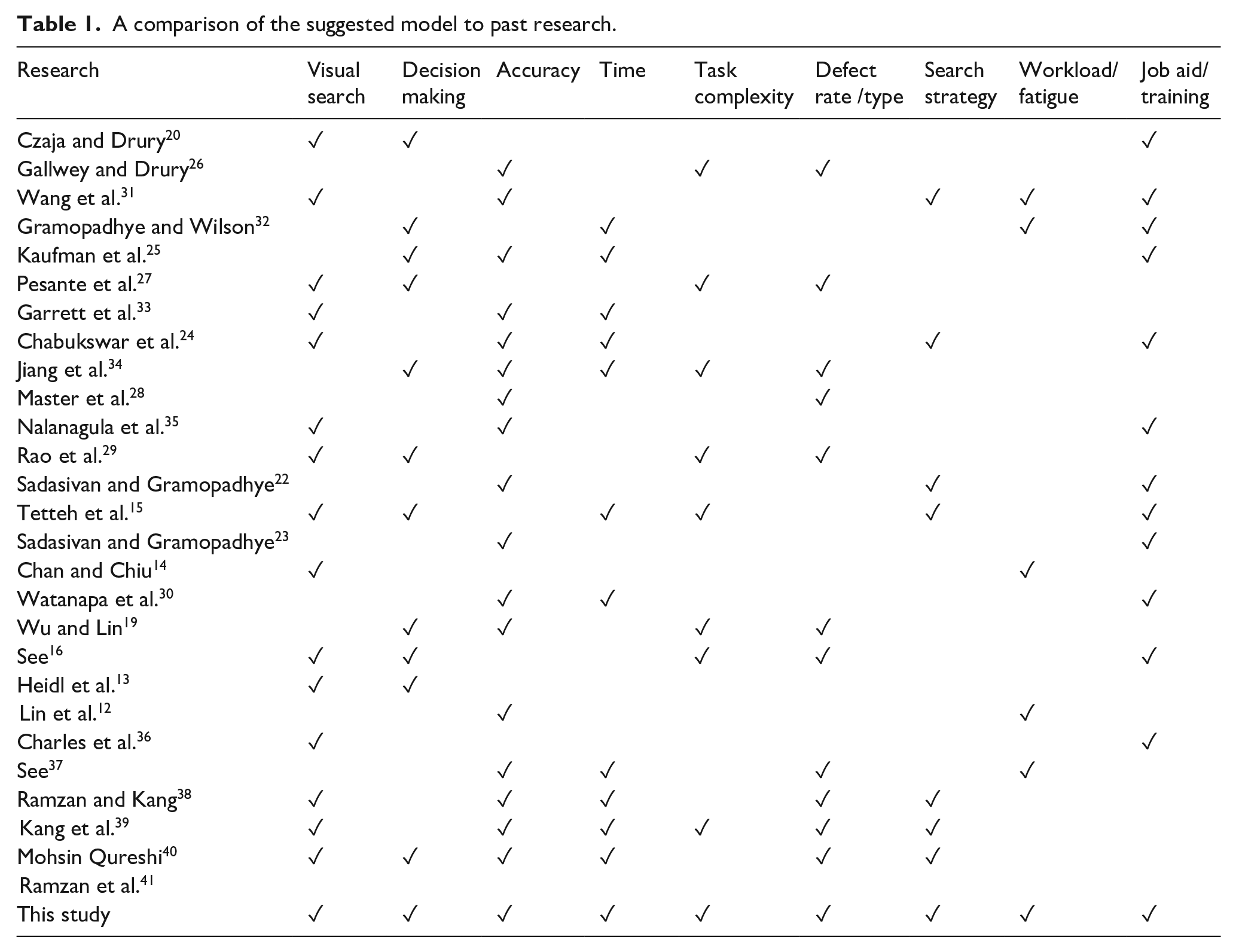
Table 1 shows the range of visual inspection studies published over the last 15 years, along with some pioneering research. This highlights the importance of the field under study and the growing interest of researchers in further exploring the different aspects that could improve inspection performance. The table classifies the literature into performance measures of inspection and prominent factors for visual inspection. Inspection performance is judged using visual search, decision-making, accuracy, and inspection duration as performance measures. Task complexity, defect rate, defect type, search method, workload, stress, weariness, job aid, and training, on the other hand, are important considerations. It is evident that researchers have taken great interest in evaluating the effects of different factors on inspection performance. However, there is a need to formulate a single and comprehensive framework of all the factors visual inspection to measure their interrelatedness that will further help the organization to improve the overall performance of visual inspection. This study identifies the inspection-related human factors and model them into a framework that will provide the basis to monitor and improve the inspection performance of individual inspector or entire inspection stations.
A comparison of the suggested model to past research.
Research methodology
Research plan
The goal of this research is to determine the effects of various factors on Human Inspection Skill (HIS) and the linkages between them. For this, we chose the Pakistani textile industry’s value-added sector, notably the garment manufacturing sector, which employs human inspectors. The approach utilized by Hussain et al. 42 was applied to attain the research purpose. CFA, a technique for verifying the factor structure of a set of observed variables, 43 was used for data analysis. The study plan is depicted in Figure 1.

Research plan to conduct CFA. 42
Conceptual framework
Based on the literature review, five latent variables or constructs were selected with multidimensional interaction. We observed these constructs to be responsible for the inspection performance of human labor in visual inspections. The theoretical model is developed using the selected latent variables as shown in Figure 2 that also depicts their unidirectional relationships.

Conceptual framework for HIS.
Constructs and corresponding observed variables
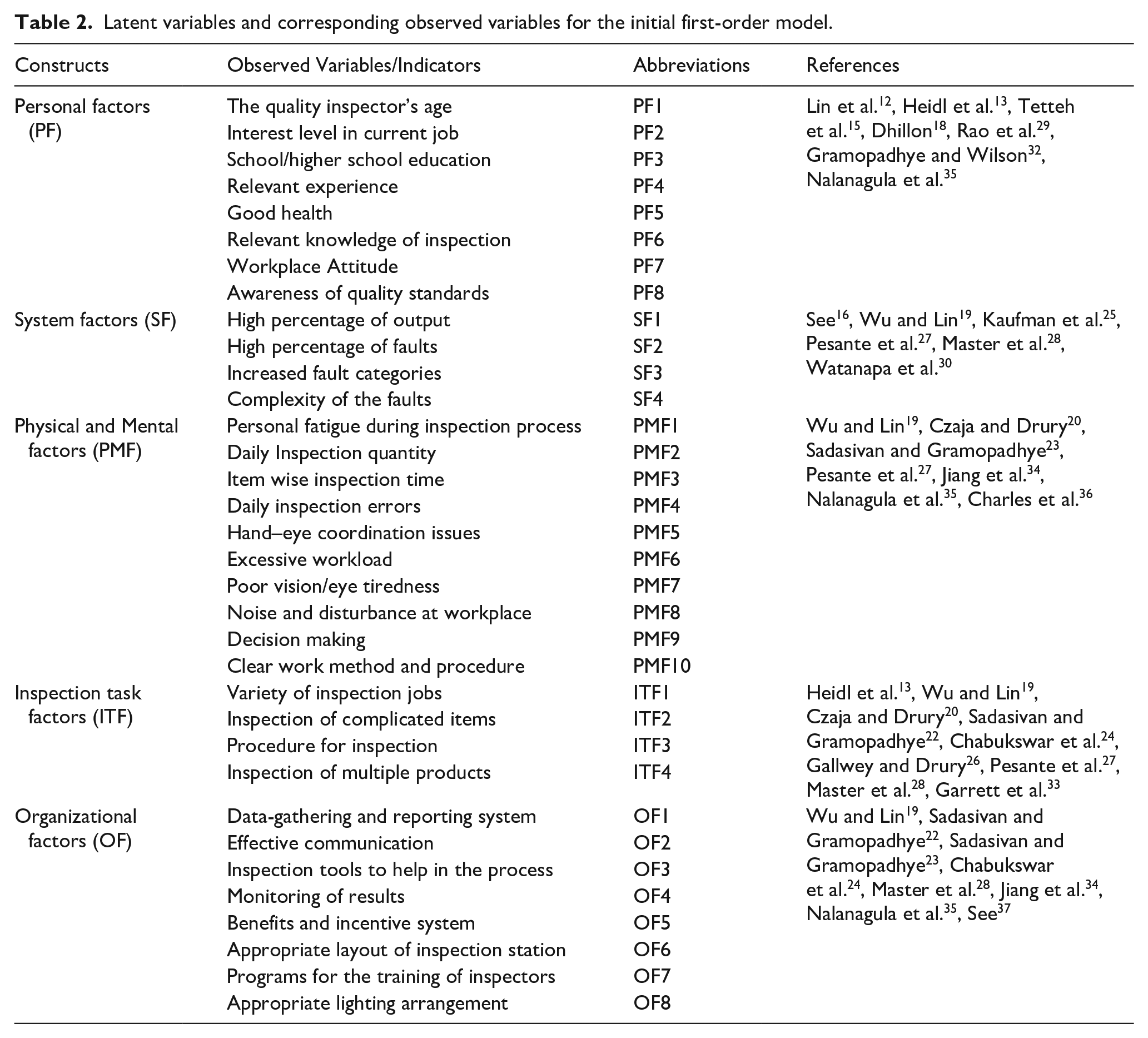
To measure the identified constructs, we extracted the observed variables from literature for each construct. The details are summarized in Table 2.
Latent variables and corresponding observed variables for the initial first-order model.
Observed variables for personal factors
Several investigations22,24,30,31,35 –37 indicate the importance of personal or individual factors that influence the performance of HIS: age, education, experience, health, interest, attitude toward work, and awareness of quality standards.
Observed variables for system factors
Many researchers have studied system factors that affect the performance of human inspection.16,18,19,28,29,34 These factors are: fault percentage, number of defect types, increase of quantity, and fault complexity.
Observed variables for physical and mental factors
Physical/mental factors include those factors that can affect human inspection performance while performing the inspection task. Such factors have been studied in past.12,14,16,18,25,32,37 Personal fatigue, eye fatigue, inspection quantity, inspection time, inspection errors, poor hand or eye coordination, eyesight, noise and disturbance, and excessive workload are the core elements for the physical/mental factors.
Observed variables for inspection task factors
Many researchers have focused on the effects of task complexity on inspection performance.13 –16,18,19,25,27,31 These factors are the number of tasks to be performed, item complexity, inspection of multiple products, and inspection procedure or search strategy.
Observed variables for organizational factors
Organizational factors are a source of motivation in human labor along with competitive climate and communication in the company. 44 For visual inspection, researchers have evaluated these factors to improve HIS12,14,15,19,20,27,29,36: incentive systems, training programs, work aids or job aids, well-defined work methods/procedures, workstation layout, proper communication system, and lighting arrangements for workstations.
Defining the hypotheses
The mode in which the constructs are related is shown in Figure 2. In the statistical analysis, aim is to confirm that all the observed variables for each construct can indeed be used as significant indicators for HIS. Therefore, we formulated the following hypotheses:
Hypothesis No. 1 (H1): All the observed variables of “personal factors” have a significant effect on the skill of a human inspector.
Hypothesis No. 2 (H2): All the observed variables of “system factors” have a considerable impact on the skill of a human inspector.
Hypothesis No. 3 (H3): All the observed variables of “physical or mental factors” have a considerable impact on HIS.
Hypothesis No. 4 (H4): All the observed variables of “inspection task complexity” have a considerable impact on HIS.
Hypothesis No. 5 (H5): All the observed variables of “organizational factors” have a considerable impact on HIS.
Methodology
The initial model is shown in Figure 3. It contains all the constructs and their respective observed variables. For this study, Confirmatory Factor Analysis (CFA) is used which is a type of factor analysis and multivariate statistical procedure. Factor analysis is a statistical technique for identifying a small number of unobserved variables that can explain the covariance between a greater number of observed variables. 45 The CFA method is used to see if the measured variables accurately indicate the number of constructs. CFA’s main benefit is that it allows academics to evaluate conceptually known theories. When CFA findings are paired with construct validity testing, a greater understanding of measure quality emerges.46,47
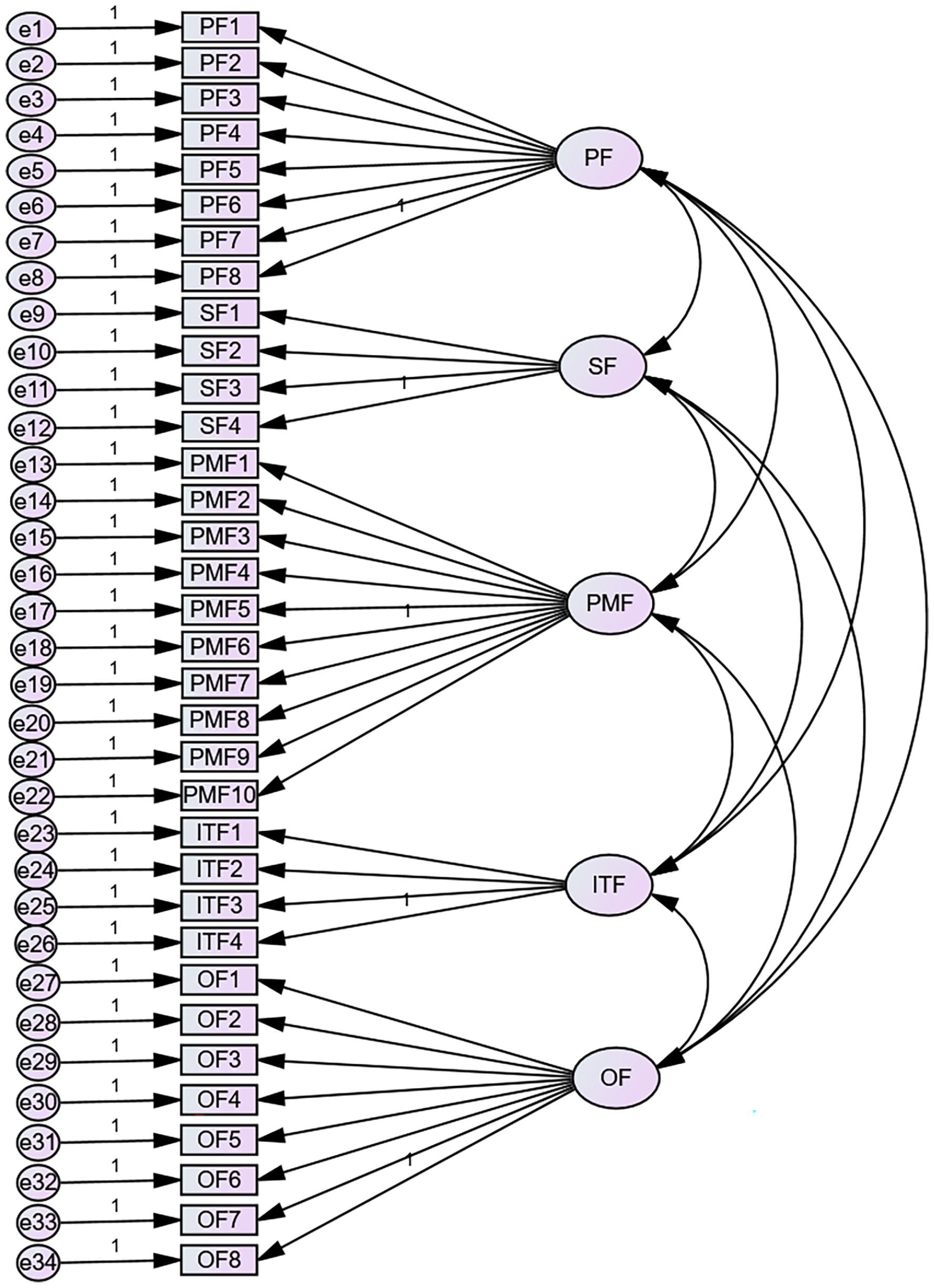
Initial first-order model for inspection skill.
For the CFA, a systematic questionnaire was used to collect data. Thereafter, the proposed model was analyzed and refined. This section describes the survey instrument, data collection method, sampling procedure, model specification, model refinement process, and finally the proposed model.
Survey instrument
For data collection, a survey instrument was designed following the guidelines set by Dillman. 48 The two main portions of the questionnaire were based on the conceptual and theoretical framework (Figure 2). The first section was used to collect demographic information from respondents, while the second section had five sub-sections for each concept. Following the observed factors indicated in Table 2, each sub-section had succinct and to-the-point questions addressing one topic at a time. Keeping the necessity for construct reliability and fair classification of observable variables in mind, we used two subjective methods: content validity by brainstorming and reliability testing by the Cronbach’s alpha test. Five managers/experts from different sectors of textile industry were asked to refine the survey instrument for better understanding by the respondents for ensuring content validity. For reliability, Cronbach’s alpha was computed later in our procedures. On a five-point Likert scale, respondents were asked to indicate how much they thought each observed variable affected inspection performance.
Data collection
After refining the survey tool, an online survey link was sent to 250 respondents by e-mail. Electronic surveys improve information quality, enable a faster response cycle, and lower research expenditures.49,50 We contacted company officials and explained the purpose of our study before distributing the survey link to achieve a decent response rate. The respondents were randomly selected, and all belonged to the Pakistani textile industry viz. knitwear, woven, denim, and home textiles. The inspection process for finished or semi-finished products in all sectors is performed by human labor. A total of 140 responses were received while 10 were excluded due to incomplete data. The remaining 130 responses, with a response rate of 52.0%, were finally analyzed.
The demographics are summarized in Table 3. Most of the respondents directly monitored or were responsible for the inspection process in their respective industries. They could understand the questions well and responded accordingly. Thus, we conducted our survey in an industry relevant to our study objective.
Respondents’ demographics.

Reliability test
The reliability of a measurement refers to how consistent it is. 42 Cronbach’s reliability coefficient is commonly used to assess a scale’s dependability. Cronbach’s alpha coefficients of 0.70 or higher suggest high-scale reliability. 51 Table 4 depicts the results after applying Cronbach’s α test. The Cronbach’s coefficient for the five HIS constructs ranges from 0.734 to 0.936, indicating that the theoretical constructs are highly reliable and consistent enough for study.
Results of reliability test.

Model specification and refinement
We analyzed the initial first-order model shown in Figure 3 with CFA using SPSS-AMOS 22. The initial model contained five constructs and 34 variables (Table 2). Our objective in conducting the CFA was to confirm the significance of the observed variables with respect to their respective latent variables. To examine the correlations between variables in the model, we used a Pearson product–moment coefficient of correlation analysis. We removed variables with negligible relationships with other variables within a latent variable at a 95% confidence interval.52,53 The recommended goodness-of-fit (GOF) cut-off values were attained after several iterations. Table 5 compares our initial and final models using recommended GOF values.
Comparison of GOF measures for initial and final models.
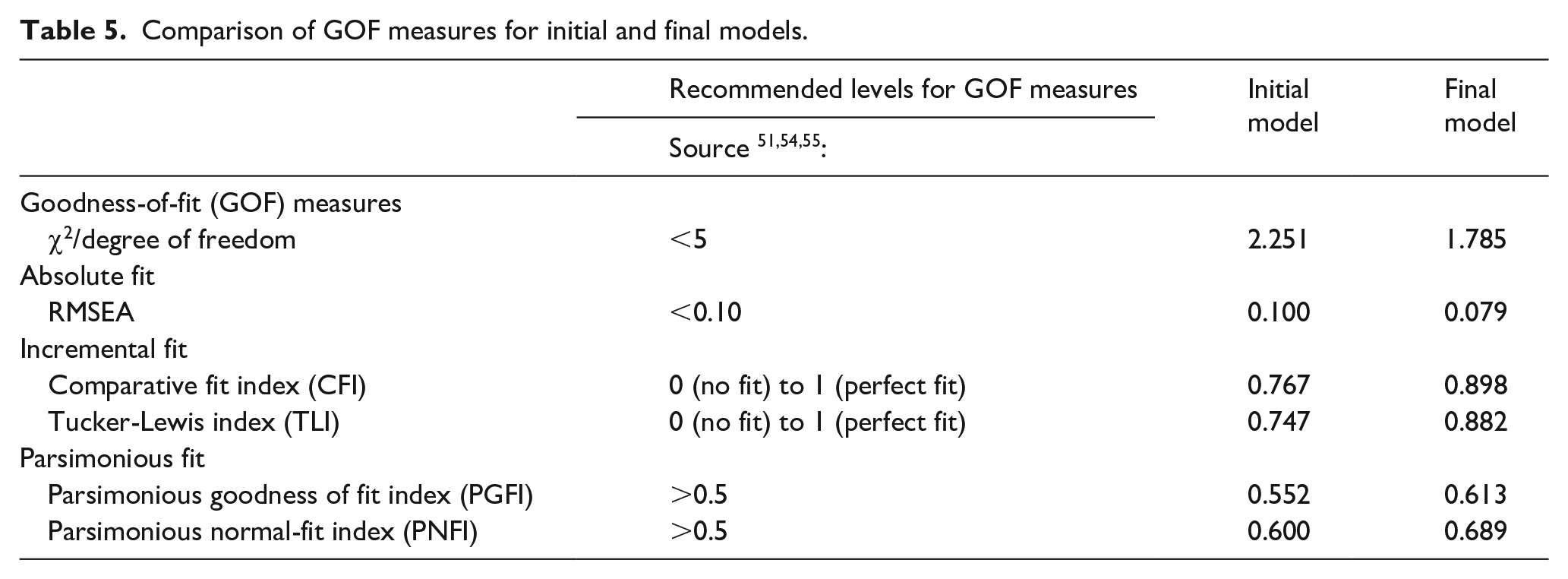
It is evident from the GOF measures that our final model for HIS is appropriately supported for given data. The GOF indices are within the prescribed limits. To validate the relationships between the constructs, we used Pearson Correlation analysis (Table 6).
Results of constructs correlation.

Correlation is significant at the following levels: *0.01, **0.05, ***0.001, and ainsignificant.
Final proposed model and discussion
Figure 4 presents the final proposed model. The path coefficients connecting each construct with its observed variables represent the factor loadings. Results show that the observed variables significantly affect HIS and provide a good measure of their respective constructs. We kept the threshold value for the factors loadings at 0.50 for this study 46 and removed seven insignificant observed variables. Thus, as the values of all the standard regression weights range from 0.52 to 0.90, a strong relationship exists between the constructs and their respective observed variables. The results of the final model are described in two parts: first based on the factors loadings of the observed variables for each latent construct; and second based on the correlation between the constructs.
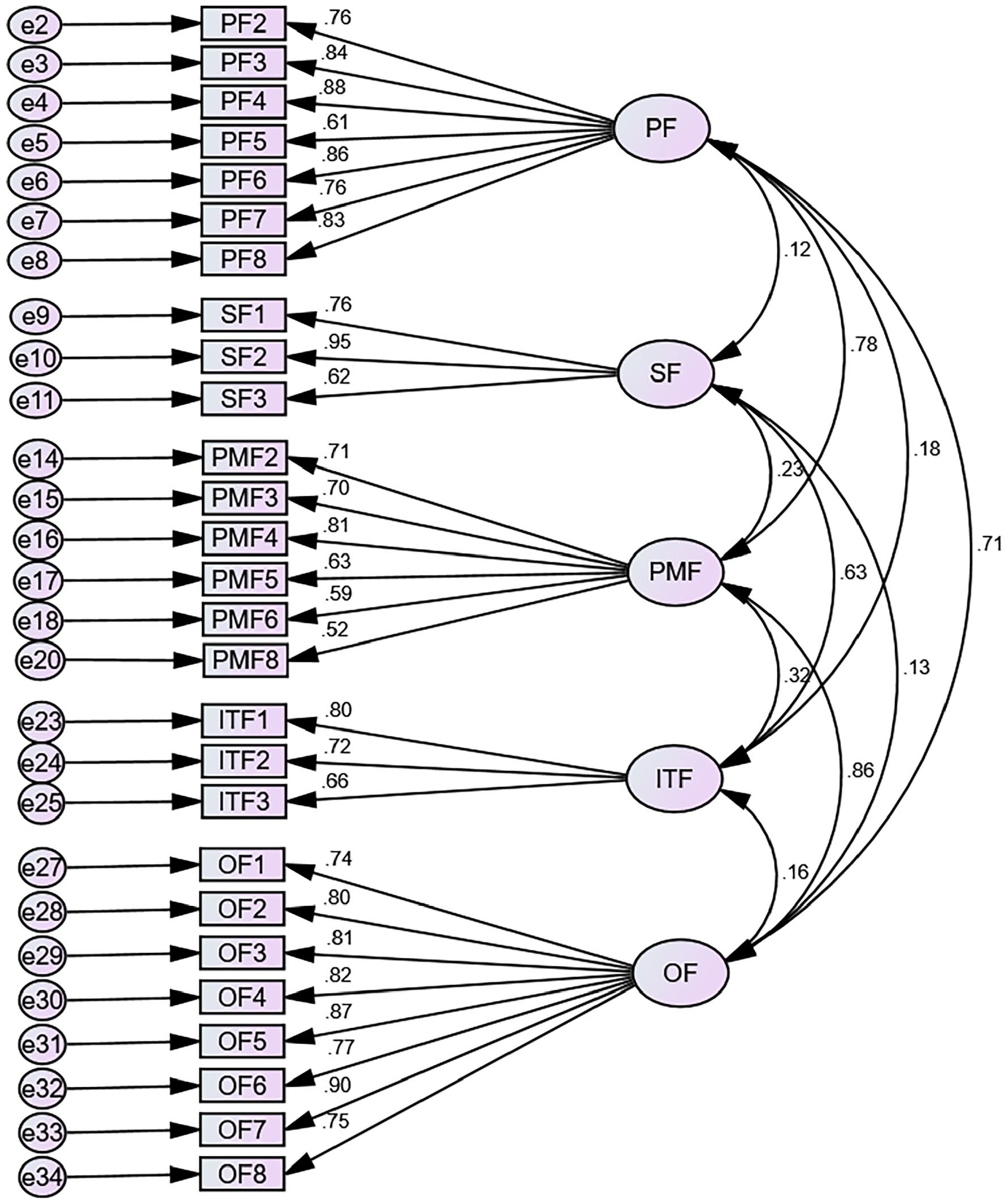
Proposed final model for HIS.
The final model indicates the significant observed variables based on the factor loading values and verifies all our hypotheses defined in section 3.1.2. Among personal factors, “age of quality inspector” was insignificant and thus excluded from the final model. Similarly, out of four observed variables for “system factors,” three of them were found significant (Figure 4). One factor “fault complexity coming from the manufacturing line” was insignificant. For the third construct, “physical/mental factors,” six observed variables were found significant. The insignificant factors were poor eyesight, noise and disturbance at the workplace, excessive workload, and eye fatigue caused by continuous inspections. For the fourth construct, “Inspection task factors,” “inspection of multiple products” was found to be insignificant. Finally, all the observed variables for “organizational factors” were found significant. Thus, all the null hypothesis are failed to reject the proposed hypotheses.
The second part of the proposed model describes the correlation between the constructs. It is observed that some of them are strong positive, and some are weak. We found the highest correlation value (0.86) between physical/mental factors and organizational factors and the lowest correlation value (0.12) between personal factors and system factors. A close observation of the correlation values indicates that the five latent factors can be divided into two groups. One group comprises personal factors, physical and mental factors, and organizational factors. All the correlation values (0.78, 0.71, and 0.86) between those three constructs are significant (Figure 4). The second group comprises system factors and inspection task factors, and their correlation value (0.63) is also high. However, the correlation value between the two groups is very weak. Finally, our proposed HIS model appears to match the data well. The proposed first-order model fits the data well and has a positive correlation between the constructs, according to model testing.
The CFA analysis sheds light on the HIS implementation structures and their connections to the underlying variables. Most of the observed variables have a significant effect on HIS, which is evident from the high values of the factor loadings. The items and factors in the proposed model provide direct and actionable information that organizations can use to improve the inspection performance of both individuals and overall inspection stations.
Conclusion
Our primary objective in this research was to find out the factors that can affect the performance of quality inspectors and how their relation can be measured statistically. For this purpose, we developed a research plan using statistical tool, that is, Confirmatory Factor Analysis, for an inspection process in which a semi-finished or finished product is inspected by human labor. The outcome of our statistical analysis is a first-order CFA model that reveals the relations between the constructs and their respective observed variables. This model consists of those factors only that have significant effect on the visual inspection skill of human labor. If an organization like to improve the current level of visual inspection performance, they must focus on the factors highlighted in this work. It is proved that the factors, related with constructs organizational, personal, and physical/mental, can contribute significantly in improving the visual inspection skill of human labor. Since we collected the data from textile and clothing sector of Pakistan only, thus the further work should be done to achieve more generalized results by increasing the target populations from the one industry of one country to different industries and at different geographical locations. In human-based manufacturing setups, learning behavior may vary among the labor that can also be related to skill improvement. Therefore, studies may also be carried out considering the learning behavior of human labor.
Footnotes
Declaration of conflicting interests
The author(s) declared no potential conflicts of interest with respect to the research, authorship, and/or publication of this article.
Funding
The author(s) received no financial support for the research, authorship, and/or publication of this article.
