



Abstract
Musculoskeletal injuries during the “Initial Training Phase” (ITP) are a major medical problem faced by law enforcement agencies worldwide. Aiming to develop an injury prevention strategy, we examined the incidence, type, associated factors, and severity of injuries and secondarily tracked their evolution over time by batches in a police academy. A retrospective cohort study was conducted using prospectively collected injury data on 979 newly recruited male police cadets enrolled in eight batches between 2015 and 2023. Among the 376 injured participants (age: 18.1 ± 0.3 years, body-mass: 75.8 ± 12.5 kg, body-height: 173.7 ± 4.0 cm, body mass index [BMI]: 25.1 ± 4.1 kg·m-2, body-fat percentage: 18.1% ± 5.1%), 405 injuries were recorded during the ITP. Musculoskeletal injury data were analyzed according to type, associated-factors, severity, and evolution across batches. Almost half of the recruits (41.4%) sustained at least one musculoskeletal injury. Based on injury frequency (39–69 case) and exposure time (20,944.5–43,006.5 hours per participant) indices, and with an implication of scientific training tips, the long-term follow-up over-batches showed that the injury incidence was decreased 2.5-fold from Batch 1 to Batch 8 (p < .0001). Most injuries occurred between Weeks 2 and 5 (80% cumulative). The most common injury type was medial tibial stress syndrome (36.0%), followed by iliotibial band syndrome (12.6%), and ankle sprain (10.4%). This injury profile aligns with previous studies on law enforcement recruits, although comparisons should be made cautiously due to variations in training programs and recruit characteristics between agencies. The most frequently reported perceived potential contributors of injuries were vitamin and mineral deficiencies (20.7%), overweight/obesity (19.1%), and harsh physical activities (13.0%). During ITP, almost half of the recruits sustained at least one musculoskeletal injury, most of them in the fourth week. Some of the major associated factors of injury could be controlled resulting in a potential reduction of the injury incidence by up to 2.5 times. Implementing tailored fitness programs, incorporating subjective and objective training load assessments, and enhancing monitoring could significantly decrease injury rates, improve recruit readiness, and reduce resource and time waste on injury treatment.
Introduction
Law enforcement agencies consistently recruit new cohorts of police cadet recruits, initiating their demanding training regimen crucial for their future roles in policing (Bulzacchelli et al., 2014; Merrick et al., 2023). Initial Training Phase (ITP) at police academies serves as a critical transitional period, helping recruits adjust from civilian life to the unique demands and challenges of law enforcement (Knapik, Graham, Cobbs, et al., 2013). Police academies face similar challenges to military institutions in terms of recruit injuries during initial training, although the specific demands and injury patterns may differ (Maupin et al., 2022; Merrick et al., 2023).
The ITP is a critical period characterized by high physical and mental demands, aimed at transforming civilians into law enforcement officers capable of meeting the challenges of their profession (Maupin et al., 2022; Merrick et al., 2023). The ITP represents a crucial phase requiring substantial physical and mental preparation, with specific focus on developing aerobic fitness, muscular endurance, and strength to meet occupational demands (Kukić et al., 2023; Wilkinson et al., 2008). This is achieved through running, resistance training, and martial arts exercises, in addition to defensive tactics training and patrol marching activities (Kucera et al., 2016; Merrick et al., 2023).
For many new recruits, the type and magnitude of training load is much higher compared with their civilian life activities (Merrick et al., 2023). It is generally believed that the difficulty of adapting to a large and rapid increase in load increases the risk of joint and musculoskeletal injuries (Knapik et al., 2011). As with civilian athletes, musculoskeletal injuries in soldiers’ trainees are usually caused by intense physical training and overuse (Fraser et al., 2022). Injury rates at this basic stage range from 20% to 59% (Knapik, Graham, Cobbs, et al., 2013), and are mainly musculoskeletal injuries (Merrick et al., 2023). Injury rates during law enforcement academy training have been reported to be as high as 368.63 injuries per 1,000 recruits per year (Sawyer et al., 2021). Injuries have a negative impact on training time, resources, and personnel (Sharma et al., 2015). While research has identified various injury risk factors in military populations, there remains limited understanding of injury patterns specific to police recruits (Bulzacchelli et al., 2014). This knowledge gap hinders the development of targeted injury prevention strategies. Training-related injuries pose a significant challenge to law enforcement agencies, making research and development of injury prevention strategies a priority worldwide (Ruscio et al., 2010; Sammito et al., 2021). Injury prevention during ITP is particularly important because the potential negative effects of chronic injuries can affect training, career, and readiness as an officer/leader (Molloy et al., 2012).
While numerous investigations have aimed to reduce the risk of musculoskeletal injuries during ITP, many have shown limited effectiveness, possibly due to their generalized approach rather than targeting specific injury types and mechanisms (Bulzacchelli et al., 2014; Maupin et al., 2022). The lack of effectiveness may be because these interventions targeted all trainees rather than specifically target the type, timing, and severity of injuries. In contrast, the most successful interventions targeted specific mechanisms of injury (Coppack et al., 2011) and achieved encouraging results in accelerating and improving the healing process without negatively affecting other untargeted injuries. These positive results show that the trend toward injury prevention can be part of the ITP strategy (Sammito et al., 2021).
In the past, standards for height, weight, and body fat were balanced by general appearance and fitness level (Friedl, 2012). Only in recent decades (e.g., 1990–2020), studies have begun to address the hypothesis of a negative relationship between body composition, training, and injury risk (Heinrich et al., 2020; Kucera et al., 2016). Recent studies have identified that trauma to joints and ligaments, particularly in the knee, is the most common type of injury among law enforcement recruits, with physical training being the primary activity associated with injury occurrence (Maupin et al., 2022). Many military and law enforcement studies have reported a strong correlation between BMI and injury risk, as abnormal BMI values (very high or very low) can be considered a predisposing injury risk (Friedl, 2012; Heinrich et al., 2020). In law enforcement populations, trauma to joints and ligaments, particularly in the knee, has been identified as the most common type of injury among recruits, with physical training being the primary activity associated with injury occurrence (Maupin et al., 2022). However, lower fitness levels are also associated with increased risk of injury (Tomes et al., 2020). Previous studies have identified that physical fitness levels, particularly aerobic fitness, muscle strength, and muscle power, were also considered as predictive factors for recruitment (Lockie et al., 2020). The general decline in fitness levels in the population could have a negative impact on the injury rate of newly recruited solders. Therefore, the fitness level of police Cadets may vary across academies and even within the same country (Myers et al., 2019). For this reason, a detailed analysis of injuries within the population is needed to develop appropriate intervention strategies.
Trauma research and rehabilitation heavily rely on accurate injury diagnosis and associated factors identification (Meeuwisse & Love, 1997). Several studies (Merrick et al., 2023; Sharma et al., 2015) have highlighted the importance of investigating and analyzing the injuries incidence. This is because the recovery and rehabilitation process can be both time-consuming and resource-intensive (Merrick et al., 2023). Recent evidence suggests that structured, ability-based training programs can reduce injury risk while improving fitness outcomes in police recruits (Melton et al., 2023; Orr et al., 2016). These programs account for individual differences in physical capabilities and allow for appropriate progression of training loads. The expenses associated with medical treatment, physiotherapy, and rehabilitation, coupled with the loss of training sessions and days, can significantly impact the effectiveness of ITP (Merrick et al., 2023; Sharma et al., 2015).
Previous research has demonstrated that fitness levels, particularly aerobic fitness, muscular strength, and power, are important predictors of injury risk and training success in law enforcement recruits (Cocke et al., 2016; Melton et al., 2023). This study aims to comprehensively profile injuries sustained during police cadet ITP by examining injury patterns, types, and potential risk factors. We hypothesized that (a) injury incidence would be highest during the initial weeks of training due to the rapid increase in physical demands, (b) lower extremity injuries would represent the majority of cases due to the running-intensive nature of training, and (c) both very high and very low BMI values would be associated with increased injury risk. The findings will inform evidence-based injury prevention strategies and establish baseline data for evaluating future interventions.
Method
Study Design
This retrospective cohort study analyzed prospectively collected injury data to examine the incidence, timing, location, mechanism, and severity of injuries across eight batches of police cadet recruits undergoing a 7-week ITP from August 2015 to November 2023 at the Police Academy. This approach aligns with recent methodologies in law enforcement injury research (Maupin et al., 2022). The ITP program remained consistent throughout the study period, with no significant changes in training protocols or requirements. Data were collected from the Academy Medical Department database and included information on injured police cadets for each batch during the ITP. This study received ethics approval from “Ethics and Research Committee, anonymized for peer review.
Participants
The study included 979 male newly recruited police cadets across eight batches over 8 years (2015–2023) at the Police Academy. The sample sizes for each batch were as follows: Batch 1 (N = 108), 2 (N = 112), 3 (N = 112), 4 (N = 98), 5 (N = 100), 6 (N = 107), 7 (N = 144), and 8 (N = 198). Of the 979 police cadet recruits, 405 injuries (376 index injuries and 29 subsequent injuries) were recorded in the ITP. Participants’ consent was not required because this is a retrospective anonymous study. The statistical power of the study was retrospectively calculated using the G*Power software (version 3.1.9.6; Kiel University, Kiel, Germany), based on the actual sample size available. Based on an expected medium effect size (f = 0.25), normal deviates for type I error (α) = 0.05, and normal deviates for statistical power (1 –β) = 0.80, a minimum sample size of 920 participants was required. The achieved statistical power was found to be 99%. This observational study extracted all data from an existing database and a waiver of participant consent was granted via the Human Research Ethics Committee. Inclusion criteria included no contraindications to exercise, such as cardiovascular or pulmonary diseases, and no chronic illness, surgery or treatment, hospitalization, or musculoskeletal or joint injury in the 6 months prior to recruitment.
Procedures
The study was conducted at Qatar Police Academy, where recruits undergo a standardized 7-week training program.
Injury Definition and Data Collection
We adopted the injury definition recommended by the International Olympic Committee consensus statement (Bahr et al., 2020): “tissue damage or other derangement of normal physical function due to participation in sports, resulting from rapid or repetitive transfer of kinetic energy.” In addition, we employed a time-loss definition, consistent with recent recommendations in occupational injury research (Serner et al., 2024). We employed a time-loss definition, consistent with recent recommendations in occupational injury research. An injury was defined as any physical complaint that resulted in a recruit being unable to fully participate in training activities for at least 1 day (Bahr et al., 2020). In this study, 12 types of injuries were observed, as follows: Achilles tendinopathy/bursitis, ankle sprain, calcaneum stress injury, femur stress fracture, hamstring strain, lower back pain, iliotibial band syndrome, internal knee derangement; including meniscal tears and ligamentous injuries confirmed by clinical examination and magnetic resonance imaging (MRI) when indicated (Maupin et al., 2022), medial tibial stress syndrome (MTSS), shoulder tendinopathy, wrist sprain, and hip adductor strain.
Injury data were collected by trained academy physicians using standardized forms and protocols to ensure consistency across all batches. Injuries were diagnosed and classified by a team of sports medicine physicians and physiotherapists using standardized clinical assessments. When necessary, diagnostic imaging (X-ray, MRI) was used to confirm diagnoses, particularly for stress fractures and internal knee injuries. Data were documented through medical reports from the local police hospital and official insurance records. When necessary, radiographic and/or MRI examinations were performed to confirm or refute the initial clinical diagnoses. It is important to note that injuries-related factors were identified through a combination of objective measurements and subjective assessments and may represent potential contributors rather than direct associated factors of injuries.
A comprehensive injury assessment protocol was implemented, involving a team of medical professionals including sports medicine physicians, physiotherapists, and certified athletic trainers. Each injury was independently evaluated by at least two members of the medical team to ensure accurate diagnosis and classification. In cases of discrepancy, a consensus was reached through discussion and additional examination if necessary.
Injury Categorization and Coding
De-identified data included date of injury, injured body area, type of injury, activity performed at the time of injury, age, body height, body composition test sheet (using the SECA 514 and the Inbody 770 body composition analyzer), and a narrative description of the incident (Bahr et al., 2020). As recommended by Bahr et al. (2020), a modified appropriate International Classification of Diseases (ICD-9 or ICD-10) (i.e., we combined body area with tissue pathology) codes used to describe and classify these injuries. As recommended (Bahr et al., 2020), the studied injuries were mixed between “sudden onset” and “gradual onset.” The injury severity scale used in this study was adapted from previous research on sports and law enforcement injuries, categorizing injuries based on time loss: Grade 1 = 0 day, Grade 2 = 1–7 days, Grade 3 = 8–28 days, Grade 4 = > 28 days (Bahr et al., 2020).
Two experienced physiotherapists independently coded the injury diagnoses to specific regions and types to ensure consistency. This process involved assigning an injury body region or area and tissue or pathology type to the diagnosis provided within the injury database.
Exposure Calculation and Incidence Rate
At the time of injury occurrence, a committee of medical professionals, rehabilitation coaches, fitness instructors, and defensive tactics instructors assessed and documented potential injury-related factors. These factors were categorized into 10 domains: sleep deprivation, vitamin deficiency, improper footwear, harsh physical activities, prolonged standing, improper application of defensive tactics instructions, inadequate warm-up, inappropriate exercise intensity/complexity, obesity, and postural deformity. This standardized assessment approach, implemented across all eight batches, ensured consistent documentation of injury-related factors (Bahr et al., 2020).The studied injuries were “sudden onset” and “gradual onset,” so the “incidence” is more useful than “period prevalence” index (Bahr et al., 2020). Exposure time was calculated individually for each recruit, accounting for actual time spent on training activities. The incidence of musculoskeletal injuries was the total number of injuries recorded in a period divided by the total exposure in that period, and the result was multiplied by 1,000 to obtain the rate per 1,000 hours (Gardner et al., 2014). We used detailed “training session report” files completed by instructors/coaches at the end of each session to accurately track exposure time. This approach allows for more precise injury incidence rate calculations (Gardner et al., 2014). The “training session report” file contain number of participants in the sessions, who present but not participate in activity, who participate in rehabilitation session during the training session, time of starting and end of session, any incidence or injury.
Data Analysis and Quality Control
Data quality was ensured through regular monitoring of adherence to the data collection protocol, as well as completeness and consistency of responses. The reliability of the data collection system was improved through tailored education and ongoing support for the people reporting the data. Validity and completeness of data reporting were analyzed by comparing with another “gold standard” data source.
It is important to note that our study may underrepresent the true injury incidence, as minor injuries not requiring formal reports or insurance claims might not have been captured in our data. This limitation is common in retrospective studies using official records (Maupin et al., 2022).
Physical Training Activities
At the beginning of police training, all police cadet recruits complete the ITP (7 weeks). On average, they undertake 33 hours of defensive tactics physical and athletic training per week (231 hours total of exposure time), with a gradual increase in workload (Table 1). Training requirements vary slightly from regiment to regiment, but energy expenditure is generally above 3,200 to 5,000 kcal per day (Wilkinson et al., 2008). These conditions included complete isolation from the outside world (Maupin et al., 2022; Merrick et al., 2023), consistent type of food, living conditions, amount of sleep with programmed deprivation sequence, geographic weather conditions (in September and October of each year; temperature: 33.06°C ± 1.86°C, humidity: 56.33% ± 2.99%, barometric pressure: 1,007.61 ± 3.48 hPa, and wind speed: 15.32 ± 1.44 km·h-1), and total training load, regardless of age, fitness level, or other factors. The date of any of the ITP batches did not correspond to the month of Ramadan. The standardized, validated training program includes lessons in law enforcement skills and a structured and progressive physical fitness program.
7-Week Initial Training Phase (ITP) Physical Training Program Structure

Note. h = hours; RPE = Rating of Perceived Exertion (0–10 scale).
Statistical Analysis
Data normality was assessed using the Kolmogorov–Smirnov test. For normally distributed data, mean values and standard deviations (SDs) were calculated, and comparisons between batches were made using one-way analysis of variance (ANOVA) with Tukey’s post hoc test. For nonnormally distributed data, medians and interquartile ranges were reported, and Kruskal-Wallis tests with Dunn’s post hoc comparisons were used. Chi-square (χ2) tests of homogeneity were used to compare proportions of injured participants across various weeks of training, between groups, and to examine relationships between injury frequency and other variables (e.g., batches, time of occurrence, body area, type, and associated factors of injuries) We calculated injury incidence rates per 1,000 recruits per year to allow for comparison with other studies in the field (Merrick et al., 2023). In addition, a Cochran–Armitage test for trend was performed to assess the change in injury incidence rates across batches (Maupin et al., 2022). Cramer’s V was used to measure the strength of these relationships. The Cohen scale (Cohen, 2013) was used for the interpretation of “Cramer’s V”: Cramer’s V <0.10 was considered weak, 0.10 to <0.50 moderate, and ≥0.50 strong relationship. The error threshold was set at 5%. Data analysis was performed using SPSS version 28.0 software (SPSS, Inc. Chicago, IL, USA).
Results
Out of the 979 male police cadet recruits, 603 (62%) did not sustain any injuries during the training period. The anthropometric characteristics of the 376 injured cadets (age: 18.1 ± 0.3 years, body-mass: 75.8 ± 12.5 kg, body-height: 174 ± 4 cm, BMI: 25.1 ± 4.1 kg·m-2, body-fat percentage: 18.1% ± 5.1%) were distributed among eight training groups, as shown in Table 1. One-way ANOVA Kruskal–Wallis test analysis showed no significant differences between groups in all age, body-mass, height, BMI, and body-fat percentage characteristics (Table 2).
Comparisons of the Age and Anthropometric Data of the Injured Groups

The 979 recruits participated in police academy training, across eight batches with 405 injuries identified (per 376 recruits) during this eight-year period. Overall, 38.41% of recruits sustained at least one musculoskeletal injury during the 7-week ITP. In-between batches comparisons of exposure time and injury incidence rate are showed in Table 3. Overall, there was an injury incidence rate of 2.03 ± 0.55 injuries per 1,000 training hours, which translates to 368.63 injuries per 1,000 recruits per year. Injury incidence rate was decreased regressively from 3.10 to 1.23 injury per 1,000 training hours, in the Batch 1 to Batch 8, respectively. A Cochran–Armitage test for trend was performed to assess the change in injury incidence rates across batches, revealing a statistically significant decreasing trend (p < .0001).
In-Between Batches Comparisons of Injury Incidence Rate

The comparison of the evolution of injuries frequencies following the time of its occurrence over the 7-weeks ITP between batches was determined using the χ2 test. The results showed a significant relationship (p < .001, Cramer’s V = 0.21 [moderate]) between batches and weeks. The highest number of injuries occurred between Weeks 2 and 5, with a peak during the fourth week (33.58% of injuries) (Table 4).
Comparison of the Evolution of Injuries Frequencies Following the Time of its Occurrence Between Batches

There were no significant differences in injury type frequencies among batches (p = .346), indicating that the distribution of injury types remained consistent across training groups. The five most common nature of injury that occurred was the MTSS (35.97% of injuries), followed by the iliotibial band syndrome (12.60%), ankle sprain (10.37%), Achilles tendinopathy/bursitis (10.21%), and knee meniscus and ligaments trauma (7.96%) (Figure 1).

Average ± SD of Percentage Injuries Frequency Percentage According to its Type (n = 405)
Based on χ2 test analysis, the results showed a nonsignificant relationship (p = .088) between the rate of injuries severity and batches. The injury severity distribution (based on time loss index) was Grade 2 and 3 injuries (67.97%), Grade 1 injuries (25.01%), and Grade 4 injuries (7.02%). In-between batches comparison of injuries rates according to its degree of severity showed a good regression of injury rate Grade 3 to the favor of injury Grade 2 and 1 over the time (Figure 2).

In-Between Batches Comparison of Injuries Rates According to its Degree of Severity
Nonsignificant differences were identified in comparisons of injury types frequencies among batches (p = .848). The five most common believed associated factors of injury that occurred was vitamins and minerals deficiency (20.71% of injuries), followed by overweight/obesity (19.13%), harsh military physical activities (13.00%), improper application of military instructions (10.59%), and sleep deprivation (9.57%) (Figure 3).
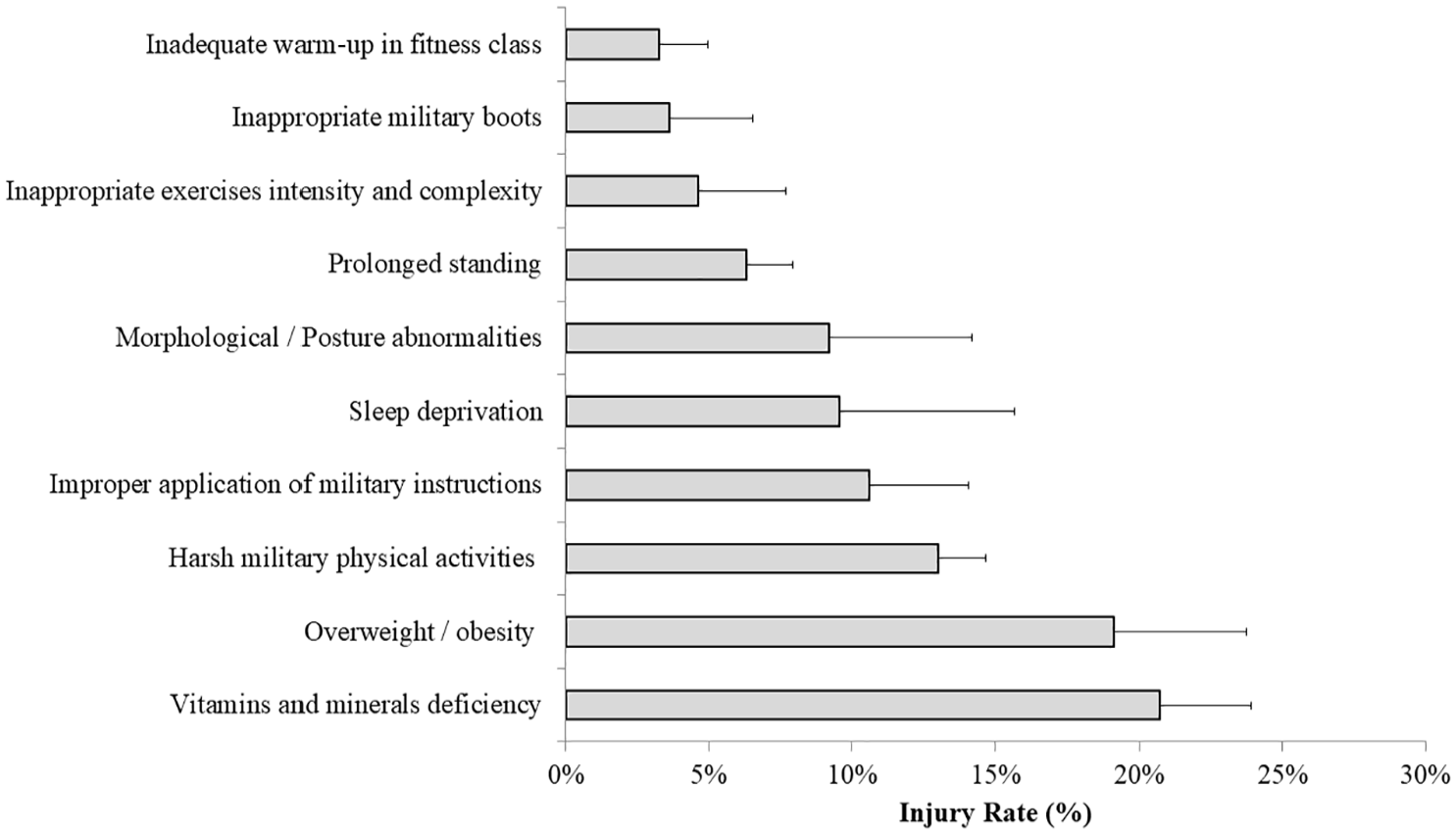
Average ± SD of Injuries Associated Factors Percentage (n = 405)
Discussion
To set an injury prevention strategy in a police academy, we examined the incidence of injuries by time, type, and associated factor, as well as their severity, and tracked their evolution in batches of candidates. The main findings suggest that almost half of the recruits sustained at least one musculoskeletal injury. Based on injury frequency and exposure time indices, and with an implication of scientific training tips over-batches, the long-term follow-up over-batches showed that the injury incidence decreased 2.5-fold from Batch 1 to Batch 8. Most injuries occurred between Weeks 2 and 5. The most common injury types were MTSS, iliotibial band syndrome, and ankle sprain. The most frequently reported perceived associated factors of injuries were vitamin and mineral deficiencies, overweight/obesity, and harsh physical activities. However, it is important to note that these are self-reported perceptions and may not reflect the actual underlying associated factors of injuries (Maupin et al., 2022; Merrick et al., 2023). In terms of injury severity, 68% of them were Grade 2 and 3 injuries.
Several studies have published sample data on injuries in law enforcement recruits. The overall injury frequency in the present study (27.37%) is an acceptable, although not well reported, rate when compared with data and studies on samples of American and British trainees (Almeida et al., 1999; Diehl et al., 2006; Knapik, Graham, Cobbs, et al., 2013). The incidence in these studies ranged from 27% (1.23 per 1,000 training hours) to 63% (3.10 per 1,000 training hours), may in part due to the small number of 98 to 198 candidates per course compared with more than 400 recruits in the United States and United Kingdom. In addition, there is the hypothesis of the cultural specificities that may not be present in other societies (Sharma et al., 2019).
Although the police academy reached 27% (1.23 per 1,000 training hours) as an injury percentage in the eighth batch, that are considered good achievement, idealistic research remains the goal of any institution seeking excellence in its field. The timing of injuries in this study appears to be consistent with previous studies, with the highest frequency of injury recorded in the first four weeks of the training program (Almeida et al., 1999; Brushøj et al., 2008; Meeuwisse & Love, 1997). In addition, the diagnoses of specific injuries were similar to previous studies (Almeida et al., 1999). For example, in this study, the incidence of 36% of tibial stress fractures and shin splints is similar to Moen et al. (2012), and iliotibial band syndrome (13%) is similar to Almeida et al. (1999). The incidence of calcaneus stress injuries (2%) is also similar to previous studies (Garnock et al., 2018; Hamstra-Wright et al., 2015). While our study focused on police cadet recruits, recruits, it is important to acknowledge that findings from military populations, which comprise a significant portion of the cited literature, may not be directly translatable to police academy recruits. However, similarities in physical training demands and organizational structures allow for cautious comparisons and insights (Maupin et al., 2022; Merrick et al., 2023). The results of our study identified that cadet recruits in this field are more likely to suffer from musculoskeletal injuries to the lower limbs due to physical training or defensive tactics training. The nature of injuries in this population is similar to previous studies of New Zealand recruits, which primarily involved muscle and ligament injuries (Sawyer et al., 2021). However, New Zealand recruits were more likely to sustain shoulder injuries, possibly due to a difference in training methodology, as in the study by Sawyer et al. (2021).
Although it is difficult to compare the duration of recovery from musculoskeletal injuries with previous studies because these data are less frequently reported, there are other similarities between this study and some previous ones (Knapik, Graham, Rieger, et al., 2013). For example, the rehabilitation time of femoral, calcaneal and tibial stress fractures was 96, 72, and 65 days, respectively (Serner et al., 2024; Weishaar et al., 2005), with bone stress injuries in particular having a longer recovery time, ranging from 56 to 335 days (Weishaar et al., 2005).
The timing of the injury and the duration of healing should be considered to prioritize good injury management (Knapik et al., 2011). Based on injury data alone, some injuries, such as iliotibial syndrome, have alarmingly high rates (e.g., 12.60% in our findings). However, these injuries appear to be relatively easy to rehabilitate (Flato et al., 2017). Tibial stress fracture also takes a long time to recover, but the incidence of this injury remains high, although it has decreased significantly in the fourth (2018–2019) and seventh (2021–2022) batches. In contrast, the lower back pain, femoral and calcaneal stress fractures, shoulder joint tendinopathies, hip adductors, and knee meniscus injuries usually require a long rehabilitation period and a complex program. In this investigation, Achilles tendinitis (10%) and knee meniscus injury syndrome (8%) were among least frequented. These injuries require a long rehabilitation time (more than six weeks), as well as these injuries account for more than a quarter of all recovery days.
While we have identified several factors associated with injuries, it is crucial to acknowledge the multifactorial nature of musculoskeletal injuries in tactical populations (Serner et al., 2024). The interplay between intrinsic (e.g., biomechanical anomalies and previous injury history) and extrinsic (e.g., training load and environmental conditions) factors contributes to the complex etiology of these injuries (Kucera et al., 2016; Merrick et al., 2023). Future research should employ more sophisticated analytical methods, such as machine learning algorithms, to better understand the relative contributions of various risk factors and their interactions.
The analysis of injury patterns during the ITP for law enforcement recruits reveals critical insights into the challenges faced by these individuals. A significant proportion (38.41%) of recruits experienced at least one musculoskeletal injury during the 7-week ITP, which aligns with injury rates reported in comparable law enforcement populations (Maupin et al., 2022). The overall injury incidence rate of 368.63 injuries per 1,000 recruits per year (or 2.03 ± 0.55 injuries per 1,000 training hours) is consistent with recent literature on law enforcement recruit injuries (Maupin et al., 2022). However, it is crucial to acknowledge that these figures may underrepresent the true injury incidence, as minor injuries not requiring formal reports or insurance claims might not have been captured in our data (Sharma et al., 2019).
A notable observation is the concentration of injuries in the initial weeks of the training program. This phenomenon can be attributed to the mismatch between the high training demands and the recruits’ physiological readiness to cope with internal loads (Merrick et al., 2023). The musculoskeletal system requires time (at least 4 weeks) to adapt to the new and intense training regimen through strengthening and reconfiguration of muscle fibers, as well as neurological adaptations (Merrick et al., 2023). Unfortunately, training demands are typically highest during the first 2 weeks, resulting in peak physiological stress during the third and fourth weeks (Maupin et al., 2022). This misalignment, compounded by the psychological stress of the new environment, likely contributes to the elevated injury incidence rates observed in the early weeks of training (Maupin et al., 2022; Sawyer et al., 2021). These findings underscore the need for carefully designed and progressive training programs that account for the physiological and psychological adaptation processes of recruits, potentially mitigating the risk of early-career injuries in law enforcement personnel.
The relationship between body composition, as determined by BMI and fat percentage, and injury risk is complex and warrants further investigation. Our findings suggest that both high and low BMI values may be associated with increased injury risk, which is consistent with previous research in tactical populations (Friedl, 2012). Most studies have shown that there is an exponential or U-shaped relationship between BMI and injury risk (Knapik, Graham, Rieger, et al., 2013). Specifically, the risk of musculoskeletal injuries is highest for high and low BMI values and lowest for individuals with a “normal” BMI (Knapik, Graham, Rieger, et al., 2013). To address the high injury rates observed during the early weeks of training, implementing a periodized training program could help gradually increase the physical load on recruits and potentially reduce injury risk. This approach has shown success in other tactical populations and could be adapted for police academy training (Maupin et al., 2022; Merrick et al., 2023). Due to their low body soft lean mass, candidates with a very low BMI are another risk group that should be monitored (Heinrich et al., 2020). Strength training programs may be an effective means of reducing injury in recruits with a very low BMI (Friedl, 2012; Sammito et al., 2021). However, this recommendation should be taken with caution, as inappropriately designed strength training programs may lead to a higher rate of injury (Knapik et al., 2011; Knapik, Graham, Rieger, et al., 2013; Molloy et al., 2012). While vitamin D and calcium deficiencies have been associated with increased risk of bone stress injuries in military populations (Bulzacchelli et al., 2014; Kucera et al., 2016), further research is needed to establish a direct causal relationship in police recruits. The high percentage (21.00%) of recruits perceiving vitamin and mineral deficiencies as a associated factor of injury warrants further investigation through objective measures (Lappe et al., 2008). These findings are consistent with results from studies on military populations (Lappe et al., 2008), although further research is needed to confirm similar effects in police recruits (Kucera et al., 2016). We therefore appeal to the academy to focus on a diet rich in minerals and vitamins and conducting a vitamins and minerals blood test for the new cadet recruits prior to the start of ITP and to give them the eventually supplementing when needed. It is important to note that these injury-related factors were identified through a combination of objective measurements and subjective assessments and may represent potential contributors rather than direct causative factors of injuries.
Another possible strategy would be to select applicants who can already meet police academy requirements (Lockie et al., 2020). To give just a few examples: The British Army already uses a selection process that focuses on aerobic capacity, muscular strength and trainability (Sharma et al., 2015; Wilkinson et al., 2008). In short, it is worth noting that many deployment criteria examine the functionality of candidates based on “functional movement screening.” These precise measures are designed to provide insight into any limitations or asymmetries that may increase risk of injury and can be used in recruitment along with traditional standards for fitness and training. The third strategy is to correct the posture candidates walk through gait training and/or foot inserts (e.g., special insoles in tactics shoes) and to determine the size of tactics boots and sports shoes since sometimes the size of a sneaker is different from that of a tactic’s boots. Defensive tactics parade drills, a combination of exercises to improve neuromuscular control and biofeedback to reduce known biomechanical risk factors, have been shown to reduce leg loading (Crowell et al., 2010). This approach has led to a substantial decrease in injury rates (Sharma et al., 2015).
The use of periodization and training of police academy personnel can help limit overtraining and gradually increase the physical load of recruits (Garnock et al., 2018; Hamstra-Wright et al., 2015). Since most injuries occur in week four, this could be due to a sudden increase in training load from Week 3 to Week 5 (Table 1). Previous research has reported that sudden increases in training load can be a factor in injuries in tactical groups (Hamstra-Wright et al., 2015). The use of periodization could allow recruits to avoid sudden increases in training load, prevent overtraining during training (Tomes et al., 2020). Training management that allows for adequate recovery and supercompensation could improve recruit fitness and reduce injury risk (Tomes et al., 2020).
The observed decrease in injury incidence from Batch 1 to Batch 8 is noteworthy, although no specific changes were made to the training program during this period. The observed decrease in injury incidence across batches was statistically significant, suggesting that the implemented changes in training protocols and injury prevention strategies were effective. However, further research is needed to isolate the specific factors contributing to this reduction. The most crucial practical recommendations are listed below and summarized in Table 5. There are some limitations to this study. First, we did not consider the impact of injuries on medical costs, and reduced readiness; this may require formal evaluation in the future. However, it is likely that medical care in the clinic is a significant contributor to these costs. While no formal changes were made to the training program load across batches, the observed decrease in injury rates suggests potential areas for future research and intervention. Second, the study included all males who were homogeneous in age, height, and body-mass. It is therefore difficult to generalize these results to all global training centers, but they can be used globally as well as at the national and regional levels. Finally, it should be noted that our used detection system may have some minor inaccuracies when it comes to determining the frequency and timing of injuries. It is possible that some cadet recruits may choose to avoid medical examinations and not report any injury complaints, even if they are suffering from an injury and continue to train or work. Furthermore, some cadet recruits may experience “recovery days” due to unrelated illnesses, such as influenza, despite suffering from an injury.
Most Crucial Practical Recommendations to Reduce Risk Injury During the Initial Training Phase of the New Recruit Police Officer-Cadet

Conclusion
Our study revealed that nearly half of the police cadets recruit experienced musculoskeletal injuries during the 7-week ITP, with a concentration of injuries between Weeks 2 and 5. The predominant injury types were MTSS, iliotibial band syndrome, and ankle sprains. These findings align with previous studies on law enforcement recruits, highlighting the consistent injury patterns across various agencies. Based on these results, we recommend implementing targeted injury prevention strategies, focusing on optimizing physical training programs and improving recruits’ ability to handle the physical demands of the academy. Specifically, the implementation of periodization and ability-based training programs, combined with upskilling of academy staff members, could significantly reduce injury rates. Furthermore, addressing modifiable risk factors such as vitamin and mineral deficiencies and overweight/obesity status prior to and during training may contribute to injury reduction. The observed decrease in injury incidence across batches suggests that continuous monitoring and adjustment of training protocols can lead to substantial improvements in recruit health and performance. Future research should focus on evaluating the effectiveness of these proposed interventions, particularly examining the long-term impact of injury prevention strategies on recruits’ career longevity and performance. In addition, investigating sex-specific injury patterns and prevention measures would be valuable, given the observed higher injury rates among female recruits.
Footnotes
Acknowledgements
The authors thank all the experts, doctors, and officers of the Police Academy for their participation in this work.
Author Contributions
Data curation, W.D., M.S., and K.C.; Formal analysis, W.D.; Funding acquisition, W.D. and M.S.; Investigation, W.D. and M.S.; Methodology, W.D., H.B.S., and K.C.; Project administration, W.D.; Software, W.D.; Validation, H.B.S. and I.D.; Writing—original draft, W.D.; Writing—review & editing, H.B.S., I.D., and K.C. All authors have read and agreed to the published version of the manuscript.
Declaration of Conflicting Interests
The author(s) declared no potential conflicts of interest with respect to the research, authorship, and/or publication of this article.
Funding
The author(s) received no financial support for the research, authorship, and/or publication of this article.

Data Availability Statement
The raw data for this research study will not be publicly available as per agreement with the Police Academy. However, requests of the authors for access to the data or for analyses to be performed as a part of data synthesis will be considered and forwarded through to the Police Academy for approval.