




Abstract
Herbal products with antioxidant properties have gained attention for their potential impact on male reproductive health. One such botanical, Ceratonia siliqua (commonly known as carob), has been empirically used by infertile men in Iran and Turkey. Carob, a pod-bearing tree native to the Mediterranean, exhibits promising therapeutic potential for various aspects of male reproductive health. Carob consumption may positively affect sperm count, motility, and morphology in infertile men. The proposed mechanisms involve antioxidant activity, improved blood flow, and enhanced energy production within sperm. Carob’s richness in antioxidants like polyphenols and flavonoids might counteract oxidative stress, a major contributor to sperm dysfunction. Carob may influence male sex hormones by potentially stimulating testosterone production and inhibiting estrogen conversion. While carob demonstrates promise as a natural supplement for male fertility, more robust research is necessary to solidify its therapeutic role. This exploration could pave the way for the development of novel dietary or nutraceutical interventions to address male infertility. While preliminary research suggests positive effects on sperm health and potential hormonal influence, robust clinical trials are needed to solidify carob’s therapeutic efficacy. This exploration paves the way for future research on carob as a natural supplement and potentially opens doors for novel dietary or nutraceutical interventions to address male infertility.

Introduction
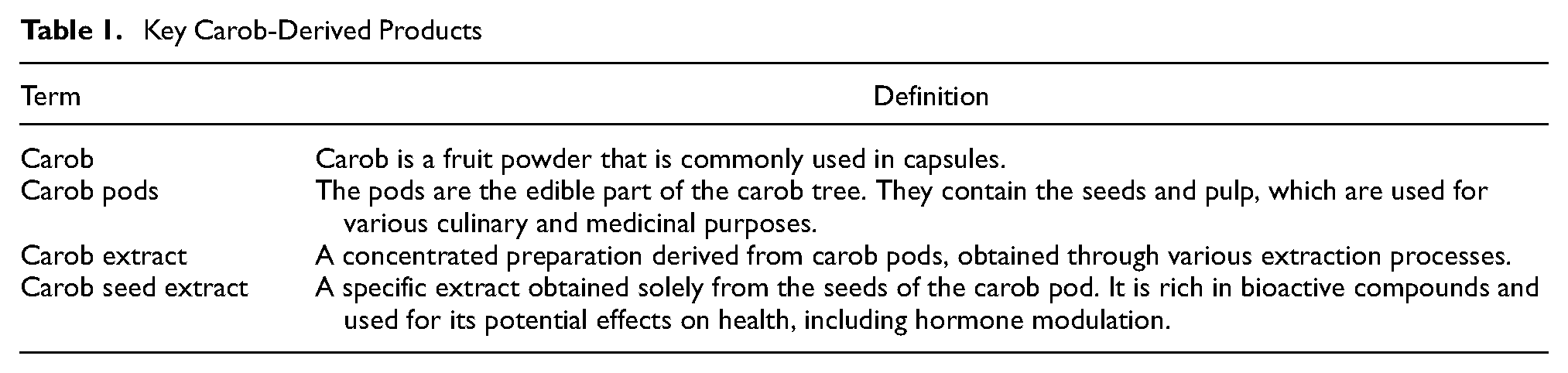
Infertility is defined as the failure to achieve pregnancy in a couple after 1 year of unprotected intercourse (World Health Organization [WHO], 2021). Male infertility can arise from a multitude of factors, with sperm dysfunction being the most prominent and prevalent contributor. Beyond sperm abnormalities, both genetic and environmental influences can impair a man’s reproductive potential (Agarwal et al., 2021). Male infertility can be diagnosed through semen analysis, hormone testing, genetic testing, and imaging studies (Heidary et al., 2020). Treatments for male infertility depend on the underlying cause and can range from lifestyle changes to medication, therapies, or surgical interventions. Treatment options are available for male infertility, including surgery, hormonal therapy, and assisted techniques such as intrauterine insemination (IUI) and in vitro fertilization (IVF) (Kaltsas et al., 2024). While these treatments can be effective in some cases, all have limitations. The emergence of adverse effects associated with synthetic pharmaceuticals has prioritized the investigation of botanical sources for novel bioactive structures. Ceratonia siliqua L. (Carob), rich in antioxidant compounds, represents one such promising avenue of exploration (Custódio et al., 2008). C. siliqua, a member of the Fabaceae family, is an evergreen tree native to western Asia. Following domestication, its cultivation expanded throughout the Mediterranean basin, reaching the western coasts of the Americas, South Africa, and southern Australia (Thomas et al., 2024). Carob has modest quantities of fat (1.99%), protein (6.34%), and carbohydrates (75.92%), and 7.30% crude fiber. Along with vitamins E, C, D, niacin, folic acid, and pyridoxine, carob is an excellent source of iron, calcium, sodium, potassium, phosphorus, and sulfur. Eleven phenolic compounds are present in carob powder, with minor concentrations of coumarin, cinnamic, ferulic, and gallic acids and significant concentrations of pyrogallol, catechol, and chlorogenic acid. Furthermore, it has 17 fatty acids totally, with the four primary fatty acids being oleic, linoleic, palmitic, and stearic acids (Youssef et al., 2013). Carob has a well-documented history of human consumption as a food stuff (Table 1) (Shahrajabian & Sun, 2024). Carob has been employed as a therapeutic agent with a broad spectrum of pharmacological effects (Shahrajabian & Sun, 2024). Carob is generally considered to have a low allergenic potential. However, there have been rare reports of allergic reactions to carob products. Such reactions may be more likely in individuals with a known allergy to legumes, as carob belongs to the Fabaceae family, which includes other allergenic plants like peanuts and soybeans (Fiocchi et al., 1999). Studies on carob’s safety profile have generally found it to be non-toxic and well-tolerated when consumed as part of a balanced diet (Gulay et al., 2012). Carob has been reported to have minimal interactions with drug metabolism. Unlike other plants with known effects on cytochrome P450 enzymes, carob does not show significant inhibitory or enhancing effects on drug metabolism pathways (Elbouzidi et al., 2023). This makes it a relatively safe option for individuals undergoing pharmacotherapy. As illustrated in Table 2, carob exhibits a promising therapeutic potential due to its multifaceted properties, including antibacterial, antiviral, and antifungal effects (Abu Hafsa et al., 2017; Abulyazid et al., 2017; Al-Olayan et al., 2016; Atta et al., 2023; Christou et al., 2019; Elbouzidi et al., 2023; Gregoriou et al., 2021; Gruendel et al., 2007; Ikram et al., 2023; Khazaei et al., 2023; Macho-González et al., 2020; Meziani et al., 2014; Qasem et al., 2018; Rico et al., 2019; Rodríguez-Solana et al., 2019; Roseiro et al., 2013; Sigge et al., 2011; Xie et al., 2020). Carob’s efficacy in treating infections has been well documented. In addition, carob has demonstrated remarkable effectiveness in managing diabetes (Macho-González et al., 2020; Qasem et al., 2018). As a potent antioxidant, carob effectively combats oxidative stress, a major contributor to various diseases (Atta et al., 2023). Carob’s antiproliferative properties hold immense promise in cancer therapy (Christou et al., 2019). Recent research suggests a promising therapeutic application for carob: improving sexual function and addressing infertility, specifically in cases of low sperm count and motility in males (Pilehvari et al., 2023, 2024). Studies have demonstrated that carob seeds possess the capacity to modulate the hypothalamic–pituitary–gonadal (HPG) axis (Aghajani et al., 2021). Consuming carob seed extract (specific extract, obtained solely from the seeds of the carob pod) has been shown to induce a significant rise in testosterone and dihydrotestosterone (DHT) concentrations (Pilehvari et al., 2024). Previous studies suggest carob has potential in infertility treatment. Given the significant challenges in managing male infertility, this investigation aims to elucidate the effects of carob on sperm parameters, genetic integrity, sex hormones, and overall male reproductive health. By compiling recent data, we will evaluate its potential as a therapeutic agent.
Key Carob-Derived Products
Therapeutic Potential of Carob in the Management of Pathological Conditions

Method
A comprehensive literature search on carob and its impact on male fertility was conducted using PubMed, Scopus, and Google Scholar. The search encompassed studies published from January 2004 up to April 2024 and employed a combination of keywords and phrases like “carob,” “male infertility,” “male reproductive system,” “semen,” “sex hormone,” “sperm parameters,” and “genetic dysfunction.” To focus on the latest findings and avoid outdated information, review studies were excluded. In addition, only original research involving human subjects was considered, omitting studies on other animal species. A total of 1,270 articles were identified. After the first screening, 1,080 articles were excluded as they were duplicated records or had poor eligibility for irrelevancy of the title or unavailability of the full text. Case reports were also excluded. A total of 188 articles were retrieved, of which 166 articles were excluded after full review. The remaining 22 articles were selected as eligible for the present study (Figure 1). Carob has been checked with World Flora Online and MPNS in June 30, 2024.
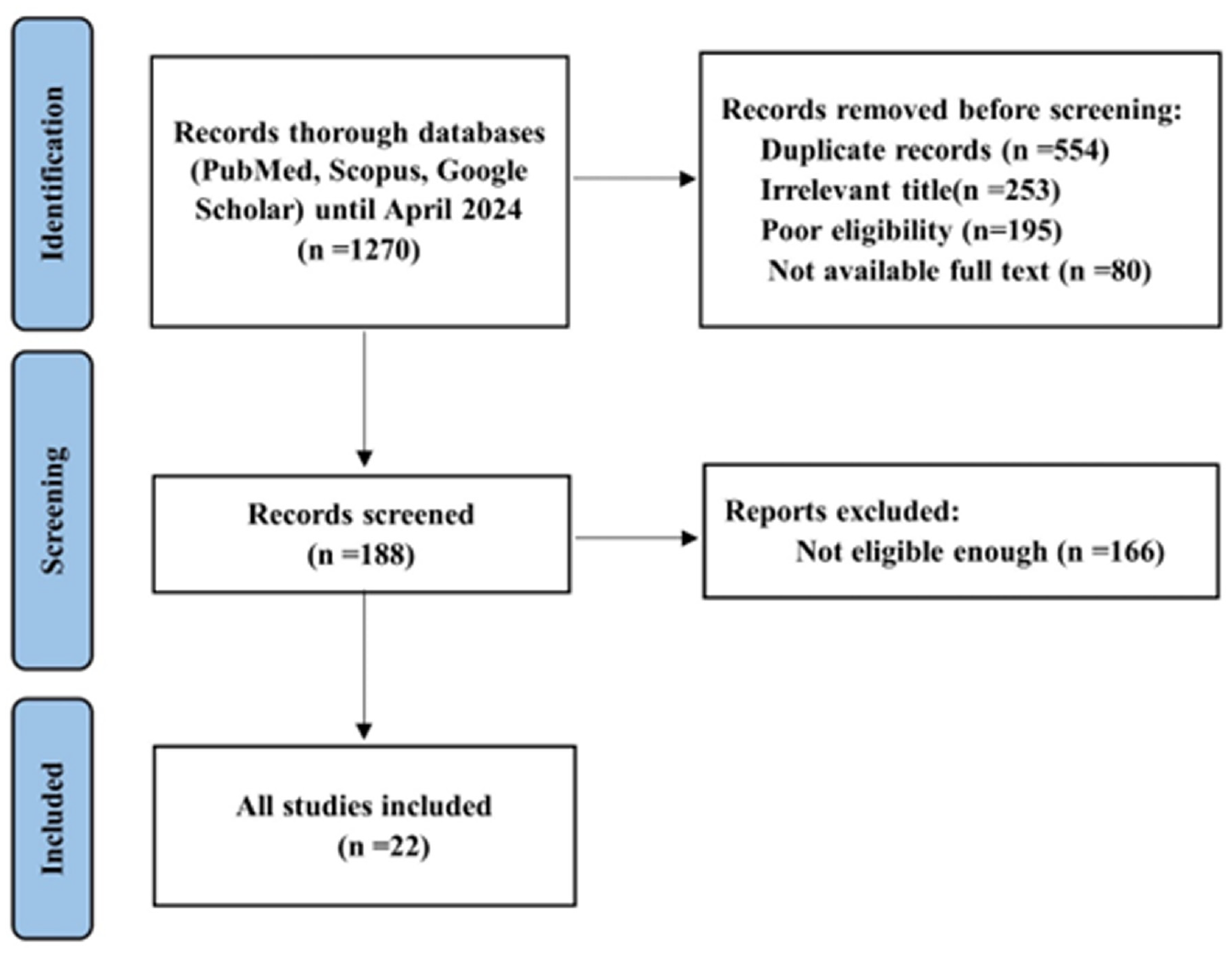
Flow Chart of Study Selection According to PRISMA Checklist
Role of Carob in Male Reproductive Health
As highlighted in the introduction, numerous studies indicate that carob may play a role in addressing aspects of male infertility (Table 3). The compound demonstrates various influences on the male reproductive system, which include the following.
Summary of Carob Effects on Male Reproductive Health

Impact on Sperm Quality and Quantity
Sperm Count
For centuries, carob has been credited with boosting male fertility (Sadogh et al., 2022). This belief is based on traditional medicine practices in some regions (Ikram et al., 2023). However, scientific evidence to support this claim has only emerged recently. Studies on animals have shown that carob extract (concentrated preparations derived from carob pods are obtained through a range of extraction processes) consumption led to an increase in sperm concentration (Mehdikhani et al., 2020; Soleimanzadeh et al., 2020). More recent studies involving human participants have yielded mixed results. Some indicate positive effects on sperm motility and morphology, but not necessarily on sperm count (Faramarzi, Aghaz, Golestan Jahromi, et al., 2019; Javanmard et al., 2022). Others suggest an overall improvement in semen parameters, including sperm count, after carob extract supplementation. Several studies suggest a potential benefit of carob (carob fruit powder) consumption on sperm count. Mahdiani et al. (2018) reported a more than twofold increase in sperm concentration and count in carob consumers compared with controls (Mahdiani et al., 2018). Similarly, Sanagoo et al. (2021), Aghajani et al. (2021), and Pilehvari et al. (2023, 2024) all observed significant improvements in sperm count following carob intake in infertile men (Aghajani et al., 2021; Pilehvari et al., 2023, 2024; Sanagoo et al., 2021). Carob consumption has been shown to mitigate the negative effects of various toxins on sperm count. Soleimanzadeh et al. (2020) and Vafaei et al. (2018) documented significant improvements in sperm count following carob supplementation in lead-induced toxicity and busulfan-induced infertility, respectively (Soleimanzadeh et al., 2020; Vafaei et al., 2018). Positive results are not consistent across all studies. Faramarzi, Aghaz, Bakhtiari, et al. (2019), Javanmard et al. (2022), and Farazmand et al. (2023) reported no statistically significant improvement in sperm count among infertile men consuming carob, which may be attributed to variations in the methodologies applied (Faramarzi, Aghaz, Bakhtiari, et al., 2019; Farazmand et al., 2023; Javanmard et al., 2022). One of a potential mechanism by which carob exposure may lead to increased sperm count could be attributed to its antioxidant properties (Ritchie & Ko, 2021). Oxidative stress, an imbalance between free radical generation and antioxidant defenses, can wreak havoc on the delicate processes of spermatogenesis, leading to sperm damage and reduced sperm count (Buzadzic et al., 2015). Carob, brimming with antioxidants like polyphenols, flavonoids, and vitamins C and E, acts as a potent shield against oxidative assault. By neutralizing harmful free radicals, carob safeguards sperm cells from oxidative damage, preserving their integrity and promoting healthy sperm production (Mahdiani et al., 2018). Carob’s richness in selenium, a trace element crucial for antioxidant enzyme function, further enhances its protective effects. Selenium augments the activity of glutathione peroxidases (GPx), enzymes that neutralize hydrogen peroxide (H2O2), a particularly damaging free radical (Figure 2). Carob’s vitamin E content bolsters cell membrane integrity, while its ability to lower C-reactive protein (CRP) and tumor necrosis factor-α (TNF-α) levels further alleviates oxidative stress and promotes a favorable environment for spermatogenesis (Abolghasemi et al., 2022; Mahdiani et al., 2018). Carob offers more than just antioxidant benefits. It contains special fatty acids that act as messengers within the body. These messengers trigger the production of testosterone, a key hormone for sperm production. In simpler terms, carob’s unique components may lead to a rise in testosterone levels, potentially boosting sperm production (Abolghasemi et al., 2022; Mobli et al., 2015; Sadeghzadeh et al., 2020; Soleimanzadeh et al., 2020; Vafaei et al., 2018). While further research is warranted to fully unravel the intricacies of carob’s impact on male fertility, the available evidence paints a compelling picture. Carob’s antioxidant and hormonal properties, coupled with its ability to modulate oxidative stress and inflammatory markers, position it as a promising natural approach for enhancing sperm count and supporting male reproductive health.

Effects of Carob on Sperm Count, Motility, and Morphology
Sperm Motility
Sperm motility, a key factor in male fertility, can be affected by various lifestyle factors (Althakafi et al., 2017). Recent research suggests carob, a sweet pod from the Mediterranean carob tree, might hold promise for improving sperm health. Several studies have explored the impact of carob on sperm motility, yielding mixed results. Studies by Mahdiani et al. (2018), Faramarzi, Aghaz, Bakhtiari, et al. (2019), Faramarzi, Aghaz, Golestan Jahromi, et al. (2019), Faramarzi et al. (2020), Aghajani et al. (2021), Sanagoo et al. (2021), Javanmard et al. (2022), and Heidari et al. (2023) observed significant improvements in sperm motility following carob consumption or supplementation (Aghajani et al., 2019; Aghajani et al., 2021; Faramarzi, Aghaz, Bakhtiari, et al. 2019; Faramarzi, Aghaz, Golestan Jahromi, et al., 2019; Heidari et al., 2023; Javanmard et al., 2022; Mahdiani et al., 2018; Sanagoo et al., 2021). These studies suggest carob may enhance motility even after cryopreservation, a process known to harm sperm (Faramarzi, Aghaz, Bakhtiari, et al., 2019; Faramarzi, Aghaz, Golestan Jahromi, et al., 2019; Heidari et al., 2023). Carob appears to outperform Vitamin E in some cases, exhibiting superior motility benefits (Aghajani et al., 2019; Sanagoo et al., 2021). For instance, Sanagoo et al. (2021) reported a motility increase from 45.90% to 52.90% with carob compared to a decrease with Vitamin E (Sanagoo et al., 2021). Javanmard et al. (2022) documented a nearly threefold rise in motility following carob administration (Javanmard et al., 2022). Notably, Heidari et al. (2023) even found low carob concentrations to be effective in preventing motility decline during cryopreservation (Heidari et al., 2023). Supporting these findings, Ahmadian et al. (2023) and Farazmand et al. (2023) observed motility improvements with carob capsule consumption (Ahmadian et al., 2023; Farazmand et al., 2023). Interestingly, animal studies by Sadat et al. (2019) and Soleimanzadeh et al. (2020) mirrored the positive effects observed in human studies, suggesting a broader applicability of carob’s benefits (Sadat et al., 2019; Soleimanzadeh et al., 2020). It is important to acknowledge conflicting studies by Pilehvari et al. (2023, 2024) that did not detect any significant motility changes associated with carob which might be attributed to differences in study design, sample size, and carob dosage (Pilehvari et al., 2023, 2024). Carob’s potential to improve sperm motility can be attributed to several mechanisms, particularly its antioxidant properties. By acting as a free radical scavenger, carob may prevent lipid peroxidation in sperm membranes, a process known to damage sperm and hinder their ability to move efficiently (Hadwan et al., 2014). High doses of carob appear to influence motility through its effect on nitric oxide. Arginine of carob is a precursor to nitric oxide, which helps relax blood vessels and improve blood flow. This may improve blood flow to the testicles, which is important for sperm production. This molecule, when elevated by carob, activates soluble guanylate cyclase (sGC), leading to a subsequent increase in cyclic guanosine monophosphate (cGMP) synthesis. The rise in cGMP further activates cGMP-dependent protein kinases, a cellular signaling cascade ultimately resulting in enhanced sperm motility (Figure 1) (Buzadzic et al., 2015). Recent research suggests a separate mechanism by which carob might improve sperm function: an increase in energy production within the sperm’s mitochondria. This enhanced energy production likely provides the sperm with the necessary fuel for stronger and more sustained motility (Otasevic et al., 2013). Vitamin B6 of carob is involved in hormone regulation, including testosterone production (Symes et al., 1984). While carob shows promise as a natural supplement for improving sperm motility, larger, more controlled studies are needed to confirm carob’s effectiveness and determine the optimal dosage for improving sperm motility.
Sperm Morphology
Some studies suggest carob may positively influence sperm morphology (Aghajani et al., 2021; Faramarzi, Aghaz, Bakhtiari, et al., 2019; Javanmard et al., 2022; Pilehvari et al., 2023, 2024; Sanagoo et al., 2021). Their results indicate carob extract consumption can lead to an increase in the percentage of sperm with normal morphology with busulfan-induced infertility (Faramarzi, Aghaz, Golestan Jahromi, et al., 2019; Mahdiani et al., 2018). In a randomized controlled trial (RCT) involving 90 infertile men, carob supplementation significantly increased the percentage of normally morphologic sperm compared with the control group (Mahdiani et al., 2018). A 2019 study by Faramarzi et al. demonstrated that carob supplementation significantly increased the percentage of sperm with normal morphology in infertile men compared with the control group (Faramarzi, Aghaz, Golestan Jahromi, et al., 2019). A 2019 study by the same authors found that carob supplementation improved sperm morphology in frozen-thawed semen samples with pre-existing morphological abnormalities (Faramarzi, Aghaz, Bakhtiari, et al., 2019). Sanagoo et al. further corroborated these findings in a 2021 study, reporting a 67% increase in the proportion of normally morphologically sperm in carob-supplemented individuals compared with baseline. Interestingly, vitamin E supplementation also showed a positive effect on sperm morphology in this study (Sanagoo et al., 2021). Aghajani et al. observed that carob supplementation led to an increase in normally morphologically sperm, while vitamin E supplementation resulted in a decrease. This discrepancy might be attributed to differences in study design, sample size, and carob dosage (Aghajani et al., 2021). Javanmard et al. explored the impact of carob extract on sperm morphology in a 2022 study. Findings demonstrate that 20 µg/mL carob extract significantly improved sperm morphology, bringing it closer to the levels observed in the fresh semen group (Javanmard et al., 2022). Pilehvari et al. conducted two studies in 2023 and 2024, demonstrating that carob supplementation not only enhanced sperm morphology but also performed better than other herbal remedies, including ginseng. Compared with the placebo group, carob increased the percentage of normally morphologically sperm by up to 100% (Pilehvari et al., 2023, 2024). Sperm morphology is highly susceptible to oxidative damage due to the unique structure of the sperm cell, which limits the availability of protective antioxidant enzymes within the sperm itself. Because of this limited availability, sperm health and fertility are heavily dependent on the accessibility of antioxidants (Fanaei et al., 2014). Carob is thought to exert its protective effects by enhancing antioxidant activity. Rich in polyphenols and flavonoids, it acts as a potent antioxidant, scavenging free radicals and reducing oxidative stress (Dahmani et al., 2023). Carob consumption has been shown to enhance mitochondrial function, leading to increased energy production and further reducing oxidative stress within sperm cells (Farazmand et al., 2023). Carob’s anti-inflammatory properties may help regulate inflammatory processes that contribute to sperm damage (Figure 2) (Mahdiani et al., 2018).
Effects on Oxidative Stress
Our bodies maintain a delicate balance between free radicals and antioxidants (Chumnantana et al., 2005). Free radicals, unstable molecules with unpaired electrons, can wreak havoc on cells and contribute to various health problems (Gupta et al., 2014). Antioxidants, on the other hand, act as cellular protectors by neutralizing these free radicals. Carob is a rich source of natural antioxidants. These include phenolic compounds, abundant in carob pods (the fruit of the C. siliqua tree) and exhibiting potent free radical scavenging abilities. Flavonoids, another class of antioxidants present in carob, offer protection against cellular damage. Finally, carob also contains tannins that may help prevent chronic diseases associated with oxidative stress (Shahrajabian & Sun, 2024; Youssef et al., 2013). Current research on carob’s impact on oxidative stress and male fertility is limited and inconclusive. While a 2018 study by Mahdavi et al. showed increased total antioxidant capacity, reduced malondialdehyde (MDA) levels, and lower levels of inflammatory markers CRP and TNF-α following carob consumption, these findings are not universally consistent (Mahdiani et al., 2018). Another study (Abolghasemi et al., 2022) suggests carob may elevate selenium (Se) concentrations in infertile males, but its influence on zinc (Zn) levels and superoxide dismutase (SOD) activity remains unclear (Abolghasemi et al., 2022). A research by Aghajani et al. (2021) found no significant difference in the oxidative stress index between carob and vitamin E groups (Aghajani et al., 2021). Carob may mitigate oxidative stress in the male reproductive system by upregulating the Nuclear factor erythroid 2-related factor 2 (Nrf2) signaling pathway. Nrf2, a transcription factor, plays a crucial role in cellular defense against oxidative stress. Upon activation, Nrf2 translocates to the nucleus and induces the expression of various antioxidant and detoxification enzymes. Carob polyphenols, particularly gallic acid and tannins, have demonstrated the ability to activate Nrf2, thereby enhancing cellular antioxidant defenses (Figure 3) (Soleimanzadeh et al., 2020).

Effects of Carob on Oxidative Stress, Sex Hormones, and Reproductive Genetics
Effects on Male Sexual Hormones
Carob pods contain a diverse range of phytochemicals, including polyphenols, flavonoids, tannins, and fiber. Notably, carob is a rich source of bioactive compounds such as gallic acid, catechins, epicatechins, and procyanidins, which possess antioxidant, anti-inflammatory, and hormone-modulating properties. These constituents interact with various physiological pathways, potentially influencing male sex hormone production and metabolism. Carob may directly interact with Leydig cells (Makris & Kefalas, 2004), the sites of testosterone production, stimulating them through prostaglandin E2 (PGE2) synthesis. Carob seeds contain precursors (gammalinolenic and alpha-linolenic acids) that convert to PGE2 (Mobli et al., 2015), leading to increased cyclic adenosine monophosphate (cAMP) and subsequent testosterone production (Figure 3) (Sadeghzadeh et al., 2020). Carob may contain phytochemicals that inhibit aromatase, the enzyme converting testosterone to estrogen. This prevents testosterone depletion (Lephart, 2015). Carob’s dietary fiber might influence gut microbiota, potentially impacting hormone metabolism and absorption indirectly (Cronin et al., 2021; Ikram et al., 2023; Santos-Marcos et al., 2023). Finally, carob polyphenols could interact with hormone receptors and signaling pathways, regulating testosterone synthesis and secretion (Martin & Touaibia, 2020). In conclusion, carob has the potential to enhance testosterone production, improve sperm quality, and mitigate reproductive dysfunction in men. However, further research is needed to validate these findings and translate them into clinical practice.
Effect on Male Reproductive Genetic Integrity
Examining its impact on reproductive system genetics are scarce. To date, only three studies have delved into this area. In 2019, Faramarzi et al. investigated the effect of carob supplementation on sperm chromatin condensation, a crucial factor in sperm quality and fertilization potential. Their findings suggest that carob may enhance sperm quality by improving chromatin condensation (Faramarzi, Aghaz, Bakhtiari, et al., 2019; Faramarzi, Aghaz, Golestan Jahromi, et al., 2019). This single study provides insufficient evidence to draw definitive conclusions about carob’s genetic influence on male reproductive health. Research on carob’s influence on other aspects of male health beyond fertility is also emerging. A 2023 study by Khazaei et al. explored the effect of carob pods on prostate cancer cells. Their in vitro experiment demonstrated that carob extract suppressed the proliferation of prostate cancer cells in a time- and dose-dependent manner. This anticancer effect appears to be mediated by inducing apoptosis (programmed cell death) and decreasing nitric oxide production. The study also found that carob extract increased the expression of genes associated with apoptosis, such as caspases-3 and -9, tumor protein p53 (p53), and Bcl-2 Associated X-protein (Bax), while decreasing the expression of the anti-apoptotic gene B-cell lymphoma-2 (Bcl-2). This resulted in a higher Bax/Bcl-2 ratio, further promoting cell death in cancer cells (Figure 3) (Khazaei et al., 2023). These findings suggest that carob may have potential benefits for prostate health, although further research is needed to confirm its efficacy in humans.
Future Directions and Research Opportunities
Considering the complexities of male infertility and the potential of carob to improve sperm health, it is important to explore promising research directions. While existing studies provide a base, there are many opportunities for further investigation that could deepen our understanding and lead to new treatments. Here are some key areas for future research:
Larger, Well-Designed Clinical Trials
Rigorous, well-designed clinical trials with diverse patient populations are essential to validate findings from preclinical studies. RCTs conducted over extended durations with double-blind placebo control will demonstrate the herb’s safety and efficacy, establish its optimal dosage, and identify potential adverse effects. Comparative studies evaluating carob against standard-of-care treatments will provide valuable insights into its therapeutic superiority or adjunctive benefits.
Mechanistic Elucidation
Understanding how carob influences sperm health is a critical goal. In-depth studies are needed to reveal the molecular pathways, cellular interactions, and physiological processes involved. This knowledge will illuminate the herb’s effectiveness and potency. Advanced molecular techniques like transcriptomics, proteomics, and metabolomics offer promise for deciphering the subtle mechanisms behind carob’s effects.
Exploration of Synergistic Combinations
Considering the multifaceted nature of male infertility, exploring the potential benefits of carob used in combination with existing treatments or other natural supplements represents a promising avenue for research. Synergistic effects with antioxidants, hormonal therapies, lifestyle modifications, or even other herbal remedies could lead to the development of novel therapeutic strategies with improved efficacy and patient outcomes.
Longitudinal Studies and Follow-Up Assessments
Longitudinal studies tracking patients over extended periods are crucial to elucidating the sustained effects of carob on sperm health, fertility outcomes, and reproductive health parameters. Comprehensive follow-up assessments can be used to evaluate potential relapse rates, the durability of therapeutic effects, and long-term safety considerations, ultimately informing clinical practice guidelines.
Investigation of Epigenetic Effect
Exploring the potential epigenetic effects of carob on sperm epigenome dynamics represents a burgeoning area of research. Epigenetic modifications play a pivotal role in sperm health, fertility, and offspring health, thus warranting investigation into whether carob exerts modulatory effects on DNA methylation patterns, histone modifications, or non-coding RNA profiles.
Impact on Pregnancy Rates
While the review focused on sperm parameters, future studies should assess whether carob supplementation translates to improved pregnancy rates in infertile couples.
Conclusion
The growing body of research on carob’s potential benefits for male fertility paints a compelling picture. Studies suggest that carob may positively affect sperm parameters. Carob consumption might contribute to increased sperm concentration, possibly through its antioxidant properties and influence on testosterone production. Carob’s antioxidant and nitric oxide–related effects seem to play a role in improving sperm motility, even after cryopreservation. Carob appears to promote the development of sperm with normal morphology by reducing oxidative stress and enhancing mitochondrial function. The evidence is not without inconsistencies. While some studies observed significant improvements in various sperm parameters, others reported no statistically relevant changes. In addition, carob’s influence on male sex hormones, particularly testosterone levels, remains ambiguous. Carob shows promise as a natural supplement for male fertility. More research is required to definitively establish its effectiveness and translate these findings into reliable clinical recommendations.
Limitation
This review is based on a relatively small number of studies, which exhibit considerable variability in methodological quality. The diverse study designs—including differences in sample sizes, outcome measures, and the lack of placebo controls—make it difficult to draw definitive conclusions about the long-term effects of carob on male fertility. The absence of standardized protocols and consistency across studies further complicates the interpretation of results. To better understand the impact of carob, future research should focus on employing rigorous methodologies and standardized outcome measures.
Footnotes
Acknowledgements
During the preparation of this work, the author used Gemini to improve the quality of the text of the article as well as to write the “Future Research Directions” section and also to check. After using Gemini, the author reviewed and edited the content as needed and take full responsibility for the content of the publication.
Author Contributions
AMF was responsible for overall supervision. AMF drafted and revised the manuscript.
Declaration of Conflicting Interests
The author(s) declared no potential conflicts of interest with respect to the research, authorship, and/or publication of this article.
Funding
The author(s) received no financial support for the research, authorship, and/or publication of this article.

Data Availability
Data sharing is not applicable as no new data were generated or analyzed during this study.