




Abstract
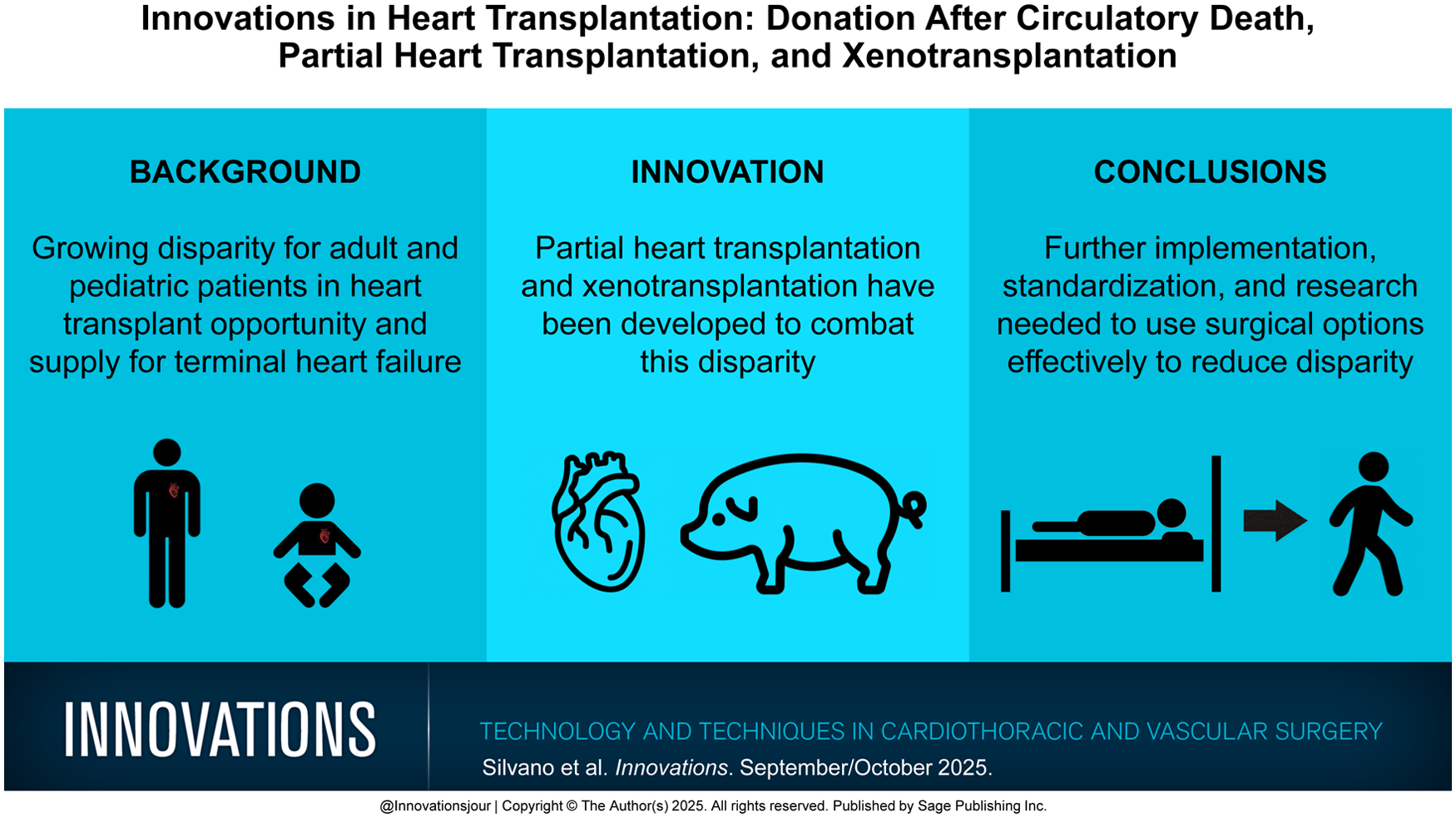
Despite efforts to improve donor heart allocation policies, geographic disparities, logistical challenges and patient criteria limit organ availability. However, recent surgical innovations offer potential solutions. These include partial heart transplantation and xenotransplantation. Partial heart transplantation is a new procedure with the potential to address several clinical challenges in treating congenital heart defects. Cardiac xenotransplantation involves the transplantation of genetically modified porcine hearts into humans, offering a potential solution to the shortage of donor organs. Although immunologic barriers and ethical concerns remain, ongoing research aims to mitigate the risks and optimize outcomes, providing hope for patients in need. These innovative surgical approaches offer promising avenues for addressing the critical shortage of donor hearts and with ongoing research, may hold the potential to revolutionize heart transplantation, and improve outcomes for patients facing terminal heart failure.
Get full access to this article
View all access options for this article.