



Abstract
Understanding and assessing worker performance is of major sociological and economic interest. This importance is mirrored in the extent of research that analyzes incentives and behavioral traits influencing worker performance. Most of this research focuses on workers in a peaceful or stable environment. However, a large share of the global population works in a country that is at war. To examine the situation of workers in such a vulnerable situation, micro-level data is necessary but often unavailable. Esports is an exception as data regarding professional players – workers – is accessible. Here, we examine how Ukrainian and Russian professional players behave before and since the Russian invasion. Contrary to popular thinking, we find a sizable improvement in performance. For Ukrainians, the effect is especially prominent for live events, and for Russians, for online events. Our results demonstrate that the behavior of professional gamers rapidly changed after the occupation.
Introduction
Research shows that many aspects, both substantial and minor, affect worker performance. Major factors such as a healthy physical or mental constitution have a positive influence on worker performance (Slaski & Cartwright, 2002; Wright et al., 1993). Smaller things, like low-cost incentives or interventions, for example, symbolic awards (Jalava et al., 2015; Kosfeld & Neckermann, 2011), employee recognition (Bradler et al., 2016), private performance feedback (Gerhards & Siemer, 2016), being ranked first or last as an employee (Gill et al., 2019), or reinserting meaning to workers’ tasks (Chadi et al., 2017) have a positive influence on worker performance. However, not all incentives clearly have a positive impact on worker performance. Team incentives and pay-for-performance illustrate this ambiguity. The results for team incentives, for example, are inconclusive. Friebel et al. (2017) and Butler et al. (2020) find a positive, while Delfgaauw et al. (2020; 2022) find no effect of team incentives on performance. Research on pay-for-performance also points in several directions. In his seminal paper, Lazear (2000) shows that, under certain conditions, pay for performance is effective. Analyzing multiple studies Hasnain et al. (2016) confirms Lazears findings while Bowman (2010) and Perry et al. (2017) conclude that performance pay rarely works.
These examples demonstrate various measures that either employers, employees, or both influence or actively control. However, several factors influencing workers’ performance are beyond the control of individuals or companies, such as natural disasters, local sports teams winning a national championship, political turmoil, or health crises. While employees and employers may have more control over personal health, low-cost interventions, or pay for performance, this does not negate the impact of uncontrollable factors on workers’ performance, with war being one such factor that employers and employees cannot control.
War is neither negligible nor infrequent for many societies. Setting the lower limit to 1,000 casualties, at least 23 countries were at war in 2022 (this includes casualties due to ethnic violence, civil war, terrorist insurgency, or drug war). Wars can last for years; thus, many companies cannot halt their business and must adapt to the circumstances and assess how their employees will work under these conditions. In February 2022, Russia attacked Ukraine and started a war that is still ongoing at the time of writing. The conflict resulted in enormous human casualties and had far-reaching economic implications (Liadze et al., 2022; McKee & Murphy, 2022). Millions of Ukrainians had to flee Ukraine, while others chose or had to stay to support the Ukrainian military (Kumar et al., 2022). This led to a situation where many Ukrainians outside Ukraine were not physically but mentally affected by the war (Bai et al., 2022).
The situation is also challenging, but in a different way, for Russian citizens. The annexation of the Crimean Peninsula in 2014 significantly worsened the relationship between the two countries (Naidenova et al., 2020). After the start of the war in 2022, the situation in Russia immediately worsened economically and publicly (Khudaykulova et al., 2022). Showing public disapproval of the war can lead to severe repercussions in Russia. For example, calling the invasion in Ukraine a “war” is punishable by up to 15 years in prison; demonstrations are violently suppressed, and most of the media is state-controlled and censored (Ermoshina et al., 2022; Press Freedom Index, 2022). The press freedom index annually ranks a country's press freedom. In 2022, out of 180 countries, Russia was listed at position 155.
In this research, we analyze how the performance of Ukrainian and Russian workers changed since the start of the war. We look at one group of workers: professional esports players. Esports players do not represent workers in general; however, several workers in IT or other areas perform similar tasks (Coates et al., 2020; Parshakov et al., 2022). Research shows that professional gaming has several similarities (with respect to rules and regulation, task structure, or labor regulations) with other industries or traditional sports (Taylor, 2012; Witkowski & Manning, 2019). Specifically, we empirically examine the performance of Counter-Strike: Global Offensive (CS:GO) players. The data includes the performance of professional players from 2012 until July 2022. Additionally, we perform a survey with CS:GO players and ask them to assess the situation of Ukrainian and Russian professional players.
We examine the performance of professional CS:GO players before and after the start of the war. These players are especially interesting as they have technical-tactical talents and should be emotionally resilient (Bihari & Pattanaik, 2024; Bonilla et al., 2022). Our results show, in stark contrast to the expectation of CS:GO players, that the performance of professional CS:GO players from Ukraine and Russia statistically significantly improved since the start of the war. Additionally, we find that Ukrainians perform better for live events, and Russians perform better for online events.
We hypothesis that Ukrainian players benefit from the increased public support. This “special status” is complicated by the fact that many Russian players, similar to athletes in other sports (e.g., ice hockey player Nikita Zadorov or tennis player Daniil Medvedev), have voiced their disagreement with the war. For most Olympic sports, these athletes are not affiliated with a state during competition. Russian esports players, however, are among the last Russians who can represent their country in an international competitive setting. Still, several Russian esports players declared not to represent Russia (e.g., Denis “electroNic” Sharipov or Vsevolod “Pradiggg” Plotnikov). While this doesn't change the special status of their play, it does introduce broader cultural nuances that need consideration. The players are navigating a complex situation, choosing to distance themselves from the Russian state while still competing as Russian nationals. This unique dynamic may contribute to their heightened focus and performance.
Section 2 gives a brief overview about CS:GO and esports, section 3 presents the methodology, section 4 analyzes the results, section 4 discusses the results, and section 6 concludes.
Counter Strike: Global Offensive and Esports
Many games are prominent in esports. CS:GO is a good example of esports as it has had a long lifecycle, being played in a different modification since 1999 (Li, 2017), has the third-highest worldwide viewership (Andrejkovics, 2020), and demands an extremely high skill level for players to succeed. These factors are necessary as “a potential Esport game is therefore predicated upon the existence of a suitably large and dedicated player base, and the labour of every person in that playerbase” (Johnson & Woodcock, 2021, p.1458).
The winning team (consisting of five players and a coach) normally receives around $400,000-$600,000. The top 50 worldwide CS:GO players have lifetime earnings received from tournaments (excluding commercials) between $2 million and $500,000 (esportsearnings.com, 2022). These numbers show that while esports is not yet as popular as some traditional sports in terms of revenue, it is clearly not a niche sector. Additionally, similar to other esports, CS:GO has an active fan base. These fans might play themselves, but an increasing focus is on watching other professionals play (Seo, 2016). Thus, fans follow matches via stream and discuss the results on online platforms. Highlight videos on youtube.com can have more than a million viewers, and streams of professional tournaments on twitch.tv routinely have more than 100,000 viewers. Prize pools for major tournaments are around $1 million – four tournaments have paid out higher amounts.
CS:GO is a first-person shooter. Two teams of five players compete against each other. The first team to win at least 2 or 3 maps (thus best of 3 or 5 formats - like Tennis) wins the game. A map is played until one team has won at least 16 rounds. In overtime, e.g., when both teams won 15 rounds, a round can go longer than 16 wins. Rounds are limited to 115 s. During this time, teams must complete their objectives. Before the start of a round, teams are categorized into Terrorist and Counterterrorist. Both teams have two possibilities to reach their objectives. First, they can kill all members of the other team. Second, terrorists win a round if the bomb that they planted explodes, counterterrorists win if they defuse the bomb.
Professional CS:GO players face several hardships during their career. Apart from common knowledge that most professional esports players must retire at a young age (Tekofsky et al., 2013, 2015), players can also face significant financial constraints (Johnson & Woodcock, 2021), interference in their personal life (Lin & Zhao, 2020), or difficulties securing their rights: “players are often left battling to find a healthy practice across locations and their roles within them” (Witkowski & Manning, 2019, p. 962). Thus, while CS:GO is an extremely popular and long-lived game with rules and a solid fan base, players nonetheless are often in precarious situations.
Methodology
We examine the position of esports players from two different perspectives, comparing them with each other. First, we conduct an online survey on reddit.com, asking respondents if and how they think the war in Ukraine influenced player performance (see section 3.1). Afterwards, we analyze performance data for professional players. Finally, we compare the results from the survey with the performance data from professional players.
Contrasting the Situation of Ukrainian and Russian Professional Players with Forecasts from CS:GO Players
Before examining the data assessing the performance of professional players, we sought to understand how CS:GO players evaluated the situation of Ukrainian professional players. Recent research has emphasized the importance of surveying experts as respondents provide unique insights (Dellavigna et al., 2022; Dellavigna & Pope, 2018). We posted an online survey on reddit.com in the CS:GO subsection, following a methodology used by previous research examining esports players (Johnson & Abarbanel, 2022). This subsection is a popular forum for people who either play themselves or follow the game as supporters. At the time of writing, the forum has 1.7 million members.
We choose a general survey description (the title was “GlobalOffensive Research Question”, the full description is available in the supplementary material) as we did not want players interested in the war in Ukraine to self-select into the survey. 17,600 people saw the post that asked people to participate in the survey, 309 people clicked on the survey, 152 people started filling out the survey, and 150 people finished the survey. The complete results of the survey are available in the supplementary material (Table A1). The survey was accessible from 30.07.2022 until 02.08.2022. The majority of the respondents were below 34 years (95%), male (95%), from Europe (54%) or North America (31%), played CS:GO (98%), and played CS:GO daily (54%).
Most of the respondents thought that major political decisions would affect CS:GO player performance (69%). Interestingly, respondents thought that the attitude towards both Ukrainian (83%) and Russian players (80%) since the start of the war changed. One player wrote, “At the beginning of the russian invasion on Ukraine I have noticed much more hatred aimed at Russian players than beforehand.” Another player focused on the attitude towards Ukrainian players saying, “people are generally a lot more friendly towards Ukrainians”. The general tendency of respondents was that the attitude towards Ukrainian players improved, while it worsened towards Russian players. One player, however, thought that this was not really possible: “Many players cannot distinguish between ukrainian and russian players, so sometimes ukrainians also get hated.”
The most important questions dealt with the performance of Ukrainian and Russian players. We asked respondents if they thought that Ukrainian and Russian player performance improved, stayed the same, or worsened since the start of the war. Regarding Ukrainian players, 6.8% of the respondents thought the performance improved, 22% thought the performance did not change, and 65% thought the performance worsened. Regarding Russian players, 1.4% of the respondents thought the performance improved, 53% thought the performance did not change, and 46% thought the performance worsened.
The results from this survey, however, must be interpreted with caution. First, compared to previous research in this area, our sample size is small (Johnson & Abarbanel, 2022). Second, respondents on reddit are not necessarily representative of the CS:GO community. Research finds that Reddit can be important but also a divisive and exclusionary platform (Xue et al., 2019; Yadav et al., 2022).
Data and Empirical Approach for Professional Esports Players
After analyzing the data from the Reddit survey, we examine the time frame for professional players from 2012 until 2022. Table 1 provides an overview of the data we use, showing the data for all matches and splitting the data for matches played before and after the war started.
Summary statistics for all matches, before the war started, and after the war started. one observation is one player in one round playing one map.*
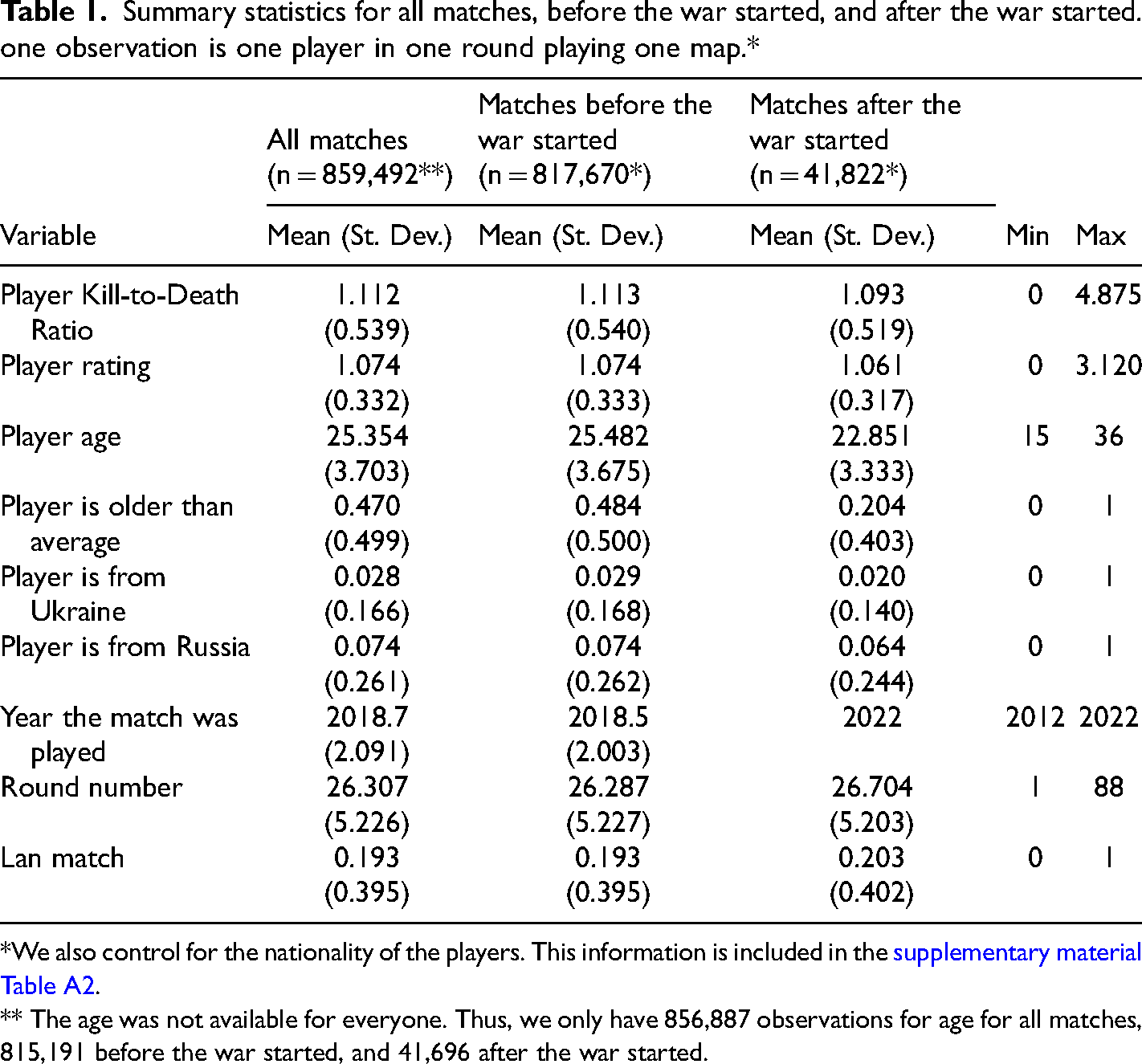
We also control for the nationality of the players. This information is included in the supplementary material Table A2.
** The age was not available for everyone. Thus, we only have 856,887 observations for age for all matches, 815,191 before the war started, and 41,696 after the war started.
A straightforward measurement to assess the strength of a player is to compare how often the player was killed compared to how often the player killed someone else, the so-called KD (Kill-to-Death) ratio. Another approximation for performance is the player rating. Unfortunately, the source of the player rating, HLTV.org, does not state how this rating is calculated. They only mention that it is a combination of several factors. Due to this ambiguity, we use player rating as a robustness check but not as our main variable of interest.
We include the age of the player (also age squared), whether the player is older than the average player, and the nationality of the players (a full list of player nationalities is available in the supplementary material – Table A2). In esports, age is especially interesting as research links age to reaction time and, thus, to performance (Tekofsky et al., 2013, 2015). Similar to traditional sports, the location of a match might influence a player's performance (Nevill & Holder, 1999; Ponzo & Scoppa, 2018). Thus, we distinguish whether a match was online or played in a local area network (LAN). Finally, we control for the maps, the round of the match (professional matches are often played in a best-of-five series), and include player and year fixed effects.
We estimate the following model for our analysis of Ukrainian players:
We perform the same model, with the same specification for Russian players as well. Thus, with
Results
Focusing on Ukrainian Players
Figure 1 compares the performance of Ukrainian CS:GO players with players from Denmark and the United States. The horizontal line represents the start of the war. Players from Denmark received the most prize money ever in tournaments and the United States has the largest professional player base and players received the 2nd most prize money ever. At the time of writing, players from Denmark received $19,407,621.78 and players from the United States $13,147,448.72. Players from Ukraine are in the 8th position having earned $5,387,057.67 (esportsearnings.com, 2021). The figure illustrates that the performance of Danish players approximately stayed the same since the start of the war while the performance of players from the United States decreased. The performance of Ukrainian players, however, increased.
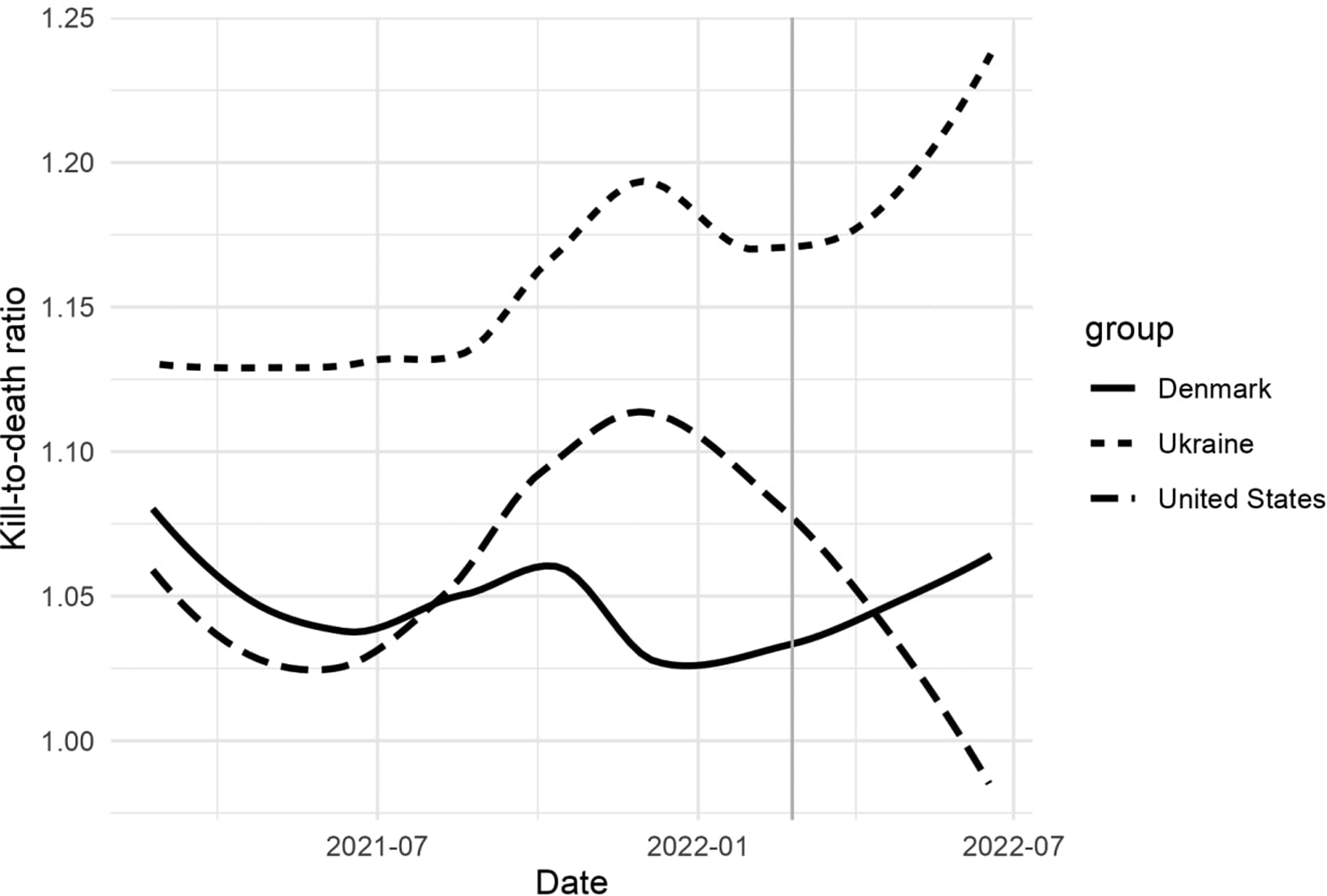
Kill-to-death ratio from 07.2021 to 07.2022 for CS:GO players from Denmark*, Ukraine, and the United States*. *Players from Denmark and the United States received, respectively, the largest and second largest prize money for tournaments ever.
Table 2 confirms these results using regression analyses, with Kill-to-Death Ratio as the dependent variable. Using rating and not Kill-to-Death ratio leads to similar results. Table 2 and Figure 2 are available in the supplementary material with rating as the dependent variable, respectively, as Figure A1 and Table A3. Model 1 controls for Ukrainian players, Ukrainian players before the war, and Ukrainian players after the war. All other models (Model 2–6) include whether the game was online or LAN, and age and age squared. Model 3 includes year fixed effects, and Models 4, 5, and 6 include both player and year fixed effects. In Model 5, we interact whether a match was online or LAN with Ukrainian players, Ukrainian players before the war, and Ukrainian players after the war. In Model 6, we interact players that are older than the average with Ukrainian players, Ukrainian players before the war, and Ukrainian players after the war. All models have a low R-squared and adjusted R-squared, indicating that other variables could also influence the results.
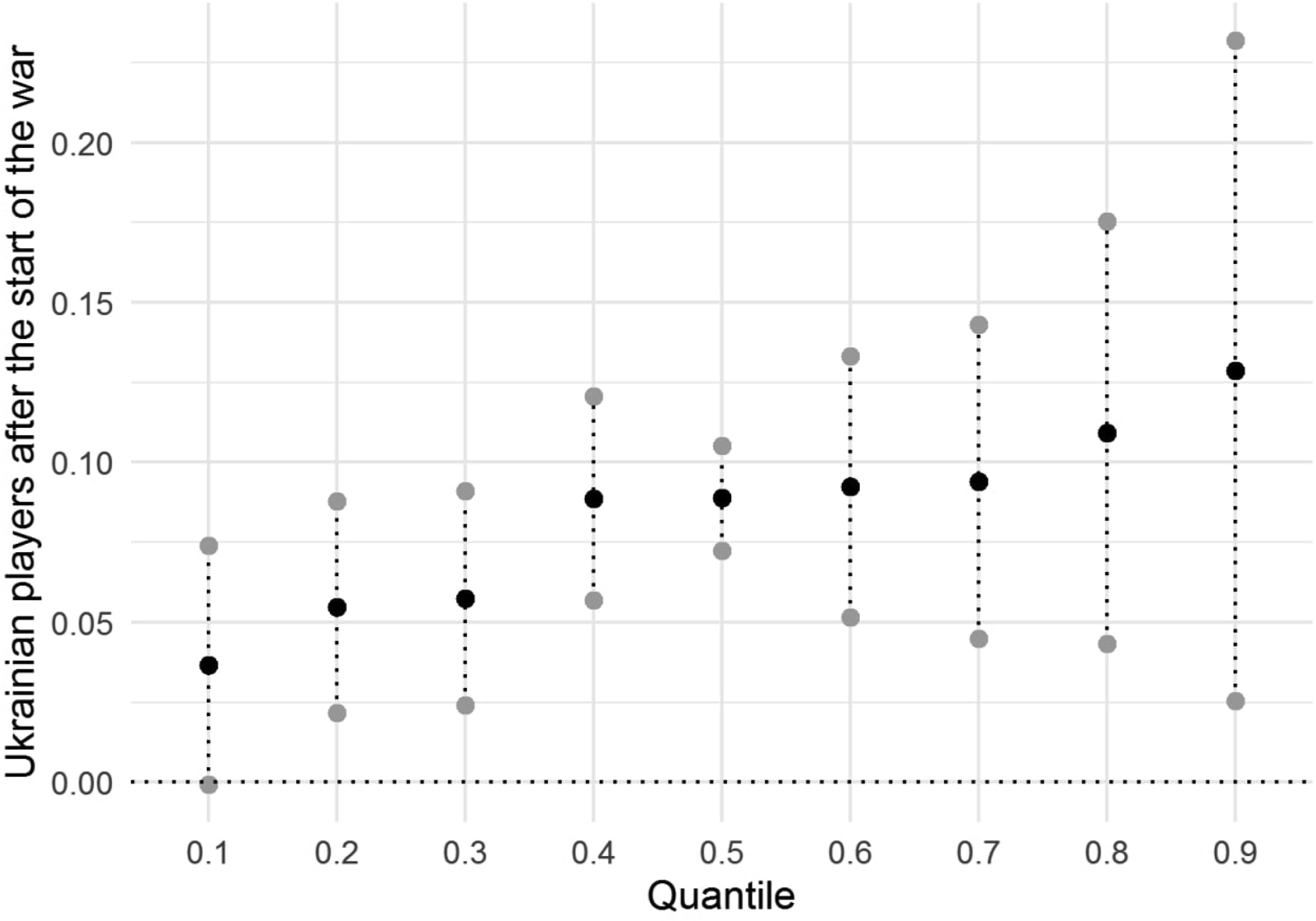
Kill-to-death increase for Ukrainian players – from highest to lowest quantile.
Regression results focusing on ukrainian players.
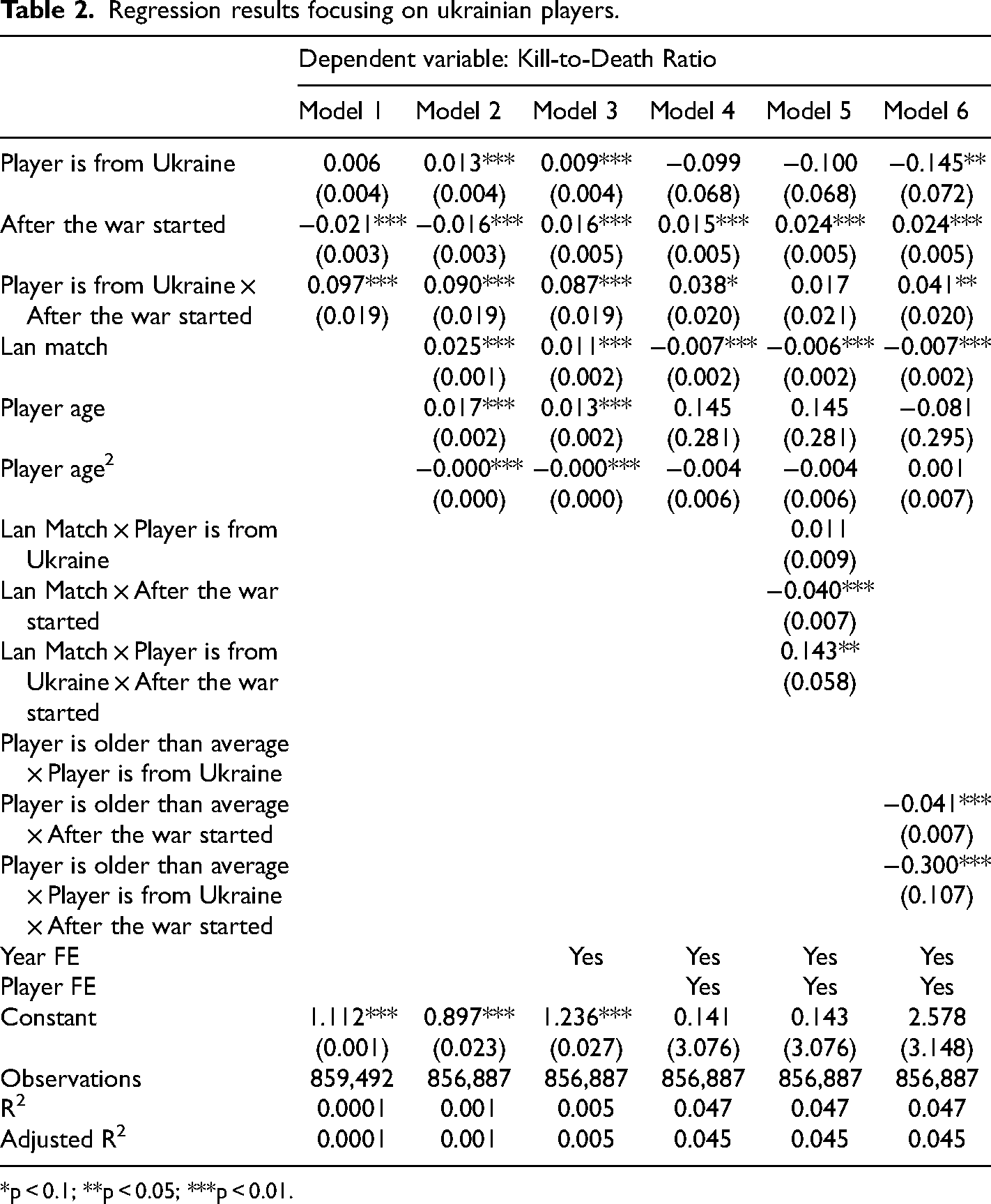
*p < 0.1; **p < 0.05; ***p < 0.01.
The results show that the performance of Ukrainian players – in terms of their Kill-to-Death ratio – statistically significantly increased after the start of the war. The Kill-to-Death ratio for Ukrainian players after the start of the war increased in all models. The magnitude, however, varies. We find the lowest impact in Model 4, a 3.8 percentage point increase.
Model 5 focuses on LAN matches. These results show the largest increase for Ukrainian players after the war: the Kill-to-Death ratio increases by 14.3 percentage points. Older than average Ukrainian players, however, underperform since the start of the war (Model 6). Player age and player age squared show the respective, expected positive and negative signs. Additionally, we are interested in the performance of players with different skill sets, i.e., at players with different Kill-to-Death ratios. It is important to examine if the performance changes are only due to specific player groups. Figure 2 shows the performance from the lowest quantile players (in terms of Kill-to-Death ratio increase/decrease) to the highest quantile players. Thus, we split the Kill-to-Death ratio performance of players starting from the lowest quantile (Kill-to-Death ratio lower than 0.562) to the highest quantile (Kill-to-Death ratio higher than 1.77).
The Kill-to-Death ratio increased for all players, from the lowest to the highest quintile. The performance of the highest quintile players improved the most – on average, above 15 percentage points. It is also interesting to examine one specific group for Ukraine. Historically, one Ukrainian esports team – NaVi – has performed better than most other Ukrainian teams. In the last years, this team has been especially successful in CS:GO. NaVi has also been successful at other esports, for example, playing Dota 2 and winning The International in 2011. Thus, as a robustness test, we run Table 2 again, but exclude NaVi. The regressions are available in the supplementary material Table A4. The results show that the performance of Ukrainian players after the war still increased; however, not to the same extent as before. This aligns with Figure 1, which showed that the performance increase of Ukrainian players was distributed unevenly.
Focusing on Russian Players
Figure 3 compares the performance of Russian CS:GO players with players from Denmark and the United States. Similar to the case of Ukrainian players, we find that the performance improves. In April, however, the performance significantly decreased. One reason for that could be that in esports, like in other areas, sanctions were imposed and made it more difficult for Russian players inside Russia to compete.
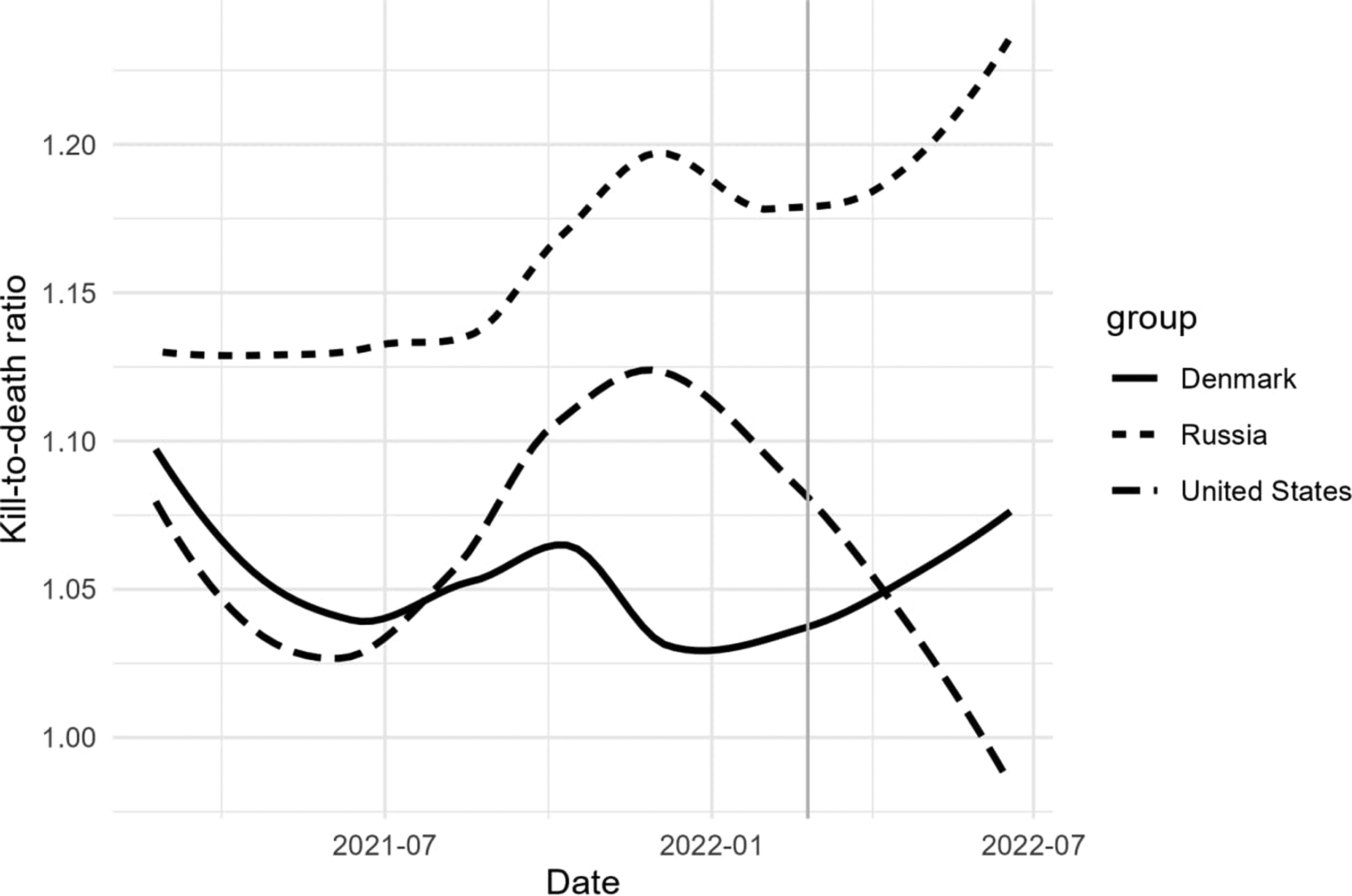
Kill-to-death ratio from 07.2021 to 07.2022 for CS:GO players from Denmark*, Russia, and the United States*.
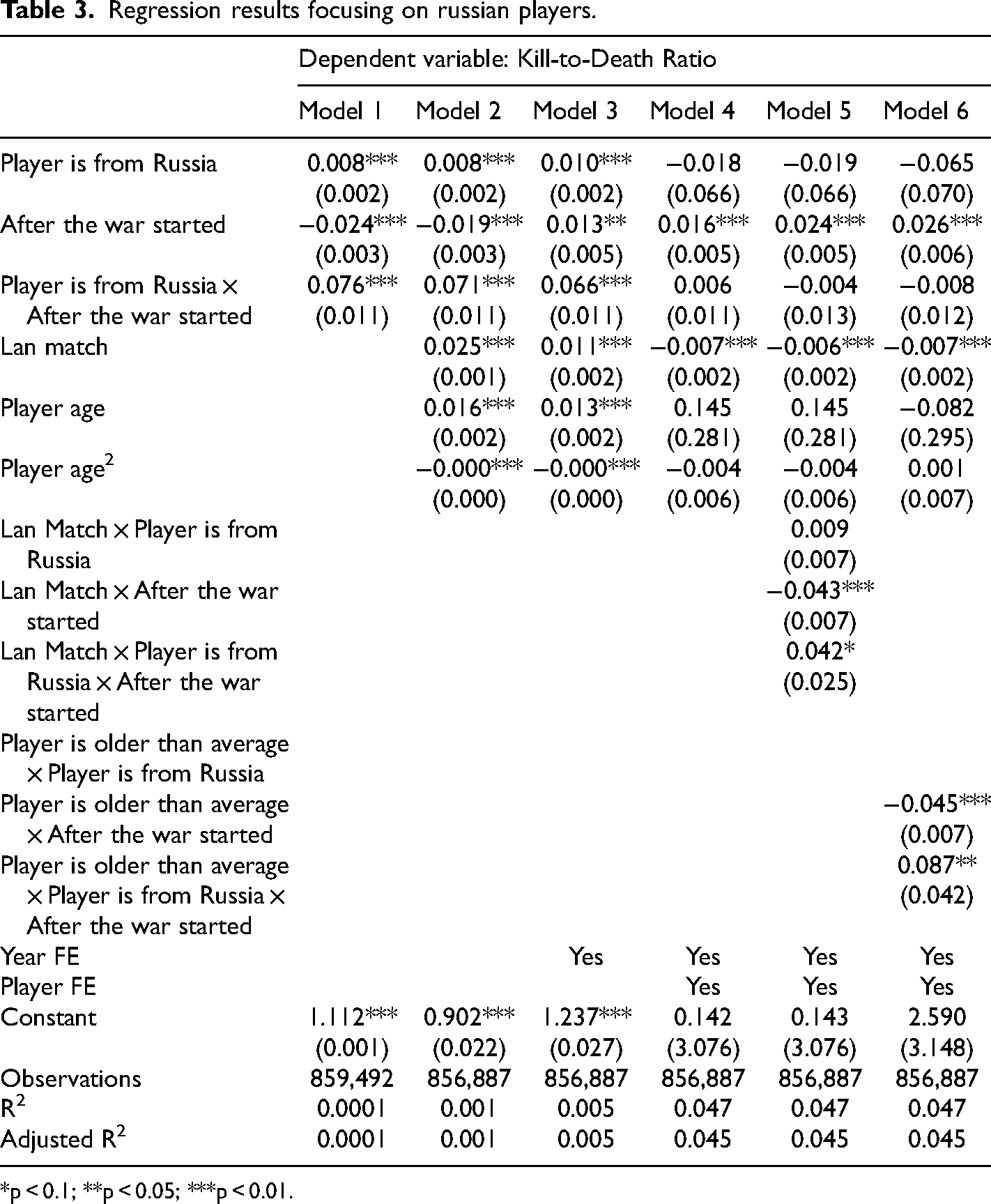
Looking at the regression results in Table 3, we find that Russian players outperformed since the start of the war. All models are structured in the same way as in the analysis for Ukrainian players – thus, Model 1 including the variables Russian players, Russian players before the war, and Russian players after the war. We then stepwise include the other control variables and player and year fixed effects.
Regression results focusing on russian players.
*p < 0.1; **p < 0.05; ***p < 0.01.
In all six models, Russian players have a higher Kill-to-Death ratio since the start of the war. The largest effect is in the first model, with a 7.6 percentage points increase. Two results are especially interesting. First, we find that the performance increase is larger for online than for LAN matches – see Model 5. For Ukrainian players, the effect for LAN matches had the largest positive impact on performance (14.3 percentage points) while for Russian players this effect is the lowest (4.2 percentage points). Second, Model 6 shows that the performance of older than average Russian players statistically significantly improved after the start of the war. The results for Ukrainian players had the opposite effect – older than average players performed statistically significantly worse.
Figure 4 shows the performance changes for Russian players since the start of the war. Similar to the results for Ukrainian players, we find that the increase is higher for all professional players – irrespective of how good they are. We see that – except for players from the highest quantile – the increase for all players is around 5 percentage points.
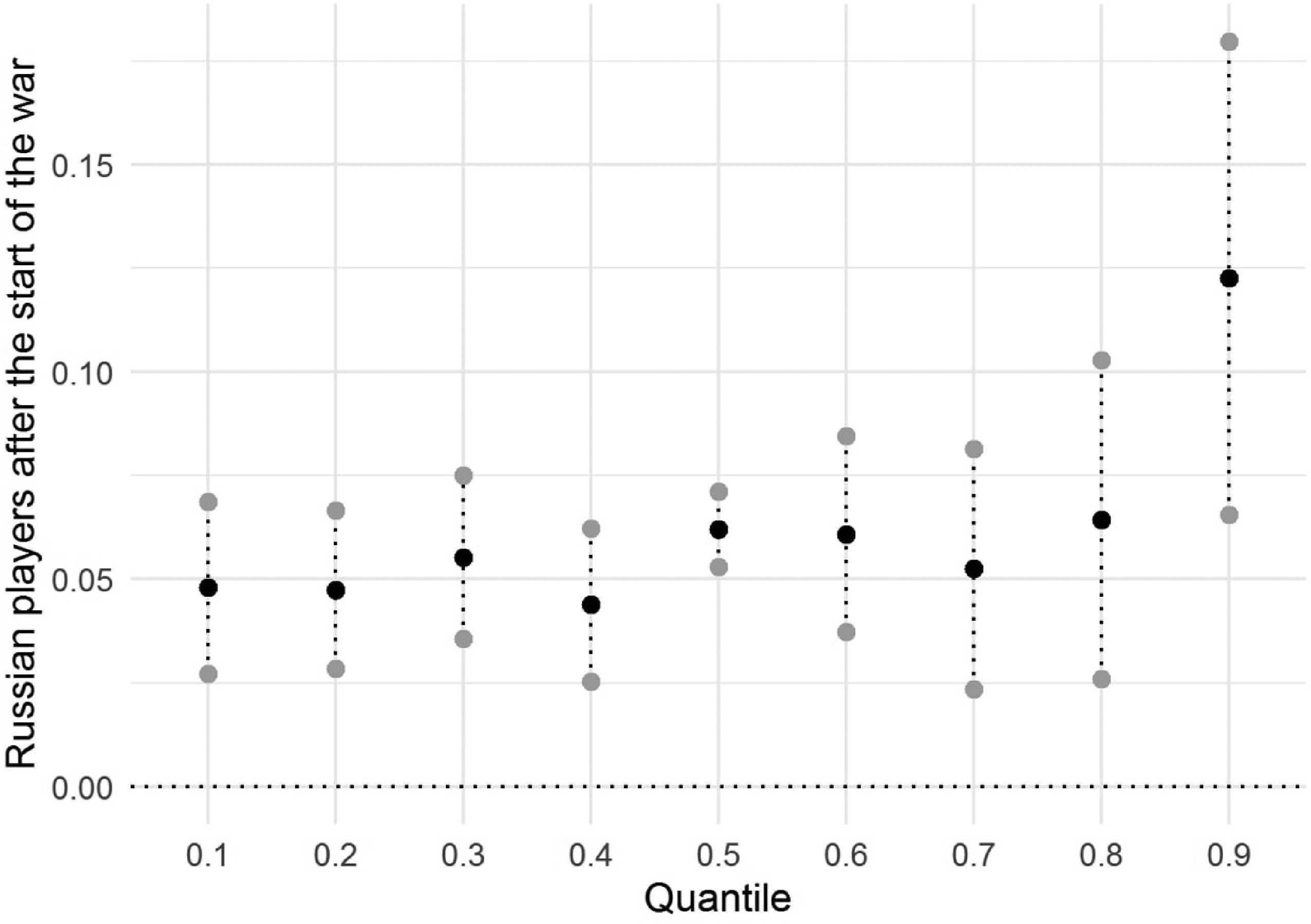
Kill-to-death increase for Russian players – from highest to lowest quantile.
Discussion
We examined the performance of one specific type of work for Ukrainians and Russians (professional CS:GO players) after the start of the war. We focused on the performance of the professional players, as this is one of the most important variables when assessing a player. Thus, it is of general interest for employers, employees, and researchers. The results show, in contrast to general expectations, that the performance of professional CS:GO players from Ukraine and Russia statistically significantly improved since the start of the war.
In the survey, we find that players anticipated that Ukrainian and Russian players would perform worse compared to before. Some of the respondents mention the psychological strain that is associated with being a player from Ukraine and still having to perform in a highly competitive setting. Interestingly, this unusual pressure – in addition to the pressure of being a professional player (Johnson & Woodcock, 2021) - seems to have resulted in an unexpected result: an increased performance. One explanation for this misinterpretation could be that professional players are psychologically more resilient than commonly expected (Bonilla et al., 2022). Due to their profession, many professional players might be more used to psychological stress.
We find in all our models that Ukrainian players performed better since the start of the war. One explanation could be related to the employment position of many Ukrainian esports players. They are working as professional players and not fighting as soldiers. The players, however, still want to show their support – for example, many Ukrainian players enter tournaments wearing Ukrainian flags. Thus, they see matches as a potential forum where their own performance is representative of their country. This ambition boosts their performance. One argument against this hypothesis is that players can normally only see their opponent for a very short time frame (a few frames at best). It is next to impossible to distinguish between individual opponents in the opponent's team.
It is essential, however, to consider the potential impact of cultural context on players’ perceptions. Historically, some countries and players have had considerable influence on the esports community (Parshakov & Zavertiaeva 2018). Even though players may not have a clear visual representation of their opponents, they may form mental images or assumptions based on cultural cues or team composition (e.g., about the number of Ukrainian players for Ukrainian teams such as NaVi, Monte or IKLA). The cultural context of the competition could indeed influence players’ perceptions and reactions. Additionally, the notion that Ukrainian players perform better may not solely be attributed to their individual skills, as opponents might also be affected by social pressure (Taylor, 2012). It's worth noting that teams are aware of the composition of their opponents and this awareness might lead to behavioral modifications when facing teams with a larger share of Ukrainian players.
The results show that Ukrainian players perform better at LAN matches than at online matches. One explanation might be fan support. In traditional sports, authors have recognized that the performance of athletes and teams depends on the size of the crowd and whether or not they play at home (Nevill & Holder, 1999; Ponzo & Scoppa, 2018). Esports players could be influenced in a similar way (Seo, 2016). Since the start of the war, fans in stadiums have supported and cheered Ukrainian players (at least until the time of writing this research article). Thus, players could benefit from this support, which is present at LAN but not at online matches.
The performance for all professional players from Ukraine increased since the start of the war. The extent, however, differs. The best players were able to improve their performance the most. This result shows that the change in performance is not due to a few select players but to the general population. Not all players are equally strongly influenced by the war in their home country; however, the performance for all players improves up to some extent.
Russian players also perform better after the start of the war. One explanation could be that Russian players, similar to our hypothesis for Ukrainian players, want to show support for their country. In international sport competitions (e.g., in tennis, football, or Olympics) teams from Russia and in some instances players from Russia were banned from participating. In esports, several players have consciously decided to distance themselves from the state. Nonetheless, these players are still allowed to compete. Thus, Russian esports players could see themselves as an exception on the international stage, as many other Russians can no longer represent their country. Navigating this difficult situation, Russian players must separate themselves from the state while continuing to be seen as Russian nationals. This distinctive dynamic could be a factor in their increased concentration and performance.
Another possible explanation for the increase in performance could be fear of being replaced (Lin & Zhao, 2020). In addition to the pressure coming from younger players, Russian players could be afraid of being completely banned from playing. Thus, improving their performance would give them an important argument for keeping their spot. Like the improved performance of Ukrainian players, the attitude of the opponents might play a role. Teams might expect increased focus on Russian team members – similar to athletes in a sports team that are choking under pressure (Hill & Shaw, 2013, p. 107). This could trigger a heightened sense of unity within their teams, supporting the struggling player, and resulting in a better performance.
The increase in the performance for Russian players has its limits. The performance increase is mainly due to online matches. Russians having a better performance for online matches fits our explanation of why Ukrainian players have a better performance for LAN matches. While Ukrainian players benefit from the public support at LAN events, it has no additional positive effect for Russian players. On the contrary, it should decrease their performance.
Interestingly, older than average Russian players increase their performance more than younger Russian players. Several reasons might influence this behavior. First, more older players might support the Russian regime and its war in Ukraine. They can channel their support via their performance. Second, older players have more experience and might be more used to politically unstable situations (e.g., Crimean annexation in 2014) than their younger counterparts.
One has to be cautious when generalizing these findings to other industries. Most esports teams, but in particular CS:GO teams, consist of small groups. In CS:GO, a team consists of five players, a coach, possibly an analyst, assistant coach, and a manager. Thus, these teams are more like smaller companies or groups within an organization. The computer-related tasks for professional players are similar but not the same as in other industries.
Our study focused on professional CS:GO players in the context of the Ukrainian-Russian war. The implications of our findings can be extended to workers in various industries who operate under similar challenging conditions. The unexpected performance improvements for Ukrainian and Russian players raise intriguing questions about the resilience and adaptive strategies of employees. In contrast to popular expectations, workers might have better performance after a conflict starts. Future research could explore whether similar patterns emerge in diverse work environments, shedding light on the shared and unique aspects of how individuals navigate professional challenges amid external turmoil.
Conclusion
In this paper, we examine how one group of Ukrainian and Russian workers - professional esports players – behave before and since the start of the Russian war. We examine the situation using survey data from esports players and examining the performance of professional players. Contrasting the results from the survey, we find a sizable, statistically significant improvement in player performance. For Ukrainians, the effect is especially prominent for live events but for Russians, it is notable for online events. Our results demonstrate that the behavior of Ukrainian and Russian professional gamers rapidly changed after the occupation.
Our analysis has several shortcomings that are related to the data. The war in Ukraine influences the players differently. Additionally, the survey sample size is small compared to previous analyses in this area. Future research could conduct larger surveys with professional players and staff to incorporate their perspective. Other confounding factors related to player characteristics could influence player performance. We observe this effect in the regression results, as all models have a low R-squared. Unfortunately, additional player-related data is not available. Also, we capture the performance of players shortly after the war. A longer-term perspective is especially interesting if the war goes on for an extended period.
Supplemental Material
sj-docx-1-gac-10.1177_15554120231224513 - Supplemental material for War and Esport: The Russian Invasions Impact on the Performance of Ukrainian and Russian Professional Players
Supplemental material, sj-docx-1-gac-10.1177_15554120231224513 for War and Esport: The Russian Invasions Impact on the Performance of Ukrainian and Russian Professional Players by Cornel Nesseler and Viktor Shtrum in Games and Culture
Footnotes
Data Availability
The data that support the findings of this study is publicly available in HarvardDataverse: https://doi.org/10.7910/DVN/ISAAYM No human participants were directly involved in the study.
Author Contributions
All authors contributed equally to this study and share the responsibility for its content.
Declaration of Conflicting Interests
The author(s) declared no potential conflicts of interest with respect to the research, authorship, and/or publication of this article.
Funding
The author(s) received no financial support for the research, authorship, and/or publication of this article.
Supplemental Material
Supplemental material for this article is available online.

Author Biographies
References
Supplementary Material
Please find the following supplemental material available below.
For Open Access articles published under a Creative Commons License, all supplemental material carries the same license as the article it is associated with.
For non-Open Access articles published, all supplemental material carries a non-exclusive license, and permission requests for re-use of supplemental material or any part of supplemental material shall be sent directly to the copyright owner as specified in the copyright notice associated with the article.
