




Abstract
It is a major challenge to transfer target sensing data efficiently to sink in Internet of things. The low-efficiency data transmission can cause low quality of service. To realize the emergent detection and periodic data gathering, the sensed data should be transferred to the sink efficiently and quickly. Recently, there are many related studies. However, there are few researches taking energy efficiency, transport delay, and network reliability into comprehensive consideration. In this article, a novel adaptive green and reliable routing scheme based on a fuzzy logic system is proposed in consideration of energy efficiency, end-to-end transport delay, and network transmission reliability. The key idea of the proposed scheme is to generate different number of renewed packet copies after certain steps according to the fuzzy inference. The fuzzy inference reflects the knowledge that the nodes in the region far to the sink and with more remaining energy initiate and transmit more packet copies concurrently by multiple routing paths to ensure the success rate of data transmission, whereas less. Thus, the high energy efficiency and low latency are obtained for data collection. Our analysis and simulation results show that adaptive green and reliable routing is more superior than the existing scheme.
Introduction
The emergence of low-power processors, smart wireless networks, low-power sensors, and cloud computing as well as big data analysis has led to the increase in the interest on the Internet of things (IoT).1–5 By combining these techniques, a large number of sensors could be placed anywhere to collect any valuable information, including the where or what information relating to the monitoring object behavior, such as military, environmental science, home automation, health care, architecture, and urban management.6–8 One of the important technology in industrial wireless sensor network (WSN) is efficient data gathering.1–3,6 For data gathering of industrial WSN, there are several key requirements that make industrial WSN distinctive:
Reliability. Reliability is vital for industrial applications. Due to the unreliable wireless links, it is important to avoid packet loss and to ensure the reliable communications for most applications in industrial WSNs.9–11 There are mainly two kinds of solutions to ensure the transmission reliability, including avoiding and recovering packet loss. The typical solutions are Automatic Repeat-reQuest (ARQ) protocol and multi-path routing.8,12–14 In the ARQ, the data transmission reliability is guaranteed by retransmitting the lost data. In the multi-path routing, data packets are transmitted by multiple paths to achieve reliable data transmission. However, these schemes are poor at end-to-end (E2E) successful transmission rate or energy efficiency.
Delay. For industrial surveillance and control, the timeliness of its data is crucial.15–18 The E2E delay is defined as the time required for sensor nodes transmitting the monitoring data to the sink. In applications such as emergency and hazard monitoring, they require the sensed information transmitted to the sink quickly and continuously. The bigger delay may cause the inaccuracy of the decision and even serious production accidents. This is unacceptable for industrial WSN.
Energy efficiency. The industrial WSN consists of spatially distributed sensors capable of sensing, data processing, and communication. The sensors are usually powered by battery. If the wireless nodes need to be plugged in or recharged every few hours or months, the deployment cost is prohibitive and it is impractical. In addition, some sensor nodes are not rechargeable. Thus, from the consideration of economic benefits, the energy consumption is one of the most concerned topics in the network design. However, reducing the energy consumption of data collection protocols cannot necessarily improve the network lifetime effectively.19,20 There is a special phenomenon of energy holes or hotspots in WSN. The network lifetime depends entirely on the nodes’ energy cost of hotspots. To improve the network lifetime effectively, the energy cost of hotspots should be reduced. Hence, it suggests that we should minimize the energy cost of nodes in hotspots as many as possible, in addition to minimizing the total energy consumption of data collection schemes. Therefore, industrial WSN has the key challenge to design data gathering scheme of high energy efficiency in order to prolong the network lifetime.
Intelligence. Recently, people have paid great attention to the improvement of object intelligence. Intelligence of terminal sensor nodes is an important operation technology in industrial WSN. For example, to meet the low power requirements to extend the battery life, it is necessary for sensor nodes to automatically adapt to changes in the available power and adopt intelligent forwarding scheme according to the current characteristic of the entire network.21–23 Since both software and hardware resources are limited for WSN nodes, it is challenging to improve the intelligence level of sensor nodes.
To address these issues, the proliferation routing (PR) scheme is proposed to recover the lost packet by the in-middle recovery. 9 In the PR approach, the source node has multiple copies of data packets and transmits them concurrently through multiple routes. In the routing process, data are reproduced at the appropriate time and is forwarded through multiple paths routing until arriving at the sink. Although PR scheme could ensure the transmission reliability, it has the following drawbacks:
The packet loss is recovered by the in-middle recovery or packet reproduction for PR. It ensures the data multiplication and concurrent transmission to guarantee the network transmission reliability. But, to guarantee the network transmission reliability, the number of multiple routing paths is often calculated according to the worst case for PR. This leads to more energy consumption and affects the network lifetime.
Nodes with different distances to sink may have different data loads to forward, which causes different energy consumption and remaining energy (RE). The sensors located at the area closer to the sink often consume their energy faster than other sensors, because these sensors must relay data from other nodes, which causes their batteries depleted very quickly. In the PR, it does not consider the factors affecting the energy efficiency, such as distance and energy level.
The number of renewed data packets of sensor nodes cannot be adaptively adjusted according to node energy and distance to sink. The adaptive data collection is not implemented. The PR scheme is lack of intelligence.
Based on the above analysis, in this article, we propose a novel adaptive data gathering scheme based on fuzzy logic in consideration of energy efficiency, E2E delay, and transmission reliability. It is called adaptive green and reliable routing (AGRR). Compared with the existing study, we make several contributions follows:
The proposed scheme has no special requirements for hardware system. In order to ensure the reliability of data transmission and reduce the energy consumption of nodes in data collection, many of the current algorithms are too complex to be implemented. Because they have high requirements for hardware system, it is difficult to run and implement on the existing hardware system. Fuzzy inference is based on rule inference. It directly uses language inference rules, reflecting the operator knowledge of the experience or relevant experts in the field. In the design, there is no need to establish an accurate mathematical model of the studied object. In addition, the inference mechanism and strategy are easy to be accepted and understood. And, the design is simple and easy to use. The implementation and operation of fuzzy logic require very small storage space. 24 Therefore, it is suitable for sensors without special requirements for hardware.
A fuzzy-rule-based scheme considering reliable communication and energy efficiency is proposed. Reducing delay with the guarantee of network reliability and network lifetime is very challenging. In this article, the data collection scheme named AGRR is proposed. In order to realize efficient data gathering, the proposed method calculates the number of transmitted packet copies based on fuzzy inference. A fuzzy logic system is designed based on heuristic knowledge and language decision rules. Thus, it is beneficial to simulate the process and method of artificial control, which enhances the adaptability of routing scheme and makes it have a certain level of intelligence. In addition, it is easy to find the choice of compromise using these fuzzy reasoning rules. In this article, the fuzzy inference is based on the knowledge that the nodes in the region far to the sink and with more RE initiate and transmit more packet copies concurrently by multiple routing paths to ensure the success rate of data transmission. And, in order to extend the network lifetime, the number of reproduced packet copies is calculated depending on the distance to the sink and the node’s RE. The network lifetime under the reliability guaranteed can be prolonged by reproducing different number of packet copies inferenced from fuzzy language rules.
We offer theoretical performance analysis. The theoretical analysis on the maximum number of reproduced packet copies under certain cases is presented. The data loads and energy cost of each node are analyzed. In addition, the transmission delay is discussed. Finally, we describe the selection of AGRR parameters as a multi-objective optimization issue under the constraint of the network reliability.
Comprehensive simulation experiments are carried out to evaluate the effectiveness of the AGRR scheme. The simulation results show that the proposed AGRR outperforms the compared scheme. The optimization objective of network lifetime and transport delay with the satisfaction of network reliability is achieved. In the simulation, the maximum energy cost could be reduced by 23.05% in one round of data gathering and without the transport E2E delay increased simultaneously compared with PR, which presents the superiority of the strategy. Therefore, the network lifetime could be improved without the increase in the transport delay through obtaining the optimized parameters.
The rest of this article is organized as follows: section “Related work” reviews the related works. Section “System model and problem statements” describes the system model. The design of the novel AGRR scheme is presented in section “The design of AGRR scheme.” Section “Performance analysis of AGRR scheme” formulates the performance analysis. The simulation results are presented in section “Simulation results” to evaluate the efficiency of the proposed AGRR scheme. A conclusion is given in section “Conclusion and future work.”
Related work
There are many research efforts devoted to provide an efficient data gathering for industrial WSN. The studies mainly focus on the three aspects of reliable transmission, energy efficiency, and latency. It is necessary to provide reliable transmission service for industrial WSN.9–11 There are two typical categories of avoiding and recovering lost packets to ensure reliable transmission in the existing works. The multi-path routing or concurrent multi-path routing is one typical way of avoiding packet loss. It uses multiple alternative paths through a network to ensure reliable transmission. It is evident that the schemes will cause more energy cost. In addition, these schemes based on packet-loss avoidance are usually costly. So, it is not widely applied in practice. The reliable transmission protocols by recovering the lost packets are more widely adopted, such as the ARQ protocol. It is a typical method of the packet-loss recovery. In the scheme, the network transmission reliability is ensured by retransmitting the lost packets once or many times.12,14 Although ARQ schemes could improve the transmission reliability, the packet-loss retransmission could lead to high delay for working in the poor industrial field.
Many of the existing research on data gathering integrate network delay and reliability,3,14,18,25,26 or integrate network lifetime and delay,8,16,17 or network lifetime and reliability.19,20,22 For example, in order to improve transmission reliability and reduce transmission delay, PR scheme appeared, in which the packet loss is recovered by the in-middle recovery. In the PR approach, the source node transmits multiple copies of data packets and forwards them concurrently through multiple routes. Some packets lost in the routing paths due to the unreliable links are reproduced at their arriving nodes after certain routing hops. Then, all the packets including the renewed are forwarded through multiple paths continually. The procedure is repeated until they arrive at the destination node sink. Although PR scheme could guarantee transmission reliability by packet reproduction and reduce the unnecessary waiting time for packet-loss retransmission in the routing process to the destination, it is evident that it increases the energy cost, and the network lifetime may not be improved effectively. As far as we know, there are few researches taking network reliability, delay, and network lifetime into consideration.
Prolonging the network lifetime is a challenging issue in the case of ensuring high transmission reliability and low latency. Some researches focus on applying the modern artificial intelligent algorithms to realize the goal of multi-objective optimization. In order to improve the reliability and energy efficiency of data delivery, Rosset et al. 22 studied the application of swarm intelligence in large-scale WSNs. The artificial bee colony algorithm is also studied in application of data collection for WSNs, such as path planning in Chang et al. 23 It is undeniable that these algorithms are effective. However, these algorithms are complicated, and it is complex to implement in terminal nodes with limited resources, because they generally have high requirements of the hardware. Therefore, it is difficult to implement on the sensor nodes without changing the current hardware. Recently, because fuzzy logic adopts fuzzy sets instead of fixed and exact value for approximate reasoning, it has many advantages, such as easy implementation, strong robustness, and strong ability to approximate non-linear mapping. It is widely applied in fields, such as adaptive control systems and system identification. 27 In addition, it has no special requirement on hardware. The implementation and operation of fuzzy logic require very small storage space. Thus, it is suitable for terminal sensors. Combining the advantages of the PR in ensuring reliable transmission and low E2E delay and the fuzzy logic in easy implementation, the fuzzy-rule-based packet reproduction routing scheme is studied in the article to achieve the prolongation of the network lifetime and decrease in E2E transport delay when the transmission reliability is satisfied.
System model and problem statements
System model
We consider a typical and the most used planar periodic data gathering WSN, which consists of
In this article, the energy consumption model is based on the typical energy consumption model studied in Gupta and Kumar. 28 In the model, the energy consumed for sending one packet is calculated as follows

And, the energy consumed for receiving one packet is computed by

where σ and
Parameters and values.

Problem statements
For realizing the emergency detection and periodic data gathering, the perception data should be collected to sink efficiently and quickly. Concerning the network performance, our goal in this article is to design an efficient data gathering scheme optimizing the overall performance including the guarantee of network reliability, the reduction of transport delay, and the improvement of energy efficiency. Considering that the network lifetime depends largely on the node with the largest energy consumption of the network, we use the first node death time to approximately represent network lifetime and denoted by
Each initiated packet carries the information (ID, time to live (TTL), DELAY), where ID describes the information associated with the packet. The packet carries the value of TTL to record the route length. Therefore, packet lifetime or packet TTL is defined as the number of steps needs to be forwarded before reproduction. It represents the route length. In addition, DELAY denotes the transmission time took in transferring procedure. We called the transport delay or E2E delay denoting the time required for a packet to finish its successful transmission to the sink. In the transmission, the packet needs time to finish one hop route and packet reproduction. The total time needed for the transmission and reproduction is recorded to make the final statistics of DELAY. Following the network model in Xu et al.,
16
we assume the transmission reliability of node


where

Relation between the number of data copies
Thus, the focuses of our article are to meet the requirements that each sensed data transmitted to the sink with a probability not less than

where
The design of AGRR scheme
Overview of the proposed scheme
In this section, we describe the overall approach. In order to achieve an efficient data gathering, the number of the reproduced packet copies is decided based on a fuzzy logic system. The overall approach is illustrated in Figure 2.

Illustration of the AGRR scheme.
In Figure 2, an example is given to illustrate the procedure of the AGRR scheme. It presents how data packets initiated from a source node
Fuzzy-rule-based packet generation or reproduction. For ensuring the transmission reliability and energy efficiency, the source node generally initiates
Direction dispersity and shortest path routing. The goal of dispersity is to transmit the reproduced packets to different nodes around the source or reproducing node. Thus, the packets could be transmitted to the destination by multi-path. When the data copies are dispersed by direction dispersity to the intermediate nodes, they will finish their TTL following the traditional shortest path routing schemes.
The implementation of the proposed scheme
Section “Overview of the proposed scheme” is an overview of the proposal. The proposed method is described in detail in the section, including fuzzy-rule-based packet generation or reproduction, direction dispersity, and shortest path routing:
Fuzzy-rule-based packet generation or reproduction.
In the proposed AGRR scheme, the number of the renewed copies of each node is decided based on the distance of reproducing node distance to the sink and its RE. The result is calculated applying a fuzzy logic system. The fuzzy inference is as follows. If the source or relay node has longer distance to the sink and more RE, it would have more data copies and the packet carries a corresponding longer TTL, which means the packet has longer path route before the next reproduction. Otherwise, there are less data copies and shorter packet TTL. A special case is that if the source or reproducing node has one or less than one hop distance to the sink, the packet is transmitted directly to the sink.
The fuzzy-logic-based packet reproduction consists of two inputs and one output, as shown in Figure 3. The inputs include the RE of the reproducing node and its distance to the sink. That means the fuzzy logic system is based on two factors of RE and distance from the reproducing node to the sink (DIS). The output of the fuzzy logic is the number of the reproduced packet copies. On the whole, the fuzzy logic system consists of three parts: (1) fuzzification, (2) fuzzy inference, and (3) defuzzification.

Two inputs and one output fuzzy logic system.
In the fuzzification phase, the crisp input values are converted to corresponding fuzzy sets through fuzzy membership functions. Fuzzy sets are represented by linguistic terms, such as “small,”“medium,” and “large.” The simple membership function types, such as trapezoidal, triangular, and sigmoid are used in the article and they are defined as shown in Figures 4–6, which allocate the truth values to a domain ranging between 0 and 1. In fuzzy membership functions, the fuzzy variables are represented as follows:
RE (remaining energy) = {XS (extreme small), S (small), M (medium), L (large), XL (extreme large)}.
DIS (distance to sink) = {XS (extreme small), S (small), M (medium), L (large), XL (extreme large)}.
The output value of the number of the renewed data packet is determined by these two factors. The output fuzzy variables are represented as follows:
RST (result) = {XXS (extreme, extreme small)), XS (extreme small), S (small), M (medium), L (large), XL (extreme large), XXL (extreme, extreme large)}.
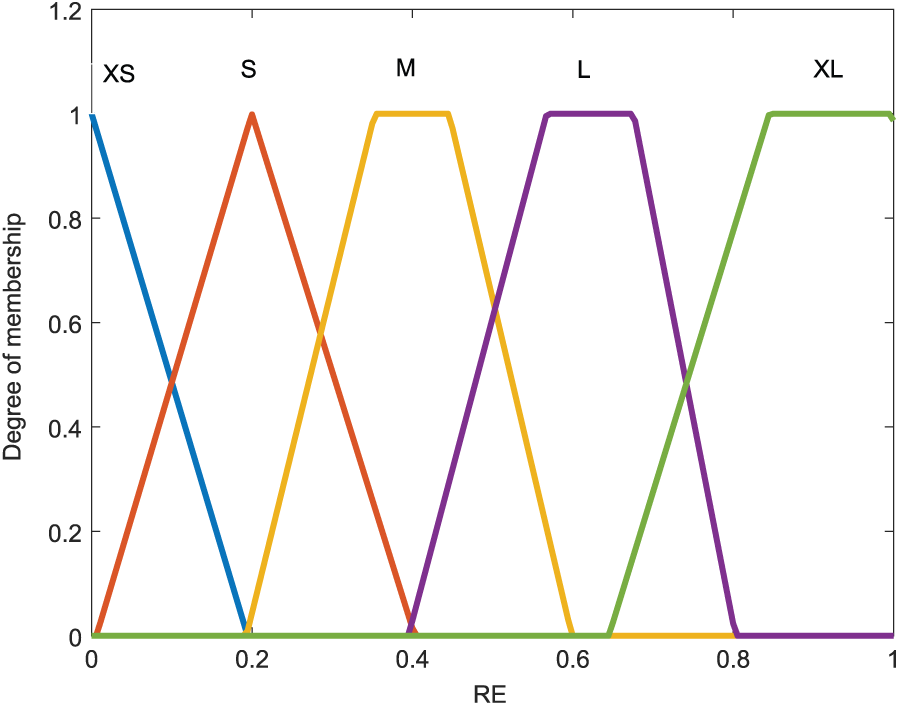
Membership function of input “RE.”

Membership function of input “DIS.”
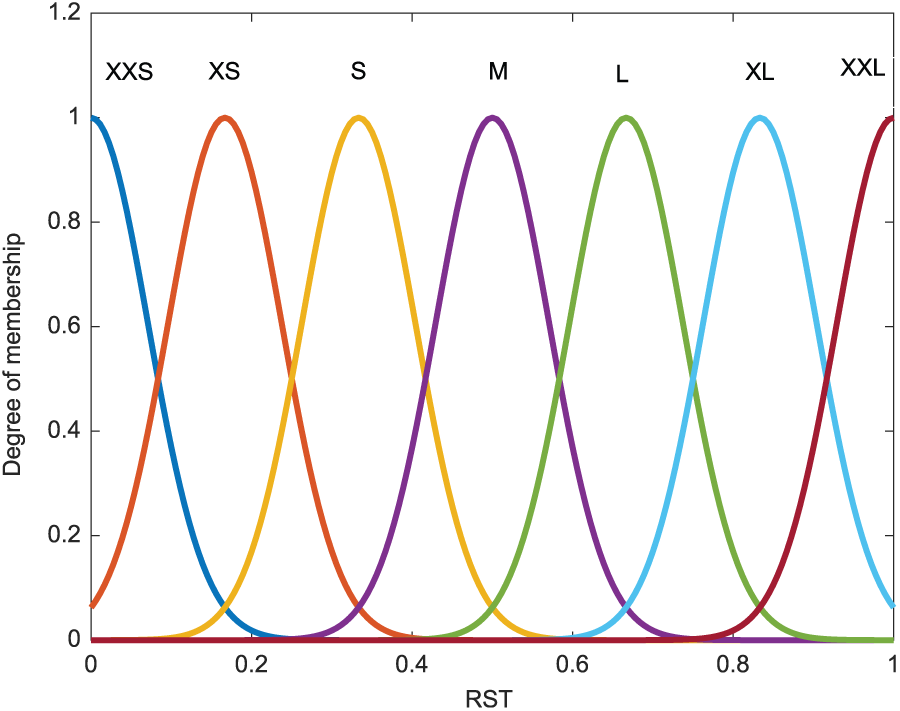
Membership function of output “RST.”
The knowledge of the packet reproduction is reflected by fuzzy rules, and the fuzzy rules are applied to process the fuzzy values in the fuzzy inference phase. The packet is reproduced based on the knowledge as follows: if the source or reproducing node has longer distance to the sink and more RE, it would have larger number of data copies and the packet carries a corresponding longer TTL. Otherwise, there are less number of data copies and shorter packet TTL. As we know from the above that the fuzzy logic system is based on two factors of RE and DIS, two input factors of RE and DIS are combined for each variable, and 25 rules are obtained in the fuzzy if-then rules. In this article, the constructed fuzzy if-then rules are shown in Table 2. The interpretation of the fuzzy logic rules is as following. Based on the fuzzy logic system, in the packet reproduction phase, if RE for the reproducing node is extreme small and the DIS is extreme small, the number of reproduced packet copies (RST) is extreme, extreme small (Rule 1). That means the reproducing node renews extreme, extreme small number of data packet copies to improve energy efficiency. This rule is usually selected to reproduce data packets in the area close to the sink for reducing energy consumption. In contrast, if RE for the reproducing node is extreme large and DIS is extreme far from the sink, (Rule 25), the RST is extreme, extreme large to guarantee the statistical network reliability. The fuzzy inference surface derived from fuzzy rules is shown in Figure 7.
Fuzzy rules.

RE: remaining energy; XS: extreme small; S: small; M: medium; L: large; XL: extreme large; XXS: extreme, extreme small; XXL: extreme, extreme large.
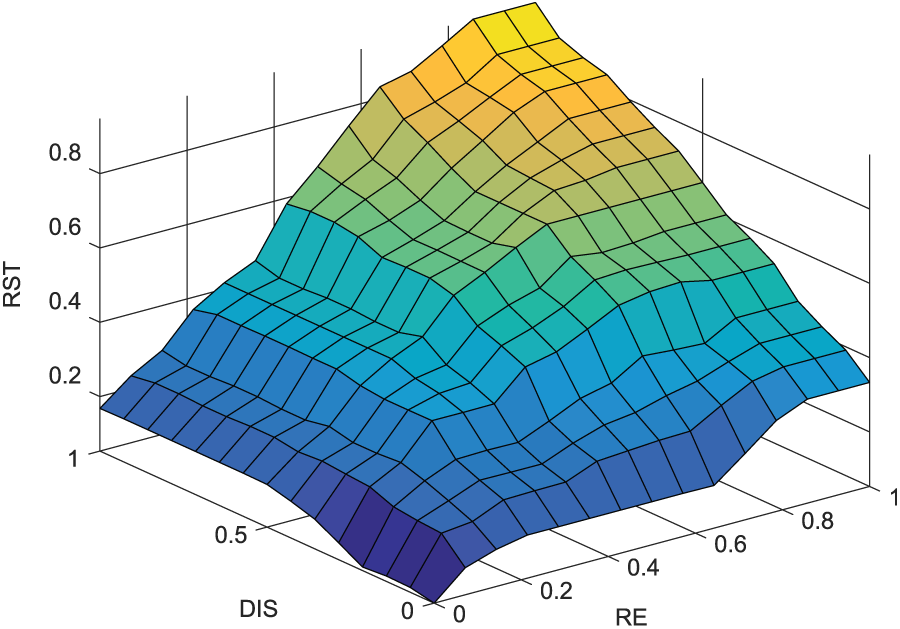
Surface of fuzzy inference.
In the defuzzification phase, a single crisp output value is obtained using the centroid method based on the fuzzy solution space. Because the output domain is ranging from 0 to 1, in the defuzzification case, the renewed number of data copies is multiplied by a coefficient and is calculated by

where
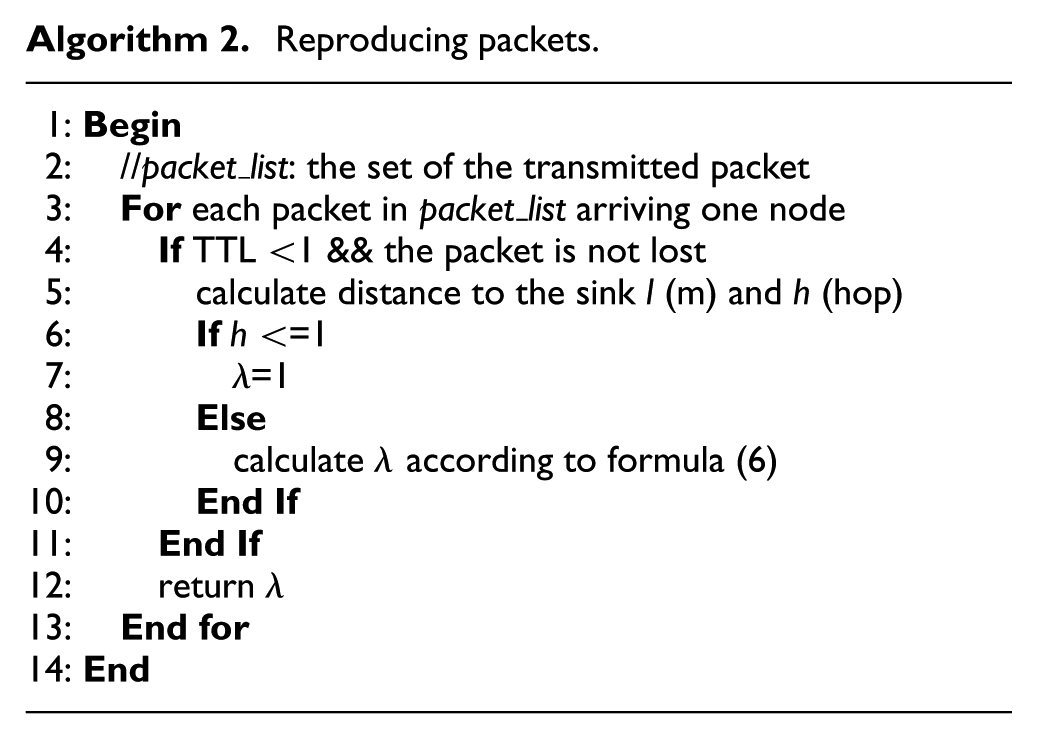
Therefore, the fuzzy-rule-based packet generation or reproduction is implemented in packet routing as shown in Figure 8. The detailed implementation is explained in Algorithms 1 and 2, respectively.

Packet reproduction based on fuzzy logic system in packet routing.
Generating the initiated packets.

Reproducing packets.
2. Direction dispersity and shortest path routing.
The objective of direction dispersity carried out by source or reproducing nodes is to transmit the reproduced data copies to
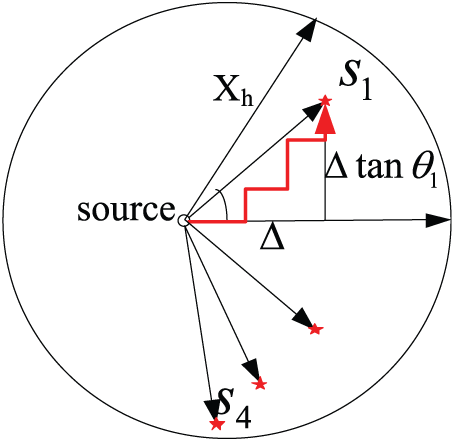
Procedure of packet dispersed to intermediate nodes.
Dispersing the packets.

Therefore, the procedure of the proposed AGRR scheme is shown in Algorithm 4.
Procedure of the AGRR.

Performance analysis of AGRR scheme
The core idea of the proposed AGRR scheme is to determine the number of reproduced packet copies based on fuzzy logic system in order to realize the network delay reduction and network lifetime prolonged under the assurance of transmission reliability. In this section, the parameters and its performance of the strategy are discussed.
The maximum number of reproduced packets
Theorem 1
If we assume

Proof
As we know that

Therefore, we have the following result

After further simplification, the maximum number of the renewed data packet copies satisfies the following formula:
In short, the number of renewed data packets has the maximum value. After exceeding the maximum value, the TTL or the route length of the packets exceeds the network topology radius hop, and the packet in-middle recovery cannot be realized.
The maximum energy consumption
In this part, we discuss the number of packets that each node needs to transmit after one round of data gathering.
Theorem 2
Considering the transmission range of sensors is

where
Proof
If the number of packet generated by source or reproducing node is fixed
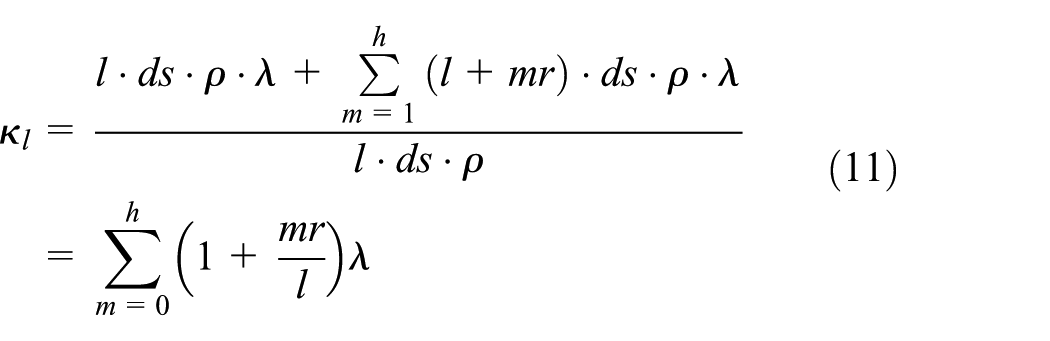
In this case of packet generated based on fuzzy logic system, the number of packets forwarded by one node with distance

where
From the above analysis, we can see that the energy cost is different for each node in industrial WSN because of the different data loads. There is more energy cost in hotspots and less energy consumption in non-hotspots. Therefore, we could fully exploit the energy cost characteristic to generate more data copies for nodes in the area far to the sink and with more RE. Correspondingly, the generated packets take longer path route or longer TTL to be forwarded. Otherwise, the opposite is true. This is the superiority of the packet reproduction based on fuzzy logic. Compared with PR, we can get the final result

The research goal is to minimize the energy cost of the node with the largest energy consumption. Therefore, if
The maximum transmission delay
In this part, we do analysis on the relation between the number of reproducing times and E2E delay. From section “The maximum number of reproduced packets,” we know the total length of network radius is

Considering the time required for once packet reproduction is much longer than the time needed for packet one hop transmission, the larger number of packet reproduction times means the greater E2E delay.
From the above discussion, we can see that the larger number of packet copies leads to longer packet TTL and less number of reproduction times. In the case, the E2E delay is reduced and the energy cost may be increased due to the larger number of reproducing packets. Thus, it is also a trade-off optimization issue to find the optimized parameters of AGRR to ensure E2E delay reduction without the increase in the energy cost.
Simulation results
The goal of the proposed scheme is to prolong the network lifetime and reduce the E2E delay under the constraint of the network reliability. In this section, the simulation results are illustrated to evaluate the proposed AGRR scheme from three performance metrics including the network reliability, the maximum energy cost, and the maximum E2E delay after one round of data gathering. First, the network model parameter setting applied in simulation experiment is described. Then, the evaluation results are presented for the proposed routing scheme. Finally, it is compared with the existing PR routing mechanism to prove the effectiveness.
Parameter settings
The simulation scenario is a WSN consisting of 800 sensor nodes that are uniformly and randomly scattered in a two-dimensional circular plane with the radius of R = 400 m. The network is shown in Figure 10. In the network, the sink is located at the center of the circular plane. In addition, the transmission range is assumed r = 60 m in maximal. The packet size is fixed 100 bits. And, we assume the time for one hop transmission is 1 ms and for packet reproduction is 3 ms. All the nodes except the sink have the identical initial energy of 2 J. The node and network reliability are assumed with the same value
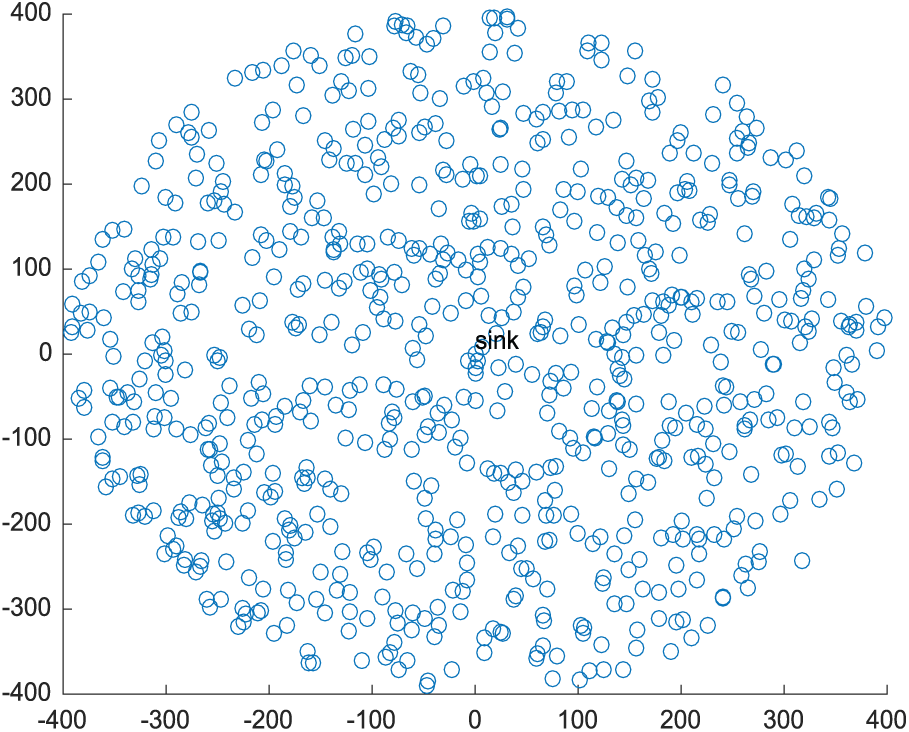
Network topology with 800 nodes scattered in a circular planar with the radius of R = 400 m.
As shown in Figure 4, the fuzzy logic system is based on two input factors of RE and distance from the node to the sink to deduce the output value of the number of the renewed data packet. The linguistic terms of the fuzzy variables are RE = {VS, S, M, L, VL}, DIS = {VS, S (small), M, L, VL}, and RST = {VVS, VS, S, M, L, VL, VVL}. In the simulation, the simple types of trapezoidal, triangular, and sigmoid fuzzy membership functions are applied as shown in Figures 5–7, respectively. The maximum and minimum values are determined by considering conditions of the sensor network. In the article, the domain of inputs and output are {0, 1}, {0, 1}, and {0, 1}, respectively. The fuzzy logic rules are as shown in Table 2. In the fuzzy inference, the simple logical operation methods, such as AND, OR and Prober are applied for the implication and aggregation. In the defuzzification phase, the centroid method is selected.
Evaluation on the parameter
in the scheme
In the proposed AGRR scheme, the number of the reproduced packets is decided by fuzzy logic system. Because the output domain is ranging from 0 to 1, the output of the fuzzy system is multiplied by a coefficient
Under the three different cases, our simulation results on metrics of reliability, energy cost, and delay are shown in Figures 11–16. Table 3 shows the specific detailed comparison results. Figure 11 presents the network transmission success rates or the network reliability in QoS level under different coefficients of
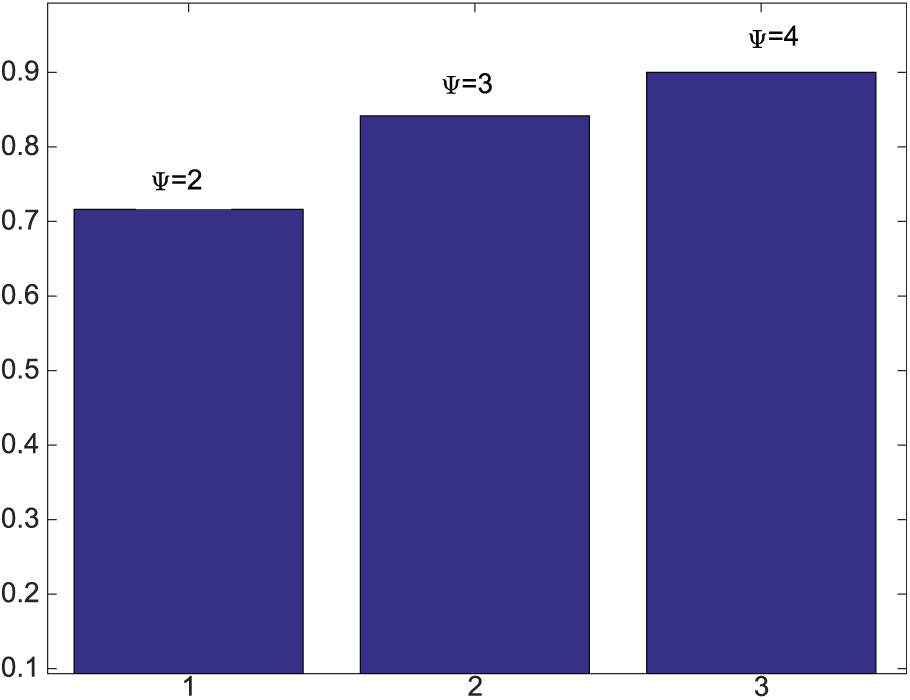
Comparisons of reliability.

Comparisons of data loads of each node: (a) all nodes in the network and (b) nodes in the key region of the network.

Comparisons of energy cost of each node: (a) all nodes in the network and (b) nodes in the key region of the network.
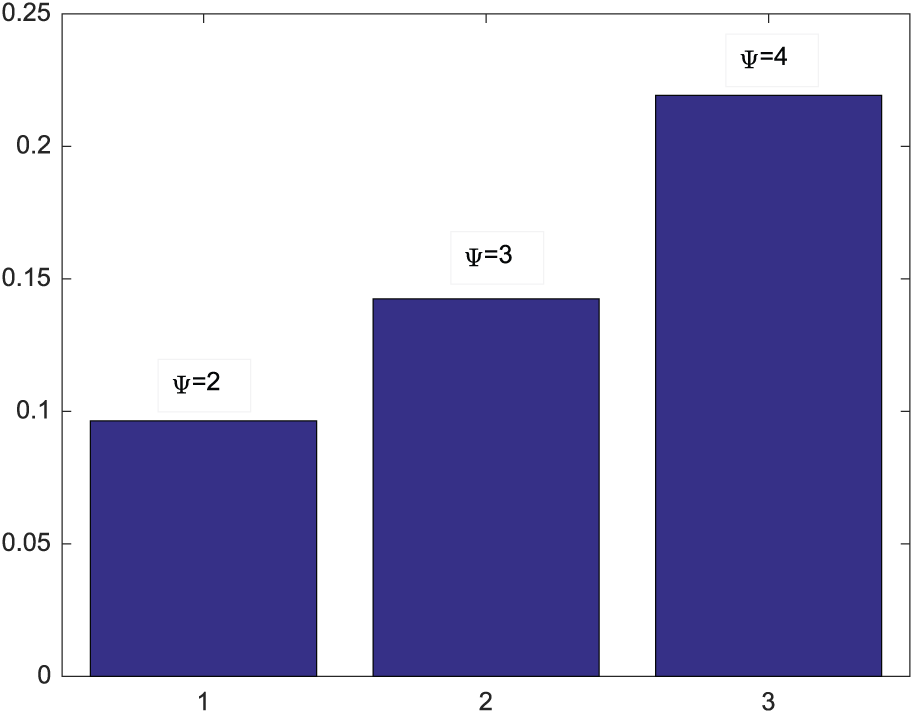
The maximum energy cost comparison.

Comparisons of transport delay of each node: (a) all nodes in the network and (b) nodes in the key region of the network.
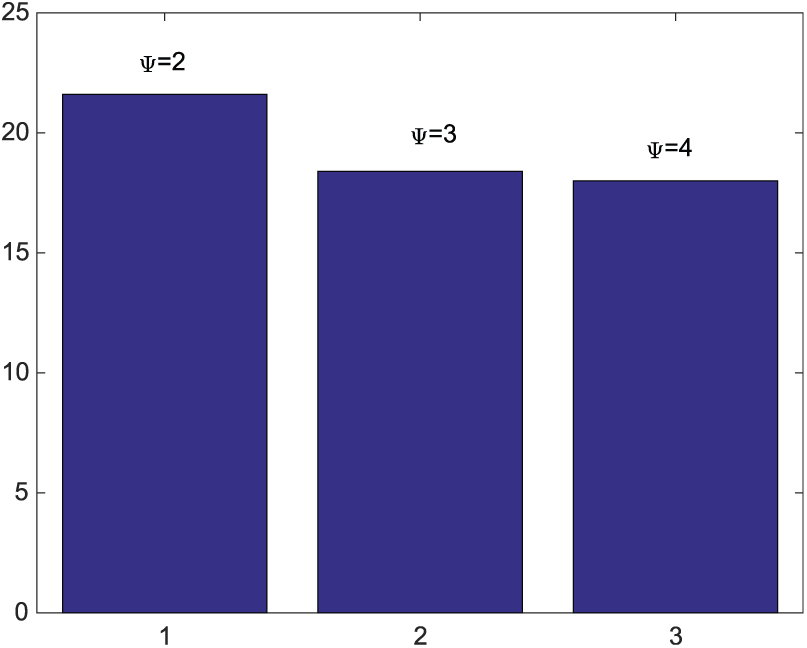
The maximum transport delay comparison.
Performance under different
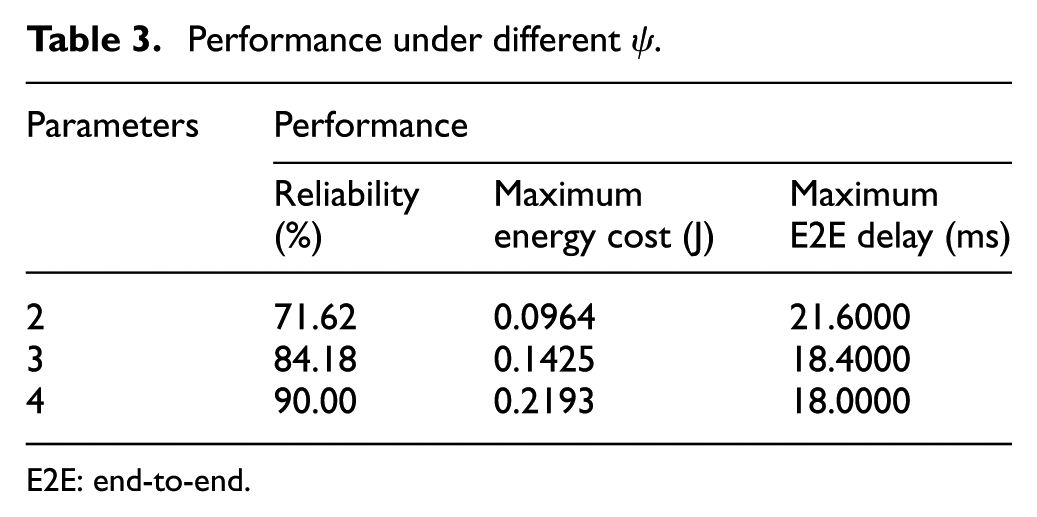
E2E: end-to-end.
Therefore, as can be seen from Figures 12–16, the bigger coefficient
Comparison
The research problem of our article is similar to the PR scheme, and our work is advanced research based on the scheme. In this part, we compare the proposed AGRR scheme with the existing PR scheme through the above-mentioned circular planar network, focusing on performance metrics of the network reliability, the maximum energy cost, and the maximum E2E delay after one round of data gathering.
The detailed comparison results of the network reliability are shown in Table 4. Figure 17 clearly shows the comparisons of reliability between AGRR and PR when one round of data gathering finishes. From the results, it can be seen that there are not obvious differences of reliability when PR = 2 and
Reliability comparisons.

AGRR: adaptive green and reliable routing; PR: proliferation routing.

Reliability comparisons of AGRR with PR under different parameters.

Data loads comparison of each node of AGRR with PR under PR = 2 and

Data loads comparison of each node of AGRR with PR under PR = 3 and
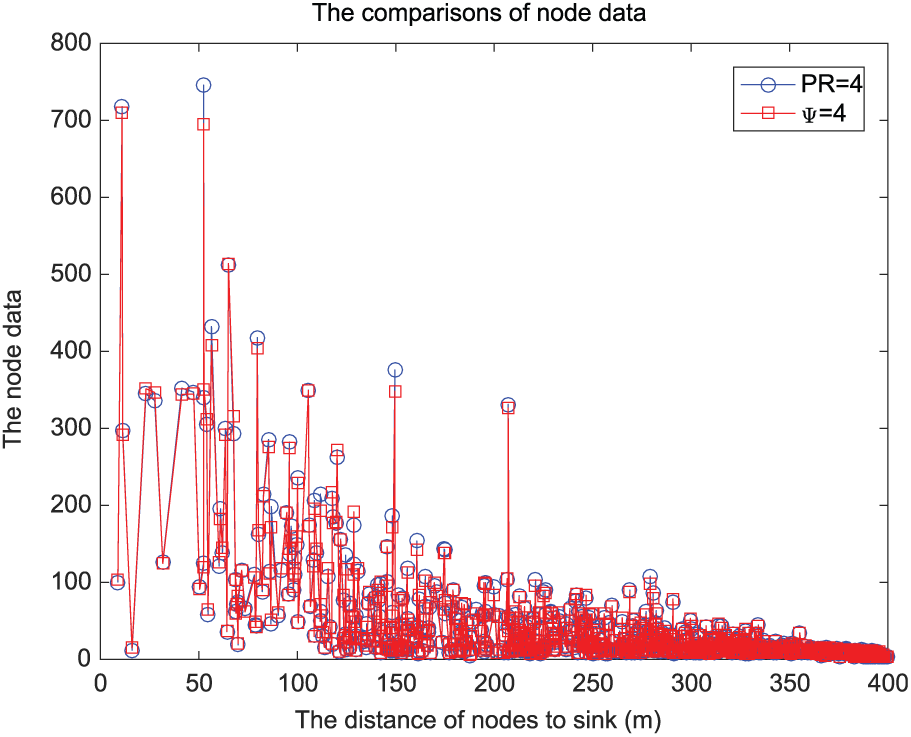
Data loads comparison of each node of AGRR with PR under PR = 4 and

Energy cost comparison of each node of AGRR with PR under PR = 2 and

Energy cost comparison of each node of AGRR with PR under PR = 3 and

Energy cost comparison of each node of AGRR with PR under PR = 4 and
Maximum energy cost comparisons.
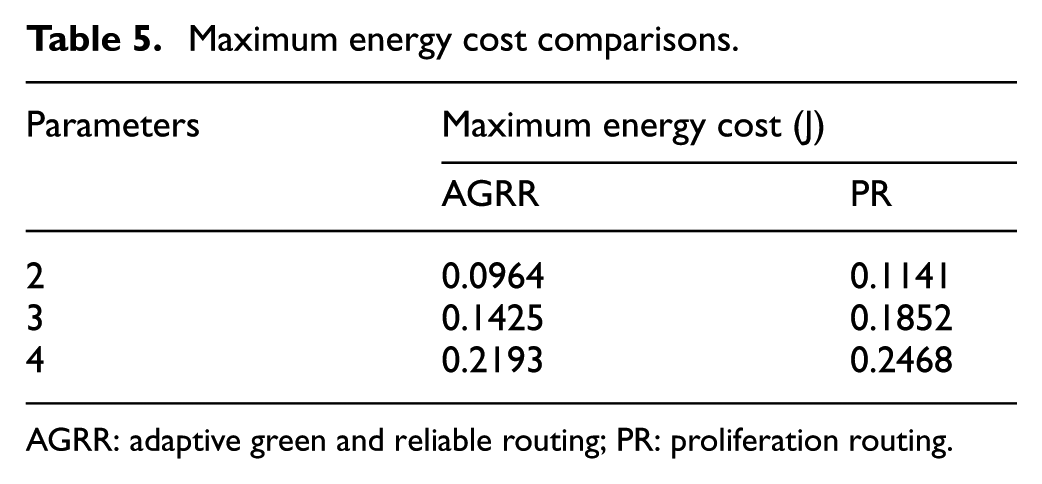
AGRR: adaptive green and reliable routing; PR: proliferation routing.
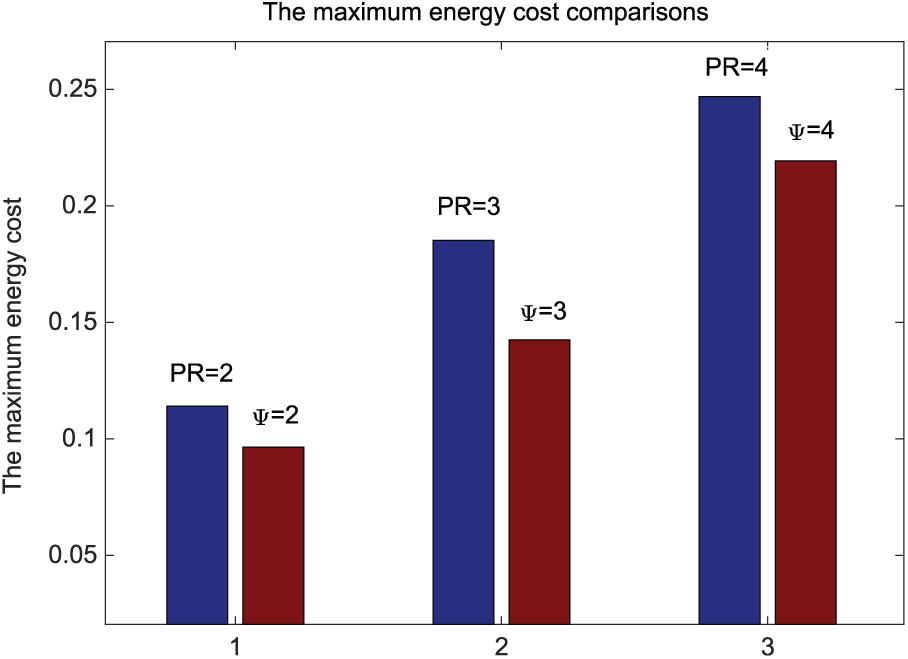
The maximum energy cost comparisons of AGRR with PR under different parameters.
Figures 25–27, respectively, show the transport E2E delay comparison between the proposed AGRR and the existing PR scheme after one round of data gathering. It is evident from the figures that the transport E2E delay changes alternately for nodes with different distances to sink. Table 6 shows the comparison result of the maximum E2E delay. For the maximum transport delay, the difference is not obvious, as shown in Figure 28.

E2E delay comparison of each node of AGRR with PR under PR = 2 and
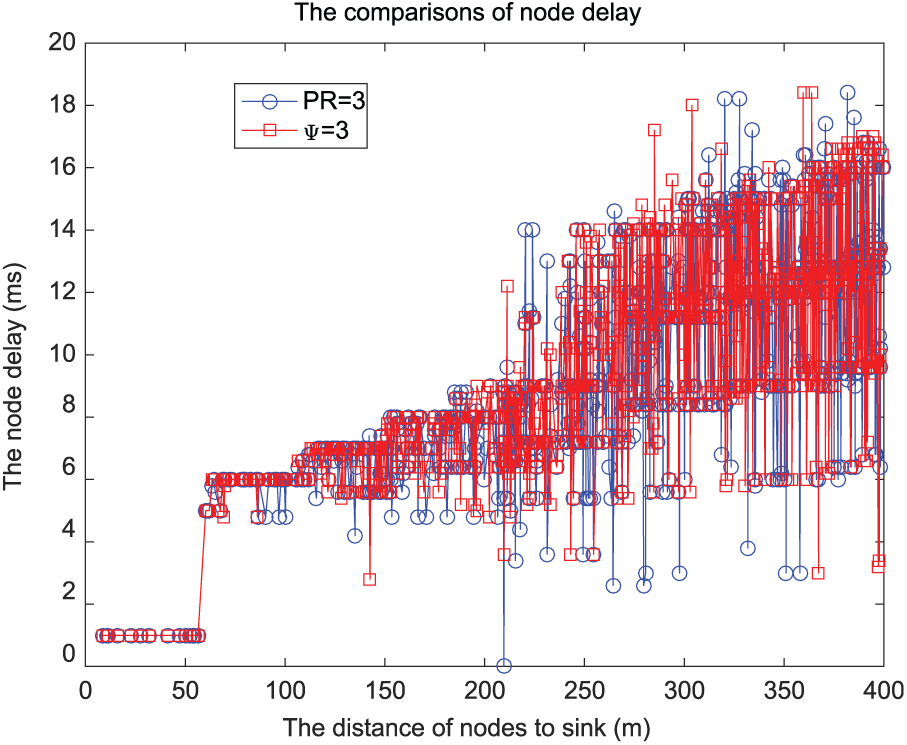
E2E delay comparison of each node of AGRR with PR under PR = 3 and

E2E delay comparison of each node of AGRR with PR under PR = 4 and
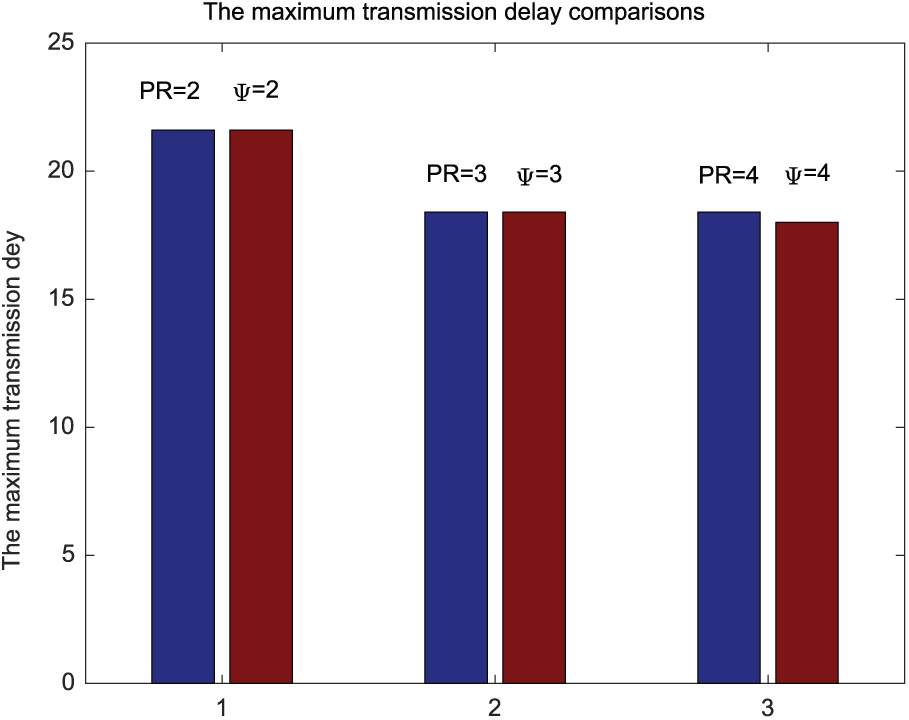
The maximum E2E delay comparison of each node of AGRR under different parameters.
Maximum E2E delay comparisons.

E2E: end-to-end; AGRR: adaptive green and reliable routing; PR: proliferation routing.
From the above comparison and analysis, we can see that the proposed AGRR scheme outperforms the existing PR scheme in energy efficiency. Simultaneously, it is superior in ensuring the transmission reliability without the increase in the E2E delay.
Conclusion and future work
In this article, we studied the problem of efficient data gathering in consideration of energy efficiency, data reliability, and E2E transport delay in industrial WSN. In the existing scheme, the energy cost is quite high. This could lead to the energy of some nodes in the network is exhausted quickly. In addition, to give nodes a certain degree of intelligence and adaptability, a novel fuzzy-rule-based AGRR scheme is proposed in the article. In the AGRR scheme, the number of reproduced packet copies is decided based on a fuzzy logic system to achieve an efficient data gathering. In the fuzzy inference, it takes the RE and distance to the sink of the source or reproducing node as its inputs. So, it can adaptably tune the number of reproducing packet copies. Therefore, the energy efficiency is improved. The theoretical analysis and the simulation results show that our method outperforms the existing method PR in reducing the maximum energy cost and prolonging the network lifetime under the guarantee of transmission reliability. Simultaneously, the E2E delay is not increased. However, the designing membership functions, arranging the inference rules and their influence on system performance are worth further research studies.
Footnotes
Handling Editor: Renato Ferrero
Declaration of conflicting interests
The author(s) declared no potential conflicts of interest with respect to the research, authorship, and/or publication of this article.
Funding
The author(s) disclosed receipt of the following financial support for the research, authorship, and/or publication of this article: This work was supported, in part, by the Natural Science Foundation of Hunan Province (2017JJ3417), the Science and Technology Plan of Hunan (2016TP1003), the National Natural Science Foundation of China (61472450), and the National Basic Research Program of China (973 Program) (2014CB046305).
