




Abstract
This study explores the coping mechanisms of employees facing abusive supervision in two different countries: Pakistan and New Zealand. Drawing on the conservation of resources (COR) theory, we examine if the personal resource of employee mindfulness can buffer the destructive effects of abusive supervision on employees’ work engagement and job burnout via organisational identification. Our two separate studies reveal that organisational identification mediates the relationship between abusive supervision and employee work engagement but not job burnout in both countries. However, employee mindfulness only buffers the harmful impact of abusive supervision in the Pakistan sample. Our study reveals new insights into the impact of employees’ personal resources on abusive supervision in two different cultural environments, providing directions for future research and practice.
Introduction
Abusive supervision refers to a subordinate's “perceptions of the extent to which supervisors engage in the sustained display of hostile verbal and non-verbal behaviours excluding physical contact” (Tepper, 2000, p. 178). These hostile supervisory behaviours violate employees’ basic rights for dignity and respect, disrupt the normative standards of an ethical workplace and pose a threat to employees’ safety and well-being (Ünal et al., 2012). Abusive supervision has been recognised as an interpersonal stressor that undermines fundamental factors such as employees’ self-esteem and sense of belonging (Arshad et al., 2021), leading to increased job burnout (Arshad et al., 2021), work disengagement (Arshad et al., 2021), turnover intentions (Tepper, 2007), psychological distress (Harvey et al., 2007), diminished job performance (Priesemuth et al., 2014), and undermining employee trust (Xiaqi et al., 2012). Studies using the conservation of resources (COR) theory suggest that abusive supervision reduces employees’ necessary resources to cope with the abuse. As a result, abused employees try to either conserve their remaining resources (Tepper, 2007; Tepper et al., 2017) or utilise their remaining resources to cope with abusive supervision (Tepper et al., 2011).
According to COR theory, resources can be categorised into several types: social resources (e.g., social support and workplace friendships), environmental resources (e.g., organisational climate and job clarity), and personal resources (e.g., self-efficacy and psychological ownership) (Arshad, 2022). Despite the growing body of research over the past 20 years on employees’ perceptions of abusive supervision and its impact on work outcomes (Mackey et al., 2017; Martinko et al., 2013), we still know very little about how employees utilise their resources to cope effectively with abusive supervisory behaviours (Tepper et al., 2017). Apart from a recent study by Arshad et al. (2021) showing the importance of cultivating workplace friendships (a social resource) to minimise the damaging effects of abusive supervision, there has been minimal research in this area. Given the substantial financial cost attached to abusive supervision (Tepper et al., 2006), it is imperative to understand how employees use their resources as coping mechanisms to mitigate the adverse effects of abusive supervision.
In this research, we focus on two personal resources: organisational identification and mindfulness. We examine whether organisational identification mediates the relationship between abusive supervision and two outcomes: job burnout and work engagement. Additionally, we explore whether the personal resource of mindfulness moderates the relationship between abusive supervision and organisational identification as well as the overall mediated relationship. Our theoretical framework is illustrated in Figure 1.
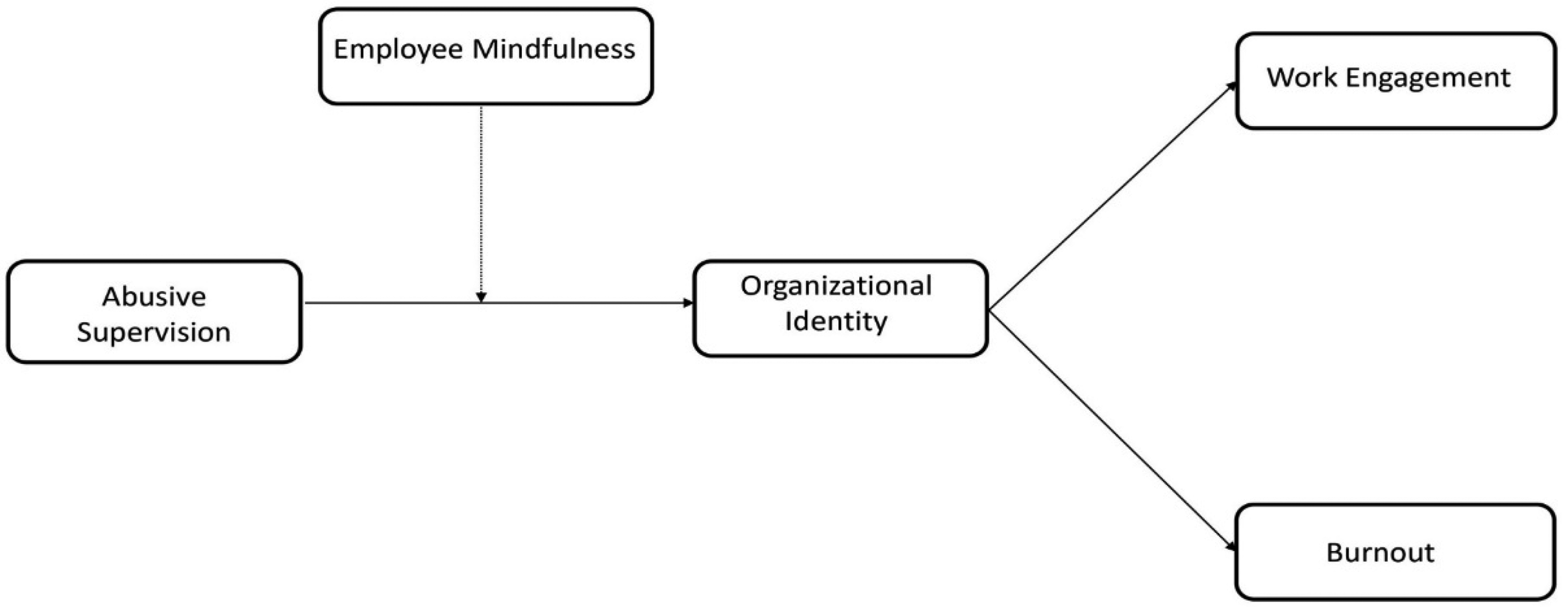
Theoretical Framework.
In the context of abusive supervision, we posit that employees’ organisational identification - essentially their sense of “who am I” in relation to the organisation - is undermined by abusive supervision. Prior research has shown that employees’ membership in their organisation becomes, to a certain extent, a part of their identity and, hence, a component of their self-construct. This perspective is supported by COR theory (Guo et al., 2022; Kaltiainen et al., 2024), which argues that organisational identification, whether relationally with someone or collectively with a group or institution, is a personal resource that contributes to one's positive state and social circumstances (Schabram & Heng, 2021) and can be undermined by abusive supervision
Organisational identification, on the other hand
When employees who identify with their organisation are abused by their supervisors, they feel disrespected, and their sense of identification with the organisation is affected, fracturing trust and drawing negative emotions. For example, research by Fiol (2002) showed that in the context of an organisational identity change (e.g., shifting from manufacturing to a service orientation), the restructuring challenged employees’ identification with the organisation resulting in breakage of trust and increased negativity. Similarly, employees who experience abuse from supervisors representing the organisation often undergo a deidentification process with the organisation. This mistrust and negativity can hinder work engagement and increase the risk of job burnout. It must also be noted that employee identification varies in intensity. Employees with a low sense of organisational identification do not feel a strong connection with the organisation and may find abusive supervision less taxing (Ashforth & Mael, 1989; Deng et al., 2018). Organisational identification can therefore be considered an important mediator between abusive supervision and outcomes such as work engagement and job burnout.
In situations of abusive supervision, mindfulness serves as a crucial personal resource, acting as an important coping strategy to buffer the negative effects. Mindfulness can be conceptualised as either a state (Kiken et al., 2015) or a trait (Carmody & Baer, 2008). In this research, we consider mindfulness as a trait, an enduring characteristic that develops over time through mindfulness practice (Carmody & Baer, 2008). We use Brown and Ryan's (2003) Mindfulness Attention Awareness Scale, which considers mindfulness as a trait. Our approach also aligns with COR theory which treats mindfulness as a personal resource “related to focused attention and awareness on present experiences” (Brown & Ryan, 2003, p. 822). Practicing mindfulness can help employees detach from negative emotions, assess them without judgment, and avoid internalising them, thereby possibly buffering (or moderating) the effects of abusive supervision on organisational identification. In this study, we are interested in examining how mindfulness buffers the negative relationship between abusive supervision and employee's organisational identification, as well as the overall mediated relationship between abusive supervision and work engagement and job burnout via organisational identification (see Figure 1 for the theoretical model).
Our study therefore makes an important contribution by examining the mechanisms employees use to cope with abusive supervision. More specifically, the combination of resources employees draws on at a personal level (i.e., organisational identification and mindfulness) when experiencing abusive supervision will give us greater insights into how abusive supervision can be mitigated. By examining how employees’ organisational identification mediates the relationship between abusive supervision and their work engagement and burnout, and how they use mindfulness to buffer the effects of abusive supervision is an important area of research, responding to Tepper et al.'s (2017) call to explore various mechanisms that help cope with abusive supervision thereby contributing to both theory and practice.
Theoretical Framework
Conservation of Resources Theory
COR theory is a fundamental framework for understanding how subordinates respond to stress caused by abusive supervisory behaviours (Harris et al., 2013). It adopts a resource-based perspective on stressors, recognising that stressors can cause the loss or depletion of resources. These resources are valuable to people and can be material (house, land, cars), social (social support, co-worker support, job security), and personal (self-esteem, resilience, mindfulness, identity) (Hobfoll, 1989). The basic tenet of COR theory is that individuals strive to acquire, retain, and preserve valuable resources (Hobfoll, 1989, 2011) and that the potential or actual loss of these resources causes psychological stress. Ultimately, this resource loss leads to resource depletion in the long run (Hobfoll, 1989). According to COR theory, individuals may respond to resource loss by: (1) investing more resources to counteract the loss, (2) conserving their remaining resources to prevent further loss, or (3) engaging in counterproductive strategies (Hobfoll, 1998, 2001). For instance, Halbesleben et al. (2014) note that employees who perceive a threat tend to hoard resources as a protective mechanism and Krischer et al. (2010) found that employees facing abusive behaviour are more likely to engage in counterproductive behaviour to regain control. Other research indicates that certain personal or social resources (e.g., resilience, self-esteem, co-worker support) can help individuals buffer the negative effects of workplace stressors (Arshad et al., 2021; Hobfoll & Shirom, 2001).
COR theory provides us with a theoretical underpinning to explore the adverse effects of abusive supervision on employee work engagement and burnout through organisational identification. It also helps us understand how employee mindfulness buffers these relationships. Figure 1 represents this study's theoretical framework.
Abusive Supervision and Employee Outcomes
As previously mentioned, abusive supervision refers to employees’ perception that their supervisor is engaging in sustained hostile verbal or non-verbal behaviours (Tepper, 2000). Examples of abusive supervision include humiliating or ridiculing employees in public, mocking or belittling them in front of their co-workers, being rude to them, or taking credit for their work (Tepper, 2000, 2007). Abusive supervision has several key characteristics: (1) it is a subjective perception, meaning different employees may perceive the same supervisor's abusive behaviour differently; (2) it must be intentional on the part of the supervisor; (3) it involves a “sustained display” rather than a one-off incident; and (4) it excludes physical contact (Harris et al., 2007). Several studies have explored the significant effects of abusive supervision on employee work outcomes, including reduced organisational citizenship behaviours (Aryee et al., 2007), lower job performance (Harris et al., 2007), feedback avoidance (Whitman et al., 2014), counterproductive work behaviours (Mitchell & Ambrose, 2007), and supervisor-directed aggression (Lian et al., 2014).
This study examines two work outcomes of abusive supervision: work engagement (Kahn, 1990) and job burnout (Maslach et al., 2001). Drawing on COR theory (Hobfoll, 1989), we posit that abusive supervision is a stressor that leads employees to conserve their resources by putting in less effort, ultimately reducing their work engagement (Avey et al., 2015; Tepper, 2000). In addition, exposure to continuous abuse from supervisors makes employees physically and mentally exhausted due to psychological strain (Carlson et al., 2012; Tepper, 2000), and hence drains their psychological resources. Employees strives to sustain their resources, and failure to do so leads to job burnout (Hobfoll, 2001; Sliter et al., 2010).
Although the impact of abusive supervision on work engagement and employee burnout has been previously studied (e.g., Carlson et al., 2012; Frieder et al., 2015; Mackey et al., 2013), there has been limited research into how intervening mechanisms such as organisational identification and employee mindfulness affect these outcomes.
Mediating Role of Organisational Identification
Organisational identification is an employee's perception of oneness with the organisation, which involves considering the organisation's successes and failures as one's own (Mael & Ashforth, 1992). Employees with a strong sense of identification with their organisation consolidate their sense of personal identity with their organisational identity (Ashforth & Humphrey, 1993). Organisation identification develops when an organisation satisfies four critical needs of employees: uncertainty reduction, belonging, self-esteem, and a sense of self-worth (Sillince & Golant, 2018; Zhuang et al., 2020). The four critical needs are personal resources as per the COR theory (Hobfoll, 2011).
Abusive supervision can threaten these four needs and ultimately undermine employees’ sense of identification with their organisation. Hostile and coercive leadership behaviours make employees feel helpless and create ambiguity in their minds about their future (Tepper et al., 2009), impairing their need for uncertainty reduction. Abusive supervisors intimidate employees by humiliating them and making them feel detached from their organisations (Aryee et al., 2007; Tepper et al., 2004), reducing their sense of belonging. Additionally, abusive supervisors may publicly criticise and mistreat employees, leading them to question their value within the organisation (Burton & Hoobler, 2006). Abused subordinates may feel disrespected and doubt their skills and competency, harming their self-esteem (Keashly & Harvey, 2005; Liu et al., 2012). Moreover, persistent abuse from supervisors reduces employees’ psychological well-being. Abusive supervisors do not appreciate the good work of their employees, making them feel that their contribution is less valuable to the organisation and disregarding their need for a sense of self-worth (De Roeck & Delobbe, 2012; Rafferty & Restubog, 2011). Ultimately, abusive supervisory behaviours can erode the four basic needs (i.e., deplete the four personal resources) that help build employees’ organisational identification.
Leaders embody their organisation's values, and their actions reflect those of the organisation (Baran et al., 2012). Research also indicates that employees tend to personify the organisation they work for based on the quality of their exchange relationship with their leaders (Kim et al., 2004). Unfortunately, abusive leaders who are inconsistent in their behaviour and disrespect employees undermine the four key needs of uncertainty reduction, belonging, self-esteem, and a sense of self-worth. The negative actions of leaders who represent their organisation can be perceived as actions of the organisation itself, thereby weakening employees’ identification with the organisation. Employees in such stressful conditions are less likely to defend their organisation's public image (Decoster et al., 2013), and their sense of alignment with the organisation's values diminishes (Tajfel, 1981). Conversely, leaders who are consistent in their behaviour and strongly support employees enhance the four key needs of employees: uncertainty reduction, belonging, self-esteem, and a sense of self-worth. Such positive actions of leaders would be perceived by employees as actions of the organisation, thereby strengthening their identification with the organisation. Taken together, this leads us to hypothesise the following: H1: Abusive supervision negatively affects employees’ organisational identification.
In light of COR theory (Hobfoll, 1989), we posit that employees’ resources are diminished when they face interpersonal stressors such as abusive supervision (Harris et al., 2013). A deficiency in personal resources, such as organisational identification, makes individuals vulnerable (Hobfoll, 2002). Their sense of belonging declines, and they are more likely to feel drained because they consume more self-regulatory resources to overcome negative impulses and emotions. To conserve resources, they exert less effort in their work, which affects their work engagement. Constant draining of self-regulatory resources puts people in a vulnerable state, eventually leading to burnout.
Employees who feel a strong sense of identification with their organisation exert more effort and dedication to their work, are more engaged even with a high workload (Guarana, 2010) and derive personal satisfaction from their work (Lee et al., 2015). A strong sense of organisational identification is a significant resource that helps minimise employees’ stress levels (Haslam et al., 2005) and minimise burnout (Jetten et al., 2012). It also encourages employees to voluntarily contribute to organisational goals without needing to utilise regulation strategies (Bhowmick & Mulla, 2021). Therefore, drawing on the COR theory, we hypothesise that: H2: Employees’ organisational identification mediates the relationship between abusive supervision and a) engagement and b) job burnout.
Moderating Role of Employee Mindfulness
Mindfulness practice has its roots in Buddhism (Purser & Milillo, 2014). It is related to a person's attention and awareness of the current moment without any reaction or judgement (Baer et al., 2006; Brown & Ryan, 2003). Mindfulness varies from person to person (Brown & Ryan, 2003), but, overall, mindfulness-based practices help people self-regulate themselves and function better (Glomb et al., 2011).
There are two core mental processes encompassing mindfulness, as described by Glomb et al. (2011). Firstly, individuals with a high level of mindfulness can detach their ego from experiences, emotions, and thoughts, making these less self-relevant. Secondly, they experience a decline in the automaticity of thoughts and mental processes, which reduces constrained thinking patterns and impulsive reactions to events and experiences (Zheng & Liu, 2017). Thus, mindfulness can help individuals stay fully aware of the moment and counter dysfunctional thinking patterns.
The role of employee mindfulness in the workplace has been well-researched (e.g., Burton & Barber, 2019; Dane, 2011; Ray et al., 2011; Weick & Putnam, 2006). Mindfulness is a personal resource that helps employees detach themselves from stressful situations at work and understand and process them in a less damaging way (Haun et al., 2018). Mindfulness interventions maximize employees’ resources to achieve organisational outcomes (McNall et al., 2021). However, mindfulness should not always be considered as an unmitigated good. For example, some studies have found that mindfulness increases the effects of abusive supervision (Walsh & Arnold, 2020), which can result in employees regarding leaders’ abusive behaviours as unfair, diminishing their perception of the organisation's interactional justice, and increasing their likelihood of retaliation (hostility/disrespect directed towards the supervisor) (Burton & Barber, 2019).
According to COR theory, employees with a high sense of association with their organisation may find it hard to distance themselves from harmful organisational stressors such as abusive supervision (Hobfoll, 1989). Such employees may feel betrayed and consider it a personal attack (Deng et al., 2018), thus depleting their sense of identification with the organisation. Drawing on COR theory, we posit that these employees can utilise mindfulness as a coping resource to buffer stressful situations such as abusive supervision at work. Mindfulness can disrupt habitual negative thought patterns, enabling individuals to detach themselves from the situation (Garland et al., 2015), thereby buffering the negative effects of abusive supervision (Weintraub et al., 2019). Mindful employees are better able to stand back, analyse the situation, and calmly cope with negativity arising from abusive supervision rather than becoming consumed by it (Haun et al., 2018). Employees with high levels of mindfulness are less likely to take things personally when faced with abusive supervisory behaviour. They can separate these behaviours from organisational actions, thus weakening the negative relationship between abusive supervision and organisational identification. Conversely, employees with low levels of mindfulness are more susceptible to the emotions caused by abusive supervisory behaviours and are unable to separate such behaviours from organisational actions, thereby strengthening the negative relationship between abusive supervision and organisational identification.
Apart from mindfulness moderating the relationship between perception of abusive supervision and organizational identification, we also posit that it moderates the overall mediated relationship between abusive supervision and job burnout and work engagement via organizational identification
Overall, mindfulness helps employees detach themselves from stressful work experiences and analyse situations non-judgementally (Glomb et al., 2011). As mindful employees are better equipped to detach themselves from stressful work experiences and buffer the negative effects of abusive supervision, they are less likely to feel that their psychological resources are being drained by negative situations at work. Mindfulness will act as a coping resource, helping to reduce the negative impact on employees’ organisational identification and work engagement and minimising job burnout. This leads to the following hypotheses:
Method
Samples and Procedures
To test our hypotheses, we conducted two separate studies. Study 1 in Pakistan and Study 2 in New Zealand (NZ). In both countries, we contacted employees using a combination of convenience and snowball sampling techniques. To maximize responses, we used both paper-based and Qualtrics surveys. In each country, we conducted a cross-sectional study in two waves, with a two-week interval between them. We separated the independent and dependent variables to minimise common method bias and reverse causality that may occur in cross-sectional research (Lindell & Whitney, 2001; Podsakoff et al., 2003; Selig & Preacher, 2009). In the first wave, we collected information on respondents’ demographics, perceptions of abusive supervision, and organisational identification. Two weeks later, in the second wave, we gathered data on their perceptions of mindfulness, work engagement, and job burnout. A cover letter accompanied the survey, informing respondents about the study's context and scope. We assured respondents that their responses were anonymous and confidential, and that all data were stored as codes in the database.
Study 1-Pakistan
We collected data from employees in the service sector in Pakistan. The service sector consisted of service organisations from industries such as education, consulting, banking, automobile services, and insurance. Since English is an official language in Pakistan and widely used in business, the surveys were conducted in English. At the end of the second wave, and after screening out invalid and incomplete responses, we obtained 329 valid responses, resulting in a validity rate of 65.8%. The sample included 56.5% females with 64.6% participants aged between 25 and 34 years. Participants represented various industries, including financial services, health, hospitality, and education.
Measures
All measures were conducted using a Likert scale ranging from 1 (strongly disagree) to 5 (strongly agree).
Abusive Supervision was measured using a 15-item scale designed by Tepper (2000). Sample items were “My boss invades my privacy” and “My boss blames me to save himself/herself embarrassment”. Respondents were asked to rate their perceptions about their supervisor's behaviours at work. Cronbach's alpha was 0.95.
Organisational Identity was measured using a 6-item scale designed by Mael and Ashforth (1992). Sample items were “When someone criticises my organisation, it feels like a personal insult” and “My organisation's successes are my successes”. Participants were asked to rate their level of identification with their organisation. Cronbach's alpha was 0.82.
Employee Mindfulness was measured using a 15-item scale designed by Brown and Ryan (2003). Sample items were “I find it difficult to stay focused on what's happening in the present” and “I do jobs or tasks automatically, without being aware of what I’m doing”. Cronbach's alpha was 0.92.
Work Engagement of Employees was measured using a 9-item scale by Schaufeli et al. (2006). Sample items include “I get carried away when I am working” and “I am enthusiastic about my job”. Cronbach's alpha was 0.87.
Job Burnout was measured using a 7-item Copenhagen work-related burnout scale developed by Kristensen et al. (2005). Sample items included “I feel worn out at the end of the working day” and “I feel burnt out because of work”. Cronbach's alpha was 0.79.
Positive and negative affectivity were included as control variables in the study. These were measured using the 8-item scale by Watson et al. (1988). Positive affectivity (PA) refers to the degree to which an individual is enthusiastic, excited, interested, and determined, displaying high energy and determination. Individuals with high levels of PA reflect overall psychological well-being (Wu & Hu, 2009). Negative affectivity (NA), on the other hand, refers to the degree to which an individual is upset, distressed, anxious, and scared. Individuals with high NA exhibit pronounced levels of anxiety and stress, affecting their perceptions of abusive supervision (Tepper et al., 2006). PA and NA relate to the perception of psychological wellbeing and stress at work respectively (Wu & Hu, 2009) and can distort employees’ perception of abusive supervision and their psychological resources. Previous studies on abusive supervision have used PA and NA as controls (Harvey et al., 2014; Tepper et al., 2006). The Cronbach's alpha for the PA scale was 0.70 and 0.74 for the NA scale.
Analytical Strategy
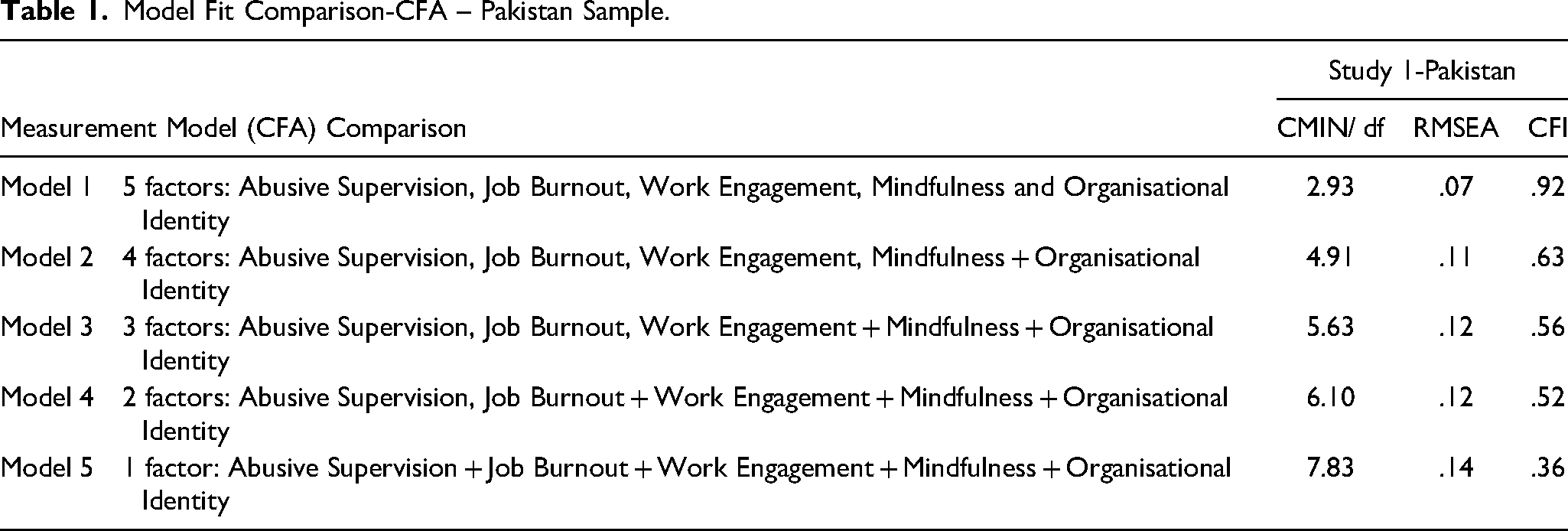
We conducted the confirmatory factor analysis (CFA) in AMOS to examine the discriminant validities of our variables (see Table 1). Our five-factor model gave a good fit to the data. The fit indices used to assess the model fit were: CMIN/df, comparative fit index (CFI), root-mean-square error of approximation (RMSEA) and standardised root-mean-square residual, as per the recommendations of Byrne (2012) and Kline (2015). Our baseline five-factor model exhibited indices that were all within an acceptable range (RMSEA = 0,07 and CFI = 0.92). In contrast, all the alternative models were a poor fit.
Model Fit Comparison-CFA – Pakistan Sample.
In order to minimise the chances of Common Method Variance (CMV), we conducted Harman's one-factor test (Podsakoff & Organ, 1986). The single factor only came with 26% of the total variance for the Pakistan samples. These variances are well-below the 40% threshold, confirming that CMV did not affect our research. We then tested for moderation and mediation, as well as moderated mediation, in SPSS through PROCESS macro models (Hayes, 2013). Moderated mediation happens when the direction and strength of mediation effects are dependent on another variable, i.e., the moderator. In our study, moderated mediation will occur when the indirect effects of abusive supervision on work engagement and burnout, mediated by employees’ organisational identification, vary in strength across low and high levels of employee mindfulness.
Results
Table 2 presents the descriptive statistics of the Study 1 sample, including the means (M), standard deviation (SD), Cronbach's alpha, and correlation matrix of our study variables.
Means (M), Standard Deviations (SD), Cronbach's α and Correlations Between Variables – Pakistan Study.
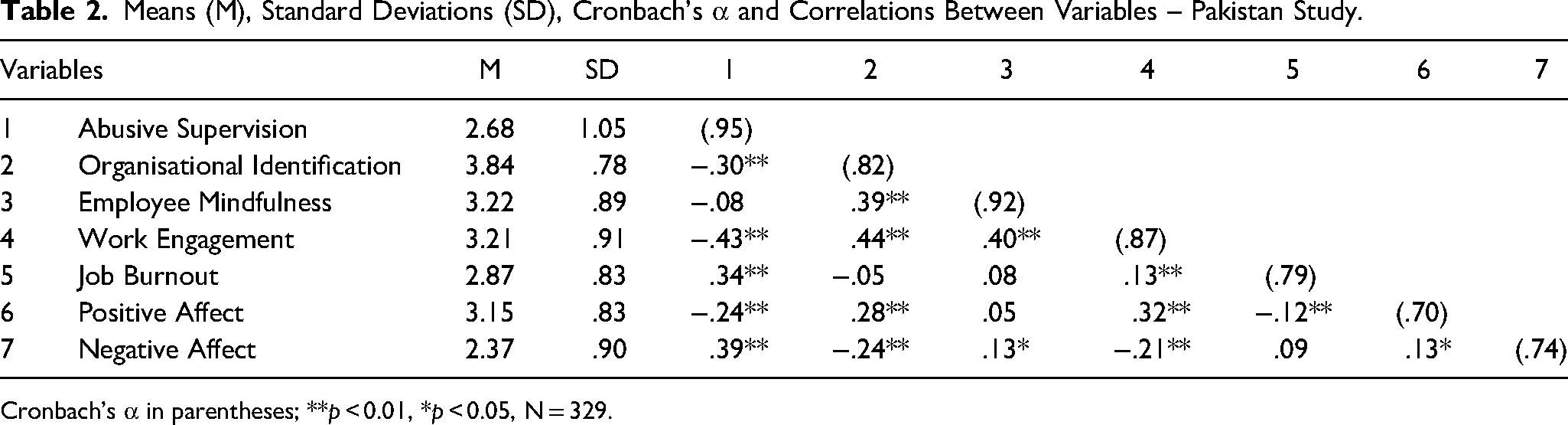
Cronbach's α in parentheses; **p < 0.01, *p < 0.05, N = 329.
Table 3 presents the results of the direct and mediation analyses using PROCESS model 4 macro (Hayes, 2013). It shows that abusive supervision is negatively related to organisational identification (b = −.19, t = −4.18, p < 0.01), supporting H1. We found that organisational identification significantly mediated the relationship between abusive supervision and work engagement of employees (b = .25, t = 4.51, p < 0.01), supporting H2a. Organisational identification had an insignificant mediation in the relationship between abusive supervision and job burnout (b = .09, t = −1.52), disproving our mediation hypothesis H2b.
Direct and Mediation Analysis-Pakistan Study.
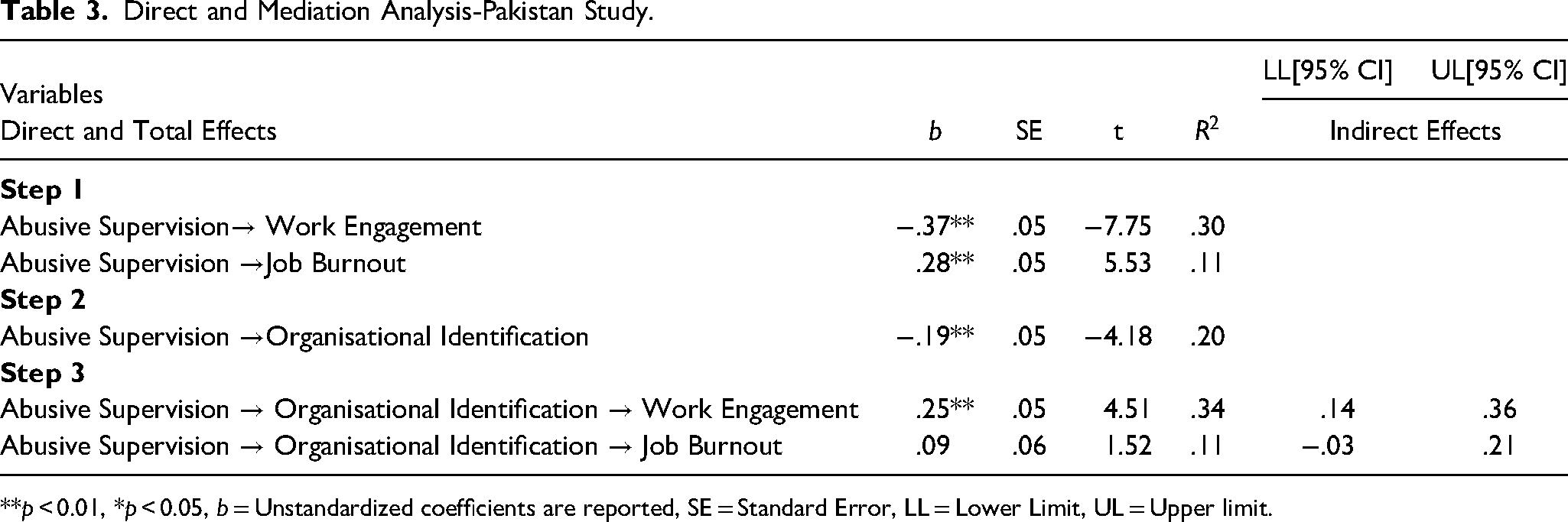
**p < 0.01, *p < 0.05, b = Unstandardized coefficients are reported, SE = Standard Error, LL = Lower Limit, UL = Upper limit.
Next, we examined the interaction of abusive supervision and employee mindfulness to predict organisational identification using PROCESS model 1 (Hayes, 2013). Table 4 shows that the interaction was significant (b = .09, p < 0.05) across high and low levels of employee mindfulness, supporting H3a. This result suggests that high employee mindfulness buffers the negative effects of abusive supervision on organisational identification, as shown in Figure 2.
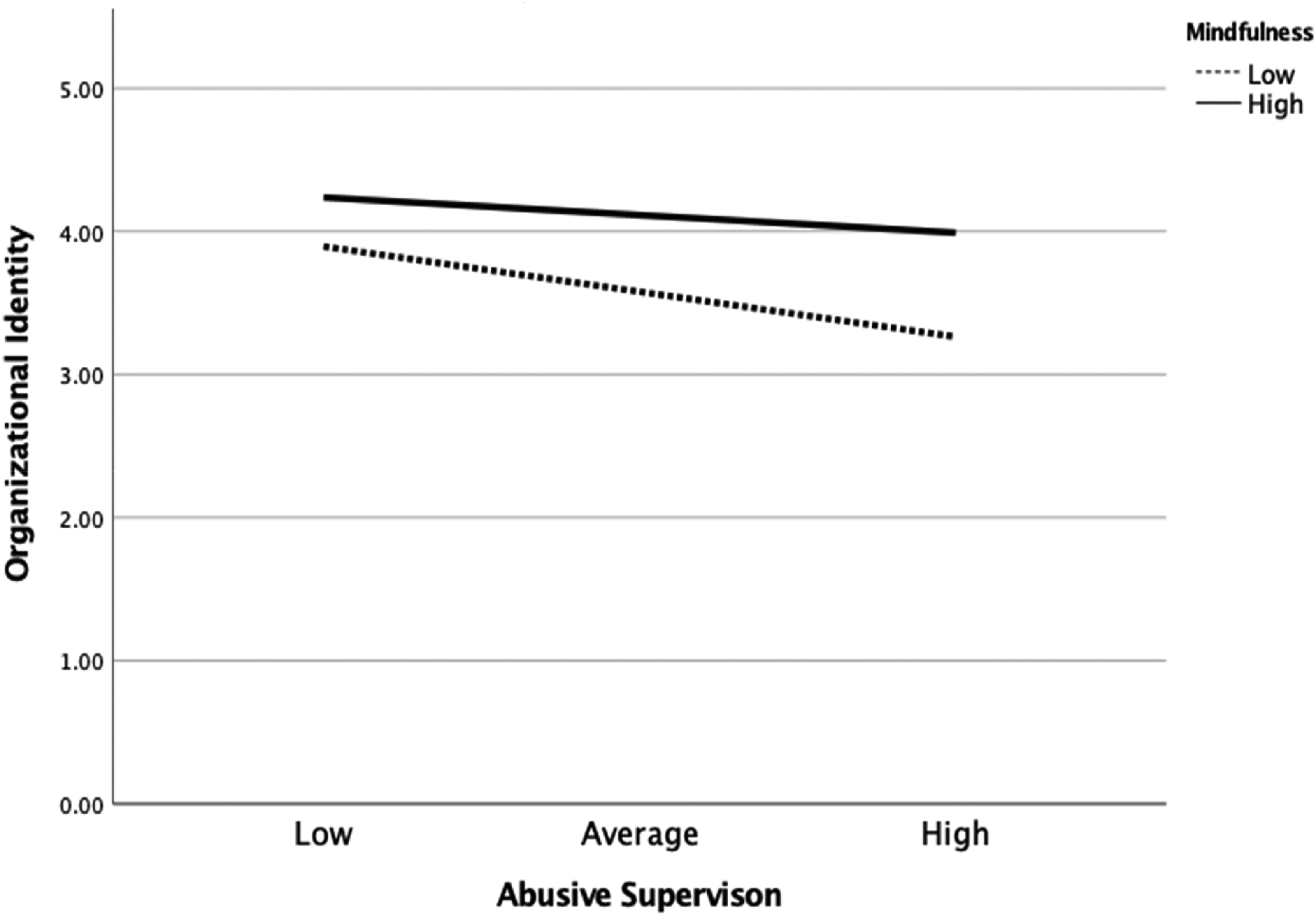
Moderating Role of Employee Mindfulness – Pakistan Study.
Moderating Role of Employee Mindfulness – Pakistan Study.
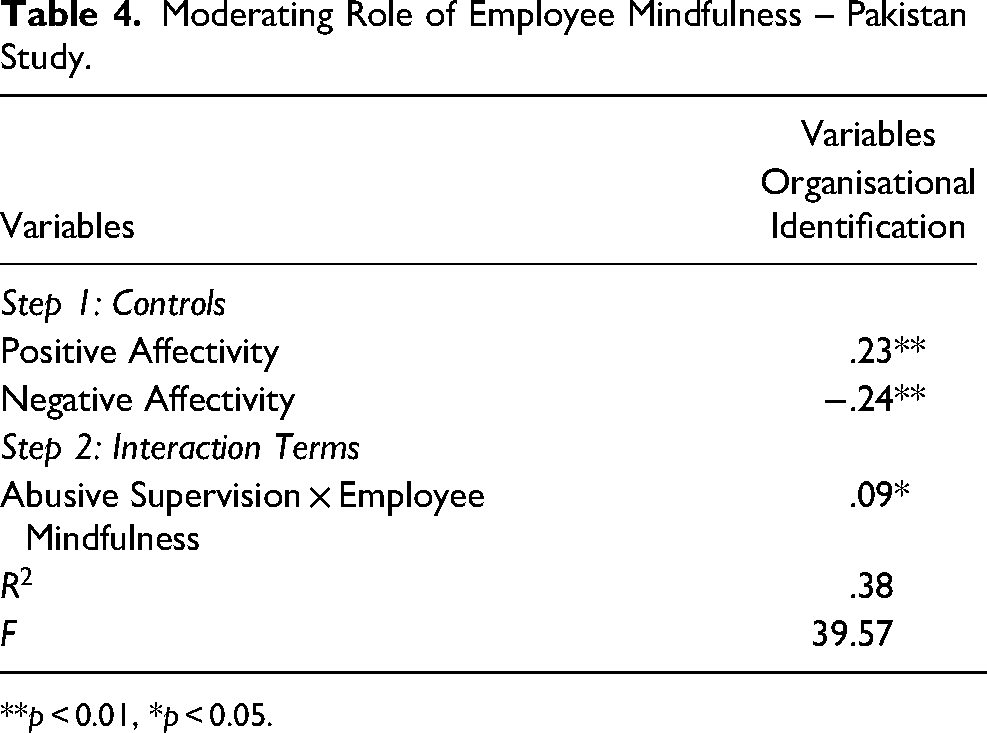
**p < 0.01, *p < 0.05.
Lastly, we checked for moderated mediation effects, presented in Table 5. The strength of the indirect effect of abusive supervision on work engagement and burnout of employees via employees’ organisational identification varied between low and high levels of employee mindfulness. We used PROCESS macro model 7 (Hayes, 2013) to assess the strength of these conditional indirect effects. The moderated mediation was found to be significant only for work engagement where it weakens (slightly) with higher levels of mindfulness, accepting H3b(a).
Moderated Mediation Results for Abusive Supervision – Pakistan Study.
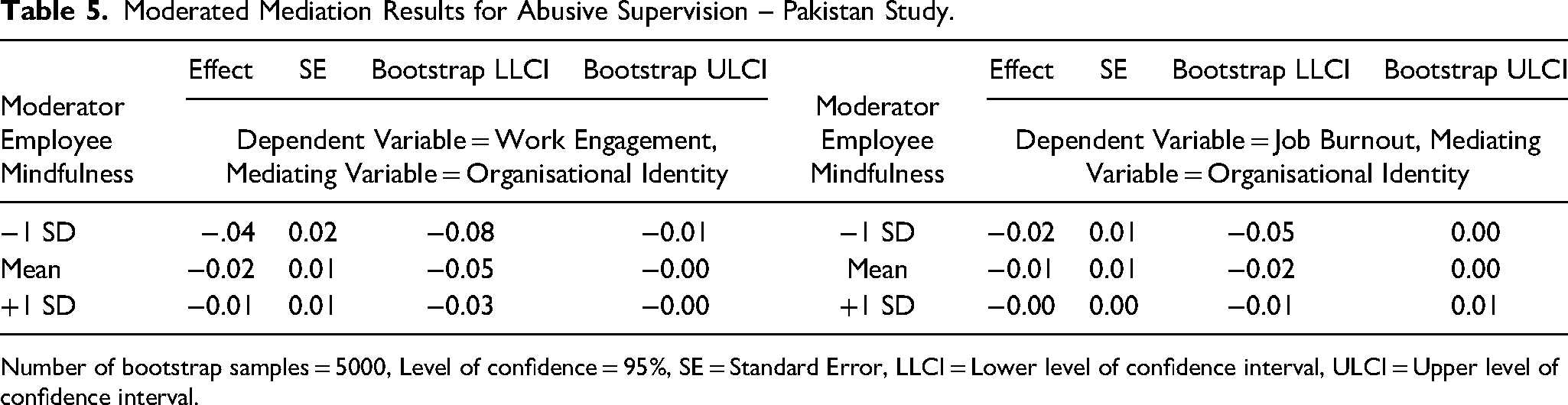
Number of bootstrap samples = 5000, Level of confidence = 95%, SE = Standard Error, LLCI = Lower level of confidence interval, ULCI = Upper level of confidence interval.
Study 2- New Zealand
We then replicated the sample and procedures from Pakistan (Study 1) in NZ (Study 2). After screening out invalid and incomplete responses, we collected 222 valid responses (validity rate of 51.15%) at the end of the second wave. The NZ sample consisted of 52.25% females, and 60.81% belonged to the age group of 25–34 years. Participants came from a variety of industries such as hospitality, education, and financial services.
Measures
We used the same measures from Study 1 for abusive supervision, organisational identity, employee mindfulness, work engagement and job burnout in Study 2. All measures were done using a Likert scale from 1 to 5, with 1 = “strongly disagree” and 5 = “strongly agree.” The Cronbach alpha was 0.96 for abusive supervision, 0.91 for organisational identification, 0.92 for employee mindfulness, 0.85 for work engagement of employees, 0.95 for job burnout, 0.72 for positive affectivity, and 0.75 for negative affectivity.
Model Fit
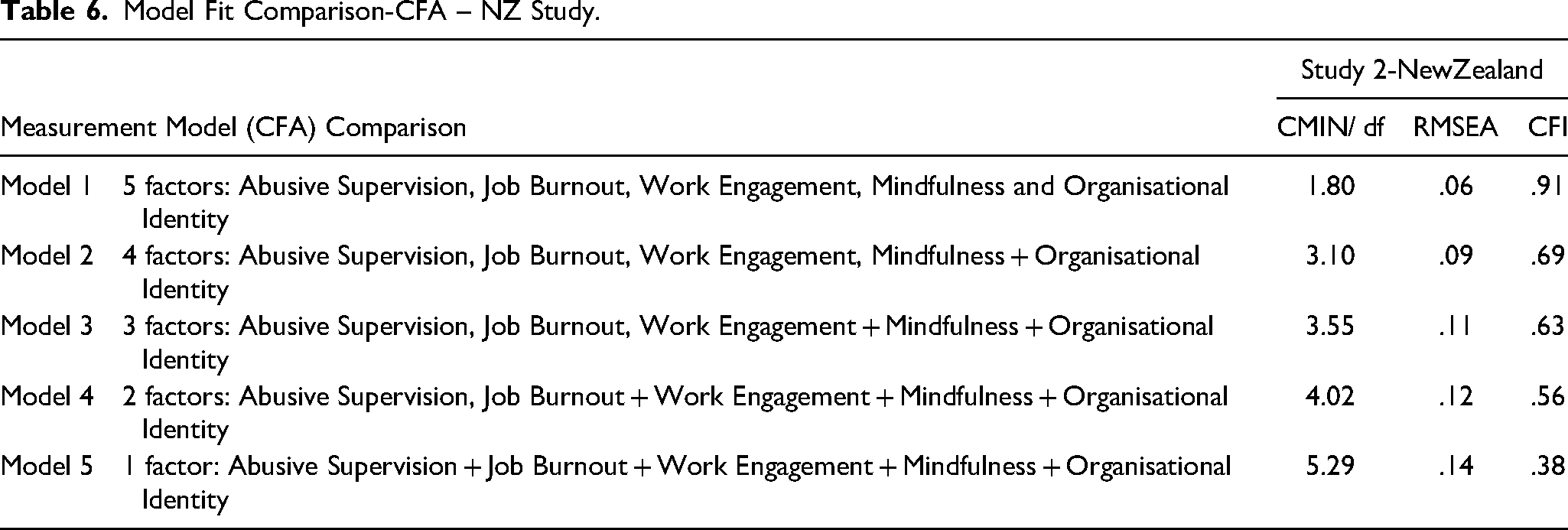
We conducted the confirmatory factor analysis (CFA) in AMOS to investigate the discriminant validities of our variables, as presented in Table 6. Our five-factor model gave a good fit to the data. The fit indices used to assess the model fit were: CMIN/df, comparative fit index (CFI), root-mean-square error of approximation (RMSEA) and standardised root-mean-square residual, as per the recommendations of Byrne (2012) and Kline (2015). Our baseline five-factor model had all the indices within an acceptable range (RMSEA = 0.06 and CFI = 0.91). In contrast, all the alternative models were a poor fit.
Model Fit Comparison-CFA – NZ Study.
To minimise the chances of CMV, we conducted Harman's one-factor test (Podsakoff & Organ, 1986). The single factor only came with 28.6% of the total variance for the NZ samples. These variances are well-below the 40% threshold, confirming that CMV did not affect our study 2.
Results
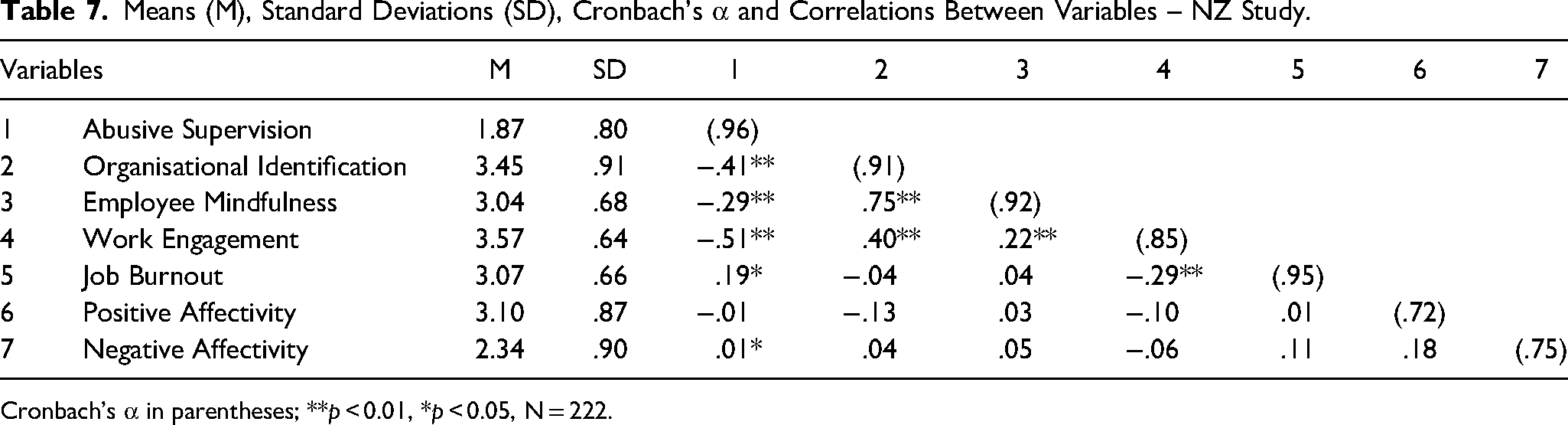
Table 7 presents the descriptive statistics of our NZ sample, including the means (M), standard deviation (SD), Cronbach's alpha, and correlation matrix of our study variables.
Means (M), Standard Deviations (SD), Cronbach's α and Correlations Between Variables – NZ Study.
Cronbach's α in parentheses; **p < 0.01, *p < 0.05, N = 222.
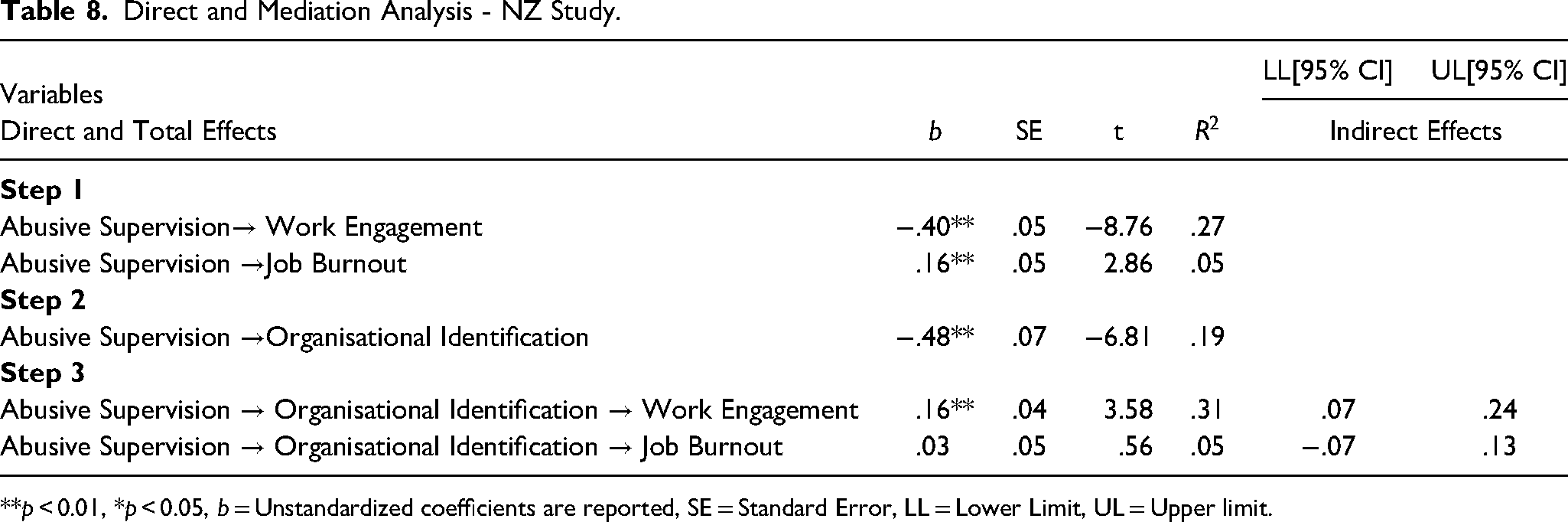
Table 8 presents the results of the direct and mediation analyses using PROCESS model 4 macro (Hayes 2013). It shows that abusive supervision is negatively related to organisational identification (b = −.48, t = −6.81, p < 0.01), supporting H1. We found that organisational identification significantly mediated the relationship between abusive supervision and work engagement of employees (b = .16, t = 3.58, p < 0.01), supporting H2a. Organisational identification had an insignificant mediation on the relationship between abusive supervision and job burnout (b = .03, t = .56), disproving our mediation hypothesis H2b.
Direct and Mediation Analysis - NZ Study.
**p < 0.01, *p < 0.05, b = Unstandardized coefficients are reported, SE = Standard Error, LL = Lower Limit, UL = Upper limit.
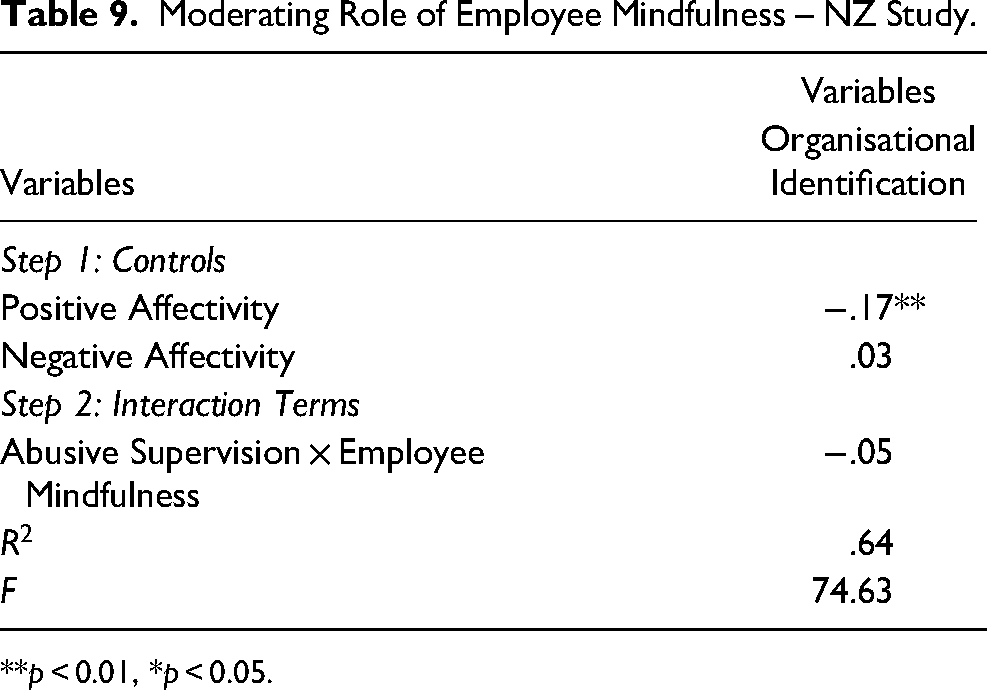
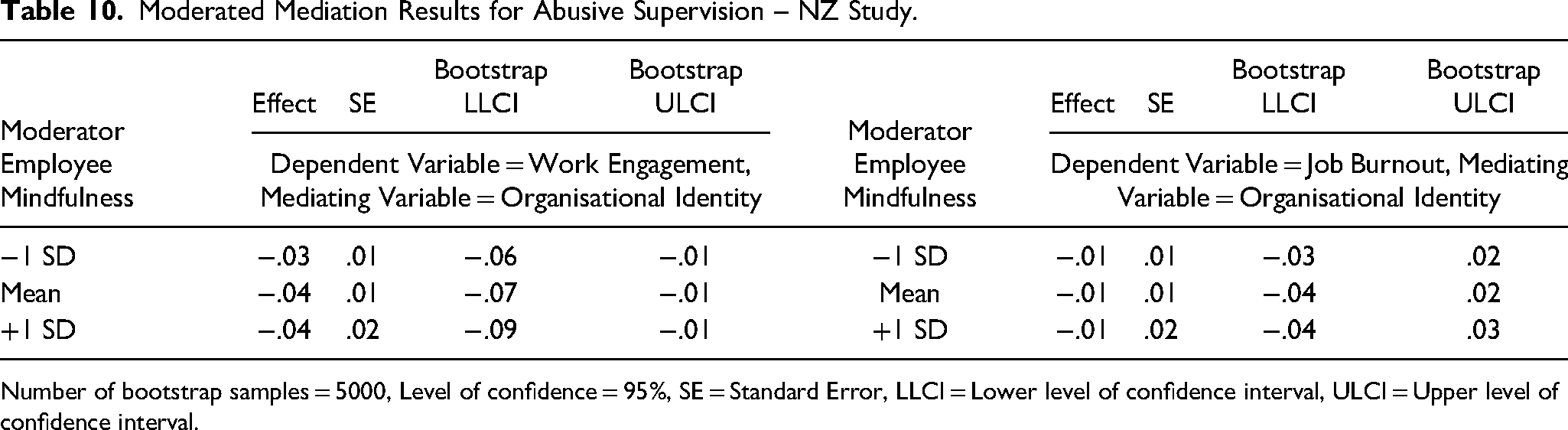
Next, we examined the interaction of abusive supervision and employee mindfulness to predict organisational identification. The interaction was insignificant (b = −.05, p > 0.05) as shown in Table 9, rejecting H3a for the NZ sample. Lastly, we checked for moderated mediation effects, with respect to whether the indirect effect of abusive supervision on work engagement and burnout of employees via employees’ organisational identification differed across varying levels of employee mindfulness. We used PROCESS macro model 7 (Hayes, 2013) to assess the strength of these conditional indirect effects. Overall, the moderated mediation was found to be insignificant for both work engagement and burnout, rejecting H3b as presented in Table 10.
Moderating Role of Employee Mindfulness – NZ Study.
**p < 0.01, *p < 0.05.
Moderated Mediation Results for Abusive Supervision – NZ Study.
Number of bootstrap samples = 5000, Level of confidence = 95%, SE = Standard Error, LLCI = Lower level of confidence interval, ULCI = Upper level of confidence interval.
Discussion & Conclusion
This study explored whether employee mindfulness and organisational identification can mitigate the adverse effects of abusive supervision. Our analysis focused on the mediating role of organisational identification in the relationship between abusive supervision and employee outcomes, specifically work engagement and burnout, in NZ and Pakistan samples. We also examined whether employee mindfulness can buffer the harmful effects of abusive supervision on organisational identification and, ultimately, on work engagement and burnout.
In our study, we considered two separate countries with differing rates of abusive supervision: NZ and Pakistan. Few studies on abusive supervision have been conducted in the NZ context. Although NZ has a higher rate of workplace bullying among the developed countries (Redmond, 2016), it is low when compared to countries such as Pakistan. In a study comparing bullying in higher education institutions across New Zealand, Norway, Denmark, Turkey, and the USA, Thirlwall and Haar (2010) found that NZ institutions reported a higher occurrence of bullying compared to their European counterparts, but similar to those in the USA. A recent report by the Institute of Business Ethics (Dondé & Somasundaram, 2018) on work ethics in NZ, Australia, and UK, shows NZ has the highest rate (marginally) of workplace bullying – about 26%, compared to 24% in the UK and Australia.
Studies about abusive supervision in Pakistan suggest that employees are exposed to higher levels of workplace bullying than in European or Australian workplaces, and most of this behaviour is top-down in nature (Ahmad et al., 2021). Other studies show that many instances of abusive supervision in Pakistan are underreported due to employees fearing retaliation or job loss, as well as lacking assertive skills to deal with the situation, and feeling trapped by the lack of alternative job opportunities (Cassum, 2014). Therefore, although NZ has a higher rate of abusive supervision compared to some OECD countries (Redmond, 2016), it is significantly lower than in Pakistan.
Since our aim was to compare the findings and discuss observed differences, we treated each country as a separate study. This treatment was necessary because the difference in the primary predictor variable (i.e., abusive supervision) was too extensive to justify combining them. Ultimately, using Welch's (1951) test to compare the abusive supervision between the two samples, we found a significant difference in abusive supervision between Pakistan (M = 2.68) and New Zealand (M = 1.87), t (474) = 162, p < 0.001).
We found that abusive supervision is negatively related to the organisational identification of employees in both the Pakistan and NZ samples. This result aligns with the assumptions of COR theory, which posits that employees’ resources diminish when faced with a stressor such as abusive supervision. We know from the literature that an interpersonal stressor such as abusive supervision can damage the four basic needs essential for employees to build organisational identification. However, although abusive supervision was significantly lower in NZ (Study 2) as compared to Pakistan (Study 1), we also found that there was a stronger negative effect of abusive supervision on employees’ organisational identification in NZ (Study 2). The multi-group analysis (Hair et al., 2017) in AMOS showed that the two samples (i.e., Pakistan and NZ) are different and the results are statistically significant with a p-value of <0.01 (note: this further justifies the separation of the two studies). This shows that the value of beta coefficients matters in comparison. In the NZ sample, abusive supervision had a stronger effect on employees’ organisational identification, with a path coefficient value of beta −0.47**, compared to the Pakistan sample which had a beta value of −.19**. Additionally, organisational identification was a stronger mediator for work engagement in the Pakistan sample (beta value of 0.25**) than in NZ sample (beta value of 0.16**). Why was this the case? It is possible that employees from a higher power distance country such as Pakistan (see https://www.hofstede-insights.com/country-comparison/) are more likely to consider abusive supervision a normal part of a leader/supervisor's role. Power distance is the degree to which less powerful members of organisations or institutions accept unequal distribution of power (Clugston et al., 2000; Hofstede, 2001). Societies with high power distance values emphasise hierarchical status differences as a way of maintaining social order (Hofstede et al., 2010). High status individuals may use controlling, aggressive tactics to manage their subordinates (Stewart et al., 1999; Tyler et al., 2000) who are more accepting of unequal power distribution and abusive supervisory behaviours, are more likely to keep silent in the face of abuse (De Clercq et al., 2022; Imran et al., 2010) and are easily manipulated and exploited by people with power (Carl et al., 2004; Imran et al., 2010). Abusive supervision, therefore, appears to have a lesser psychological effect on Pakistani employees compared to those in NZ where, culturally, everyone is expected to be more equal, irrespective of the position they hold in the organisation.
In contrast to Pakistan, NZ is a low power distance country (see https://www.hofstede-insights.com/country-comparison/). NZ is widely regarded as an egalitarian culture, in which status differences are deemphasised, and individual needs and rights are regarded as important (Nolan, 2007). Employees, therefore, expect supervisors to not treat them with hostility but with dignity and respect (Tyler et al., 2000). Therefore, any abuse by their supervisor is more likely to be salient and noticed, thereby having a greater negative effect on organisational identification.
In both studies, we also found that organisational identification partially mediates the relationship between abusive supervision and work engagement. These results support the arguments of COR theory which posits that when employees face workplace stressors such as abusive supervision, their resources diminish, leading them to conserve their remaining resources by putting in less effort at work. An interesting finding in both studies is the difference in mediation coefficients. Organisational identification was a stronger mediator for the Pakistan sample than for the NZ sample. This suggests that identification with an institution is more important for Pakistani employees than for New Zealand employees. A possible explanation for this could be that Pakistan has a more collectivistic culture (see https://www.hofstede-insights.com/country-comparison/), which places a higher importance on organisational identification compared to the more individualistic culture of New Zealand. There was no mediation for job burnout in either study, indicating that the direct harmful effects of abusive supervision on employees’ physical and emotional health are very strong.
We also found that the moderating effect of employee mindfulness was significant only in Pakistan (Study 1) and not in NZ (study 2) for work engagement. Similarly, the moderated mediation was significant for Pakistani employees’ work engagement and not for their burnout. The most likely explanation for this is the cultural differences between the two countries. In a higher power distance country such as Pakistan, people are more accepting of unequal power distribution and workplace inequality. Abusive supervisory behaviours are more likely to be tolerated by employees due to a greater acceptance of hierarchy compared to more egalitarian countries like New Zealand (Vogel et al., 2015). Consequently, Pakistani employees’ self-regulatory resources are less likely to be drained by controlling negative emotions and impulses, allowing them the emotional and cognitive capacity to engage in mindfulness practices. Interestingly, mindfulness did not buffer the mediated relationship between abusive supervision, organisational identification, and employee burnout and work engagement in the NZ sample. A possible explanation for this is that any form of abusive supervision is considered unethical and unacceptable in a lower power distance culture such as NZ. Abusive supervision is such a significant stressor that NZ employees are drained of the cognitive and emotional capacity needed to engage in mindfulness practices. Hence, mindfulness may not be effective in such a low power distance context, and may even accentuate abuse.
Theoretical and Practical Implications
Our findings make three important theoretical contributions. First, our study shows that the effectiveness of coping resources, such as mindfulness, for dealing with abusive supervision varies between Pakistan and NZ. Therefore, mindfulness cannot be considered as universally beneficial - rather, it is contextually dependent. Future studies should consider contextual differences, such as cultural orientations, when evaluating such coping strategies.
Second, our study contributes to COR theory by showing that mindfulness and organisational identification are resources that function together as a resource caravan when individuals face stressors such as abusive supervision. Recent developments in COR theory suggest that resource caravans (i.e., linked resources) are formed and retained within a resource caravan passageway. These caravan passageways consist of the environmental conditions that support, facilitate, and promote personal and/or social resources (Hobfoll, 2011). Individuals, as caravans, facing supervisory abuse can more effectively utilize their personal resources of mindfulness and organizational identification to navigate through stressors caused by abusive supervision in high power distance and collectivistic cultures such as Pakistan compared to individuals in relatively lower power distance and individualistic cultures such as NZ. Our study therefore highlights the potential for contextually dependent conditions, such as the cultural context, to function as passageways, thereby contributing to COR theory. However, this finding needs to be confirmed by future empirical studies taking power distance and individualism/collectivism orientations as study variables. Our study shows the importance of considering factors such as resource caravans and the cultural contexts in which multiple resources interact when examining employee responses to abusive supervision.
Third, while our study shows that mindfulness and organisational identification are valuable personal resources for mitigating abusive supervision, the specific ways in which employees utilize these resources remain unclear. We recommend that future longitudinal studies be conducted to explore this research question in greater depth.
Our study also has several practical implications. Firstly, it confirms that abusive supervision negatively impacts employees’ organisational identification and work engagement. To mitigate these negative effects, organisations should take action against abusive supervisors and provide better training or coaching for them. Secondly, we found that the harmful effects of abusive supervision on organisational identification were more pronounced for employees in NZ than for employees in Pakistan, to the extent that even employee mindfulness could not buffer this effect. This indicates that in a different cultural context such as in NZ, even low levels of abusive supervision can significantly harm employees’ organisational identification. Abusive supervision can lead to employees feeling undervalued and dissatisfied at work. Our findings highlight the importance of addressing these abusive behaviours and investing in positive leadership training in NZ. Instead of allocating resources to mindfulness training for employees to mitigate the effects of abusive supervision, resources would be better spent on training leaders to exhibit less abusive behaviours. In contrast, in countries such as Pakistan, where abusive supervision appears to be more tolerated, a combination of mindfulness training for employees and positive leadership training for supervisors would be beneficial in minimising the negative effects of abusive supervision.
Limitations
Like any study, ours has limitations. One such limitation is that all data came from a single source, which can introduce common source bias. However, we mitigated this by collecting data in two waves with a two-week interval Additionally, we subjected our samples to the Harman one-factor test, and the results ruled out the presence of common method variance (CMV).
Another limitation to our study is that we did not consider variables such as power distance and individualism/collectivism. Future studies should incorporate these cultural variables, especially when examining different national cultures, and include them in the study. Future studies should also consider having samples from more than two countries, with cultural variables (i.e., power distance and individual/collectivism) ranging from low, to moderate, to high. These varying strengths could provide valuable insights into how cultural factors influence coping mechanisms. Nevertheless, by examining the difference in the strengths of the mediating and moderating mechanisms between two different countries and using cultural values as possible explanations, our study partially answers the calls from researchers (e.g., Cole et al., 2010; Peltokorpi & Ramaswami, 2021) for more studies of abusive supervision across different countries, particularly using non-western samples.
Footnotes
Data Availability
The data sets analysed for the current study are not publicly available but are available from the corresponding author on reasonable request.
Declaration of Conflicting Interests
The authors declared no potential conflicts of interest with respect to the research, authorship, and/or publication of this article.
Funding
The authors received no financial support for the research, authorship, and/or publication of this article.
