




Abstract
Drawing from the job demands–resources (JD-R) model, this study sets out to investigate two complementary mechanisms that underpin the connection between employees’ exposure to abusive supervision and diminished job performance – one that is health-related (higher emotional exhaustion) and another that is motivation-related (lower work engagement). It also examines how this harmful process might be contained by employees’ mindfulness, particularly as manifest in its attention–awareness component. Data collected across three points in time among employees and supervisors in different organizations show that the motivation-based mechanism is more prominent than its health-impairment counterpart in connecting abusive supervision with lower job performance. The results also reveal a buffering effect of employees’ mindfulness on their responses to abusive supervision.
JEL Classification:
Keywords
1. Introduction
Adverse, highly demanding job situations can have powerfully negative consequences for the quality of employees’ work functioning and performance (Loi et al., 2016; Nguyen et al., 2018). Exposure to job-related adversity can leave employees deeply frustrated with their current job situation, especially if the adversity is caused by the person to whom they report and on whom they depend for their career progress, such as a verbally abusive or aggressive supervisor (Avey et al., 2015; Huang et al., 2019). Abusive leaders exhibit hostility towards their followers, interact in rude and demeaning ways, and fail to express respect for others’ personal well-being or development (Kacmar et al., 2015; Yu et al., 2016). Exposure to such abusive leadership is an ongoing concern for organizations, because it represents a substantial threat to their employees.
In particular, employees who work for abusive leaders may experience significant fear about their current and future career prospects (Schaubroeck et al., 2016; Yang et al., 2020), sense that their work contributions are not appreciated or seek to protect themselves rather than find ways to contribute to their employer’s success (Kacmar et al., 2015; Peng et al., 2014). Abusive supervision in turn might hinder citizenship behaviours (Gregory et al., 2013), prosocial voice (Rafferty and Restubog, 2011), creativity (Gu et al., 2016) or knowledge sharing (Kim et al., 2016). Prior research also identifies a negative relationship between exposures to abusive supervision and propensities to fulfil performance duties (Nandkeolyar et al., 2014; Xu et al., 2012), mediated by factors such as intrinsic motivation (Tariq and Ding, 2018), affective commitment (Yu et al., 2016), leader–member exchanges (Peng et al., 2014; Xu et al., 2012) or perceptions of ethical leadership (Kacmar et al., 2015).
To extend this research domain, we propose that employees’ occupational well-being, represented by two distinct constructs that reflect the levels of their emotional exhaustion and work engagement (Mihail and Kloutsiniotis, 2016; Schaufeli and Bakker, 2004), might connect their exposure to abusive supervision with their reduced job performance. Emotional exhaustion is a key aspect of job burnout; it captures the extent to which employees feel emotionally overextended by their work (De Clercq et al., 2018; Maslach et al., 2001) and is a likely outcome of abusive supervision (Xiao et al., 2020). Work engagement refers to ‘a positive, fulfilling, work-related state of well-being characterized by a high level of energy’ (Boon and Kalshoven, 2014: 406), marked by the three interrelated dimensions of vigour, dedication and absorption (Schaufeli et al., 2006). Vigour is employees’ persistence and willingness to spend significant time on work-related issues; dedication pertains to their involvement with work and associated sense of enthusiasm and pride when working hard; and absorption refers to their concentration on and immersion in daily work activities (Schaufeli and Bakker, 2010). The unidimensional work engagement construct – which is distinct from related notions such as job involvement, organizational commitment or job satisfaction (Boon and Kalshoven, 2014; Macey and Schneider, 2008) – tends to be negatively affected by abusive supervision (Barnes et al., 2015).
We investigate the combined mediating roles of emotional exhaustion and work engagement in the abusive supervision–job performance link, to compare their relative potency as complementary mechanisms related to employees’ psychological health and motivation, respectively (Mihail and Kloutsiniotis, 2016; Moliner et al., 2008). To assess emotional exhaustion and work engagement as indicators of employees’ occupational well-being (Heuven et al., 2006; Schaufeli and Bakker, 2004), we draw on the job demands–resources (JD-R) model. Specifically, we propose that employees’ exposure to abusive supervision, as a demanding job condition (Huang et al., 2019; Wang, 2019), diminishes their job performance through both (1) a health impairment process, in the form of greater emotional exhaustion, and (2) a motivation reduction process, as manifest in lower work engagement (Akkermans et al., 2013; Schaufeli and Bakker, 2004).
Previous research already has established attention–awareness mindfulness as a personal resource that helps employees cope with demanding job situations, such as work overload (Montani et al., 2020) or emotion-based work hardships (Haun et al., 2018). We draw from the JD-R model to investigate the potentially beneficial role of this personal resource in mitigating the difficulties that come with another pertinent job demand, abusive leadership (Huang et al., 2019). Mindfulness has been conceptualized as a broad construct with five dimensions (observing, describing, acting with awareness, non-judging of inner experience and non-reactivity to inner experience; Baer et al., 2006; Moskal et al., 2020), though another viable approach, the mindful attention and awareness scale (MAAS), more narrowly captures employees’ ‘enhanced attention to and awareness of [their] current experience or present reality’ (Brown and Ryan, 2003: 822), whereby ‘awareness involves experiencing and perceiving reality, [and] attention guides awareness to specific elements of the experienced reality’ (Leroy et al., 2013: 238). We adopt this latter approach, in line with the argument that the attention–awareness component of mindfulness provides pertinent protection against demanding job situations (Martin et al., 2018; Weintraub et al., 2019). Formally, in the presence of attention–awareness mindfulness as a resource – which we refer to simply as mindfulness, for parsimony – the negative relationship between a critical job demand (abusive supervision) and job performance, through the influences of emotional exhaustion and work engagement, becomes attenuated. Many other personal resources also may protect employees against the hardships of abusive supervision, but by focusing on mindfulness specifically, we seek to offer practical value, considering its broad applicability and malleability through mindfulness intervention programmes (Jamieson and Tuckey, 2017).
By pinpointing emotional exhaustion and work engagement as two distinct, complementary, intervening factors that connect abusive supervision with lower job performance (Bakker and Demerouti, 2007; Garcia et al., 2017), this study provides expanded insights into how demeaning leader behaviours may connect with underperformance by employees. Are employees challenged to complete their job duties because they feel overextended, do they not want to do so, or both? These two pertinent factors also suggest the risk that abusive supervision can create a double whammy for employee victims: They feel upset about the demeaning treatment that they receive from organizational leaders, and the health impairment or diminished motivation that it imposes on them hinders their chances of completing their job tasks, which may make the negative work situation even worse.
We also respond to calls for researchers to apply contingency approaches to understand the outcomes of abusive supervision (Lee et al., 2018; Tariq and Ding, 2018; Xiao et al., 2020). Previous research indicates some ambiguity with respect to the harmful effect of negative leadership styles on the likelihood that employees avoid productive work behaviours, which might be explained by influential personal factors such as trait self-control (Xiao et al., 2020) or conscientiousness (Nandkeolyar et al., 2014). By considering the buffering role of mindfulness, as a personal resource, this study pinpoints an additional pathway that organizations might use to help employees cope with the hardships imposed by verbally abusive leaders: They should encourage employees to develop and foster heightened awareness of and attention to their present reality (Brown et al., 2007; Leroy et al., 2013). Some evidence indicates that employees’ heightened attention to moment-to-moment experiences may increase the chances that they view abusive supervisor as unfair (Burton and Barber, 2019), but we theorize more generally that attention–awareness mindfulness has a protective, buffering role, consistent with other findings regarding its effects on employees’ reactions to quantitative and emotional job demands (Haun et al., 2018) or polychronicity (Weintraub et al., 2019).
2. Theoretical background and hypotheses
2.1. The job demands–resources (JD-R) model
Our theoretical arguments about the roles of emotional exhaustion and work engagement in the abusive supervision–job performance link are anchored in the JD-R model (Bakker and Demerouti, 2007). In this model, employees’ occupational well-being is informed by (1) a health impairment process, which acknowledges that job demands generate strain for employees and may appear as emotional exhaustion, and (2) a motivational process that reflects how job resources can spur work-related motivation, such as in the form of work engagement (Akkermans et al., 2013; Schaufeli and Bakker, 2004). Although the JD-R model primarily highlights the beneficial role of job resources for enhancing work engagement, its logic also allows for the possibility that stress-inducing job demands diminish work engagement (e.g. Garcia et al., 2017; Kunte and RungRuang, 2019; Tadic et al., 2015).
In particular, this extension of the original JD-R framework identifies abusive supervision as a notable example of a hindrance demand, defined as ‘stressful demands that have the potential to thwart personal growth, learning, and goal attainment’, such that ‘hindrance demands should be negatively related to engagement because they result in negative emotions and passive, emotion-focused coping styles that reflect withdrawal and reduced employee engagement’ (Crawford et al., 2010: 836). Prior applications of the JD-R model show that employees’ work engagement is lower to the extent that they suffer from hindrance demands, including role conflict (Breevaart and Bakker, 2018), role ambiguity (Kunte and RungRuang, 2019) or excessive bureaucracy (Tadic et al., 2015). Consistent with prior research, we conceptualize abusive supervision as a hindrance job demand (Huang et al., 2019) and propose that it undermines job performance by influencing employees’ emotional exhaustion and work engagement. Previous applications of the JD-R model also acknowledge the negative performance consequences of emotional exhaustion and work engagement (e.g. Bakker and Bal, 2010; Rhee et al., 2017).
The JD-R model also postulates that the extent to which employees respond negatively to difficult job conditions depends on personal factors (Bakker and Demerouti, 2007), such as employees’ proactive personality (Loi et al., 2016), resilience (De Clercq and Belausteguigoitia, 2017) or core self-evaluations (van Doorn and Hülsheger, 2015). Their responses may be less extreme if they can draw from valuable resources that help protect them from the related hardships. In this sense, the JD-R model predicts protective roles of both job and personal resources in mitigating the harmful effects of job demands. We propose that employees’ mindfulness, and particularly the extent to which they are aware of and attentive to their present surroundings (Brown and Ryan, 2003), functions as a resource that causes them to experience abusive leadership as less threatening or upsetting, so they enjoy lower emotional exhaustion and higher work engagement (Scheuer et al., 2016). In turn, the extent to which employees seek to halt productive work activities, when they suffer from emotional exhaustion or diminished work engagement, might be subdued if they can draw from a personal resource such as mindfulness (Bakker and Demerouti, 2007).
In short, we propose two key dynamics, as depicted in Figure 1. First, employees’ emotional exhaustion and work engagement are two complementary mechanisms that underpin the negative link between exposure to abusive supervision and job performance. Second, we introduce mindfulness as a potential buffer, such that this link is weaker when employees can leverage their mindfulness to diminish the chances that (1) this dysfunctional leadership style connects with enhanced emotional exhaustion and diminished work engagement and (2) these two manifestations of poor occupational well-being connect with lower job performance.
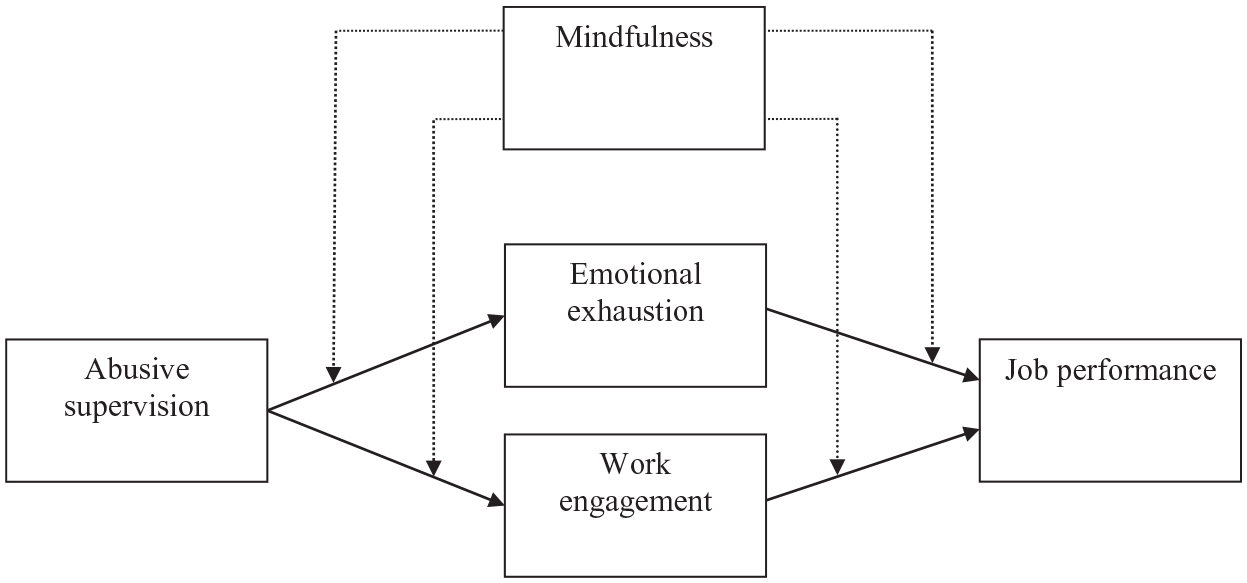
Conceptual model.
2.2. Mediating role of emotional exhaustion
Extant research on the dark side of leadership indicates that employees’ exposure to verbally abusive leaders generates significant hardships for their work functioning (Schaubroeck et al., 2016; Yang et al., 2020). According to the JD-R model, when employees receive disrespectful treatment from their leaders, it constitutes a demanding job condition with health impairment effects, because employees become preoccupied with their current and future career situation in the company (Bakker et al., 2014; Huang et al., 2019). This health impairment notably manifests in feeling emotionally overextended by work (Maslach and Jackson, 1981; Xiao et al., 2020). Employees’ exposure to abusive supervision also may connect indirectly with emotional exhaustion, in that the exposure can generate doubts about whether their daily work contributions are appreciated (Huang et al., 2020). That is, abusive supervision may signal that supervisors are ignorant of employees’ dedicated work-related efforts, which employees experience as upsetting and emotionally draining (Kim et al., 2020). To the extent that employees suffer verbal abuse from leaders, they are more likely to feel overwhelmed in the course of doing their job tasks, which arises as a sense of emotional exhaustion.
In turn, employees’ emotional exhaustion likely is negatively linked with their job performance. According to the JD-R model, when employees’ psychological health is impaired and they feel overextended, their energy resources may become so drained that they have insufficient discretionary energy available to meet their performance requirements (Bakker et al., 2014). In their application of the JD-R model, to study the negative performance consequences of emotional exhaustion, Rhee et al. (2017) point out that exhaustion imposes ‘high demands of time and energy and elevated stress levels on the job [such that] emotionally exhausted individuals experience depletion of physical and psychological resources’ (p. 713). That is, emotional overextension compromises job performance, because the experienced energy depletion compromises their ability to dedicate themselves to organization-set performance standards (Bakker et al., 2004). Conversely, employees who do not feel exhausted by work are better positioned to meet the job obligations set forth by their organization, so it becomes more likely that they exhibit high job performance levels (Rhee et al., 2017).
The combination of these arguments suggests a critical mediating role of emotional exhaustion. When employees feel emotionally overextended due to their leaders’ demeaning, disrespectful treatment, their depleted energy turns them away from fulfilling their job duties (Aryee et al., 2008). The health impairment that employees experience when dealing with an employer that condones abusive behaviours undermines their ability to complete their job tasks, by draining the energy resources they need to do so (Quinn et al., 2012). Conversely, if employees do not perceive their leaders as verbally abusive, they should be less likely to feel emotionally overextended, and their resulting vitality may enable them to exert the required effort and meet their performance obligations (Kensbock and Boehm, 2016).
2.3. Mediating role of work engagement
Employees’ work engagement reflects the positive energy that they experience in relation to their work, as manifest in their vigour, dedication and absorption (Schaufeli et al., 2006). Employees tend to be less persistent in executing work tasks, feel less excited about their work and avoid deep immersion in it to the extent that they are convinced their leaders are not concerned with their individual well-being, such as when the leaders are rude and verbally abusive (Barnes et al., 2015; Huang et al., 2019). The negative link between abusive supervision and work engagement reflects the demoralizing effect of this leadership style on the energy, devotion and immersion people exhibit towards their work, because it contradicts the guidance and support that employees expect from leaders (Avey et al., 2015). In the terminology of the JD-R model, this link identifies abusive supervision as a hindrance job demand that leaves employees indifferent to work (Huang et al., 2019). The probability that employees engage in dedicated work efforts decreases if they believe leaders do not try to treat them with respect.
This diminished work engagement in turn may be associated with diminished job performance. Prior research, based on the JD-R model, points to the role of positive emotions in steering engaged employees towards performance-enhancing activities (Bakker et al., 2014). As explicated by Bakker and Bal (2010: 192), who apply the JD-R model to explain the performance benefits of work engagement, engaged employees often experience positive emotions, including happiness, joy, interest, and enthusiasm, . . . [that] have the capacity to broaden people’s momentary thought–action repertoires and to build their personal resources (e.g. social relationships, self-efficacy) through widening the array of thoughts and actions that come to mind.
Conversely, employees who are not engaged and feel indifferent about their work tend to lose interest in finding ways to ensure the success of their employer (Azeem et al., 2020). The mechanism that underlies the link between low work engagement and low job performance, according to the JD-R model, is employees’ lack of motivation to dedicate themselves to energy-consuming work activities that otherwise could add to organizational effectiveness (Bakker et al., 2014; van Wingerden et al., 2018). That is, demotivation stems from a lack of work engagement, so employees exhibit passivity when it comes to fulfilling their job duties (Demerouti and Cropanzano, 2010).
By integrating these arguments, we predict a mediating role of work engagement. Employees who suffer abusive supervision may underperform in their jobs, informed by their limited engagement in work (Barnes et al., 2015). These employees likely blame their employer for the mistreatment they receive from abusive leaders, so they are not interested in engaging in work activities or directing personal energy towards productive work behaviours that benefit this organization (Huang et al., 2019; Scheuer et al., 2016). The realization of how disengaged they have become from their work, in reaction to suffering from rude leader behaviours (Kernan et al., 2016), also may reinforce their unwillingness to facilitate the organization’s success with strong job performance. Conversely, if employees do not feel threatened by their leaders, they may be more excited and engaged with their work (Barnes et al., 2015), which should enhance their desire to support their employer by fulfilling performance duties.
2.4. Moderation by mindfulness
We predict that the connection between abusive leadership and diminished job performance, through emotional exhaustion and work engagement, is subdued to the extent that employees can draw from their attention–awareness mindfulness, as a personal resource that might mitigate each of the horizontal links in the proposed moderated mediation framework in Figure 1. We first predict its buffering role in the mediation of (enhanced) emotional exhaustion, and then in the parallel mediation of (diminished) work engagement.
Following the logic of the JD-R model, the emotional strain that employees experience in the presence of demanding job situations decreases if they can draw from valuable personal resources (Bakker and Demerouti, 2007; Loi et al., 2016). Attention–awareness mindfulness is one such resource; it helps employees dissociate their selves from unfavourable work settings and reappraise their treatment in less negative terms (Bishop et al., 2004; Haun et al., 2018). That is, mindful employees can disrupt their own automatic negative response patterns, such that adverse work situations seem less intrusive to their personal well-being (Garland et al., 2015; Shapiro et al., 2006). An alternative argument could be that greater attention to and awareness of adverse conditions leaves employees more frustrated, but prior research indicates that this personal resource has a buffering effect in the opposite direction (Weintraub et al., 2019). That is, ‘rather than being immersed in the negative interpretation of and associated emotional reaction to a stressful event, [mindful] employees are able to stand back and simply witness what is without judging it’, so they can ‘remain calm in the face of stressful events and experience less negative cognitive and affective reactions, thus coping with work demands more effectively’ (Haun et al., 2018: 389).
In our study context, this logic implies that employees equipped with attention–awareness mindfulness should be less likely to view themselves as victims of leaders’ abusive tendencies, so they experience this negative situation as less draining (Glomb et al., 2011). That is, the process of externalizing adverse work conditions (Haun et al., 2018) reduces their risk of emotional exhaustion due to abusive supervision. The heightened attention and awareness resulting from mindfulness can generate a sense of meaningfulness too, linked to people’s ability to contain the emotional hardships of adverse work conditions. Haun et al. (2018: 390) predict that mindfulness increases the chances that employees adopt ‘an emotion-focused cognitive coping strategy through which events are re-perceived as beneficial or meaningful’, which, in our study context, should diminish the likelihood that they feel emotionally overextended by their work in the presence of abusive supervision (Reb et al., 2017).
A similar mitigating role arises in the negative link between emotional exhaustion and job performance. To perform their job duties in the presence of emotional exhaustion, employees must be able to immunize themselves from the hardships that come with their sense of being worn out or spent by work (McCarthy et al., 2016). As a personal resource, attention–awareness mindfulness may refuel employees’ energy levels and increase their ability to cope with the demands associated with being emotionally overextended (Haun et al., 2018; Rhee et al., 2017), in line with the JD-R model. The likelihood that mindful employees avoid performance-enhancing work activities, even when they feel overwhelmed by their work, then should be subdued. Similarly, employees who feel worn out by their work but exhibit high levels of mindfulness may embrace the challenge of completing their job duties in this difficult situation, as a source of positive energy (Weintraub et al., 2019), and maintain a greater ability to perform job tasks despite their experienced exhaustion (Dane and Brummel, 2014). That is, mindfulness may enable employees to combine their sense of being overextended with a certain level of performance-enhancing work activities (Shao and Skarlicki, 2009).
These arguments, in combination with the mediating role of emotional exhaustion (Hypothesis 1), indicate a moderated mediation dynamic (Preacher et al., 2007). We predict that the personal resource of attention–awareness mindfulness is a critical contingency of the indirect relationship between employees’ exposure to abusive supervision and their diminished job performance. Instead of being overwhelmed by negative evaluations of and corresponding emotional responses to the negative work condition, mindful employees take a step back and observe the condition more objectively (Haun et al., 2018; Shapiro et al., 2006), so they avoid significant energy depletion in the presence of abusive supervision and cope with it in ways that do not undermine their job performance.
Mindful employees exposed to abusive supervision also might be more likely to stay engaged with their work. Their focus on the present reality – and the associated realization that a complete eradication of abusive leader behaviour might be unrealistic (Weintraub et al., 2019) – may leave them less disheartened by the verbal abuse and less likely to blame the employer for this hindrance job demand (Barnes et al., 2015; Huang et al., 2019). Furthermore, mindful employees tend to feel positively stimulated by the possibility of attending to and resolving challenging work situations (Evans et al., 2009; Hülsheger et al., 2013), and they may gain a sense of pride if they can remain engaged and relatively less affected by work-related hardships (Harris et al., 2007). The heightened awareness and focus that mark mindful employees even may grant them insights into how they can benefit from staying engaged with their work in the presence of abusive supervision, by prompting more favourable supervisory assessments of their work functioning (Gunasekara and Zheng, 2019; Liang et al., 2016). For example, they may exploit the exposure to abusive leadership as an opportunity to be creative or a showcase for their ability to handle difficult situations (Langer and Moldoveanu, 2000; Shao and Skarlicki, 2009).
The extent to which employees’ lack of work engagement translates into diminished job performance similarly should be lower if they can draw from attention–awareness mindfulness. According to the JD-R model, tarnished work engagement is less instrumental in motivating employees to stay away from productive work activities when those employees also have access to personal resources that counter their depletion of positive work energy (Bakker and Demerouti, 2007; De Clercq and Belausteguigoitia, 2017). Employees who exhibit high levels of attention–awareness mindfulness are better placed to deal with low work engagement, because their attention to their current reality makes them more understanding and accepting of the negative experience (Haun et al., 2018). That is, employees tend to see the work situation from a more positive angle, even if their employer cannot provide an engagement-enhancing experience (Brown and Ryan, 2003; Shao and Skarlicki, 2009). It should become less likely then that the indifference that they feel towards work keeps them from performing their job duties (Bakker et al., 2014). In essence, mindfulness helps disengaged employees maintain some motivation to undertake performance-enhancing work activities (Dane and Brummel, 2014).
When considered in tandem with the mediating role of work engagement (Hypothesis 2), these arguments suggest another moderated mediation process (Preacher et al., 2007). To the extent that employees can draw on their mindfulness, their diminished work engagement, as a conduit between their exposure to abusive supervision and their poorer job performance, should be less influential. Formally, employees’ enhanced awareness of and attention to their present reality, which enable them to derive joy and see the benefits of remaining positively energized at work (Gunasekara and Zheng, 2019; Weintraub et al., 2019), should diminish the chances that dysfunctional leadership connects with poor job performance through reduced work engagement. Conversely, if employees cannot rely on their personal mindfulness, as a resource, limited work engagement becomes more potent for explaining how abusive leadership associates with diminished job performance.
3. Research method
3.1. Sample and data collection
The data were collected from employees in three Pakistani-based organizations that operate in different industry sectors: telecommunication, banking and textiles. The research design entailed three rounds, with a time period of approximately three weeks between each round. These time periods were sufficiently long to diminish concerns about reverse causality, but not too long so that significant internal or external events were likely to have occurred during the data collection. The surveys were administered in English, which is the formal language in educational and business settings in Pakistan.
Several measures helped protect the participants’ rights and diminish the chances of social desirability and acquiescence biases. As the invitation statements that accompanied the surveys highlighted, all responses were treated with complete confidentiality, participation in the study was entirely voluntary, and the research objective was to investigate general patterns in the aggregate data, not to reveal individual-level data. Furthermore, transparent explanations noted that both the employees and organizational leaders would participate in the study, but no detail was given regarding which issues would be addressed by the leaders. The statements also noted that the surveys used a personal code to match the data across the different survey rounds but that the matching would never compromise the confidentiality of the participants’ responses and that the personal codes would be destroyed by the researchers immediately after the data matching process. Finally, the surveys underscored that there were no correct or incorrect answers, that participants were expected to provide varied responses to specific questions, and that it was critical for them to answer the questions as honestly as possible. Even if these diverse, detailed specifications cannot completely exclude the presence of social desirability and acquiescence biases, they diminish the probability of their occurrence significantly (Spector, 2006).
The first survey addressed employees’ perceptions of abusive supervision and mindfulness (round 1); the second assessed their emotional exhaustion and work engagement (round 2); and the third survey, completed by supervisors, captured employees’ job performance (round 3). To avoid issues related to nested data, the employee surveys were distributed to the widest set of work groups possible in each organization. Consistent with prior research (Naseer et al., 2016), in the few cases that more than two respondents reported to a particular supervisor, we asked this supervisor to pass the round 3 survey to a colleague who was also knowledgeable about the work of one of those employees and who had not completed another employee survey. Of the 450 surveys administered in the first round, 402 were returned, for a response rate of 89.3%. In turn, 398 respondents completed the survey in the second round (response rate = 99.0%). We received 348 surveys in the third round, which reflects a response rate of 87.4%. After omitting surveys with incomplete data, we retained 305 completed sets for the hypothesis tests, equivalent to an overall response rate of 67.8%. 1
3.2. Measures
3.2.1. Abusive supervision
We measured employees’ exposure to abusive supervision with a 15-item scale and 5-point Likert-type anchors (1 = strongly disagree, 5 = strongly agree), in line with prior research (Lee et al., 2018; Tepper, 2000). For example, employees assessed their agreement with statements such as ‘My boss ridicules me’, ‘My boss tells me my thoughts or feelings are stupid’, ‘My boss reminds me of my past mistakes and failures’ and ‘My boss makes negative comments about me to others’ (Cronbach’s alpha = .95).
3.2.2. Emotional exhaustion
We assessed the extent to which employees feel emotionally overextended by their work with a nine-item scale of emotional exhaustion, developed by Maslach and Jackson (1981) and applied in previous research of employee reactions to adverse situations (e.g. De Clercq et al., 2018; Sassi et al., 2015). The scale used 7-point Likert-type anchors (0 = never; 6 = every day). The respondents rated, for example, whether ‘I feel used up at the end of the workday’ and ‘I feel emotionally drained from my work’ (Cronbach’s alpha = .92).
3.2.3. Work engagement
We assessed employees’ work engagement with the shortened nine-item version of the Utrecht Work Engagement Scale, which has excellent psychometric characteristics (Schaufeli et al., 2006). The three subdimensions that constitute work engagement (vigour, dedication and absorption) are typically highly correlated – as was the case in our sample, with correlations varying between .689 and .777 (p < .001) – so this nine-item scale offers an adequate assessment of work engagement (De Clercq et al., 2014; Schaufeli et al., 2006). Respondents indicated how often their feelings about their job matched the descriptions in the nine statements (e.g. ‘At my work, I feel bursting with energy’, ‘I am enthusiastic about my job’, ‘I get carried away when I am working’), using 7-point Likert-type anchors (0 = never, 6 = always) (Cronbach’s alpha = .91).
3.2.4. Job performance
We asked supervisors to assess the extent to which employees successfully achieve their performance targets, applying a seven-item scale of job performance, with 5-point Likert-type anchors (1 = strongly disagree; 5 = strongly agree), consistent with previous studies (Williams and Anderson, 1991). Three example measurement items were: ‘This employee meets the formal performance requirements of his or her job’, ‘This employee fulfils responsibilities specified in his or her job description’ and ‘This employee adequately completes the assigned duties’ (Cronbach’s alpha = .84).
3.2.5. Mindfulness
We applied the 15-item mindful attention and awareness scale (MAAS), developed and validated by Brown and Ryan (2003) and used in various studies of employee well-being and behaviour (e.g. Haun et al., 2018; Hülsheger et al., 2013; Leroy et al., 2013; Weintraub et al., 2019). The measurement items pertain to people’s everyday experiences, so participants had to indicate how frequently they currently had each of the experiences, on 6-point, reverse-coded Likert-type anchors (1 = almost never, 6 = almost always). We emphasized that they should rate the statements according to their actual experiences, rather than what they think their experiences should be. Example items were: ‘I find it difficult to stay focused on what’s happening in the present’, ‘It seems I am running on automatic, without much awareness of what I’m doing’, ‘I rush through activities without being really attentive to them’ and ‘I find myself doing things without paying attention’ (Cronbach’s alpha = .91).
3.2.6. Control variables
We included two demographic control variables: gender (1 = female) and organizational tenure (in years). An analysis of variance indicated that the banking organization had a higher percentage of female employees than its telecom and textile counterparts. The average organizational tenure was higher in the telecom organization. We controlled for the industry in which employees’ organization competed by including telecom and banking dummy variables, with textiles as the base category. 2
3.2.7. Construct validity
In support of convergent validity, the five constructs exhibited significant factor loadings on their respective items (p < .001) in a confirmatory factor analysis. We confirm discriminant validity among the constructs, according to the relative fit of the constrained and unconstrained models. For each of the 10 pairs that can be generated from the five constructs, the fit of the constrained models (correlations between two constructs set to equal 1) is significantly worse than the fit of their unconstrained counterparts (correlations are free to vary) (Δχ2(1) > 3.84).
4. Results
The correlation coefficients and descriptive statistics of the study variables are in Table 1; the hierarchical regression results are in Table 2. Models 1–3 explain emotional exhaustion, Models 4–6 pertain to work engagement and Models 7–11 refer to job performance. For each model, the variance inflation factor values were lower than a conservative value of 5.0, so multicollinearity was not a concern. The results indicate that abusive supervision relates positively to emotional exhaustion (β = .555, p < .001, Model 2), which in turn relates negatively to job performance (β = –.081, p < .05, Model 9). In a parallel finding, abusive supervision relates negatively to work engagement (β = –.415, p < .001, Model 5), which relates positively to job performance (β = .259, p < .001, Model 9).
Correlations and descriptive statistics (n = 305).
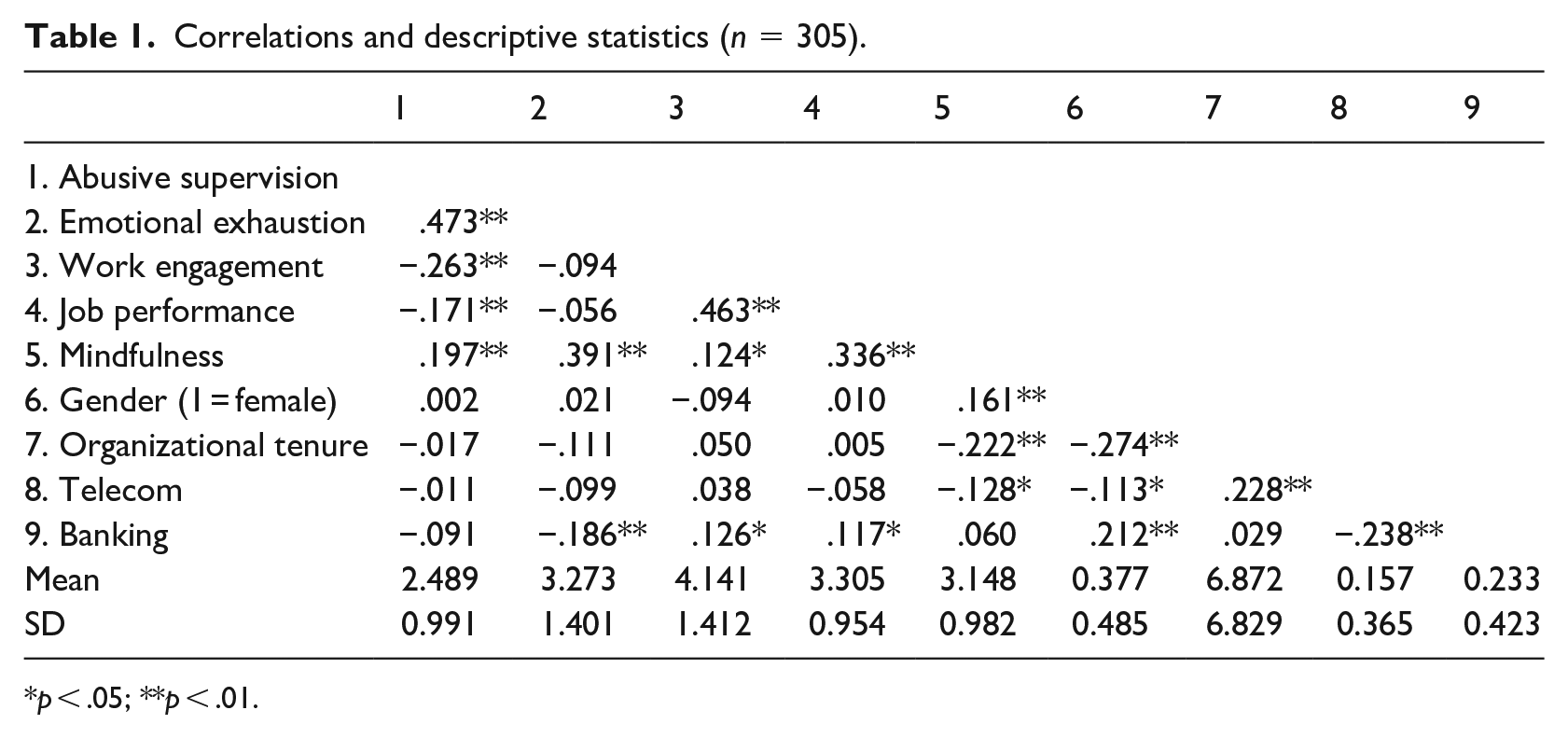
p < .05; **p < .01.
Regression results (n = 305).
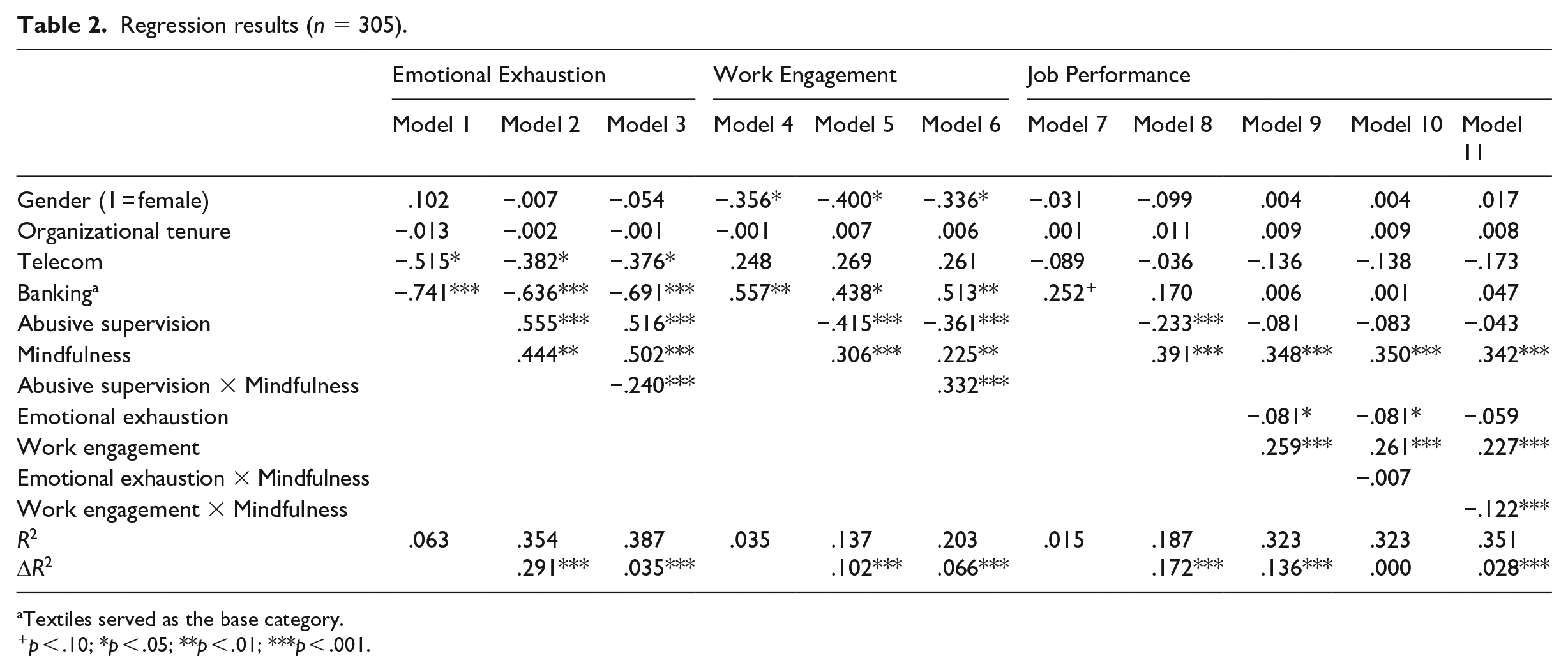
Textiles served as the base category.
p < .10; *p < .05; **p < .01; ***p < .001.
Consistent with well-established standards for testing moderated mediation frameworks (e.g. De Clercq et al., 2021; Haq et al., 2021), we combine the hierarchical regression approach with a bootstrapping procedure, based on the Process macro developed by Hayes (2013), to assess the presence of mediation by emotional exhaustion and work engagement (and also to assess moderated mediation, as reported hereafter). The Process procedure calculates confidence intervals (CIs), instead of point estimates, for indirect effects, thereby avoiding the statistical power issues that arise when indirect effects are not symmetric and do not follow a normal distribution. The results of this analysis – based on the Process macro’s Model 4, in which we included both mediators simultaneously – are in Table 3. The indirect relationship between abusive supervision and job performance through emotional exhaustion is not significant; its CI includes 0 (–.098, .003). The CI does not include 0 (–.172, –.058) when work engagement serves as the mediator though. Therefore, the mediating role of work engagement supersedes that of emotional exhaustion. These results indicate that the motivation-related explanation for the link between abusive supervision and lower job performance is more salient than its health-related counterpart.
Bootstrapping results (Process), n = 305.
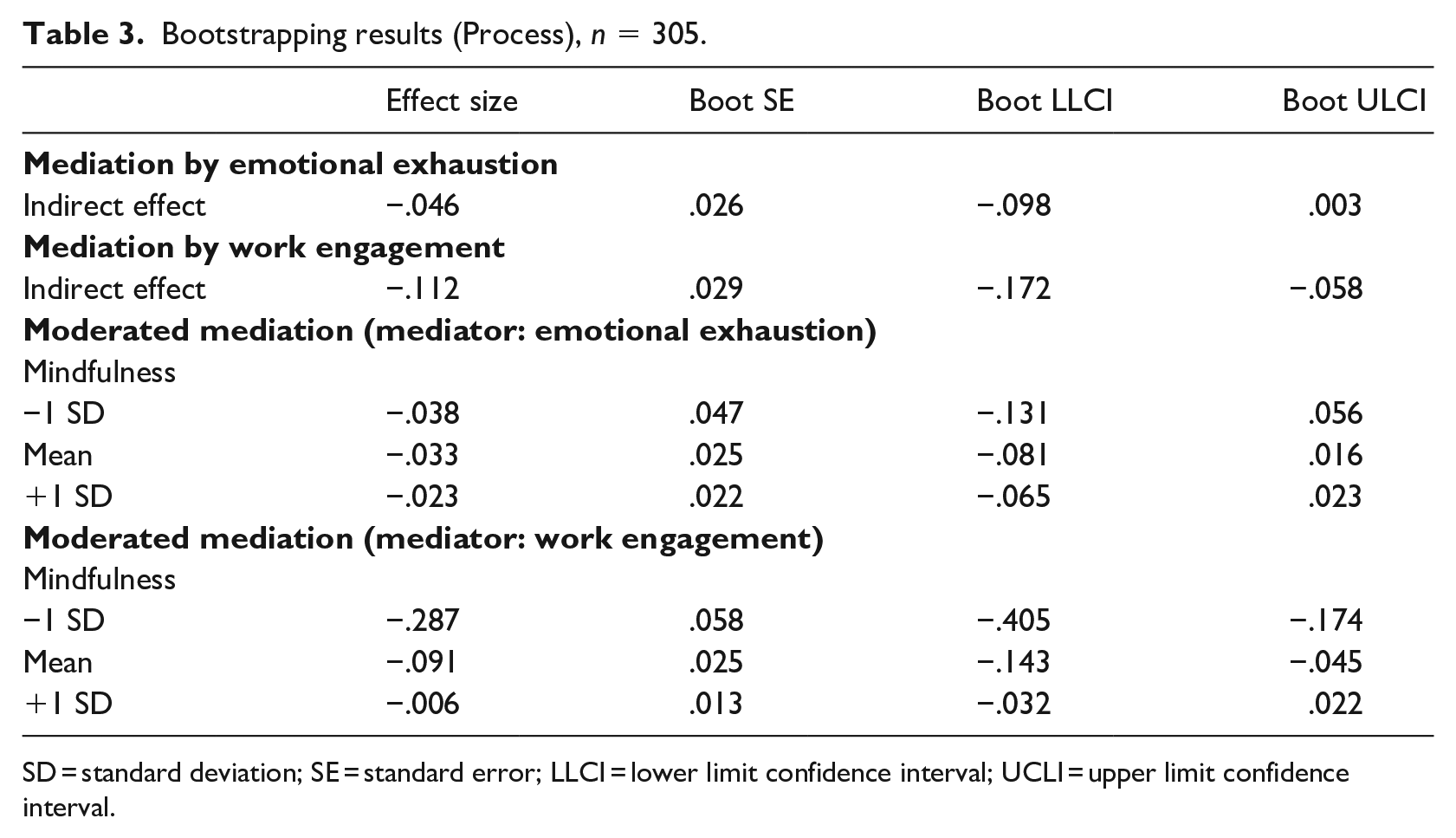
SD = standard deviation; SE = standard error; LLCI = lower limit confidence interval; UCLI = upper limit confidence interval.
Before checking for the presence of moderated mediation, we evaluate the moderating effects of mindfulness on the paths of the mediated links. Consistent with our theoretical predictions, we consider the potential moderation of each path, such that we calculate an abusive supervision × mindfulness interaction term to predict emotional exhaustion (Model 3) and work engagement (Model 6), as well as emotional exhaustion × mindfulness (Model 10) and work engagement × mindfulness (Model 11) interaction terms to predict job performance. The negative sign of the moderating effect of mindfulness on the (positive) abusive supervision–emotional exhaustion link (β = –.240, p < .001, Model 3) provides support for the buffering role of mindfulness, but we cannot confirm a similar role in the emotional exhaustion–job performance link (β = –.007, ns, Model 10). In contrast, the positive sign of the moderating effect of mindfulness on the (negative) abusive supervision–work engagement link (β = .332, p < .001, Model 6) and the negative sign of this effect on the (positive) work engagement–job performance link (β = –.122, p < .001, Model 11) indicate a mitigating role of this personal resource for both paths. The three significant moderating effects are depicted in Figures 2 to 4, which feature weaker slopes at higher levels of mindfulness.
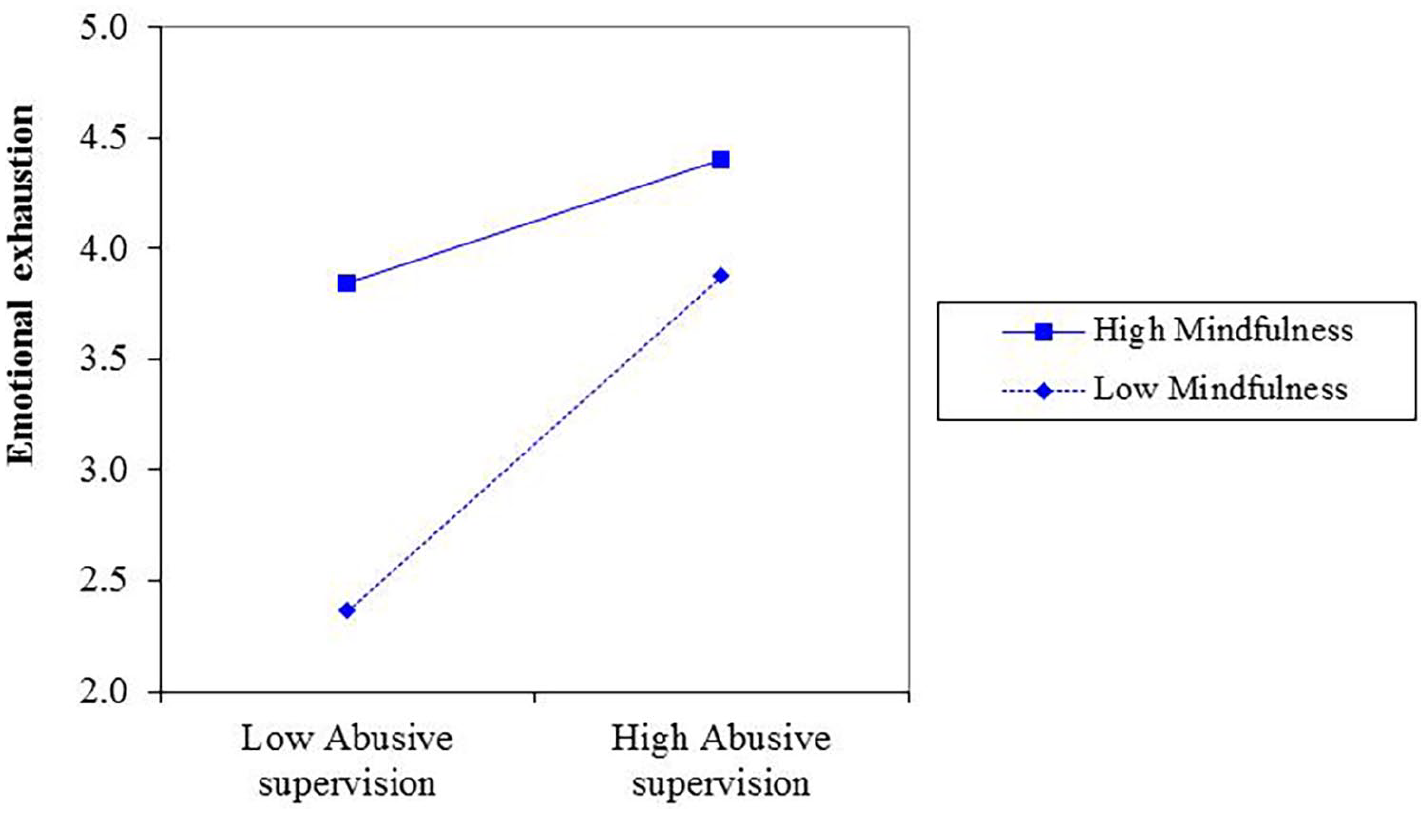
Moderating effect of mindfulness on the relationship between abusive supervision and emotional exhaustion.
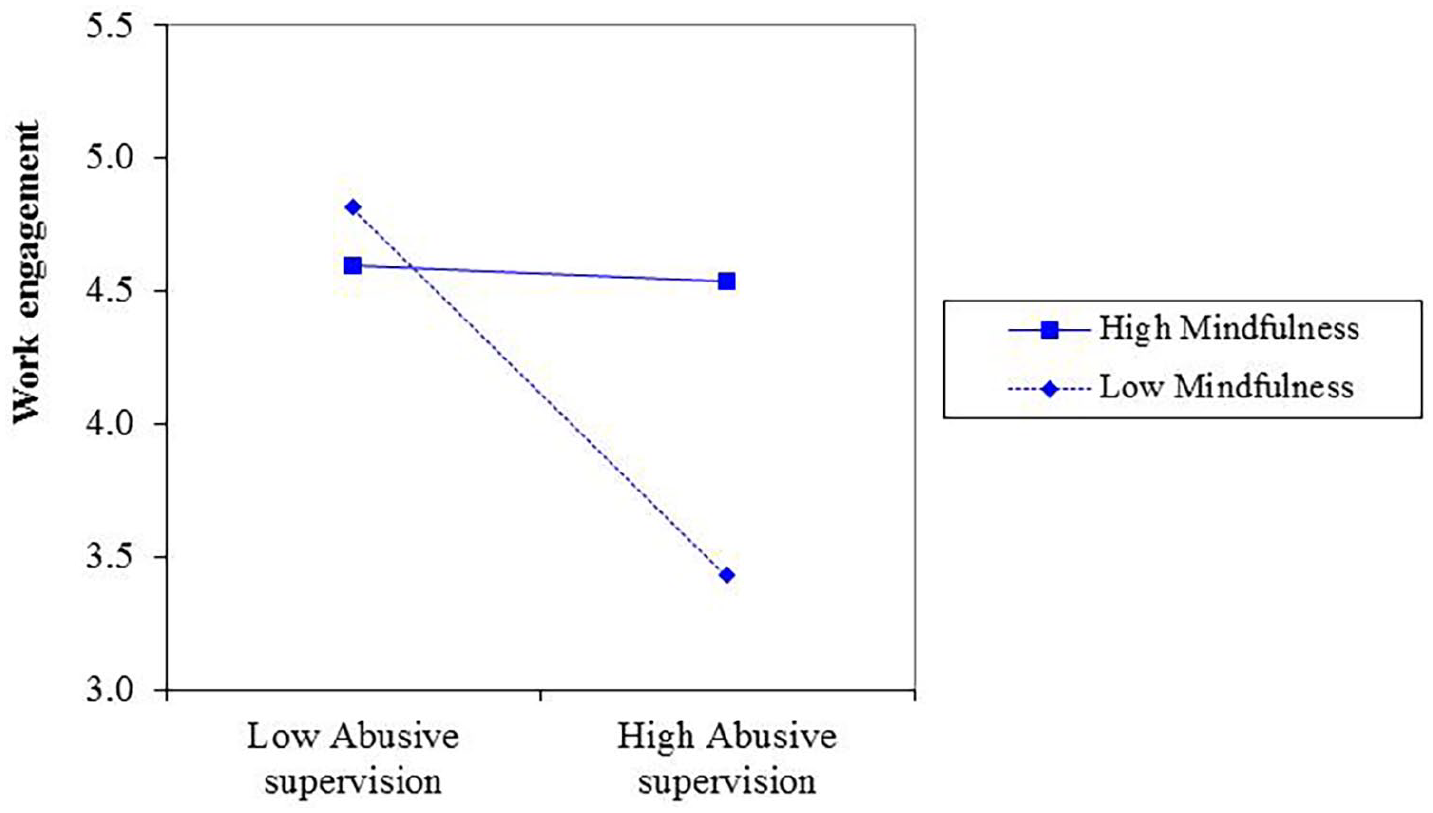
Moderating effect of mindfulness on the relationship between abusive supervision and work engagement
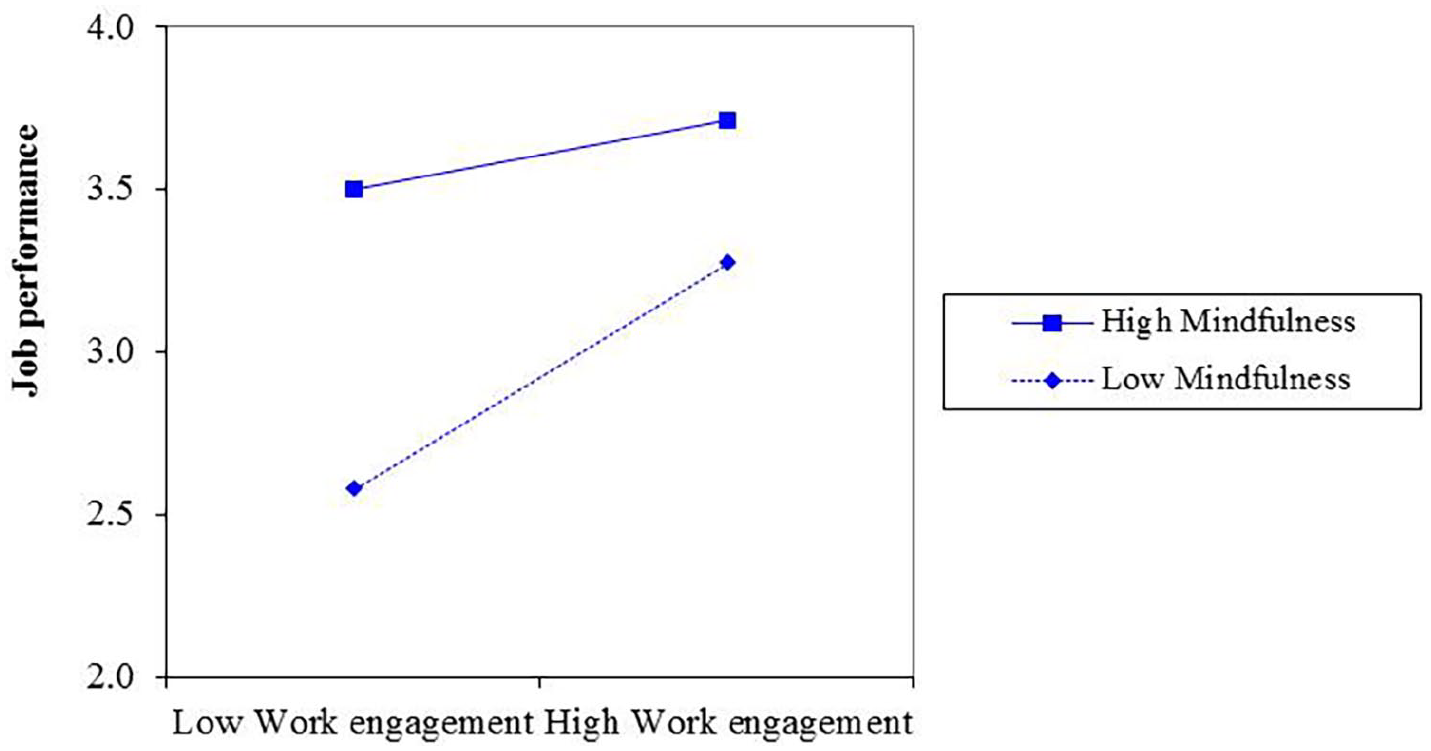
Moderating effect of mindfulness on the relationship between work engagement and job performance.
A clarifying note is in order with respect to Figure 4. The theorizing that underpins the logic of Hypothesis 4 points to the contingent nature of the performance effects of decreasing levels of work engagement. Moving from right to left in Figure 4, the downwards slopes of the two lines indicate that lower work engagement is associated with lower job performance. Critically for our theorizing, the downwards slope is less pronounced at higher levels of mindfulness, consistent with the buffering role of mindfulness we predict in Hypothesis 4. The interaction plot can also be interpreted from another perspective though, focused on what occurs at increasing levels of work engagement. Moving from left to right in Figure 4, we note that stronger work engagement is more closely associated with higher job performance among employees who are less mindful. This interpretation suggests a substitution dynamic. When employees are less well positioned to dissociate themselves from difficult situations – that is, when they possess low levels of attention–awareness mindfulness (Haun et al., 2018) – the positive energy that comes with elevated levels of work engagement becomes more instrumental for maintaining high performance levels. Employees marked by high mindfulness levels instead are better positioned to meet their performance duties, even with limited work engagement. The relative value of their work engagement in spurring performance-enhancing work activities thus appears to decrease to the extent that employees are strongly aware of the performance expectations that their employer has for them.
To test for the presence of moderated mediation formally – as explicated in Hypotheses 3 and 4 and implied by the proposed framework – we rely on Preacher et al.’s (2007) procedure and Hayes’s (2013) Process macro. Similar to the bootstrapping approach to evaluate mediation, this procedure calculates CIs instead of point estimates for conditional indirect effects (MacKinnon et al., 2004). As specified in Hayes’s (2013) Process macro, the CIs refer to three different levels of the moderator (i.e. 1 SD below its mean, at its mean, and 1 SD above its mean). We ran the Process macro Model 58, which includes moderation of the independent–mediator variable and mediator–dependent variable links. When emotional exhaustion is the mediator, the CI at each of the three levels includes 0, which indicates no support for moderated mediation (Table 3). When work engagement is the moderator, the CIs do not include 0 at the two lower values of the moderator (–1 SD (–.405, –.174); mean (–.143, –.045)), but it includes 0 when the moderator is high (+1 SD (–.032, .022)), indicating a moderated mediation effect (Table 3). These results corroborate Hypothesis 4 but not Hypothesis 3.
5. Discussion
5.1. Theoretical implications
This article contributes to extant research on negative leadership effects by examining the association of abusive supervision with job performance, with a particular focus on the roles of employees’ occupational well-being (emotional exhaustion and work engagement) and mindfulness. Previous research details how verbally abusive leaders can turn employees away from performance-enhancing efforts (Fiset et al., 2019; Yu et al., 2016), though without specifying whether this connection stems mainly from a health impairment or motivational process, or both, or if some personal conditions might make such processes more or less likely to materialize. Therefore, we leverage the JD-R model (Bakker and Demerouti, 2007; Bakker et al., 2014) to posit that employees who do not fulfil their performance obligations when they confront abusive supervision may be emotionally exhausted by or less engaged with their work, though their mindfulness serves as a buffer. The empirical findings largely support our theoretical predictions while also indicating a stronger effect of diminished motivation than of health impairment.
Although employees’ exposure to abusive supervision is positively linked with their emotional exhaustion, which then connects negatively with their job performance, these relationships are not strong enough to establish a significant mediating role of emotional exhaustion. In contrast, we find a significant indirect relationship between abusive supervision and job performance, through reduced work engagement. As a contribution to research at the nexus of dysfunctional leadership and occupational well-being (Scheuer et al., 2016; Wang and Chan, 2020), we establish that the adverse connection between abusive supervision and job performance is driven more by motivation than by health reasons. This finding provides an interesting complement to JD-R studies that find stronger relationships of job resources, rather than job demands, with work engagement (Bakker et al., 2014; Halbesleben, 2010). Our theoretical framework does not include job resources – so a direct comparison of their effects on work engagement, relative to those of job demands, is not feasible – but the prominent mediating role of work engagement that we identify is consistent with prior research on the detrimental effect of hindrance demands on work engagement (Barnes et al., 2015; Huang et al., 2019). As Barnes et al., (2015: 1423) explicate, ‘subordinate motivation is proximal psychologically to abusive behaviour and thus likely to be a strong psychological outcome for subordinates experiencing abusive supervision’, so ‘by providing an experience that employees will find aversive, abusive supervision should leave employees more likely to withdraw than to engage themselves heavily in their work’.
From a more general perspective, it is limited work engagement, not greater emotional exhaustion, that appears to initiate a downwards spiral for employees. They must deal with abusive leaders who are disrespectful and rude, and their associated propensities to disengage from their work and default on their performance duties may threaten to exacerbate the situation by putting them in an even more negative light. However, this downwards spiral can be disrupted if employees can turn to their personal resource of attention–awareness mindfulness (Brown and Ryan, 2003). This resource diminishes the potency of limited work engagement in terms of linking abusive leadership to lower job performance. According to the JD-R model, employees can use pertinent personal resources to mitigate the hardships of demanding job conditions, so they are less likely to experience decreased work engagement (De Clercq and Belausteguigoitia, 2017). Employees who are more aware of and attentive to their present reality likely have a deeper understanding of why leaders might be disrespectful towards followers, as well as how they can exploit the situation by maintaining a certain level of work engagement, even in the presence of abusive supervision (Gunasekara and Zheng, 2019; Weintraub et al., 2019). Similarly, and also in line with the JD-R model (Bakker and Demerouti, 2007), the extent to which disengaged employees are motivated to halt performance-enhancing efforts is lower if they can draw from their personal resource of attention–awareness mindfulness (Dane and Brummel, 2014). These employees seemingly are better able to shield themselves from the risk that their exposure to abusive supervision connects with an unwillingness to contribute to their organization’s success with strong job performance, which ultimately might help them maintain their organizational standing and garner positive performance assessments.
An interesting observation from Figure 2 is that higher levels of mindfulness, on average, associate with higher levels of emotional exhaustion, as is also apparent in the positive relationship between mindfulness and emotional exhaustion in Table 2 (β = .444, p < .01, Model 2). This finding suggests that the mental efforts required by enhanced attentiveness and awareness propensities might be sources of energy depletion themselves (Quinn et al., 2012). Some studies similarly have found that mindfulness, and particularly interventions that stimulate mindfulness (e.g. meditation), may generate negative outcomes such as anxiety (Cebolla et al., 2017), distress (Lindahl et al., 2017) or depression (Lomas et al., 2015). People marked by high mindfulness levels tend to engage in more intense information processing, such that they might become overburdened when seeking to make sense of events in their environments (Lomas et al., 2015). Other research suggests that mindful employees may be more sensitized to negative work situations, such as when they perceive low person–organization fit (Reb et al., 2017) or high abusive supervision (Burton and Barber, 2019). The positive correlation between mindfulness and abusive supervision in Table 1 (r = .197, p < .01) aligns with this prior research finding.
Yet, the slope pattern in Figure 2, which reflects the combined roles of abusive supervision and mindfulness for explaining emotional exhaustion, is consistent with our theoretical predictions. The extent to which higher levels of abusive supervision lead to higher levels of emotional exhaustion decreases when mindfulness is high. Taken together, these results pinpoint an indirect beneficial role of mindfulness in protecting employees against the chances that they experience exhaustion in the presence of abusive supervision versus a direct harmful role in stimulating such exhaustion. To clarify these somewhat puzzling, opposing forces, qualitative studies might seek more detailed accounts of the different mechanisms and job situations in which mindful employees tend to feel overextended by their work.
With our relatively more complete depiction of the negative performance outcomes of dysfunctional leadership in the workplace though, we establish how (1) a lack of engagement with work, and to a lesser extent enhanced emotional exhaustion, helps link a significant source of leadership adversity (abusive supervision) to diminished job performance and (2) employees’ mindfulness subdues this process. The first finding underscores that limited desire, rather than health impairment, is the primary mechanism that underpins the abusive supervision–job performance link. The second finding complements and adds to previous research that has focused on the direct benefits of mindfulness, as a personal resource that can spur work engagement (Gunasekara and Zheng, 2019) or job performance (Shao and Skarlicki, 2009). Instead, we reveal a more indirect, but no less important, role: Mindfulness may provide a shield against the risk that leader verbal aggression becomes associated with a reluctance to support the organization with strong performance, due to the difficulty employees experience staying engaged with their work. A caveat herein – related to our research design, which spans a time period of six weeks – is that we cannot assess the long-term effects of abusive supervision on employees’ health impairment, work motivation or performance. A conservative interpretation of our results accordingly is that there are clear short-term benefits of mindfulness, which help employees cope with abusive leader behaviours, but these benefits might not be sufficient to overcome the long-term costs that arise with sustained verbal abuse or with the need to draw from valuable, scarce, personal resources to counter that abuse (Nandkeolyar et al., 2014; Xiao et al., 2020).
Finally, our theoretical arguments are country neutral, so we expect that the findings should apply to a broad set of countries. Nonetheless, by conducting this research in Pakistan, we respond to calls for more studies of dysfunctional leadership styles in non-Western settings (e.g. Naseer et al., 2016; Xu et al., 2015). Pakistani culture is marked by high levels of power distance (Hofstede et al., 2010), so confrontations with abusive supervisors might be a reality for many employees (Khan et al., 2018). At the same time, the risk aversion that characterizes this country (Hofstede et al., 2010) implies that employees likely feel threatened by uncertainty-inducing abusive supervision, so a personal resource such as mindfulness might be particularly useful for helping them mitigate their negative reactions and avoiding a negative work spiral. From this perspective, Pakistan offered a relevant, compelling empirical context for the investigation of the study’s focal issues.
5.2. Limitations and further research
Some limitations of this study provide avenues for further research. First, work engagement, more so than emotional exhaustion, emerges as a critical mechanism through which abusive supervision connects with negative performance outcomes, but continued studies might consider other mediators too. For example, other pertinent dimensions of job burnout, such as inadequate personal accomplishment or depersonalization (Maslach et al., 2001), might diminish employees’ ability to perform their job duties in the presence of abusive supervision. Other motivation-related mediators might be relevant too, such as job involvement (Diefendorff et al., 2002) or job satisfaction (Foote and Tang, 2008). Whereas we adopt health impairment and motivational rationales to explain how emotional exhaustion and work engagement, respectively, link abusive supervision to diminished job performance, another interesting extension might measure employees’ perceptions of health deprivation and diminished motivation directly. Studies that use longer timeframes (i.e. longer than six weeks) also could determine the persistence of the buffering effect of mindfulness and whether it can mitigate the long-term costs that employees may incur due to their sustained exposure to abusive supervision (Wee et al., 2017). In light of the cross-sectional design, we purposefully avoid claims of causality; our findings reveal connections of abusive supervision with job performance, through emotional exhaustion and work engagement. Longitudinal studies might measure the focal constructs at different points in time though, to offer formal checks for causality and estimates of cross-lagged effects.
Second, our consideration of mindfulness centred on its attention–awareness component, informed by its beneficial roles in the presence of other job-related hardships, according to prior research (Haun et al., 2018; Weintraub et al., 2019). Continued investigations could include other dimensions of this personal resource, such as acceptance, non-judgement or non-reactivity (Sauer et al., 2013). Other individual-level factors also might represent contingencies, such as employees’ resilience (Al-Hawari et al., 2020) or psychological hardiness (Cole et al., 2006). Supportive features at the organizational level could be pertinent too, such as the extents to which employees have flexibility in how they may complete their job tasks (Scott and Bruce, 1994) or the organizational climate is predicated on fairness (Colquitt et al., 2001).
Third, the hypothesized relationships are not country-specific, yet it may be interesting to investigate how macro-level factors inform the conceptual framework. In particular, cross-country investigations could delineate how pertinent cultural values, such as power distance or uncertainty avoidance (Hofstede et al., 2010), influence the hardships that employees encounter in the presence of verbally aggressive leader behaviour, as well as the benefits of different personal factors for subduing these hardships. A related goal might be to consider how corresponding features at the individual level, such as employees’ own personal risk aversion or acceptance (Chow et al., 2012), influence the negative work outcomes of abusive supervision.
5.3. Practical implications
Verbal aggression and abuse by people in supervisory positions can invoke significant frustration and hardship for employees, so organizations must minimize its occurrence. It is up to senior decision makers to eliminate known causes of dysfunctional leader behaviours, such as ineffective promotion policies, excessive work pressures on leaders or a permissive organizational climate in which leaders’ rights supersede the rights of those who operate at lower levels (Eissa and Lester, 2017). Moreover, organizations could design leader development programmes to emphasize that anyone with supervisory responsibilities must interact with employees respectfully and supportively (Gentry et al., 2014). In addition to this broad recommendation to discourage abusive leadership though, we offer suggestions for organizations that might be unable to eradicate abusive tendencies completely.
Our finding that the negative relationship between abusive supervision and job performance is driven more by motivation reduction (lower engagement) than health impairment (higher emotional exhaustion) indicates that organizational decision makers should be particularly cognizant of the danger that a lack of positive work energy – as manifest in low levels of vigour, dedication and absorption – may steer verbally abused employees away from performance-enhancing work activities. A challenging issue herein is that some employees might be reluctant to complain about abusive leaders, for fear that they will be further intimated or accused of incompetence (Liang et al., 2016). Specific organizational measures that could help in this regard include providing employees with ample opportunities to share their negative leader experiences and vent their frustrations, whether with peers, dedicated human resource managers or formally appointed ombudsmen or ombudswomen (Harrison et al., 2013). In no way should this recommendation be taken as any sort of justification for abusive supervision; rather than excusing such behaviour, giving employees an opportunity to vent should increase relevant stakeholders’ awareness of the problem and motivate them to find adequate solutions.
The findings also indicate that employees who score high on attention–awareness mindfulness are less likely to halt their productive efforts in response to the threats that come with abusive supervision. As mentioned, we cannot establish the role of mindfulness in the long-term effects of abusive supervision, nor do our results indicate that mindfulness has only beneficial roles. This personal resource may add to the experience of emotional exhaustion, because mindful people tend to process information in more detail (Lindahl et al., 2017). The buffering role of mindfulness that we find also should not be taken to indicate that organizations can rest on their laurels, expect mindful employees to bear the burden all by themselves or avoid sanctioning abusive leaders. What we can propose though is that organizations can derive benefits from encouraging employees’ propensities to attend to their present reality and avoid automatic negative reactions to leader-related hardships (Brown and Ryan, 2003). Previous research also indicates the value of mindfulness meditation and training programmes for helping employees find effective solutions to challenging work situations (Charoensukmongkol, 2013). To stimulate employees’ mindfulness and its effective application, organizations might explicate which competencies are needed to deal with adverse leader behaviours, then teach employees how to leverage those competencies, as motivational strategies to raise their voice and express concerns about destructive leadership that enable them to maintain adequate performance while also combating the threat of abusive supervision. Yet they also should be aware that not all employees may respond positively to mindfulness programmes and take particular care to avoid overburdening such employees with mindfulness initiatives (Lomas et al., 2015).
5.4. Conclusion
This study extends previous literature by investigating the relationship between employees’ exposure to abusive supervision and their job performance, with a particular focus on their occupational well-being (emotional exhaustion and work engagement) and mindfulness. Verbally aggressive leaders may compromise employees’ adequate performance, as informed by their reduced work-related motivation. If employees are more aware of and attentive to what is occurring in their present reality, the likelihood that abusive supervision connects with a lower propensity to achieve performance targets, through reduced work engagement, gets mitigated. We thus hope this research serves as a catalyst for further examinations of how organizations can exert necessary efforts to eliminate abusive behaviours by their leaders, while supporting adequate performance among their employees as they wait for those efforts to bear fruit.
