




Abstract
In recent years, Western societies have witnessed a notable rise in populism, nationalism, and extremist ideologies, marked by the increasing dehumanization of specific social groups. This trend presents significant challenges to the preservation of civil liberties, particularly the freedom of action and speech for targeted groups, both within higher education institutions and K-12 schools. The study investigates whether access to such freedoms impacts students’ sense of belonging in school and society. Reduced belonging among certain groups diminishes social cohesion and heightens the risk of radicalization and targeted violence. Drawing from a comprehensive sample of N = 518,833 students from 18,819 schools in 68 countries or economies as defined by the OECD, this study reveals a significant insight: countries with more equitable access to civil liberties across all social groups exhibit the higher average levels of school belonging.
Introduction
In recent years, Western societies, including but not limited to countries in North America and Europe, have witnessed a notable rise in populism, nationalism, and extremist ideologies, marked by the increasing demonization and dehumanization of specific social groups. This trend presents significant challenges to the preservation of civil liberties, particularly the freedom of action and speech for targeted groups, both within higher education institutions and K-12 schools. Consequently, there is a pressing need to explore the significance of civil liberties for students from diverse backgrounds. While the study does not delve into the epistemological debate on the definition of freedom of action and speech in classroom contexts, the study investigates whether access to such freedoms impacts students’ sense of belonging in school and society. Reduced belonging among certain groups diminishes social cohesion and heightens the risk of radicalization and targeted violence. This inquiry is therefore vital given the paucity of research on belonging as a protective factor that fosters resilience to targeted violence and extremism. Drawing from a comprehensive sample of N = 518,833 students from 18,819 schools in 68 countries or economies as defined by the OECD, this study reveals a significant insight: countries with more equitable access to civil liberties across all social groups exhibit the higher average levels of school belonging.
One of the emerging theoretical frameworks of radicalization, namely, Educational Displacement Theory (Sabic-El-Rayess, 2021, 2023; Sabic-El-Rayess et al., 2023a, 2023b), offers an illustrative ten-step pathway (please see Figure 1) leading a person towards full radicalization, and in doing so spotlights the window of prevention that exists wherein protective factors, such as a sense of belonging in school, nurture a school climate and culture that is resilient to educational displacement and, in turn, radicalization. The Educational Displacement model of radicalization, as articulated by Sabic-El-Rayess (2021, 2023) and further expanded by Sabic-El-Rayess et al. (2023a, 2023b), underscores the pivotal role of a quest for belonging in the process of radicalization driven by a sense of displacement within both educational institutions and broader society. According to this framework, “Educational displacement translates into being invisible and unacknowledged in the educational curricula, leaving a permanent imprint on those affected” wherein “lived experiences and representations [are] transposed from mainstream curriculum in schools, engendering a feeling of a lesser contribution, meaning, and value to society” (Sabic-El-Rayess, 2023, p. 123). These initial experiences of invisibility, voicelessness, and disconnection catalyze a search for belonging, markedly heightening a risk to radicalize (Joshi, 2018). While a risk factor for radicalization, feeling educationally displaced does not warrant that individuals experiencing educational displacement will inevitably radicalize; rather, radicalization unfolds through distinct stages. Educational displacement theory and model of radicalization. Source: Sabic-El-Rayess (2021). How do people radicalize? International Journal of Educational Development, 87, 102499.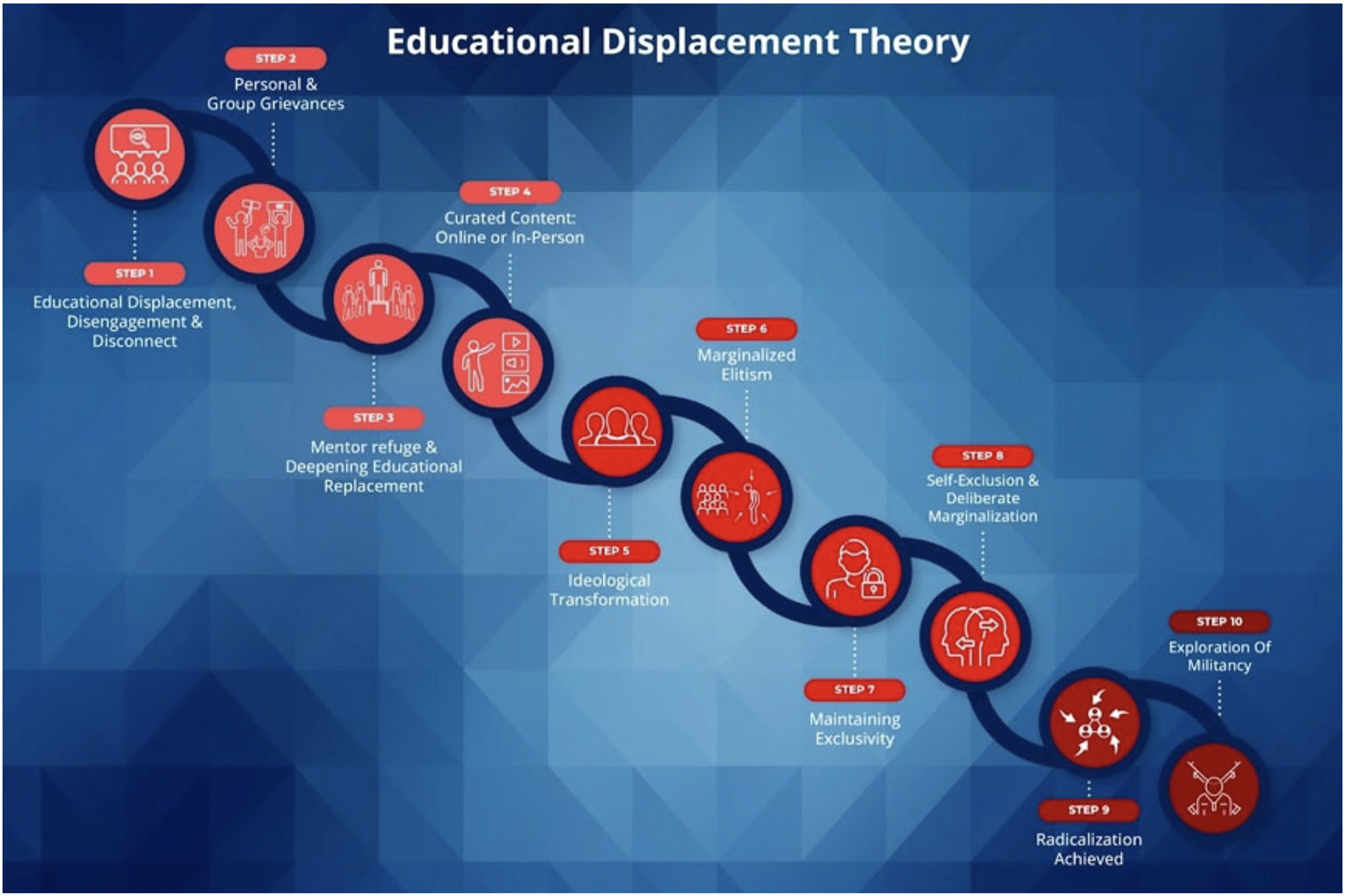
The onset of displacement is often exacerbated by perceived or actual grievances (Step 2 in Figure 1), prompting individuals to seek alternative communities of belonging, a process often facilitated by a trusted guide (Step 3). These mentors, if radicalized themselves, broaden and deepen radicalization for the new recruits through curated extremist content (Step 4), either face-to-face or online. This leads to an ideological shift (Step 5) wherein individuals embrace a new perspective frequently attributing fault for their sense of displacement and related grievances to a specific “Other.” This transformative process that offers a target in the other-ed group or identity engenders a sense of solidarity and inclusion among a radicalizing faction that begins to feel distinct and empowered, producing a feeling of belonging and elevating their new sense of self (Step 6).
As individuals progress along the radicalization continuum, they form insular bonds (Step 7) that reinforce and legitimize extremist convictions and strengthen belonging within these radicalized communities. As their beliefs solidify, opportunities for prevention lessen because the radicalizing individuals intentionally detach and isolate themselves (Step 8) from mainstream society, culminating in complete radicalization (Step 9). The conclusion of this process marks the most dangerous phase, which is when a radicalized individual begins to contemplate how to perpetrate an act of targeted violence (Step 10) (Sabic-El-Rayess & Joshi, 2024).
One field that has offered helpful conceptual and normative architectures to the question of civil liberties, radicalization, and targeted violence is Transformative Learning Theory, henceforth referred to as TLT (Sabic-El-Rayess & Marsick, 2021). While critiques of TLT have underscored an excessive emphasis on the individual and therefore an abiding neglect of social structures, it is vital to recognize that changes in social structures will necessarily be accompanied by “profound learning at the individual level” that will enable the social change (Hoggan, 2016, p. 58). TLT provides both a theoretical and empirical basis to articulate the changes required to facilitate positive transformations in society. What this paper proposes is to bring TLT in conversation with Educational Displacement Theory in order to examine both individual and social protective and risk factors for Educational Displacement.
Consequently, this study looks at the risk factors for and protective factors against Educational Displacement with a unique focus on civil liberties—particularly freedom of speech and action—and their role in building school belonging. When a student experiences this phenomenon of being pushed out of the classroom, without having their voice heard, grievances addressed, or a sense of belonging to the educational institution they are enrolled in, they experience Educational Displacement (Sabic-El-Rayess, 2021, 2023). School belonging, which is a protective factor against Educational Displacement, will serve as a proxy to understand risk and protective factors. To fulfill the aim of approaching this question from both the individual and societal level, this paper will conduct its analyses from a multilevel perspective. The research question driving this analysis is to examine what individual and social variables significantly predict one’s belonging in school. To address this question, the authors compare 518,333 students from 68 countries or single economies as defined by the Organization for Economic Co-operation and Development (OECD) specifically seeking to understand what individual as well as social risk factors and protective factors predict school belonging?
When reviewing the literature on risk factors for and protective factors against Educational Displacement, we have explored the literature on school belonging for two reasons: (a) the literature on Educational Displacement Theory is a novel theoretical and empirical contribution to the literature on radicalization and violence prevention; and (b) the mature field of research on school belonging, which serves as a proxy for Educational Displacement, offers a foundation to deepen the analyses in relation to Educational Displacement Theory. To substantiate this premise, consider a meta-analysis by Allen et al. (2018) that found several individual protective and risk factors of school belonging. Among the most important protective factors were emotional stability as well as teacher and parent support. Research by Sabic-El-Rayess et al. (2023a, 2023b) has also found experiences of bullying and discrimination to be risk factors for educational displacement (cf. Cunningham, 2007; McDiarmid et al., 2023; Montoro et al., 2021). In another study, Högberg et al. (2021) found that in the case of Sweden, between 2010 and 2018, foreign-born students suffered from an acute sense of a lack of school belonging. They suggest that certain legislative actions such as introducing high-stakes standardized testing and removing school support structures were reasons for the decline in school belonging in Sweden.
Research on educational inputs in Mongolia (Sabic-El-Rayess & Heyneman, 2020; Sabic-El-Rayess et al., 2019; Sabic-El-Rayess & Otgonlkhagva, 2012) indicates that the sense of belonging among students is intricately linked to the societal dynamics within their local communities. In schools where a large proportion of students cannot afford school uniforms, the lack of ownership does not adversely affect students’ sense of belonging. However, in settings where only a minority of students face this financial challenge, their sense of displacement is considerable. The student’s sense of belonging is therefore not intrinsically formed or constrained to oneself but rather relationally established and dependent on social circumstances. This research underscores the critical influence of social circumstances in either enhancing or undermining the sense of belonging in educational milieus. In order to understand the different pathways that lead to school belonging and, in turn, risk factors for and protective factors against Educational Displacement, individual factors as well as the social circumstances of an individual have to be considered.
There remains a paucity of research conducted on the social factors influencing Educational Displacement. King et al. (2022) have found an association between economic inequality and Educational Displacement. The more unequal a country was in economic resources, the lower was average school belonging in that country. These effects were mitigated for more affluent individual students living in those countries. More affluent students in more economically unequal countries did not seem to suffer from a lack of school belonging.
However, Sabic-El-Rayess et al. (2023b) discovered that students’ sense of belonging is influenced not only by family income but also by encounters with discrimination and bullying. They find that the effectiveness of teachers in addressing these issues and acting as supportive mentors plays a crucial role as well, underscoring the significant impact of social environments and the experiences students face on their sense of belonging. In another study on socioecological influences on school belonging, Johnson et al. (2023) found that a country’s individualism and power distance influenced several other variables like bullying, teacher support, disciplinary climate, and parental involvement. Individualism here refers to the degree to which a country is considered to value the individual more than the collective. Power distance on the other hand refers to a culture’s preference for power hierarchies versus more egalitarian social structures. Bullying, teacher support, disciplinary climate, and parental involvement seemed to mediate the effects between a country’s individualism and power distance on school belonging. Generally, countries with higher scores on individualism and power distance reported lower levels of school belonging because of mediating effects through bullying, teacher support, disciplinary climate, and parental involvement. A country with higher levels of individualism, for instance, showed lower levels of teacher support and therefore also lower levels of school belonging. However, to our knowledge, no study has looked at the effects of social inequality and especially lack of access to civil liberties on school belonging, particularly for foreign-born students.
The Current Study
While we know of few studies that have adopted a socioecological view on school belonging and have investigated country-level effects of inequality or social values (Johnson et al., 2023; King et al., 2022), this study aims to address a few specific research gaps: We first want to reproduce not only the country-level analyses of King et al.’s (2022) study but also include more individual-level variables. King et al.’s (2022) study solely included economic variables like economic inequality and socio-economic status. As mentioned before, several studies have found that individual-level variables like having a good student–teacher-relationship offer to be protective or, if absent, pose risk factors for educational displacement. These studies, however, do not consider possible socio-ecological influences. In this paper, we want to merge those two viewpoints by introducing a multilevel model perspective to school belonging and educational displacement. This multilevel approach adds to the existing literature by merging as well as disaggregating individual and social effects on school belonging using a sound statistical method.
We also wish to add to the school belonging and immigration literature. Several studies have found that foreign-born students suffer disproportionately from certain legislative actions, like, for instance, introducing high stakes standardized testing. Recent research suggests that despite imperfections in assessment tools, standardized tests remain more predictive of academic performance compared to factors like “access to fancy internships and expensive extracurriculars” (Stu Schmill, Massachusetts Institute of Technology’s Dean of Admissions, as cited in Corcoran, 2024). After the COVID-19 pandemic, Massachusetts Institute of Technology (MIT) led the way among elite U.S. institutions in reinstating high-stakes testing such as SAT and ACT in its admission process citing their research that underscores the reliability of standardized testing in predicting student achievement. While the debate over the relevance of high-stakes testing continues, this study underlines the critical role of belonging in student success. Students who feel disconnected and unacknowledged within their immediate community are less likely to perform at their highest potential. In this paper, therefore, we want to add to this literature by examining how the unequal access to civil liberties at the country level impacts student belonging on the individual level—as well as disaggregate those effects for foreign-born and native students.
Our goal is, third, to use the newest representative cross-country dataset available on school belonging to replicate and extend analyses that often are confined to individual-country data and small sample sizes. We therefore use the newest wave of PISA data to investigate possible individual- and social-level risk and protective factors of educational displacement.
In light of the research literature summarized above, we formulate the following hypotheses:
Previously researched individual-level predictors will predict school belonging.
Good student–teacher relationships will be positively associated with school belonging.
Feelings of safety at school will be positively associated with school belonging.
Student socio-economic status will be positively associated with school belonging.
Experiences of being bullied will be negatively associated with school belonging.
Being a second-generation or first-generation immigrant student will be negatively associated with school belonging.
Known socio-economic predictors at the country-level will predict school belonging.
Economic inequality will be negatively associated with school belonging.
The Human Development Index (HDI) will be positively associated with school belonging.
Social inequality at the country-level will be negatively associated with school belonging.
The unequal access to civil liberties will predict school belonging.
This effect will be more pronounced for foreign-born than for native students.
Method
Participants and Data Sources
To inform our analyses, we used publicly available data from the Program for International Student Assessment (PISA) of the Organization for Economic Cooperation and Development (OECD, 2022). PISA aims to collect data from students every three years. In addition to administering tests that measure certain cognitive or academic abilities—math and creativity in the year 2022, for instance—PISA administers an exhaustive student survey measuring student’s self-reported experiences in school, their family as well as attitudes and behaviors. PISA provides representative data on multiple countries that includes several quality assurance procedures in order to achieve a high data quality: the sample designs, quality checks, and individual survey administration procedures per country can be found in the PISA 2022 Technical Report (OECD, 2022) and are not reported in length in this article.
We matched the PISA 2022 data with data from the United Nations Development Programme (UNDP), reported in their Human Development Report 2021–22 (UNDP, 2022), as well as data from the V-Dem Institute by the University of Gothenburg that collects data on legislation and democracies worldwide. We merged the UNDP’s Human Development Index and Atkinson Index of income inequality as well as V-Dem’s (2023) index for social group equality in respect for civil liberties with the PISA data. Because the UNDP’s as well as V-Dem’s indices are not collected for every country or economy of the PISA dataset, our total sample amounts to N = 518,833 students from 18,819 schools in 68 countries or economies as defined by the OECD. The OECD does not ask for gender but instead for assigned sex at birth: Of 518,754 students who answered that question, 49.8% were female and 50.2% were male. The OECD additionally computes an immigration variable that indicates whether students have an immigration background or not: according to the OECD’s criteria, 89.8% of students were native-born, 5.8% of students identified as second-generation students, and 4.4% identified as first-generation students.
Measures
School Belonging
School belonging was measured by using the standardized PISA-constructed measure of school belonging (BELONG). The measure was created using the following six items: “I feel like an outsider (or left out of things) at school (reverse-coded),” “I make friends easily at school,” “I feel like I belong at school,” “I feel awkward and out of place in my school” (reverse-coded), “Other students seem to like me,” and “I feel lonely at school” (reverse-coded). All items were answered on a 4-point scale (1 = strongly disagree, 4 = strongly agree).
Experiences of Bullying
Experiences of being bullied were assessed by using the standardized PISA-constructed measure of being bullied at school (BULLIED). Students indicated how often they had experiences at school that are indicative of being bullied during the past 12 months. The nine items were as follows: “Other students left me out of things on purpose,” “Other students made fun of me,” “I was threatened by other students,” “Other students took away or destroyed things that belonged to me,” “I got hit or pushed around by other students,” “Other students spread nasty rumors about me,” “I was in a physical fight on school property,” “I stayed home from school because I felt unsafe,” and “I gave money to someone at school because they threatened me.” Each item of the scale again had four answer options (1 = never or almost never, 2 = a few times a year, 3 = a few times a month, 4 = once a week or more).
Teacher–Student Relationship
PISA additionally included a standardized measure of the quality of teacher–student relationship in their school survey (RELATST). This measure was constructed to capture how much the teachers at a school cared about their students and treated them with respect. The eight items were as follows: “The teachers at my school are respectful towards me,” “If I walked into my classes upset, my teachers would be concerned about me,” “If I came back to visit my school three years from now, my teachers would be excited to see me,” “I feel intimidated by the teachers at my school” (reverse-coded), “When my teachers ask how I am doing, they are really interested in my answer,” “The teachers at my school are friendly towards me,” “The teachers at my school are interested in students’ well-being,” and “The teachers at my school are mean towards me” (reverse-coded). All items were answered on a 4-point scale (1 = strongly disagree, 4 = strongly agree).
Student’s Feelings of Safety
An additional standardized measure of student’s feelings of safety in school was added to the analysis (SAFE). The four items were as follows: “I feel safe on my way to school,” “I feel safe on my way home from school,” I feel safe in my classrooms at school,” and “I feel safe at other places at school (e.g., hallway, cafeteria, restroom).” All items were again answered on a 4-point scale (1 = strongly disagree, 4 = strongly agree).
Student’s Index of Economic, Social, and Cultural Status
A complex composite index was derived from the PISA student questionnaire that measured a student’s economic, social, and cultural status (ESCS) by using three indicators: highest parental occupation status, highest education of parents in years, and home possessions. The idea behind that measure is to assess socio-economic status which is commonly assessed by status, education, and income using an indirect measure of income through home possessions. Home possessions have been used as a proxy for household income quite successfully in the past. The ESCS measure was again standardized.
Immigration Status
From the information of a student’s country of birth and the student’s parent’s country of birth, an immigration index (IMMIG) was computed. Students who themselves were born in the respective OECD country or economy and had at least one parent born in the same country or economy were considered native-born students. Students who were born in the country or economy—but both parents were born in another country or economy—were considered second-generation students. Students who were born outside the country and had both of their parents born outside the country were considered first-generation students. For modeling purposes, we aggregated second-generation students and first-generation students into one group and compared them to native students (1 = native student, 2 = second- or first-generation student). We later visually disaggregated these findings in Figure 2. Effect sizes for the final multilevel model. Note. Error bars show 95% CIs.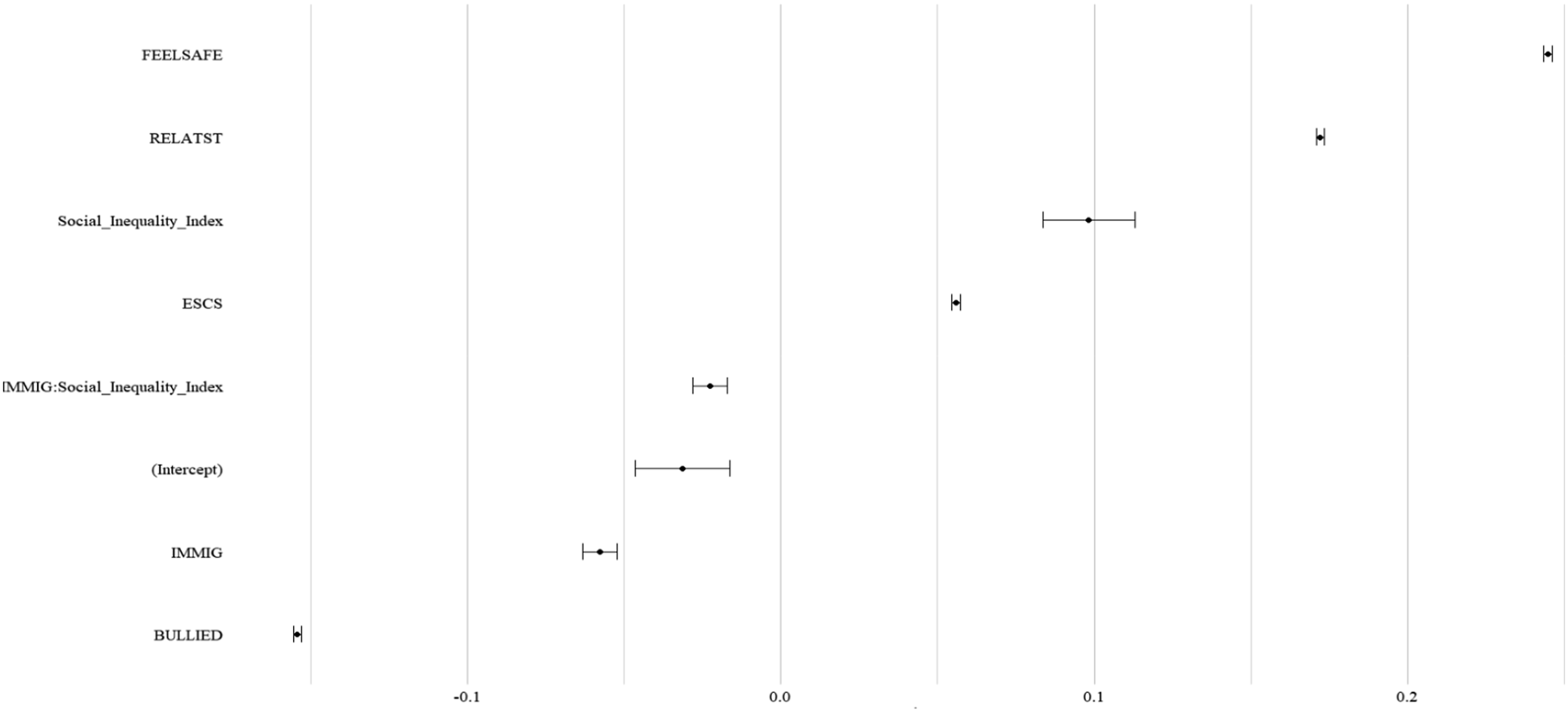
Atkinson Index and Human Development Index
From the UNDP’s Human Development Report 2021–22 (UNDP, 2022), we adapted the Atkinson index as well as the Human Development Index. Both indices were accumulated at the country-level, that is, their values are the same for each student in a given country or economy. Both indices were chosen for the year before the administration of the PISA survey as this yielded the best predictive value in past research (King et al., 2022).
The Atkinson index is a measure of income inequality that captures the distribution of income across a population with a particular emphasis on the lower end of the income distribution. Unlike the widely used Gini index, which treats all income disparities the same regardless of where they occur in the income distribution, the Atkinson index allows for the explicit consideration of the social welfare implications of income inequalities. It incorporates a parameter that reflects the level of inequality aversion—essentially, how much importance society places on income transfers at different parts of the income distribution. A higher parameter value indicates a greater focus on inequalities affecting the poorer segments of society. This feature makes the Atkinson index especially useful in psychology research for exploring the nuanced impacts of economic disparities on societal well-being, mental health, and social cohesion. By contrast, the Gini index provides a more generalized overview of inequality within a society. The ability of the Atkinson index to account for the societal aversion to inequality and its focus on the lower tail of the income distribution offer researchers a valuable tool for assessing the psychological and social implications of economic inequality with a degree of sensitivity that other measures like the Gini index may not afford.
The Human Development Index (HDI) is a composite statistic used to rank countries based on their levels of human development. Developed by the United Nations Development Programme (UNDP), the HDI combines indicators in three fundamental dimensions: health (measured by life expectancy at birth), education (measured by years of schooling for adults aged 25 and older and expected years of schooling for children entering school), and standard of living (measured by Gross National Income per capita adjusted for purchasing power parity). This multidimensional approach allows the HDI to provide a broader perspective on well-being and potential human development beyond economic growth alone. It serves as a critical tool for assessing and comparing the level of progress of nations towards achieving a high quality of life for their citizens. In psychology research, the HDI can be particularly useful for exploring the impact of various dimensions of development on psychological well-being, societal values, and individual behavior. By offering a more holistic view of development, the HDI facilitates a nuanced understanding of how improvements in health, education, and income levels interact to influence overall human development, social cohesion, and mental health outcomes.
Social Group Equality in Respect for Civil Liberties Index
The social group equality in respect for civil liberties index was our third country-level measure. It was developed by the V-Dem (Varieties of Democracy) institute to capture whether “all social groups, as distinguished by language, ethnicity, religion, race, region, or caste, enjoy the same level of civil liberties, or [whether there] are some groups generally in a more favorable position” (V-Dem, 2023, p. 180). To capture the degree to which a country provides equal civil liberties to all social groups, V-Dem captures data from around 3500 country experts worldwide in order to assure that the indices reflect a diverse range of perspectives and expertise. The V-Dem institute is based at the University of Gothenburg in Sweden. The experts were asked to answer the following: “Do all social groups, as distinguished by language, ethnicity, religion, race, region, or caste, enjoy the same level of civil liberties, or are some groups generally in a more favorable position?” They indicated their answers on a five-point scale: 0 = Members of some social groups enjoy much fewer civil liberties than the general population, to 4 = Members of all salient social groups enjoy the same level of civil liberties.
Methodological Design
Data Preparation
The PISA data was downloaded from the publicly available OECD repository as an SPSS datafile. UNDP and V-Dem indices were then merged with the PISA data using IBM SPSS 29. The merged data file was then exported as a .csv and all multilevel models as well as figures were then created in R (version 4.2.2) using the lme4 package for multilevel modeling, the mice package for creating multiple imputation datasets to deal with missing data, broom for aggregating the multiple imputation multilevel results, and ggplot2 to create the figures. All variables were standardized before entering them into the model so each coefficient can be interpreted as a standardized effect size.
Data Weighting
Data for all analyses was weighted by using PISA’s normalized weights for each country. These normalized weights assure that each country and school contribute equally to the analyses regardless of actual sample size. It additionally assures that the results are representative of the countries and schools.
Missing Data
There were several missing data points for all individual-level measures of the PISA dataset. As these could bias the estimates and standard errors of the statistical analyses, we used multiple imputation to deal with this missingness. Multiple imputation is a statistical technique for handling missing data by creating multiple complete datasets from the original data. Each missing value is imputed several times, based on a distribution that reflects the uncertainty about the right value to impute. Model estimates and standard errors are then averaged across all imputed datasets to give a more accurate estimate.
Data Analysis
The specific contribution of this paper is to apply a multilevel framework to research on school belonging and educational displacement. Multilevel Modeling, also known as hierarchical linear modeling (HLM), is a statistical technique used for analyzing data that is structured in hierarchies or nested levels. This method is particularly useful when dealing with data where observations at one level are nested within higher levels. In this case, students (Level 1) are nested within schools (Level 2) that are nested within countries (Level 3). HLM allows researchers to examine relationships at multiple levels simultaneously, providing a more nuanced understanding of data that traditional single-level models like linear regression might overlook. It additionally acknowledges and models the potential correlation of data points within the same group, addressing issues like non-independence of observations and heterogeneity across groups.
The importance of HLM lies in its ability to provide more accurate and meaningful insights in contexts where data is inherently hierarchical. Traditional statistical methods often fail to account for the variability between groups (like schools or countries in our case), which can lead to biased estimates and incorrect conclusions. By explicitly modeling the variance at each level, HLM can lead to more precise estimates and a better understanding of the effect of predictors at different levels.
It is important to note that HLM is a model-based framework. That means that one is entering certain predictor variables in a model that is trying to predict the variation in a certain outcome variable—in this case, school belonging. There are several indices for how well a model fits, and models with a better fit to the data are generally seen as more acceptable given the data. In this paper, we therefore follow a stepwise approach: we first compute a baseline model and later add other models with more predictors. These models are then compared to each other using several fit indices to check which model fits the data best. Note that this creates two hurdles for our hypotheses to overcome in order to not be rejected: First, a model as proposed by a hypothesis has to fit the data better than a previous model. Second, the individual predictors inside the model have to be of a significant effect size as well as the direction of the effect proposed by the hypothesis. It is furthermore important to note that multilevel models do not imply causality. We can make no causal inferences from the cross-sectional design of the PISA data and our proposed multilevel models.
Results
Individual-Level Predictors of School Belonging
In a first step of our modeling procedure, we follow the advice of Hox et al. (2017) in first computing a null-model as the baseline against which other models are then compared. This null-model only includes a random intercept for level 2 and level 3, but no predictors at any level. This model is then used to test whether there is significant variance that could be predicted by level 2 or level 3 variables. This null-model showed that there was significant variance at level 3, ICC = .062, as well as level 2, ICC = .038. The Intraclass Correlation Coefficient (ICC) in a multilevel model measures the proportion of variance in the dependent variable that is attributable to the grouping structure in the data. In this case, 3.8% of the variance in individual school belonging is attributable to variance between schools and 6.2% of the variance in individual school belonging is attributable to variance between countries. According to standard recommendations, this warrants the use of a multilevel model (Hox et al., 2017).
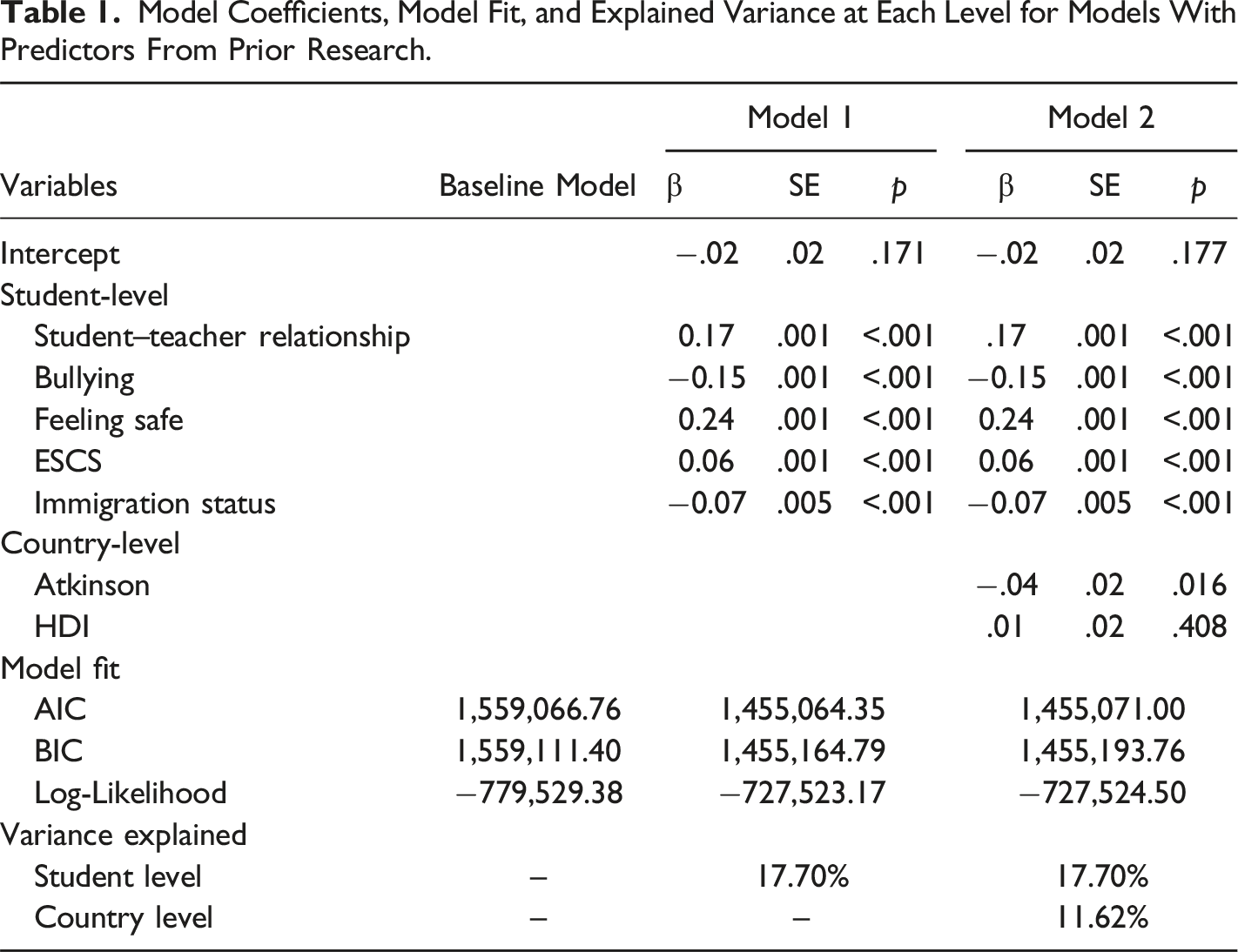
In the second step of our analysis, we therefore entered the theory-based level-1 predictors into our model. The model showed a large improvement in fit. Additionally, all individual-level predictors were significant in the hypothesized direction. The quality of student–teacher relationship significantly predicted school belonging, β = .17, SE = .001, p < .001, as did feeling safe at school, β = .24, SE = .001, p < .001 and individual ESCS, β = .06, SE = .001, p < .001. Being bullied was negatively associated with school belonging, β = −.15, SE = .001, p < .001 as was being a foreign-born student, β = −.07, SE = .001, p < .001.
These results replicate several single-study results using a large international dataset.
Socio-Economic Predictors of School Belonging
Model Coefficients, Model Fit, and Explained Variance at Each Level for Models With Predictors From Prior Research.
Social Inequality Predicts School Belonging
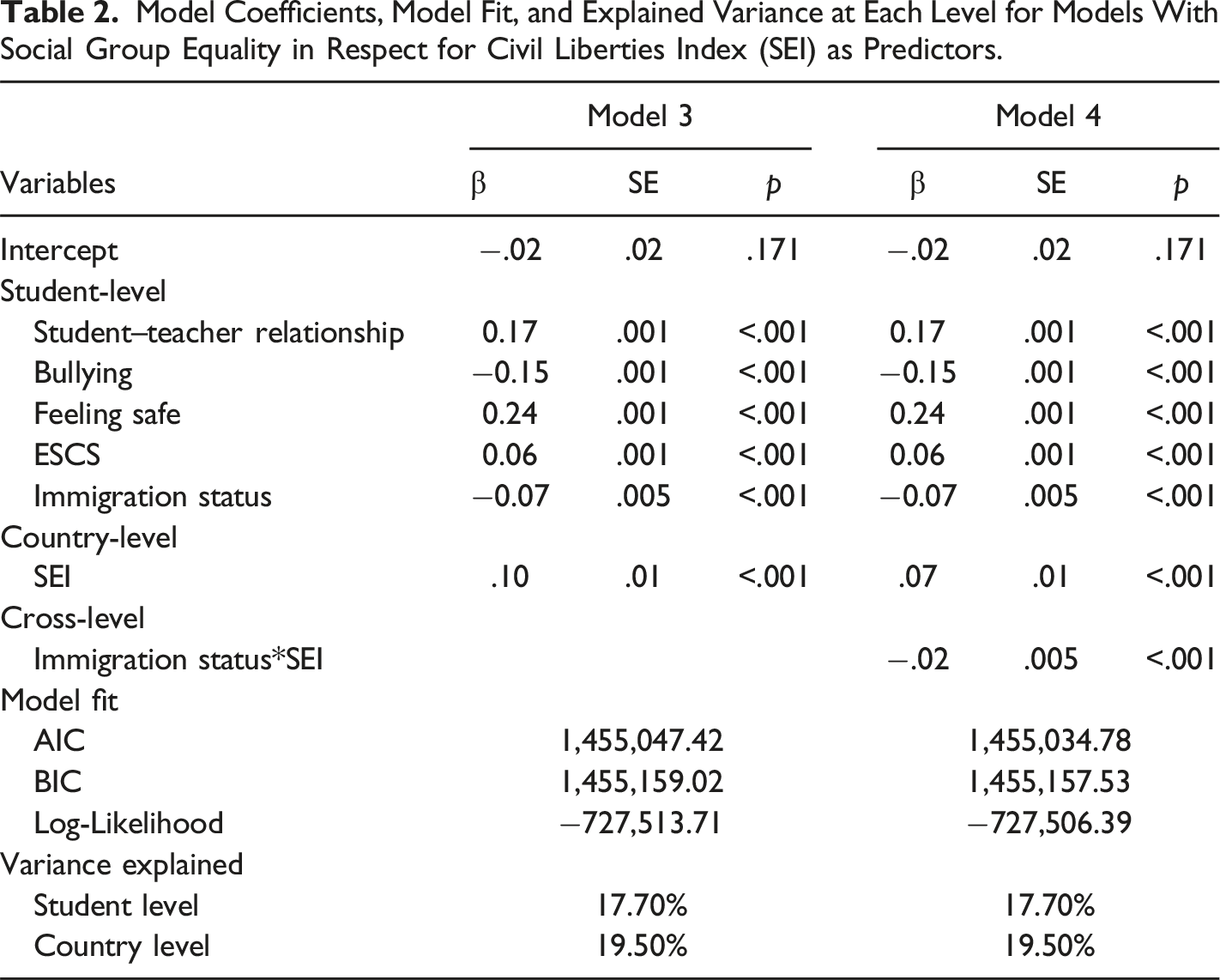
Our third hypothesis proposed that social inequality as measured by the social group equality in respect for civil liberties index (SEI) would be significantly associated with school belonging. We therefore removed the Atkinson index and HDI from our model as entering them has shown a decrease in model fit and entered the SEI into our model. The model now showed a moderate improvement in model fit. Additionally, SEI was significantly associated with school belonging, β = .07, SE = .01, p < .001. This means that the more equal all social groups in a country have access to civil liberties, the higher the average school belonging is in that country. The model parameters can be found in Table 1, a visualization of the effect sizes of the final model in Figure 2.
The second part of our third hypothesis was concerned with the effect of social equality specifically for foreign-born students. Our hypothesis claimed that foreign-born students would especially benefit from equal access to social liberties. This translated to an interaction effect between the SEI and immigration status. In our final step, we therefore entered this interaction effect into our model. This again showed a moderate improvement in fit. Additionally, the interaction term between SEI and immigration status was significant, β = −.02, SE = .006, p < .001. Figure 2 shows a graphical representation of the effect disaggregated by first- and second-generation students. Figure 3 shows two clear trends: First, first-generation students generally show the biggest educational displacement. Second, second-generation students seem to benefit the most from social equality. While their trend line starts below that of native and first-generation students for low equality countries, their estimated school belonging is as high as that of native students for high equality countries (Table 2). Scatterplot with guidelines for interaction effect between immigration status, school belonging, and values of social group equality in respect for civil liberties index (SEI). Note. The marginal plots show the different distributions for SEI (on top) and school belonging (right). Model Coefficients, Model Fit, and Explained Variance at Each Level for Models With Social Group Equality in Respect for Civil Liberties Index (SEI) as Predictors.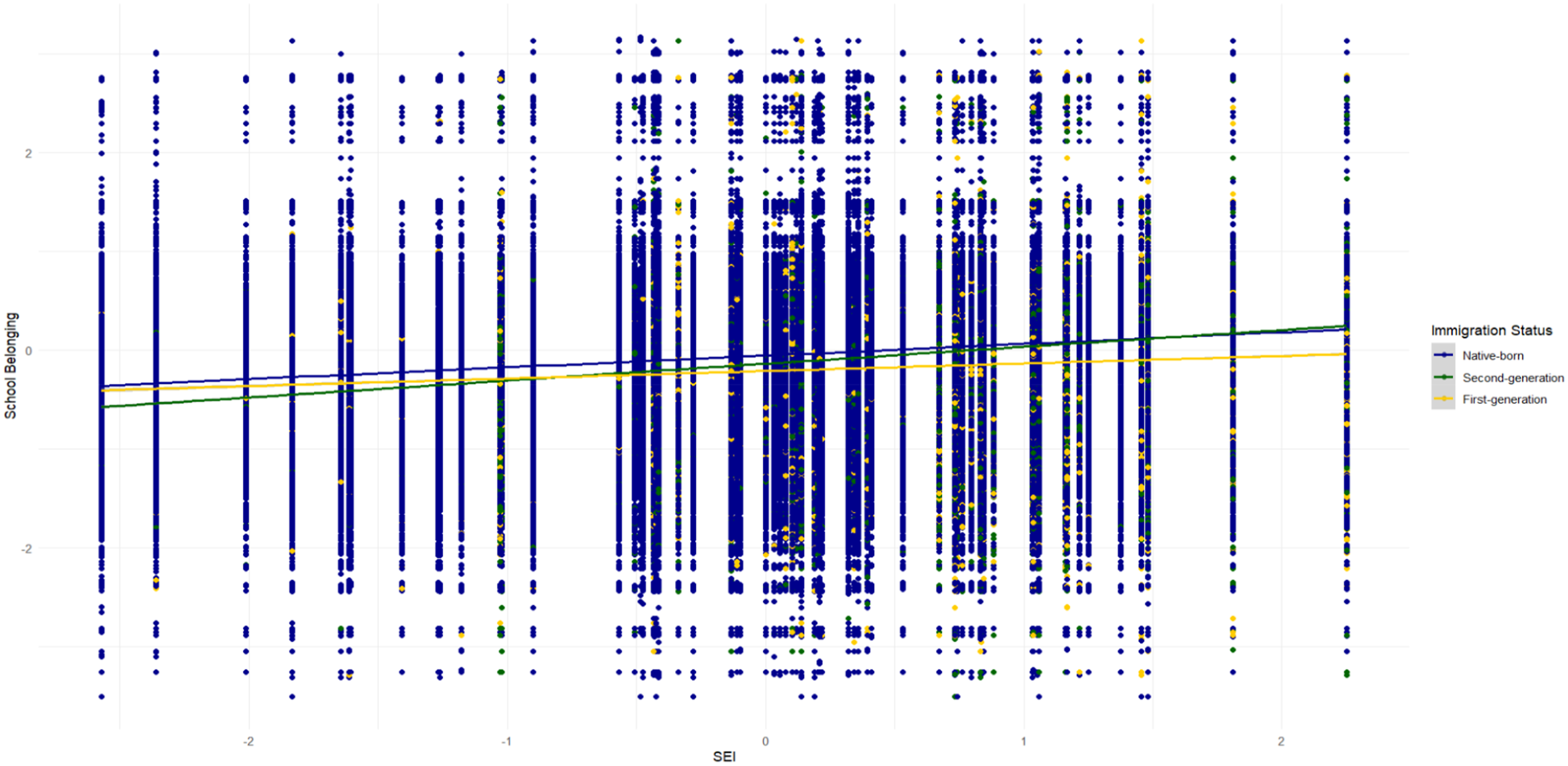
Discussion
The results largely confirmed our hypotheses: A positive relationship with teachers, feeling safe at school, and a high socio-economic status acted as protective factors of educational displacement at the individual level. Being bullied as well as being a first- or second-generation immigrant student were risk factors for feeling a sense of displacement at school. At the country level, social equality acted as a protective factor for increasing school belonging—but effects of economic inequality could not be reproduced using the newest wave of PISA data and including more than economic variables at the individual level of the multilevel model. Our results additionally showed that second- but not first-generation immigrant students benefited from a more equal access to civil liberties in a society. This would suggest that the second-generation immigrants, likely due to their awareness of their parents’ stories of hardship and difficulties with lacking belonging in their new countries, were most cognizant of the importance of their access to civil liberties to ensure their sense of belonging.
From the results, it is clear that individual-level variables significantly predict school belonging, and to a meaningful degree. Our previous studies have underscored the integral role belonging plays in building a school climate and culture of social connectedness and peer acceptance (Sabic-El-Rayess et al., 2023a, 2023b). Pedagogical practices that support and enrich school belonging include offering a wider variety of stories within the curriculum such that students see themselves not only represented in the life of the curriculum but also—if accommodating all stories is made difficult by temporal constraints—developing reading lists and references for students to seek stories beyond the boundaries of the formal curriculum (Dillon et al., 2024; Sabic-El-Rayess, 2020, 2023). In addition, project-based learning initiatives, where students lead local prevention projects that nurture belonging in their classrooms, schools, and communities, invite opportunities for students to demonstrate their agency and contribute to the collective sense of belonging across the entire educational institution (Joshi & Sabic-El-Rayess, 2023, 2024).
Furthermore, educator-focused training programs that celebrate storytelling, self and community awareness, and the importance of empathy have shown to improve belonging across the entire school environment (Sabic-El-Rayess & Sullivan, 2020, 2024). The authors of this paper have led an empirical, evidence-based program titled, Reimagine Resilience, which is a professional development training program aimed at educators and educational staff in service of building both resilience and belonging in schools through a multimodal training program (Sabic-El-Rayess et al., 2023a; Sabic-El-Rayess et al., 2019). 1 As a complement to student and educator-oriented programs and initiatives, legislative actions such as increased funding for programming that supports belonging—via storytelling, project-based learning, and student leadership programs—would create the necessary and sustainable infrastructure for such programming to integrate as a regular offering within schools. While high-stakes testing remains a pertinent measure of student success, its implementation should not overshadow the social structures and practices that foster belonging. Without these supports, the cohesion and effectiveness of both schools and society are compromised (Joshi, 2025). Lastly, legislative action that would support the creation, development, and sustainment of advisement and mentorship programs within schools would serve as a powerful practice that cultivated belonging in schools through teacher–student and staff–student bonds.
With reference to this inquiry, it is important to highlight that even though this study provides strong support for the aforementioned hypotheses, one should be careful when trying to interpret the reported results causally. Multilevel modeling based on cross-sectional data does not provide proof for causal effects. We additionally cannot disaggregate the effects of social inequality for the different subgroups of a population of a certain country. We do know that if social groups are treated differently, this will affect a country’s overall school belonging, but we do not know which social group for which country drives those effects—and how large the effect size of being treated unequally compared to other groups is among that specific group. Studies that look at the individual country, for instance, could investigate school belonging across different social groups in that specific country.
In the broader conversation on Radicalization and Targeted Violence, belonging remains a vital bulwark against Educational Displacement (Joshi & Rosenthal, 2025). This study was motivated by the promising, yet nascent, literature at the intersection of Educational Displacement and Transformative Learning Theory, wherein individual and social transformation together enable approaches to violence prevention where every member’s learning is crucial for classrooms, schools, and communities to become and remain safe. At the core of Transformative Learning Theory is acknowledgment that questioning established premises and assumptions can expose individuals to alternative, sometimes, dysfunctional perspectives. This parallels the Educational Displacement Theory of Radicalization, which views the radicalization process as a form of transformative learning at the individual level accompanied by adverse societal outcomes. Here, individuals dismantle their existing worldview and construct a new mindset that governs their actions, potentially leading to violent outcomes justified by the newly acquired perspective. While Transformative Learning Theory often focuses on individual transformation, Mezirow’s (1991, p. 209) insights similarly carry implications for fostering broader social change: “Perspective transformation involving sociolinguistic distortions ideally should involve a recognition that what was initially thought to be a private dilemma is shared by others and may be a public issue. . . Sociolinguistic distortions often result in unquestioned, institutionalized social practices that can be changed only through collective political action. Personal transformation involving sociolinguistic distortions can happen only when a perspective of social change is involved, and social change, in turn, depends upon personal transformation.” Therefore, recognizing the intrinsic link between personal transformation, belonging, and social change is a true realization of the whole-of-school and whole-of-society approach to violence prevention where all actors, at all levels, share responsibility for the safety of everyone within and beyond the schooling environment.
Footnotes
Declaration of Conflicting Interests
The author(s) declared no potential conflicts of interest with respect to the research, authorship, and/or publication of this article.
Funding
The author(s) received no financial support for the research, authorship, and/or publication of this article.