Abstract
Louis Edgar Esparza on the triumph of an emancipatory network.
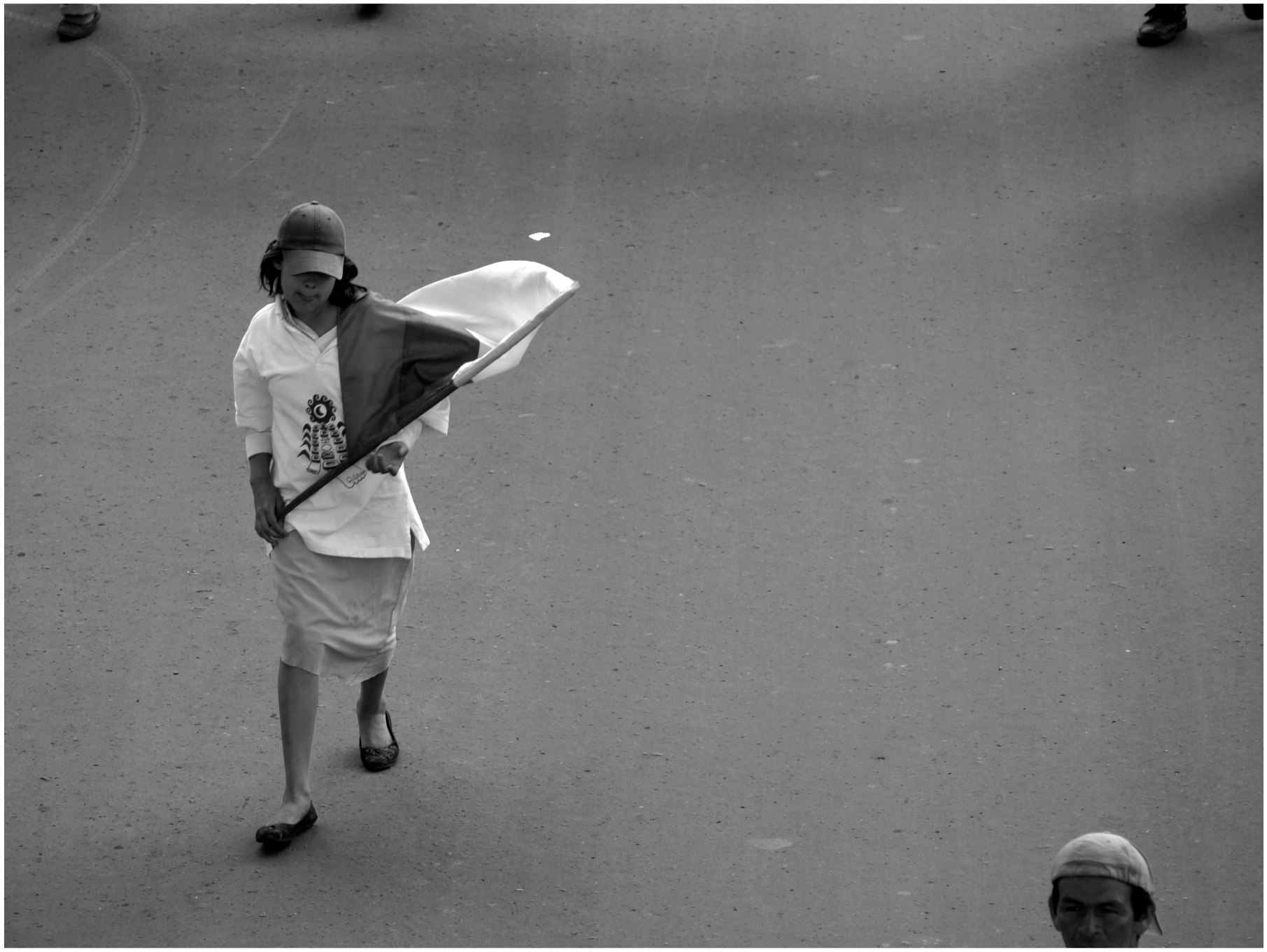
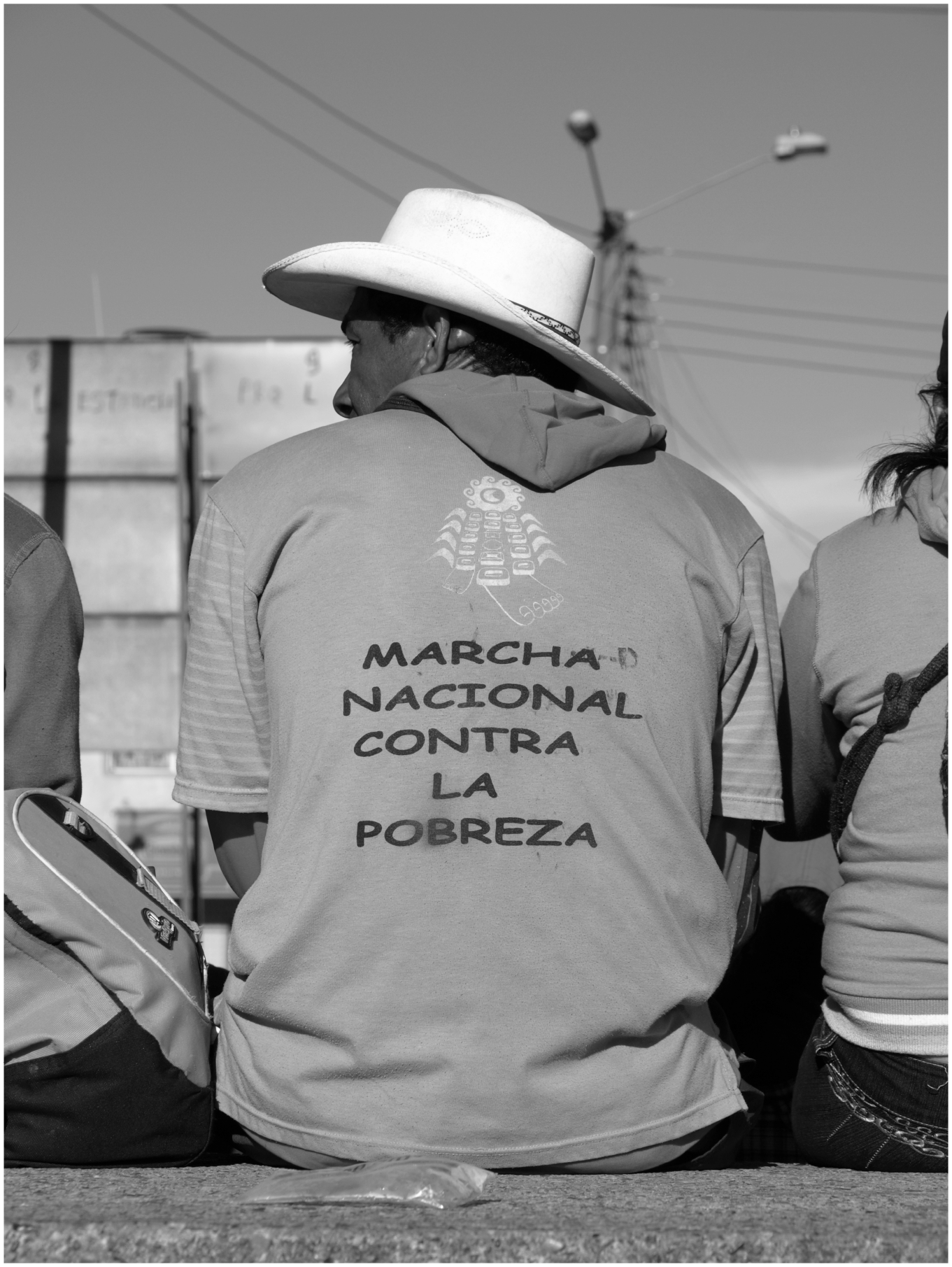
Even today, more than one-quarter of Colombians live under the poverty line. Civil violence, which has displaced countless people from the countryside, aggravates this figure. Indeed, the shantytowns that ring major cities are now called home by millions of former campesinos. It is in these shantytowns that community leaders are organizing marches to pressure government officials to provide job training, infrastructure development, schools, health care, and poverty alleviation programs.
In Bogotá, I watched tensions between grassroots organizers and professionalized non-profits hamper community efforts. I witnessed international funding agencies divert the attention of community groups from capacity-building to resource distribution. I looked on as frustrated youth fought with the police. But I also saw this refrain inspire activists elsewhere to compose a counterpoint: a broad coalition of workers, professionals, communities, unions, and local government.
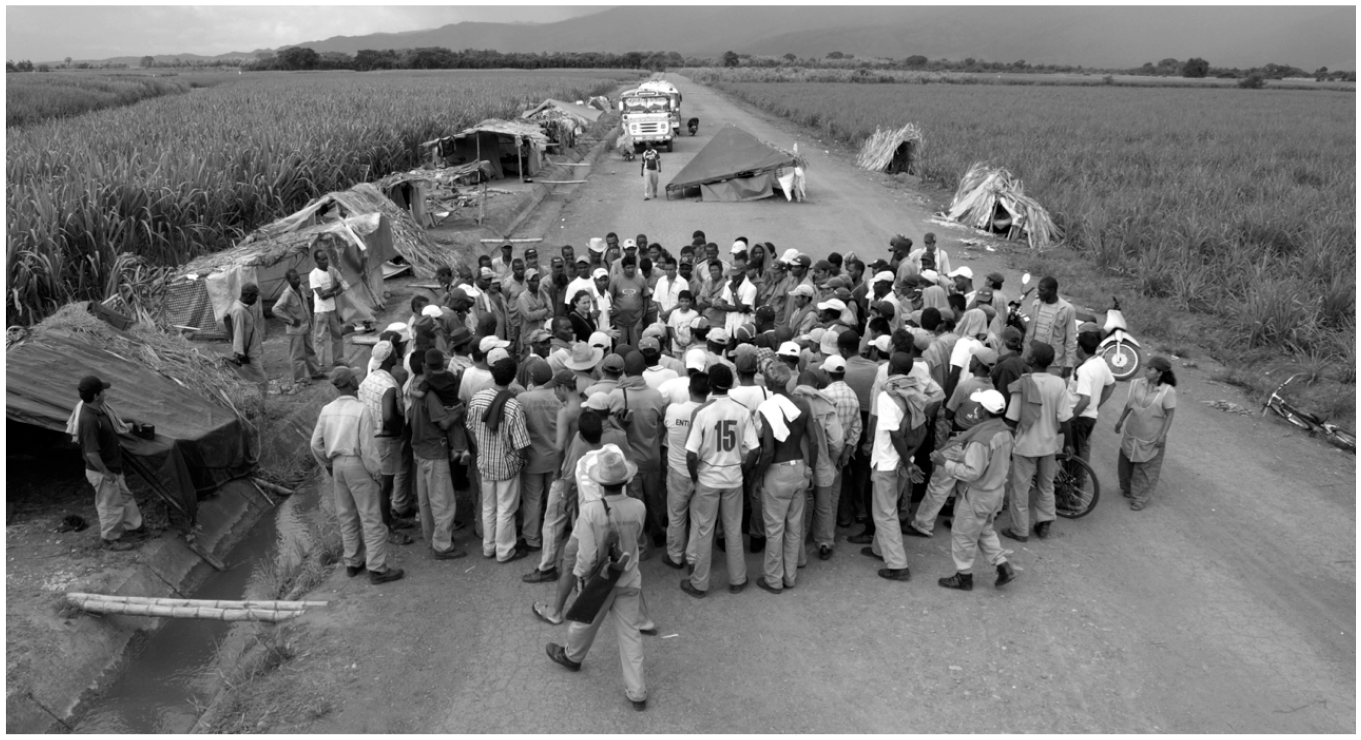
Little-known outside Latin America, a movement of 8,500 Colombian sugarcane workers went on strike for 58 days in 2008. Tipped off, I left Bogotá’s community movements for the cane fields one week before the strike was to begin. What I found there was a type of social network structure that proved resilient and effective against state and paramilitary repression. In sociological terms, this emancipatory network worked as a segmentary kinship system, with a high degree of differentiation, involution, and dependence. Workers allied themselves with human rights activists to coordinate heterogenous allies.
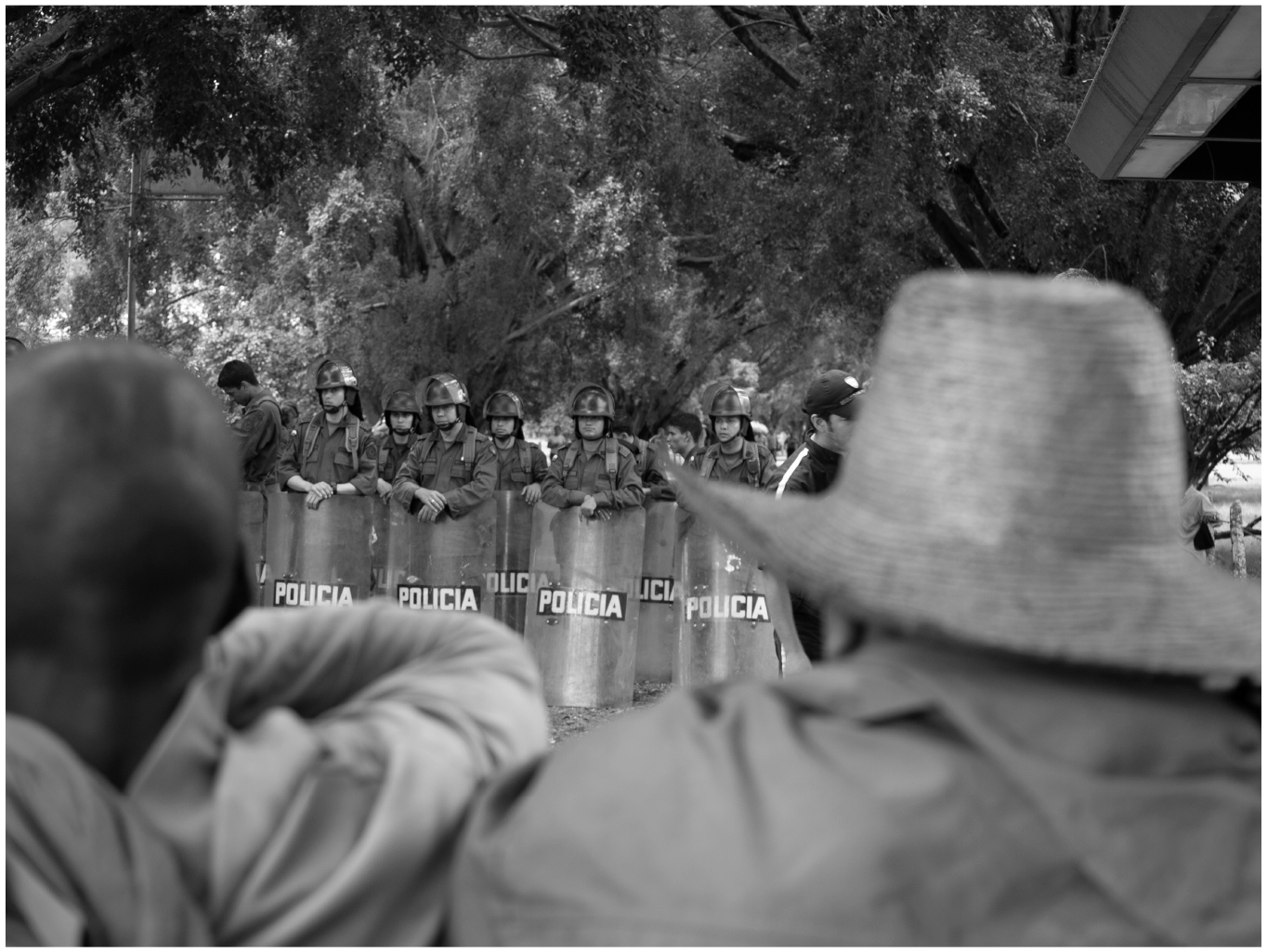
Their central resource was their capacity to disrupt sugarcane production. I watched militant picketers roam the plantations as gangs of hundreds blocked roads and disabled cane trucks. Police fired tear gas and rubber bullets at the workers. Workers responded by swinging their machetes. The ensuing mêlée sent dozens to the hospital as the workers scattered into the fields where police refused to follow. “They called us ‘delinquents’ because they thought that they could just have their way with us,” one worker told me, “...but those riot police sure are scared of the sugarcane workers.”
Avoiding political disaster, then-president of Colombia Álvaro Uribe Vélez quickly changed his mind about removing workers by force. President Uribe became an early backer of negotiations after the initial confrontation between workers and riot police. But his administration also charged that there were “dark hands” operating behind the strike. One worker told a reporter in response, “Of course there are! Can’t you see that 70% of us are Black?”
By threatening profits, workers forced the recalcitrant industrialists to decide between negotiation and running the plantations asunder. Plantation owners waited eight weeks before coming to terms.
Strikes of any significant length and size require an immense amount of coordination. Supplying and staffing strike kitchens, for instance, was an essential task for keeping the workers hydrated and fed in the tropical sun. Community members, including families, unions, and local governments enhanced the workers’ own strengths and capacities in an alliance that freed workers to focus on causing maximum disruption.
These efforts made it clear to workers and observers that it was not the disruption of profit-making that put workers at risk. No, sugarcane workers and their families already lived in economic precarity. What puts workers in danger is the state’s intolerance of human rights and its unskillful application of violence in response to economic disruption. Hired paramilitaries harassed, followed, and otherwise intimidated workers supporting the strike.
A young woman with a Colombian national flag marches against poverty on a Bogotá street.
photos © Louis Edgar Esparza
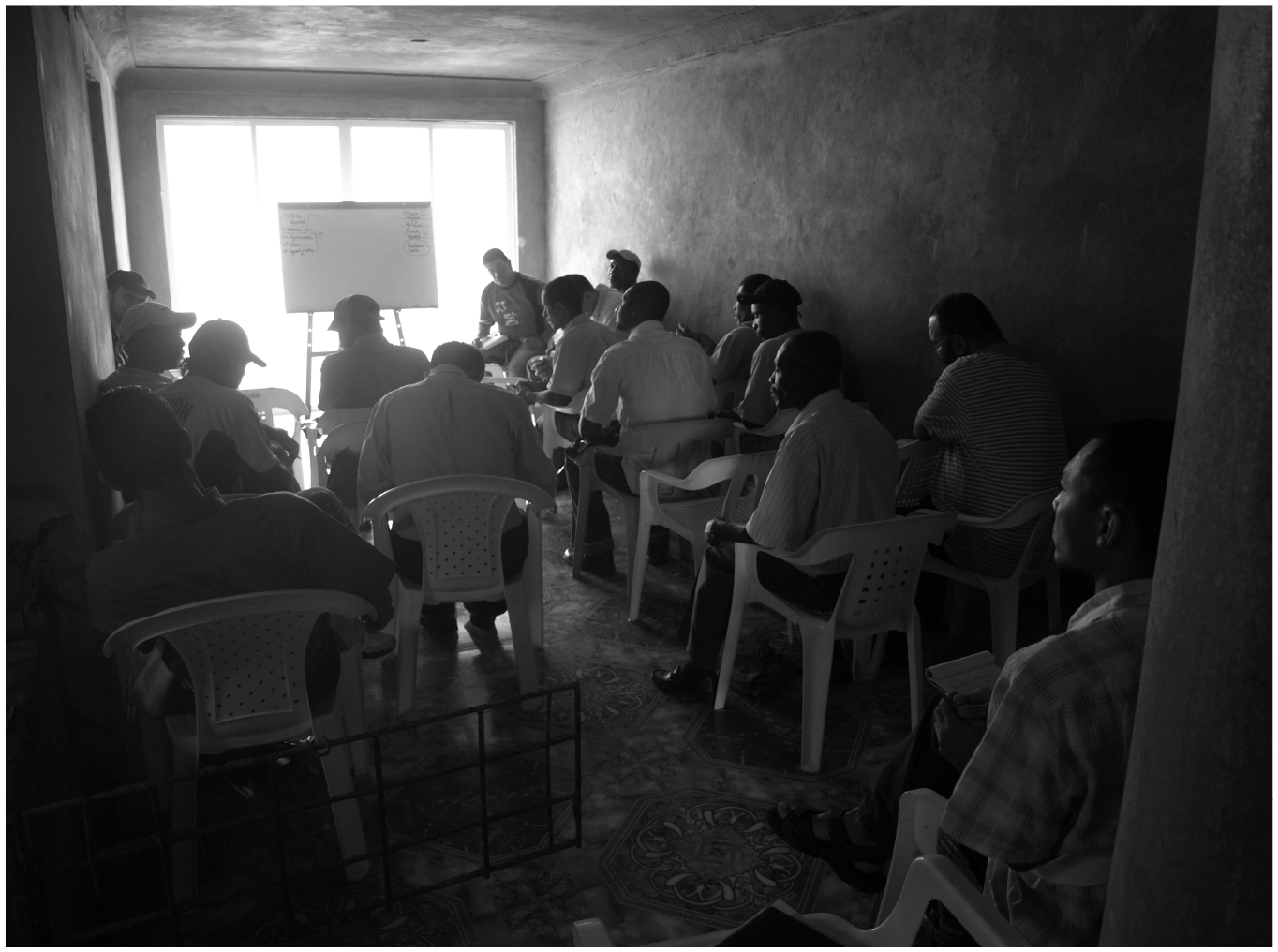
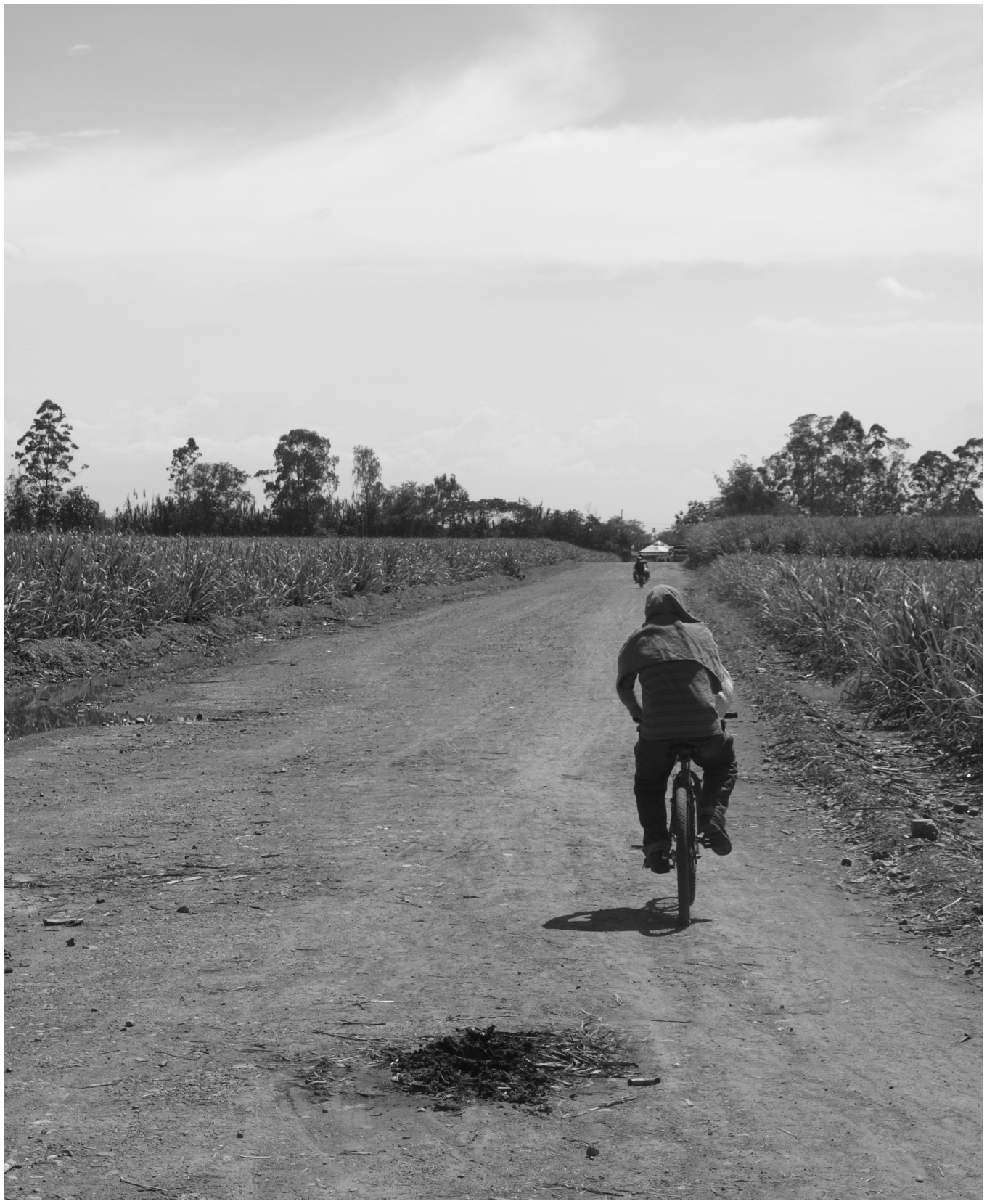
Coordinating such a strike campaign came with other problems, of course. The varied tasks needed to keep the strike going included nightly meetings, sometimes stretching to six hours, in which workers and their supporters marshalled and distributed sacks of rice, SIM cards, petty cash, and information about tactical adjustments to far-flung plantations across Valle del Cauca. Other workers and human rights activists traveled long distances to deliver speeches by megaphone, combatting the sugarcane industry’s aggressive public relations campaigns, while bicycle couriers carried privileged information between the workers’ militant pickets. All these activities heightened anxieties and amplified disagreements. Activists sometimes exchanged coarse words, especially around the use of radical tactics.
For instance, after the mêlée, desperate workers pleaded for gasoline with which they could block the roads with burning tires, construct Molotov cocktails, and set vehicles ablaze. But this request infuriated their human rights allies. “We will not win if we fight this on their terms,” they scolded. Workers, too, would not dismiss using violence against the police. At one meeting, I heard a worker snap at the human rights activists: “You know how people get when they have machetes in their hands.” As other workers in the room chuckled, the activists responded, “Do you think that this is a joke?”
Though there was creative tension in this emancipatory network, it nonetheless led to a successful strategy that won material concessions from plantation owners. The absence of such a network in Bogotá—hindered by international funders—led to uncoordinated efforts that foundered when it came to achieving human rights goals.
An activist, whose shirt reads “National March Against Poverty,” takes a break.
photos © Louis Edgar Esparza
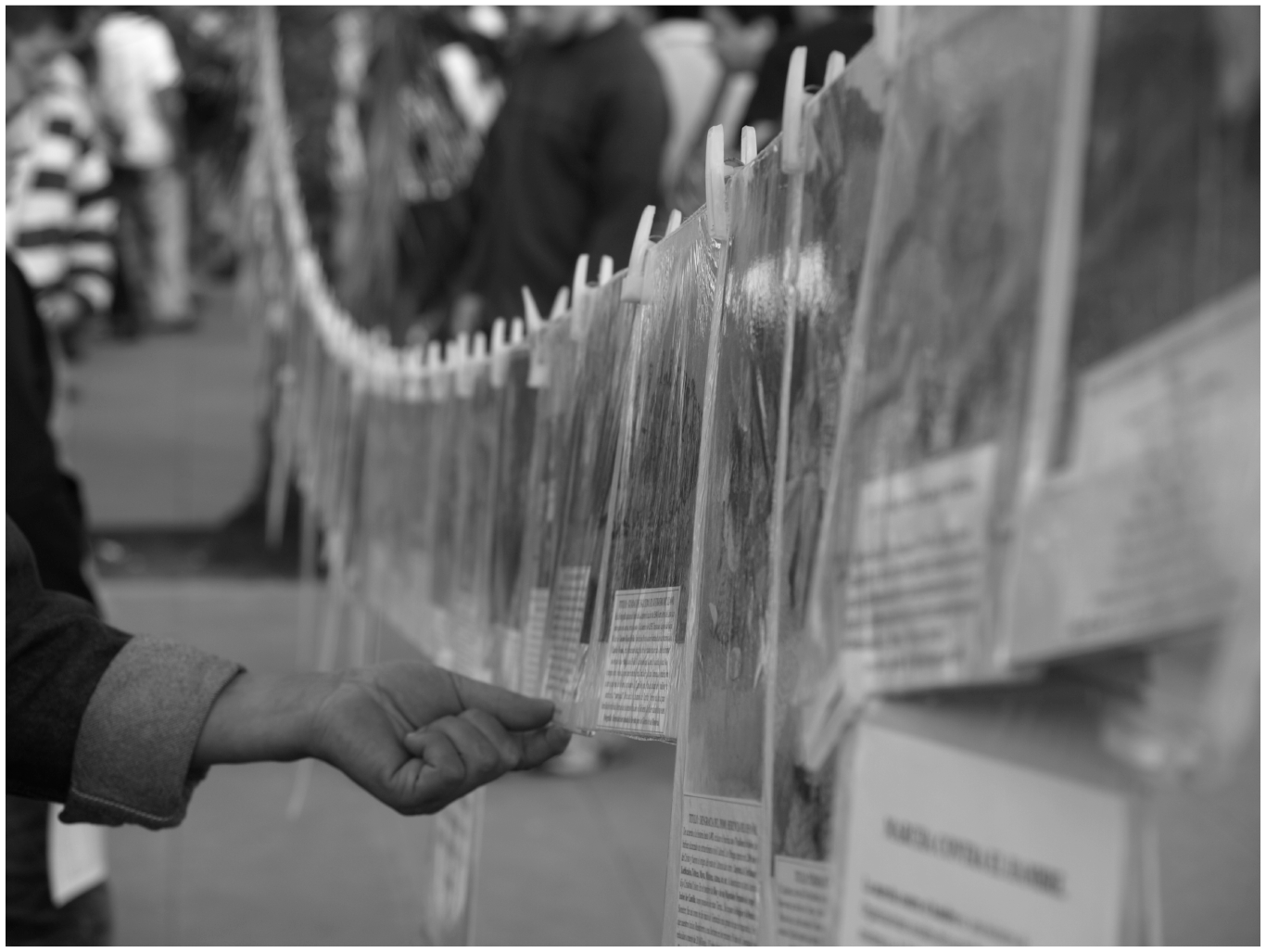
A woman walking in a public park in Bogotá stops to read a display telling the story of a victim of civil violence.
photos © Louis Edgar Esparza
Colombian National Police defend a plantation entrance against striking sugarcane workers in Valle del Cauca.
photos © Louis Edgar Esparza
Strike leaders from various plantations attend a strategy meeting in an unfinished room in Valle del Cauca.
photos © Louis Edgar Esparza
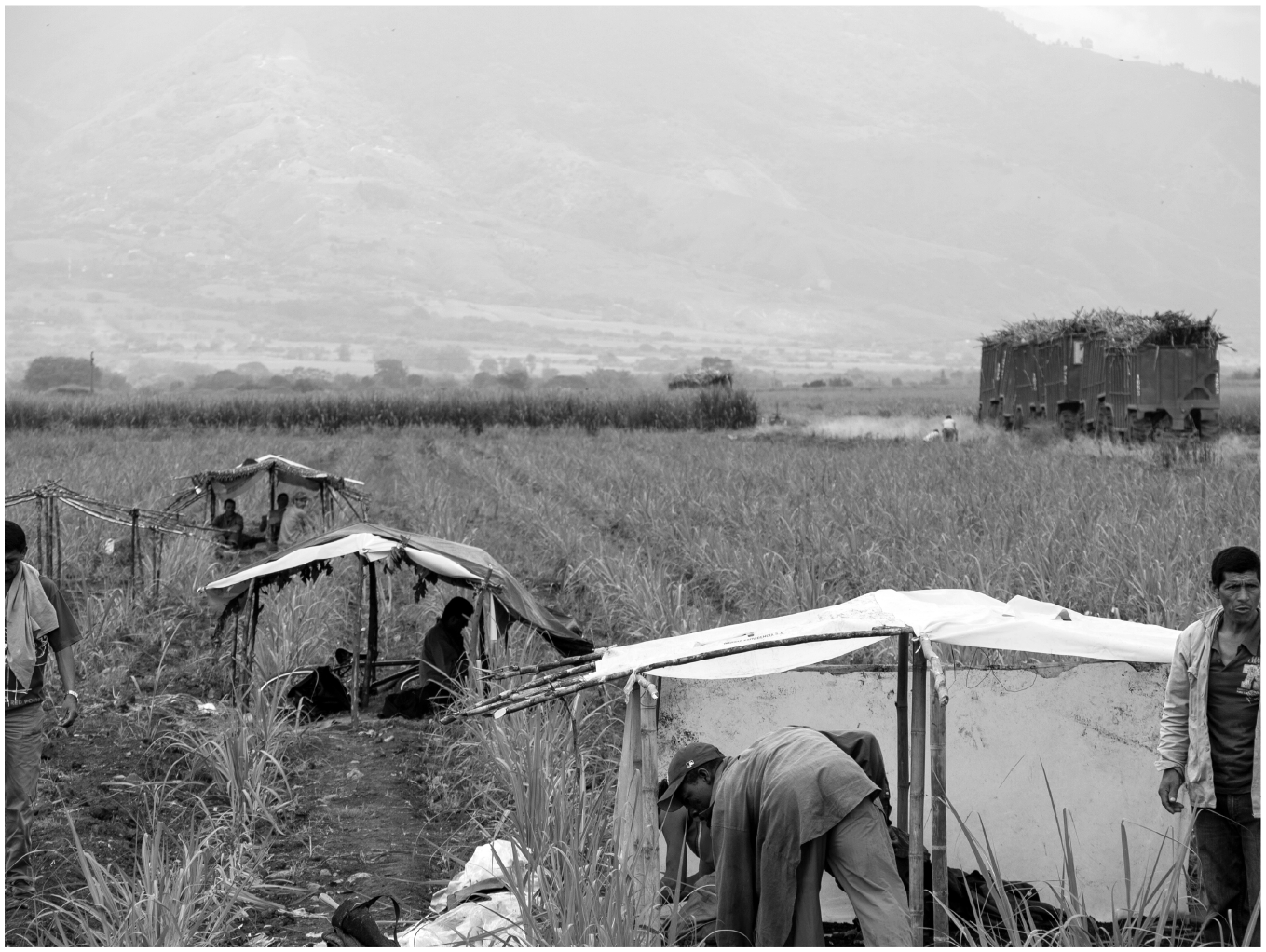
Striking workers settle into plantation property, taking their place under tarps.
photos © Louis Edgar Esparza
A sugarcane worker rides a bicycle on a dirt road between protest encampments in Valle del Cauca.
photos © Louis Edgar Esparza
Sugarcane workers meet on an occupied dirt road in Valle del Cauca.
photos © Louis Edgar Esparza