Abstract
Exploring the relationship between Mexico City’s citizens and police with photographer and professor Michael Sierra-Arévalo.
While the crisis of police legitimacy and public distrust continues in the United States, Mexico’s struggle with state corruption has reached unprecedented levels. Indeed, as tense as U.S. police-public relations are at the moment, the depth of dysfunction in Mexico makes the situation in the United States pale in comparison.
Though the U.S. experienced a spike in violence between 2015 and 2016, this short-lived increase was well below the highs of the early 1990s and is once again trending down, all while police continue to be one of the most trusted institutions in U.S. society, according to a 2018 Gallup poll. On the other hand, Mexico—despite reforms throughout the 2000s that took aim at police abuse, corruption, and ineffectiveness—is experiencing its highest murder rate in recorded history and local police are viewed as some of the most untrustworthy and corrupt legal agents in Mexican society.
This deep-seated distrust only compounds the difficulty of protecting Mexico City, a city of some 8.9 million spread across more than 570 square miles—more people than in New York City in an area larger than Los Angeles. To patrol this megalopolis, the Secretariat of Public Security (Secretaría de Seguridad Pública) oversees nearly 90,000 uniformed officers across 5 zones, 15 regions, 72 sectors, and 847 quadrants.
In contrast to the Preventive Police tasked with responding to citizens’ calls for service, the Metropolitan Police are not tied to a particular area of Mexico City. Instead, they operate across the breadth of Mexico City and serve a mixture of reactive, proactive, and order maintenance functions. Over the course of a 24-hour shift, a Metro officer might rescue flood victims, provide crowd control at a parade, or breach a house to disrupt narcotrafficking activity.
More commonplace—and more damaging to police legitimacy—are the proactive stops and searches of citizens, similar to “stop-and-frisk” policing in the United States. It is in the course of such proactive policing that one finds the limits of contemporary reform. Though Mexican law stipulates that all citizens should be secure in their persons and property barring a judge’s order or evidence of a “serious crime,” Metro officers looking for drugs and weapons frequently stop and search citizens based on the thinnest of justifications.
In the U.S., such “pretextual” stops disproportionately affect minority communities and are often portrayed by police as a color-blind response to low-level traffic or quality-of-life infractions (e.g., not signaling before a lane change, jaywalking). Metro officers, on the other hand, freely describe how they profile Mexican citizens based on demographics and geography in their search for drugs and weapons.
Young men are the primary targets of such stops, especially if riding together in a vehicle. These stops are justified on the grounds of groups of men being the perpetrators of drive-by shootings tied to the drug trade or gang activity. However, traveling alone is no protection from police contact; young men on motorcycles or mopeds are also stopped on the premise that they could be drug couriers.
Location is also a key indicator of potential criminality. Akin to the “hot spots” or “high crime areas” in the United States, proximity to a “punto rojo” or “red spot” is a frequently cited reason for stopping drivers and pedestrians. Because the police can draw on any number of unquestioned logics to explain a given stop, the specifics of what a citizen is doing at the time are largely irrelevant. So long as they are a young male in a poor part of Mexico City, it does not matter if they are driving a car, riding a moped, walking, sitting, or playing handball in a public court—all are subject to being stopped and searched. As in the U.S., these policing tactics alienate the public from police, increasing cynicism and damaging police legitimacy that is the foundation on which trust and cooperation are built.
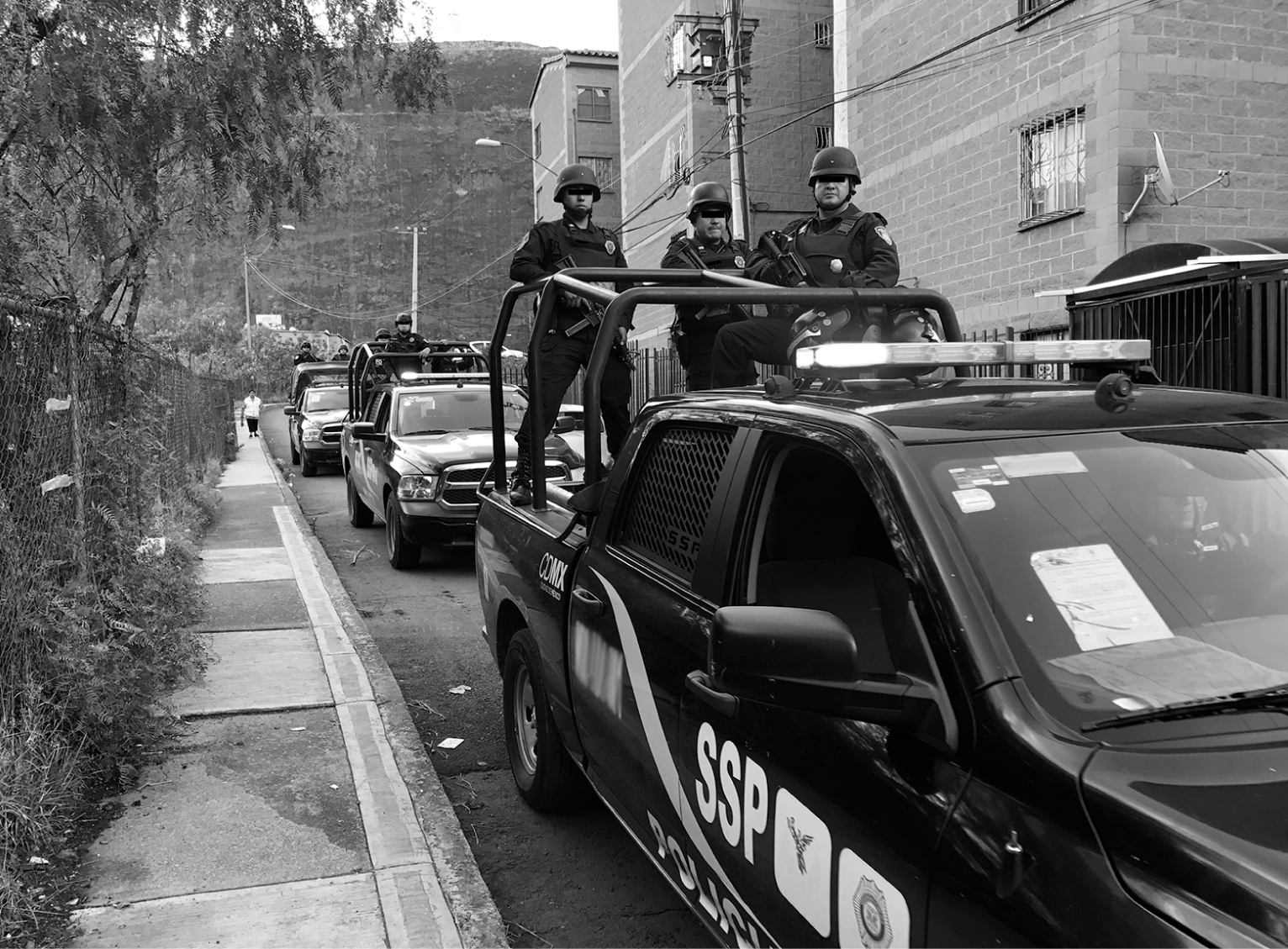
“Convoy,” Colonia El Paraíso, Iztapalapa, Mexico City. As a means to protect officers from potential ambush, proactive patrols sometimes operate in convoys such as this one, especially if the neighborhood is poor or characterized by high crime rates. Unlike the Preventive Police that answer calls for service, Metropolitan officers’ standard armament includes rifles and ballistic helmets. In addition to providing for officer safety, this clear show of force tinges requests for consent to search one’s person or vehicle with an implicit “or else.”
Michael Sierra-Arevalo
Against the backdrop of growing inequality and the persistent insecurity that perpetuates such intrusions on liberty, the 2018 election of López Obrador to Mexico’s presidency prompted some hope of meaningful social and police reform. Unfortunately, López Obrador’s early promises of dedicating resources into social services and education have instead materialized as a renewed commitment to military-based solutions to cartel violence, including the recent formation of a militarized police force called the “National Guard.” Combined with the limited success of past reforms, rising bloodshed and continued police violence should temper expectations of meaningful changes to street-level policing, especially if reforms continue to ignore local police operations in favor of the “manic creation and disappearance of agencies” at the federal level. Without a change to the legitimacy-damaging practices of street-level officers like those in Mexico City, any returns to public safety born of such aggressive and poorly focused tactics are likely to be overshadowed by commensurate increases in public distrust, anger, and fear.
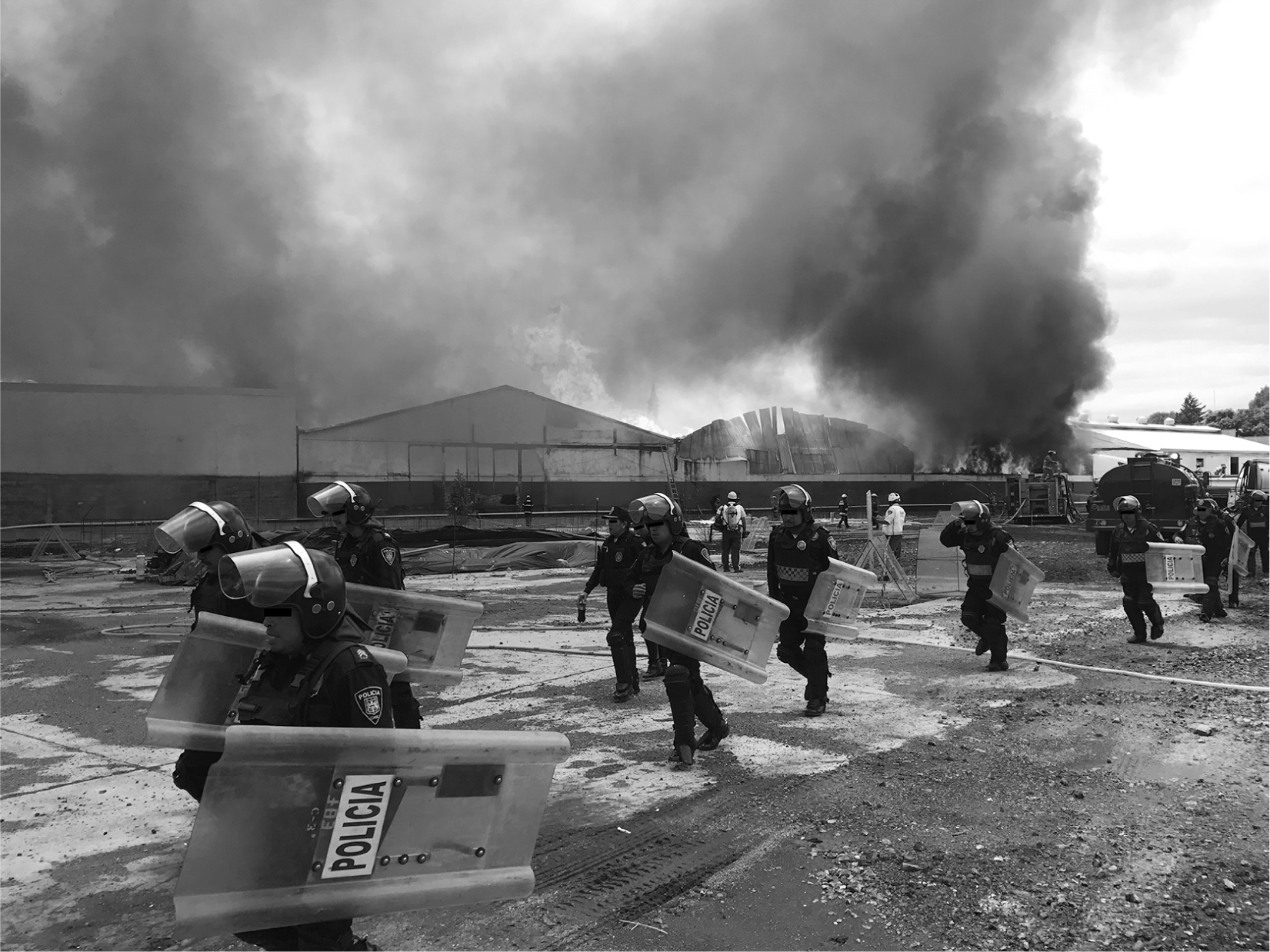
“Forming a Perimeter,” Granjas México, Iztacalco, Mexico City. Metropolitan officers race to form a perimeter around the site of an explosion at a liquor distillery. A few days later, officers rescued citizens stranded by flash floods. In September 2017, they looked for survivors amidst the rubble after a massive earthquake that killed more than 200 in Mexico City alone.
Michael Sierra-Arevalo
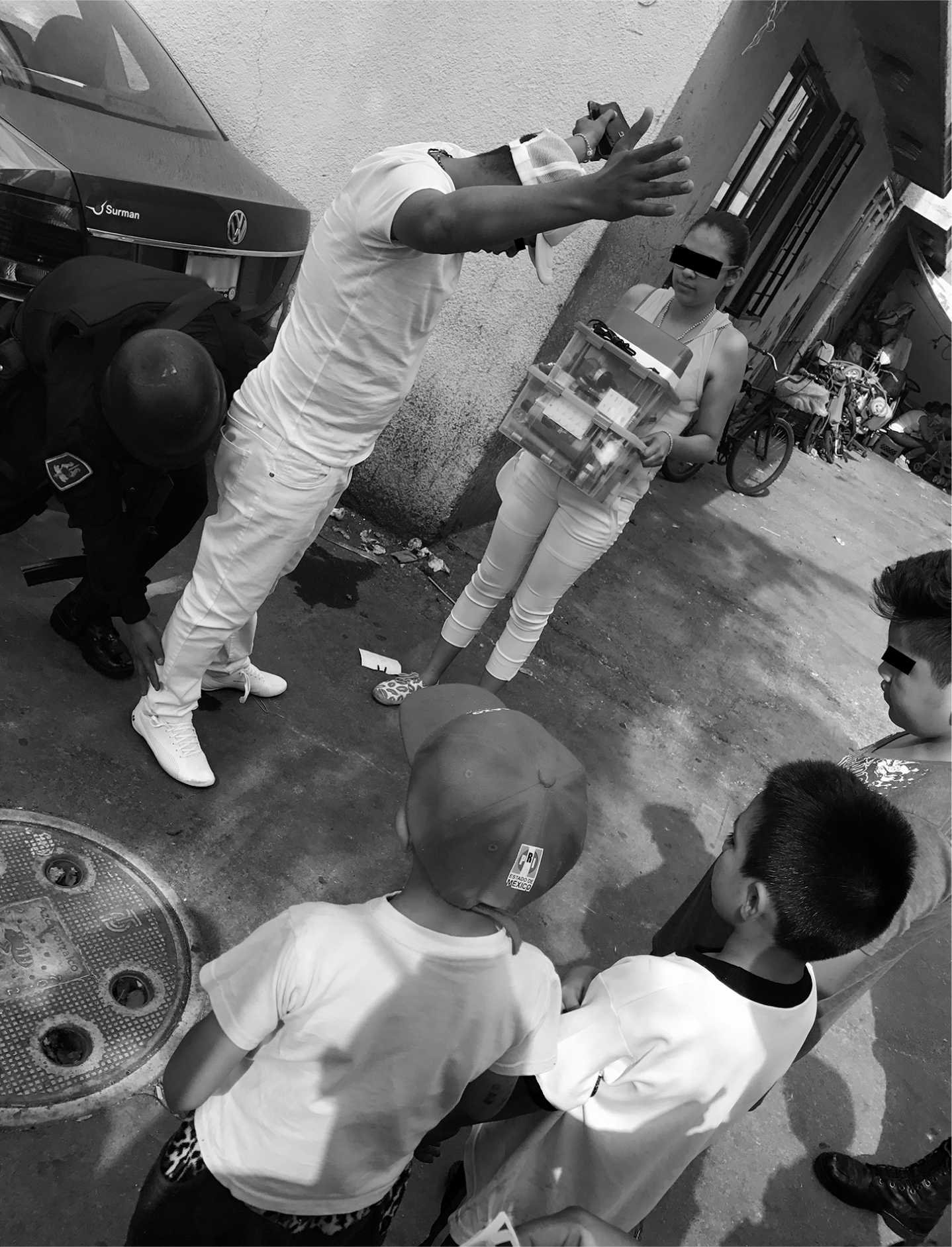
“Punto Rojo,” Reynosa Tamaulipas, Azcapotzalco, Mexico City. Neighbors and local children watch as officers stop, detain, and search a man who was on his cell phone near a “punto rojo”—literally, red point or red dot—that officers claim is a site for narcotics sales. As with most of these largely unjustified searches, nothing was found. Nonetheless, children learn that police can and do stop their friends and family with little or no justification; in time, they will likely be the targets of such stops, themselves.
Michael Sierra-Arevalo
“Search and Discretion,” Cinco de Mayo, Mexico City. This stop and search of a pedestrian netted a wad of paper soaked in “solvente,” or a solvent. When inhaled, the fumes of such solvents can cause drowsiness, euphoria, and light-headedness. As in other contexts, Metropolitan police officers exercise a great deal of discretion in where, when, and how they enforce the law. This man was released without arrest or citation because possession of these chemicals, unlike possession of more serious narcotics or a firearm, is only a civil infraction.
Michael Sierra-Arevalo
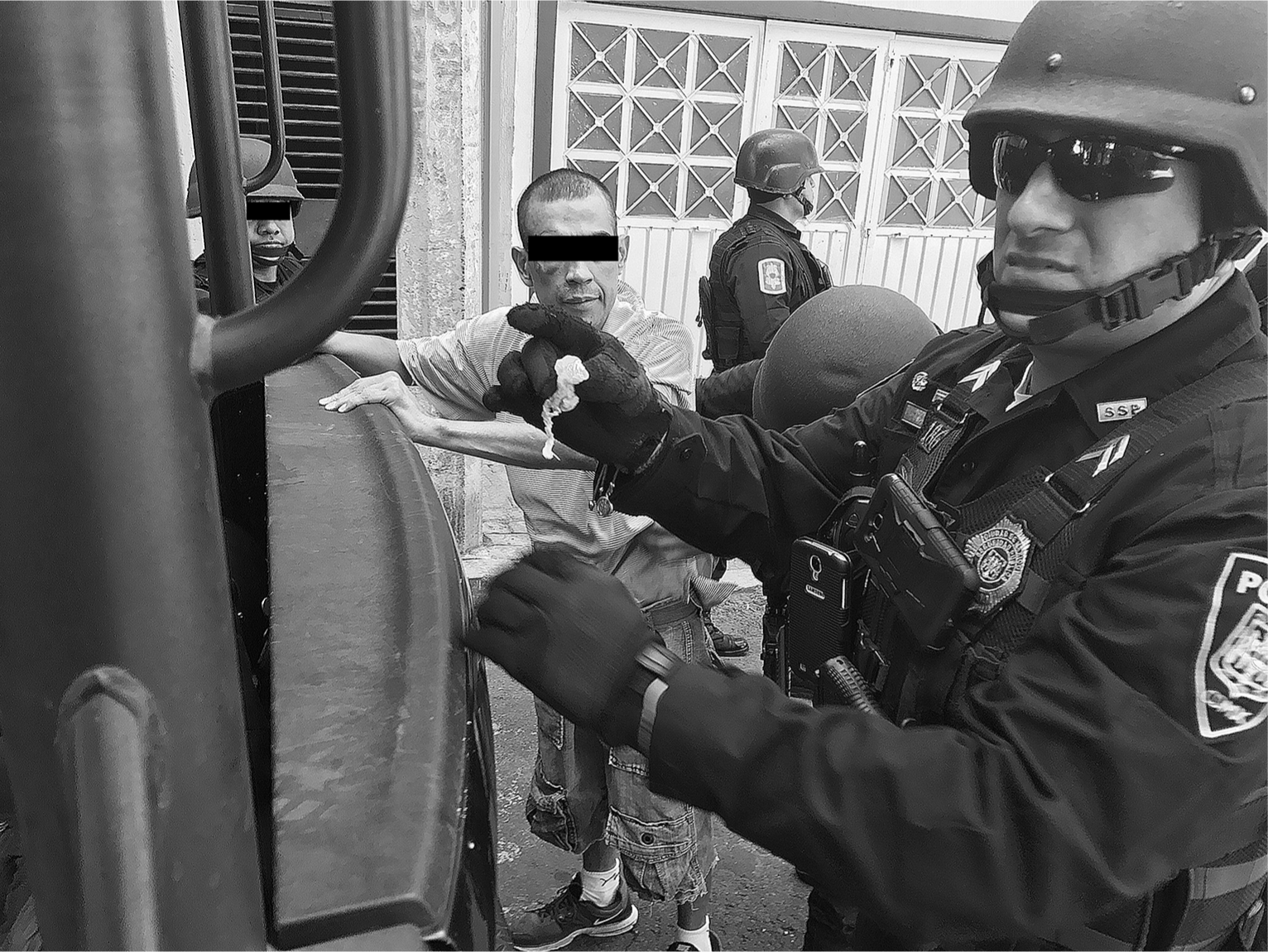
“Force,” San Juan de Aragón, Gustavo A. Madero, Manuel Hidalgo, Mexico City. Officers stopped a car that was driving erratically at a high rate of speed. After exiting the stopped vehicle, this young man pulled away from the officers who were attempting to search him. These officers jumped in to restrain him. Eventually, he was found to have an illegal firearm in his possession.
Michael Sierra-Arevalo
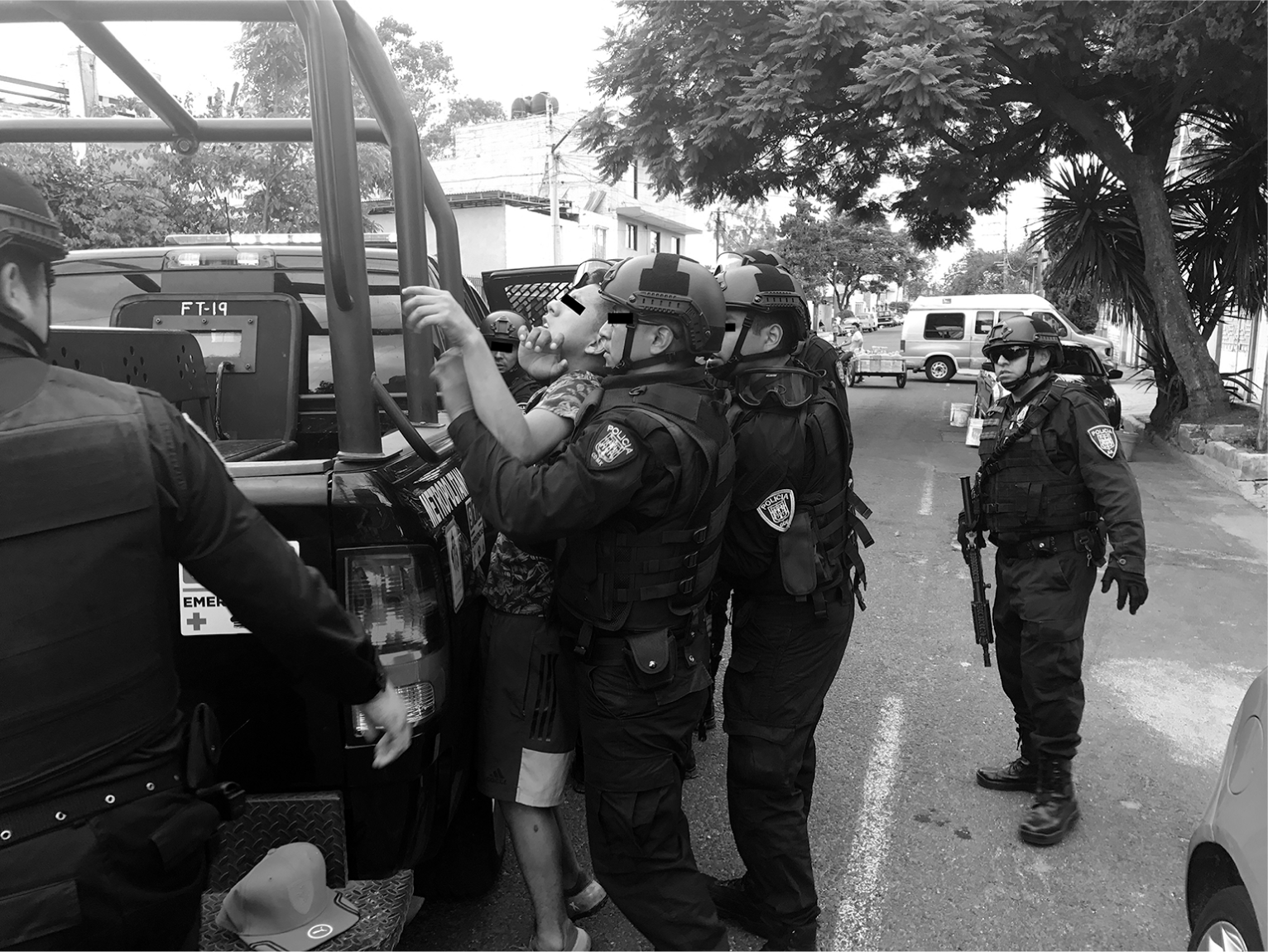
“Stolen Weapon,” San Juan de Aragón, Gustavo A. Madero, Mexico City. This Walther P99 semi-automatic pistol was found by police following the stop and brief struggle with the driver pictured above. Though Mexican law guarantees citizens the right to own firearms, a lack of gun stores (Mexico has only one state-run vendor) and steep bureaucratic barriers keep citizens from getting authorization to carry a concealed weapon. Nonetheless, robust black markets supplied by the illegal flow of firearms from the United States ensure the persistence of Mexican gun violence.
Michael Sierra-Arevalo
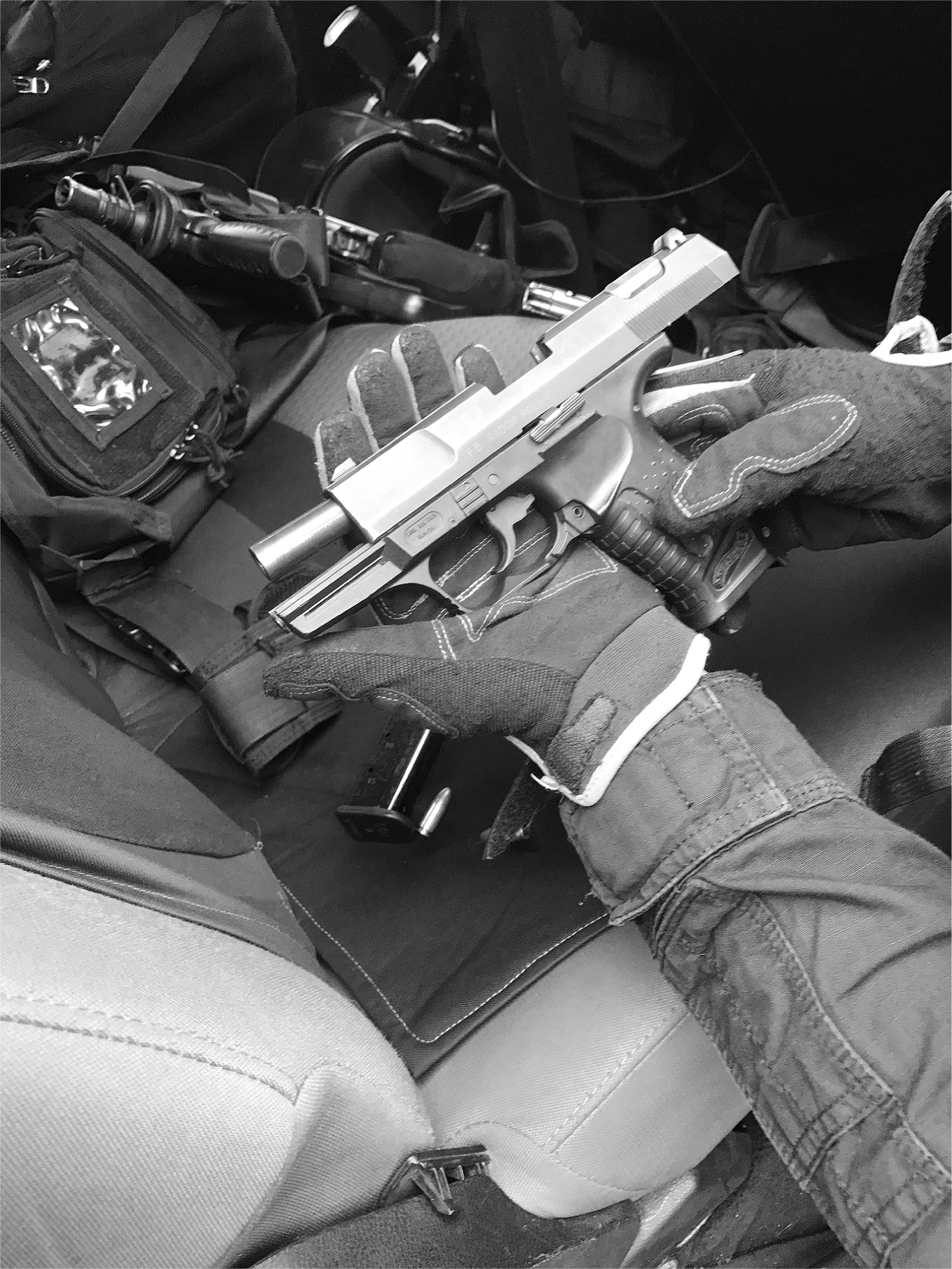
“Occupying Force,” Anáhuac, Miguel Hidalgo, Mexico City. These officers are part of Zorros (Foxes), an elite unit within the Metropolitan Police that receives specialized training in hostage rescue, bomb diffusion, anti-terrorism, and more. Despite their skillset and more marked militarization, Zorros are sometimes sent alongside less specialized Metropolitan officers to assist in routine enforcement activities, such as the search for a robbery suspect occurring in this residential building.
Michael Sierra-Arevalo
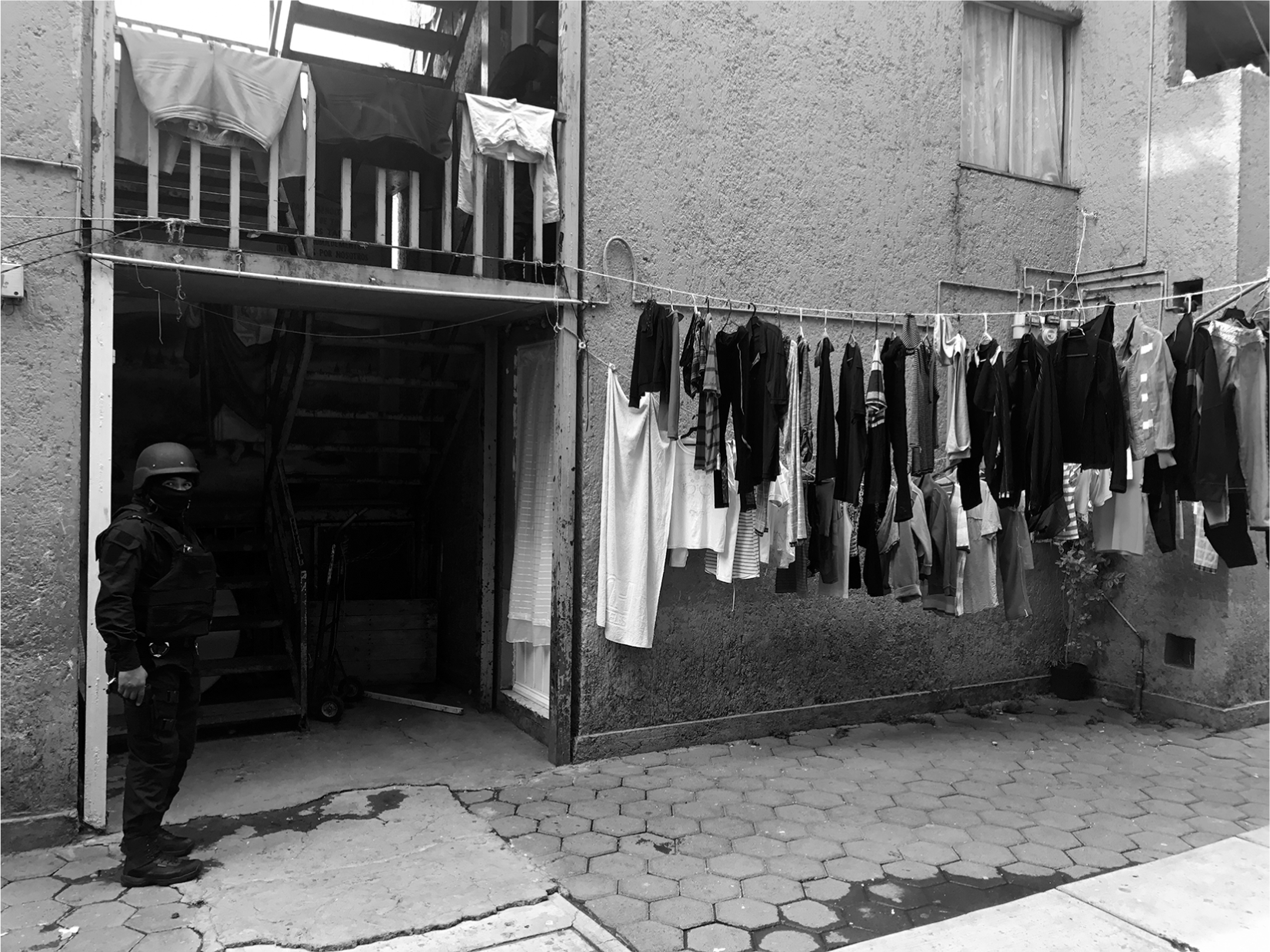
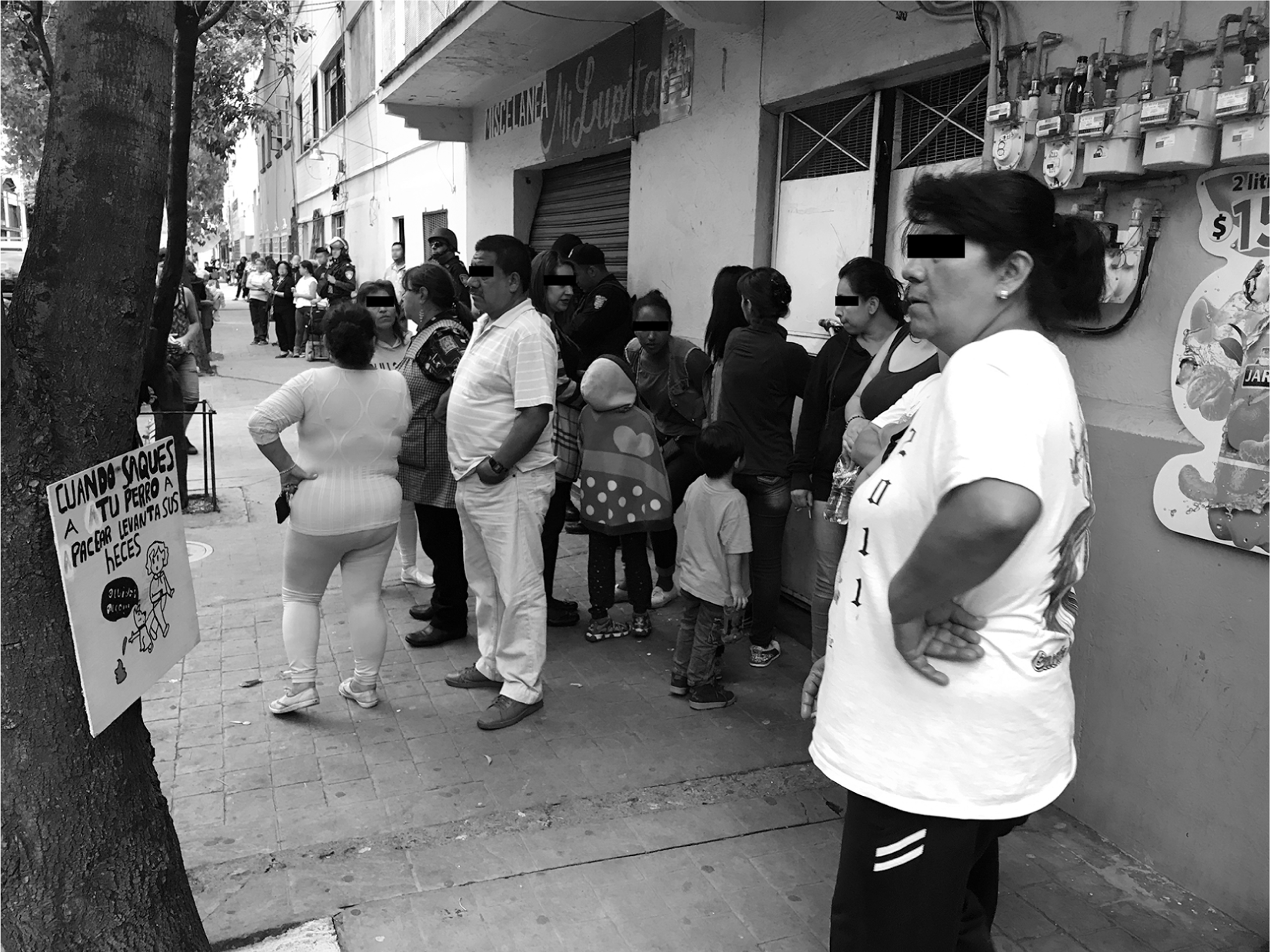
“Onlookers,” Anáhuac, Miguel Hidalgo, Mexico City. Community members watch as dozens of officers stream into residential buildings in search of a robbery suspect. Explanations are rarely given to citizens for why police take the actions they do, leaving citizens to watch as police arrive, detain, search, and then leave without a word. This, in turn, contributes to distrust in a police force that is seen as illegitimate, corrupt, and predatory.
Michael Sierra-Arevalo
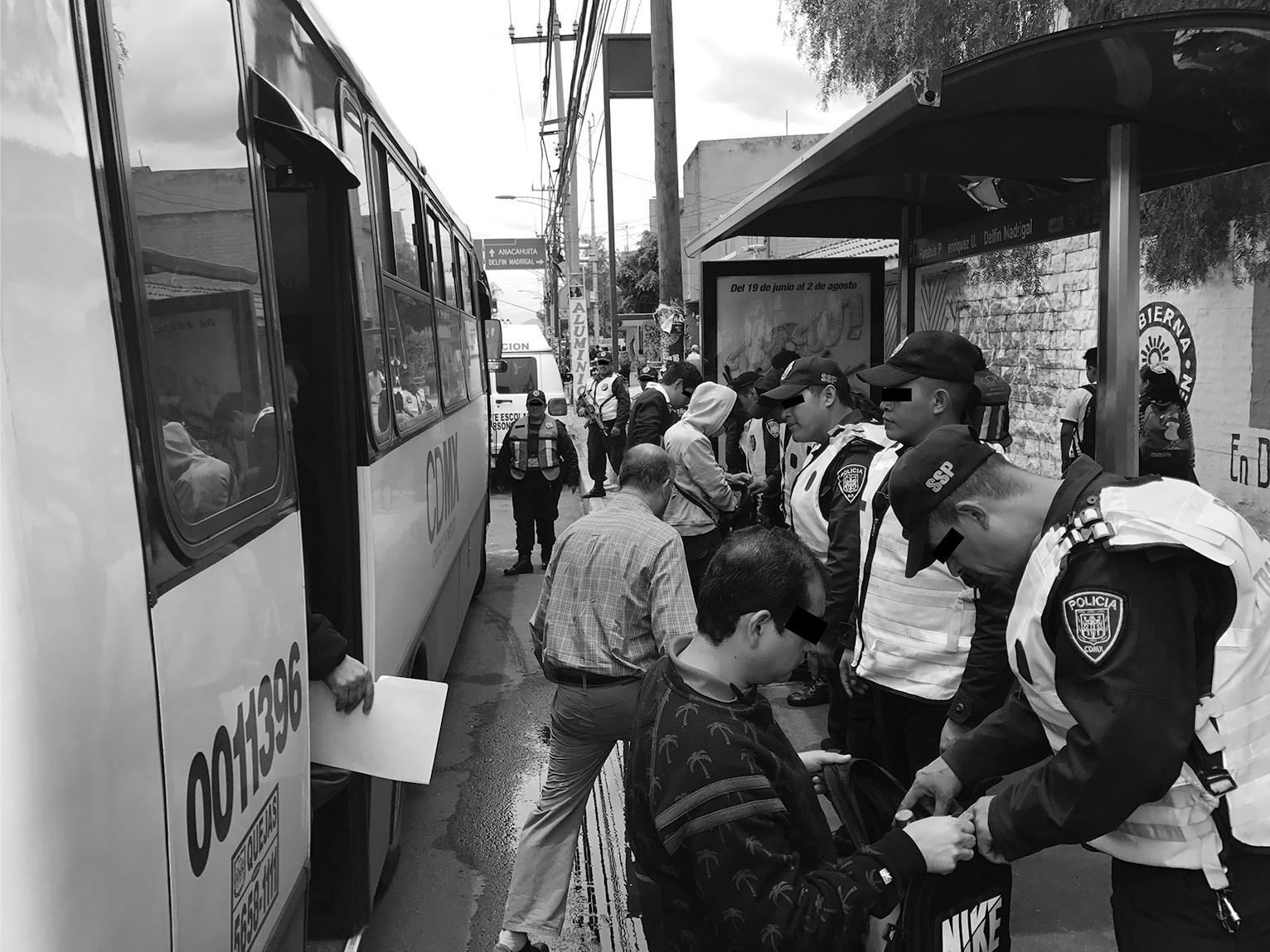
“Mass Search,” Pedregal de Santo Domingo, Coyoacán, Mexico City. As a subdivision of the Metropolitan Police, the Transit Police are responsible for traffic safety and enforcement. Additionally, they perform stops and searches of passengers on public transit, such as this public bus. As with stops of pedestrians and private vehicles, men are the main focus of these stops; however, female officers are sent onto buses to search female passengers.
Michael Sierra-Arevalo
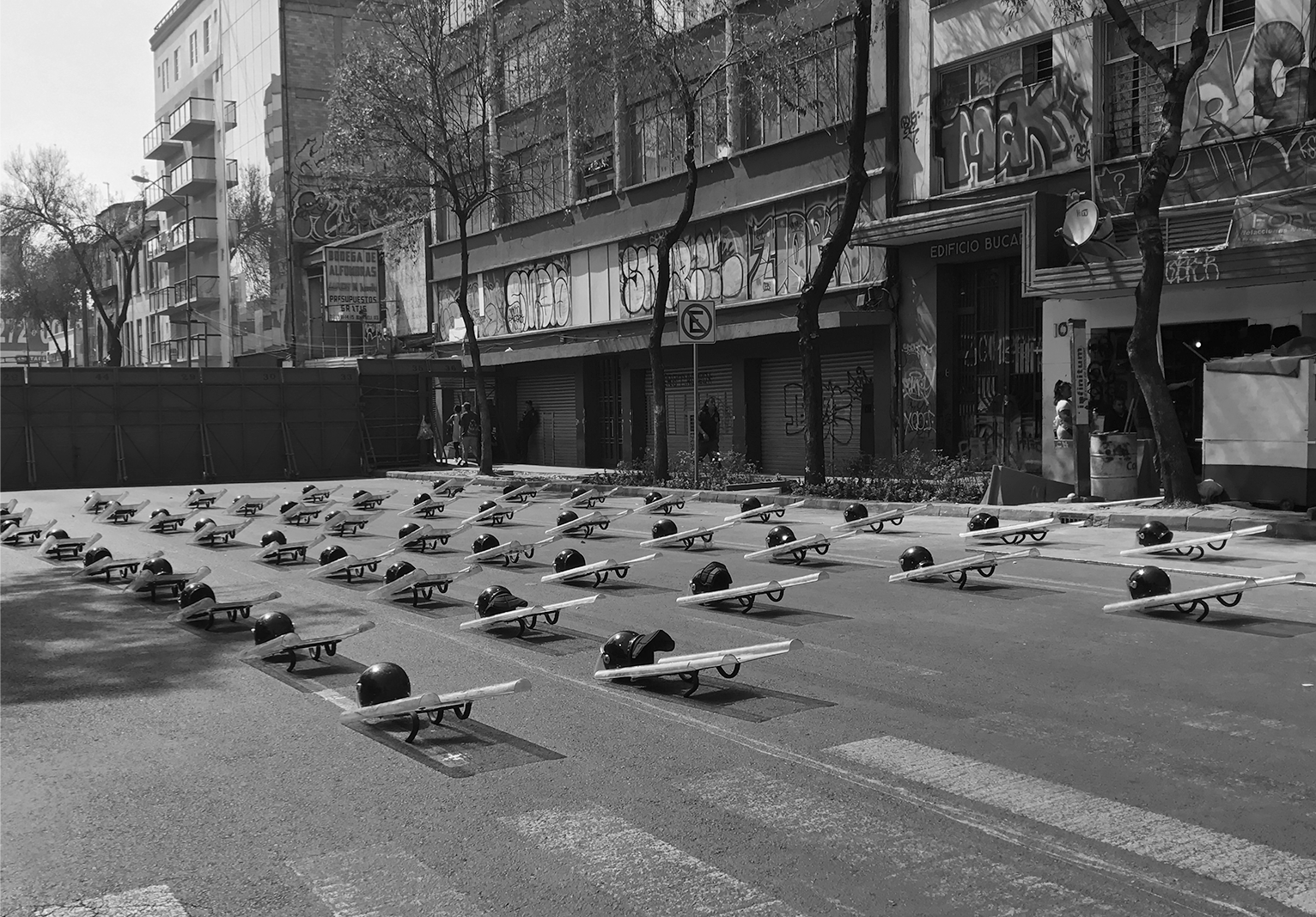
“Preparing for Protest,” Juárez, Cuahtemoc, Mexico City. Mexico City is the center of economic and political power in Mexico. As a result, it is also the site of frequent and varied protests against state corruption, state violence, economic inequality, and social injustice. Pictured above are rows of riot shields and helmets laid out in advance of protests near the Secretariat of Governance (Secretaría de Gobernación).
Michael Sierra-Arevalo
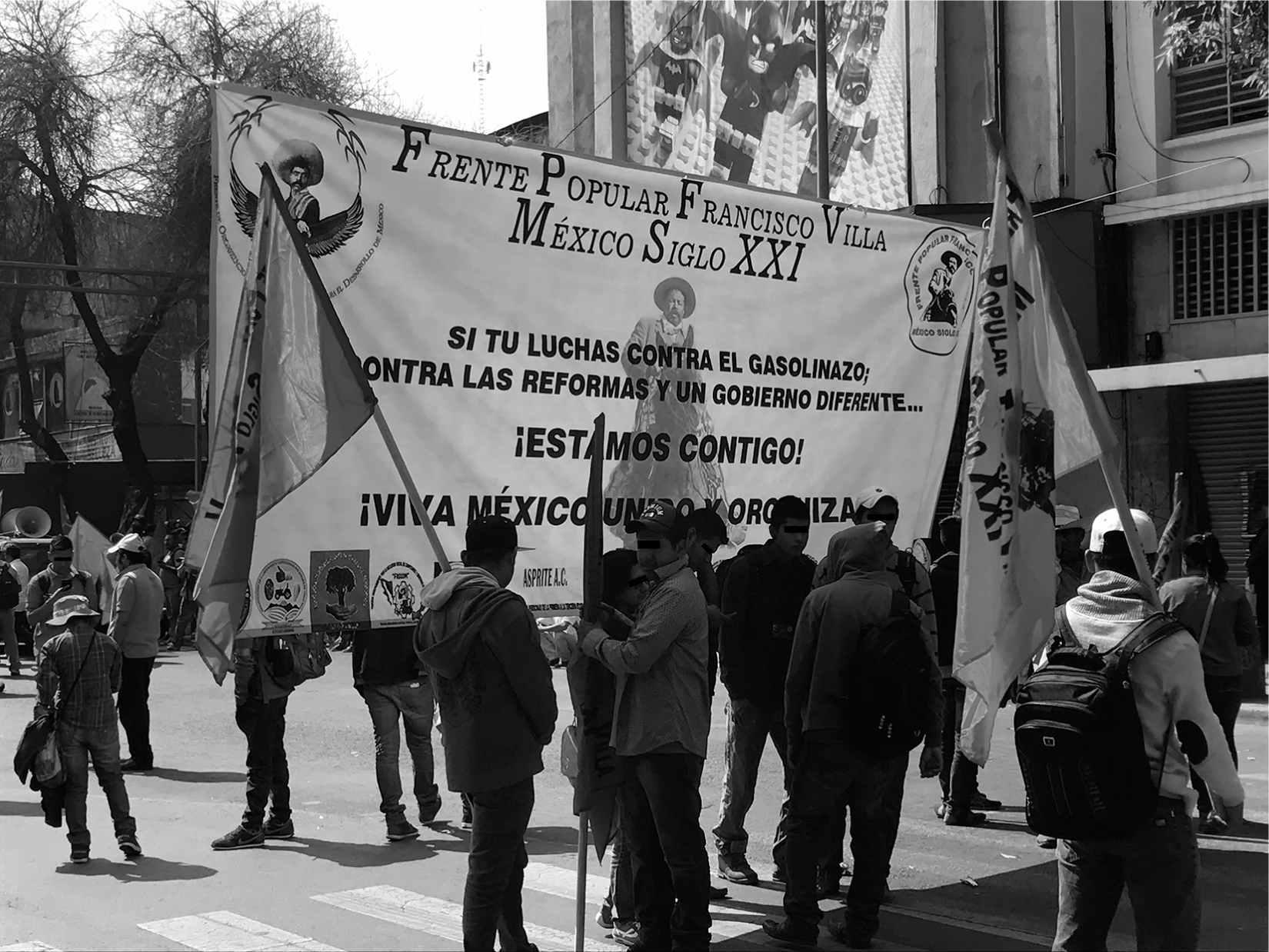
“Protestors,” Juárez, Cuahtemoc, Mexico City. Stationed a few blocks away from the Secretariat of Governance, this group is one of several that protested on a single day in Mexico City. They are part of a group called the Francisco Villa Popular Front, a communist group named after the famous Mexican revolutionary more commonly known as “Pancho” Villa. This banner takes specific aim at the gasolinazo, a sharp increase in gasoline prices after the privatization of oil under former President Enrique Peña Nieto in 2017. More generally, these and other protestors take aim at government corruption and pervasive poverty in Mexico.
Michael Sierra-Arevalo