Objectively, adulthood in the United States is a life stage that begins at the age of 18. There is no ambiguity about how the federal government defines it. Legal adults can vote, join the military without parental consent, and garner additional rights and privileges depending on an individual’s state of residence.
Turning to more subjective conceptualizations of adulthood, sociologists have explored the markers of independence that the dominant culture prescribes as necessary to check all the boxes for becoming a “real adult,” namely: completing education, establishing financial independence, moving out of parents’ home, working full time, and getting married. Recently, shifting expectations about partnerships and families, changing ideas about gender roles, mounting standards for professional credentials, and constrained financial climates have required more flexibility in how we think of the milestones that constitute the making of a legitimate grown-up.
Despite knowing whether or when someone completes the items on the checklist, it is difficult to articulate when someone actually feels like an adult, particularly as it can vary substantially from person to person. Narrated experiences of particular ages, and how we manage others’ perceptions of our age, are underexplored.
I, Alicia, collaborated with a small group of undergraduate students, all of whom are co-authors of this piece, on a project to explore this idea. Serving as both the researchers and the subjects, we used visual and narrative methods to engage in sociological storytelling about the challenges and tensions that come up in emerging adulthood, the liminal space between adolescence and “real” adulthood, and how, when, and why we “feel our age.” More specifically, we used a hybrid methodology, merging elements of Photovoice with collaborative autoethnography in an effort to answer questions such as: How do adults consciously and unconsciously represent their ages in day-to-day life? What enables us to feel like adults?
Importantly, being 18-22 in the wake of a global pandemic affected how Sunny, Dakota, Izze, Jonah, and Charlie navigated the world as college students and newly minted legal adults all living away from their parents for the first time. Their millennial professor faced similar and different challenges as a 30-something adult who, despite being a legitimate adult in the eyes of others, continues to feel, at times, like she is playing a grown-up on TV.
Public health scholar Seth J. Schwartz describes emerging adulthood as a key turning point in a person’s life that may, for many, have “two faces.” As he wrote in 2016, it is “simultaneously a time of great optimism but also great uncertainty.”
We students, along with our professor, took photos of our daily lives for three weeks in an attempt to better understand our own experiences as young adults in 2024. We are toe-to-toe with the many faces that materialize at the cusp of adulthood. Despite fitting the technical definition, in many ways we do not fit the archetype of a “real” adult; instead, it can feel like we occupy an uncomfortable transition state that precedes adulthood. This emerging adulthood has been made more complicated by the pandemic, when social isolation, an unstable economy, shifts in how we engage with the social world, and heightened technology use affected how we understood ourselves and presented our positionalities to the world. Independence was often enforced via isolating from others to contain germs. Simultaneously, our sense of independence was complicated by constant contact with parents via texting and FaceTime, reliance on others for transportation, and dependence on “real adults” for financial support. It was difficult to carve out a sense of self as young adults when we could not always collaborate in-person on this highly individualized yet shared identity project. All of us students are members of Gen Z, and we have found ourselves simultaneously embracing and benefiting from the growing ubiquity of technology in our day-to-day lives. Our generation derives pride from its forward-thinking, progressive collective consciousness, yet, at times, we have yearned for aspects of social life that proliferated in an off-screen past.
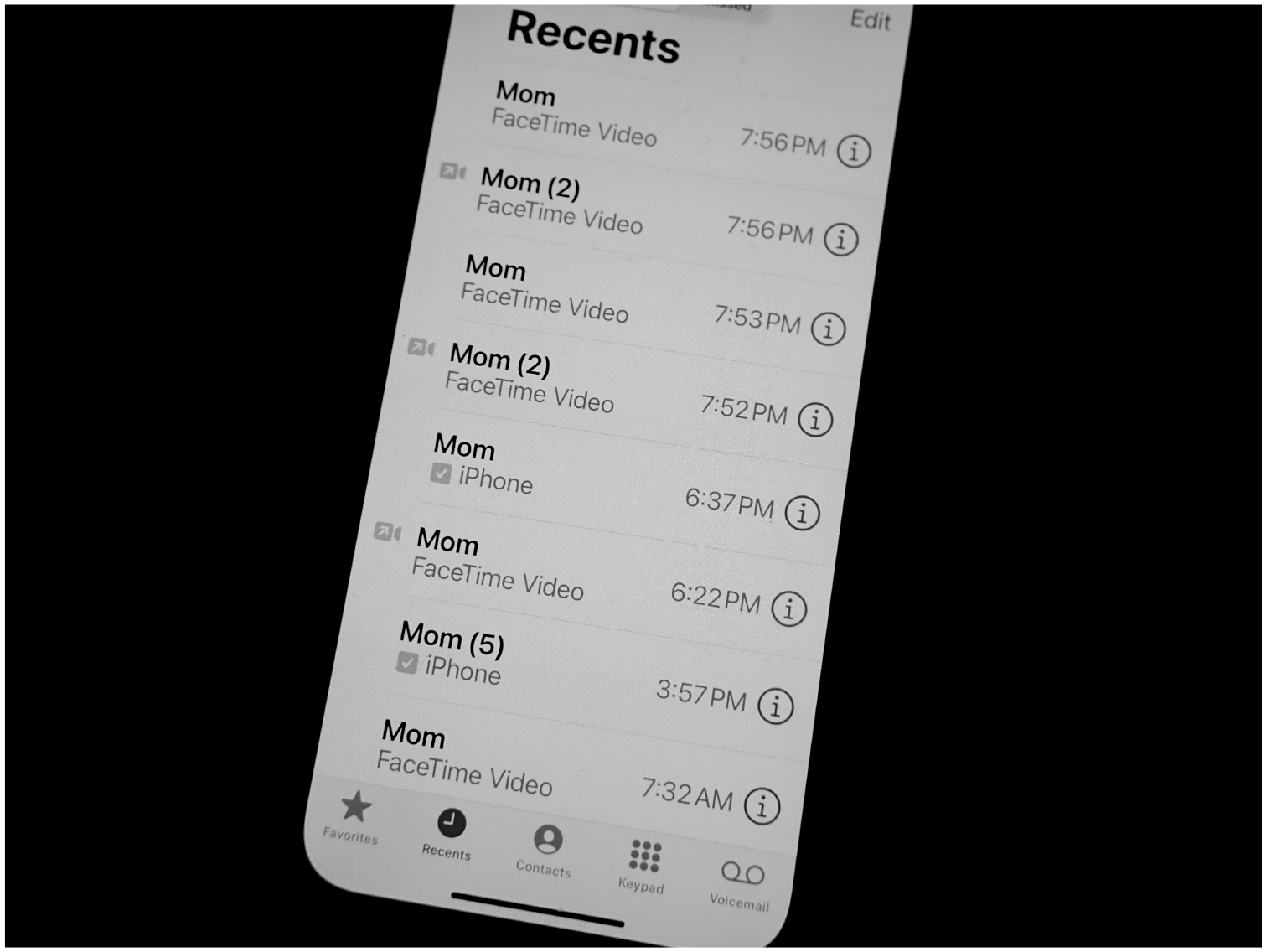
Calling Mom: The photo shows my recent calls, all of which are calls to my mom. I chose this photo because I feel like the frequency with which I call my mom is not indicative of being a “real” adult. Sometimes, I call my mom to seek parental guidance, but I more often call because I enjoy talking to her. It feels like talking to a close friend. No matter the reason, our many calls make me feel like I’m not an adult, because adulthood is often associated with independence from parents. Dakota
At different times throughout the study, each of us had our own “a-ha” moment when we realized that our individual insecurity about our sense of belonging in adulthood was felt by all of us, the Millennial first author included. Adulthood is idealized as the first life stage in which one is entirely self-reliant, but often that’s not possible in the context of a highly individualistic society in which structural barriers make things like car ownership, rent affordability, and professional development opportunities feel impossible to attain without privilege and instrumental social support. Viewing each other’s images and engaging in dialogue about our lives as emerging adults peeking out from the shadows of the pandemic, allowed us to see the shared inconsistencies and uncertainties characteristic of Gen Z’s young adulthood in new ways. While the embodied experience of emerging adulthood is difficult to capture, our images provide small glimpses of what this life stage is like for our collective, navigating an exciting and anxiety-inducing period of growth and tribulation.
Childhood Homes: I stayed with my boyfriend at his childhood home for a weekend, and it made me feel like an adult and a child all at once. I met his parents for the first time, which felt like a uniquely “adult” relationship milestone. But I also felt nervous about pleasing them, and I slept in a bedroom with relics from my boyfriend’s childhood. We hung out in the basement like little kids, and his parents took us out for dinner, but his parents also treated us as equals. It was a very dissonant experience. Charlie
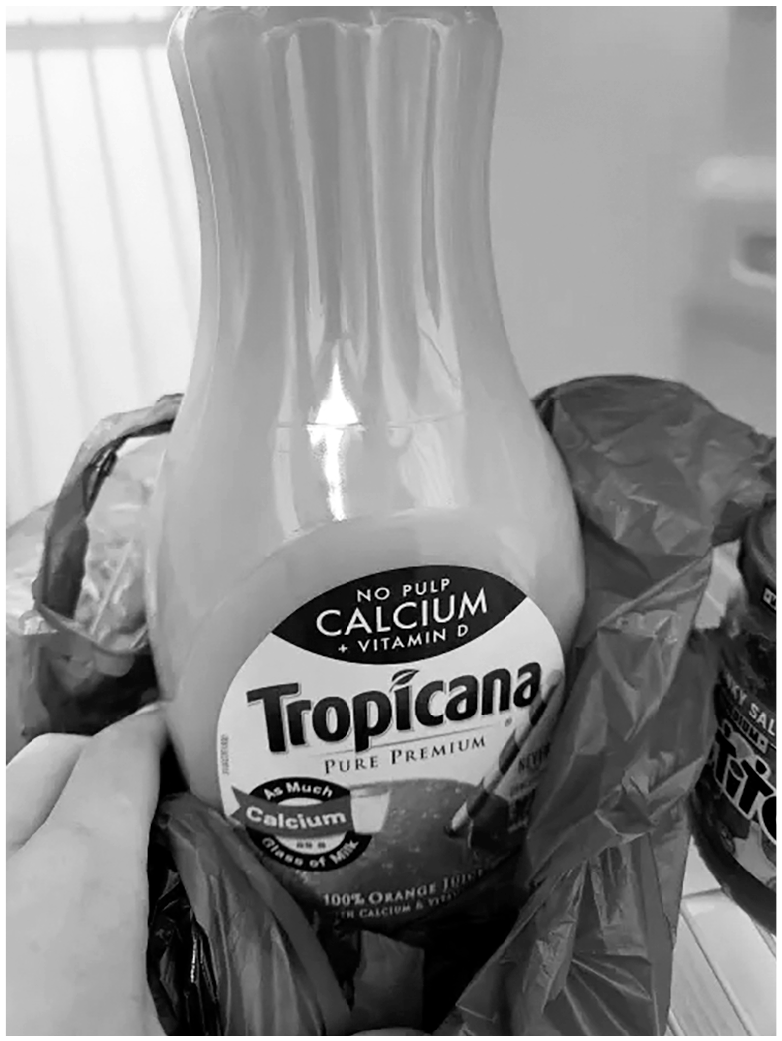
Groceries: This is a picture of some groceries I bought from IGA, a store right up the road from campus. These are actually some of the first groceries I had bought for myself with the money I earned from my job. I felt like this instance showed an increasing financial independence from my parents. While I was shopping, I found myself incorporating many tactics that I noticed my mom use, including hunting for deals and on-sale items to get the most out of my money. I was successful in my efforts, scoring a solid amount of groceries for under $20. This made me feel like an actual adult. I find it interesting that the act of consumerism feels so intrinsic to adulthood and that the ability to spend money responsibly has become a litmus test for maturity. It shows the value that we have placed on money, as well the neoliberal ideals of responsibility and independence. Sunny
Dining Hall: This photo was taken in a campus dining hall. I chose this image because cooking meals is one thing I associate with adulthood. Although not all adults cook for themselves and young children can learn to cook, I think frequently preparing meals for yourself can be a sign of increased independence and maturity, characteristics traditionally associated with being a “good” adult. However, while at college, I do not cook meals; instead, I get my food from the dining halls. The routine of obtaining food in these spaces, rather than engaging in the act of cooking, contrasts with stereotypical adult responsibilities. Even when I’m at home, I rarely cook my meals. My meals are, instead, cooked by the “real” adults in my family, making me feel like I am not an adult after all. Dakota
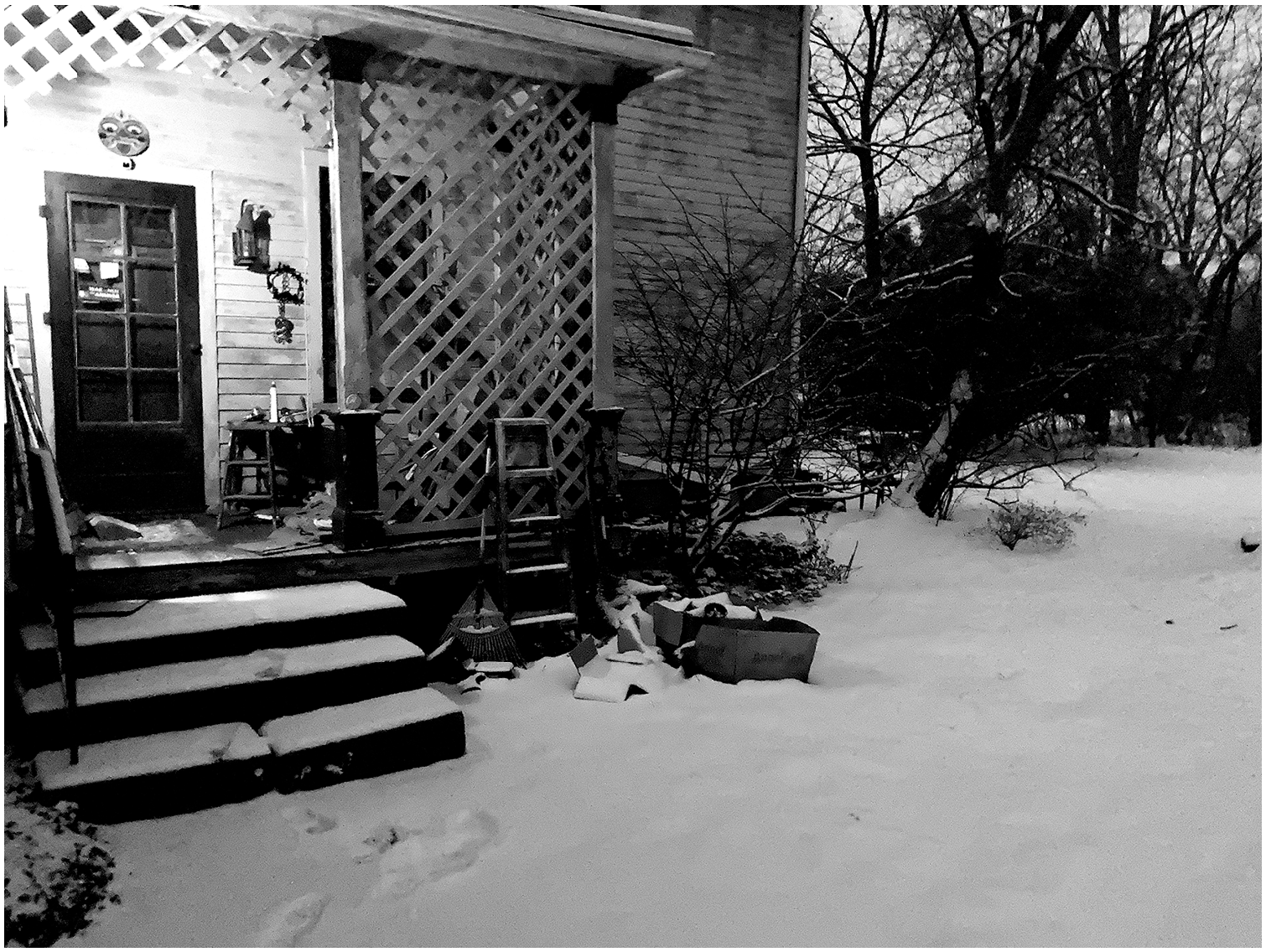
Do We Have a Shovel? This photo is was taken this morning, though I planned it out yesterday. My roommate and I live in one of several units in a big house, and we have no idea whose responsibility it is to shovel the driveway. I said I’d check the lease but haven’t yet. Neither of us owns a car, and as of now I think only one of our neighbors has one, so driveway access isn’t necessarily critical. Still, we should probably get a better clue about what’s going on, and I was painfully reminded this morning that wading through unshoveled snow isn’t the best way to start your day. Jonah
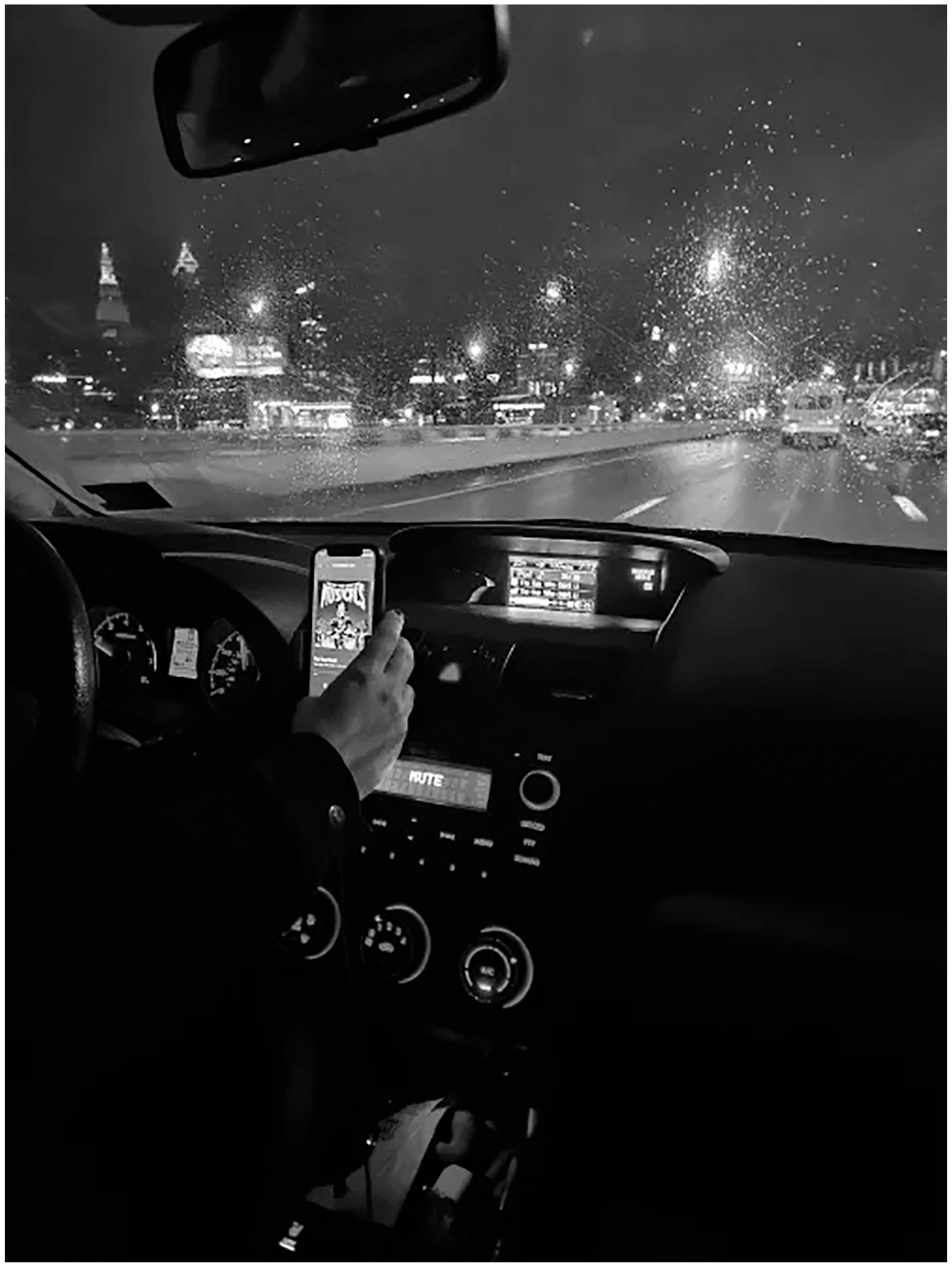
Passenger Seat: This is a picture I took while a friend of mine helped me make the commute from Oberlin to Cleveland, Ohio. What first inspired me to take the photo was how attractive the city lights looked in the dark. One major source of shame throughout my junior/senior year of high school was the fact that I could not drive. It made me feel alienated and less mature than my peers, even though my reasons for waiting to learn were related to the costs and hassle of driving to school. Even though I now have a driver’s permit, I only had limited time to practice driving over the summer, meaning that I have to depend on others for big commutes. While no longer a visceral source of embarrassment, this does not make me feel like an independent adult. My feelings show how much driving has become a “coming of age” symbol within our culture. The ability to transport yourself is a hallmark of being independent, and because of our car-centric infrastructure, a driver’s license is necessary. If public transportation was more available, it would save me a lot of stress, embarrassment, and maybe even some money. Sunny
Ice: My friends and I walked on the frozen-over reservoir together. Sliding around in our big winter coats made us feel like curious little kids. I felt like in the future, when I’m a real adult, I won’t be able to do things like this in the middle of a weekday with my friends. There was a family on the ice, too—a man, a woman, a little girl, and a dog. I wondered if the only way for adults to reclaim childhood wonder is to have a child of their own. Charlie
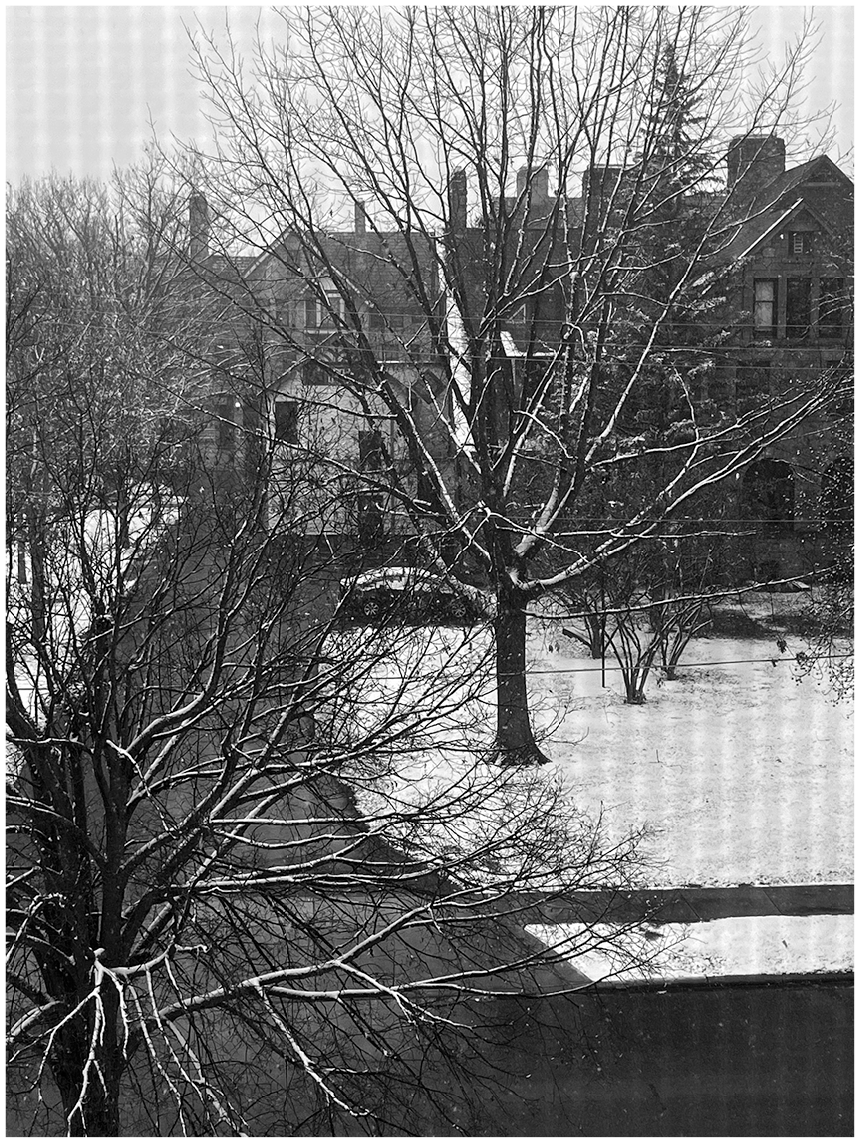
Snow Day: This photo was taken when I woke up, a few days ago, to snow on the ground. Along with taking the photo for this project, I sent it to some friends to brag about the snow, even though it now lacks luster. Because snow possesses the magical quality of evoking childhood nostalgia, the photo reminds me of moments when I don’t feel like an adult. Even if you didn’t grow up experiencing snow, it just ends up being too delightful on the first snowfall. The photo also reminds me of waking up for school to see a big bed of white on the ground and feeling a rise of happiness go through my chest. It does make me feel somewhat more adult, though, when I remember there will be less and less snow every year because of global warming. Izze
Facial Adjustments: This is a beard trimmer. Making choices about facial hair and presentations of masculinity are direct ways in which people who grow facial hair interact with perceptions of age. I definitely believe (and have been told by all manner of acquaintances) that the amount of time elapsed since I last shaved changes how old I appear. Clean-shaven, I can pass for 17, but if it’s been a longer period of time or I have a beard, I’ve been told I look 25. I see it as a kind of privilege. Sometimes I’m annoyed that I look either far more babyish or way more old and haggard than I feel I am, but sometimes I do feel like a baby, and occasionally I do feel old. Jonah
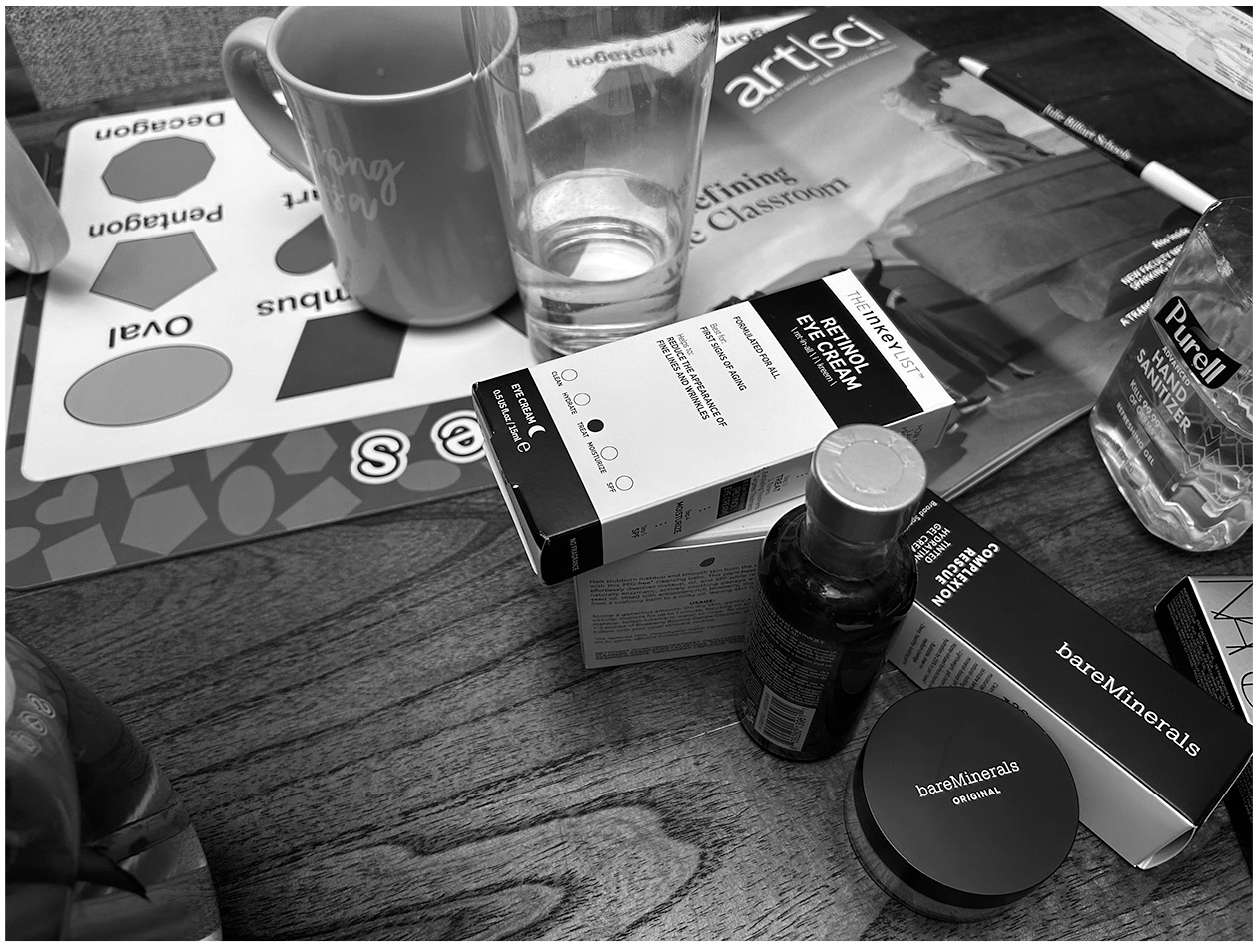
Eye Cream: For some reason after the new year started, I decided I needed to adopt a skin care regimen. Something about turning 36 this year feels closer to 40, which just sounds older. I ordered some eye cream from Sephora and seeing it there, next to some of my kids’ items, made me think, “Yep, I am solidly an adult—I’m someone’s mother, and I’m someone who uses eye cream!” Alicia
Gray Hair: I did not have gray hair until the pandemic started. Spring and summer 2020 were some of the more stressful periods of my life, so perhaps that contributed to it. Developing gray hair during your 30s also seems fairly common. I know some friends who pluck theirs or color their gray hair, but I kinda like it. It makes me feel more seasoned, wise, and experienced—like I’ve really lived. It makes me feel like I’m more of a “real adult.” This is refreshing, given I used to be mistaken for a student when I first started as a faculty member after grad school six years ago. Alicia
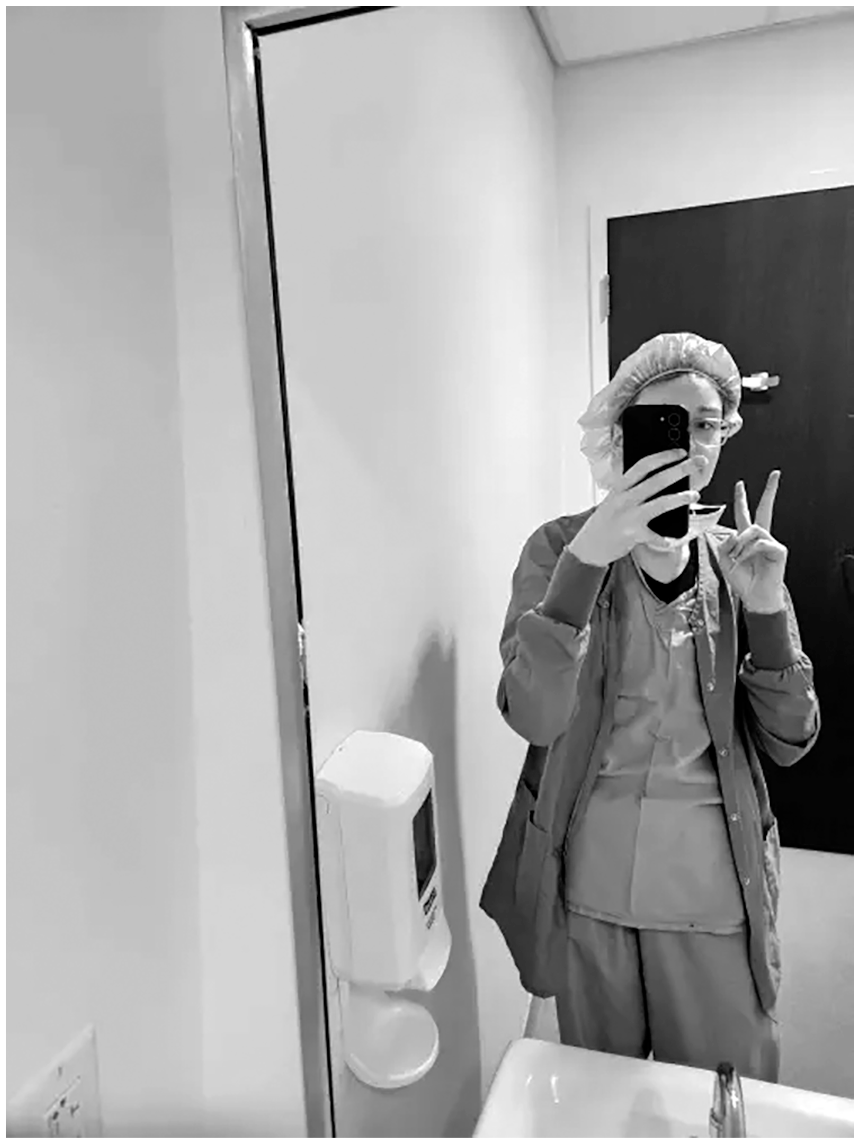
Scrubs: This is a picture I took while shadowing a doctor up at the Cleveland Clinic. I’m wearing scrubs, because I was going in and out of the OR (operating room) and I needed appropriate attire. The whole experience made me feel like an adult, but also reminded me of the long transition period I have ahead. I felt really happy, though, and getting to wear scrubs added to that because I was able to blend in with all the other healthcare workers. I actually sent this picture to my mom, and it made her very emotional because she “never thought she would see me like this.” She said that I had “aged.” I find it interesting that a few pieces of clothing contribute so much to one’s perception of age. This picture feels like a visual representation of the formation of my professional identity as well as my self-actualization, arguably the most central part of becoming an adult. For once I felt like I saw myself staring back in the mirror. There is obviously more to be said about how this image (and my reaction to it) relates to issues surrounding the perception of medical professionals. Would my mom have felt so positively if I was pursuing a different career? Sunny
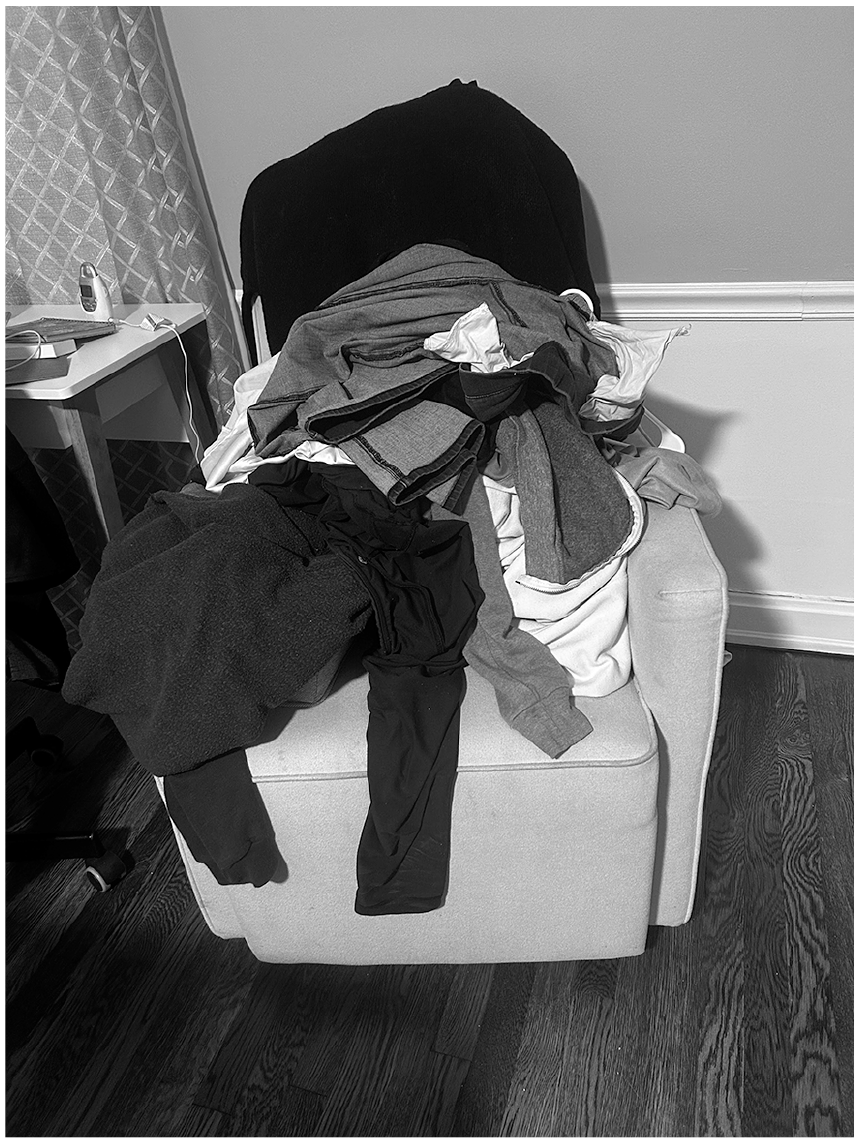
Messy Chair: Laundry has always been one of the more challenging “chores” for me. My mom would practically beg me to put my clean clothes away when I was a child. Now I’m 36 years old, and I still dread and have difficulty initiating the task. As I get older I feel more shame around this at times, but a recent ADHD diagnosis is helping me to understand why I have long had some executive functioning issues. It makes me consider how neurodivergent and disabled people have more difficulty adhering to some of the tasks expected of “responsible” adults. I am adamant about keeping the more “public” spaces on the first floor of our home clean and tidy, but our bedroom is often a disaster. Sometimes, that makes me feel like I am performing responsible adulthood, but behind the scenes, it can be so messy and I still don’t have it all together. I often ask friends, “How do people have jobs, kids, marriages, social lives, hobbies, workout regimes, and clean houses?” Still trying to figure that one out, but am convinced it can only be done by those who can afford hired help. Alicia
Footnotes
Alicia Smith-Tran is in the Departments of Sociology and Comparative American Studies at Oberlin College, where Sunny Hunt, Dakota Wynn, Izze Powell, and Charlie Kline are undergraduate students and Jonah Covell is a recent graduate. Smith-Tran studies health, sport, age, and the Black middle class.