




Abstract
Using data from the ‘Social Futures and Life Pathways of Young People in Queensland’ project, we analysed happiness among a group of young Australians from the ages of 14–26. Over this time, our findings suggest a linear decrease in happiness. Potential correlating factors were then explored at the following three pivotal points: mid-high school (aged 14–15), during the transition to tertiary education and early workforce entry (aged 19–20) and at the onset of formative career development and greater financial independence (25–26 years). Results show that educational attainment, relationship formation, earning capacity and confidence in the future are central to happiness throughout this period. Our findings imply that milestones traditionally associated with adulthood continue to play a significant role in the happiness of young Australians. Our findings underscore the importance of providing better support for the overall well-being of emerging adults as they navigate this complex life stage.
Introduction
The transition from adolescence to adulthood is a critical period characterized by significant psychological, social and economic changes. Traditionally, this life stage has been marked by the achievement of specific milestones, such as completing education, securing stable employment and forming long-term relationships (Settersten et al., 2015). These markers of adulthood have long been associated with increased stability and well-being (Sharon, 2015). However, recent decades have seen substantial shifts in the pathways young people navigate as they move towards adulthood (Walczak, 2023). Evidence suggests that the transition from adolescence to adulthood is becoming increasingly heterogeneous, prolonged and delayed within contemporary societies (Arnett, 2011; Chesters et al., 2019). As a result, this important transition has gradually become more unpredictable and uncertain (Rouvroye & Liefbroer, 2023; Tomaszczyk & Worth, 2020). It is within this broader context that contemporary investigations of happiness have revealed a decrease in happiness from adolescence to mid-adulthood (Bardo, 2017; Bartram, 2020; Blanchflower et al., 2023; Blanchflower & Oswald, 2008, 2019; Frijters & Beatton, 2012; Laaksonen, 2018; Piper, 2015). Understanding this trajectory necessitates a closer examination of the factors that contribute to a person’s happiness from adolescence into emerging adulthood.
This study examines the implications of these shifts in happiness among a cohort of young people from Queensland (QLD), Australia. The aim of the present study is to track and observe the happiness of young Australians from adolescence (aged 14) into emerging adulthood (aged 26). We first investigate levels of happiness across this time to identify the prevailing trend. We then explore how various factors relate to happiness at the following three significant junctures: mid-high school (aged 14–15), during the transition to tertiary education and early workforce entry (aged 19–20) and at the onset of early career development and greater financial independence (25–26 years). These time points reflect distinct transitional contexts for young people in Australia, emphasizing different milestones in relation to education, career and relationships. At each time point, we examine how happiness varies according to socio-demographic characteristics, lived experiences and personal evaluations. Socio-demographic and lived experiences focus on tangible life experiences and external influences. Personal evaluations observe how various internal evaluations, such as trust, confidence, mastery and self-perceived intelligence, may relate to reported happiness levels. Our findings contribute to the body of literature concerned with the intersection of emerging adulthood and well-being by offering insight into how lived experiences, key life domains and expectations of the future shape patterns of happiness. This research underscores the need for active support for people navigating this transitional period from adolescence to emerging adulthood.
Framing Happiness
Happiness remains an important component of our overall understanding of well-being (Burns & Crisp, 2022). Conceptually, it is a colloquial term (Delle Fave et al., 2011; Diener, 2007), shaped by individuals subjective definitions founded in their everyday life and experiences (Agbo & Ome, 2017; McMillan et al., 2022). This intrinsic connection to everyday life underscores the importance of exploring happiness as a key component of well-being. Our previous work has demonstrated that the subjective conception of happiness emerges from a complex evaluation of past experiences, present realities and future aspirations (McMillan et al., 2022). Additionally, social context plays a crucial role in shaping happiness, serving as the backdrop against which individuals position and evaluate their lives (Helliwell et al., 2019). Thus, happiness is intricately linked to how one’s life has unfolded or is unfolding, assessed in relation to one’s perceived ideal life within the context of their current social environment.
Happiness, therefore, represents an overall evaluation of life (Veenhoven, 1997) that relies on both the ‘context’ of an individual’s life and the ‘content’ of their definition of happiness (Delle Fave et al., 2011). Here context is based on observable factors characterized within predominant life domains and socio-demographic attributes. While the content of happiness is more subjective, incorporating both affective and cognitive components (Rojas, 2005). As such, we posit that happiness is a subjective evaluation of one’s affective and cognitive ‘condition’ spanning multiple life domains across the life course (Argyle, 2013; McMillan et al., 2022; Veenhoven, 2012).
Emerging Adulthood and Patterns of Well-being
Patterns of well-being are inherently shaped by personal and societal contexts (Helliwell et al., 2019). During the transition into emerging adulthood, this can be observed in the relationship between happiness and personal expectations of embedded societal norms associated with this critical life stage (Sharon, 2015). Once typically signified by milestones like marriage, moving out and shifting from education to work (Hall & Walls, 2016; Raffo & Reeves, 2000; Woodman & Wyn, 2015), this period is becoming increasingly prolonged (Arnett, 2000; Chesters et al., 2019; Clark, 2007; Côté & Bynner, 2008; Silva, 2012; Walczak, 2023). Arnett (1997) conceptualized this period as emerging adulthood. Central to their claim, emerging adults are choosing to delay milestones ones synonymous with adult responsibilities, in favour of exploration and experimentation (Arnett, 2011). However, subsequent research has emphasized the importance of contextual factors within this conceptualization (Bynner, 2005; Côté & Bynner, 2008; Hendry & Kloep, 2007). According to Côté and Bynner (2008), this prolonged transition may be better understood as a process characterized by uncertainty and experimentation. Such uncertainty emerges as young people contend with patterns of insecurity as they navigate life priorities across multiple domains (Chesters et al., 2019).
Observations of this prolonged and uncertain period of emerging adulthood have coincided with a notable decline in mental health and well-being among emerging adults (Blanchflower et al., 2024). Twenge et al. (2019) identify a sharp increase in mood disorders and suicide outcomes among past cohorts of emerging adulthood. While the trend is not yet fully understood, they propose several plausible explanations consistent with other research, such as digital media use (Lin et al., 2016; Rasmussen et al., 2020; Twenge et al., 2019), sleep disturbances and the relationship between the two (Twenge et al., 2017). Examining 20 years of Australian representative, longitudinal data, Botha et al. (2023) found that individuals from more recent cohorts, particularly those born in the 1990s, exhibit the most concerning mental health trajectories over time. Compared to previous cohorts of the same age group, members of this cohort report significantly poorer mental health outcomes overall. Crucially, these patterns are consistent with cohort effects and not simply explained by temporary age or period effects (Botha et al., 2023). These findings represent challenges reflective of broader societal shifts experienced by contemporary cohorts of emerging adults. This growing trend towards poorer mental health underscores the need to examine how the evolving nature of this life stage may influence the well-being of young people in the future.
It is reasonable to suggest that the uncertainty associated with emerging adulthood (Chesters et al., 2019) is a likely contributor to diminished happiness and overall well-being among emerging adults (Blanchflower et al., 2024). An ongoing longitudinal study of Australian life pathways demonstrated that adolescents (12–13 years old) overwhelmingly expected to experience traditional life pathways, with a majority expecting to get married, have children and never get divorced (Skrbis et al., 2012). Yet, by the time individuals reach emerging adulthood, it is suggested that they tend to express uncertainty towards the specifics of their adult identity (Amit, 2011; Côté & Bynner, 2008). In this way, the decline in happiness may be associated, in part, with the dissonance between unmet aspirations and one’s lived experiences as suggested by Schwandt (2016). This hypothesis is central to the present study, which seeks to connect the defining characteristics of the emerging adulthood experience with the evident trends in happiness.
Shaping Happiness
Empirical studies have considered numerous potential influences shaping happiness (Ferrer‐i‐Carbonell & Frijters, 2004). These investigations have considered the impact of factors such as income (Cimpoeru, 2023; Easterlin, 1974; Kollamparambil, 2019), education (Araki, 2022; Ruiu & Ruiu, 2018), interpersonal relationships (Borelli et al., 2019), ethnicity (Rojas & Vittersø, 2010; Shin et al., 2018), religion or spirituality (David et al., 2022; Singh, 2014), health (Steptoe et al., 2015), sex (Brakus et al., 2022; MacLeod, 2015) and age (Blanchflower et al., 2023; Mogilner et al., 2011). Not only do experiences and outcomes associated with these factors influence happiness, but happiness, in turn, plays a significant role in shaping how individuals interpret and evaluate their experiences within these areas of life (Lyubomirsky et al., 2005). Happiness serves as a lens through which people view their past, present and future, significantly shaping their overall well-being. It influences perceptions, frames expectations and guides how life events are understood and valued. Given its dynamic and deeply interwoven nature, ongoing investigation and reassessment are imperative (Steptoe et al., 2015). Understanding happiness is essential, as it is not static but a fluid aspect of human life, intricately linked to individual and societal experiences.
Participants
Sample
This article incorporates data from the ‘Social Futures and Life Pathways of Young People in Queensland’ project. Also known as ‘Our Lives’, this ongoing longitudinal study has been following a single-aged cohort of young people from QLD, Australia, as they move into adulthood (Our Lives, 2021). The project began with the first survey in 2006 when this cohort was aged 12/13 years (n = 7,031), with follow-up surveys conducted every 2 years. As of this study, the most recent survey wave included in this analysis was carried out in 2021 when the cohort was aged 27/28 (n = 1,663).
Representativeness
In 2006, the Our Lives Project employed a two-stage cluster sampling approach that aimed to recruit all QLD schools (stage 1) and all grade 8 (aged 12–13) students within those schools (stage 2). The project achieved a school-level response rate of 51% (n = 208 schools) and a within-school response rate of 34% (n = 7,031). This equated to approximately 12% of all QLD grade 8 students (N = 57,203) for that year (ABS, 2012). The wave-on-wave retention rate was 52% of the original cohort in wave 2 (n = 3,649); 88% in wave 3 (n = 3,209); 69% in wave 4 (n = 2,208); 97% in wave 5 (n = 2,150); 94% in wave 6 (n = 2,030); and 95% in wave 7 (n = 1,928).
Attrition
In wave 1, female students and those in the private schooling sector were more likely to participate than male students and those attending State schools, resulting in their overrepresentation in the initial sample. However, the geographical composition of the initial wave 1 sample was highly representative of young people in urban, regional and remote areas of QLD. Those groups who were more likely to complete the survey initially (e.g., females and private school students) were also more likely to remain participants in the study over subsequent waves. The distributions and bivariate associations between wave 2 participation and five key demographic factors were tested to explore patterns of attrition. These tests revealed that females, those within the independent school sector, with Australian-born parents and parents who have completed study beyond year 12, were less likely to drop out of subsequent survey waves of the Our Lives Project.
Methods
Data were drawn from waves 2 to 7 of the ‘Our Lives’ project, for which methodology, survey instruments and technical reports are publicly available (Our Lives, 2021). Analysis was then completed in two stages. First, we examined happiness across each wave to determine the overall trend of happiness between the ages of 12 and 26 years old. Second, we then explored a wide range of potential correlates of happiness at three key time points (at ages 14–15, 19–20 and 25–26 years old).
Stage 1: Trend of Happiness Across Survey Waves
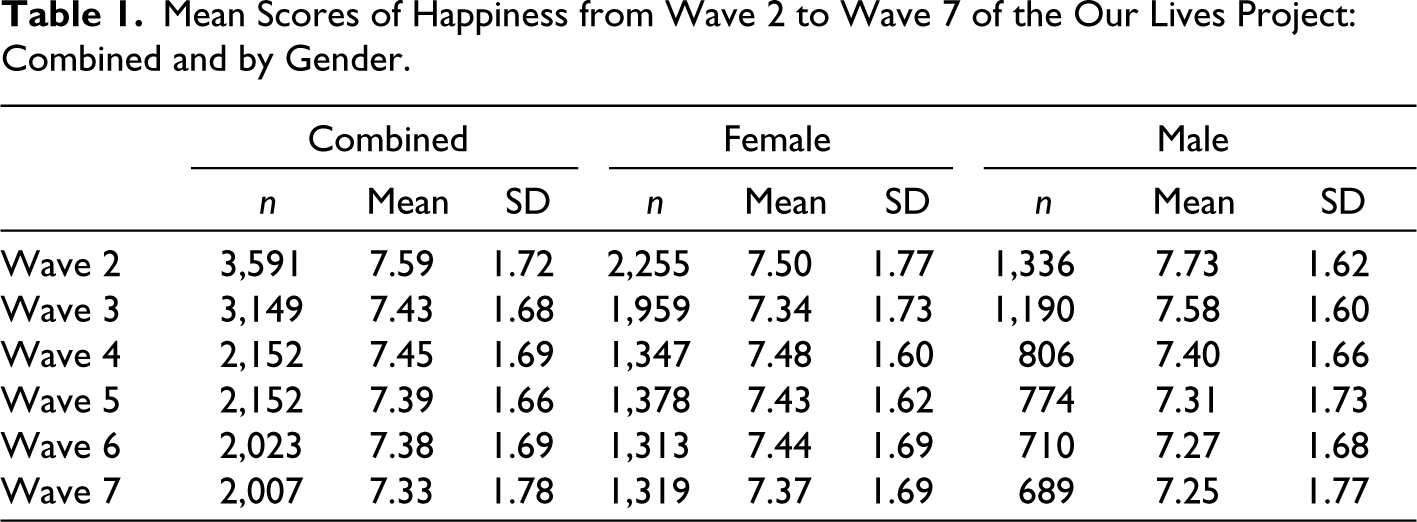
In stage 1 of the analysis, we examined the mean of happiness across all waves from wave 2 (age 14/15) to wave 7 (age 25/26). In each wave, beginning in wave 2, included in this investigation, participants were asked, ‘All in all, how happy are you with your life these days?’ on a 10-point Likert scale. The intention of this descriptive analysis is to display the general trend of happiness over this important life stage. The stage 1 results are presented as mean happiness scores at each wave (Table 1). Results were then plotted to display the change in happiness over time for males and females.
Mean Scores of Happiness from Wave 2 to Wave 7 of the Our Lives Project: Combined and by Gender.
Stage 2: Correlates of Happiness at Three Key Time Points
In stage 2 of the analysis, we explored a wide range of potential correlates of happiness at three key time points (see Supplementary Materials for the complete variable list). Our intent was to identify factors associated with happiness and analyse how the combination of associated factors varied at each time point. To maximize sample size, all available data at each time point were included. To ensure findings were not influenced by sample differences between survey waves, robustness testing confirmed that overall patterns were consistent across both the full sample and a subset of participants present at all time points (see Supplementary Materials). These three time points consist of data from wave 2 (aged 14–15) as participants were in the later years of high school; wave 4 (aged 19–20) around the time of tertiary education, vocational training or early career formation; and lastly wave 7 (aged 25–26) as participants were more readily contending with decisions concerning the family formation, career and increasing agency as they transitioned to emerging adulthood. These time points were selected as they represent important cross-sections within traditional transition narratives from adolescence towards adulthood in an Australian context.
The analysis consisted of three stages. First, exploratory methods were employed to test the correlation of 56 variables available at each wave of the Our Lives survey (2021) with the reported level of happiness. Between the time points, there was some variation in the specific measures due to availability or relevance. While some variables (e.g., happiness) are measured consistently across the study period, others are only captured either during school (e.g., future expectations/orientations) or entering emerging adulthood as they became more applicable (e.g., income and post-school qualification).
Second, at each time point, bivariate analysis was used to determine the associations between each factor and happiness. The subsequent significant factors were organized into the following three blocs: (a) socio-demographic characteristics, (b) reported lived experiences and (c) personal evaluations. Happiness was then regressed on these variables within each bloc at each time point. Finally, a final multivariate regression model for each time point was constructed by retaining only those significant predictors of happiness from the three variable blocs analysed in the previous stage. The final models reveal significant factors correlating to happiness and clear patterns of variation between each time point. In this way, the factors most prominently associated with happiness at each time point were observed.
Findings
Happiness from Adolescence to Emerging Adulthood
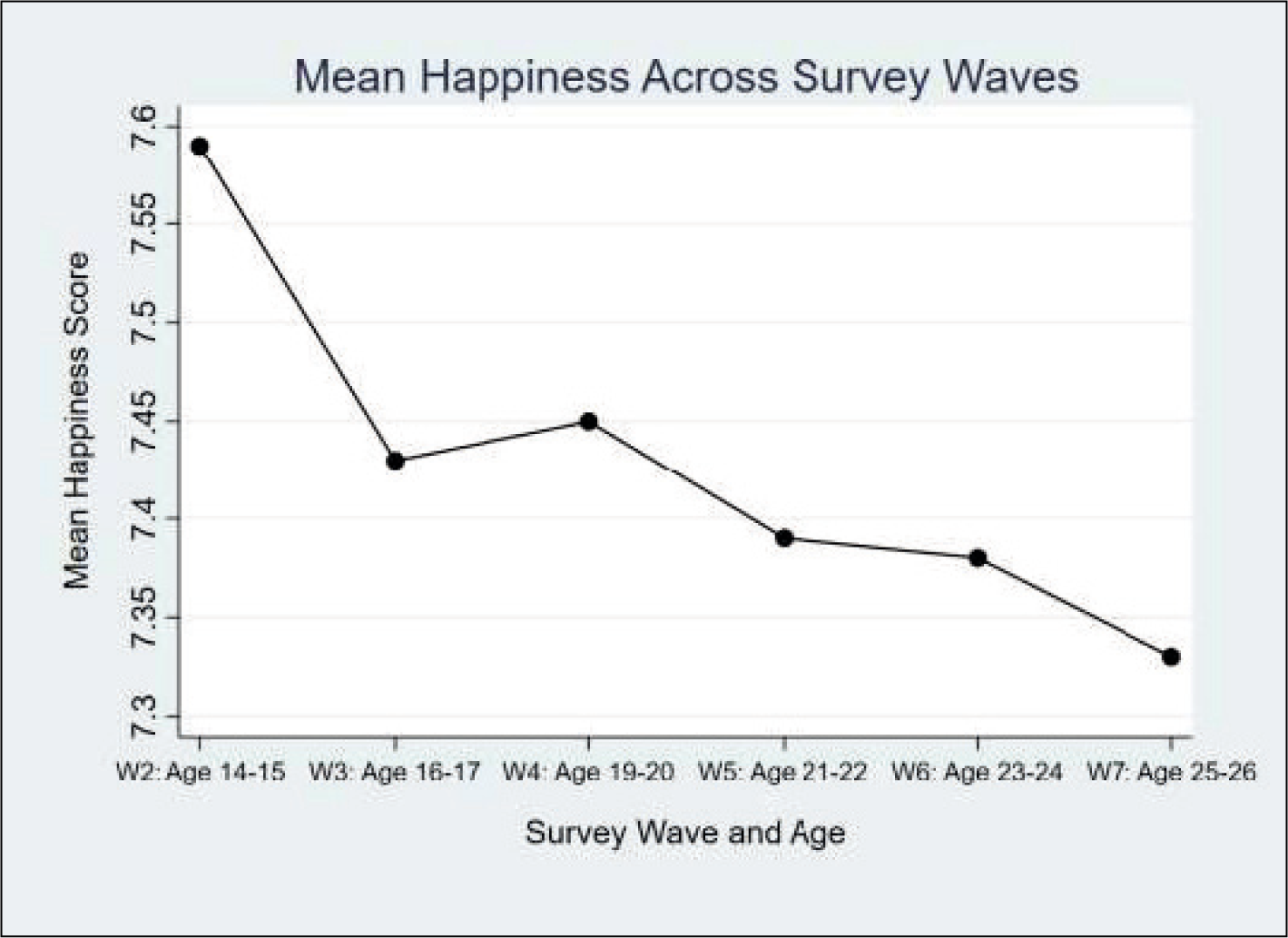
The results descriptively indicate a mostly consistent linear decline of mean happiness scores from wave 2 (ages 14–15) to wave 7 (ages 25–26; Table 1). The combined mean happiness scores were plotted to better visualize the scores over time (Figure 1). The general downward trend suggests a decrease in happiness among young Australians as they grow older, consistent with previous findings in Western societies (Blanchflower et al., 2023). Males describe decreases in happiness, while the mean happiness of females appears more stable. However, further analysis is needed to establish statistical differences. Overall, however, sex differences appear marginal, as evidenced by findings in stage two, outlined in the following sections.
Plot of Mean Scores of Happiness at Each Wave of the Our Lives Project.
Time 1: Happiness in the High School Years (Aged 14–15)
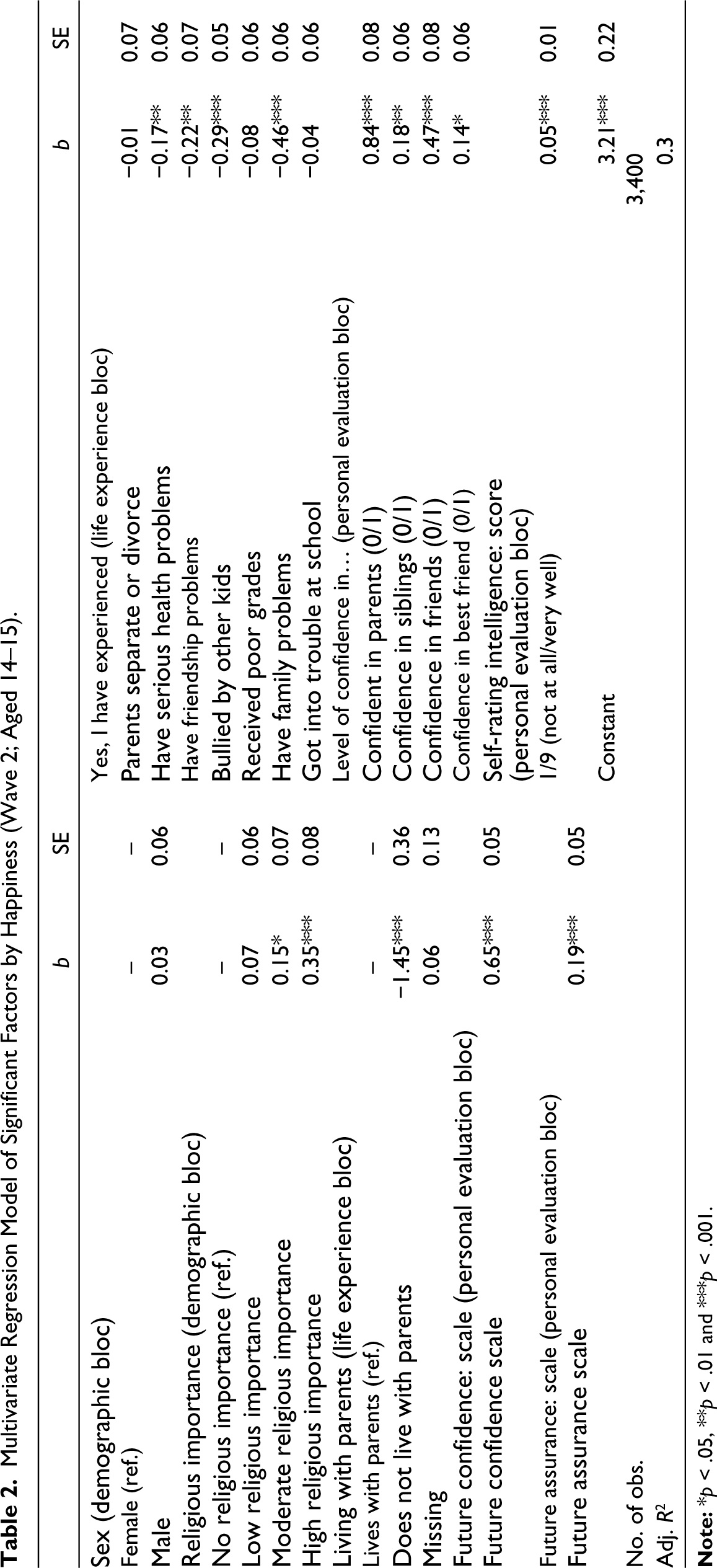
At T1 (aged 14–15), key relationships within and outside of one’s family related particularly strongly to happiness during early high school. Not living with parents at this age has a strong negative correlation to happiness (b = −1.45, p < .001) compared to those young people still living with their parents. However, the sample robustness analysis, available with the Supplementary Materials, found this effect was no longer statistically significant among a subset of individuals included at every time point. The importance of strong family relationships for happiness is further highlighted by the positive association with confidence in parents (b = 0.84, p < .001) and, to a lesser extent, siblings (b = 0.18, p < .01). Confidence in one’s friends (b = 0.47, p < .001) has a significant positive relationship with happiness. Negative experiences within family and peers further highlighted the salience of relational factors to young people’s happiness. Respondents who reported experiencing family problems (b = −0.46, p < .001), friendship problems (b = −0.22, p < .001) or being bullied (b = −0.29, p < .001) were more likely to report lower happiness levels. Compared to those who place no importance on religion, placing a high level of importance on religion was also found to be associated with higher levels of happiness (b = 0.35, p < .001). Evaluations of confidence in one’s future were revealed to relate positively to happiness (b = 0.65, p < .001), seen also to a lesser extent with one’s self-assurance in their future (b = 0.19, p < .001).
Multivariate Regression Model of Significant Factors by Happiness (Wave 2; Aged 14–15).
Time 2: Happiness Post High School (Aged 19–20)
At time 2 (T2), participants were aged 19–20 years old. It is at this age, young Australians are generally no longer participating in secondary education and beginning to consider or engage in post-school activities such as apprenticeships, tertiary education and joining the workforce. Following the same analytical process as T1, factors with a significant relationship to happiness were identified (refer to Table 3).
Multivariate Regression Model of Significant Factors by Happiness (Wave 4; Aged 19–20).
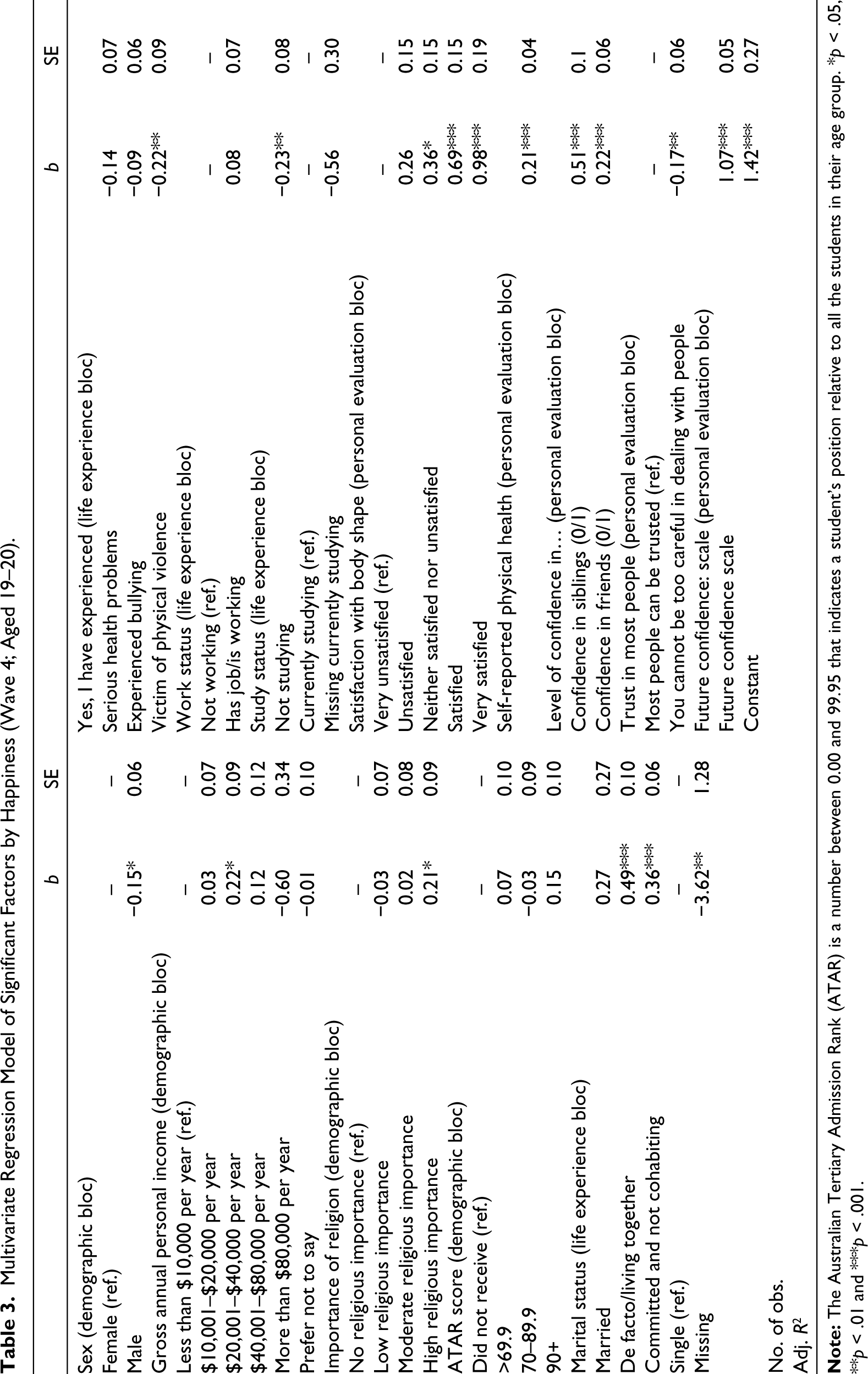
Marital status was correlated to happiness. In comparison to those who reported being single, participants in committed cohabitating (b = 0.49, p < .001) and non-cohabitating (b = 0.36, p < .001) were happier. Marriage shows no significant connection to happiness, likely due to the limited number of married participants (n = 24). Confidence in siblings (b = 0.51, p < .001) and friends (b = 0.22, p < .001) maintained a positive association with happiness; confidence in parents, however, did not. High importance placed on religion (b = 0.21, p < .05) was significantly correlated to happiness.
Considering health, two factors emerged as reasonably associated with happiness. Evaluations of body shape revealed a linear relationship with happiness. Those very satisfied with their body shape reported significantly higher happiness than those very unsatisfied (b = 0.98, p < .001). Self-reported physical health revealed a similar, though weaker, relationship (b = 0.21, p < .001).
Education, a central point of this period in life, showed a strong connection to happiness. Results showed that those not currently studying (b = −0.23, p < .01) reported lower happiness compared to those who were. This highlights the significant role perceptions of, and hope for, the future play in young people’s happiness. As seen among those with greater confidence regarding future aspirations who reported higher happiness levels (b = 01.07, p < .001).
Time 3: Happiness Beyond Education and Training (Aged 25–26)
Time 3 (T3) reports findings from participants in wave 7 of the Our Lives Project, aged 25–26 years old. Following the procedure at the previous time points, significant relationships with happiness were identified (Table 4). At age 25–26, males were more likely to report marginally lower happiness levels (b = −0.31, p < .001) than females. Income is also connected strongly with happiness, though this relationship is not linear. Rather, each income category was similarly more likely to report higher happiness than those with no income. The correlation between high religious importance and happiness (b = 0.48, p < .001) was again found to be significant compared to those who reported no religious importance.
Multivariate Regression Model of Significant Factors by Happiness (Wave 7; Aged 25–26).
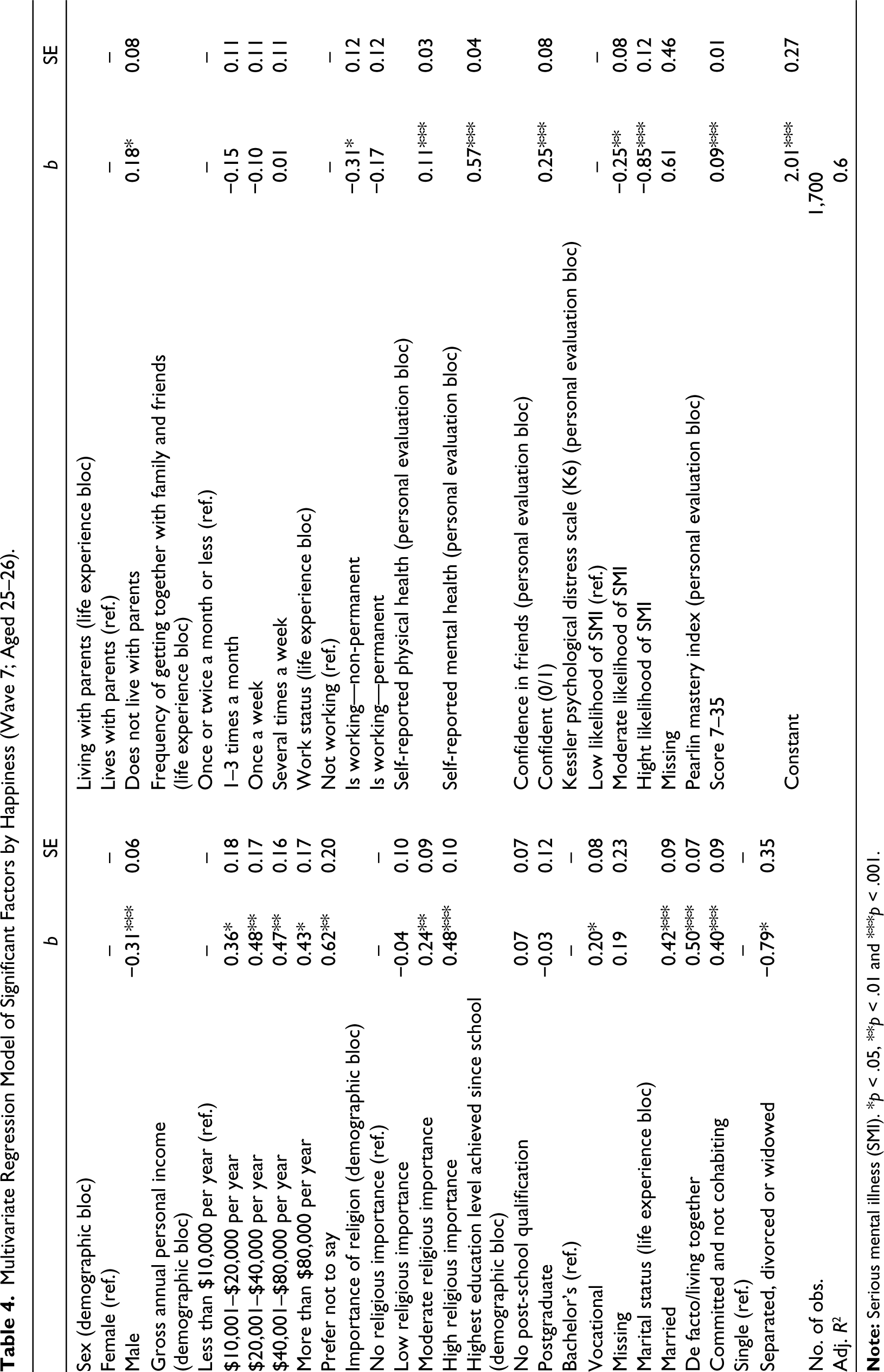
Relationships of marriage (b = 0.42, p < .001), cohabitating (b = 0.50, p < .001) and committed but not cohabitating (b = 0.40, p < .001) are all positively associated with greater happiness compared to those who are single. While individuals who have experienced separation, divorce or becoming a widow were more likely to report lower happiness (b = −0.79, p < .05).
Mental health (b = 0.57, p < .05) and physical health (b = −0.31, p < .05) share a positive linear relationship to happiness. The psychological distress scale (K6) further revealed that those who report a higher likelihood of serious mental illness are also more likely to report lower happiness (b = −0.85, p < .001). Unlike the previous time points, confidence in family was not correlated to happiness at T3, whereas confidence in friends was presented as significantly correlated (b = 0.25, p < .001). The importance of future confidence and a sense of control continues as a significant factor as it relates to happiness, as those reporting higher mastery scores are also more likely to report fractionally greater levels of happiness (b = 0.09, p < .001).
Discussion
Happiness from Adolescence to Emerging Adulthood
In alignment with trends of happiness observed within other samples (Blanchflower et al., 2023; Piper, 2015), our findings describe a general decline in happiness among Australians aged 14–26. Given that happiness is highly associated with several well-being metrics and mental health indicators (Burns & Crisp, 2022), this decline cannot be dismissed as superficial. The single cohort design of this analysis suggests that the observed decrease in happiness aligns with a cohort effect, as similar patterns have been documented across Australian cohorts within existing research (Botha et al., 2023). While ageing effects are likely a contributing factor, the limitations of our data prevent us from definitively assessing their impact in this study. Importantly, the overarching decline in happiness across this pivotal phase of life suggested in our findings and established in previous research (Bardo, 2017; Bartram, 2020; Blanchflower et al., 2023; Blanchflower & Oswald, 2008) underscores the importance of identifying contributing factors and developing targeted interventions to mitigate its potentially negative impacts.
Major Themes Across Time Points
Distinct factors were associated with happiness at each time point. Participants at T1 (aged 14–15) were amid their high school education. This phase is characterized by the increasing influence of peers in moulding interests, identity and a sense of belonging (Branje et al., 2021). Concurrently, many would have also been navigating, or had already traversed, the primary phases of puberty (Farello et al., 2019). Participants aged 14–15 demonstrate the importance of lived experiences on happiness, particularly as they pertain to the quality of interpersonal relationships and interactions. This is true for familiar relationships, but also friends, as young people of this age begin to emphasize and prioritize peer connections (Paterson et al., 1994). It is also evident that a cohesive and defined perspective of the future is markedly connected to happiness, which highlights happiness as an intrinsically temporal construct (McMillan et al., 2022).
At T2, participants had typically concluded their standard high school education or its equivalent and embarked on tertiary education, vocational training or consistent employment. This phase represents a pivotal juncture characterized by foundational decisions pertaining to both key relationships and professional trajectories. Committed relationships alongside high confidence in friends and siblings were the prominent factors positively correlated with elevated happiness levels. This sentiment is consistent with the importance of interpersonal relationships at 14–15 years old and underscores the overall salience of such relationships during the transition from adolescence to emerging adulthood (Borelli et al., 2019).
By T3 (aged 25–26), participants had reached the age of 25–26 years. Considered to be towards the end of emerging adulthood, according to Arnett (2011), ideas about what constitutes success should begin to move from flexible or experimental to more committed and permanent arrangements. This shift is observable within our sample. The majority had completed their educational pursuits or vocational apprenticeships, barring a minority who either opted for a change in academic direction or pursued advanced studies. Notably, in this stage of life, variables such as income, employment status and marital status were recognized as highly connected to happiness. This transition underscores a broader metamorphosis from dependency on parental support to a greater autonomy normatively associated with adulthood. Happiness is then derived from the successful navigation of the sense of adult-like autonomy (Inguglia et al., 2015). The correlation between lower happiness and a less adult-like autonomy, such as remaining in the family home and not having a stable job or committed romantic relationship, suggests that this cohort may compare to their peers through the lens of these norms and conclude they are ‘behind’. In summation, factors associated with happiness at ages 25–26 markedly diverged from those observed in preceding time points. The data underscore a palpable shift in participants’ sources of contentment, pivoting from external support structures to internal accomplishments and responsibilities that could be associated with adulthood.
Shifting Markers of Happiness
Our examination of three pivotal time points in early life revealed intriguing patterns that offer insights into the dynamic nature of happiness and its influencing factors. In the following section, prominent patterns are discussed and descriptive comparisons between time points are considered to better understand how happiness evolves over this time.
Religion consistently emerged as a significant influencer of happiness across all age groups (Singh, 2014). The sense of community, purpose and existential security that religious affiliations often provide might act as a protective buffer against life’s uncertainties, offering solace and a sense of belonging (Williams, 2021). Intriguingly, the magnitude of religion’s correlation with happiness exhibited a dynamic pattern across the three time points. From T1 to T2, there was a discernible attenuation in the effect size of high religious importance, which subsequently amplified from T2 to T3, surpassing the initial effect observed at T1. This trajectory is indicative of the pronounced familial influence at 14–15 years old (T1), which often recedes by age 19–20 (T2). By this time, individuals may gain autonomy to delineate their personal religious stance. Consequently, by age 25–26 (T3), those who report higher religiosity are more likely to do so out of intrinsic conviction, as opposed to identifying with their parent’s religion, more likely than those aged 14–15. Theoretically, this may help to explain the amplifying of its positive correlation with happiness in emerging adulthood, though changes in religious importance would need to be considered statistically to confirm this hypothesis.
Financial considerations, while minimally connected to happiness during adolescence, gained importance with age. By the mid-twenties, financial stability and security became a central aspect of happiness (Chrostek, 2016; Cimpoeru, 2023). This reflects the burgeoning responsibilities and aspirations associated with adulthood as participants begin to establish themselves in the world (Chesters et al., 2019; Hall & Walls, 2016). The role of intimate relationships in influencing happiness also evolved notably across time points (Borelli et al., 2019). Unlike income, the importance of committed relationships was apparent from T2 (aged 19–20), with the effect increasing by T3 (aged 25–26). By the mid-twenties, individuals in committed relationships, whether married or cohabiting, reported heightened levels of happiness. This underscores the importance of emotional support, companionship and a sense of belonging that intimate partnerships often provide. In addition, these relationships result in multiple incomes, providing greater financial stability and autonomy from parental influence. Interestingly, while the foundational role of family and parental confidence was pivotal during adolescence, its significance waned in favour of peer and romantic relationships as individuals matured. This shift is emblematic of the natural progression towards autonomy and identity formation outside the paternal family unit and an increased reliance on peers and romantic partners for emotional and social sustenance (Foulkes et al., 2018).
Between T1 and T2, the profound impact of confidence in achieving future aspirations emerged as a prominent theme in relation to happiness. The proactive endeavour of setting, navigating and actualizing personal objectives imbues individuals with a profound sense of purpose and direction (Damon & Malin, 2020). This highlights the intricate connection between happiness and the derivation of life’s meaning (Wapano & Paguta, 2022), while also drawing attention to the temporal dynamics that underpin these mechanisms (McMillan et al., 2022). Researchers have explored this intricate interplay of identity formation, aspirations and life meaning in relation to happiness (Emmons, 2003). However, these connections warrant further exploration to comprehensively discern how these complex processes determine happiness during formative years. Such insights could explain the attenuation in happiness evident in young people as they enter emerging adulthood.
Markers of Adulthood and Markers of Happiness
Happiness is a concept deeply influenced by temporal perspectives. People define and evaluate this complex notion by comparing past experiences, present circumstances and future aspirations (McMillan et al., 2022). This is evident in the strong correlation between higher happiness levels and elevated Pearlin mastery scores, which reflect the degree to which individuals perceive their life chances as being within their control rather than governed by fate (Pearlin & Schooler, 1978). Moreover, our findings reveal that happiness is strongly tied to one’s confidence in achieving future plans, which often reflect milestones traditionally associated with adulthood (Manning, 2020; Pitti, 2017; Settersten et al., 2015). These expectations of control and confidence in the future serve as benchmarks against which young people evaluate their past experiences and present circumstances. When these expectations are unmet, they may have significant implications for happiness.
Contrary to some emerging adulthood theory (Arnett, 2011), which suggests that young people intentionally delay traditional adult responsibilities in favour of exploration and experimentation, our findings suggest otherwise. Despite being increasingly delayed and uncertain, these milestones remain significant markers of adulthood (Cepa & Furstenberg, 2021). It is therefore plausible that future expectations surrounding these milestones, combined with the perceived ability to achieve them, are closely linked to the happiness of Australian emerging adults. Even as achieving these milestones becomes increasingly challenging, their role in shaping happiness remains significant, emphasizing the tension between aspirations and current circumstances in the lives of emerging adults (Schwandt, 2016). Our findings suggest that the disparity between aspirations and reality may significantly shape happiness trajectories. We contend that if milestone life events continue to be valued as normative goals and yet become increasingly elusive, this misalignment may play a critical role in the observed decline in happiness and associated mental health outcomes.
Conclusion and Future Research
This study has demonstrated that the downward trend of happiness is evident among young Australians as they transition to adulthood. We have also described the dynamic nature of happiness across three pivotal time points within this transition. To further substantiate the relationship between happiness and the uncertainty experienced by contemporary emerging adults, additional longitudinal analysis is needed. This analysis should focus on how the downward trend in happiness relates to individuals’ expectations during adolescence and emerging adulthood while also considering eventual life outcomes. Additionally, the design of this analysis also limits causal interpretations. Further exploration is needed to understand the mechanisms behind the relationships observed in this study. Nonetheless, as individuals navigate the complexities of life, understanding the fluid characteristics of happiness is important. This knowledge not only offers insights into the human experience but also provides a foundation for interventions aimed at enhancing well-being among emerging adults.
Supplemental Material
Supplemental material for this article is available online.
Supplemental Material
Supplemental material for this article is available online.
Footnotes
Declaration of Conflicting Interests
The authors declare no potential conflicts of interest concerning the research, authorship and/or publication of this article.
Ethics Approval
All data collection and collection materials operationalized by the Our Lives Project were completed with full ethical approval from the Monash University Human Research Ethics Committee (MUHREC), with consent to participate received from each participant.
Funding
This work was supported by the Australian Research Council (DP160100360).
References
Supplementary Material
Please find the following supplemental material available below.
For Open Access articles published under a Creative Commons License, all supplemental material carries the same license as the article it is associated with.
For non-Open Access articles published, all supplemental material carries a non-exclusive license, and permission requests for re-use of supplemental material or any part of supplemental material shall be sent directly to the copyright owner as specified in the copyright notice associated with the article.
