Abstract
Ryan Banfi on the enduring appeals of the humble pinball machine.
From hospitals and cafes to laundromats, bars, clothing stores, and even the beach, the classic pinball machine persists in the United States. The game isn’t necessarily present for play—the way its designers intended—but as a way of establishing ambience. It’s a visual indicator of Americana, of nostalgia. I argue that pinball’s functionality in public places hinges on establishments reworking pinball, finding new purposes for the game (and its iconic machines) in a world that’s largely left it behind.
During the Great Depression, pinball caught America’s attention by offering cheap amusement. After companies such as Gottlieb and Bally mass-produced pinball machines in the 1930s, writers began referring to the game as a "salvation" and "a depression Smasher!" By the 1950s, companies were pumping out hundreds of pinball titles a year, and as late as 1992, over a hundred thousand pinball machines were sold annually worldwide. Still, in 2000, there was a "pinball crash," coinciding with the fallout of the American arcade industry. The last few pinball manufactures made a total of four games that year.
With the precipitous decline in pinball manufacturing, the machines began moving out of the public sphere and into private collections—possibly never to be played by the community again. Most of the older public facing pinball games have become unplayable due to a lack of knowledge on how to maintain the machines.
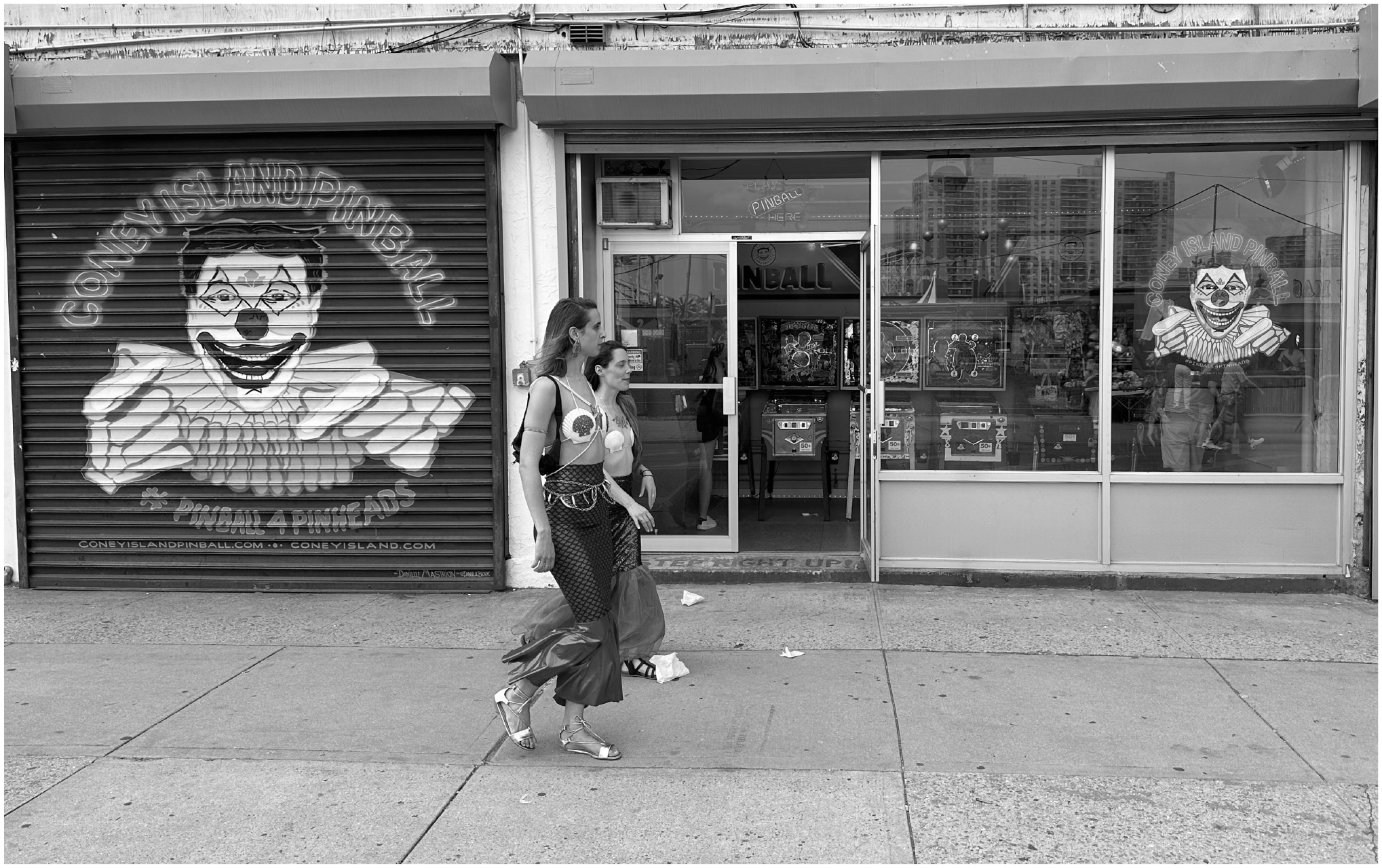
In an earlier era, pinball machines largely represented amusement and coexisted within amusement parks. Consider, for instance, pinball’s connection to Coney Island, NY (see p. 46), one of the first true amusement parks in the United States. Coney Island, opened in 1895, and it was designed to lure wealthier customers to the seaside with live music, arcades, and theme parks. (A more prurient draw can perhaps be found in the Thomas Edison-produced film, Electrocuting an Elephant, which featured Topsy, a circus elephant in Luna Park, Coney Island, being electrocuted to death in 1903 for killing three men). The location was a popular place for coin-op entertainment, especially pinball, and its name became so well-associated with the game that manufacturers proudly plastered the moniker on their new machines: Coney Island (Exhibit, 1938), Coney Island (Block Marble Company, 1948), Coney Island (Bally, 1951), Old Coney Island! (Game Plan, 1979), and Coney Island (Sirmo, date unknown). The Great Recession, starting in 2008, and a wave of high-rise hotels largely eroded Coney Island’s businesses, yet pinball’s memory remains essential to the area. Currently, the theme park still supports a place to play pinball: Coney Island Pinball. Its inclusion suggests an enduring affection for the theme park, as well as a deep connection between the park and the eclectic amusements that attracted its customers for so many decades.
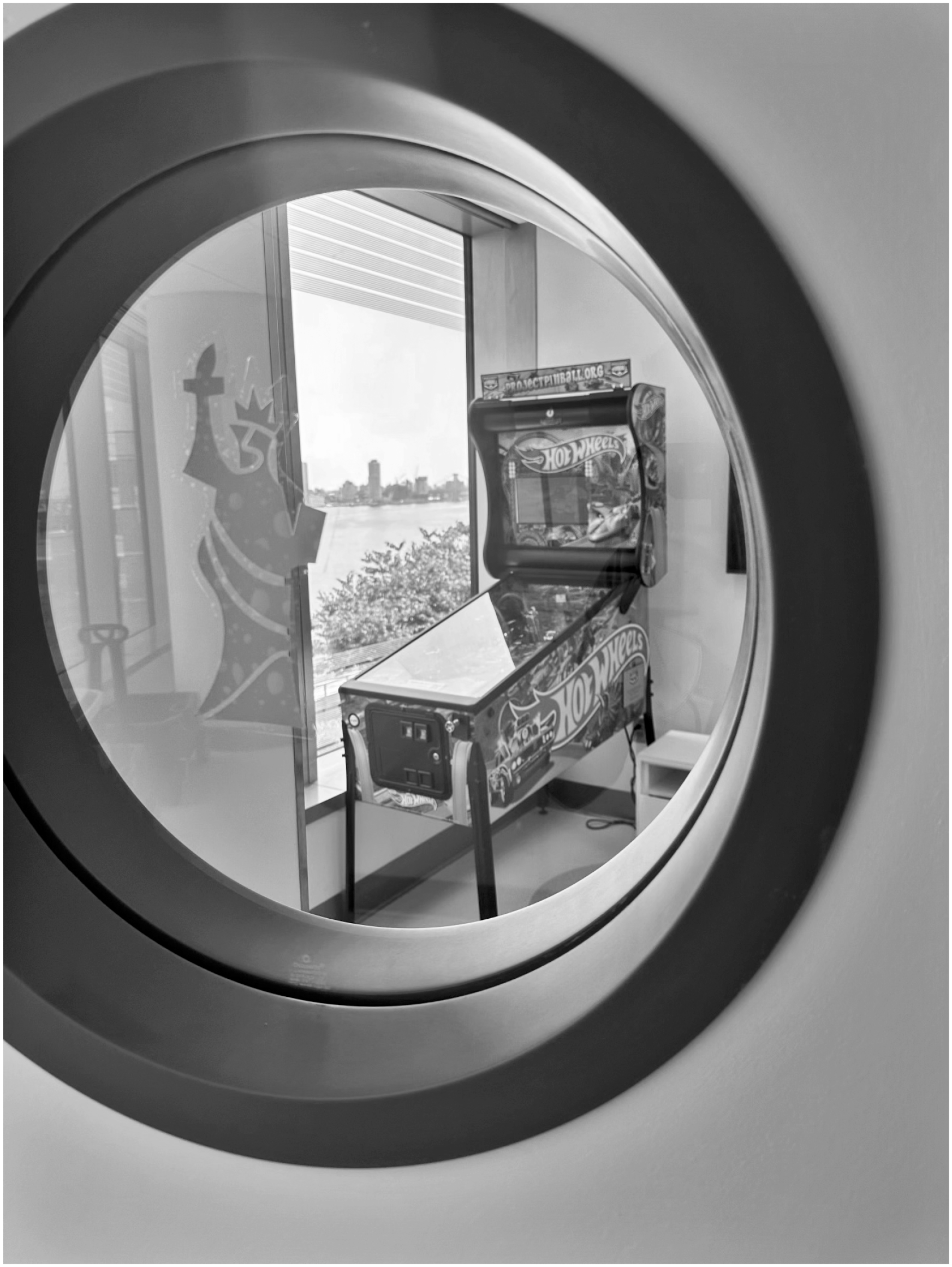
Beyond using pinball for profit, people today use the game for community building and healing. The Project Pinball Charity, for example, places pinball machines into hospitals to help children recover. David Fix, the CEO of American Pinball, donated Hot Wheels (American Pinball, 2020) to Hassenfeld Children’s Hospital at NYU Langone Health as part of the project (p. 45). The purpose of Project Pinball, according to the founder and director, Daniel Spolar, is to provide recreational relief—in this way, pinball has become something much more than for-profit-amusement.
As I write, only 40,909 pinball machines reside in 9,887 locations across the world (according to Pinball Map). But for the establishments in America, the pinball machine still means something. Harnessing its nostalgic power, stores, bars, laundromats, cafes, and museums still use the pinball machine to lure in customers to drink, eat, look, and listen. Importantly, though, the games are no longer self-sustaining. Operators in earlier times could earn enough money from pinball games to pay off their investment in the machines. This is still sometimes the case, according to Peter Rose, the owner and operator of Sunshine Laundromat in New York City, but for many other locations, the games are not earners. It’s little wonder so many have ended up in the hands of private collectors. Yet, past the emotional draw, it remains something of a mystery why other businesses continue to maintain older machines and even buy new ones.
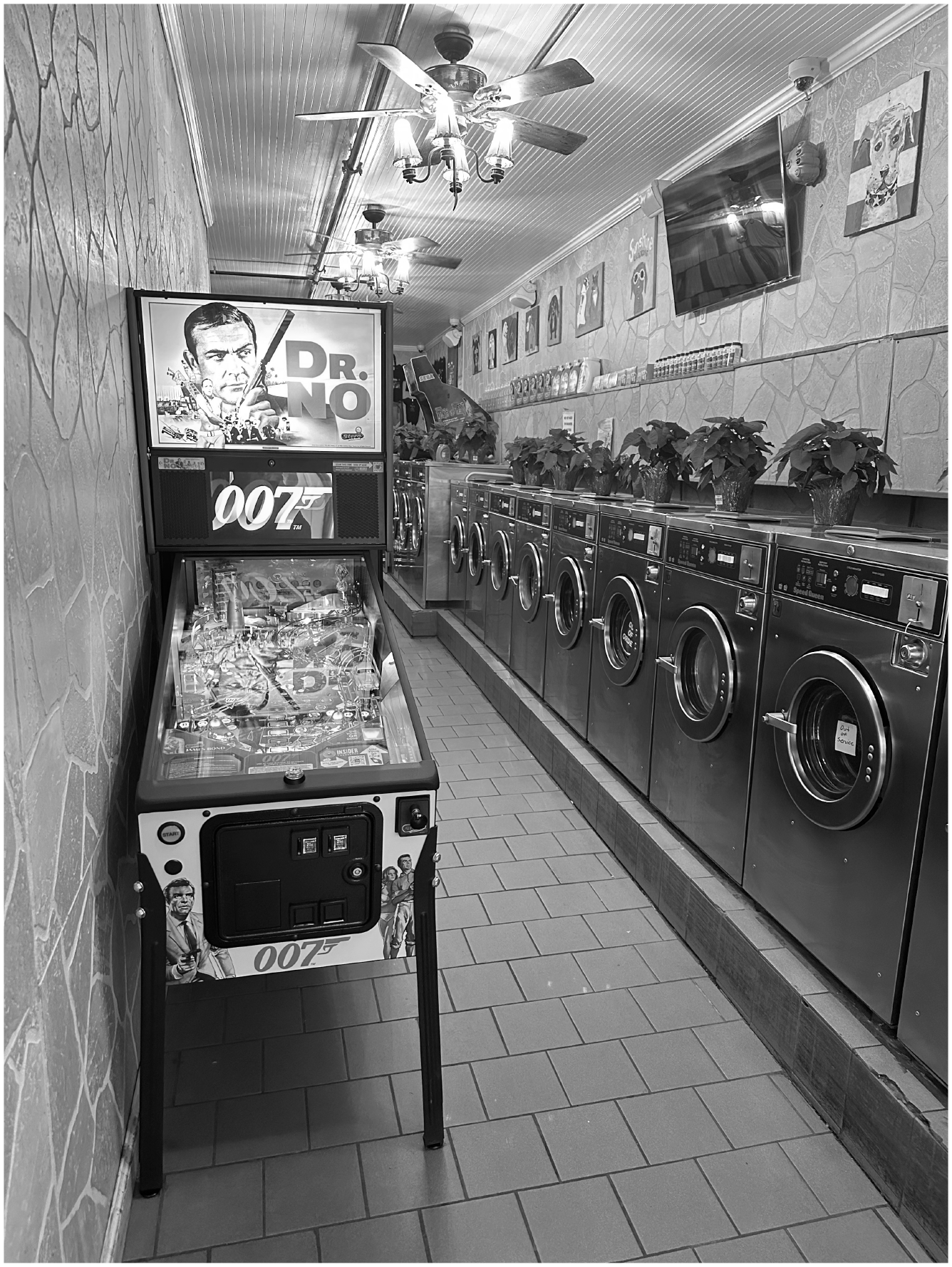
For Sunshine Laundromat, a laundromat and speakeasy in Brooklyn, New York, pinball is two things: drunken entertainment and an activity to pass the time while you wait for your laundry to dry. Some (b)arcades’ pinball machines only accept tokens available for purchase at the establishment, but the James Bond 007 (Stern, 2022) machine pictured here accepts quarters, just like the nearby laundry machines.
All photos © Ryan Banfi
The collection of photographs in this essay, snapped across the cityscapes of the greater Seattle area, New York City, and Delray Beach, Florida, showcases the nuances of placing pinball machines in public places. It records the ways that, in their very presence, the machines can evoke loss, pride, waiting, and wandering. And it documents pieces of the past still standing, still inviting the public to pause and play.
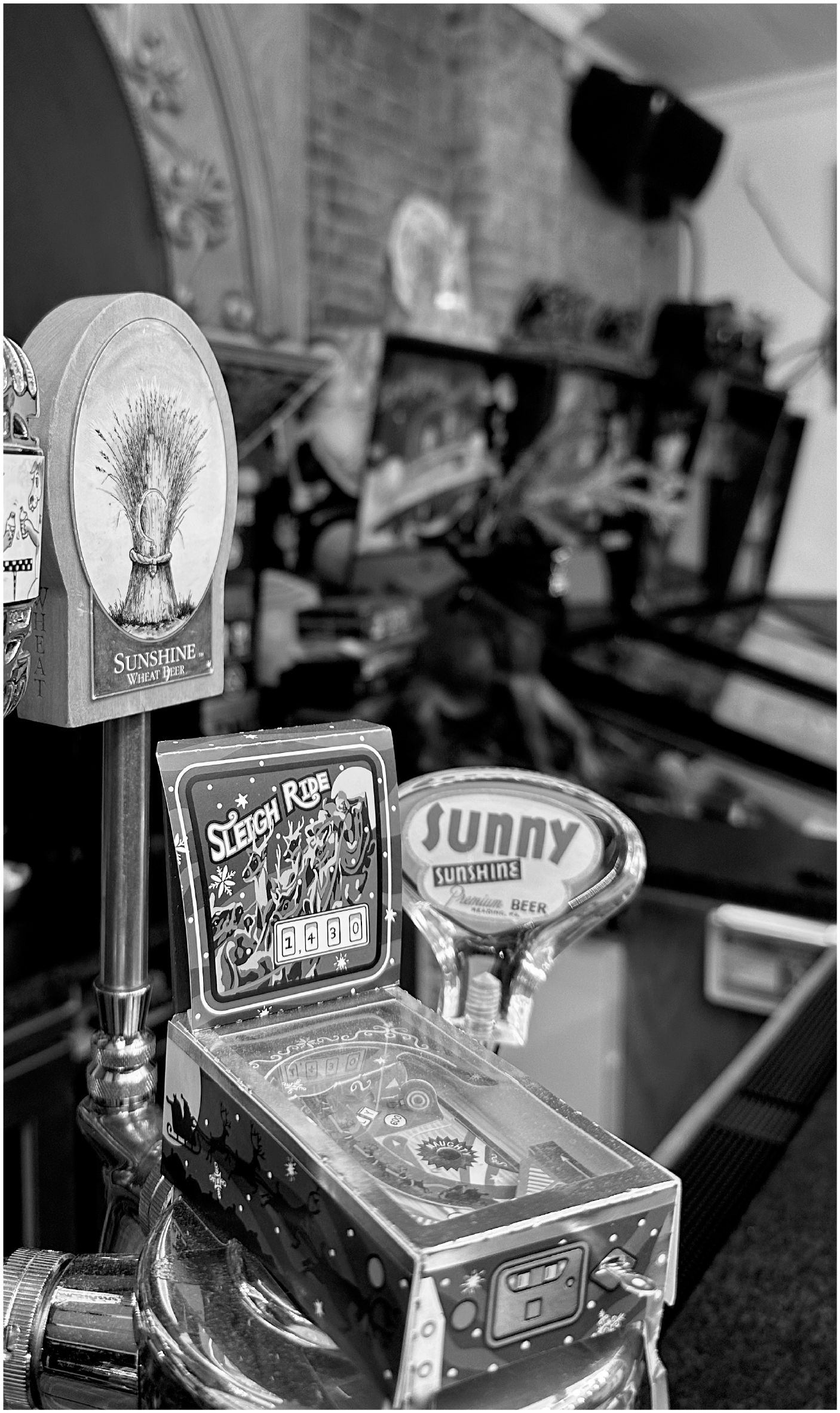
On the other side of Sunshine Laundromat—where they put the "suds" into the suds-and-duds bar-laundromat format—even the bar sports a miniature pinball motif. Patrons can drink while they play, play while they drink in the "barcade" spin on the 20th century’s arcade industry.
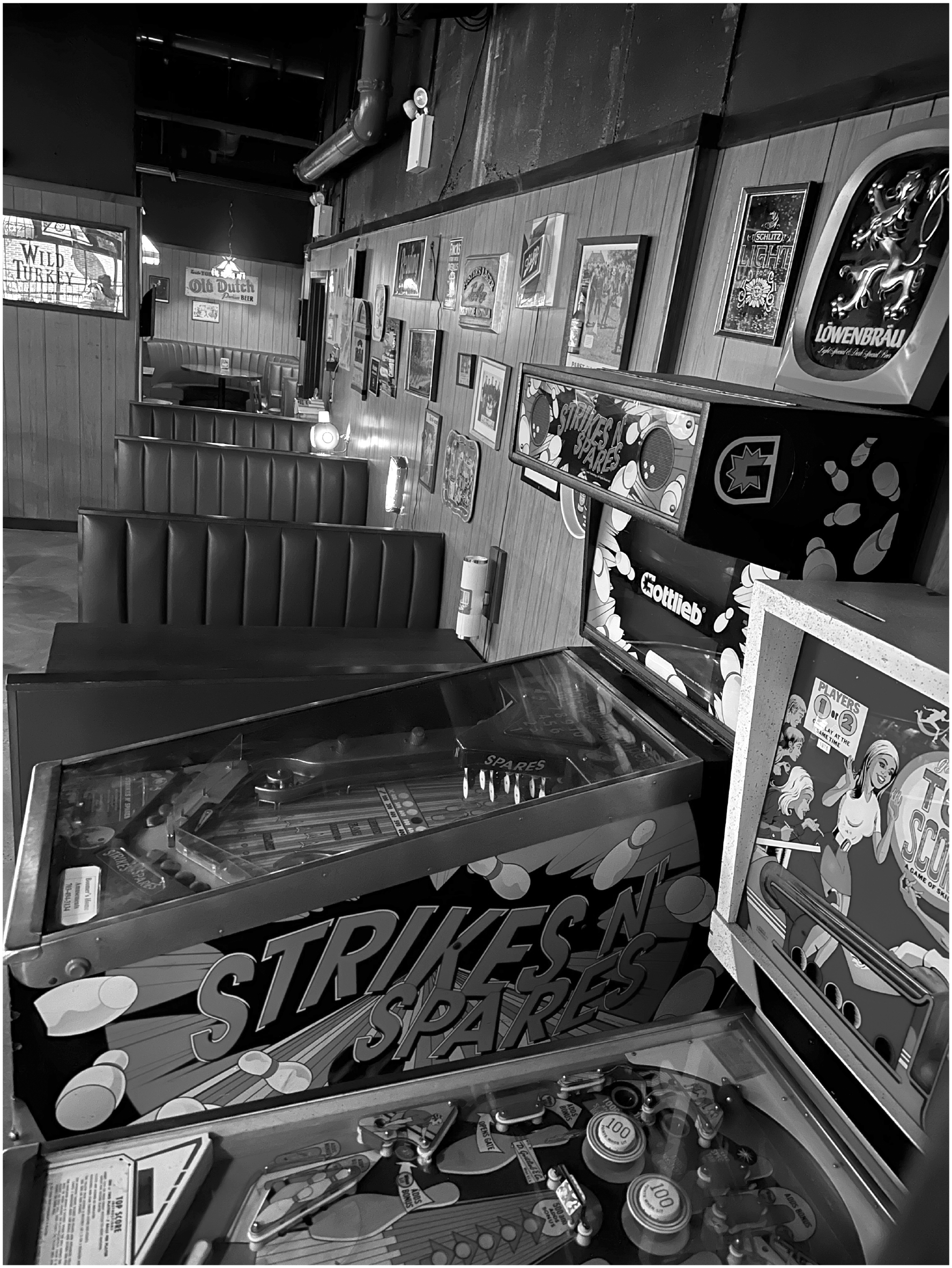
The Gutter, on Manhattan’s Lower East Side, is a bowling alley, but near the lanes, I spotted the games Strikes N’Spares (Gottlieb, 1995) and Top Score (Gottlieb, 1975). When I asked the manager if the machines worked, he told me, "Nope! They are just for show!" Customers cannot play them, and so the games act as furniture to help recreate the atmosphere of a bygone era.
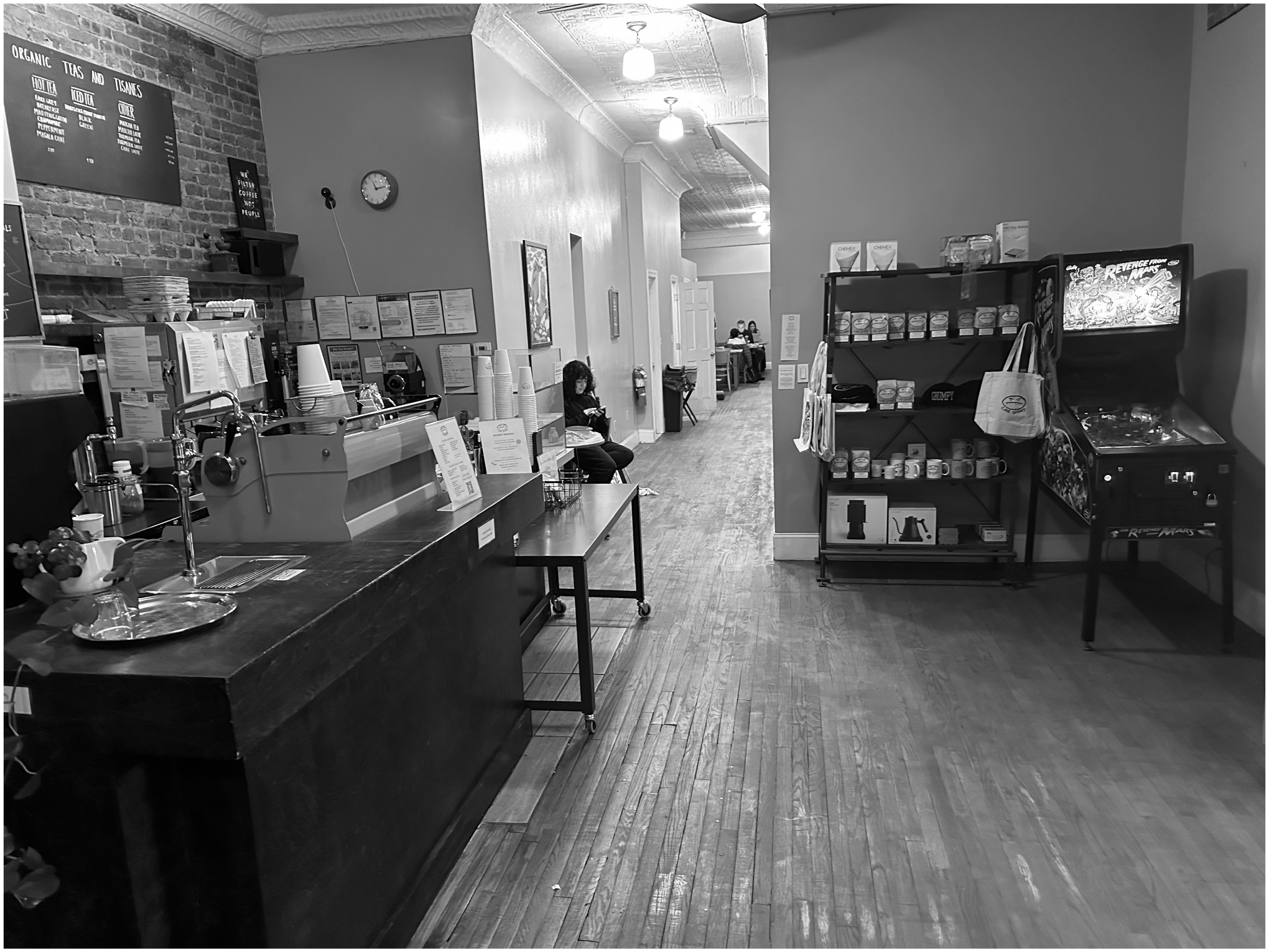
It may seem antithetical to house a pinball machine that dings, rings, and sings in a cafe (Cafe Grumpy in Greenpoint, Brooklyn, to be exact) where students and professionals gather to read, work, and write. Indeed, after playing Revenge from Mars (Bally, 1999) and seeing people observe me play, I am convinced that it is. Perhaps for that reason, this is, according to the Pinball Map, among the few cafes in the world to include a working pinball machine.
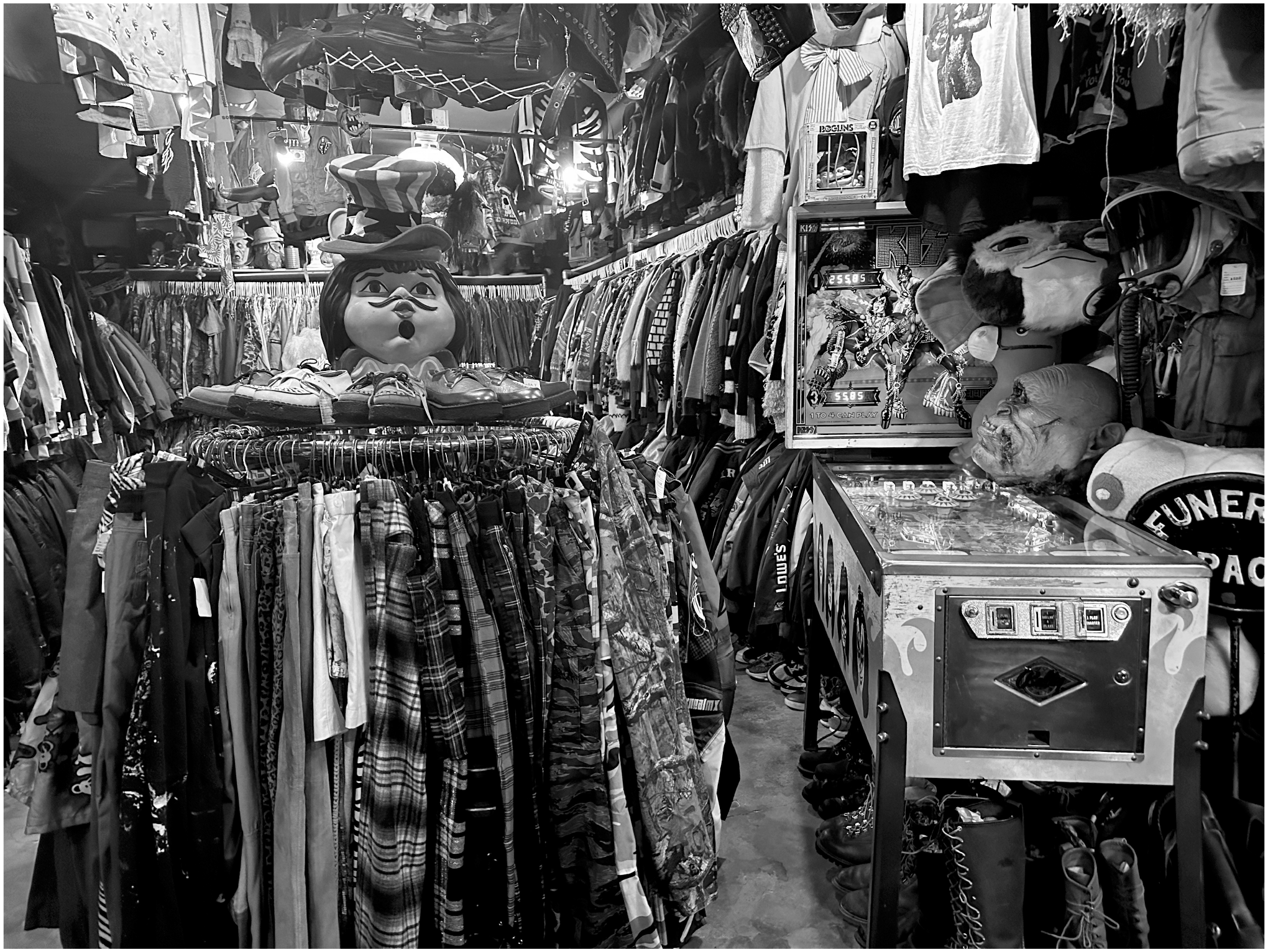
This KISS (Bally, 1979) machine is buried under numerous trinkets and clothes in a vintage shop called Search and Destroy on St. Mark’s Place in Manhattan’s East Village. According to the staff member I spoke with, the machine works, but more often "the machine’s function is to dissolve into the space as it is a part of the ambience, no one really plays it."
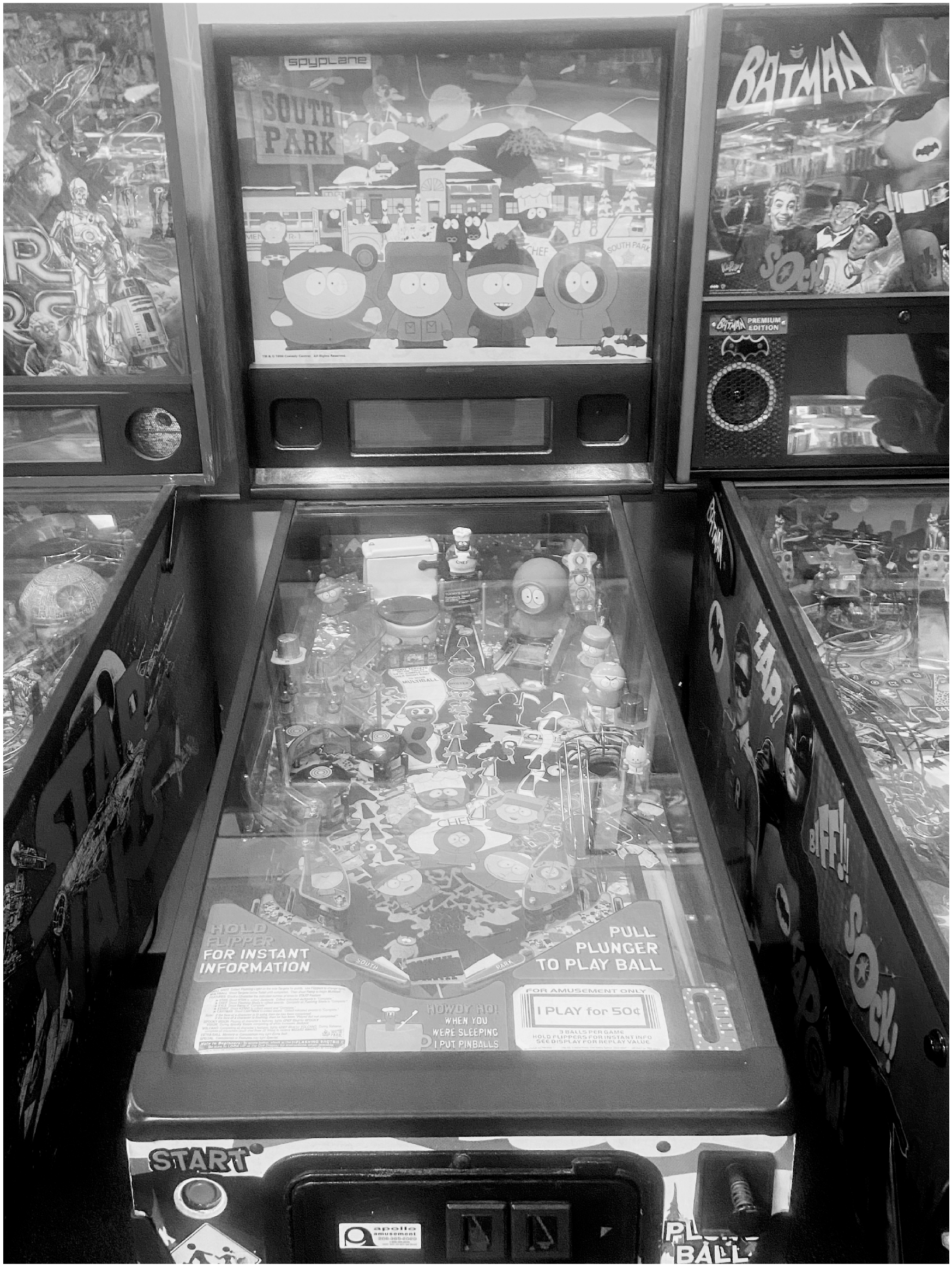
The pinball machines at Another Castle Video Games in Lynwood, WA, work, but they were unplugged in May 2020 (when this photo was taken) so that people would not congregate and spread COVID-19. Rather than the usual flashing lights, patrons would see their own reflections in the black screens. In this way, the purpose of these machines, at least for the time, was not for play, but as an object imbued with collective wishes for a time when they could be played.
The Hot Wheels (American Pinball, 2020) machine donated by American Pinball resides on the 8th floor of the Hassenfeld Children’s Hospital at NYU Langone Health. According to play theorist Joe L. Frost, play carries healing power, especially among children, who are learning to interact with others during play. Thus, pinball is prescribed as a restorative activity—a game that can help kids heal.
Coney Island Pinball, June 17th, 2023, during the 41st Annual Mermaid Parade in Coney Island, Brooklyn. Pinball is essential to the memory of the park’s heyday, when its name adorned so many pinball machines. Coney Island Pinball, in fact, features the game Old Coney Island! among its titles.
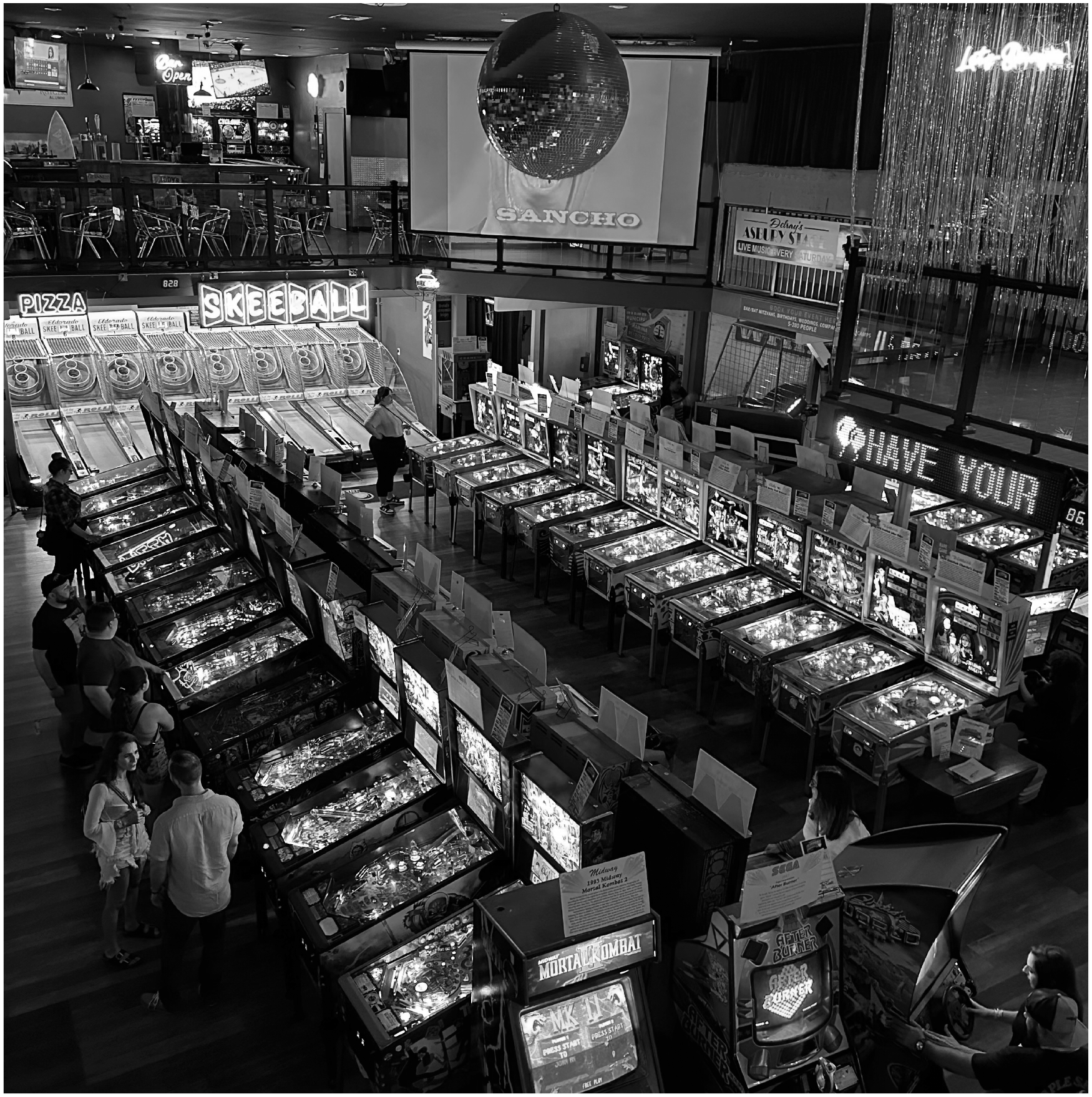
Some museums, like The Strong National Museum of Play, are meant to preserve the integrity of the art of games. The Silverball Museum in Delray Beach, Florida, pictured here, houses an original Pong arcade cabinet (Pong essentially created the video game industry) as well as Knockout (Gottlieb, 1950) and other rare pinball games. But it is also a barcade: On Wednesdays from 8-11 pm, the museum hosts a weekly “ladies’ night” with half-off drinks. It has become evident that pairing the rare hardware that kickstarted a gaming revolution with alcohol can make for a promising business venture.