Abstract
Jess Tolbert, Maria Cristina Morales, and Nancy Plankey-Videla on value and aesthetic labor.
Art stirs emotions and ignites critical thinking. But how does the art we value connect to the status of the artists and their labor process? Jess Tolbert, an artist, and Cristina Morales, a sociologist, come together to show the spaces where their disciplines converge by organizing the Art + Labor workshop and conversation.
Here, we feature the work of Candelaria, a Rarámuri, an Indigenous woman, and Janette Terrazas, or Mustang Jane, a co-founder of Ni En More, a non-profit social innovation project in Cuidad Juárez, Mexico that merges political activism, fashion, and art. The mission of Ni En More (Not One More) is to alleviate the exploitation of women workers in the maquiladora export industry and to curb femicides in Ciudad Juarez.
In addition, we invited Dr. Nancy Plankey-Videla to join the conversation. She discussed her previous work on a Mexican global factory that reorganized to manufacture consent—but instead manufactured militancy. She also contextualized the workforce within the global economy and the dynamics of neoliberalism that promote the hiring of a presumably docile female workforce. Assumption does not meet reality, she discussed, as women, seen in the case of Ni En More, are not passive actors but active agents.
Mustang Jane further taught us how Ni En More brings Raramuri, an Indigenous group in Chihuahua, Mexico, and Mexican women from impoverished colonias in Juarez, together in the process of bundle-dying with natural materials—flowers, leaves, fruits, nuts, among others. In this way, the group fashioned a creative and agentic alternative to the dehumanizing and repetitive work in the maquiladoras.
Art + Labor not only ignited interesting conversations at the intersection of art and sociology, it introduced participants to the physical and creative work of bundle-dying. All of the participants received a kit with the necessary materials, as well as instructions for gathering their own flowers and leaves. We learned various processes of bundle dying with natural materials and we created unique bandanas. But why did we not do it alone—but together?
The idea for this collaboration came pre-pandemic. Rather than cancel the event, we turned to Zoom, holding our two-day workshop across October 20 and October 22, 2020. On the latter date, El Paso had 1,161 people newly diagnosed with the coronavirus, and we were eight months into experiencing various degrees of quarantine and social isolation. This is important to mention, because in addition to providing a space for art and sociology to come together, Art + Labor also provided healing by filling a void for human connection. Art + Labor connected feminists on both sides of the U.S.-Mexico border and central Texas, faculty and students, and children, mothers, sisters, and aunts.
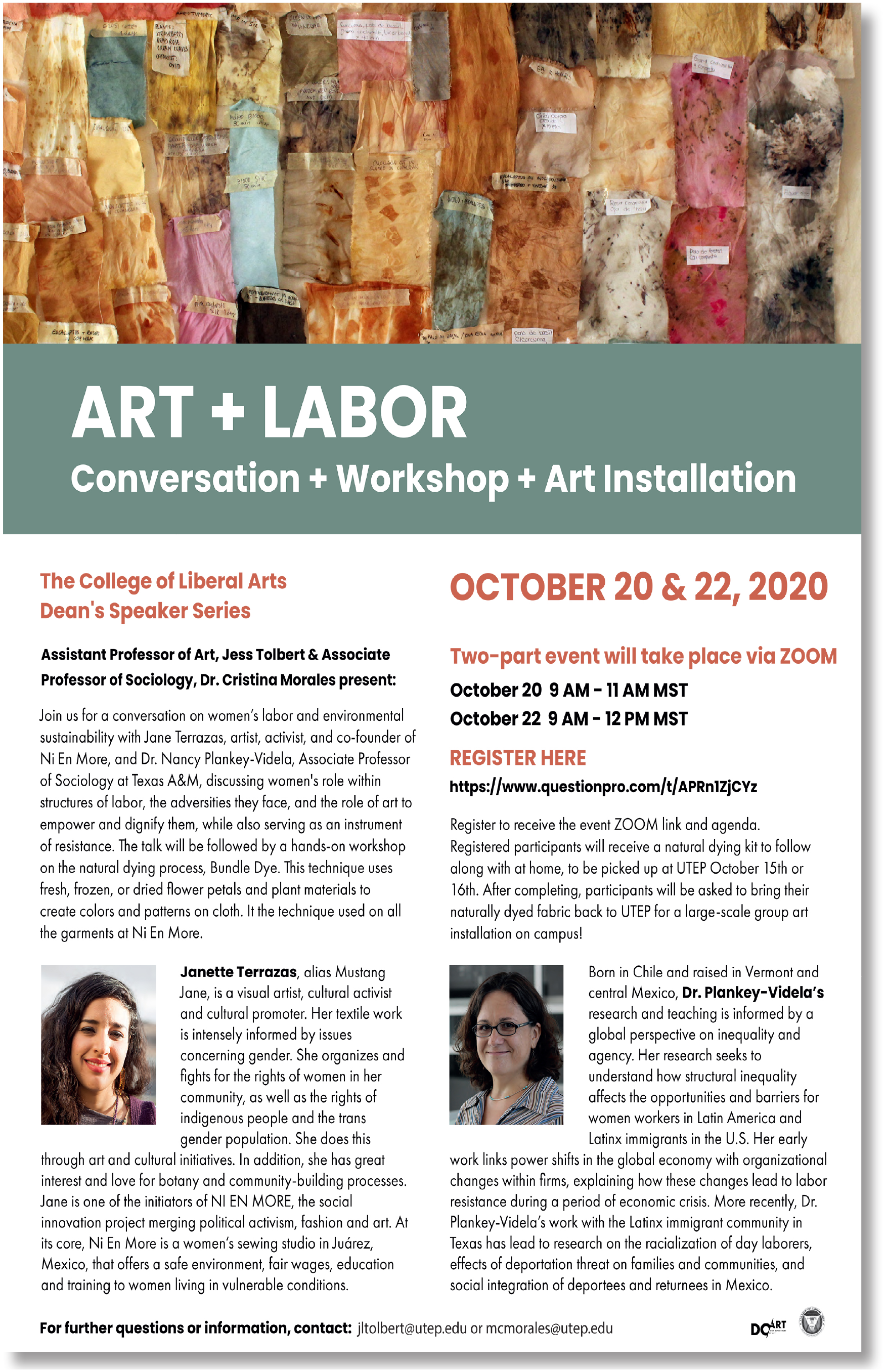
Promotional material for Art + Labor conversation + workshop + art installation. Organizers, featured speakers, and workshop details are outlined above, with a sample images of naturally dyed fabrics made by Janette Terrazas.
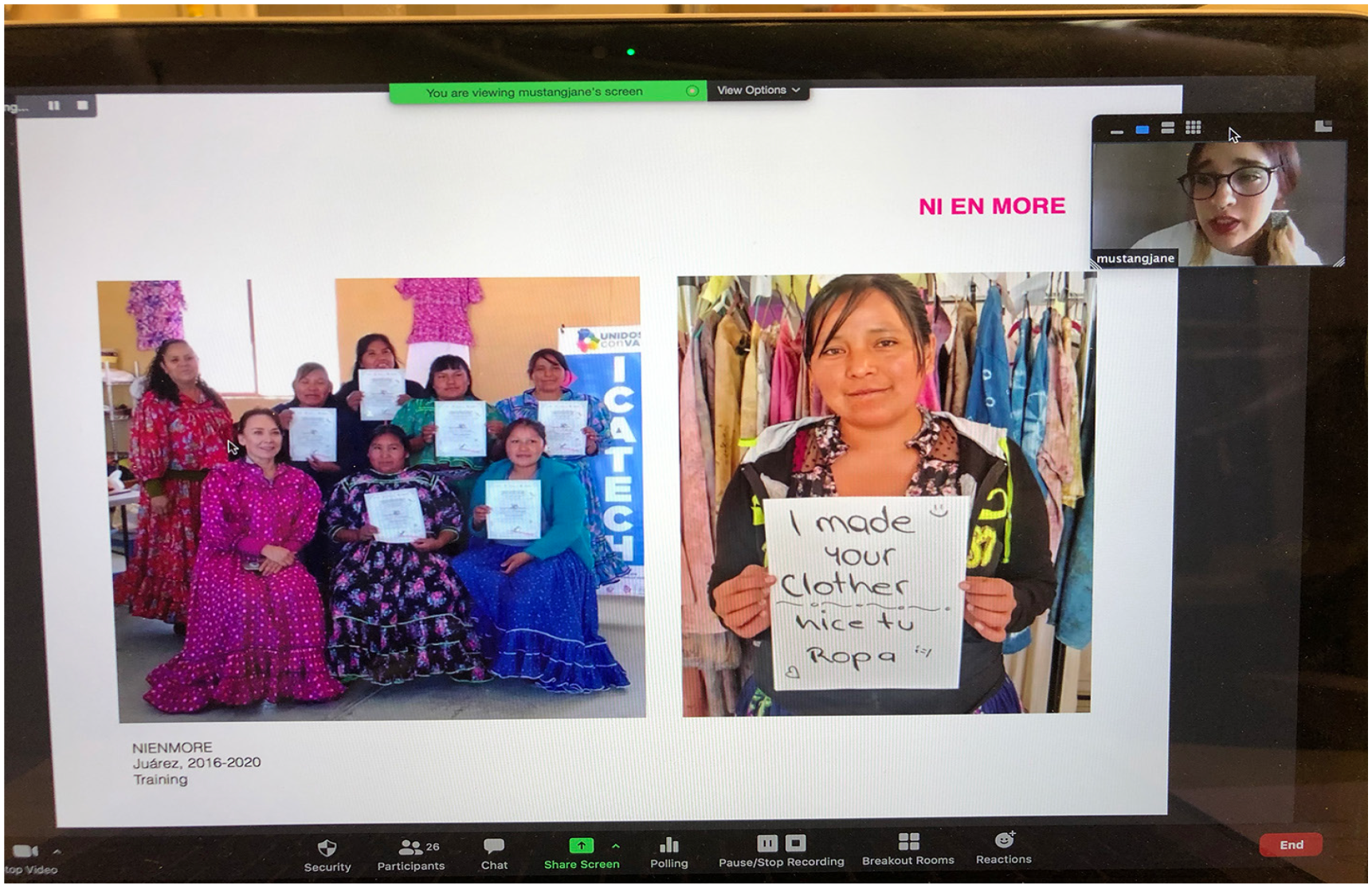
Screenshot of our Zoom conversation showing Janette Terrazas speaking about the Ni En More studio in Cuidad Juarez, Chihuahua, Mexico. Top right-hand corner is Mustang Jane, co-founder of Ni En More, and main photo is of the group of Raramuri and low-income Mexican women who are training us on the bundle-dye clothing process.
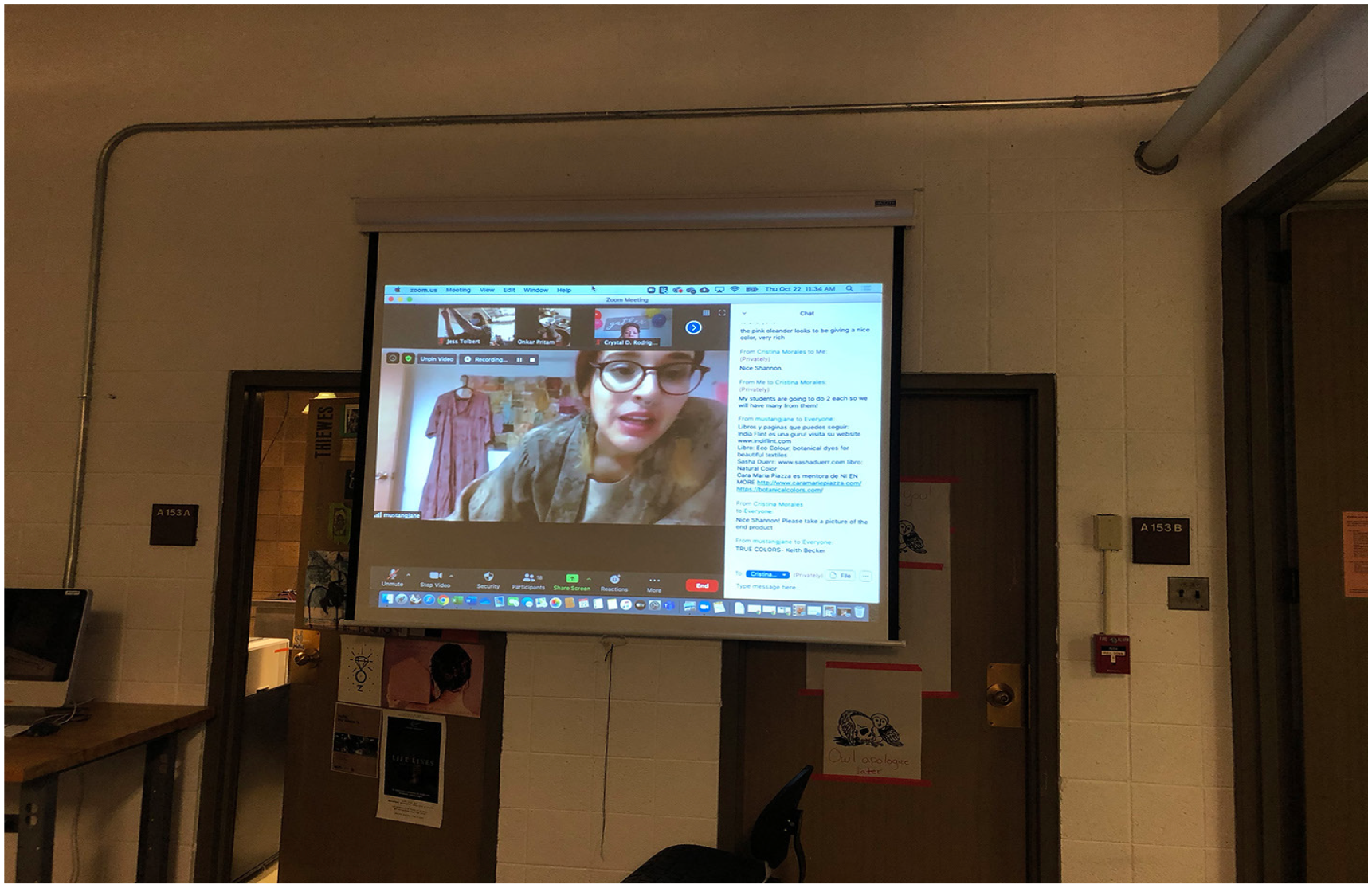
Art + Labor Zoom conversation and workshop taking place at the metals studio in the Department of Art at the University of Texas-El Paso. Janette Terrazas is seen answering questions from a lively chat discussion.
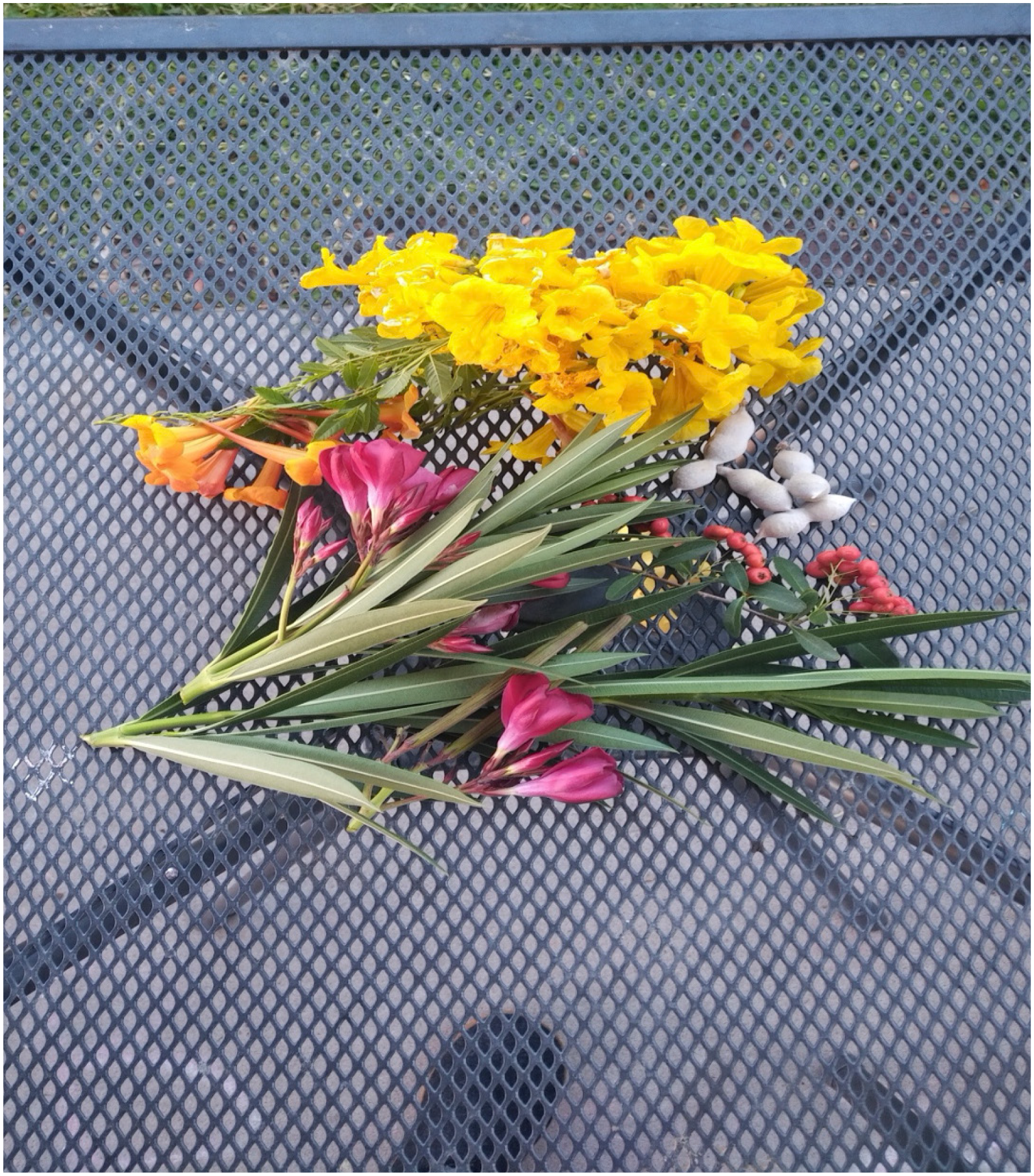
Natural materials for bundle-dye—pink oleander, onion skin, purple flowers, and yellow flowers—gathered from participant Dr. Shannon Connelly’s yard.
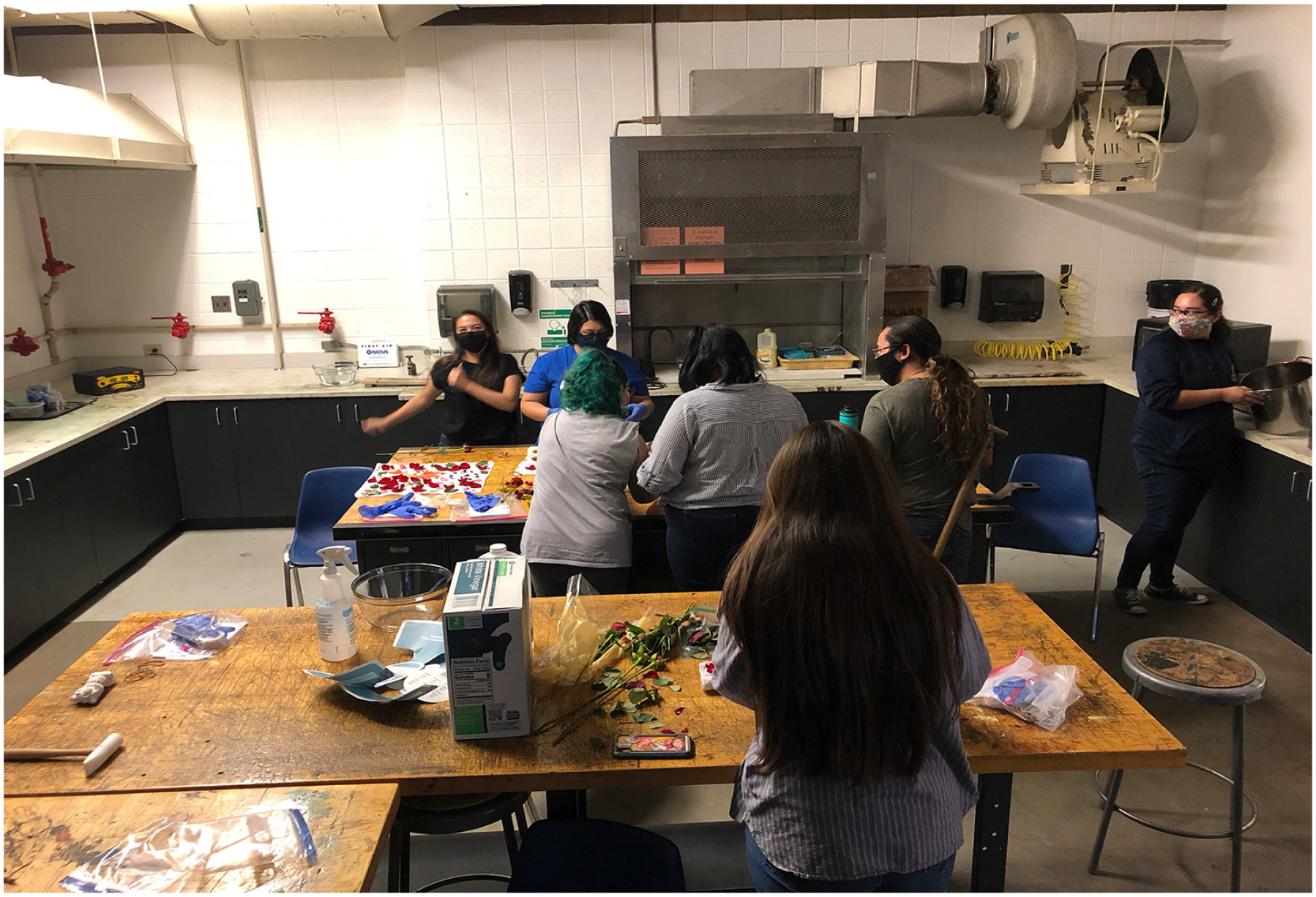
Jewelry and metalsmithing students at the University of Texas-El Paso, Department of Art metals studio working on their bundle-dye projects.
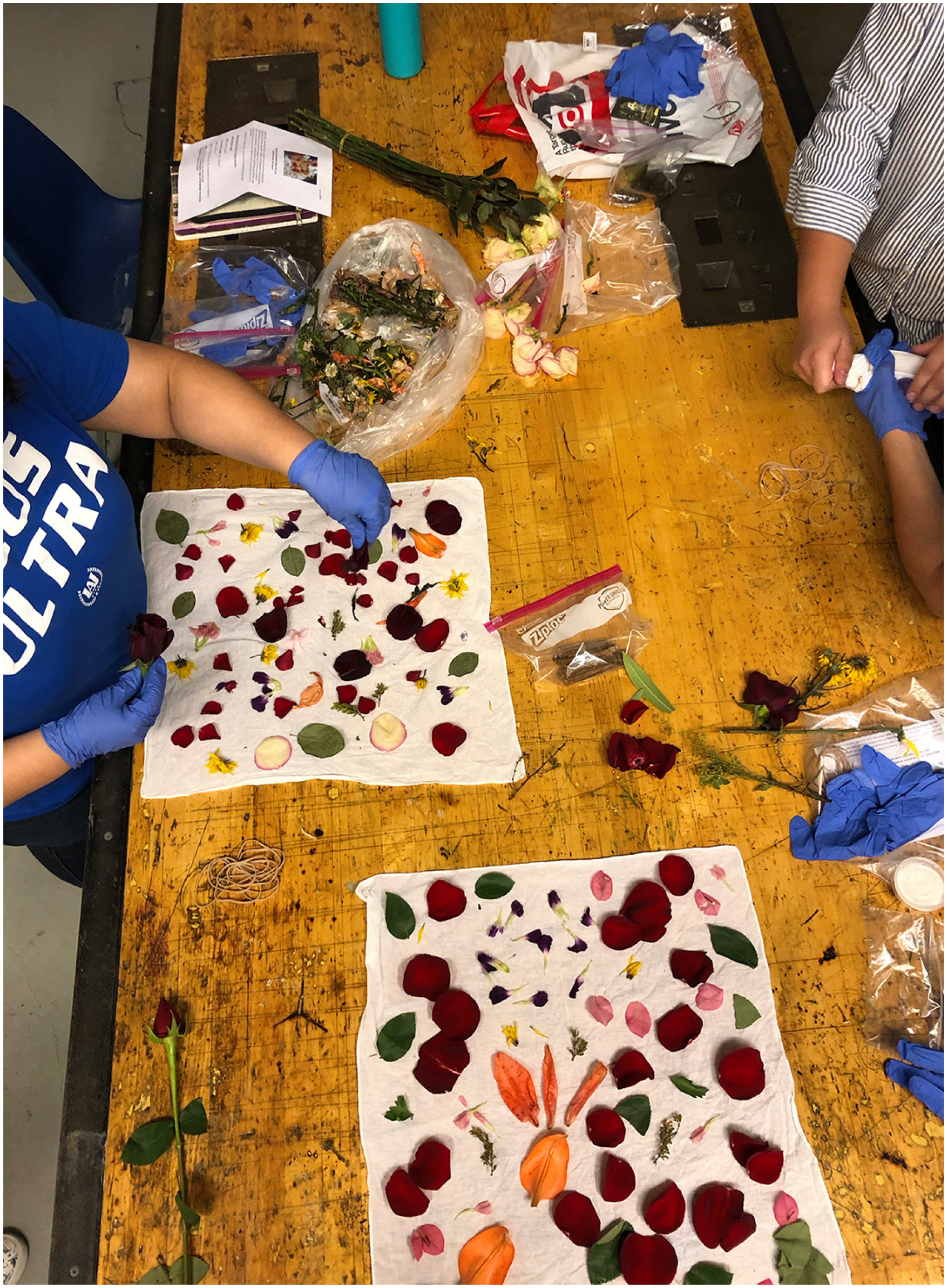
Students arranging their natural materials on bandanas before rolling and tying at the University of Texas-El Paso, Department of Art metals studio.
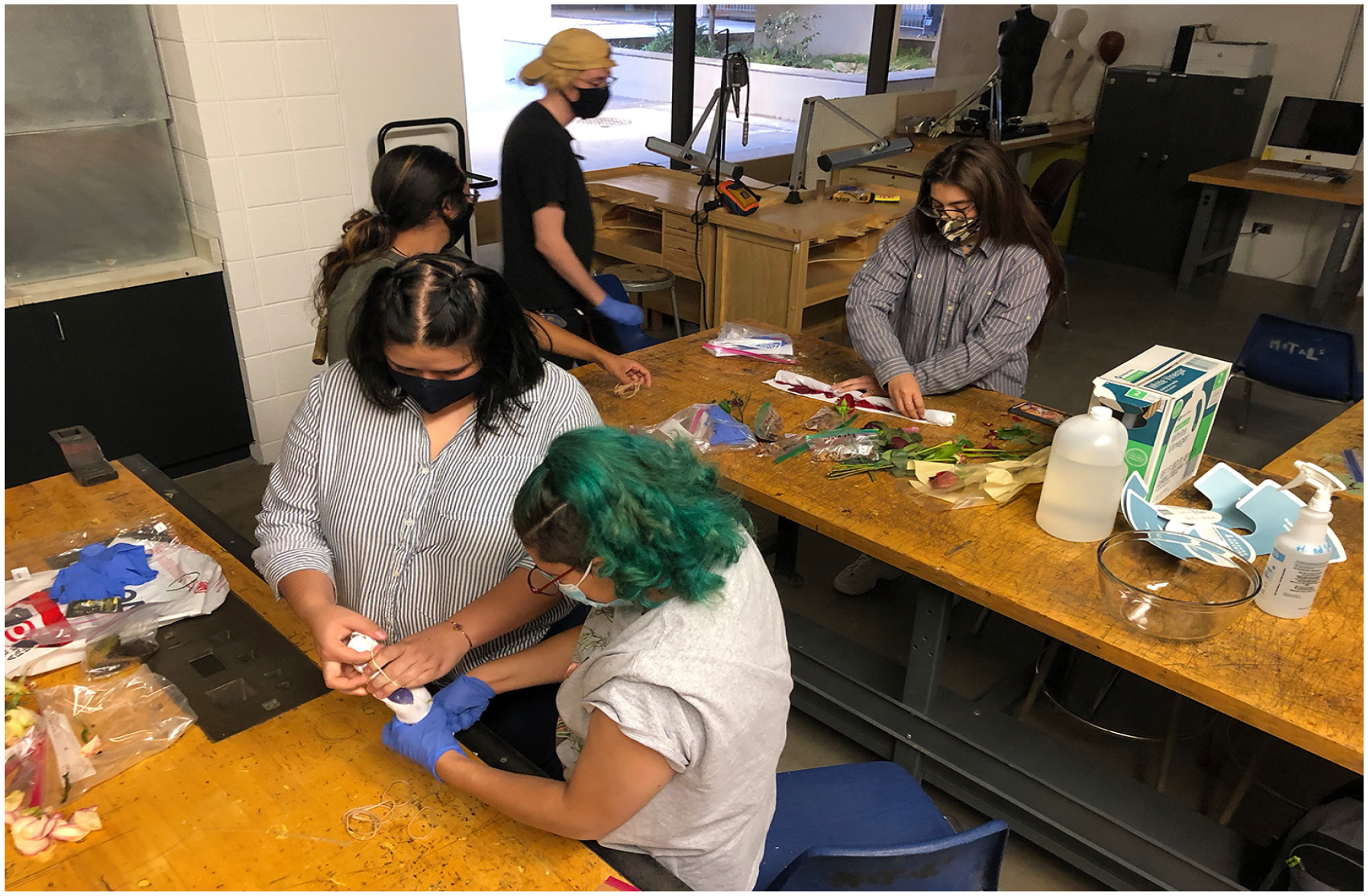
Students collaborating on their bundle-dye projects during the pandemic, at the University of Texas-El Paso, Department of Art metals studio.
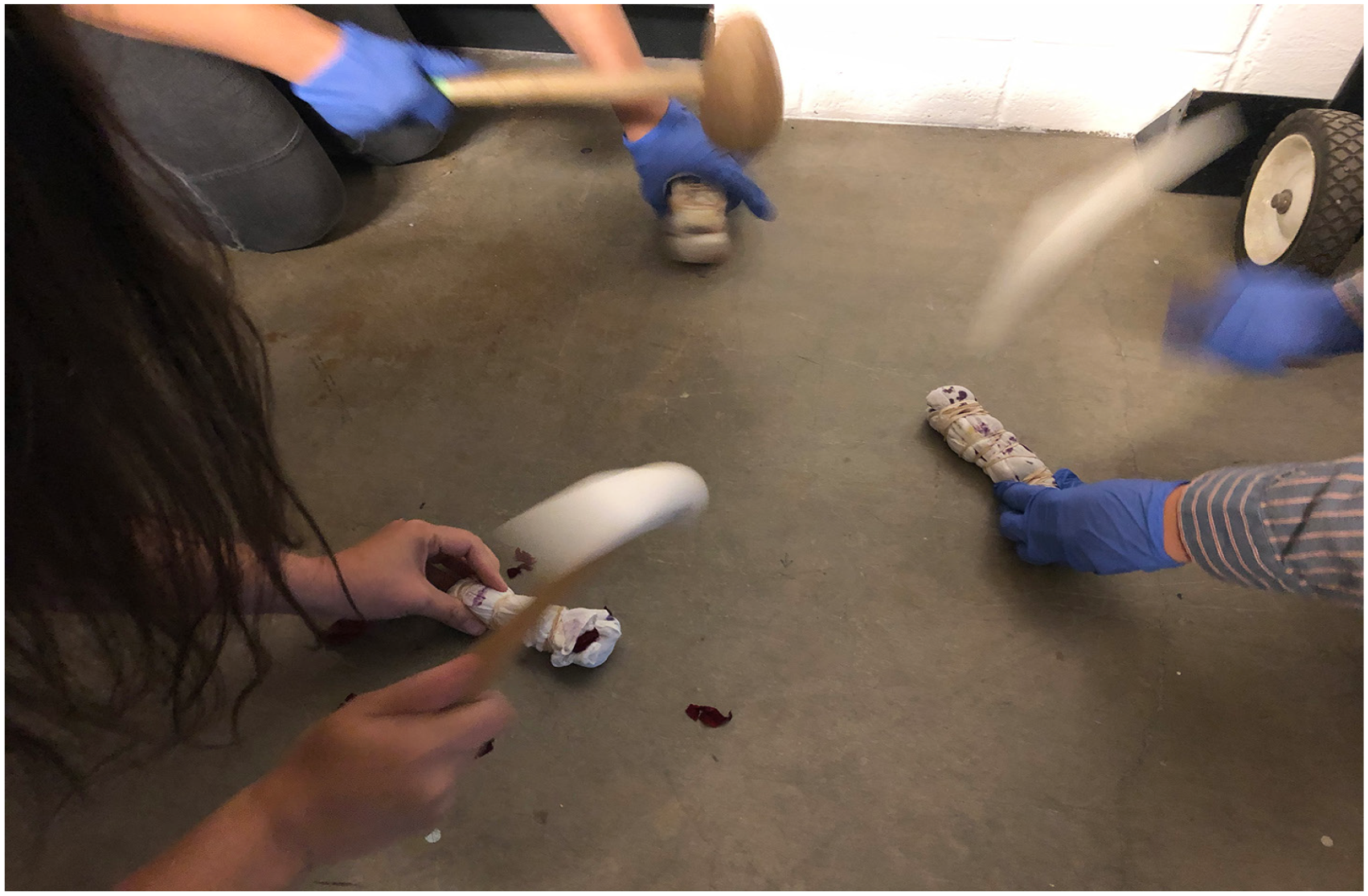
The bandanas are now rolled and tied with natural leaves/flowers inside. This image shows the process of smashing or hammering the bundles to release the natural materials’ pigment prior to steaming.
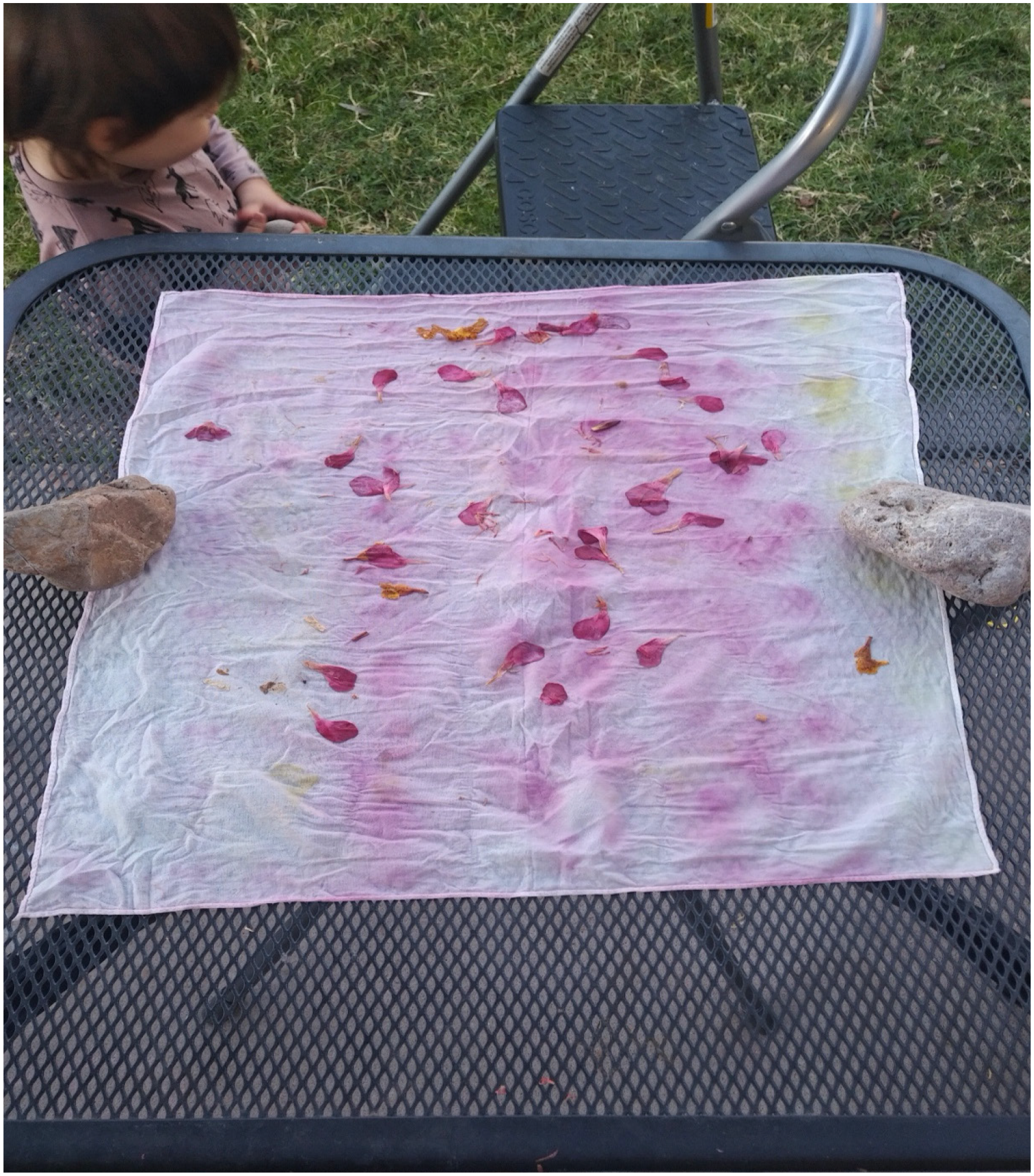
After the bundles are steamed, they are unrolled to reveal the beautiful range of color. This bundle-dye process photo is from participant Dr. Shannon Connelly, working at home with her daughter.
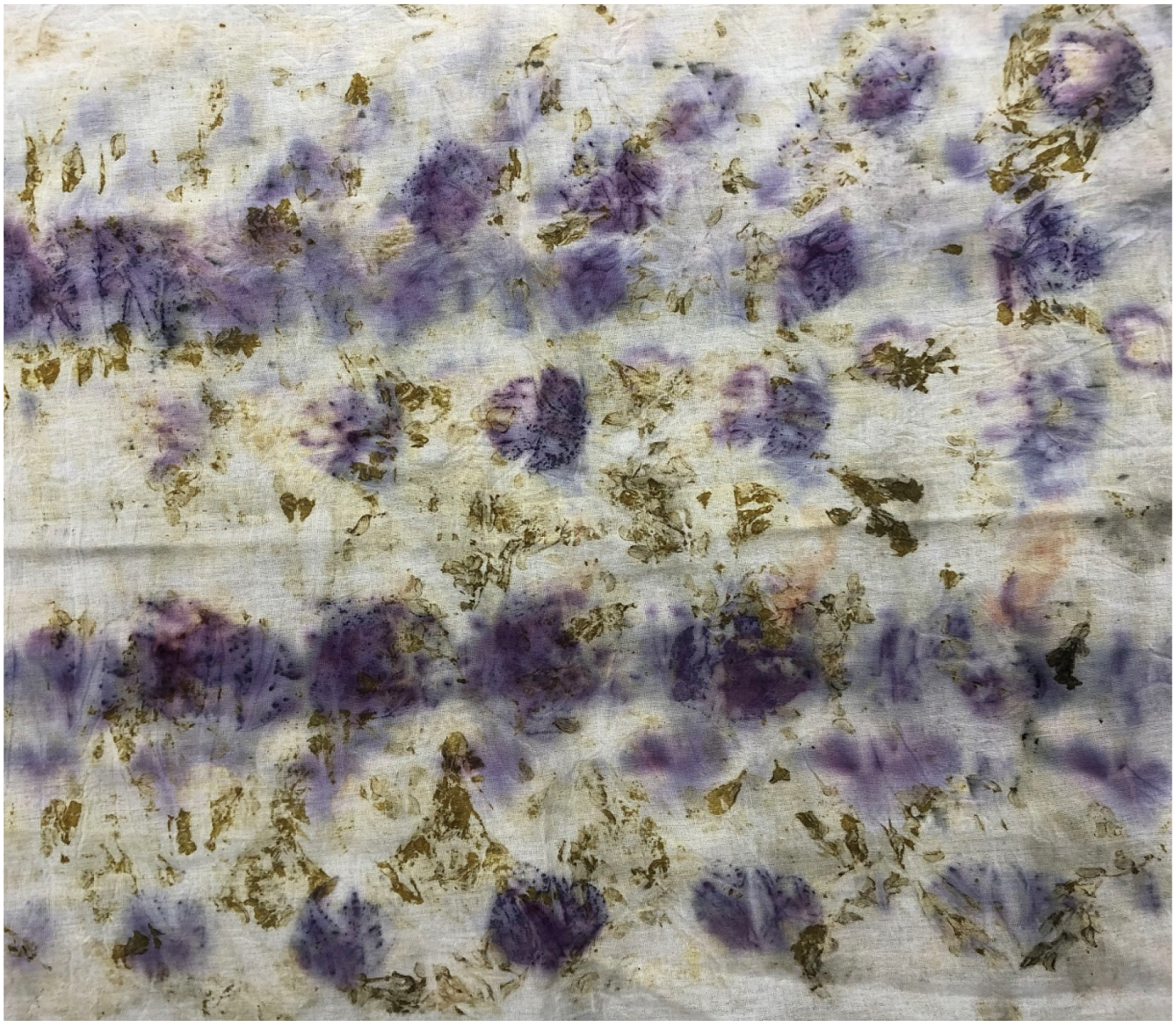
Final bundle-dyed fabric (bandana) from one of the participants at the Art + Labor workshop. These colors and patterns were achieved with roses and leaves of the creosote plant.
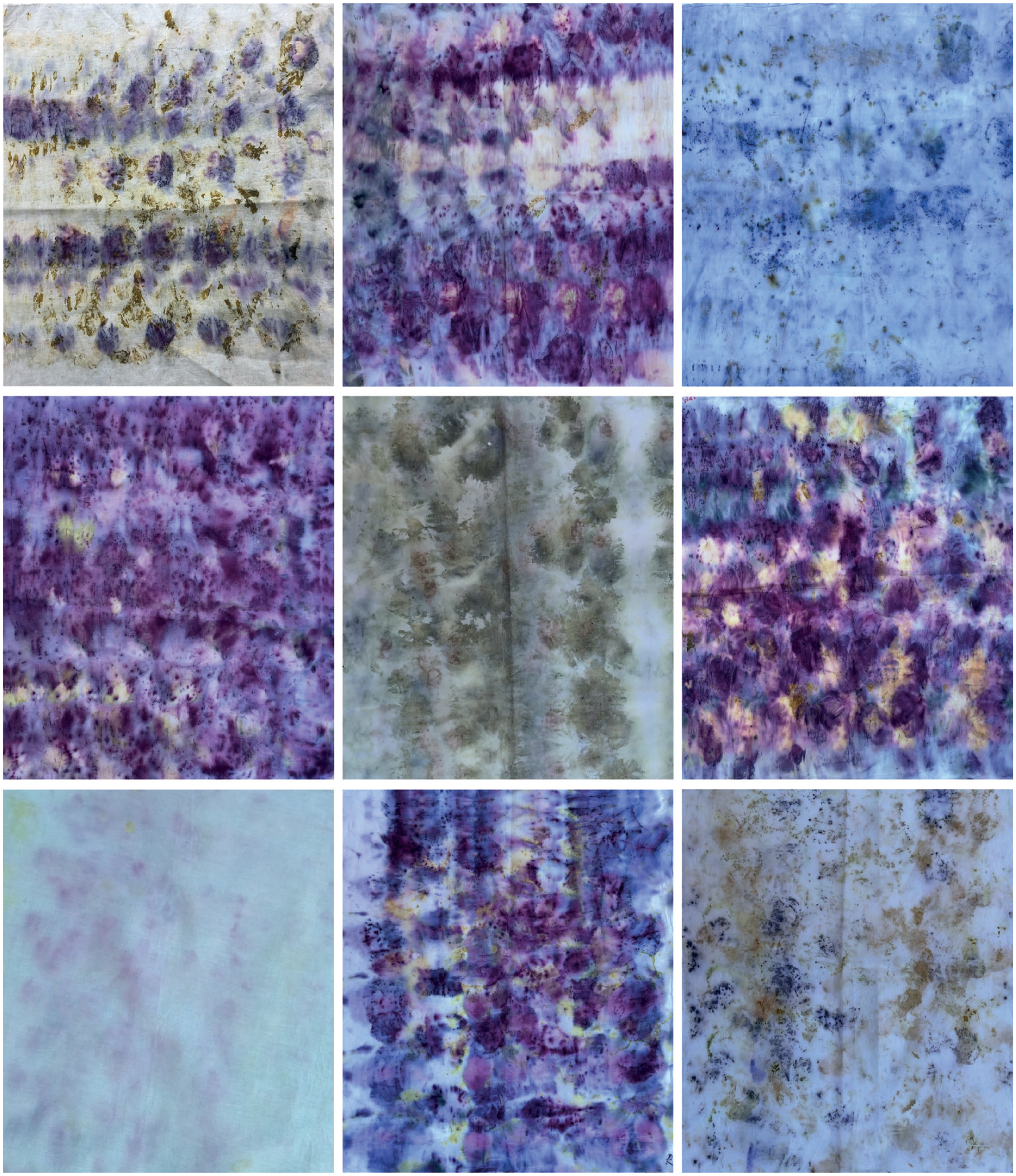
Due to the ongoing, and at the time increasing pandemic, we opted to create a digital installation of the bundle-dyed fabrics. This digital “quilt” showcases nine participants’ variations of the process using a wide range of materials. To see all images in color, visit ctx.sagepub.com.