



Abstract
Intersectional oppression, or the combined effects of various kinds of discrimination and exclusion, is a fact of life for Cabo Verdean service and care workers in Lisbon, Portugal. But so, too, is joy. By cultivating Black joy within counterspaces of belonging, these women reveal a kaleidoscope of futures worth fighting for.
Friends, neighbors, and newcomers filled the space with their laughter and conversations. Older men and women sat chatting at tables, while children and teenagers bantered playfully in the the corners, their array of hairstyles too numerous to catalog. Straight, curly, and coiled coifs topped Black and brown faces with shiny twists, locks, and braids, smatterings of bronze clips and cowry shells, and afros of every size. The room became louder, reverberating with a comfortable cacophony of laughter, enthusiastic conversations, musical instruments tuning up, tables and chairs scraping, and feet shuffling on cool linoleum.
Cabo Verde’s Independence Day, July 5th, is recognized in many of the peripheral neighborhoods of Lisbon, Portugal, including Mirela’s. A migrant from the island archipelago nation, she invited me to this gathering roughly 10 kilometers from central Lisbon. I walked into a welcoming crowd of happy people celebrating their country’s long-fought independence. As we sat in the corner and enjoyed the rhythms of soft coladeira coming from a nearby troupe of musicians, Mirela turned to me, smiled, and rather assuredly told me, "THIS will really make your research! Make sure you don’t forget!" Indeed, what I observed was nothing short than a scene of unbridled, beautiful Black, diasporic joy. And, importantly, this joy emanated from within Portugal, the very country that had claimed Mirela’s homeland as a colony for more than 500 years.
Scenes like these filled the field research I conducted for my book, Laboring in the Shadow of Empire: Race, Gender, and Care Work in Portugal, which centers on the everyday lives of an African-descendant cleaning and home care service workforce in Portugal. This is a contemporary, ostensibly "anti-racial" immigrant-receiving nation where race is not considered a legitimate social category by the state, yet, as Cabo Verdean women migrate to Lisbon, entering labor markets and interacting with natives and fellow immigrants, what they experience is anything but anti-racial (this may remind readers of the case of France, explored in Jean Beaman’s 2012 Contexts article "But Madame, We Are French Also, "or of Sweden, explored in Beiyi Hu’s 2024 Contexts article "Talking Race in a Race-Taboo Land"). They weather systemic gendered racism within a society where Africans and African descendants are framed as in but not truly of Europe.
Even so, exclusion is not the only story to be told. As I interviewed and shadowed Cabo Verdean migrant care workers throughout their work and in their neighborhood spaces, I took note of how they and their communities co-created counterspaces of belonging in which their intersectional identities are visible. In these spaces, intersectional identities did not simply mark marginalization, but, rather, reflected and opened spaces for Black joy. Society-wide intersectional oppressions may attempt to restrict Cabo Verdean women’s ability to feel and express joy freely, but joyful moments and counterspaces of belonging proliferated in my fieldwork. Together, they remind us that there are always joyful, agentic possibilities emerging from within and, perhaps, beyond the shadow of Empire.
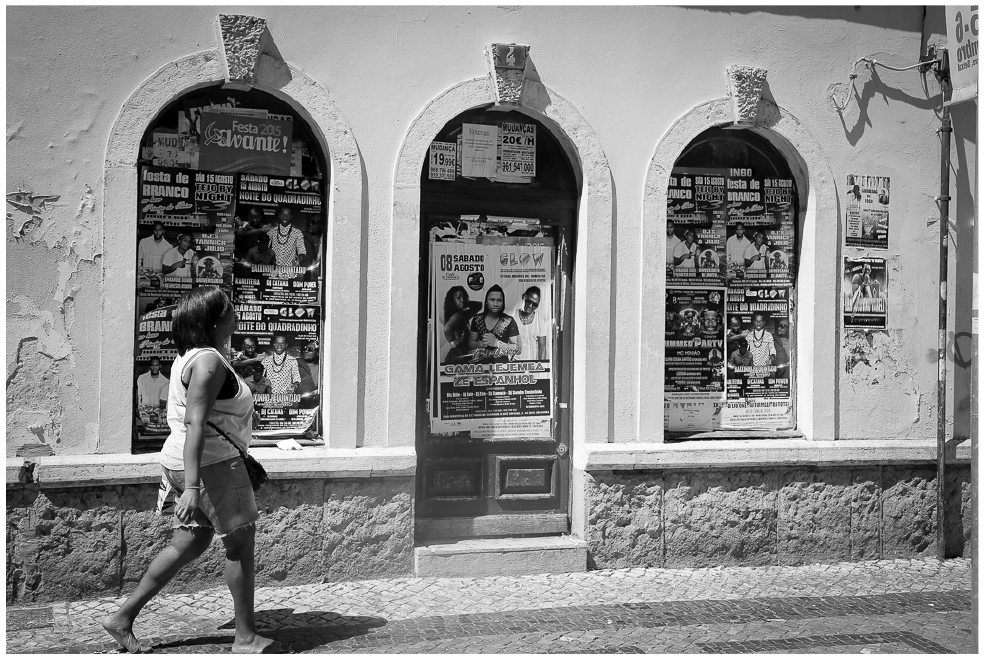
Posters on Lisbon’s periphery advertise upcoming Afro music events.
Courtesy Celeste Curington
what’s joy got to do with it?
The Cabo Verdean home care and cleaning workers I met throughout my fieldwork explained that they were exposed to patterns of everyday gendered anti-Blackness as they traversed the distant corners of their city. This occurred not only because they frequently crossed spatial boundaries between their workplaces and the segregated Lisboan outer-fringe neighborhoods in which they resided, but also because everyday gendered anti-Blackness reserves feminine innocence for White women— meaning that Black, African and African descendant women are seen as appropriate targets for insult, regulation, and control. Indeed, research informants had frequently witnessed other Black women being racially harassed and many had been directly accosted or harassed by White men and White women in public spaces, such as schools, commercial centers, on sidewalks, in public parks, at transportation terminals or stops, and at restaurants. Such incidents reflected an exertion and reinforcement of Whites’ racial dominance, especially White women’s, given their subordinate gendered status vis-a-vis White men.
Consider the words of Djedje, a 60-year-old Cabo Verdean migrant care worker who had lived in Portugal more than half her life. "Racism is everywhere," she reflected. "‘Pr-ta da merda!’ That’s what you hear. Bus stops, trains, commercial centers, supermarkets, there are things like that that occur constantly around here." "Pr-ta da merda," which means, roughly, "black shit" and refers specifically to Black women, is an unavoidably racist and sexist phrase, despite being deployed in this ostensibly anti-racial country. Other Cabo Verdean women explained to me that it was common to be told, rather hostilely, by White people in public spaces to go back to their countries of origin. " Vaipara sua terra, Vaipara sua terra! Pr-ta da merda!" ("Go back to your country, go back to your country! You n— piece of shit!") quoted another informant. These instances were only part of an intricate web of experience, where these women’s race, gender, and assumed foreignness are violently read as signals of non-belonging in an ostensibly postcolonial and anti-racial urban context.
To be sure, these are stories that must be told if we wish to dismantle the systems that breathe life into these stories and make them collectively powerful. However, a singular focus on this oppression may lead us to frame our research participants’ experiences of such oppression as the main, or, perhaps, defining experiences of their lives. We may miss out on the ways members of the communities we study (and, often, belong to) exert agency and reclaim humanity in everyday social life.
Prioritizing and nourishing Black joy resists larger forces that aim to keep Black, African and African descendant women literally and figuratively marginalized in Portuguese society.
iStockPhoto // skyNext

Joy represents one productive avenue for bringing overlooked aspects of being marginalized to the fore. That’s because intersectional oppressions produce a range of emotions, all the way from rage and despair to empowerment and joy. And joy, as an emotion, has socio-political historical underpinnings. Feeling and seeing Black Joy, for instance, is an alternative to the tragic representations of Black life that abound. Cabo Verdean women like Mirela dare to create and feel joy—a feeling that is central to their humanity. From within the independence celebration, Mirela and others co-construct positive nourishment in a celebratory counterspace, thereby challenging White societies’ stereotypical representations of African migrants as Other, as not fully human. Fully expressing, feeling, prioritizing, and nourishing Black joy resists larger forces in Portuguese society that aim to keep Black, African and African descendant women like Mirela at the margins. In a world where images and realities of Black suffering abounds, paying attention to joy is supremely powerful in its ability to recognize and imagine alternative possibilities.
joy and counterspaces
In Portugal, as in many places around the world, Black joy is often formed, nurtured, and sustained within specific ethnic and racial enclave counterspaces often forced by spatial exclusion. These enclaves mark a symbolic boundary, contrasting with the spaces in which everyday gendered anti-Black racism predominates. Cabo Verdeans cited, as their spaces of refuge, community spaces in which cultural practice rather than racial hierarchies dictated interactional norms. One recent emigre, Nilda, told me that attending church on her days off allowed her to feel like she was "part of something."
"When I arrived here, at the beginning, I spoke with my sister who lives on the other side of the river and I told her: ’Listen, I went to Buraca, I went to church, and I was so happy because I saw so many Cabo Verdeans there!… for example, we have mass on the 29th of June for the celebration of Saint Pedro. It’s all community things, all Cabo Verdean, we will all be there, organize a little party, have a day at church. And so, the people feel more comfortable and free."
Nilda’s gravitation toward Cabo Verdean spaces, such as the church, emerged from her desire to feel "comfortable and free" rather than dislocated as she so often did. She wanted a place to just be. Importantly, in religious space she feels the pleasure of joy and freedom in a world that consistently tells Black people they are out of place, that they don’t belong in "anti-racial" Portugal. In these spaces, Nilda is anything but invisible.
Though several of the Cabo Verdean care workers I met during fieldwork had long and tiring schedules, they too managed to find time to connect with others on their rare evenings off. Another such meeting space was a small nightclub located in a segregated neighborhood of Lisbon’s periphery, far from the popular nightclubs frequented by tourists and local (White) Kizomba afficionados. One evening, around 11 pm, Mirela and I met at the club with a group of her friends. The dance floor was packed with people whose bright outfits, braids, and intricate hairstyles signified this was a diasporic space. It was a scene of unbridled Black joy.
Within the hour, however, the inviting and joyful scene came to an abrupt halt. Fifteen of Portugal’s Rapid Intervention Team officers entered in full combat uniform, intent on policing the leisure activities of these happy people. The officers, all of whom were White, instructed the club’s patrons to stand against the wall while they inspected the bar, bathrooms, and closets, tearing through the sofas and inspecting the seams, crevices, and corners of the furniture. After about 45 minutes, the officers left, and the dancing promptly resumed, but not before the party-goers expressed their condemnation of the would-be raid. Now the tempo shifted from Afro-house to accordion-based rhythms of Cabo Verdean funana, with partners embracing as the dancefloor returned to its densely packed state. The party-goers reclaimed their diasporic space.
Our group knew that the night was soon to end when the dim sunlight started to stream through the blinds, but not before someone shouted out the name of the Cabo Verdean Island "Maioooooo" into the space. A small group of women immediately responded "Praia!" the name of Cabo Verde’s capital city on the island Santiago. A man chatting in the corner with the DJ, now joined in the chorus, fiercely responding "Sao Vicennnnteeeeeee," another island’s name, then Mirela joined with "Santiagooooo." As the impromptu roll-call spilled into the city streets, the happy people laughed, walked, and bellowed out their island affiliations into the cold, morning wind. In that club, and on those streets, they affirmed their joyful belonging.
The juxtaposition of intrusive racialized policing into joyful diasporic community reflected, to me, a dialectical relationship between Lisbon and its counterspaces. On the one hand, these counterspaces and the joyful congregation they facilitate are ripe for policing and regulation—Black joy and leisure are considered suspect by the state. However, these counterspaces also offer a social barrier, providing places to come together and access emotive resources such as the joy, warmth, and kinship that link the Lisboan periphery neighborhoods to ancestral homelands. The policing of community space attempts to thwart possibilities for Black joy, yet it endures. Black joy resists and persists.
Cabo Verdeans have carved out counterspaces of belonging, such as African beauty salons, nightclubs, and community halls, that link Lisbon’s periphery neighborhoods to ancestral homelands.
iStockPhoto // Image Source

Now take a moment to consider how this story would be different had I centered the intrusion of the Rapid Intervention Team into this night’s revelry. We would learn only how these diasporic spaces draw violent repression, nothing of the fierce, joyful shouts of identity and belonging that filled the February morning as we erupted into the streets after a night marked by celebration. Let this be a reminder of the complexity of full human experience, of Cabo Verdean community members’ joy in being who they are, of the diasporic lives that defy Portuguese anti-racial ideology and repressive state regimes.
reclaiming joy in workspaces
The Cabo Verdean women I met indicated that they felt especially vulnerable to racist and sexist harassment in public spaces including their workplaces. They were acutely aware of how the people under their care, along with White patrons and their White colleagues (the majority of whom were women), drew on racist and sexist expectations of Black femininity. They drew on age-old colonial stereotypes of Black African women by treating them as subservient and appropriate for taxing physical labor, but also as untrustworthy, ignorant, and devious. One eldercare worker informant reflected, "The Portuguese just think that we are always doing something wrong. That we are criminals." Another informant, a cleaner, summarized: "They [my White colleagues] think that a person of the Black race doesn’t have enough intelligence to complete certain tasks… More ignorant and stupid." The policing of community space attempts to thwart possibilities for Black joy, yet it endures. Black joy resists and persists.
Cabo Verdean care workers, nevertheless, resisted their White, Portuguese colleagues’ devaluation of them and their labor through their cultivation of joy. For many of the women I met, Black joy was reflected in an ethic of care and a shared determination to support each other. They nurtured enduring friendships with many of their African and African descendant colleagues, and these relationships turned their workplaces into spaces of collaboration. Joyful milestones—such as birthdays, baptisms, and holidays—were celebrated during breaks, in-between shifts, and during off hours, and the women recognized each other’s accomplishments, including their children’s accomplishments. In otherwise cold and unwelcoming spaces, from worksites to hallways and break rooms, they embraced joy and collectively cultivated their own belonging.
While systemic intersectional oppressions are pervasive in society, amplifying joy makes it clear that those oppressions will not have the final word.
iStockPhoto // mixetto
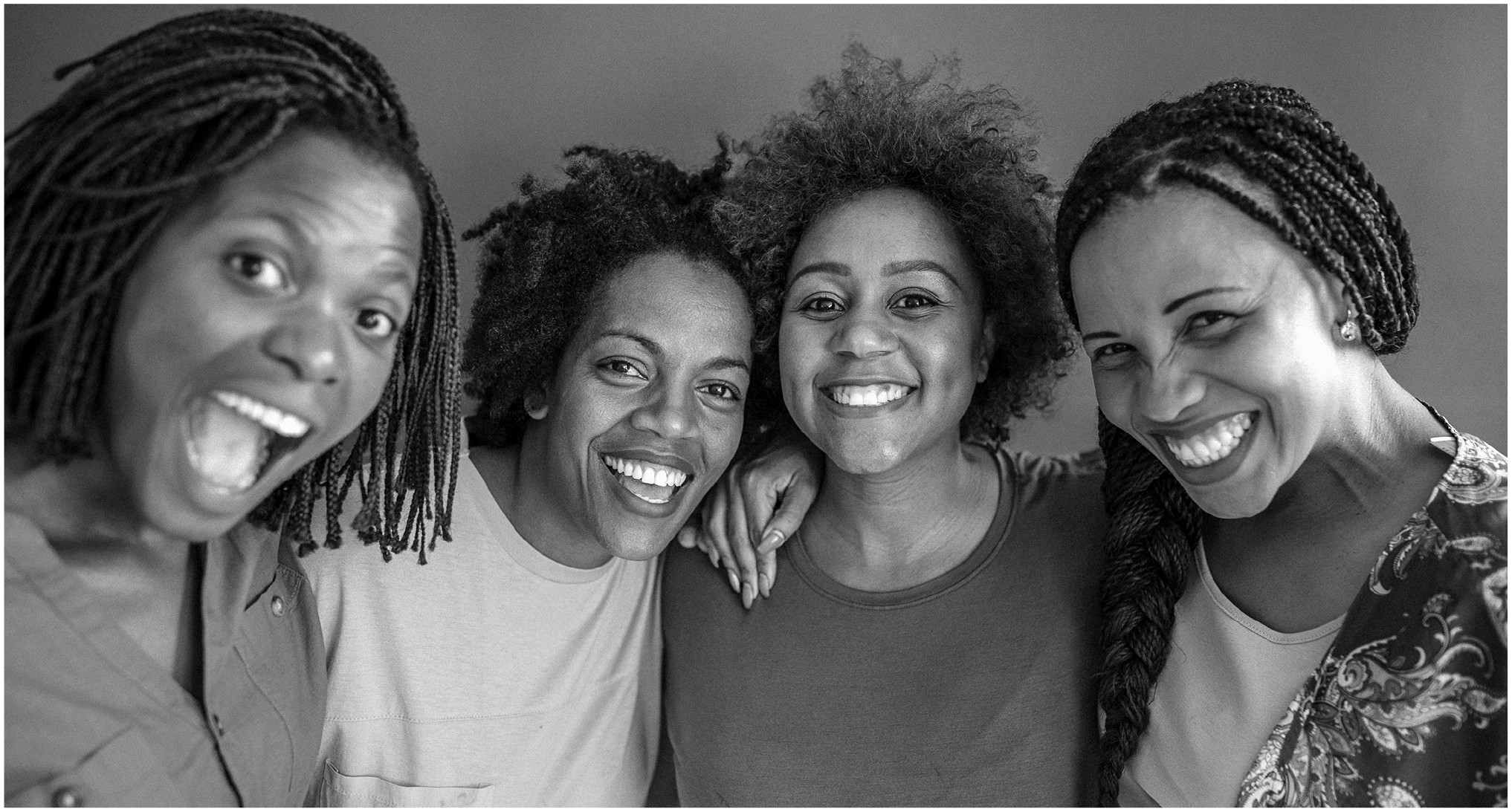
Workers also turned worksites into joyful counterspaces of belonging through the maintenance of cultural practices. For instance, though management prohibited workers from speaking kriolu, workers defied these rules and spoke this African diasporic dialect with their fellow Cabo Verdeans. Kriolu allowed them to infuse happiness and laughter into their tiring, at times monotonous, daily routines by connecting to their cultural identity as they deftly lobbed cajolery, humor, and sarcasm. One worker explained: "The truth is that we shouldn’t speak kriolu at work, but that’s something I always contest… It just comes out naturally." Like many service workers in gendered occupations, they knew they were expected to "do" racialized femininity by expressing deference, powerlessness, and passivity, but their use of kriolu defied pressures of assimilation. Being able to communicate with a co-ethnic in their workplace allowed them to re-signify the workplace, stripping away a little bit of the power structure that shaped their subordinate location.
the joy of being black, cabo verdean women
Many of the Cabo Verdean women I met expressed joy in and by incorporating style, especially Black and Afro-centric beauty culture, into their expressions of Black femininity. They took great care in styling their voluminous tresses, doing their makeup, and selecting their outfits for a night out—preparations that stood in stark contrast with the anonymity of their workplace uniforms. Not only were their bright outfits, matching headscarves, and intricate hairstyles and braids forms of cultural self-expression, but they also pushed back against dominant narratives that framed Black women care workers as dirty (recall the unavoidably racist and sexist phrase "pr-ta de merda") and needing neither time nor energy to spend on their own bodies. Their aesthetic practices were, therefore, a mobilization against the lived experience of non-belonging in a White supremacist, paradoxically "anti-racial" context like Portugal.
For example, several of the Cabo Verdean women I met cultivated joy during their visits to local hair and braiding salons in their neighborhoods, where the owners, stylists, and braiders often dressed and sounded just like their clients. For many of my informants, the salon was a place of connection, pampering, and commerce where staff and clients had personal connections to various parts of the African diaspora, including Cabo Verde, Angola, Brazil, Senegal, and Guinea Bissau. In spaces like African-serving salon it was possible to laugh, play, and enjoy a gendered solidarity within and across ethnic differences. As documented in several studies on the African Diaspora in Europe, the Black, African Beauty Salon represented a space in which positive associations and depictions of black femininity and African families were embedded in the culture; these, too, are counterspaces in which Black femininities are celebrated alongside the nurturement of Black, diasporic joy.
Cabo Verdean women also felt joy in proudly, and unapologetically, affirming their Blackness and femininity. Nena, a dark-skinned Black woman who frequented a local beauty salon, explained how she loved her thick, textured hair and her melanated skin color because she had a beautiful glow, or what she referred to as brilho, something that she insisted many Portuguese women envied. Simply put, she felt joy in feeling and knowing she looked good. In fact, in response to the racist and sexist commentary she heard from Whites as she traversed the city, Nena said her response was to affirm her own self-love: "I tell them [White Portuguese] with so much pride that I am so proud to be a Black woman… because they wish they could be Black like me, but they could never!" Nena continued, "I think that sometimes it’s a matter of jealousy. They see us, happy, dressed well, hair perfect, working hard. They think we are vain, but really, it’s [their] jealousy. So, when they say these things, I tell them, directly, I am so proud to be a Black woman."
Simply being present, being dark-skinned, Cabo Verdean women proudly and happily donning Afrocentric hairstyles such as braids, twists, flat tops, and afros in and outside of their workplaces, was testament to how these women resisted Portuguese anti-racialism by joyfully expressing their authentic selves. Their joy and comfort in their skin resisted the pressure of assimilation that arises from living in a world where racist and sexist colonial ideologies attempt to narrow the scope of Black femininity and Black futures. As stated by one informant, "I love being a Black woman because I am a Black woman."
reclaiming joy
Joy is having its moment in sociology. In Long Live Queer Nightlife, Amin Ghaziani argues that crisis theorizing—though an outcome of living and studying in an unjust world—should not be our only guide for sociological inquiry. This ethnographic study of ephemeral queer urban spaces of intersectional belonging is a call to recenter and learn from humans’ beautiful capacity for joy. Likewise, in their recent Contexts essay, stef m. shuster and Laurel Westbrook spotlight the true joy of being transgender in a world where dominant narratives portray that identity as deviant or victimized. This moment is not meant to minimize nor dismiss pain, but to recognize that suffering, sorrow, and joy can and do coexist. In sociologist Barbara Harris Combs’s words, joy "comes from a radical resolve to choose joy in a world of pain." While systemic intersectional oppressions are pervasive in society, amplifying joy makes it clear that those oppressions will not have the final word.
Indeed, Black femininity may be devalued in wider, ostensibly anti-racial Portuguese society, but in the counterpaces of joyful belonging I describe in my research, it is forged and sustained. Black joy prevailed when Cabo Verdean women’s history and culture were honored from within counterspaces where their identities as Black, diasporic women were visible. Cabo Verdean women experienced this joy through their collective cultivation of bonds with fellow co-ethnic colleagues. They experienced both ephemeral and enduring joy in their workplaces and in their neighborhood spaces. And, in these moments, they belonged.
At the intersection of anti-Black racism, sexism, and non-belonging lies anger, sadness, and rage. Black joy, on the other hand, manifests when those who exist at those very same intersections can exert their agency and be their authentic selves.
Learning from Black joy demands that we consider several questions. How can we build solidarities that center on Black joy? How does Black joy relate to the on-the-ground movements of Black, intersectional organizing, and civil activism? What are the policy initiatives that cultivate Black joy? How, if at all, can honoring Black joy in our classrooms and curricula make education a truly emancipatory and decolonial practice? The questions we ask, the data we gather, and the stories we tell, as social scientists, are part of this project. Let’s build by learning from the spaces where the most marginalized dare to feel and express unbridled, beautiful, powerful joy. Black joy provides a glimpse into the present—and into a kaleidoscope of possible futures that are absolutely worth fighting for.
recommended resources
Barbara Harris Combs. 2023. "Finding Black Joy in a World Where We Are Not Safe," Sociology of Race and Ethnicity 9(4). Challenges readers to consider how "choosing" to nurture and feel joy is a "radical resolve" in an anti-Black world.
Amin Ghaziani. 2024. Long Live Queer Nightlife. Princeton, NJ: Princeton University Press. Illustrates how LGBTQ individuals and communities form social attachments, cultivate joy and belonging, and create queer spaces in the United States and United Kingdom.
Jessica H. Lu and Catherine Knight Steele. 2019. "‘Joy is resistance’: Cross-platform Resilience and (Re)Invention of Black Oral Culture Online," Information, Communication & Society 22(6). Evidences how Black online users connect across social media platforms to express and cultivate joy not as a response to pain and suffering but as a response to their own humanity and desire to be heard and seen.
Francesca Sobande and Emma-Lee Amponsah. 2024. "Demands, Displays, and Dreams of ‘Black Joy’ During Times of Crisis," Ethnic and Racial Studies. Warns of the dangers presented by characterizing Black joy from the perspective of capitalist market logics.
Antar A. Tichavakunda. 2022. "Black Students and Positive Racialized Emotions: Feeling Black Joy at a Historically White Institution," Humanity & Society 46(3). Takes a joy-centered approach to understanding Black students’ multidimensional experiences within a racialized context of constraint and proposes that forwarding such a perspective enhances anti-racist praxis.
Asif Wilson and Rachel McMillian. 2024. "kNOw Your History kNOw Yourself: Fugitive Praxes of Black Joy During the COVID-19 Pandemic," Urban Education. Highlights methodological and pedagogical approaches that center Black joy in K-12 active learning.