



Abstract
This article complicates a popular notion that conservative religions are incompatible with sexual expression and pleasure. Case studies from Orthodox Judaism and evangelical Protestant Christianity demonstrate a breadth of sexual expressions and negotiations of desire and sin that defy the association of conservative religions with sexual repression.

The church conference in a small Midwestern town was called, “Intimacy in Marriage,” so Kelsy expected speakers and participants to talk about sex. A graduate student just beginning research on evangelicals and sexuality, she was not expecting the prayers for couples to experience “the deepest sexual pleasure in the name of Jesus Christ” or a raffle for a vibrating massager that sat on a table in the sanctuary. Her field notes were punctuated with exclamation points, like after the phrase, “There is a vibrator in a church!”
On the other side of the globe, in Israel, an Orthodox Jewish bridal counselor discussed with Orit the sexual education component of a twelve-session marriage preparation course. A stern looking woman in her fifties, she served as an example for brides-to-be of Jewish modesty codes—hair covered, she was dressed in a long skirt and shirt with long sleeves and high neckline. Yet she spoke enthusiastically and directly to the sexually uninitiated young women enrolled in the course, telling them to “Get the mood right. Tell him what you want.”
Were it not for the obvious markers of religion, these scenes might not be surprising in the 21st century. At least within western popular culture, “good sex” has seemingly won out over sexual shame and become a prerogative of modern adult life. From advice books like The Joy of Sex to TV shows like Sex in the City and popular podcasts like Savage Love, a fulfilling sex life is promoted as integral to happiness and personal fulfillment. But religious traditions are notorious for sexual rules and norms that seem to fly in the face of modern secular culture, with its emphasis on sexual expression, experimentation, and satisfaction. In fact, many observers associate the expansion of progressive sexual norms and practices with the decline of organized religion.
It is in this context that we examine how some religious followers live and love amid secular and religious messages about sex and sexuality. Kelsy observed, surveyed, and interviewed American evangelical Christians who used websites or attended workshops to discuss sexual pleasure in Christian marriages. Orit interviewed Orthodox Jewish women in Israel about the sexual education that is part of an elaborate marriage preparation. The believers, educators, and experts we interviewed and observed contradicted the stereotype that religiosity is incompatible with sexual pleasure. They self-identified as “traditional,” “conservative,” and “devout,” yet insisted that their religious traditions encouraged sexual pleasure and could even improve how they experienced sexuality. Our respondents learned to navigate the religiously prescribed boundaries surrounding sexuality and embrace “good,” religiously sanctioned sex.
Learning to Experience Pleasure
How believers develop a religious prerogative for sexual pleasure hinges on three related tasks: learning to embrace sexual pleasure, contextualizing sex as part of a larger religious narrative, and establishing religious rules for permissible sex.
Historically, the list of perceived sexual sins has been much longer than that of religiously permitted sexual desires and practices. Religious rules range from the familiar —prohibitions against extramarital, premarital, and homosexual sex common to many religious traditions—to the foreign. In Orthodox Judaism, marital sex is forbidden for roughly two weeks of every menstrual cycle. Catholic teaching forbids sex acts unless they lead to procreative, penile-vaginal intercourse within marriage, and Latter-day Saints prohibit mutual masturbation within marriage. Such religious proscriptions can serve as obstacles for followers who want to learn about and experience sex in a meaningful way. Orthodox Jewish women Orit talked to drew on a range of euphemisms for sex, referencing “the first night,” “physical relations,” and a husband and wife “meeting” or “coming together.” One evangelical woman told Kelsy that, until her marriage, she had “no idea” how her body worked “down there.” Religious regulations and conversational unease among believers may seem to imply that religion is bad for one’s sex life—but that’s not what we found when we talked to evangelical Christians and Orthodox Jews who purport to live and love by God’s rules.
For these believers, God’s case for sex involves explicit sex education along with a sexual re-education that affirms the pleasures of sex. Secular sex education and advice—found in Cosmopolitan magazine and the like—are largely off-limits to, or are at least treated with skepticism by, religious conservatives. Followers of conservative religions must instead filter out the secular messages about sex that they believe disregard God’s messages, while also filtering out religious messages that emphasize sexual sins. We call this an inhibition paradox—growing up, evangelicals and Orthodox Jews receive numerous negative messages about sex but are expected to embrace and enjoy sex once married. Orthodox Jewish respondents said they struggled with making a “180-degree switch” on their wedding night. One evangelical woman described her church as “schizophrenic:” “sex is bad, bad, bad, and then suddenly good, good, good.”
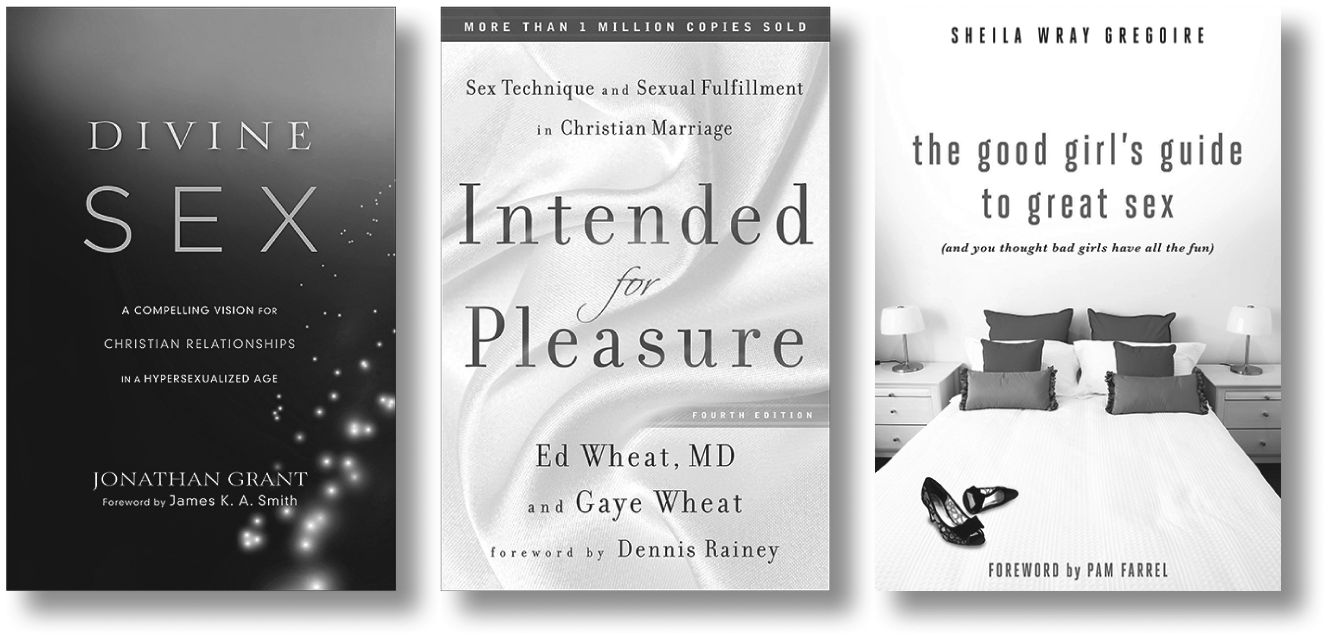
The evangelical Christians and Orthodox Jews we spoke with emphasized that God encourages sexual pleasure, if one knows where to look. They look to sex therapists, workshops, premarital preparation classes, Internet conversations, and Christian and Jewish sex advice books, with titles that make abundantly clear that God approves of good sex: A Celebration of Sex; The Gift of Sex; Holy Sex; Kosher Sex, Kosher Lust. They also seek sex positive messages in scripture while rejecting secular sexual ethics, deemed as hedonistic, and the dominant view of Christian sexual ethics, perceived to be sex negative. Indeed, religious studies scholar Jennifer Wright Knust points out that although the Bible is a political and sexual battleground in contemporary debates about sexuality, it is not a systematic or conclusive sexual code. Rather, biblical teachings on desire, sexual practices, marriage, and the body are inconsistent and open to interpretation. As such, religious adherents collectively construct interpretations claiming that sexuality is not “forbidden,” “shameful,” or “disgusting”—as was once their impression. Instead, sex is holy, normal, and good.
Religious regulations and conversational unease among believers may seem to imply that religion is bad for one’s sex life—but that’s not what we found when we talked to evangelical Christians and Orthodox Jews who purport to live and love by God’s rules.
The illustrations for this “Kosher sex” guide are sealed in an envelope warning readers of their explicit nature.
Daniel Estrin/Gefen Publishing House
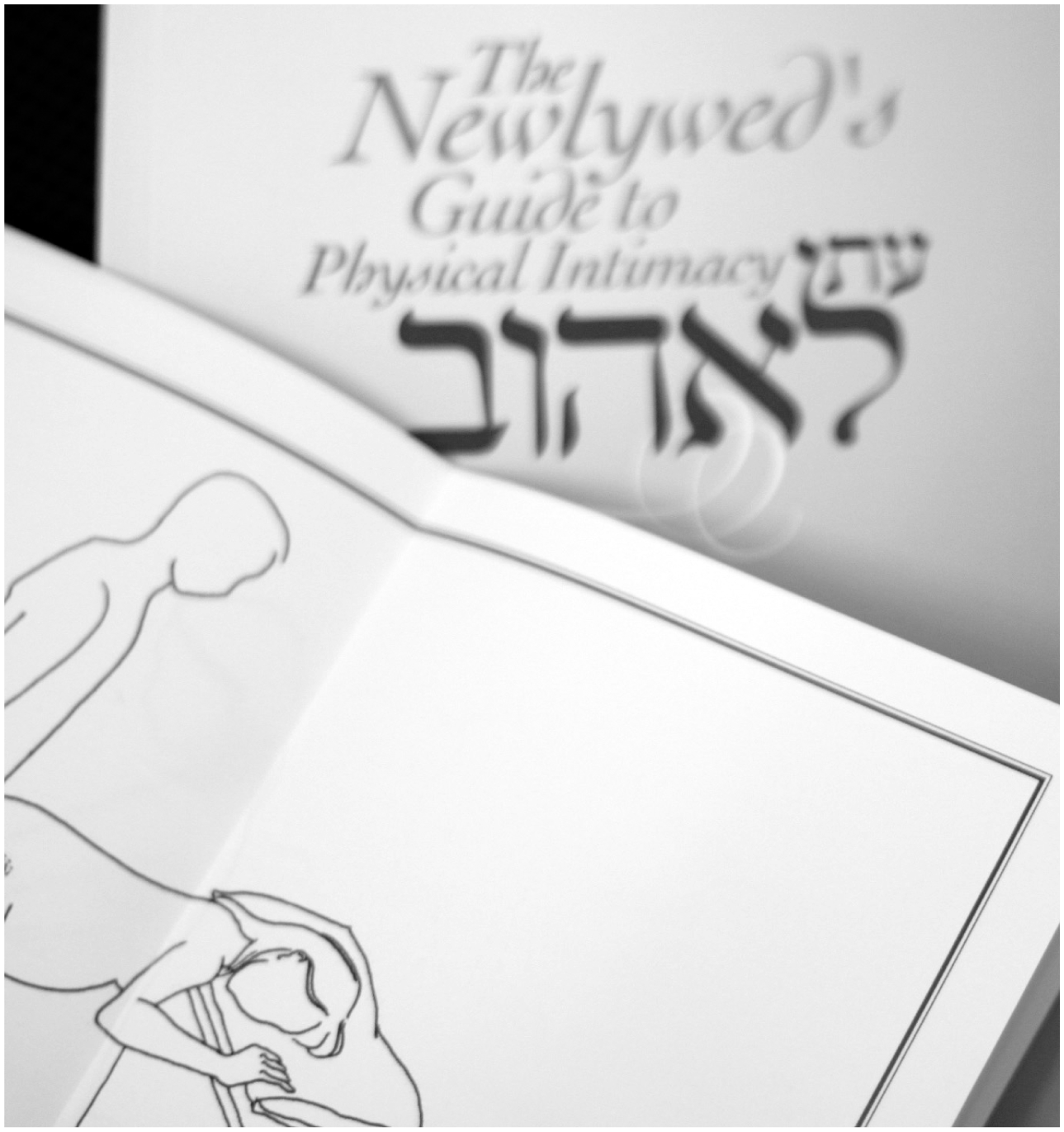
But theologically redeeming sexuality is insufficient—followers still need concrete advice on how to have good sex. In Orthodox Jewish circles, much of this education occurs during premarital preparation. One bridal counselor, a high school teacher in her fifties, told Orit how she harnesses Jewish laws of menstrual purity to help brides prepare for sex. These laws entail that women check for remnants of blood for seven days after menstruation ceases, and this counselor encourages young women to use the opportunity to explore themselves “there” as preparation for the marital relationship, especially the dreaded “first night.” Her affirmation of self-exploration serves as “a way to connect with the body so it doesn’t seem alien, so the place is not foreign” and flies in the face of years of teaching that masturbation is immoral and sinful, but she assures brides that “It’s not negative. It’s positive, permissible, essential, important for you to get to know your body… it’s good to arouse yourself, you have to incite yourself.”
Christian sexuality websites and advice books also offer couples tools to help achieve physical pleasure: step-by-step instructions for arousal, anatomical drawings identifying “mysterious” body parts like the clitoris, advice on lubricants, suggestions about what time of day to have sex, lists of romantic gestures, and descriptions of sexual positioning. Evangelicals prioritize mutuality and consent and sex acts that benefit a heterosexual marital relationship. This gives both spouses a clear voice within a marriage, even among those Christians who support men’s headship and women’s submission. Authors Ed and Gaye Wheat insist that women are entitled to experience sexual pleasure: “If you [directed toward women] desire to have an orgasm, [it is] because you know it is your right, your provision from God. …Your goal, now, is satisfaction given by a loving husband, and achieving the fulfillment of orgasm.” Evangelicals like the Wheats contextualize pleasure as good for the spiritual and marital lives of believers. In contrast to much secular sex advice, God’s case for sex constructs sex as a means, not an end.
A Greater Good
Orthodox Jews and evangelical Christians face a dilemma: how to affirm sexual desires without descending into the vulgarities associated with secular culture? Their solution is to normalize pleasure but insist that sex is fundamentally a spiritual pursuit.
Despite the “anything goes” in marriage attitude that seems to dominate Christian sex advice, the rationale for pursuing and optimizing sexual pleasure is a theological one. As historian of religion Amy DeRogatis has also argued, evangelicals believe that following God’s rules makes possible a unique and exceptional sexual experience that contributes to a larger story about being born again. At the “Intimacy in Marriage” conference, David, a pastor, explained that the stakes of marital sex are high: “There’s a party being thrown in heaven when married Christians have sex. Just by having sex, you are winning a battle in the war against Satan.” By having sex in the way that God designed (in heterosexual, monogamous marriage), couples can help defeat the devil. David outlined specific steps that spouses could take to “use weapons to fight to keep your marriage out of Satan’s hands:” praying before, during, and after sex and having sex frequently. David explained, “sex should be spiritually comforting, spiritually connecting, and spiritually productive for the two most important relationships in your life: God and your spouse.” Good sex aligns with living a Christian life.
Jewish scriptures contain seemingly conflicting messages about sex. On the one hand, sexual desire is known as yezer hara, or the evil desire. But marital sex is also a mitzvah, a religiously prescribed obligation. To resolve this apparent conflict, some Orthodox Jews infuse an otherwise carnal act with spirituality and morality. As one Orthodox bridal counselor described, authentic Jewish “marital relations” can be “happy, wonderful, sanctified, as long as it’s in the right place, at the right time, and with the right intention.” Marriage sanctifies the sexual act: the self-exploration and arousal discussed above were sanctioned because they prepared the bride for her husband. This approach to sex posits that sex is good because it facilitates the creation of “one flesh.” By connecting couples, sex strengthens the marital relationship, the building block of Jewish communities. Spiritual “marital relations” hinge on having sex with the “right intention”: rather than pursue satisfaction of carnal desires, couples sanctify sex by bringing “the Almighty to it.” Accordingly, one bridal counselor does not instruct brides about desire, pleasure, or the mechanics of sex, but teaches them to recite prayers about holiness and redemption before and after “relations.” Another counselor instructs brides to “think pure thoughts and recite psalms before coming together.”
To appreciate their complexity we need to understand religious traditions’ approaches to sexuality from within their own logics and sensibilities.
But not everyone buys this spiritual model of sex. Increasingly, Orthodox Jews are seeking to articulate an alternative sexual ethics that would let Orthodox Jewish women “just have fun.” Recent years have seen the emergence of Facebook groups (for women only) and the expansion of body-focused study groups and pools of therapists and instructors well-versed in Jewish teachings as well as the latest sexological research. Nevertheless, even in these more forgiving spaces it is clear that religious rules about marriage, bodies, and good sex still need to be followed.
Playing by the Rules
For religious authorities within Orthodox Judaism and evangelical Christianity, God’s embrace of sex does not mean that anything goes. Sex requires regulation, though opinions vary about what practices are allowed. Some authorities restrict sex to acts associated with penile-vaginal intercourse, but scriptural ambiguity leaves room for some competing interpretations.
Most evangelical authorities permit heterosexual married couples to explore almost any sexual act imaginable so long as there is monogamy and mutual consent. Evangelicals who believe that the Bible is the literal word of God must read between the lines to determine God’s stance on a wide range of marital sex acts that the Bible does not discuss. Author Shannon Ethridge summarizes the prevailing attitude that sex is permitted by God “as long as no harm is done and all is kept solely between consenting spouses.” Similarly, a popular blogger explains: “There are far more things that you can enjoy together than those you cannot.” Kelsy surveyed almost 800 users of Christian sexuality websites about their attitudes toward a range of sexual activities. Over 90% of respondents agreed that, within marriage, oral sex and using a vibrator are “not wrong at all.” About anal sex and masturbation within marriage, only 20 and 10%, respectively, reported that the acts are “always wrong.” One message board user explained her attitude about anal sex: “I am undecided. …It’s not something DH [dear husband] and I are interested in. …If DH were really interested in it, I’d be willing to look into it from a Biblical and health standpoint and hope we could reach some common ground on it.” Respondents who reported those acts are “sometimes” or “usually” wrong explained in follow-up interviews that they did not feel comfortable making judgments about these acts without knowing the relational context in which they occur.
How believers develop a religious prerogative for sexual pleasure hinges on three related tasks: learning to embrace sexual pleasure, contextualizing sex as part of a larger religious narrative, and establishing religious rules for permissible sex.
The “inhibition” paradox can be hard for a religious woman raised to see sex as bad–up until her wedding night.
Jeremy Blanchard, Flickr CC

Likewise, for many Jewish couples, “kosher sex” is murky terrain. Orthodox Jews draw sexual directives from the Bible, its elaborators and interpreters, and contemporary rabbis with whom they consult on all matters pertaining to Jewish law and practice. Orthodox Jewish authorities are quick to point out that Jewish sex is not about procreation. Referring to the Jewish mitzvah (religious deed) of Onah—Jewish law that regards a wife’s sexual pleasure as a marital obligation—one bridal counselor explained to Orit that, “unlike Christians, in Judaism coming together is first and foremost about pleasure.” Yet this religiously prescribed pleasure is highly regulated. Expectedly, intimate and sexual acts are restricted to marriage and require mutual consent. In addition, Jewish law prescribes periods of impermissible sexual activity depending on the woman’s menstrual status and prohibits “wasting of seed.” This term refers to the prohibition against sexual acts in which the male’s sperm is consciously wasted, and it is traditionally cited in prohibitions against male homosexual acts and masturbation, though some authorities also use it to restrict marital sex to penile-vaginal intercourse. A thirty-something woman who had been married for almost fifteen years told Orit about how she struggled early in her marriage: “the fun was lost amidst concerns about non-vaginal ejaculation!” She later took a bridal counseling course and began working with young women herself. Only then did she become comfortable speaking in such direct terms—and with alternatives to intercourse.
The people we talked to and spaces we studied suggest that conservative religions articulate a sexual ethic that blends limits on who is allowed to have sex with expansive possibilities for sexual pleasure within those limits. This is how evangelical Christians declare there is “tremendous freedom” within the (heterosexual) “marriage bed,” but remain vehemently opposed to same-sex relationships and other non-heterosexual or non-monogamous sexual expressions. The co-creator of one evangelical message board that hosts supportive conversations about a wide range of sexual interests writes to the site’s members: “The basic tenets of the Christian faith are not debatable issues” and later explains that “any defense of the practice of homosexuality, so called ‘gay marriage,’ or the like” will not be tolerated. In Orthodox Jewish marriage preparation courses the message is clear: women prepare to wed men. In both of these faith traditions, heterosexuality is as sacrosanct as marriage itself.
Sexual Ambivalence
Religious sexual debates operate on multiple levels: interpretations of scripture and foundational religious documents; talk about sexuality by religious leaders, teachers, and experts; and lay people’s sexual practices and ideas about sexuality. But at each level conservative religious traditions simultaneously encourage sexual expression—albeit in specifically prescribed circumstances—while admonishing sexual sins. We have identified two reasons why this “sexual ambivalence” persists in religious communities.
First, narratives that sex is wrong remain salient in the lives of religious believers (regardless of what the Bible “really” says). Traditionally, Jewish and Christian leaders have spent far more time discussing sexual sins than sexual enjoyment, and people’s minds are hard to de- and re-program. One woman told Orit about an episode that occurred three years into her marriage, when she was pregnant with her second child: “Once I woke up in the middle of the night, thinking ‘THERE IS A MAN IN MY BED! WHAT IS A MAN DOING IN MY BED?…’ I told myself, ‘It’s ok, this is your husband.’ It’s entrenched in us, the sense that this whole thing is forbidden.” Evangelicals’ stories about using Christian sexuality websites suggest similar unresolved anxieties about the possibility of Christian sexual pleasure. Many users turned to “googling” their questions about sex because they felt they could not discuss them with anyone in real life. One user explained to Kelsy, “I never felt like it would be okay for me to date or have sex ever. I mean, intellectually I knew that my parents would be happy if I got married, but it didn’t seem to make sense in my head.”
Second, even though conservative religious communities are hardly unique bastions of sexual hangups, sex functions as a boundary making mechanism that sets religious believers apart from the secular world. Discussions of sex, vibrators, and sexual pleasure are sites of ideological battles. Religious communities regulate sex not simply to suppress “worldly” pleasures but to negotiate conflicting worldviews and ethical systems about life’s purpose. In the Orthodox Jewish case, yoking sex to marriage draws a bright line between a religious and secular sexual ethic. For evangelicals, embracing sexual pleasure within the criteria of heterosexual, monogamous matrimony means that they can experience the pleasures encouraged by the secular world but remain committed to their religious foundation.
For sexual pleasure to function as a religious ethic, it needs to be regulated—hence enduring sexual rules. Political debates about abortion, contraception, pornography, sexual education, and marriage equality typically present religious attitudes as constraining sexual expressions, rejecting sexual diversity, and squashing sexual pleasure. There’s some truth to this. Numerous injuries have been inflicted in the name of religious morality through legislation and public debates that portray heterosexuality and modesty as normative and universal. In the coming-out stories of gays and lesbians, religion is often a hurdle on the path to self-love and acceptance.
Theologically redeeming sexuality is insufficient—followers still need concrete advice on how to have good sex.
Yet, if sexual regulations are more about communal efforts to define sexual morality than they are about unequivocal and timeless biblical sexual codes, religious groups’ notions of sexual morality can incorporate a wide range of beliefs and practices—accounting for the presence of a vibrator in church and exhortations for brides-to-be to explore “down there.” These religious traditions, then, are not unequivocally sexually repressive, nor are they uniformly sexually liberating. To appreciate their complexity we need to understand religious traditions’ approaches to sexuality from within their own logics and sensibilities. From there, we find that religious boundaries are not simple or fixed, and they can and do change with the broader social world in which believers practice their faith.