



Abstract
Sexual racism, parental happiness, and smoking ‘em (if you can get ‘em): A snapshot of new research.
A Cannabis Conundrum
Do you support legalizing recreational cannabis? If so, would you be comfortable with a pot shop in your neighborhood? In a recent article published in Law & Social Inquiry, Ekaterina Moiseeva explores how not-in-my-backyard (NIMBY) sentiments have affected the implementation of Proposition 64, the legal instrument that helped to legalize recreational cannabis across California.
Economically prosperous cities in this study tended to vote for state-level cannabis legalization, but balk at the presence of dispensaries in their communities.
iStockPhoto.com // karenfoleyphotography

Analyzing the register of all cannabis licenses issued in California from 2018 and 2019, the study suggests that economically prosperous cities tend to exhibit greater support for state-level cannabis legalization. Their residents, however, are reluctant to permit legal cannabis business within their communities, even if it means forgoing potential financial benefits. For example, even though 75% and 62% of Santa Monica and Laguna Beach residents, respectively, voted in favor of Proposition 64, both city governments passed ordinances prohibiting cannabis businesses. These communities are known for their affluence, with only 10.7% and 6.6% percent of residents falling below the poverty line. In contrast, cannabis businesses are more likely to obtain permits in economically distressed cities, even those in which a majority of the population voted against cannabis legalization. Cities such as Calexico and Firebaugh, where more than a quarter of the population lives below the poverty line, have adopted permissive cannabis regulations, though only 46% and 42% of their voters, respectively, decided in favor of state-level legalization.
Affluent communities’ concerns about cannabis dispensaries exemplify the presence of drug stigma, which is deeply intertwined with issues of class and race. In this case, the disparity between the demand for cannabis legalization in predominantly White middle-class communities and the supply of cannabis businesses in economically disadvantaged Hispanic communities highlights the enduring vestiges of the stereotypes perpetuated by the War on Drugs. NIMBYism, then, distinguishes between what is considered normal versus pathological, and it grants further privileges to groups, predominantly White middle- and upper-class individuals, considered appropriate for setting community norms. To evaluate the impact of the cannabis reform movement, the author highlights the importance of directing attention toward the economically disadvantaged communities whose priorities are often overlooked due to NIMBYism.
Going Up Country?
Rural life is better known for its pastoral landscapes, tight-knit communities, and relative affordability than for its vibrant nightlife. Accordingly, research on the trend of rural young people around the world flocking to urban areas has tended to focus on economic drivers, like jobs and housing, rather than cultural motivations, such as leisure and entertainment. Recent work by a team of Spanish researchers led by Laura Pavon-Benitez suggests otherwise. The authors posit that youth’s conception of nightlife in the urban-rural imaginary is, indeed, constrained by existing stereotypes, yet presents an opportunity to reimagine rural life at the same time.
To better understand how Spanish youth think about nightlife across contexts, the study, published in the journal Rural Sociology, draws on interviews and focus groups with 118 youth aged 15-24 from a diverse array of class, ethnic, religious, and sexual backgrounds. From these discussions, the researchers found, first and foremost, that youth still perceive rural nightlife as pacific and boring, while viewing cities as the center of excitement, spontaneity, and opportunity. This is because cities better meet youth’s criteria for good nightlife, which include a variety of venues, young people coming together en masse, and a plentitude of alcohol and drugs. The researchers found an exception to this, though, in the form of summer village festivals and fiestas, during which young people thought their nightlife criteria were more easily met.
Opportunities for leisure, nightlife, and fun shape whether young people see a place for themselves in rural life.
iStockPhoto.com // DisobeyArt

Consequently, the researchers identified two cultural shifts that offer possibilities for changing youth’s perceptions of rural nightlife. Through the increased use of digital technology, like social media and messaging apps, parties are becoming easier to organize, even in the absence of traditional venues. And relatedly, in recent years, an emerging desire for alternative and flexible venues—often referred to as pop-ups—has expanded the possible locations where nightlife can unfold, potentially making rural spaces more appealing.
As many rural areas look to adapt to urbanization by making their regions more attractive to young people, there has been a tendency for municipalities, and scholars, to focus on the material dimensions of youth out-migration. This study suggests that beyond jobs and housing, leisure and nightlife—in short, fun—are central in shaping how youth view rural life and their place within it.
The Depths of Sexual Racism
Writing in Social Problems, Khoa Phan Howard uses a case study of a 35-year-old interracial friendship group anonymized as the “Asian Network Group” (ANG) to demonstrate that even within a group that claims to be a safe space for Asian gay men, there is still the problem of sexual racism, which favors White men and reinforces the belief that they are more desirable.
Drawing from eight months of ethnographic observations and 33 interviews, Phan Howard delves into 4 distinct sets of significant findings. First, comparing the motivations of Asian and White individuals for entering the group reveals that the racial hierarchy of desire observed outside the group persists within it. Asians may be somewhat desirable, but their desirability is attenuated; White people encounter fewer obstacles to desirability. In addition, the study investigates a specific group practice that involves monitoring “creepy” White men while depicting Asians as “helpless.” This practice reveals underlying racial stereotypes and, unfortunately, restricts the agency of Asian men. Third, a group norm encourages Asian-White relationships and exerts pressure on those who deviate from this norm which reinforces the idea that whiteness is necessary for romantic relationships. Lastly, when looking at individual experiences of desirability, White men continue to be perceived as the most desirable group members, despite the ANG’s attempts to increase the desirability of Asian individuals.
This study takes a novel approach to studying sexual racism in that it goes beyond online platforms and interviews, utilizing real-world observations of group interactions to explore the profound linkages between race, sexuality, and the replication of racial biases. In so doing, it exposes the persistence of sexual racism and White desirability, even inside a purposefully diverse community network.
Worthless Bodies, Legitimized Violence
Do you know how many missing and murdered Indigenous women, girls, and 2SLGBTQQIA1 people are in what is now called “Canada”? Shockingly, it appears that the police do not. In a recent article in Gender & Society, Jerry Flores and Andrea Roman Alfaro investigate the inadequate response of law enforcement agencies to such crimes and the ways police (in)actions serve to make sense of, justify, and/or dismiss this epidemic of violence.
Drawing on data from 48 interviews with Indigenous peoples and 219 testimonies from the Canadian National Inquiry into Missing and Murdered Indigenous Women and Girls, the authors find that the police use four main frames to make sense of violence against Indigenous women and girls in particular. These strategies include labeling Indigenous women and girls as “runaways,” “drunks,” “prostitutes,” and/or “drug addicts,” all negative stereotypes deployed to rationalize victimization as an inevitable outcome of personal choices. Moreover, the police dismiss violence with “indifference, callousness, and lack of information,” entrenching Indigenous women’s low status in the settler-colonial states. Lastly, the police employ a pair of narratives that justify and perpetuate violence: pathologizing the behavior of Indigenous women and asserting that “there’s nothing we can do.” Both narratives uphold and reinforce settler supremacy, allowing for the continued dismissal of violence against Indigenous women.
At the Bay Area Two-Spirit Powwow in 2020, a drum circle draws attention to Missing and Murdered Indigenous Women and Girls, or MMIWG.
iStockPhoto.com // SvetlanaSF
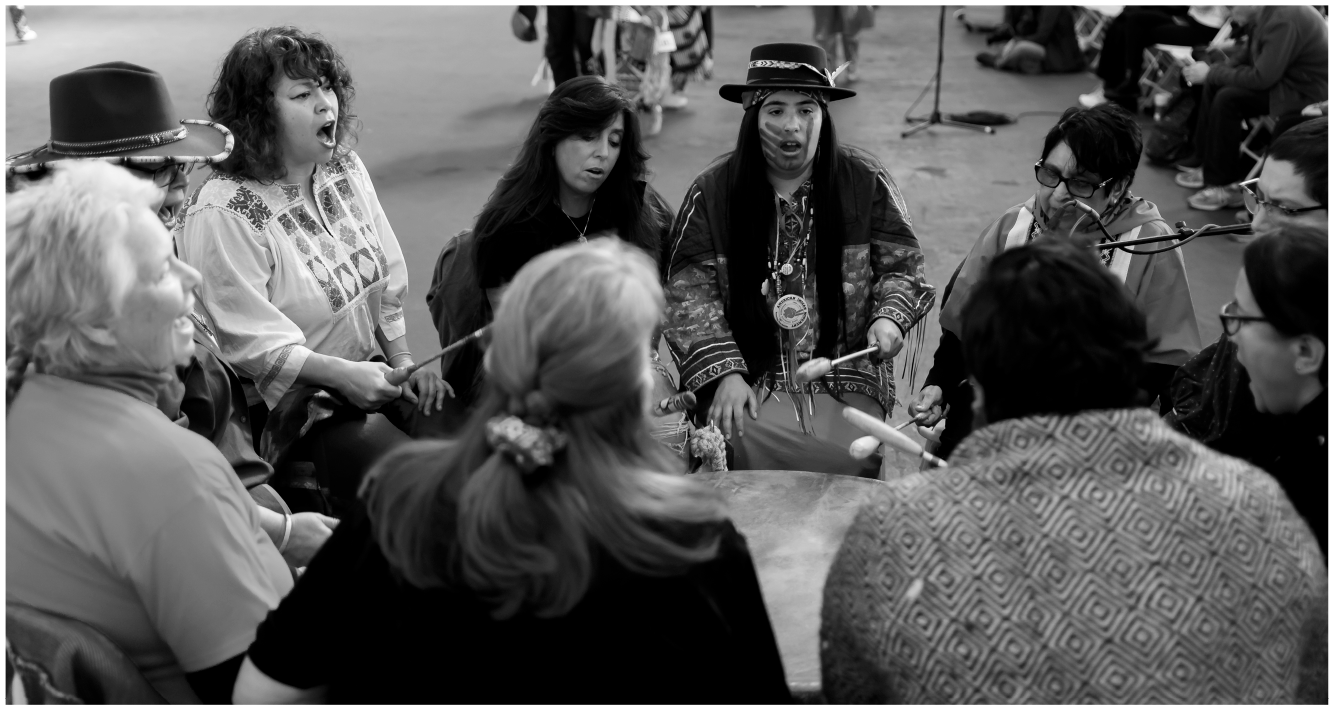
The United Nations has identified violence against Indigenous women as a human rights concern and has urged governments worldwide to take action. This study, however, emphasizes the interactions between systemic discrimination and violence faced by Indigenous women in Canada. The findings imply that the police response to violence against Indigenous women, girls, and 2SLGBTQQIA1 people is insufficient, in part, because law enforcement institutions play a role in maintaining the settler-colonial relationship. A more just and equitable global society will require working to confront and demolish the systems that allow and perpetuate violence against vulnerable people.
Social Determinants of Obesity
Right now, major North American media outlets are buzzing with excitement over the emergence of ground-breaking weight loss drugs like Ozempic. As treatments proliferate, however, the causes (and potential consequences) of obesity remain the topic of heated debate. In Social Science & Medicine, researchers Jaeun Lim and Benjamin Cornwell consider the likelihood of obesity in relation to social networks and individuals’ positions within them.
Using data from a longitudinal national survey, Lim and Cornwell investigate the association between participants’ body mass index (BMI) and their “structural position,” defined as their location, level of connection, and strength of relationships within a group or community. The findings indicate a strong connection between obesity and structural position: Obesity is more prevalent among people who are marginalized, have fewer connections, or have weaker social relationships within their networks. In hypothesizing the mechanisms that could explain this connection, the authors note that those in marginalized positions may have more limited access to social support, resources, and health and wellness information. They also point to the ways social norms and behaviors within the network can impact an individual’s behaviors, including diet and exercise. The role of homophily, or the inclination for people to hang out with those who are similar to themselves, is also mentioned; if a person’s social network is predominantly made up of obese people, the risk of that person being obese increases.
New science has suggested and is being used to make the case that obesity is strongly shaped by genetics. This paper moves away from individualization to provide a sociological counterexample, uncovering potential community-level drivers of obesity and suggesting ways social network structure can be leveraged to affect individual outcomes.
Take a Bite Out of Crime?
While dogs have long been our best friend, a recent paper by Nicolo P. Pinchak and colleagues suggests that they also are a neighborhood’s best friend. The mere presence of dogs in neighborhoods, they find, plays a role in deterring urban crimes.
Just think of them as the safety squad.
iStockPhoto.com // LuckyBusiness

The study, published in Social Forces, draws on extensive market survey data that captures the presence of dogs in households across different neighborhoods in Columbus, OH. The authors discover that neighborhoods with a higher density of dogs have lower incidences of robbery and homicide. This association is particularly noticeable in neighborhoods where there is a higher level of trust among residents, but even when removing neighborhood trust from the equation, the presence of dogs is still associated with lower rates of property crime such as burglaries, automotive crimes, and theft. What’s more, these results are consistent across neighborhoods with different class and racial compositions, suggesting that dogs are good for neighborhoods regardless of who lives in them.
Though many would assume that dogs deter urban crimes through constant vigilance and barking, Pinchak and colleagues highlight the function of dogs in facilitating residential street monitoring. Dogs have been found to encourage routine walks within the neighborhood and social interactions among residents. They play a crucial role in promoting local surveillance, or residents’ “eyes on the street,” thereby deterring potential offenders. This is exemplified by the findings of the authors, which indicate the associations between neighborhood dog presence and the reduction of street crimes such as robbery and homicide, which often occur outside of homes. Regardless of why dogs are a neighborhood’s best friend, it is important to look after our canine companions like our lives depend on them.
Learning Curves
For a long time, sociologists and policymakers have assumed that the fact kids in some neighborhoods do better in school than others can be boiled down to the quality of the schools in those neighborhoods. In this narrative, kids at elite, hard-to-get-into schools located in leafy suburbs outperform their peers in underfunded, concrete-clad inner-city institutions. But a new study in the American Journal of Sociology finds little evidence supporting this notion.
In their study, Geoffrey T. Wodtke and colleagues utilize data from the Early Childhood Longitudinal Study and supplement it with a comprehensive range of measures designed to evaluate school quality. These measures encompass different aspects of school effectiveness, resources, and climate. For example, by the measure of “school resources,” a high-quality elementary school is one that receives ample funding, has small class sizes, and employs “the most qualified and experienced teachers.” The findings suggest that living in a disadvantaged neighborhood, as measured by the socioeconomic composition of a student’s home census tract, reduces academic achievement, but not because the neighborhood influences school quality. In fact, differences in elementary school quality do not seem to play a significant mediating role. Moreover, school quality does not appear to interact with neighborhood context, as the effects of attending higher or lower quality elementary schools are similar regardless of whether children reside in advantaged or disadvantaged neighborhoods. Taken together, the findings suggest that neighborhood effects on academic achievement are most likely explained by other factors that are not directly linked to the quality, or the composition, of elementary schools.
The authors emphasize the need for careful examination when interpreting this counterintuitive finding, since even if elementary schools are not to blame for neighborhood-based disparities in academic achievement, they can still be part of the solution. For example, the authors find that elementary schools serving children from impoverished communities are, on average, educating their first-grade students as effectively as schools in more advantaged communities. According to the paper, policies that prioritize reinvestment in schools located in underprivileged neighborhoods, rather than extensive restructuring or closure, may prove effective in enhancing educational outcomes in those areas.
Ethnic Identity and Migrant Communities
Migration for the sake of survival is an unfortunate reality for many. From Ukraine to Syria, individuals make the unimaginably difficult choice to settle in new nations for self-preservation. How forced migrants navigate social life following the unique experiences that compelled relocation is not well understood. What’s more, ways of reestablishing oneself in new homelands become more difficult and less understood as subnational ethnic diversity rises with migration. This lack of understanding of an increasingly common experience justifies studies into subethnic migrant communities. In a paper in Sociology of Race and Ethnicity, Beka Guluma thus investigates how immigrants negotiate between their various racial and ethnic identity options as they acclimate to American society.
Oromo immigrants gather for a protest in Minneapolis, MN, July 10, 2020.
Chad Davis, Flickr CC
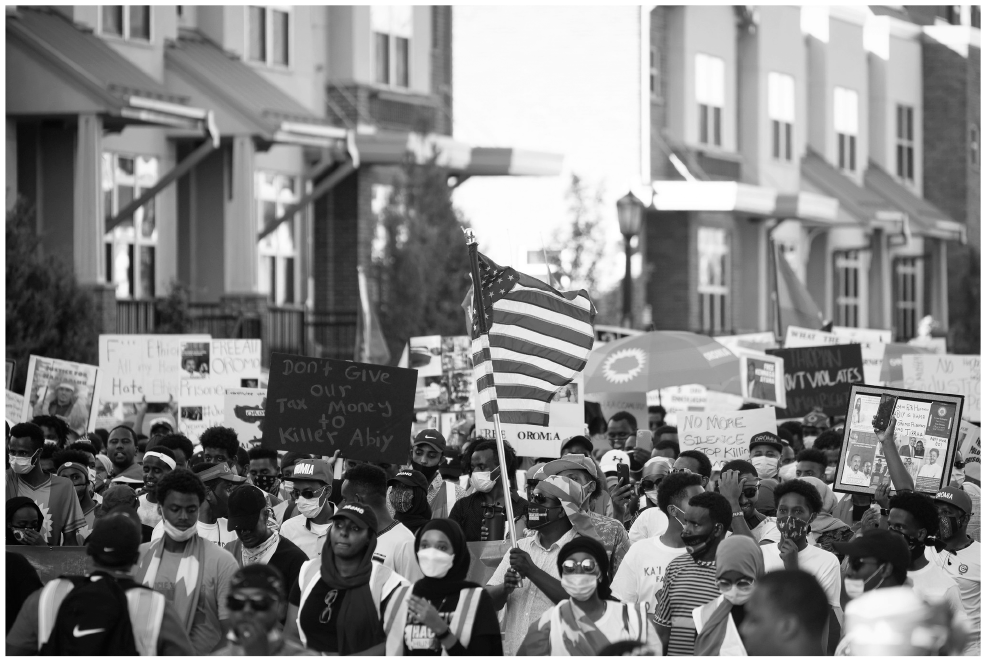
Constructing her dataset, Guluma interviewed 30 first- and second-generation Oromo peoples (the largest subnational ethnic group in Ethiopia) across two American cities highly concentrated with Oromo immigrants, Washington, D.C. and Minneapolis/St. Paul, MN. The Oromo experienced nearly 150 years of political subjugation, marginalization, and cultural erasure in Ethiopia. In fleeing oppression, Oromos drew sharp distinctions between themselves and their Ethiopian compatriots while simultaneously relating on a deeper level with Black Americans. This identity alignment was punctuated by the visible emergence of the BLM movement and the nearly concurrent murders of Hachalu Hundessa (an Ethiopian-born Oromo man) and George Floyd (a U.S.-born Black man). In this way, collective experiences from two distant nations became the crucible in which a new collective identity was forged, built up from a belief in a shared project of Black liberation as a response to cultural trauma.
A clear sense of home is essential to individual health and wellbeing. This study’s findings affirm the ways uniting under calamity and unexpected circumstances can foster affinity across diversity. At a time when forced migration for myriad reasons has become common, the Oromo demonstrate that tragedy and trauma may also lead to belongingness and the reconstruction of a sense of home and family.
The War On Climate
Decades of research have shown that economic growth directly contributes to a rise in carbon emissions—the primary driver of the climate crisis. Yet, we know surprisingly little about what, and how, other related social forces mediate this dynamic. The authors of a new study, published in the American Sociological Review, identify militarization—the development and growth of national troops and arms—as central to this relationship, especially as states increasingly view climate change as a threat to national security.
Spanning 106 countries from 1990 to 2016, the authors’ novel dataset brings together measures of military expenditure and enrollment, GDP, and total and per capita carbon emissions at the national level. Using this dataset, Andrew K. Jorgenson and colleagues investigate whether, and how, militarization contours the relationship between economic growth and carbon emissions. They find that the bigger a nation’s military, the more economic growth drives carbon emissions. Conversely, the smaller the military, the less economic growth drives carbon emissions. To explain this, the authors highlight that heavily militarized states—like the United States and Russia—rely on their national forces for economic development and that militaries themselves are capital- and carbon-intensive organizations.
iStockPhoto.com // phaisarn2517

Today, many states have developed preparedness plans that rely heavily on militaries to respond to climate disasters. Despite this, in late 2021, when President Biden signed an Executive Order mandating the U.S. government achieve the goals of 100% carbon-free electricity by 2030 and net-zero emissions by 2050, he exempted any activity related to the military and national security. As the findings here show, relying on militarized responses to the climate emergency while exempting military activity from climate policy targets risks exacerbating the very issue world powers are trying to combat.
Happy Parents
Black fathers are much more likely to report being happy than are their childless peers.
iStockPhoto.com // PeopleImages

Along with freedom and liberty, the pursuit of happiness is central to American life, and in recent decades, entire industries have formed around mental, physical, and spiritual wellbeing. We know, though, that happiness, and the right to it, is not distributed equally across the population; American men report higher rates of happiness than women, as do White Americans when compared to their Black counterparts. While scholars often point to structural constraints like racism and inequality as the primary drivers of this gap, a new study in the open-access journal Socius suggests that parenting also plays a key role.
Like others studying the phenomenon of happiness in relation to gender and race, authors Jennifer Augustine and Mia Brantlay draw on data from the American General Social Survey to examine how the experience of parenting affects self-reported happiness among White and Black mothers and fathers. Several trends emerged from the data. White mothers appear to be less happy than their non-parent counterparts, while no gap in happiness was found between Black mothers and non-parenting Black women. As for men, there was no happiness gap between White fathers and non-parents, while Black fathers were much more likely to report being very happy than were their non-parent peers.
The authors present several potential explanations for these trends, including evidence that Black women are much more likely to view themselves as role models for their children and to spend more time with their children, and that Black mothers tend to experience higher levels of community support than do mothers in White communities. As for the dads, one explanation may be that fatherhood helps alleviate the growing social disconnectedness found among young single men, and that shifting gender norms allow fathers to more easily partake in enjoyable family activities. Black fathers specifically may be less likely to view their ability to provide financially as being synonymous with being a good parent and instead embrace an alternative model of fathering that focuses on the parent-child relationship. Taken together, these findings help to combat many of the uniquely negative stereotypes and challenges facing Black mothers and fathers, highlighting the pathway to happiness that the experience of parenting may provide.
Unplugging from Politics
iStockPhoto.com // smodj
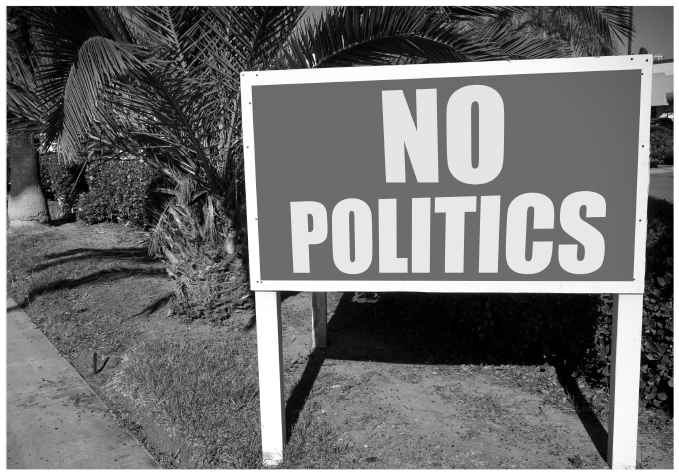
Have working-class young adults inherited their parents’ politics? The 2016 election put a spotlight on working-class resentment as a driving force behind Donald Trump’s victory. But a new study by Jennifer M. Silva finds a different trend among the next generation of working-class adults: disengagement. So, what changed?
Drawing from interviews with 73 working-class young adults in a declining Pennsylvania coal town, Silva locates the root of her respondents’ disengagement in the decline of social institutions and roles that once facilitated political engagement. Lacking external sources of direction, meaning, and connection, the young adults in Silva’s study managed their suffering and made sense of their place in an unequal society by constructing narratives of the self in which pain is meaningful, the American dream is a lie, politicians cannot be trusted, and opting out of the political process is therefore not only logical but admirable. The cultural narratives readily available through social media—conspiracy theories and self-help ideologies—served to reinforce their cynicism and isolation. Consequently, the vast majority of Silva’s respondents did not plan to vote in the upcoming election.
Silva’s findings illuminate a departure from the political allegiances of previous generations: rather than fueling support for politicians of any allegiance, resentment appears to have manifested in political withdrawal for these working-class young adults. Young people are at an inflection point, and some have become so alienated that they have given up on the democratic process altogether. The question, as always, is how do we build a civil society that recognizes the worth of all its members and empowers them to participate in order to pursue greater justice, inclusion, and wellbeing for themselves and for others?