



Abstract
They’re not good investments, so what’s driving their popularity? The answer lies in who is buying Bitcoin, meme stocks, and similar financial instruments.

The ongoing collapse of cryptocurrency exchanges has made it even more evident that crypto and similar financial instruments are not, generally, good investments. So why are so many people still buying in? The answer lies in who is buying the cryptocurrency: it’s mostly men, and they’re being driven not by financial considerations, but by gender. Men—especially young men—seem to be using these products to assert a threatened masculinity.
It’s important to ask what men are chasing when they invest in cryptocurrencies and meme stocks.
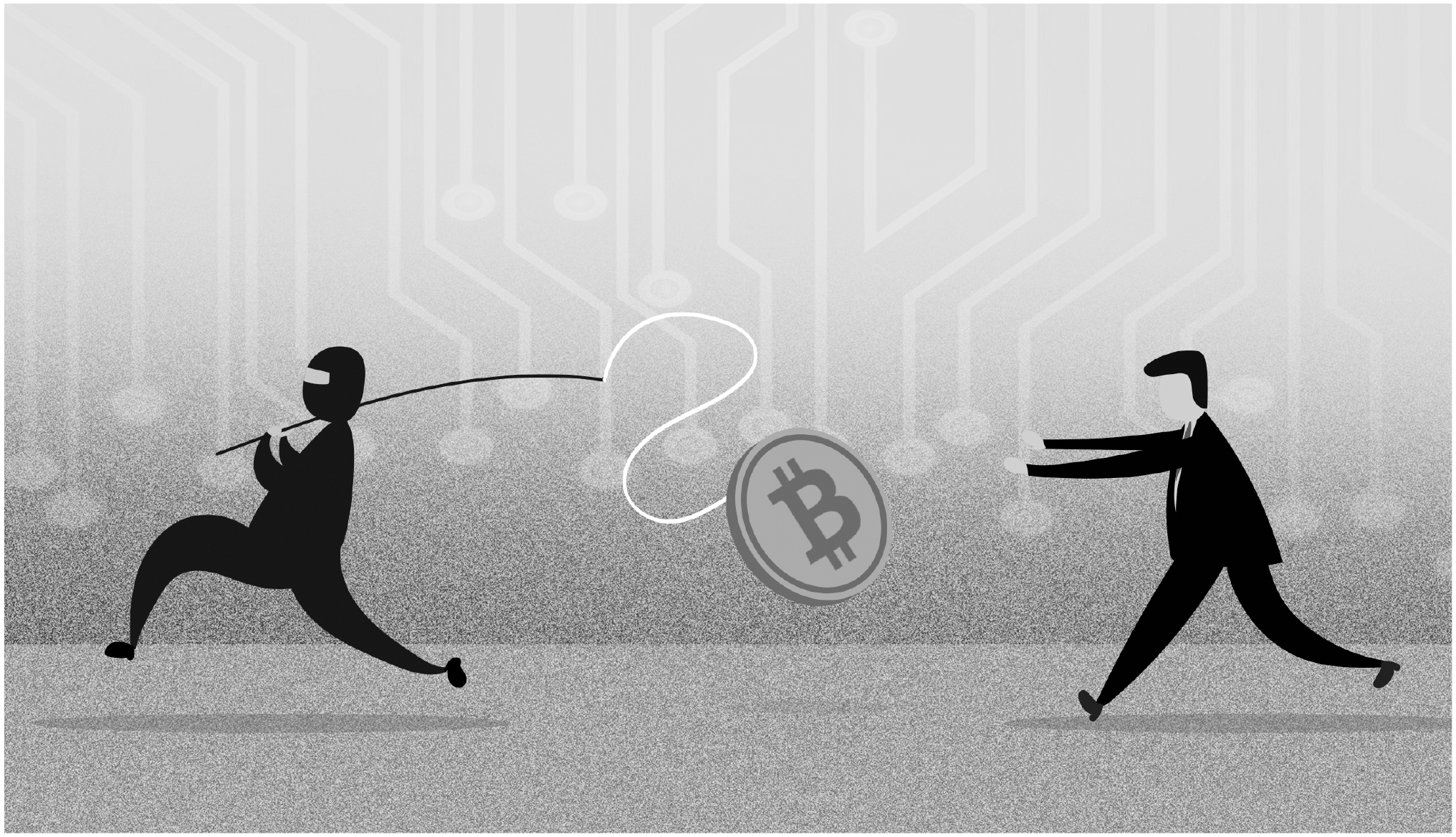
Ricky Redor, ByBit, Flickr CC. learn.bybit.com/bybit-p2p-guide/how-to-avoid-p2p-crypto-scams-fraud/
It’s not news that cryptocurrency, NFTs, and similar financial instruments have a gender problem. While nearly all financial services have a sex imbalance, CNBC reports that the gap in crypto and other decentralized financial tools is far larger than for traditional investment assets. These instruments, the best-known of which is Bitcoin (in circulation for nearly 15 years at this point), involve currencies and other securities that aren’t backed by any government or stored in a bank, and their markets are dominated by men. A 2022 GQ article on the fashion of “crypto bros” casually notes that 94% of cryptocurrency accounts are held by men, while The Street pegs women’s participation at less than 5%. Despite conferences, celebrity endorsements, and social media targeting women featuring entrepreneurs like the Kardashians, cryptocurrencies’ appeal has largely been lost on women. And even those efforts have largely fallen off as the crypto markets have crashed.
Since a peak in late 2021, investors have lost more than $2 trillion in these markets, but more than $1 trillion remains in them. Understanding what drives these markets is more than an academic exercise, and the gap in ownership between men and women is a big clue. The gap, I’ve found, isn’t just because of gendered differences in risk tolerance or technical expertise. It’s more about what these digital tokens—as well as some more traditional financial instruments—mean to their mostly male owners.
Sociology has long shown that men’s gender identities (the way that they perform masculinity to themselves and others) are relatively fragile, leading them to look for ways to display traits that they see as masculine. In the past, men might have displayed their masculinity through activities like hunting, crafting, or athletic endeavors. These avenues might not be open to many urban, educated young men, but that doesn’t obviate their need to prove their gender identity to themselves and others. The fact that crypto is opaque, that discussions of it involve jargony, insider imperatives to “HODL to the moon” (that is, refuse to sell even in the face of downturns), and the fact that crypto represents a rebellion against governments and authority are all features, not bugs for male entrepreneurs. By owning crypto, or certain “meme stocks” (more on those in a bit), men can evidence a willingness to take risks, display esoteric knowledge, and demonstrate fortitude and independence in a way that they can’t do with other financial assets. Especially in the wake of later downturns, it’s easy to mock the Matt Damon Crypto.com ad that insisted “fortune favors the brave,” but that appeal may be key to convincing young men to buy these kinds of financial instruments.
Starting in 2022, I added questions about crypto ownership to traditional telephone polls carried out by the FDU Poll in New Jersey. These were coupled with questions about gender identity, allowing us to see some direct correlations. For instance, a little more than half of men in the New Jersey sample (and in past studies with national samples) assert a “completely masculine” gender identity (as measured on a six-point scale running from “completely feminine” to “completely masculine”). Among them, 35% say that they have owned cryptocurrency, NFTs, or similar products. Among men who assert any other kind of gender identity (a 1-5 out of 6 on our scale), that figure is just 23%. Put another way, 82% of male crypto owners in the FDU Poll say that they’re “completely masculine.” This difference between crypto owning men and others holds up even controlling for other factors like race, education, age and partisanship.
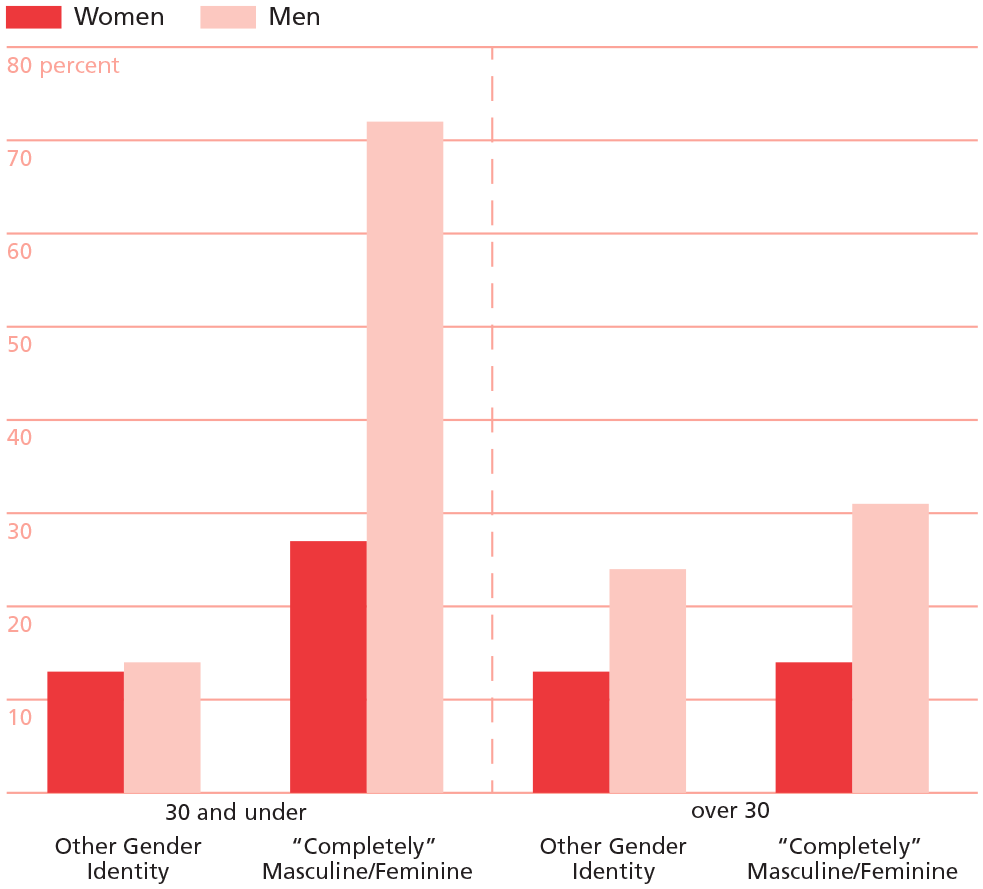
Report owning cryptocurrency or NFTs, by age, sex, and gender identity
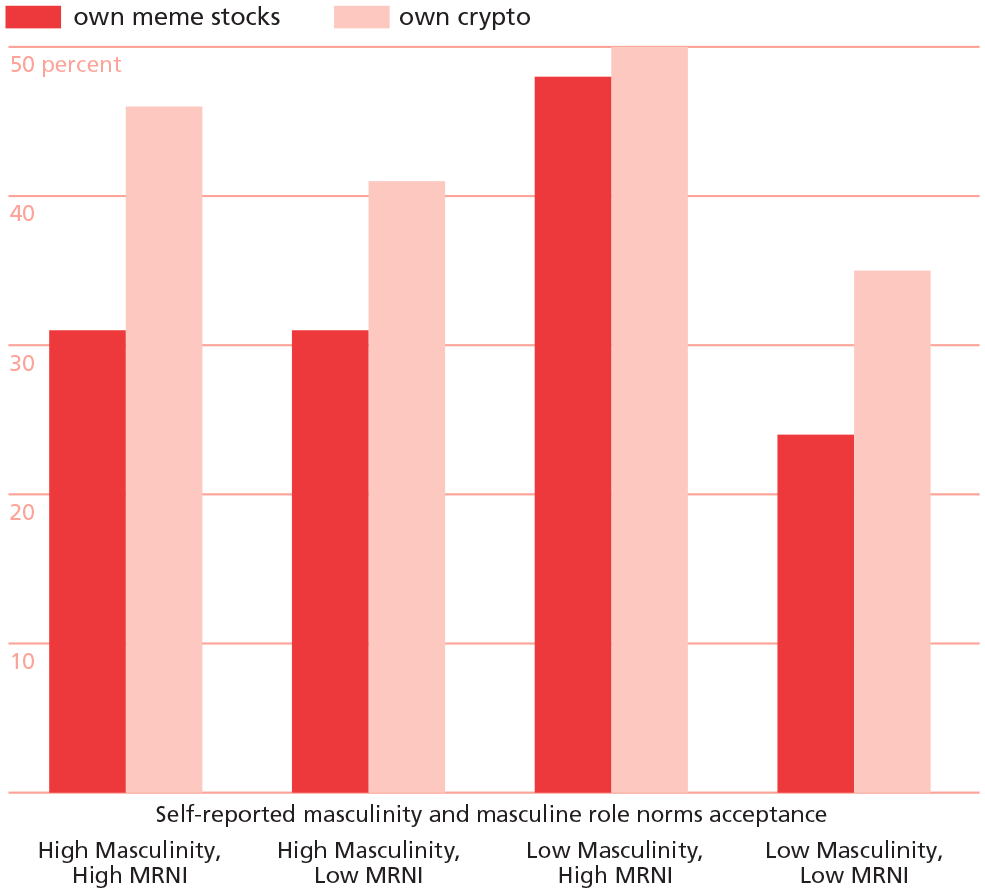
Men who report owning cryptocurrency, NFTs, and meme stocks
The relationship between crypto ownership and gender becomes even clearer when we account for age. Young women (under 30) are only slightly more likely than older women to own crypto, and even among older men, there’s no relationship between crypto ownership and assertions of masculinity. But among younger men, cryptocurrency is closely tied to expressed gender identity. In this group, 72% of those who claim they are “completely masculine” own crypto, while just 14% of those who claim they’re anything other than “completely masculine” say the same.
To replicate these results, I next made use of a national online study. It took separate samples of 1,076 young people (ages 18 to 30) nationwide, with an oversample of young men. Because young people generally have less bi-modal views of gender identity, this survey used two separate items to measure masculinity and femininity, letting respondents place themselves on a 0-100 scale for each. Despite the differences in sample and measurement, the national data tells much the same story as the New Jersey survey. When asked to place their masculinity on the 0-100 scale, crypto owners rate themselves 13 points more masculine than non-owners. They also score significantly higher (0.12 points on a 0 to 1 scale) on a short form of the Masculine Role Norms Inventory (MRNI), a scale designed to measure acceptance of traditional U.S. masculine gender role norms that asks respondents to assess statements like “I think a young man should try to be physically tough, even if he’s not big” and “Men should watch football games instead of soap operas.”
For those men who both value traditional masculinity and don’t think that they’re achieving it, these products seem almost designed to deliver gender value.
Of course, the most common narratives about why men are more likely to invest in things like cryptocurrency in the business and economics literature don’t incorporate expressions of gender identity. Rather, they argue that men are more tolerant of risk, more willing to put money into riskier speculative investments that have higher potential returns, have higher financial literacy, or simply, owing to wage gaps, make more money and can better afford investments that might lose their value.
A cross-sectional analysis does not a causal story make. The traits that make crypto and other speculative investments more attractive to men might themselves be tied to masculinity, but we need more information. To help establish that relationship, we embedded an experiment in the New Jersey telephone survey. In it, half of respondents were randomly assigned to be asked about their crypto ownership just before being asked about their masculinity or femininity. For everyone else, the questions were widely separated. It turns out, when crypto owners are asked about their gender right after being asked about crypto ownership, they are ten points more likely to say that they’re “completely masculine” than when the questions are separated. Among men who don’t report owning crypto, there’s no significant difference.
What’s going on here? It’s important to remember that, generally, people don’t really know how they’re going to respond to a question asking about something like their masculinity or femininity until they’re asked, so they make up an answer in the moment, based in part on what’s on top of their minds. Because they see crypto ownership as being a masculine trait, the fact that they’ve just said that they own cryptocurrency or related assets makes them more likely to say that they’re “completely” masculine. There’s no necessary relationship between gender and cryptocurrency investments, but these results show us that male crypto owners believe that owning crypto makes them more masculine. Whatever other differences might lead men to be more likely to invest in crypto, the link between masculinity and crypto ownership must be counted among them.
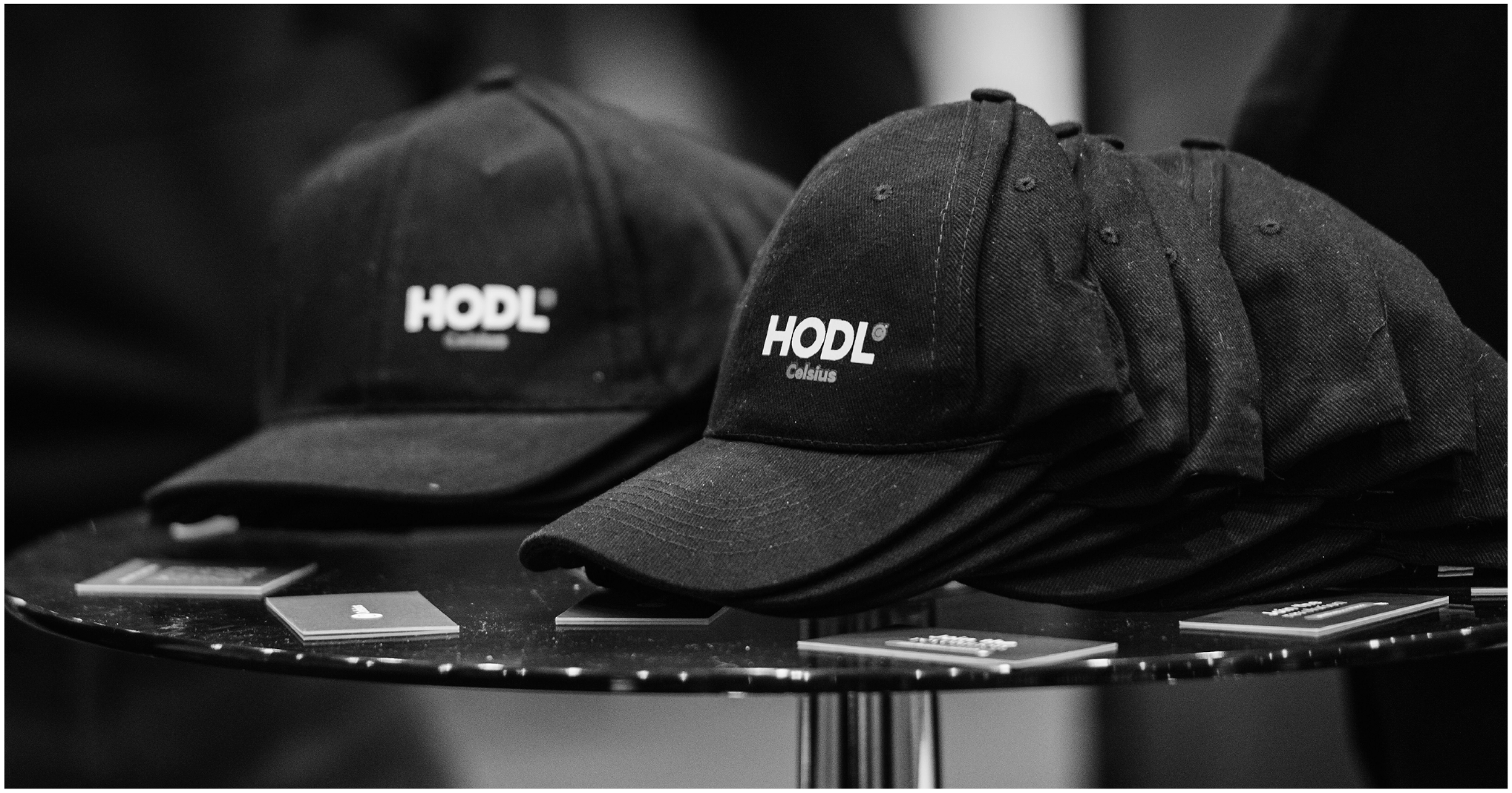
Conference swag for now-bankrupt trading app Celsius touts the notion of “hodling” to the moon. Customers who did incurred major losses, as there were no FDIC protections for their crypto investments.
WebSummit, Flickr CC
Meme Stocks and The Moass
If young men are using cryptocurrency to assert a masculine gender identity, there’s no reason that such behavior should be limited to crypto. Many of the same factors that lead young men to invest in cryptocurrency have also driven them toward “meme stocks.” Apps like Robinhood have made it easy for people to buy and sell individual stocks with minimal fees, catering to a very different class of investors than most brokerages, and many of their clients only joined the platforms during the lockdown period of the COVID-19 pandemic. According to Robinhood, the average age of investors on the platform is 32, and about half of them had never bought stocks before joining. They’re also investing in different stocks from more established investors; Robinhood’s most popular stocks include AMC, Gamestop, and, until recently, Bed Bath & Beyond.
Part of this difference has to do with where the new investors are getting their information. It might seem odd that young, Internet-age investors are interested in brick-and-mortar chains, but these particular ones have garnered intense discussion on investing message boards, especially Reddit’s r/wallstreetbets. That’s, by the way, how they got the name “meme stocks.” Generally, institutional investors see these chains as a poor value, but on the message boards, that truism has translated into the belief that the chains’ stock prices are being artificially depressed by powerful investors and institutions selling the stock short. That makes buying and holding the stocks an act of rebellion and control—and given the price of the stocks, a cheap one.
What does it mean to short a stock? Rather than buying a stock and betting its value will go up, short sellers are betting that the price will drop. They sell the stock now, agreeing to buy it back later. If the price falls, the original holder makes money; if it rises, they lose money. In the case of Gamestop, it seemed that there were more shares being shorted than there were in normal circulation. So, this meant that if meme stock buyers bought Gamestop stock and didn’t sell, there might not be enough shares for the shorters to buy back (or “cover” their shorts). But since they have to buy the stock to cover the short, the price rises in what’s called a “short squeeze.” Which brings us to January 2021. By the end of that month, owing to a meme stock run on Gamestop shares, the price had increased to almost 30x its value, and brokers, including Robinhood, stopped allowing users to buy or sell it. Robinhood claimed the stoppage was due to an issue with their clearinghouse, but many investors saw it as nefarious. Before too long, the price of Gamestop was back about where it started, and some investors cashed out. Many others, however, held on to their stocks, determined to show their perseverance and bragging about how they would hold it forever.
The Gamestop short squeeze was not a one-off event. The same message boards that had argued that the price of Game-stop stock was being artificially, perhaps illegally, depressed found new targets. They followed the same simple theory: if meme stock holders keep buying up shares, eventually there won’t be enough shares to cover all of the shorts. Desperate short-sellers will bid any available shares up and up and up (“to the moon!”) until the price of the stock becomes asymptotically infinite, and the people who have held it can sell for some absurd but undefined amount of money. This is what’s referred to in these groups as the “Mother of all short squeezes” or MOASS.
This is, to be clear, ridiculous. If a stock became that volatile, the exchange would halt trading. If the price of a stock went up that high, the company itself would be foolish not to issue more stock and cash out. And the money being put into the market by the meme stock traders isn’t anything like the holdings of institutional investors. But even today, as stocks like AMC flounder, you can go to the social media site of your choosing and find posts asserting that the MOASS is coming any day now: the virtuous will be rewarded, those in power will be brought low, the little guy will win.
This story may sound very familiar to readers of the classic social science text “When Prophecy Fails,” but there’s more to it. The same appeals that may be leading young men to buy cryptocurrency—taking control, fighting against a corrupt system, demonstrating mastery of esoteric knowledge and perseverance, and doing it all in the name of being able to provide for their families—may well be driving them toward the meme stocks. Online communities are also important amplifiers: a behavior designed to assert masculinity is only useful if it’s recognized as such. So, just as gun ownership is a more powerful show of masculine gender identity in a place where other people own guns, crypto and meme stock ownership is a more powerful show when it’s recognized and appreciated by others making the same display. Online spaces give these men a place to show off the masculine traits that they see as being linked to their investments.
In our society, masculinity can be a valued trait, and the desire to assert masculinity isn’t limited to men.
In the national data, men who report having owned “meme” stocks like AMC and Gamestop—a full 26% of the sample of men under 30!—score significantly higher on the aforementioned MRNI (0.59 on a 0-1 scale, versus 0.48 for non-owners). More telling, though, is what happens when we look at the joint effects of masculine role norms and self-placement of masculinity. Men who assert a more masculine gender identity are more likely to report owning both meme stocks and cryptocurrency, as are men who value more traditional gender roles for men, as measured by the MRNI. But the highest levels of ownership for both cryptocurrency and meme stocks come from men who value traditional gender roles for men, but, in their own estimation, fall short of that standard, rating themselves below the median on the masculinity scale (to be fair, the median for men is 88 out of 100, but an 87 is still relatively low).
A hard-charging, 3,000-lb. ode to the “future of finance,” erected by online crypto and stock trading firm TradeStation in Miami, FL, a city touted by its mayor as the “new capital of capital.”
Anthony Quintano, Flickr CC

In some sense, it’s not surprising that we’d see similar results for cryptocurrency and meme stocks, as they share many of the same appeals, but it demonstrates that this is not an issue that’s limited to crypto, but is part of a broader link between gender and investments. Whatever financial function they may serve, cryptocurrency and meme stocks also seem to be filling a gap for young men. That gap, between the expectations they have for men and how they view themselves, doesn’t exist for everyone: the lowest levels of crypto and meme stock ownership are among men who don’t value traditional masculinity and don’t try to assert it. But for those men who both value traditional masculinity and don’t think that they’re achieving it, these products seem almost designed to deliver gender value.
Not All Men?
So far, we have been looking at the effect of masculinity mostly on people who self-identify as male, but that doesn’t mean that these effects are absent among women and non-binary people. Among men, crypto and meme stock ownership is correlated with a mismatch between valuing traditional ideals of masculine gender identity and how the person views their own masculinity, but there is a main effect of masculinity more generally. That is, men who do not meet their own expectations of masculinity are more likely to buy cryptocurrency and meme stocks, but simply asserting a strong masculine gender identity also makes people more likely to do so. This is true for anyone who asserts a strongly masculine gender identity: men, women, and non-binary people (though the data do not show the same effects of the gap between masculine norm beliefs and asserted masculinity among women and non-binary people). In our society, masculinity can be a valued trait, and the desire to assert masculinity isn’t limited to men.
That crypto investments are at least associated with certain types of masculinity is not lost on the industry. This freely distributed computer wallpaper celebrates open source blockchain platform Ethereum Classic.
Public Domain

More work is also needed to examine how masculinity appeals interact with men’s race and ethnicity. For instance, in the data presented here, the gap between acceptance of masculinity norms and asserted masculine gender identity is weaker among Black and Hispanic men than it is among White and Asian-American men. This is correlated with lower observed levels of crypto and meme stock ownership; perhaps Black and Hispanic men are less likely to see such behaviors as expressions of masculinity.
The Crypto Crash
In forums, investors talk about how they’ll use the proceeds from their inevitable victory to support their families, buy a house, move to a better neighborhood—all things that traditional masculinity says that men are supposed to do, but many young men now find to be impossible. These posts are mirrored by the appeals made to courts when cryptocurrency exchanges like Celsius and FTX declare bankruptcy and all of the money that these men have invested, and the paper returns that they’ve made, disappear. In letters to the bankruptcy judges in these cases, the investors (likely to get little or none of their money back) write about how they were going to use the money to pay for a house, about wanting better for their children’s education, and about how they have let their families down. The same narratives show up in online discussions about the MOASS, as believers continue to wait for the unthinkable wealth that they’re sure is coming any day now.
Proponents of cryptocurrency assert that the current crash is a temporary downturn, an opportunity for true believers to buy low and hold, making big gains when the value rises. They say that cryptocurrencies have a real use for a society outside of the largely criminal activities that have been the most obvious use-case. But it doesn’t really matter if crypto is a worthwhile investment, because the buyers aren’t buying it just to fulfill a financial need, but also a social one. The popularity of these assets among young men isn’t a sign that they’re looking for exciting new opportunities: it’s a sign of a gap between the lives of young men and what they feel masculinity requires them to be.