




Abstract
After the collapse of the Soviet Union in 1991, the sex ratio at birth in Azerbaijan, a former Soviet Republic, became very skewed. Historical data suggest that the collapse of the Soviet safety net, coupled with the increased availability of ultrasounds and longstanding son preference, may have facilitated the practice of sex/gender selection in post-Soviet Azerbaijan.
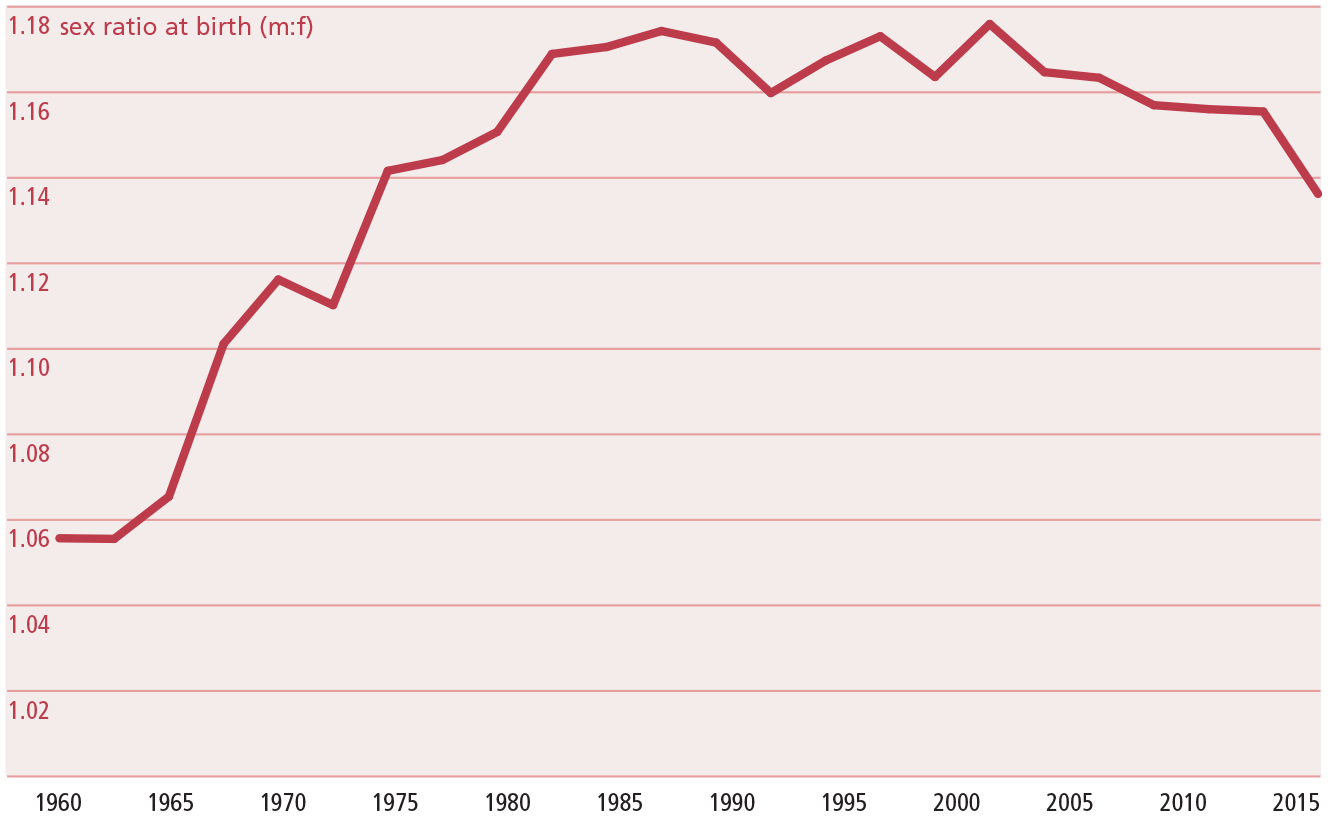
In a typical population 106 boys will be born for every 100 girls. However, after the collapse of the Soviet Union in 1991, this sex ratio at birth became skewed in Azerbaijan, a former Soviet Republic. By 2010, 116 boys were born for every 100 girls. The change clearly indicated the sudden, widespread use of prenatal sex/gender selection to ensure the birth of a son.
The change in Azerbaijan’s sex ratio at birth (SRB) over two decades suggests that something about the transition to independence facilitated the widespread practice of prenatal sex/gender selection in Azerbaijan. But what?
Like many other countries with skewed SRBs, Azerbaijan’s family system has been organized along patriarchal, patrilocal, and patrilineal lines. Patriarchal because men in Azerbaijan are considered to head their households and typically exert the final say in major household decisions. Men are also thought to be essential to performing social and religious rituals, such as funerary rites. Patrilocal, meaning that a family’s youngest son and his wife usually live with his parents after they get married and are expected to support his elderly parents. In exchange, parents then leave their property and inheritance to this son. And fi nally, patrilineal because Azerbaijanis place a high value on the continuation of the family line that only sons may advance.
In this type of gender and family system, parents view sons as better, almost necessary, investments. Daughters, though loved and cherished, are often not viewed the same way.
Skewed sex ratios at birth occur when many expectant parents use prenatal sex/gender selection (most commonly fetal ultrasound and abortion) to have sons instead of daughters. They are found in just a handful of countries around the world, including China, India, Vietnam, and a cluster of countries located in the South Caucasus: Armenia, Azerbaijan, and Georgia. The emergence of skewed SRBs in the South Caucus was curious since there was no history of female infanticide and intentional neglect of daughters, like there was in China and India.
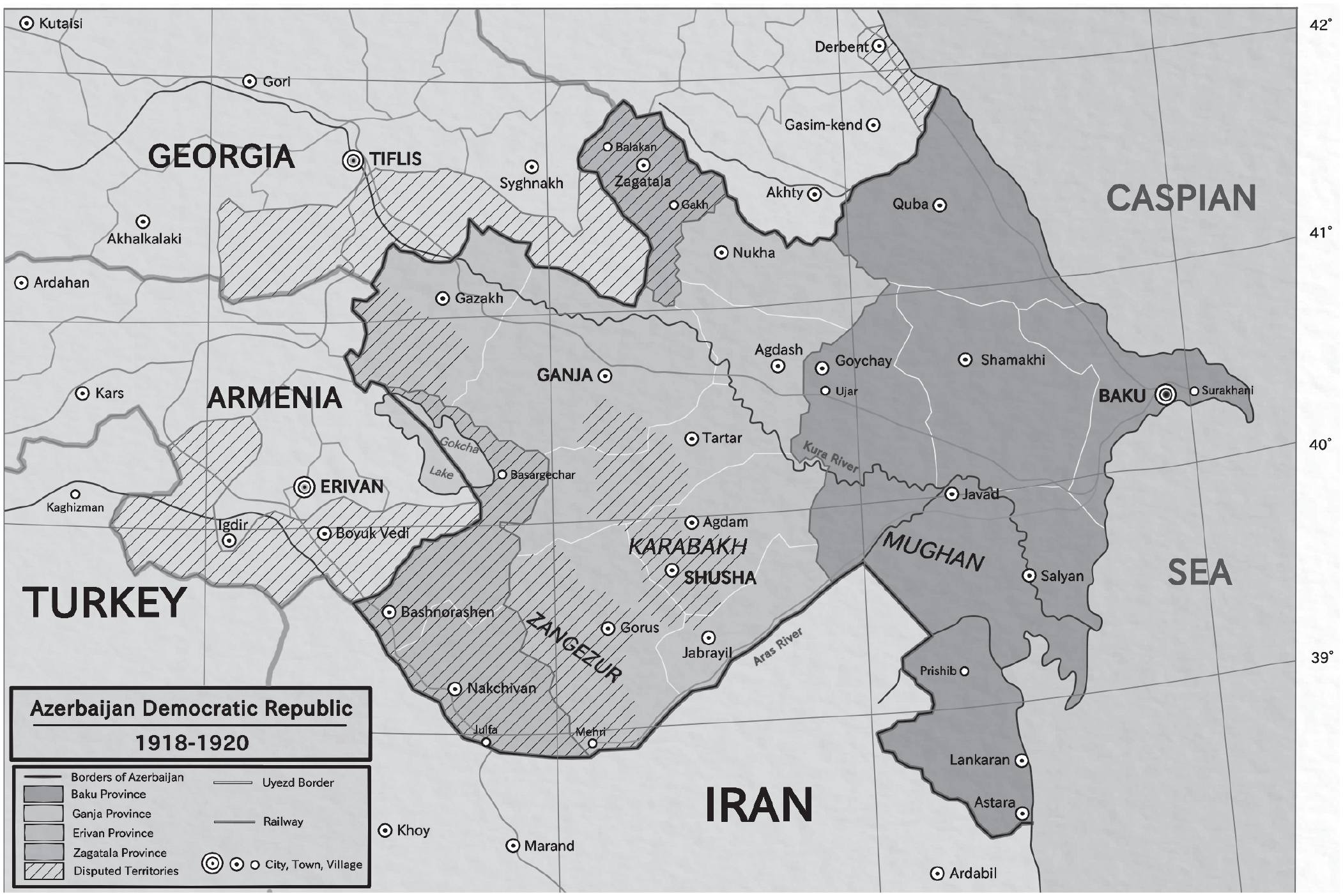
Azerbaijan is a former Soviet Republic on the Caspian Sea north of Iran, east of Turkey and south of the country of Georgia.
Golden, via Wikimedia Commons
The figure at right shows how Azerbaijan's SRB changed over time according to birth data collected by the State Statistical Committee of Azerbaijan. During the Soviet period, Azerbaijan's SRB was typical (more male babies are born than female babies, balanced by higher mortality among males at all ages than females). After the country gained independence from the Soviet Union, the sex ratio at birth ascended quickly to its peak of 116 to 100 in 2010.
Azerbaijanis have long had access to abortion. Abortion was the primary form of fertility control throughout the Soviet Union. Healthcare providers discouraged the use of oral contraceptives and, even if they hadn't, citizens were distrustful of their safety. Abortion was legal and available at no to little cost. Abortion was allowed for any reason during the first 12 weeks of a pregnancy, for certain social reasons until the 28th week, and at any time during the pregnancy for medical reasons. Regulations only required the abortion to have been performed by a qualified physician in a hospital or clinic.
Upon gaining independence from the Soviet Union, leaders in Azerbaijan retained the country's reproductive health policies: to this day, Azerbaijan's abortion policies are nearly identical to what they were during Soviet rule.
Sex ratio at birth in Azerbaijan, 1980-2015
Source: State Statistical Committee of the Republic of Azerbaijan
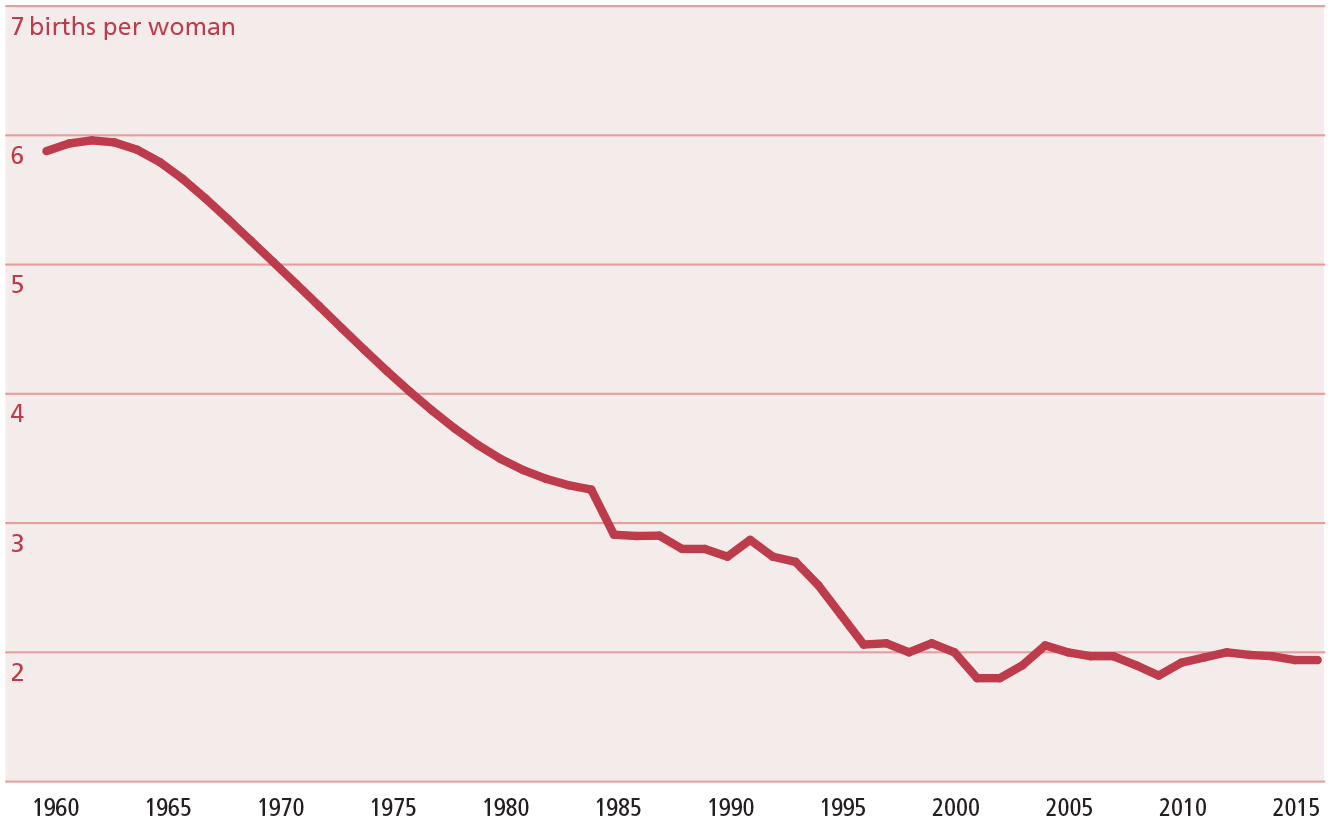
Total Fertility Rate in Azerbaijan, 1960-2015
Source: World Bank
Abortion for the exclusive purpose of sex/gender selection has never been permitted. Something changed to make it possible for parents to use abortion to select fetuses based on their sex. Technology to determine the sex of children before birth was not widely available in the state-run Soviet hospitals.
It was the transition to a free market after independence that made sex/gender selection possible. In the dramatic restructuring of the economy after independence, hospitals and clinics—many newly privatized—were suddenly able to import medical technologies from the global marketplace. The most significant was ultrasound machines that allowed healthcare providers and expectant parents to identify fetal sex between 11–13 weeks of a pregnancy.
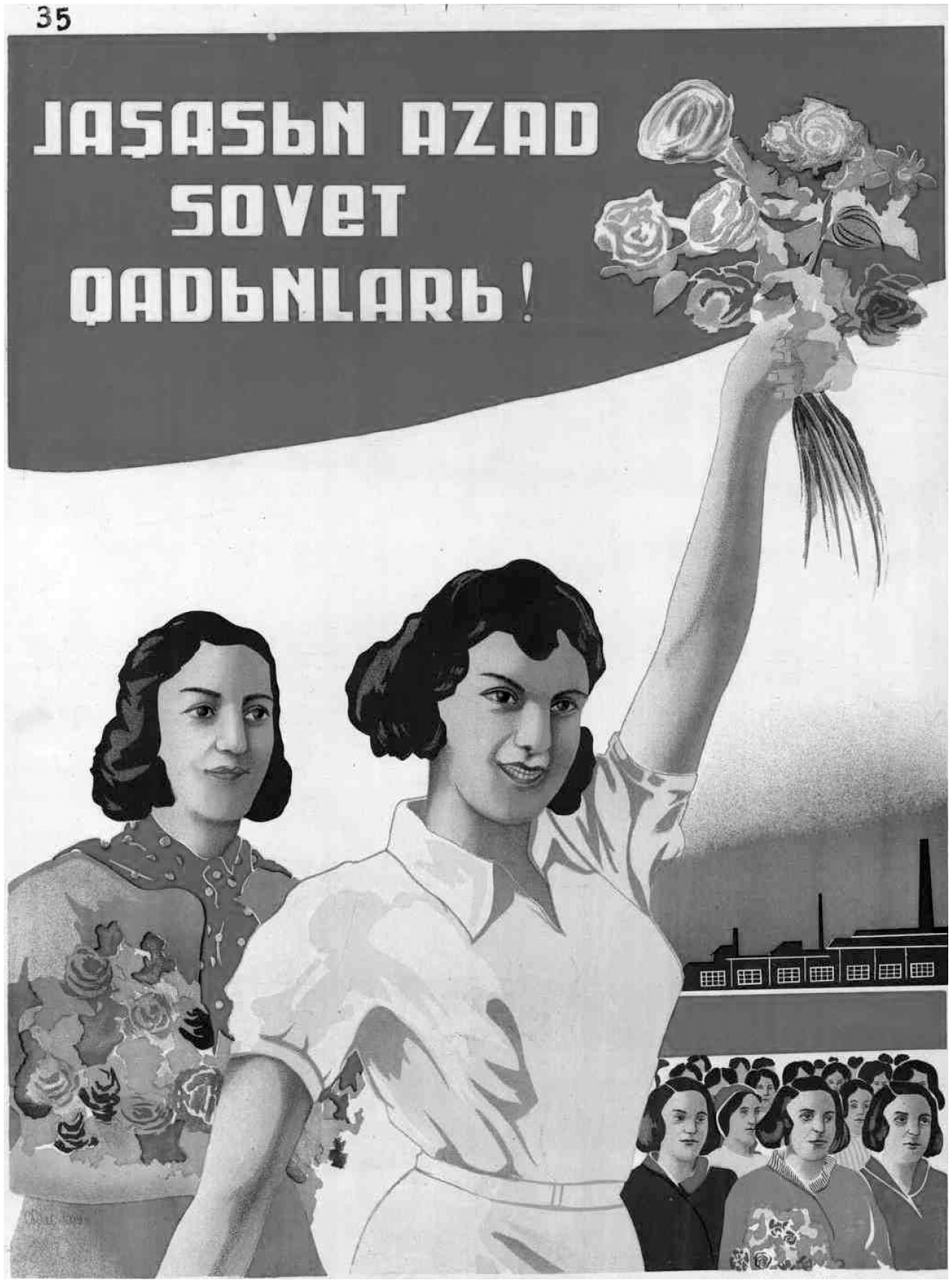
Soviet influence shaped institutions in Azerbaijan and affected social life in myriad ways, including birth rates and trends in fertility.
International Institute of Social History, via Wikimedia Commons
Reproductive technologies can make sex/gender selection possible but parents will really only use them when they face what demographers call a “fertility squeeze.” In normal times, couples seeking a desired gender composition among their children are often willing to continue having children until they achieve that composition.
When conditions for a squeeze occur, however, couples are more likely to use sex/gender selection to secure their desired gender composition. Azerbaijan's fertility rate had declined during Soviet rule. In 1960, Azerbaijan's total fertility rate was six children per woman; by 1985 it had fallen to three children per woman. The rate remained stable from 1985 to 1991.
But, like many other former Soviet countries, Azerbaijan's decline in total fertility rate became even steeper immediately following independence. As the bottom figure on p. 55 shows, by the mid-1990s, about five years after independence, Azerbaijan's TFR had reached a little over two children per woman.
Qualitative historical data can help us make sense of the rapid fertility decline. Independence from the Soviet Union brought significant economic upheaval to Azerbaijan, as it did in many other former Soviet republics. The Soviet safety net, which had long provided a wide array of social services to Azerbaijanis, collapsed and citizens were left reeling. Scores of Azerbaijanis once employed by the state struggled to find jobs in the private or informal sectors.
Meanwhile, Azerbaijan was involved in a devastating war with neighboring Armenia over control of the Nagorno-Karabakh region. Approximately 750,000 Azerbaijanis were internally displaced. “The drop in the standard of living accelerated, and, with all of the uncertainties generated by the state of war and political instability,” the Iranian-British anthropologist Farideh Heyat wrote of the state of affairs in the capital city of Baku during the mid-nineties, “the social climate in Baku was akin to a state of emergency following a natural disaster” (Heyat 2002:18).
Decreasing fertility rates in the post-Soviet period may have been linked to this widespread uncertainty. Dr. Tamilla Dilbazi, a “maternity doctor,” wrote that the decline was noticeable walking through the streets. Fewer pregnant women were present and women, who, she noted once wanted many children, no longer desired children. “Many do everything possible to avoid having them,” she wrote; “themain uncertainty in life is the economy and that's what is causing families to hesitate (emphasis added; Dilbazi 1995:51-52).
Of course, it is possible that Azerbaijan's fertility decline in the post-Soviet period was just part of its broader shift from high fertility to low fertility. It could represent what demographers call the ”demographic transition” from high-fertility and high-mortality to low fertility and mortality.
But the demographic transition cannot explain why a number of other post-socialist countries also saw fertility declines tied to the economic upheaval they experienced at the time.And more importantly it cannot explain the rapid uptake of prenatal sex/gender selection.
Qualitative historical data can help us make sense of the rapid fertility decline.
Pixabay

The case of sex/gender selection anticipates current debates about the role of reproductive technologies in society. “Selective reproductive technologies,” the name that Tine Gammeltoft and Ayo Wahlberg gave to tools such as fetal ultrasound and more recently, in vitro fertilization and preimplantation genetic diagnosis, have become widely available globally. As they do so, these selective reproductive technologies, along with the demand for sons and declining fertility rates, may lead to a proliferation of masculinized SRBs, particularly in the Middle East.
As society debates the consequences of these technologies, it would be wise to follow if dramatic structural change trig- gers skewed sex ratios at birth in other parts of the world, as the collapse of the Soviet Union appears to have in Azerbaijan.
And what to do in those countries currently grappling with skewed sex ratios at birth, such as Azerbaijan? There is widespread consensus among population experts that promoting gender equity, not curtailing the right to sexual and reproductive health, is the most promising path forward.