



Abstract
Worker-recuperated businesses, like the Hotel Bauen highlighted in this essay, are organizations that were closed by their private owners, occupied by their workers, and restarted as cooperatives. As the author learned over the course of her fieldwork, many were established not only to save jobs, but also to create better jobs. Studies of workplaces in the Global North often detail how workplace policies can lessen the degree or severity of unequal treatment. But some organizations guided by principles of democracy, justice, and self-management take a more radical approach: to actively promote equality at work.
In March 2003, Gisela approached a busy intersection in downtown Buenos Aires, Argentina’s capital city. She looked up at the nearby Hotel Bauen, a once-luxury hotel where she had worked as a seamstress for nearly twenty years. At the end of 2001, the property owners had declared bankruptcy, shutting down the hotel and firing long-time employees. Although Gisela was nearing retirement, the timing could not have been worse. The hotel closed as the country entered a severe economic and political crisis. Decades of political efforts to dismantle the welfare state, deregulate the economy, and roll back labor protections following neoliberal policy prescriptions had taken an extreme toll. As the economy tumbled into recession, business owners closed their doors, leaving nearly twenty percent of the population out of work. While assets could be sold and debts restructured or forgiven, jobs seemed to be gone for good. But Gisela and her co-workers had a different plan. After months of deliberation, and energized by a wave of popular mobilizations, they decided to illegally enter and occupy the hotel to fight for their jobs.
That March day, Gisela led former Bauen employees towards the shuttered hotel. From an underground parking garage, they broke in and followed the light shining through the floor-to-ceiling windows in the lobby. “When we got there,” Gisela remembered years later, “we began to cry and hug… We never thought we would return to the hotel.” Although they did not realize it at the time, the Hotel Bauen would become one of the most iconic businesses to be “recuperated” (recuperada) by its workers. And Gisela, one of its most vocal advocates.
After occupying the property, the group formed a worker cooperative and eventually reopened the hotel without a boss. Until its closure in 2020 amid the global pandemic, the BAUEN Cooperative operated around-the-clock, providing overnight accommodations in guest rooms with sweeping downtown views, conference facilities in the seven ballrooms and theater, and casual fare in a street-side cafe that workers voted to name “Utopia.”
As a founding member of the cooperative, Gisela went back to her work repairing linens and bedding. I met her multiple times over the course of my long-term fieldwork in the BAUEN Cooperative, observing her everyday routines, interviewing her about her work history, and watching her speak to journalists and at public events. I reconstructed her story from these various encounters. After my first visit to the hotel in 2008, I spent eighteen months between 2010 and 2015 conducting participant observation, interviews, and archival research to understand how Gisela and her co-workers transformed the hotel into a cooperative.
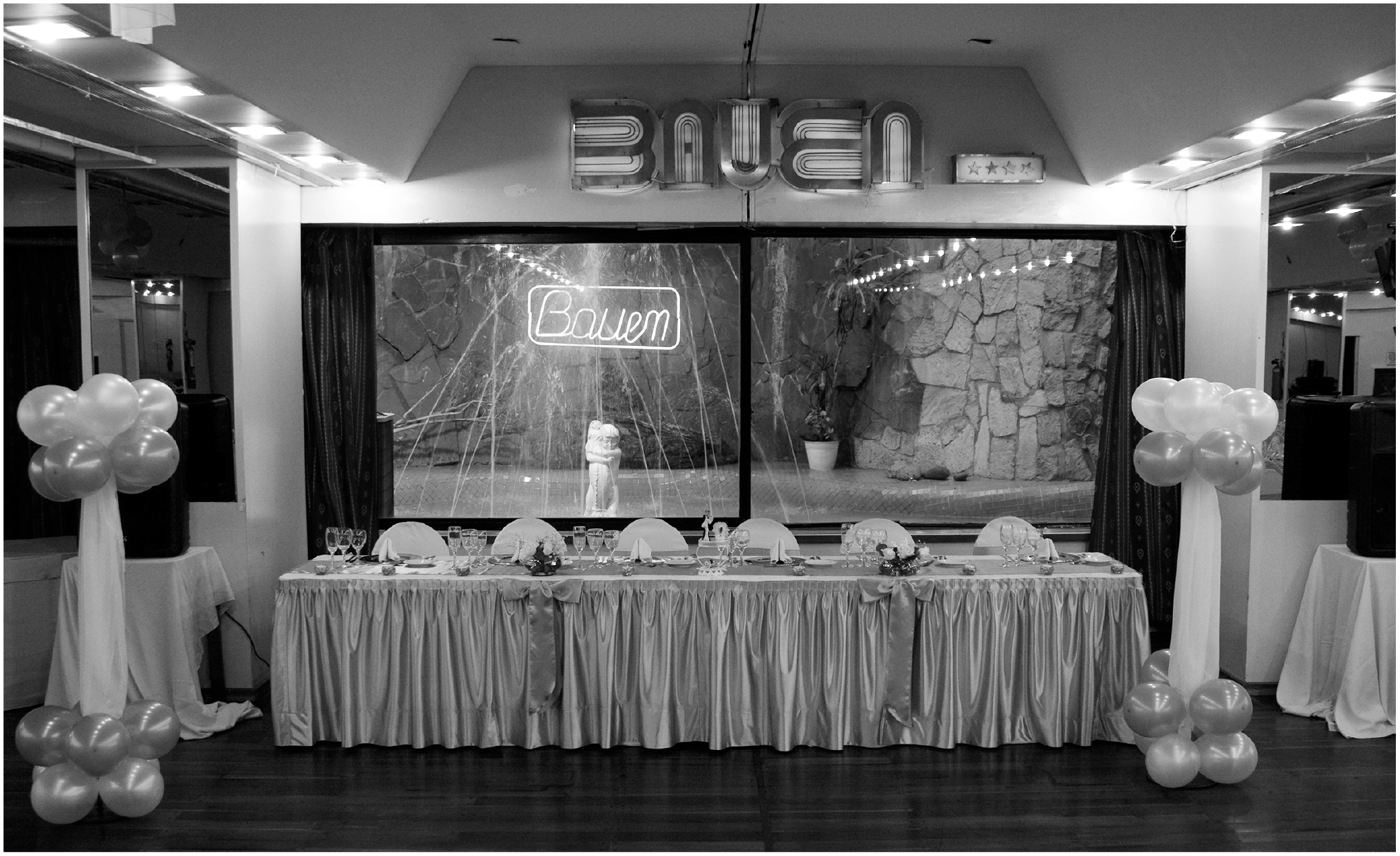
Event preparations in the largest of the seven ballrooms in the Hotel Bauen.
BAUEN Cooperative
Worker-recuperated businesses like the Hotel Bauen are organizations that were closed by their private owners, occupied by their workers, and restarted as cooperatives. As I learned over the course of my fieldwork, many were established not only to save jobs, but also to create better jobs. Studies of workplaces in the Global North often detail how workplace policies can lessen the degree or severity of unequal treatment. But some organizations guided by principles of democracy, justice, and self-management take a more radical approach: to actively promote equality at work.
Equality Projects
In sociology, the word “equality” is commonly used to refer to inequality reduction. The logic is simple: If we decrease inequalities, we thus promote equality in society. But equality is not synonymous with reducing or eliminating inequalities. A long line of egalitarian thinkers has gone beyond such simple definitions to theorize a relational understanding of equality as produced through interpersonal interaction.
Equality is widely valued in principle, but there is little consensus about what it looks like in practice. Sociologists are well-positioned to examine equality empirically. To do so, I argue that equality should be understood as a project: an ongoing effort to promote more egalitarian relations between people. Like other sociological uses of the term, projects connect what equality means in a particular context with how social structures and everyday experiences are organized based upon those meanings. Organizations, which are key sites to examine the relational production of inequality, are also important social spaces to examine how power and resources can be broadly distributed. By focusing on the relationships between people and positions, equality projects can shed light on how organizations might question, redefine, or even dismantle the ways we justify how people are treated.
Equality is widely valued in principle, but there is little consensus about what it looks like in practice. Sociologists are well-positioned to examine equality empirically.
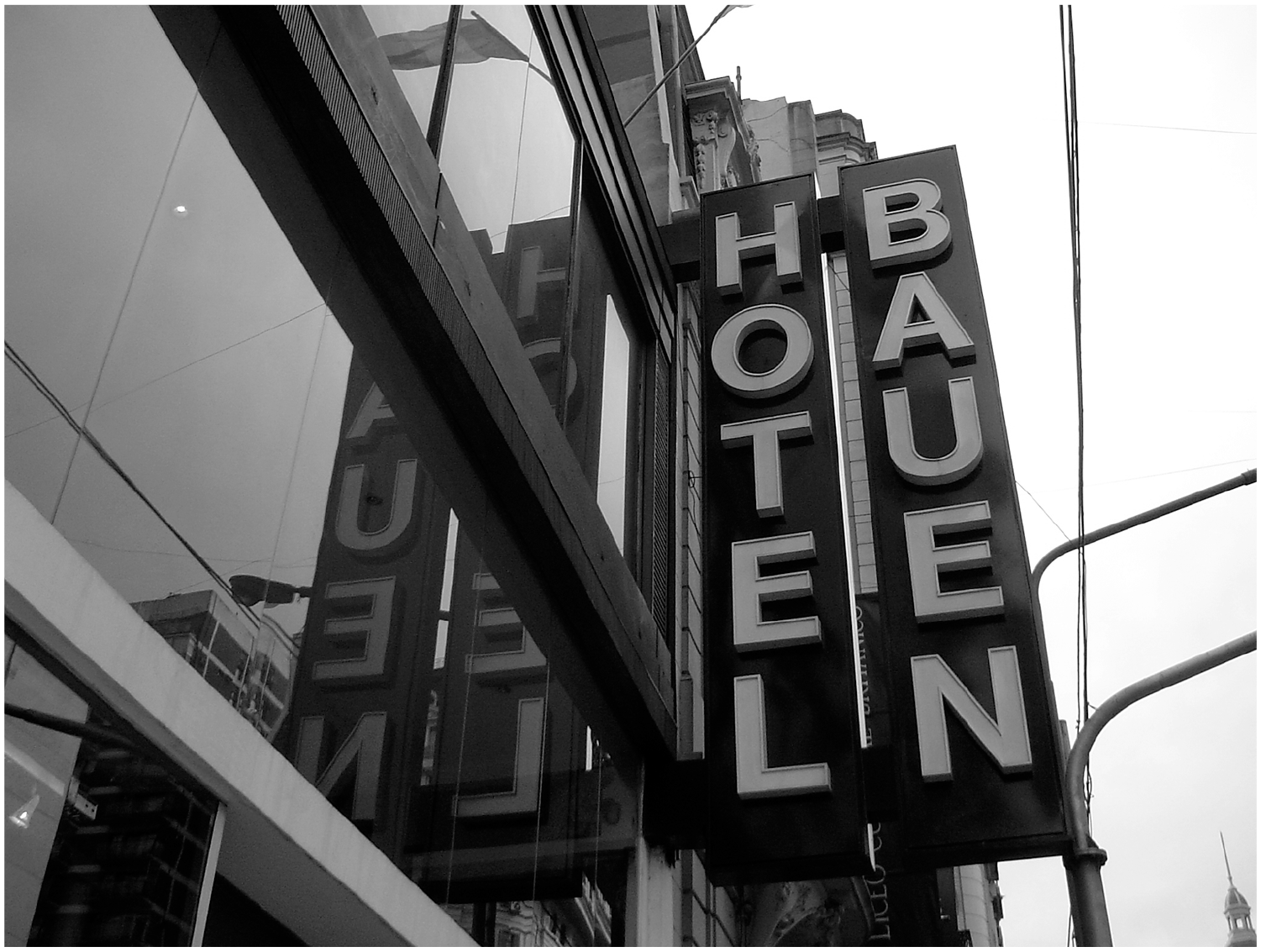
Iconic sign on the outside of the Hotel Bauen.
Katherine Sobering
Workers in the Hotel Bauen initiated an equality project as they transformed the business into a cooperative and confronted differences in power and resources that impacted their efforts to practice democracy at work. Through long-term participant observation, including ten months spent working in the hotel, I observed how members created and negotiated rules, practices, and interactions to transform their hospitality work. These efforts were fraught with challenges. Occupational segregation persisted; discrimination and biases inflected decision-making processes; and status differences by race, class, gender, and nationality shaped individuals’ experiences in the cooperative. These well-studied mechanisms of inequality are important to understanding work in the BAUEN Cooperative. But workers’ efforts to transform the hotel also provided a case to examine equality-producing processes that may operate in tandem. Given this opportunity, I focused on a different set of questions: How did workers convert a conventional business into a cooperative? And how did they promote equality in the workplace?
Converting Businesses into Cooperatives
Worker cooperatives, commonly called “co-ops,” are businesses that are owned and operated by their workers. In the U.S., co-ops are often associated with democratic organizations that emerged out of the 1960s counterculture movement or, more recently, the Occupy Wall Street movement. However, cooperatives have a long history, drawing on practices of collective production, forms of mutual aid, and indigenous social organization to structure work relations. By the Industrial Revolution, cooperatives offered an alternative model that critiqued the exploitation and alienation inherent to capitalist work arrangements and was part of a broader vision for a more just and equitable society.
In contemporary worker cooperatives, members share ownership equally and participate in decision-making democratically. Some co-ops are small, self-help organizations with flat structures, while others adopt some hierarchy in the form of elected representatives or committees to produce goods and services. What unites co-ops large and small is that the highest authority is vested in the group as a whole.
Many co-ops are grassroots organizations built from the ground up. However, advocates of the cooperative movement also promote a different strategy: to convert existing businesses into worker cooperatives. Worker-recuperated businesses in Argentina offer an example of how cooperative conversion can both save jobs lost to business closure and increase worker power. According to the Open Faculty at the University of Buenos Aires, by 2018, nearly 400 businesses—including restaurants, schools, and factories—had been occupied and restarted as worker cooperatives in Argentina, inspiring groups of workers around the globe to adopt similar tactics.
How Do You Run a Hotel Without a Boss?
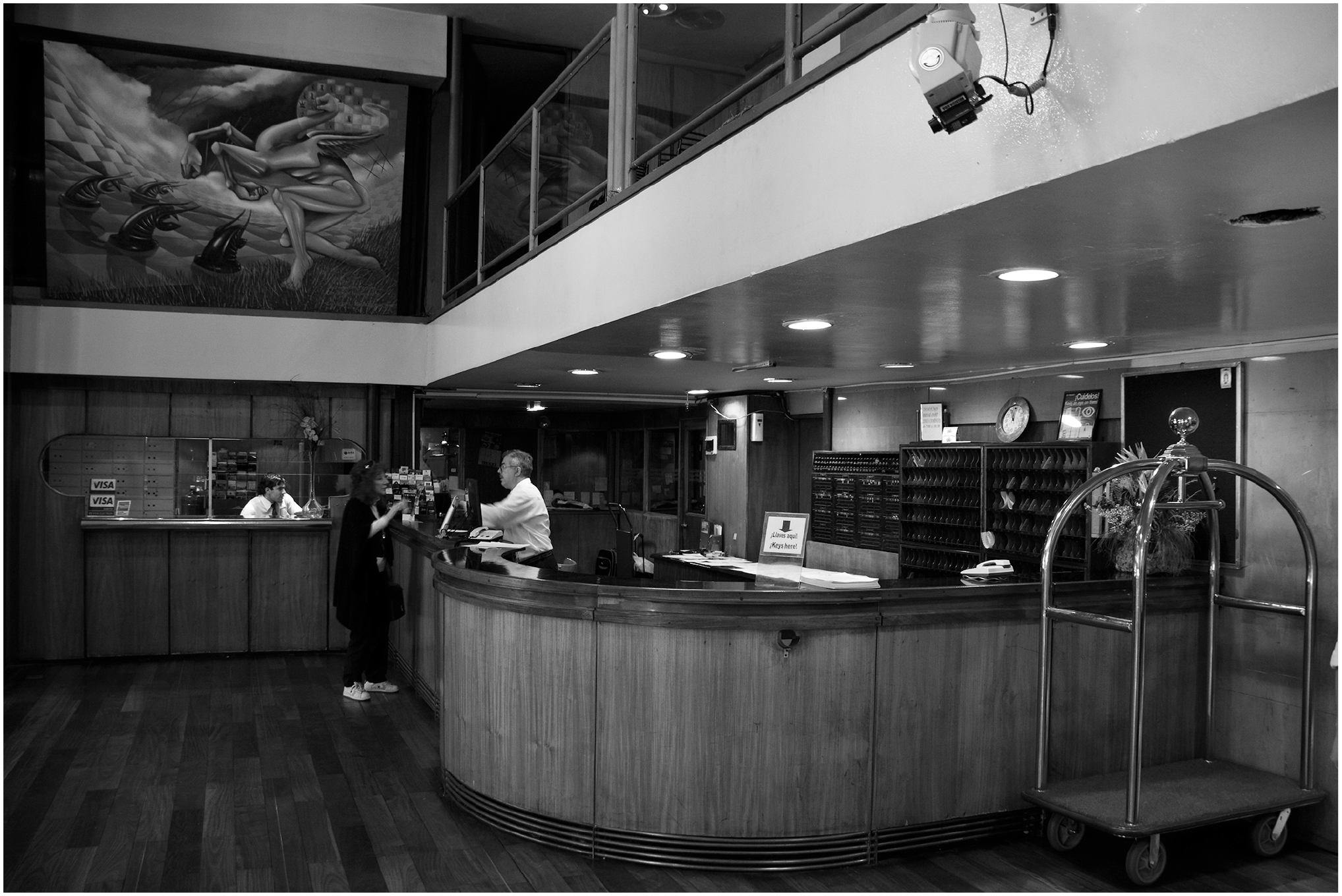
In 2005, the BAUEN Cooperative reopened the downtown hotel as a worker-controlled, democratically-managed organization. When I first walked through the heavy glass doors and into the lobby three years later, the hotel was fully functional. Originally built in the 1970s, the Hotel Bauen had a vintage feel with worn wood floors, dated brass fixtures, and much of the original signage. On a typical day during my fieldwork, I observed guests check in and out at the curved reception desk, regulars play chess in the Utopia Cafe, and a steady stream of event-goers fill the various salons. After a series of shorter periods of fieldwork, I spent ten months working in the hotel, covering shifts in different sectors and attending meetings to get an inside look into how decisions were made.
Long-time members of the cooperative told me that they realized early on that if money and power were not fairly distributed, they wouldn’t be able to interact on an equal footing. Francisco joined the co-op right after it opened and had since held many different jobs, from cleaning and setting up for events to waiting tables in the cafe. After working together for nearly a month, he told me: “If we are going to call ourselves a cooperative, we need to all be equal.” As he pointed out, forming a worker cooperative where all members were equal owners with equal votes provided a roadmap to reconfigure the formal distribution of power.
The BAUEN Cooperative disseminated power in two ways. First, all members are part of the Workers Assembly, which makes decisions according to a one person, one vote policy. Second, the Workers Assembly delegates managerial authority to a nine-member Administrative Council. During my yearlong internship, I attended both Workers Assemblies and meetings of the Administrative Council that were usually closed to outsiders. In weekly council meetings, I observed elected officers work together to keep the hotel open for business, from signing checks to hiring new members. While managing the day-to-day operations, they also took care when exercising their authority. For issues that were new or potentially controversial, council members readily called on the Workers Assembly
The differences between managerial and collective authority were made clear when Gisela requested to change her work schedule. Twelve years after Gisela broke into the Hotel Bauen, she had become one of the co-op’s most vocal advocates. Over the years, we met to talk in a small room that had been converted into a space for storing and repairing linens. As she sat at her sewing machine, I understood why Gisela was often asked to speak on behalf of the cooperative: “I really like to tell people who we are, where we came from, what we did. I tell you this in simple words,” she said one day. She went on to explain that she didn’t know much about activism or laws, but she knew about the work. “I know because I’ve worked for years in the same place”—first under a boss and then as part of the cooperative.
For many of its members, their participation in the BAUEN Cooperative was a life- changing experience. During the occupation, a group of founding members stayed in the hotel around the clock to stake their claim on the property and avoid eviction. These founding experiences led the cooperative to reimagine how they used productive space, blending the “public” sphere of work with their “private” needs and concerns. Even after reopening for business, members sometimes brought their children to work. They receive discounted room rates for family and friends, and a small group of workers, including Gisela, both lived and worked in the hotel.
Years later, the co-op voted to turn the rooms into office space, so Gisela moved out to live with family nearby. But when her daily commute became difficult, she asked the Administrative Council to reduce her work schedule from five to three days a week. Council members agreed to her request, but since the decision would set a precedent about part-time work (all members worked full time), they wanted the approval of the collective.
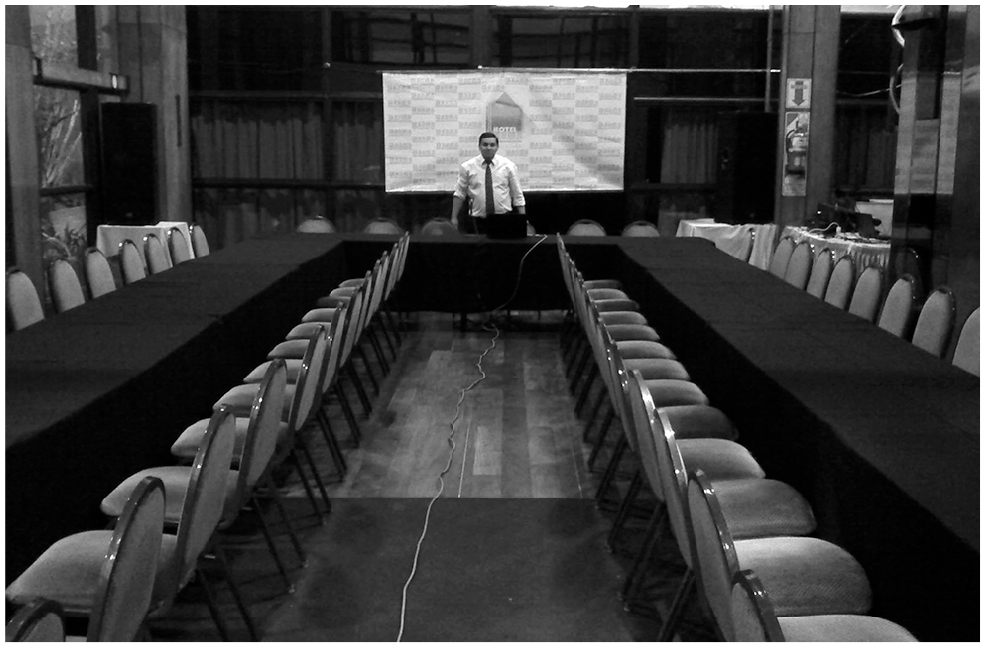
Member of the cooperative prepares for an event in lobby of the Hotel Bauen.
Katherine Sobering
Worker-recuperated businesses in Argentina offer an example of how cooperative conversion can both save jobs lost to business closure and increase worker power.
At the next Assembly, Gisela’s work schedule was on the agenda. When her turn came, she stood at the front of a room of about seventy co-workers and explained her case: She wanted to continue working, but riding the city bus was difficult at her age. Gisela answered questions about her circumstances, and the group approved the exception. Her request illustrated how collective authority operated. While the Administrative Council enforced formal workplace policies, the Workers Assembly approved exceptions, appealed decisions, and could even remove people from positions.
Equal Pay for Equal Work
In the process of converting the hotel into a cooperative, members adopted new rules and practices to support more egalitarian social relations among the group. The process of collective decision-making described above addressed conventional power differences between workers and managers head on.
Reception desk and lobby in the Hotel Bauen
BAUEN Cooperative
“If the people in the laundry wash the sheets poorly and the housekeeper lays them out, the guests will complain to the receptionists. It’s a chain. It’s not a single person. It’s all of us here.”
Money was another major focus, from how much the hotel made and spent to what members were paid. Transparency was important to people I talked to in the cooperative, and as a result, members were especially careful to document their financial transactions. When I worked with cashiers, accountants, and the treasurer who regularly handled cash, I was surprised by how comfortable they were as I looked over their shoulders. On multiple occasions, workers reminded me, “This money is everyone’s,” as they closed out registers or prepared bank deposits.
Unlike many conventional workplaces where talking about pay is strongly discouraged, members of the BAUEN Cooperative openly discussed wages. At the outset, all members earned the same salary, whether they cleaned guest rooms, waited tables, or held an elected office. Over the years, the Workers Assembly introduced some variation, although pay differences were small and the base salary remained equal. To understand how workers negotiated their commitment to equal pay, I talked to long-time members about their memories of these decisions. I also reviewed records from meetings since the cooperative was formed to understand how they justified these changes.
I found that small differences were created to incentivize attendance and punctuality, recognize tenure and additional responsibility, and compensate for different social conditions (for example, members with dependents received small additional stipends). Despite the resulting variation, members of the BAUEN Cooperative regularly emphasized the value of each person’s contribution to the group. For example, Omar described different jobs as a “chain:” “If the people in the laundry wash the sheets poorly and the housekeeper lays them out, the guests will complain to the receptionists. It’s a chain. It’s not a single person. It’s all of us here.” Omar emphasized the interconnection of work that kept the hotel running, rejecting commonly used distinctions in skill, experience or education to justify differences in pay.
Valuing different positions as equally important was more than a discourse. With the exception of new members, everyone I talked to over my years of fieldwork had changed jobs at least once, and this cross-training directly impacted how they related to their co-workers. Pilar spoke about this during an interview in her office. She had a long history in the Hotel Bauen, having worked for the private owner before joining the cooperative. Describing her experience in the cooperative, Pilar explained, “We can talk about things as equals because we know what it takes to do the job.” For Pilar, embodied understandings of different jobs promoted relational equality at work. She not only knew what her position entailed, but she also had experience in other work sectors. When we spoke, Pilar was serving a term on the Administrative Council, and before that, she worked in housekeeping. She also worked overtime shifts at events on evenings and weekends: “[I] help in the kitchen to peel potatoes…to help with the cooking,” she told me. “I’ve even learned how to carve a chicken! It’s good for me because it helps me understand what is happening.” The particular nature of work in the kitchen was different from her previous jobs. Cooking was not only intensely physical labor, but it also involved complicated logistics as cooks planned menus, ordered supplies, and prepared meals within tight budgets. Based on her experience, Pilar developed empathy for her co-workers laboring over the hot stoves. She understood why they were tired because she learned the value of their work first-hand.
Producing Equality at Work
Organizations like the BAUEN Cooperative provide an opportunity to examine how work can be reorganized to promote justice. In response to the immediate prospect of unemployment and brewing discontents working for a boss, workers occupied the downtown hotel and restarted it as a cooperative. Drawing on long-term ethnographic research, I found that organizational efforts to promote equality were central to understanding how workers reconfigured the hotel. By addressing major differences in power and resources, Gisela, Omar, Pilar, and their co-workers were able to interact as equal members of the cooperative.
The case of the Hotel Bauen does not provide a one-size-fits-all prescription to eliminate durable workplace inequalities. However, it does provide an opportunity to theorize organizational and cultural mechanisms that may promote equality in other contexts. By eliminating power differences between workers and owners, a cooperative organizational structure reconfigures the foundation of capitalist exploitation. Rather than a boss extracting surplus value from workers, cooperatives are organized around the inclusion of all members into the value added by their labor.
Members of the cooperative also negotiated what equality meant in practice. One way that workers made sense of equality was by valuing positions as interdependent: one job could not exist without the others. In doing so, members engaged in symbolic leveling, emphasizing the necessity of each person’s contribution rather than invoking common distinctions by education, skill, or experience to justify inequality.
Seventeen years after workers occupied the hotel, the BAUEN Cooperative remains one of the most symbolic worker-recuperated businesses in Argentina. Although the cooperative permanently closed the hotel in 2020, this case provides an example of how workers resisted the devesting effects of neo-liberal capitalism and how businesses can become more just and democratic. The hotel was never a utopia free from the structuring effects of inequality. While members of the cooperative carefully scrutinized differences in pay and authority, other inequalities went under the radar. But by studying alternative ways of doing and thinking about work, as the case of the Hotel Bauen shows, we can broaden our conversations about inequality to more carefully consider equality and its effects.