Abstract
This essay explores the burdens of nightwork through the eyes of call center employees in India. India’s call centers are revealing of the ways in which work lives are reorganized to fit global processes. When the nights of agents are hitched directly to the days of other places, we witness not only a triumph of the global economy; we also notice certain dysfunctions of a functionally integrated world.
In the dead of night, GoCom’s cafeteria was all bustle and hum. Spicy aromas wafted through the air. In short queues, men and women fetched food on steel plates with sections for lentils, rice, bread, and vegetables. Kitchen managers checked food coupons, making sure no one took more dessert than the coupon’s worth. There was nothing striking except for the fact that agents were having lunch after midnight. They slept during the day at home and worked nights at GoCom, an international call center in Gurgaon, India, where I worked for several months for research.
“I can’t take it,” Geeta lamented nightwork, “Number one, as I told you, in the day I can’t sleep properly. Then, so much of that coffee, smoking… ginger tea, elaichee tea.” Geeta made 200-250 calls a night to her customers abroad like thousands of other workers while Gurgaon slept quietly outside the business district. “We also have these [coffee] counters, GE has Barista,” Geeta continued, “but basically it’s the heavy food, and sedentary job, just sitting.” Aware of her weight gain, she was already experiencing nightwork’s adverse effects.
If sleep and fitness were the biological casualties of nightwork, family and friendships were the social ones. One rain-washed Sunday afternoon, I was chatting with Vikas whose cool and carefree personality masked his doubts about call center work.
“For the last two or three days my father has been asking why don’t you go for an MBA or something… Okay, for the time being, this is fine; I’m earning money, but what will happen after two or three years?” Vikas told me in his apartment, which he shared with five other male agents packed into three bedrooms. “There was once this guy working for a call center,” Vikas recalled, “He was happy; everything was fine. But the moment he got married, he said, now I cannot work here. Otherwise, my family life will go to hell.”
While Vikas could resist his father’s pressure for the moment, female agents faced greater family pressure. Marriage haunts middle-class Indian women as a dominant family concern. At GoCom, no woman in my group thought of call center work as her career. Nocturnal labor was at cross-purposes with the historical development of family life, child development, and general sociality.
“Hardly anybody recognizes you, nobody recognizes you,” Tarun was one of the few who openly expressed concerns about his social life, “you go out when nobody sees you; you come in when nobody sees you. When you wake up in the evening, you pick up your newspapers. You browse through the news for the day that happened yesterday…. After a while, you stop listening to the news; then you stop reading the newspapers. All you want to do is get your pillow and sleep; get up, go, make your calls, come back, and sleep. You don’t want to know what’s happening in the world.”
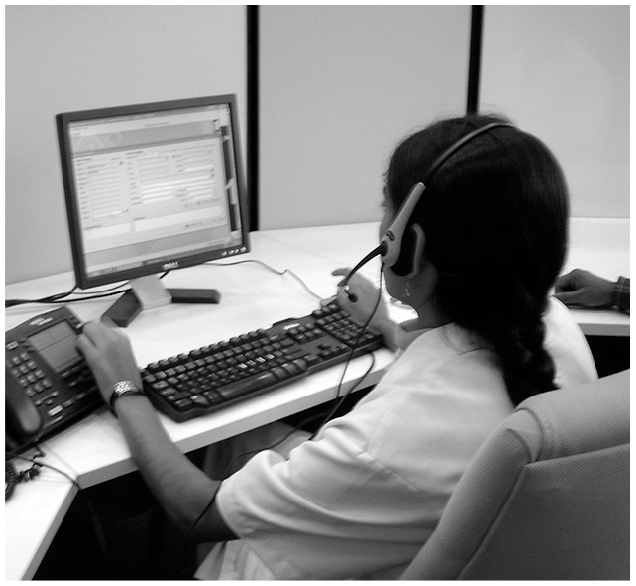
Still, our nightly life at GoCom had its social life and rhythm; we made friends, for instance, Vikas and I, working the same schedule. However, after the training period was over and we graduated to making real calls, everyone worked alone on the crowded floor. All the agents had their own headsets, their own computer monitors, their self-contained desk partitions, their separate sales goals, separate triumphs and disappointments.
Once the loss of social life dawned on her, Ranjana decided to quit, “I think sixteen of us quit, and two people are still there. The day I quit, senior people who were working there for two years said they also want to quit but they can’t. I said, ‘why?’ and they said, ‘Where will we get a job?’“ They were only being rational in choosing financial security.
With a few exceptions like Ran-jana and Tarun, who openly recognized the burdens of nightwork, most agents expressed their discontent through anxieties about family, marriage, and friendships. As sites of real-time communication across continents, India’s call centers are revealing of the ways in which work lives are reorganized to it global processes. When the nights of agents are hitched directly to the days of other places, we witness not only a triumph of the global economy; we also notice certain dysfunctions of a functionally integrated world.
As sites of real-time communication across continents, India’s call centers are revealing of the ways in which work lives are reorganized to fit global processes.
David Robinson, Flickr cc