



Abstract
Central bankers’ choices over monetary policy involve judgments about what is best for their societies and are ultimately marked by a trade-off between controlling inflation and stimulating economic growth. Depending on how central bankers choose to balance these two competing goals, they ultimately privilege the interests and well-being of some groups over others.
Sitting in the busy, air-conditioned office of a senior official at the South African Reserve Bank (SARB), I watched as he shifted in his chair and sighed deeply. “I’ve been dealing with financial markets a long time,” he said. I was curious to hear his account of the central bank’s monetary policy decision that past January—a decision that many financiers found “unexpected” and some, such as labor unions, openly criticized. “Why did the South African central bank increase the interest rate?” I asked. He pondered for a minute, then said: “For a while, it was good to explain to the market that ‘this is a crisis situation’…but how long can you get away with that?… At some point, you’ll lose credibility… At some stage the markets need that confidence. They want to be assured that you will increase rates.”
I met several central bankers in South Africa and Turkey during 2013-2014 who voiced a similar concern about losing credibility. In May 2013, the U.S. Federal Reserve’s then-Chairman Bernanke indicated that the Fed could roll back its quantitative easing program—large-scale asset purchases the Fed undertook after the 2008 financial crisis. The news altered financiers’ risk appetites and investment calculus. According to a financier in Johannesburg, the decision facing foreign investors was straightforward: “Should we continue to invest in what’s deemed risky assets, or should we, rather, start filtering that money into the U.S. economy and other developed markets?” Increasingly after May 2013, the latter happened. ‘Emerging economies’ such as South Africa and Turkey, witnessed significant portfolio capital outflows. Their currencies subsequently tanked, with Moody’s singling out the South African rand and the Turkish lira as “hardest hit” by capital outflows.
Central bankers’ choices over monetary policy involve judgments about what is best for their societies and are ultimately marked by a trade-off between controlling inflation and stimulating economic growth.
Currency depreciations contributed to rising inflation, heightening pressure on central bankers to tighten monetary policy. When the SARB and Turkey are mediated and governed, these events were eventually did so in January 2014 through a 0.5 percent interest rate hike, The Financial Times reported, “Analysts say the decision to raise rates enhances the [SARB’s] credibility, as it stuck to its mandate.”
Just one day before the SARB’s decision, policymakers at the Central Bank of the Republic of Turkey (CBRT) also announced an interest rate decision. At an emergency meeting convened on Tuesday night in Ankara, they moved the policy rate from 4.5 to 10 percent. Turkey was on the verge of a crisis in the days prior to the emergency meeting due to a surge in capital outflows and the lira’s collapse, leading The New York Times to comment, “Turkey is battling a crisis of confidence in the global markets.” In London, where global investments into South Africa and Turkey are mediated and governed, these events were understood as the outcome of “markets forcing the central bank because there was no credibility left,” as a London-based portfolio manager told me. The CBRT had lost a lot of credibility in the eyes of the financial community in the preceding months, and both global and local financiers had little trust in the central bank to maintain price stability (i.e., low and stable inflation). The CBRT’s dramatic interest rate hike was a step toward rebuilding credibility, and it was enthusiastically received among financiers. “They increased the interest rates,” said one fund manager in London, “then it became clear, okay, now they’re seriously fighting inflation.”’
Such seemingly mundane decisions about interest rates are like dealing cards. They determine who wins and who loses. Despite the scientization of central banking in public discourse and economics textbooks, central banking is a political endeavor. Central bankers’ choices over monetary policy involve judgments about what is best for their societies and are ultimately marked by a trade-off between controlling inflation and stimulating economic growth. Depending on how central bankers choose to balance these two competing goals, they ultimately privilege the interests and well-being of some groups over others.
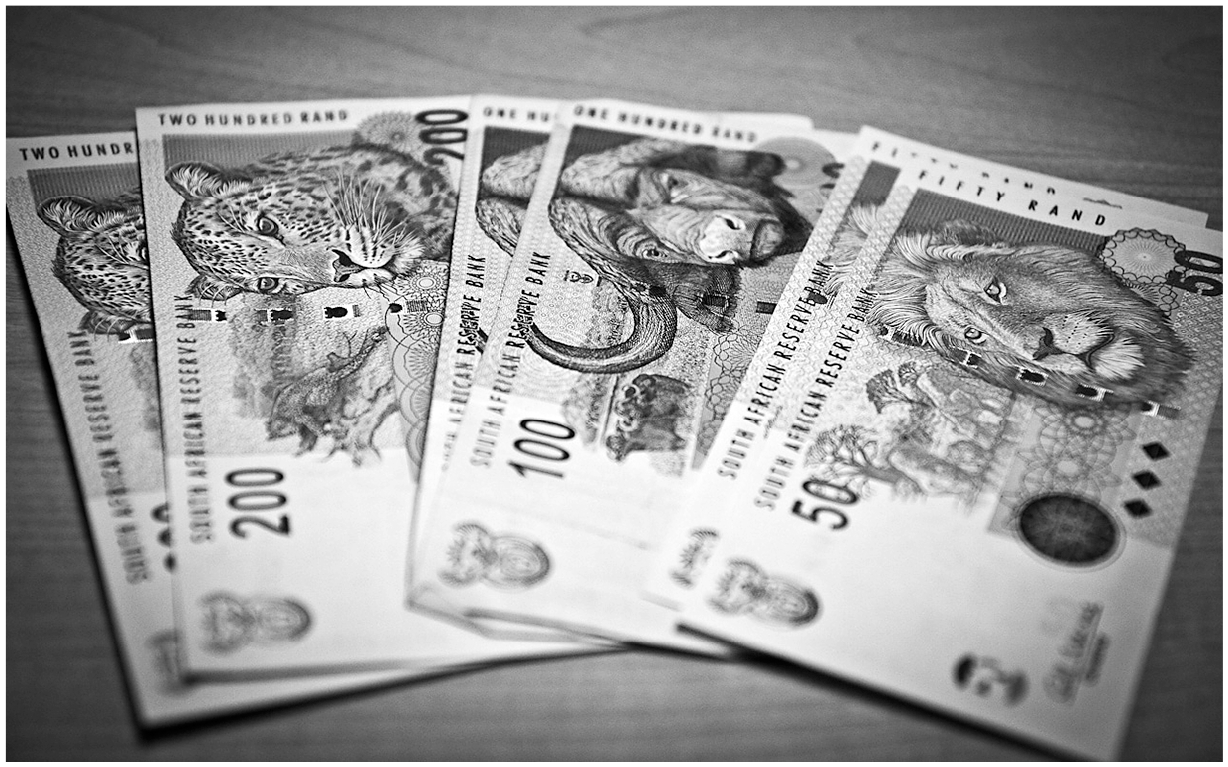
The South African rand was among the “hardest hit” by capital outflows, backlash from investors’ return to ‘safe havens’ in 2013.
Steven Tan, Flickr cc
Such decisions also reflect underlying assumptions about the appropriate role of central banks in the economy. From the end of WWII until the collapse of the Bret-ton Woods system in 1971, central banks in the “Third World” were subordinate to governments and acted as “agents of development.” They bought government debt, imposed interest rate controls, and subsidized credit to select economic sectors to promote economic growth and modernization. By contrast, current wisdom about central banks says they should act as guarantors of price stability, primarily pursuing low and stable inflation, and that they must be independent of government interference to do so.
One after another, governments in the Global South have adopted independent central banks with price stability mandates in response to their narrower policy space under financial globalization. However, central banks’ focus on price stability engenders real dilemmas for countries in the Global South facing high levels of unemployment, poverty, and fragile economic growth. Anti-inflationary monetary policy that calms investors’ nerves ultimately curtails national economic growth and employment, costing the livelihoods of ordinary people. Thus, central bankers often face a dilemma between sticking to their price stability mandates and addressing domestic needs.
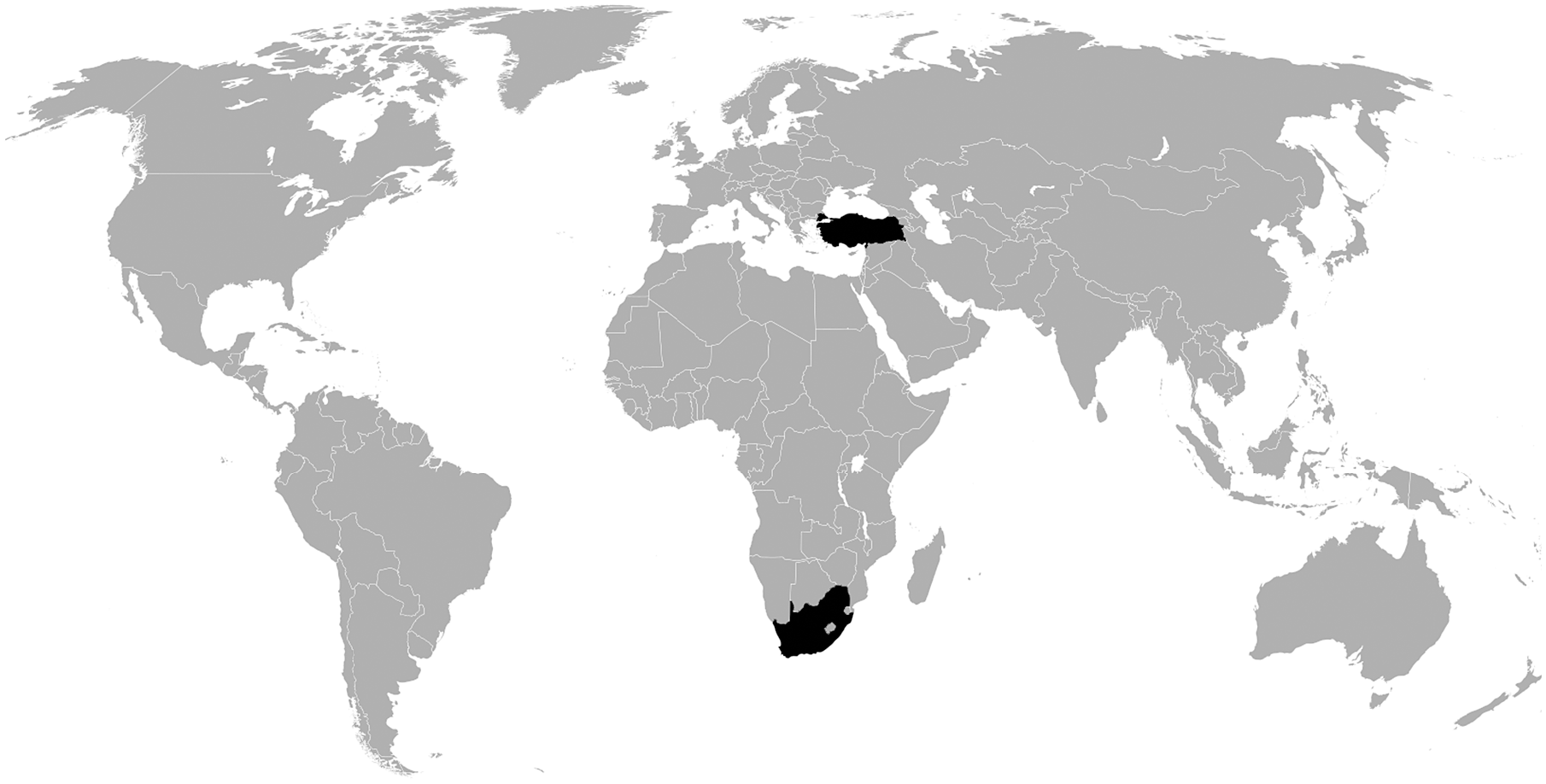
How do central bankers in the Global South deal with these competing pressures? I explored this question in the context of South Africa and Turkey—two middle-income, financially integrated developing economies that rely on foreign capital inflows. During 2013 and 2014, I spoke with more than 60 officials at the central banks of South Africa and Turkey. I also talked with numerous financiers in Johannesburg, Istanbul, and London. Most central bankers I met did not view themselves as “inflation nutters”—a term coined by the former Bank of England governor, Mervyn King, to describe those who champion price stability above all else. Instead, central bankers portrayed monetary policymaking as a delicate balancing act.
Juggling the Trade-off: Why is Credibility Important?
How do central bankers juggle the trade-off between controlling inflation and promoting employment? I found that the credibility of a central bank plays a critical role in this balancing act because it provides central bankers with some policy space to maneuver in today’s financialized world. But what is credibility? Credibility is a central bank’s perceived commitment to price stability. It is a belief. One that is intertwined with financial interests and is upheld and enforced by finance, most notably through capital flows. A central bank might miss its inflation targets, but what matters, as an Istanbul-based financier explained, is that “The markets and citizens believe that the central bank has done the right things to control inflation.” The threat of losing credibility, in the words of a SARB official, “forces your hand constantly.”
A sketch of the Central Bank of the Republic of Turkey (CBRT).

Of course, not all central banks are created equal. Maintaining credibility with the financial community is particularly important for central banks in the Global South. These ‘peripheral’ central banks do not govern reserve currencies like the U.S. dollar, which gives the U.S. government and corporations an unmatched advantage in borrowing cheaply and excessively. Instead, they govern currencies that are not treated as ‘safe havens’. They also work alongside governments whose credit-worthiness is dubious at best, and whose policies can contradict or undermine those implemented by central bankers. One central banker in Turkey complained of the potential conflict of interest between governments and central banks: “Politicians are not half-gods, they want to be re-elected. They think, ‘the central bank will lower inflation, but is inflation that important?’“ This uneasy relationship between governments and central banks in the Global South breeds fear of political interference, making investors nervous.
Another CBRT official claimed that these differences lead the Global South to “pay a poverty tax” while borrowing in financial markets, and mean central bankers “have to worry” about investor confidence “all the time, even when [they] go to bed.” It is no surprise, then, that central bankers in the Global South have often assumed the role of conflict managers between governments and financiers and have become the agents of policy credibility and macroeconomic stability.
The Importance of Being Boring: How is Credibility Gained (and Lost)?
In central banking and financial circles, credibility is understood to stem from central bank independence. However, I found that independence does not necessarily yield credibility. Since the 2000s, both the CBRT and the SARB have had legal independence and operated under an inflation-targeting framework with publicly announced inflation targets. Nonetheless, the two central banks had drastically different levels of credibility in the eyes of the financial community at the end of 2013.
As one London-based economist commented, “The CBRT and SARB are two ends of the spectrum as an emerging market central bank. SARB is really well regarded, strong credibility, an inflation targeter… CBRT is on the other end of the spectrum.” Such divergence attests to the fact that credibility is an inter-subjective belief. A SARB official detailed how credibility is constructed: “It’s a dialogue between the monetary authorities and the public. The better that dialogue is, the more there is trust.” In this dialogue, credibility is built on shared, intersubjective interpretations of empirical phenomena, statistical data, and past and future monetary policy decisions. The ultimate goal of central bankers is to convince their audiences of their commitment to price stability. Where words fail, however, “Then you must give enough interest rate medicine to have credibility,” said another SARB official.
The financial community ultimately evaluates, challenges, and grants credibility to central banks and global institutions such as J.P. Morgan (the ‘sell-side’) and Pimco (the ‘buy-side’) enjoy disproportionate power in establishing, supporting, and enforcing credibility. These institutions govern large sums, so they “can make the market; they can force a market change via their operations,” remarked a SARB official. Calling them “foreigners,” one Istanbul-based economist similarly said: “In financial markets if I say, ‘this is salt’ [pointing at pepper on the coffee table], and everyone else says ‘this is salt,’ pepper becomes salt. If foreigners govern the majority of capital inflows and outflows, it is they who eventually decide whether this is salt or pepper!”
Indeed, global institutions were a key target of the CBRT and SARB’s credibility performances, as both countries heavily relied on foreign investors for capital inflows. Many of my interviewees went on ‘roadshows’ to global financial centers such as London and New York, holding private meetings with financiers to boost their credibility and maintain investor confidence. During these private encounters, said one fund manager in London, “Actually, central banks sell their countries.”
If maintaining credibility equally constrained central bankers in South Africa and Turkey, then why did the CBRT and SARB have different levels of credibility? After 2010, Turkish policymakers increasingly incorporated multiple new monetary policy instruments into the central bank’s inflation-targeting framework. The framework was dubbed “unorthodox” and criticized for being “too complex.” One London-based fund manager voiced the widespread criticism: “If you introduce a system which is extremely complex, then it obviously raises the questions. Why are you doing that? Why are you not just doing the right thing? The textbook way you should do.” The complexity of the CBRT’s framework unintentionally alienated financiers who could not easily assess policymakers’ narratives about their actions, and therefore policymakers’ commitment to price stability.
How do central bankers juggle the trade-off between controlling inflation and promoting employment? I found that the credibility of a central bank plays a critical role in this balancing act because it provides central bankers with some policy space to maneuver in today’s financialized world.
This perceived complexity contrasted with how financiers viewed the SARB. Under its conventional framework, the SARB could construct an easily comprehensible narrative around its policy rate that aimed to persuade the financial community of its commitment to price stability by detailing its efforts to this end, even when it missed its inflation target at the end of 2012 and mid-2013. Several interviewees in Johannesburg and London described the SARB as “boring” and claimed that they could “understand its actions.”
Additionally, the CBRT abolished one-on-one meetings with financiers in 2011—again, in stark contrast to SARB policymakers, who “saw [financiers] all the time.” The CBRT limited its communication to formal publications, public speeches, and regularly scheduled large ‘economist meetings’. During my interviews, central bankers claimed that this would give all financiers equal access to the central bank. However, the policy backfired and was gradually reversed in 2013 because central bankers at the CBRT deprived themselves of a unique space where they could construct interpretations of the monetary situation and their policy measures in dialogue with financial actors, and persuade them of their own imaginaries and narratives when necessary. A London-based strategist contrasted the SARB and the CBRT in this regard: “The SARB has more chance to have a dialogue with investors. At the meetings they often ask me and my colleagues what we think about the policy, about the economy, about the world… When you have these big meetings like the CBRT, you actually isolate yourself from the rest of the world.” Eventually, the CBRT lost credibility in an unintended way.
How do central bankers in the Global South deal with competing pressures? South Africa and Turkey, for example, are two middle-income, financially integrated developing economies that rely on foreign capital inflows.
Turkish Flame, cc
“Once you have established credibility… Foreign creditors often may give you the benefit of the doubt… which means that you could potentially then spend a little bit more time focusing on growth than inflation.”
It is worth noting that upon hearing some of these criticisms, one former CBRT official asserted that there was “differential treatment,” saying, “South Africa is always favored. It is the gateway of global capital into Africa. It receives a higher investment grade and more investment than it should.” While not voiced often, this perception potentially hints at the likely importance of South Africa’s colonial history in how its credibility is constituted. Frequent movement of people between London, Johannesburg, and the SARB, coupled with the legacy of colonialism that structured the SARB and financial markets as “first-world” institutions, are likely to make South Africa more comprehensible in the dialogue between central bankers and the financial community.
What Does Credibility Do?
How does credibility expand central banks’ room to maneuver, and why does it matter for ordinary people? The CBRT’s and SARB’s January 2014 decisions and their actions between May 2013 and January 2014 reveal an underlying mechanism. Following Bernanke’s speech in May 2013, SARB officials repeatedly publicized a dilemma they confronted. On the one hand, they faced low economic growth (2.5 percent in 2013). On the other hand, they faced mounting pressures to tighten monetary policy due to rising inflation. Over the next three months, SARB performed credibility through narratives of hawkishness, announcing, for example, in September that they would “not hesitate to take appropriate action in order to maintain the integrity of the inflation-targeting framework.”
Because financiers already believed the SARB was committed to price stability due to its high level of credibility, SARB pronouncements successfully influenced the expectations of financial market participants. “If you are trusted,” a CBRT official asserted, “you say, inflation will be 6.9 percent at the end of the year, and people will believe it.” The capacity to influence expectations is an asset because it allows central banks to control inflation by capitalizing on the performative effects of expectations on economic activity.
SARB policymakers could control inflation expectations despite growing inflationary pressures in the economy, because, as a sell-side economist in Johannesburg explained: “Once you have established credibility… Foreign creditors often may give you the benefit of the doubt… which means that you could potentially then spend a little bit more time focusing on growth than inflation.”
Since central bankers at the SARB maintained investor confidence and controlled inflation, they could, in turn, avoid an interest rate hike for several months, safeguarding economic growth and employment. And when they eventually hiked, it was a small increase. When I asked them why they increased the policy rate in January, given that they had a high level of credibility, a senior SARB official replied: “How long can you convince the market, [saying] ‘bear with us’? At some point, you’ll lose credibility.” Hence, policymakers delivered the “interest rate medicine,” knowing well that the financial community’s benefit of the doubt had its limits.
The financial community did not give the CBRT the benefit of the doubt. Policymakers at the CBRT had already lost credibility in the months leading up to May 2013. Their inaction to raise interest rates after May further tarnished their credibility and diminished investor confidence. An Istanbul-based economist’s words exemplify this: “They should have raised interest rates throughout summer… They behaved as if nothing happened! That’s when the markets lost hope. It eroded their credibility, extremely.”
Unable to stabilize financial markets through their words, CBRT policymakers felt pressured to respond to heightened capital outflows and a looming crisis through a dramatic interest rate hike. The decision aimed to promote confidence in the central bank and prove credibility; however, it came at a large cost to economic growth. One CBRT official confessed: “You need to make them believe. That’s why losing credibility is terrible! Because you need to take more costly measures to re-gain your credibility, impose higher interest rates that are more detrimental to economic growth.” The cost of overcompensating came at the expense of ordinary people’s livelihoods, because, as a SARB official said, the CBRT’s decision “[forced] the economy to a recession, and in a recession poor and working people suffer.”
Conclusion
Sociologists have shown a growing interest in central banks after the 2008 financial crisis. Yet, central banking in the Global South remains a black box. Recent studies typically focus on advanced-economy central banks, while earlier studies tend to explore the politics of central bank independence. Based on this literature, we know how the rise of finance constrains central bankers in the Global South, but much less about how they operate under these constraints.
I have attempted to unpack the black box. The comparison between the actions of the CBRT and the SARB demonstrates how credibility provides central bankers in the Global South with some room to maneuver under financial globalization. The SARB not only avoided an interest rate hike for several months, but, when it did hike its policy rate, the increase was small.
The fact that credibility is a precondition of monetary policy space tells an important story about the power dynamics between finance and central banks. The perspectives voiced by central bankers and financiers confirm that credibility functions under the discipline of finance. Credibility does not allow central bankers to openly challenge the power of finance or the rules of the global financial system. On the contrary, the policy space associated with credibility is always subordinate to, and operates within, the constraints finance imposes. Hence, central bankers in the Global South try to minimize the trade-offs they face, not by challenging the power of finance or the rules of the global financial system, but instead by performing adherence to those rules (a performance of credibility). When the performance is unsuccessful, credibility is ultimately enforced by the ‘markets.’
Credibility functions under the discipline of finance.