



Abstract
Most sociological studies of job searching are from higher-income, industrialized countries, often referred to as the Global North. Much less is understood about job search behavior in the lower-income countries of the Global South, where there are fewer labor market institutions, weaker social safety nets, higher underemployment, more informality, and more precarity. In this environment of deprivation and insecurity, low-wage workers in the Global South turn to their personal networks for the resources that markets and states cannot provide. While job referrals allow workers to earn a living, however, they also extend employer surveillance and control beyond the bounds of the employment relation.

Domingo Álvarez, a 41-year-old day laborer, lives in the city of León, Nicaragua’s second-largest city. He earns a living by doing odd jobs in the homes of León’s more well-to-do residents. Domingo’s job search bears little resemblance to what we might imagine a job search looks like—searching the internet, scanning a newspaper, or visiting workplaces to inquire about open positions. Indeed, the way Domingo talks about jobs makes it sound as though they simply fall from the sky: “You might not have anything to eat, but all of a sudden a friend comes and tells you, ‘look, there is a little job there…let’s go do it.’ So I go with that friend, we do the job, and we get ahead. Get it?”
Domingo describes himself as unemployed; he would like to have more steady work, he says, but such opportunities are scarce in León. Therefore, he keeps an ear to the ground, hoping for an opportunity, and in the meanwhile he relies on sporadic, informal, poorly paid day labor. It is hard to say how much Domingo earns, because the quantity of available work, and the rate he can charge for it, fluctuate erratically with the vicissitudes of León’s economy and the whims of prospective clients. However, the city provides just enough opportunities for Domingo to earn his living, even if it is a marginal one. He has no formal credentials—no diploma, certificate, or license to certify his experience and skills. He does not seek work through government job centers or labor unions. Instead, he relies on his personal network—a web of relationships with friends, neighbors, and former employers, who provide Domingo with job leads and spread the word about his reputation to other prospective employers. Moreover, Domingo recognizes that his employability rests upon his reputation and that he must actively cultivate and mobilize a broad network of friends and acquaintances. “Friends recommend you to other people and they give you little jobs. So that’s how you take care of yourself,” he says. “I like to be sociable, friendly with people so that tomorrow they say, ‘this guy is easygoing.’”
It would be tempting to look at Domingo’s life and see something “traditional” there, something lost—an old-fashioned way of doing things, based on personal connections and a code of honor. However, the labor market in which Domingo ekes out his living is a thoroughly modern one, and Domingo is far from alone.
Most sociological studies of job searching are from higher-income, industrialized countries, often referred to as the Global North. Countries of the Global North have more highly developed labor market institutions for matching workers to jobs.
“You might not have anything to eat, but all of a sudden a friend comes and tells you, ‘look, there is a little job there…let’s go do it.’ So I go with that friend, we do the job, and we get ahead. Get it?”
Such labor market institutions include state agencies, job finding centers, career coaches, career websites, industry-specific conferences, support groups, union halls, and placement firms. Some jobseekers in the Global North use these institutions to find out about work opportunities or get advice and support for job searching. Although networks remain an important source of jobs for seekers in the Global North, for them activating networks is one strategy among many. If their job search is unsuccessful, the unemployed in the Global North can turn to social safety nets such as unemployment insurance or food assistance to supplement their incomes or provide for their basic needs.
Much less is understood about job search behavior in the lower-income countries of the Global South, where there are fewer labor market institutions, weaker social safety nets, higher underemployment, more informality, and more precarity. In this environment of deprivation and insecurity, low-wage workers in the Global South turn to their personal networks for the resources that markets and states cannot provide. While job referrals allow workers to earn a living, however, they also extend employer surveillance and control beyond the bounds of the employment relation.
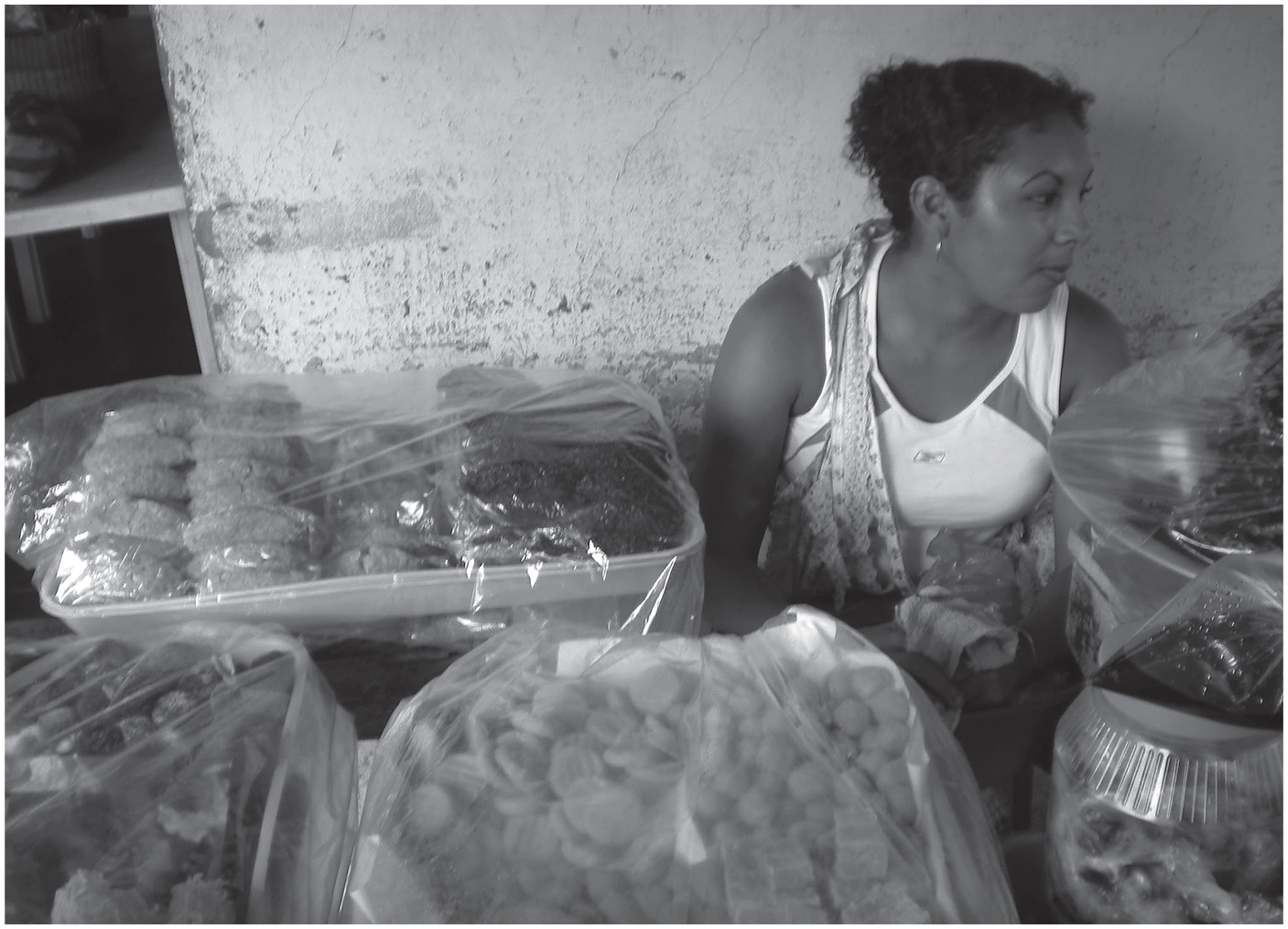
A woman sells sweets in León’s city center.
Lindsey Ibanez
A sign on a home reads, “Domestic worker needed.”
Lindsey Ibañez

León, nicaragua
I spent four months in León, Nicaragua, interviewing more than 100 low-wage workers, job-seekers, and employers. They described in detail the jobs they had held, their job searches, their relationships, their family histories, and the job-finding assistance they gave to others. This richly detailed data allowed me to examine the interactional contexts in which job information was shared, the types of ties that yielded referrals, and the strategies used by job seekers and contacts to cultivate their reputations while assisting one another.
While job referrals allow workers to earn a living, they also extend employer surveillance and control beyond the bounds of the employment relation.
León’s labor market has several key features that give rise to job referral networks. First is widespread informality—economic activity that exceeds the bounds of regulated labor markets— including employment without a written contract, employment in an unregistered business, self-employment, and domestic work without labor protections. Because informality makes employees vulnerable to wage theft and abuse, job seekers and contacts shared information about employers’ reputations. The economic insecurity and low wages associated with informality also creates the need for workers to continue cultivating their networks and reputations even while employed. Thus, the job search in León never really ends. Second, Nicaragua’s low-wage labor market lacks formal creden-tialing or screening mechanisms for job seekers, and many low-wage workers and employers are unwilling to pay for background checks. Therefore, employers hire through referrals, asking current employees, or their own network members to help them identify candidates.
Given these features of León’s low-wage labor market, I expected respondents to actively cultivate networks and reputations, and that is what I observed. However, I also observed a great deal of agency and meaning making rooted in the highly unequal power relations between workers and employers. In the precarious economies of the Global South, referrals are not only a way of matching workers to the jobs that fit them best, as has been theorized previously, but they are also a powerful mechanism of social control. Referral networks in León turned all relations into labor market relations, allowing employers and contacts to exert control over employees and prospective employees, even outside the workplace.
Instead of creating a docile workforce, however, I found that referral networks led Nicaraguans to prioritize their relationships over their jobs. The workers I interviewed often voluntarily left their jobs or turned down job offers, but no one reported ending a relationship over a bad referral. At first this seems counterintuitive, but in a setting where relations are more durable than jobs, it is the job, not the tie, that is disposable. While studying housing insecurity in the U.S., sociologist Matthew Desmond found that his impoverished respondents formed and activated short-term exchange relationships with strangers, which he called “disposable ties,” to meet their emergency needs. I found no evidence of this among my respondents, who lacked access to the kinds of public assistance Desmond’s respondents had. In the less-institutionalized societies of the Global South, the network is the safety net.
Intermediate ties
Sociologists have studied how relationship characteristics affect the resources that flow through networks. Mark Granovetter famously found that distant, weak ties tend to provide better information; therefore, acquaintances provide more job leads than family members. On the other hand, close, strong ties provide essential forms of social and emotional support, due to the solidarity and affection they engender. In low-wage labor markets like León’s, though, job referrals represent a combination of information and social support: the contact provides key information about the job opening and the application process, but more importantly, the contact vouches for the applicant with the employer. By doing so, the contact puts his or her own reputation on the line to help the job-seeker. In order for this to happen, contacts must trust the job seekers enough and like them enough to want to help. Therefore, a job seeker must have ties that are weak exchanges, elaborate strategies arise for balancing all parties’ enough to provide access to job information that she does not goals and interests. In León, job seekers use a specific set of already have, but not so weak that the contacts lack trust or strategies to obtain work and cultivate their reputations without affection for her.
A hand-lettered sign offers in-home salon services.
Lindsey Ibanez

In my interview data, the two most common sources of job referrals were friends and neighbors, with 41 percent of referrals combined. These intermediate ties are strong enough to assess the job seeker’s fitness for the position and weak enough to be positioned within other, broader networks that help job seekers cast a wider net. In contrast, only three percent of referrals came from acquaintances (weakest ties), and only eight percent of referrals came from siblings (strongest ties).
Why are neighbors such an important source of referrals? The physical layout of León helps to explain how relationships are built among neighbors: Nearly every street in the city has at least one pulpería, a small corner store where people pick up staples such as tomato paste, bread, and rice. Low-wage workers do not earn enough to buy large quantities of groceries at the supermarket, so they purchase small quantities daily, from pulperías and outdoor markets. Most neighborhoods also have a tortillera, where fresh tortillas are made and sold daily. While running these daily errands, residents have regular, face-to-face exchanges with their neighbors—the kinds of interactions that produce trust over time. Moreover, all my respondents had lived in León for at least five years, and most had lived in the city much longer, so they had built relationships in neighborhoods that spanned generations.
Managing Risk, Maintaining Relations
When people use personal relationships for economic exchanges, elaborate strategies arise for balancing all parties’ goals and interests. In León, job seekers use a specific set of strategies to obtain work and cultivate their reputations without jeopardizing their relations with contacts, and contacts use a specific set of strategies to manage the risk of giving referrals while preserving their relations with job seekers.while preserving their relations with job seekers.
For job seekers, asking directly for a referral might be perceived as too bold or demanding, especially when the contact is of a higher social status. To avoid possible awkwardness, job seekers subtly embed their searches within casual social visits under other pretexts. Francisco Roque, 57, recounted a time from earlier in his job history, when he was selling residential pest control products door-to-door for commissions. Hoping to find more stable employment, one day he visited the home of his brothers’ godfather, the director of a public hospital. On the pretext of selling pesticides, Francisco dropped by the director’s home unannounced. The man was not home, but his wife received Francisco and asked how his sales job was going. He told her that sales were slow and that he needed to find more stable work. She told him to return later in the afternoon when her husband would be home, and when Francisco returned, the woman had spoken to her husband on his behalf. Francisco was given a job as an orderly at the hospital. Though his pesticide sales pitch provided a pretext for the visit, Francisco explained, his true purpose was to find out about possible job openings at the hospital. The sales visit, Francisco said, also served the purpose of demonstrating his work ethic to the director’s wife, who provided the crucial connection to a coveted position in the public sector.
To avoid damaging their reputations when they quit a job, low-wage workers reach out to the contact who gave the referral to explain their reasons for quitting. Alejandra Quintero, a retired 63-year-old, recommended a neighbor for a job as a domestic worker, but after working for a short time the worker felt mistreated by her employer and decided to quit. Before doing so, however, the worker sought out Alejandra to receive her blessing. “She told me the reason why she didn’t feel good [working there]. And I saw it as unjust too.” By convincing Alejandra that the employer’s behavior was “unjust,” and by approaching Ale-jandra in a self-effacing way, the worker preserved her reputation with Alejandra, making future referrals possible.
A man on a motorcycle stops in front of a bakery.
Lindsey Ibañez

León’s Cathedral, a United Nations World Heritage Site, is the largest in Central America.
Lindsey Ibañez

Examining settings in the Global South should lead us to look for how job search behavior, and the meaning-making efforts that surround it, vary in different institutional and cultural contexts.
Like job seekers, contacts also have strategies for managing reputational risk while maintaining relations. One way that contacts preserve their relationships with job seekers is by avoiding conflict over negative referral outcomes. Karl Santos, a 43-year-old auto mechanic, said he referred two job seekers to his employer. Ultimately both men were fired, one for shirking on the job and the other for absenteeism. Karl said he did not confront his friends about their job performance, nor did he sever the ties. Instead, he chose to let it go. For contacts like Karl, avoiding a confrontational interaction is seen as the best way to deal with a failed referral because a confrontation will not change past events. The breaking of a tie creates ripple effects through a network, as the loss of one connection can leave a person cut off from the rest of the other person’s network. Thus, letting go of negative referral outcomes may be interpreted as an effort by contacts to maintain balance and stability in their networks. However, this choice has implications for job seekers, who suffer damage to their reputations and the loss of future opportunities without knowing it.
Power, Control, and Responses
“I do not try to get ahead,” says Domingo, the 41-year-old day laborer. By this, Domingo means that he does not put his own interests ahead of his employers’ interests. He describes how he tries to save his employers money by preventing them from overbuying supplies. When asked how much he earns, he explains that he allows prospective employers to offer the amount they are willing to pay because he fears that if he charges too high a rate, they will neither hire him nor recommend him to others. He recounts a time when an employer tested his trustworthiness by leaving valuables around her house for him to find, and how he indignantly defended his honor. Once, one of Domingo’s employers became violent. “For no reason, he hits me,” he says. When Domingo quit, the employer became angry and threatened him: “‘You are going to see,’ he said to me. ‘Someday [you will be] asking me for work and I will deny it to you. ‘From today on,’ he tells me, ‘realize and understand that with me you will not find work.’” In order to defend himself against the employer’s abuse, Domingo must forego future job opportunities and referrals from this employer, illustrating the price that workers in León pay for standing up for themselves.
Referral networks facilitate job matching by coordinating the interests of employers, contacts, and job seekers, but these parties’ interests are not the same. Moreover, these processes and strategies are not neutral—they are imbued with the unequal power relations that define the broader labor market context, in a setting where stable jobs are scarce, wages are low, and underemployment is pervasive. The strategies contacts use to maintain relations and protect their own reputations disadvantage job seekers by denying them the opportunity to repair their reputations and by damaging their future employment prospects. Moreover, contacts’ perceptions of job seekers reflect employers’ interests—to find compliant, reliable workers. The interpersonal relationship between contacts and job seekers becomes one of surveillance and judgment, as contacts look at job seekers through the lens of employer power. Reliability is not always possible when workers or their family members fall ill or when employers expect uncompensated work from employees. Regardless, the onus is on workers and contacts to preserve their reputations and maintain relations. In low-wage labor markets in the Global South, all relations become an extension of the employment relation, giving employers control far beyond the bounds of the workplace.
Some respondents avoided the surveillance and control of job referral networks. Young women, in particular, were most likely to apply directly to employers rather than seek a referral. Because women under 35 are explicitly favored for employment in León’s shops, restaurants, and export factory, many avoided domestic work and network-based searching. In contrast, women over age 40 reported that their job opportunities in León were limited to domestic work, making it nearly impossible to avoid seeking referrals. Even those who resist the surveillance and control of referral networks are still vulnerable to the abuses of employers and the harsh reality of hiring discrimination.
What can we learn from low-wage job seekers in a Nica-raguan city? Examining settings in the Global South should lead us to look for how job search behavior, and the meaning-making efforts that surround it, vary in different institutional and cultural contexts. For example, in settings with more religious or ethnic diversity, are there forms of bridgework that allow trusting relations to be transposed across social divides? As cities across the Global South rapidly urbanize, how do new arrivals cultivate relations and reputations among strangers? What forms of resistance are possible in emerging economies with expanding service sectors? By expanding our sociological gaze beyond the Global North, we can better understand how institutional contexts shape the job search, and, more broadly, how institutional contexts shape experiences of economic insecurity and job precarity.