




Abstract
In this article, Alisha Kirchoff and Fabio Rojas interview Nadeen Strossen, former President of the American Civil Liberties Union.
Keywords
Nadine Strossen was President of the American Civil Liberties Union from 1991 to 2008. Her most recent book, HATE: Why We Should Resist it With Free Speech, Not Censorship, was published in 2018 by Oxford University Press. This interview was conducted by Alisha Kirchoff and Fabio Rojas.
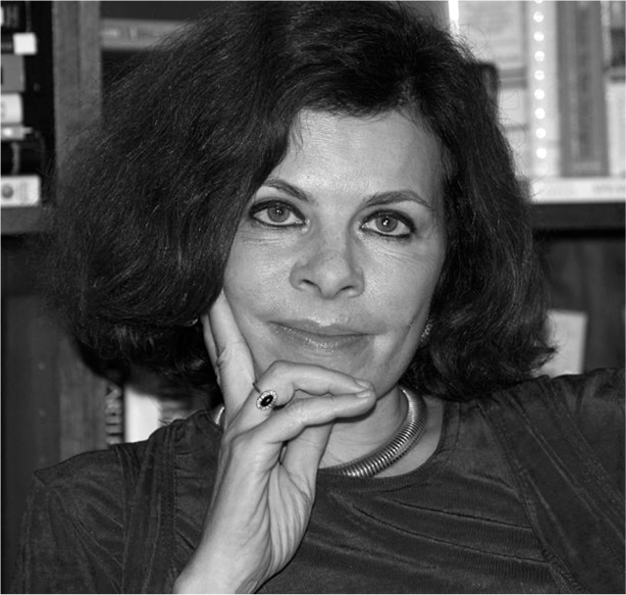
Nadine Strossen, Former President of the American Civil Liberties Union (ACLU) and current Professor at New York Law School.
David Shankbone via Flickr
What Does the Aclu Do?
When the average person thinks about the ACLU, they think of lawyers charging into court like you would see in movies. Can you say a few words about what helming the organization actually looks like daily?
The best knownbest-known aspect of our work is litigation. That is only part of our activism, which also includes lobbying elected officials at all levels of government, grassroots organizing and advocacy, as well as what we quaintly used to call “public education,” which means dealing with the media, publishing reports.
I want to talk about your book, “HATE: Why We Should Resist it With Free Speech, Not Censorship,” which is now out in paperback. Can you summarize the key arguments for those who haven’t gotten around to it yet?
I have passionately been supportive of free speech and experienced free speech as the necessary prerequisite for, as I said earlier, support and advancement of any other cause.
All the movements for equality throughout history and around the world have demonstrably depended upon, as the most vital weapon if you will, a robust freedom of speech that extends to controversial, offensive, hateful, and hated speech. Conversely, censorship has consistently been the strongest weapon to thwart any movement for equal rights and equal justice. In the ACLU’s earliest days, we were defending freedom of speech for fascists. People who were denouncing the very civil liberties that we were advocating. I was fervent in my belief in 1977-78 that the ACLU controversially come to the defense of Neo-Nazis to demonstrate in Skokie, IL, a town near Chicago that had a large population of Jewish people and many of whom are Holocaust survivors…. People, understandably, don’t want to defend ideas that they find rightly repugnant. That stance was so unpopular that even within the ACLU that 15 percent of our members resigned. It was quite a hit.
We recouped the membership, in the late 1980s, the same issue came back again and was again debated very fervently among civil libertarians including within the ACLU in the context of the then-new movement for campus hate speech rules. And the ACLU again re-examined our position, that far from countering equality, diversity, inclusiv-ity, and all the wonderful goals that are supported by those who champion hate speech restrictions, we reached the conclusion that censorship is not an effective way and is likely even a counter-productive way to try and advance those ideals. But we strongly encourage steps that are consistent with free speech that colleges and universities must take in order to promote genuine equality and inclusivity. We had a list of about a dozen steps they should take.
The issues raiseds its head again and became front and center after 2014 and Ferguson and the ignition of the campus protests and Black Lives Matter movement. Of course, the killing of Black people is just horrible, but we knew it was going on and had been protesting it forever and it was usually falling on deaf ears. So now we are getting big attention from politicians and college students so that was really, really thrilling to me. I love the emergence of campus activism but I started to see this pattern that those who were campaigning for social justice seemed to not support free speech. That’s putting it mildly.
Can you talk a bit about the private sector and businesses, particularly social media, in terms of their role and responsibilities related to free speech?
Social media companies, and I really mean the giant ones that wield so much power, exercise more censorial power than any governments around the world and throughout history ever have and the statistics are just mind-boggling. At the time I wrote the epilogue [of my book], Facebook alone was taking down about 125,000 posts a month for violations of its policy against hate speech and that’s probably just the tip of the iceberg. It’s one company and one category. That’s really a frightening power for a private sector company to exercise without any of the accountability or due process constraints that reign in government. Many people are surprised to learn that the constitution, including the first amendment with free speech and due process, only applies to government, not to private sector actors.
As for Twitter, you have probably seen the constant, persistent, not surprising, complaints that the companies are disproportionately silencing Black Lives Matter activists and other protestors for racial justice and social justice under the user agreement hate speech policies. And, suppressing feminists and advocates for reproductive justice, and LGBTQ rights under their policies under pornography. It’s the same problem of inevitable arbitrariness that I talk about following from the inherently vague concept of hateful speech. Enforcing the hate speech policy by Facebook or by its algorithm is not doing any more to advance racial justice than having a government do the same thing. We really have to use alternative mechanisms because there is a lot going on where people are harnessing the power of social media to proactively counter stereotypes on a mass scale, reach out to individual hate mongers on an individual scale, and to provide support and education. I think it’s really promising.
Does academic speech like that meet the standard you were talking about earlier about imminent harm?
Absolutely not. Let me be clear about it: speech absolutely can cause harm in a more indirect, complex, nuanced way.
Most people, including respected academics who have written important books on censorship, argue that speech that is protected under U.S. law, does cause harm. Hate speech causes harm, but that conclusion is not enough to justify censorship. Logically, you have to go on to ask several other questions. Number one: would the censorship meaningfully reduce or prevent the harm? Number two: would the censorship unintentionally cause adverse consequences that increase the harm? Number three: are there other, non-censorial measures we could pursue that would be at least as effective in reducing or redressing the harm. So my argument is not that censorship does more harm than good and once to go government policy. It was called the “bad tendency” standard.
Your defense of free speech is not only about an expressive right, like somebody has their right to use their voice to defend something even if it’s horrible or distasteful, but also entails a tolerance for speech as a prerequisite for other values that we think are important. Is that accurate?
It is. I consider myself to be a human rights advocate who defends robust freedom of speech including speech that is sufficiently robust to extend protections to hate speech as an essential prerequisite for all human rights for all people. So, you’re exactly right that free speech is for all people in this human rights tapestry, if beyond the most clear and tight connection between the speech and the harm, that discretion is predictably going to be used disproportionately against those who lack political power. That’s the reason why so many human rights activists and so many international human rights activists from around the world, who I quote in my book, oppose censoring hate speech and support the American approach. This is not because of the first amendment, but what is likely to work and not a tool that is to be turned against those who are protesting for social justice or against you will, and if we pull that string, then we’re going to unravel the gains we’ve made on racial equality, and women’s rights, and sexual orientation, and other minorities, and you name it.