




Abstract
In this essay I contrast twentieth century heroes of freedom of speech in the Old and New Lefts with contemporary “cancel culture” and social media censorship. In so doing, my aim is to invite you to think with me about this metamorphosis and what it means for social movement research.
The heroes of free speech in the twentieth century were labor disruptors, civil rights marchers, and long-haired students. But today, the loudest voices against the corporate media, widespread surveillance, and foreign wars seem to be coming at least equally from conservatives. The success of social movements of all types depends on the freedom of expression, but the public’s tolerance for opposing and offensive views have plummeted. Does that matter for social movement research?
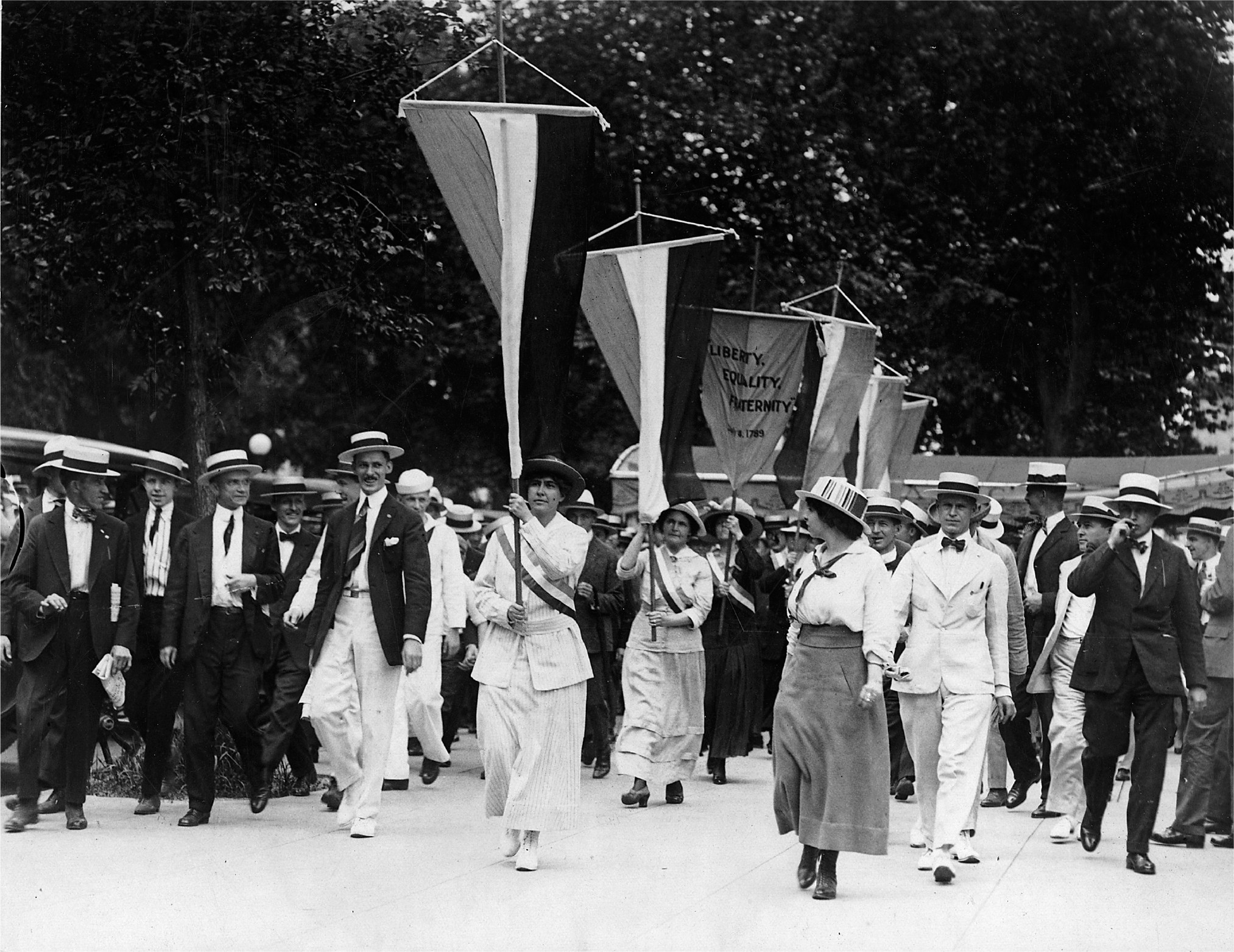
Free Speech heroes of the twentieth Century include labor disruptors and civil rights advocates such as these suffragettes in 1917 picketing the White House for voting rights.
National Archives at College Park, Public Domain, via Wikimedia Commons
Albert Einstein frequently wrote on the question of freedom even before his cottage was confiscated and turned into a Hitler Youth Camp. In 1940 he wrote that “freedom” constitutes “social conditions of such a kind that the expression of opinions and assertions about general and particular matters of knowledge will not involve dangers or serious disadvantages for him who expresses them.” Better known for his application of the scientific method, free speech and the scientific method both assume that free and robust skepticism of truth claims always leads to better outcomes.
The concept has origins in Hellenistic and Zoroastrian traditions respecting religious diversity and natural rights. The Magna Carta, Bill of Rights, Declaration of Independence, and Universal Declaration of Human Rights have all followed in this tradition of codifying aspirational rights to individuals in the hopes that those who read them may bring them to life. The Universal Declaration of Human Rights specifically mentions freedom of speech in the Preamble as an assumption on which other rights are derived but also protects it uniquely in Article 19.
In the United States, freedom of speech has been used as a vehicle to protect science and religion, jazz artists and filmmakers, Nazis, and anarchists. It is instructive to review some twentieth-century events which are so essential to understanding our current conditions. Sociology is particularly suited to speak to twentieth-century culture, having flourished alongside it. To understand how we reached this point, I will first outline important twentieth-century heroes of free speech. Despite continuous attempts by governments and corporations to rip free speech from individuals, opposition to the draft, Jim Crow laws, and a myriad of other underfunded euangelions discovered their reward in a public audience. From mid-century mothers resisting the draft on behalf of their sons to large networks of peace movements lasting well through the end of the Cold War, it is hard to imagine the century developing as it did without the First Amendment. Next, I contrast these heroes with social media censorship and the proponents of cancel culture. In so doing, I aim to invite you to think with me about this metamorphosis and what it means for social movement research. Weakening the freedom of speech undermines the enlightenment ideas of democracy and individual rights. Centuries of rightlessness are payment enough for the liberties we now enjoy.
The Old Left
Free speech for the working class of the early twentieth century happened on street corners. Grown men stood atop soapboxes calling railroad tycoons “parasites” for a minute or two before being chased by militias. Frank Cedervall of Industrial Union 440 in Cleveland, Ohio, turned the craft into an art. However, as Howard Kimeldorf’s Battling for American Labor points out, the Wobblies had been organizing in this way for some time. Activists commonly flooded the streets to intentionally disobey speech ordinances, only to end up battered and imprisoned. Citing the First Amendment to the Constitution, which prevents governments from abridging the freedom of speech and peaceable assembly, the protests continued for years.
Since 1891, the Salvation Army has been preaching on the streets of Spokane, Washington. Saving souls, collecting coins, and feeding the hungry, their large following was a ripe target for soapboxing Wobblies. Frustrated about low wages, many would flock to James Walsh and others speaking about workers’ rights and union organizing. Throughout the West in Iowa, Montana, Joe Hill’s California, Bill Haywood’s Colorado, and elsewhere, the history of the IWW lay waste to speech ordinances and opened up access to public space.
Centuries of rightlessness are payment enough for the liberties we now enjoy.
On the East coast, a small Irish Catholic from Cork, Mother Jones, stood up to President Teddy Roosevelt’s business-friendly policies. Walking from Philadelphia to Oyster Bay in defense of children’s rights, Mother Jones brought media attention to the issue of child labor in the steel mills of Pennsylvania. Child labor laws were not passed until after the presidential campaigns of Eugene V. Debbs, who brought further attention to the issue. Debbs won 3% of the national vote in 1920 while sitting in federal prison. Where the government did not protect the right to free speech, labor activists took it.
The New Left
While the Old Left concerned itself primarily with economic and sometimes anti-colonial concerns, New Left activism turned its attention to expanding individual rights, especially the rights of women, Blacks, and gays that had been left out. This new generation integrated the ideas of Henry David Thoreau, Leo Tolstoy, Gandhi, and Dr. Martin Luther King, all of whom understood that freedom of speech is sometimes the only tool available with which to undo injustice. Resting on the victories of old free speech fights and New Deal policies, this generation innovated on non-violence theory and resorted to violence when their national leaders were assassinated.
For instance, Robert Cohen’s book Freedom’s Orator details how the Berkeley Free Speech movement thrust itself into national political debates in defiance of campus speech laws. Overtaking buildings to make their point, Mario Savio and other activists pushed the cultural boundaries of acceptable public expressions. This student rebellion created the template used by many contemporary campus social movements. Beatniks, hippies, and punks emerged from the fringe to publish books like Rules for Radicals and songs such as “Light My Fire” that made popular culture what it is today. Some of them even decided to become sociologists.
Southern towns tried to keep civil rights organizations from holding rallies and marches by forcing them to post large sums of cash as an insurance bond. Knowing that these tactics violated the First Amendment, activists intentionally broke these and other laws and accepted the consequences. Southern Blacks had been resisting discriminatory laws for two hundred years. Even while prevented from normal participation in civic life, W. E. B. DuBois, Booker T. Washington, and Ida Wells-Barnett, as well as the artists Blind Lemon Jefferson, Muddy Waters, and Paul Robeson, penetrated the national culture. Knowing their right to free expression was inalienable, these black artists, thinkers, and activists sought and found their audience. At the height of the civil rights movement and defying orders to disperse from public places and refusing to move from their seats at segregated lunch counters, white students and black Baptists marched, voted, and sang their way to racially integrated schools, universal suffrage, and equal opportunity in employment. These activists had set out to force Jim Crow to bend at the knee before the Bill of Rights. ASA President Aldon Morris’ Origins of the Civil Rights Movement, for example, details the growth of the NAACP even in the face of constant terror. The NAACP in those days were the most prominent defenders of the freedom of expression.
The Ku Klux Klan and the American Nazi Party held their own rallies, alongside illegal acts of terrorism in the decades since the Civil War of the 1860s, to try and stop the progress of mass movements. Even through the 1970s, National Socialists attempted to hold rallies. The nation watched anxiously as Holocaust survivors faced off against men in brown shirts bearing swastikas in Skokie and Chicago. The principles of free speech came under fire for allowing hatred to freely goosestep down the paths of Marquette Park.
The streets and its parks were where good ideas, and a fair heap of bad ones, were introduced and litigated before the public. There is a difference, of course, between activist youth who trained in philosophical and tactical nonviolence in church basements and those violent racists that invoke eugenicist and antisemitic arguments to advocate for discrimination and violence against gays, blacks, Jews, immigrants, and the disabled. Equal justice under the law survived, though tarnished, to defend movements to come.
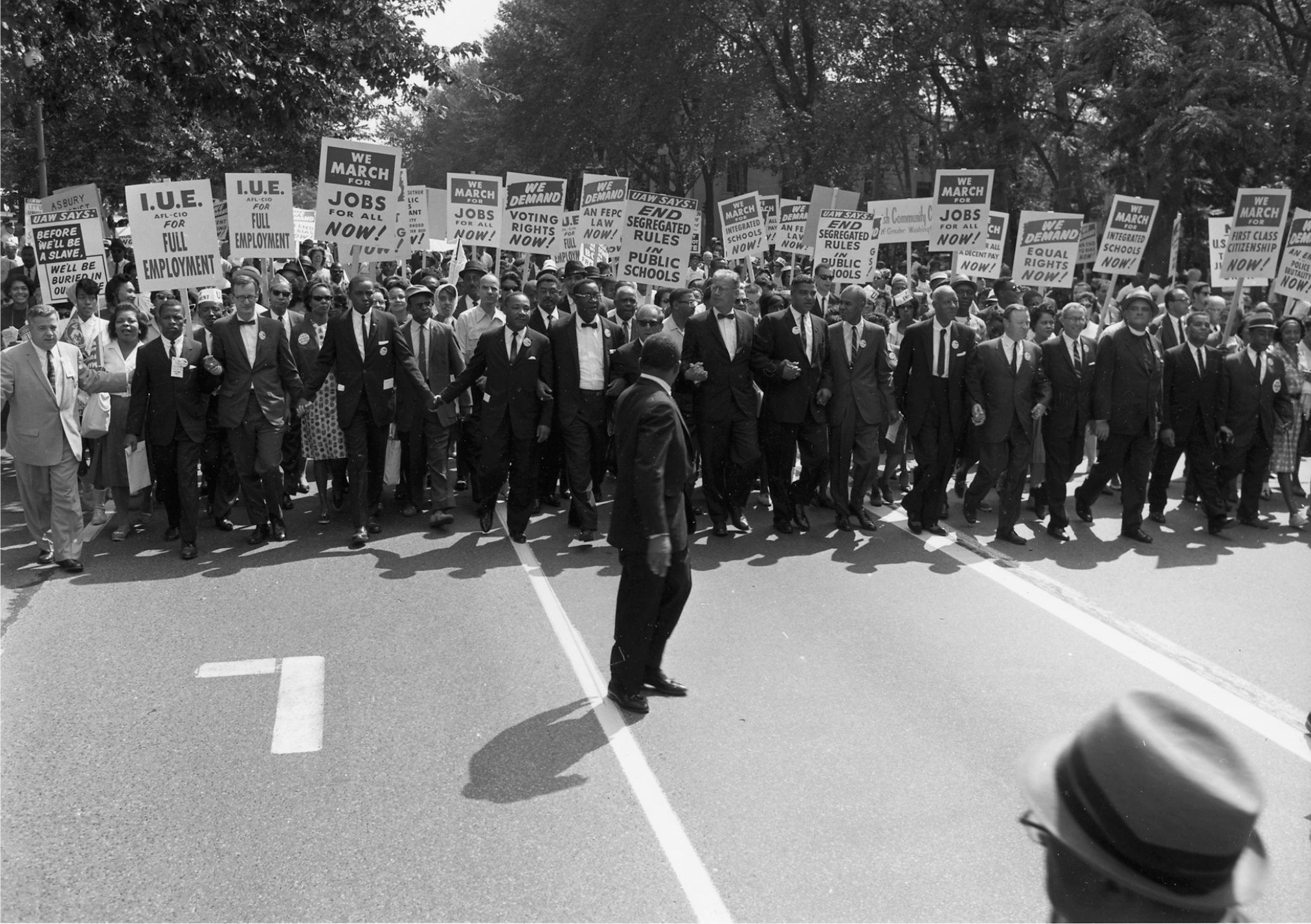
The first amendment of the American constitution has been used to protect civil rights protestors like those who marched on Washington in 1963, but it has also been used to provide legal protection for Nazis and anarchists, artists, clergy, and scientists.
National Archives at College Park, Public Domain, via Wikimedia Commons
After the Cold War
As construction equipment cut through the Berlin Wall, so did the international economic treaties of the 1990s cut through the American working class. Protests against the North American Free Trade Agreement and the World Trade Organization erupted as the century came to a close. Unfettered by the constraints of US labor and civil laws, the largest corporations in the country became increasingly global in scope. Labor and student movements organized against this economic globalization of capital and the concentration of corporate media companies. Naomi Klein wrote about both in No Logo, and sociologists, too, turned their attention to these trends. At the start of the twenty-first century, movements focused on economic inequality, wars in Iraq and Afghanistan, and universal surveillance.
But recent political trends seem to have split these concerns between its twentieth-century defenders and new conservative movements. Once at the center of the New Left of Abbie Hoffman and Mario Savio and pioneered by the Old Left of Bill Haywood and Mother Jones, libertine sentiments of free speech have found a home with contemporary conservative voices. Large political protests in the summer of 2020 and January of 2021 illustrate that anti-elite passions have captured both the Left and the Right. This development seems somewhat ironic, since the American Right, in the form of concentrated capital and Calvinism, had been opposed to freedom of speech for a century.
Censorship Today
The fight for freedom of expression happens in a much more privatized rights context when compared to what happened in the last century. The contemporary violations of free speech in the form of social media censorship run afoul of civil libertarian principles. The early internet was an anarchic playground of innovation and creativity. But since large corporations discovered a formula for how to harness it for their own purposes, the internet has become a medium for disinformation in the interest of capital. Google, Facebook, Apple, Twitter, and Amazon have privatized the public sphere, and federal laws have failed to restrain them. The diversity of unique websites and methods to access them have diminished considerably. Consumers access even traditional news organizations (themselves having become highly centralized) using social media companies.
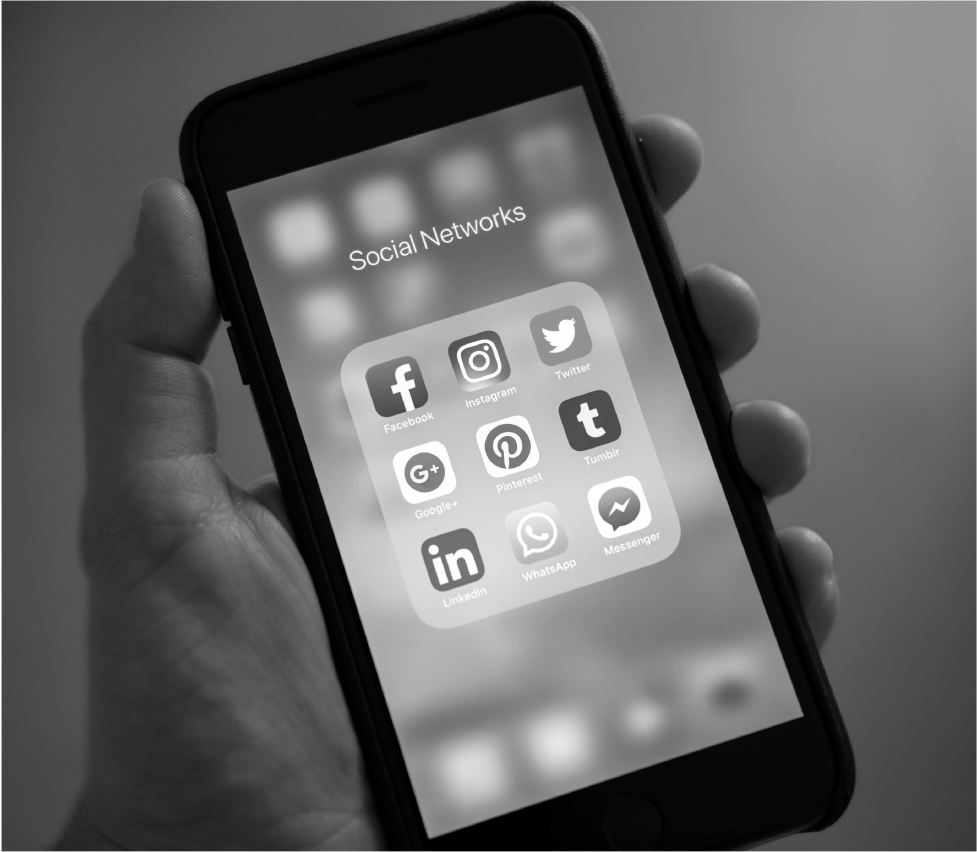
Self-interested censorship on the part of social media companies has not only limited the range of acceptable speech in the culture but has also reduced the esteem that civil liberties once enjoyed in American public life.
Tracy LeBlanc, Pexels
Rather than freely choosing among the soapboxers on the sidewalk, today, we experience the world as it is filtered through a handful of self-interested companies. Search engine and social media feed algorithms are proprietary, meaning that consumers do not have access to how our experiences are filtered. Individuals that post using these platforms are referred to as “content creators,” their data having become monetized and privatized. While individuals retain the right to create and host their own independent websites and blogs independent from these companies, they are mostly unable to reach the public without having first passed through one or more of these company portals.
The freedom to speak one’s mind is the freedom on which all others are patrolled and defended.
This self-interested censorship on the part of social media companies has not only limited the range of acceptable speech in the culture but has also reduced the esteem that civil liberties once enjoyed in American public life. The terms of the agreement that social media users consent to when opening one of these private accounts are often used to justify this curation of content. Social media companies enjoy liability protection against the behavior of its users. But these companies also behave like traditional publishers do, with the ability to choose among publishing proposals at will.
Social media censors tread lightly at first, as their platforms had not yet penetrated the market. While few objected to the bans against direct harassment or expressions of hatred and support for terrorism, these steps served as a basis for further curation. Some accounts are now permanently banned. By now, users are forbidden from swearing or using offensive language, posting personal information of individuals, defamation, posting illegally obtained information, and posting what social media companies call “abusive behavior.” According to the Cato Institute Summer 2020 National Survey, most Americans today are afraid to express their views for fear of reprisals.
Social movements of the twentieth century—both of the Old and New Lefts—used exactly these behaviors, among others, to disrupt entrenched interests in the culture. Social movement researchers know that high-risk activism is one of the core strengths of non-violent protest. Effective social movements rely on breaking unjust laws, accepting the punishment, and having the public pass judgment. However, modern social media platforms act as judge, jury, and executioner—all of this hidden from plain view. Social media censorship often occurs without public knowledge and sometimes without the victim’s knowledge.
For example, Wikileaks published U.S. diplomatic cables sent to embassies worldwide in 2010. Federal officials commenced a long pursuit of Julian Assange and later Edward Snowden in a related disclosure a few years later. Rather than being celebrated as whistleblowers against government wrongdoing, individuals who tried to reproduce and redistribute the contents of these unauthorized disclosures on social media sites were removed, hampering efforts to have these documents reach the public.
In contrast, the Watergate informant known as “Deep Throat,” whose disclosures led to the downfall of the Nixon administration in 1974, became the source of intense media and public attention. Thought of as a hero, Congress welcomed increased government transparency and opposing views with the Ethics in Government Act of 1978. Rather than reporting openly on the Assange and Snowden disclosures and welcoming access to government activity, the contemporary reaction has been to censor whistleblowers.
Contemporary Cancel Culture
This intolerance of offensive and opposing views is not contained to social media companies. Their users are now one of the main drivers of this censorship which has been called “cancel culture.” A mere accusation of wrongdoing on one of these social media sites is now enough for an employer to fire someone. While some of these accusations turn out to have merit, many of them do not. The consequences of cancel culture campaigns, however, are the same. The victims of these social media users can have their lives destroyed merely for causing offense.
Researchers have begun studying how our media diets mold our perception of the world. Online censorship and curation create distinct realities and lead us to believe in a narrow range of acceptable human expressions. Amid renewed attention to racial and economic inequality, social media users even lament that there is not enough censorship taking place. Hannah Arendt argues in Origins of Totalitarianism that the acceptance of totalitarian ideas stems from the fear of becoming subject to violence. This fear, combined with the kind of sustained economic inequality that we are now witnessing, has led to our collective abandonment of civil liberties. With such large concentrations of capital, the concept of political freedom loses its punch. The First Amendment restrains the government from infringing on speech, but no such restriction exists for corporations. In his book The Rebel, Albert Camus calls intolerant movements similar to cancel culture “cynical revolutions,” where intolerance reigns. Cynical revolutions “can be either of the right or of the left and […] will try to achieve the unity of the world so as to found, at last, the religion of man.” Social media companies and the cancel culture which they have produced, in this sense, erase the presence of individuals for expressing unique positions.
This trend necessarily stymies social action. How can social movements frame protest events without being able to express themselves freely? Some of the documented instances of censorship illustrate that the moderation of posts reflects the interest of social media companies. Proprietary algorithms largely carry out the curation of social media content that appears on these platforms and some of it is carried out by in-house employees. While these companies have received some public criticism about these practices, leaving it up to the companies to self-regulate has not seemed to work.
Despite this, some individuals have found ways to bring attention to the issue. For example, one Twitter user took advantage of the Terms of Service and had his account permanently suspended for making a death threat against a dead mosquito:
Where do you get off biting me all over while I’m just trying to relax and watch TV? Die! (Actually you’re already dead). @nemuismywife, 8/20/2017
Similarly, another Twitter user was banned for sexually harassing the cereal mascot Tony the Tiger, posting “I’d fuck that tiger” in response to an advertisement that read “Frosted Flakes look GR-R-Reat. And that tiger on the box doesn’t look half bad either.”
There are dozens and hundreds of similar examples of censorship scattered throughout the Internet, including the censorship of otherwise legal speech on both sides of the political spectrum. For instance, Christian blogger Elizabeth Johnston had her account temporarily suspended for expressing her opposition to anal sex, and activist Victoria Fierce was banned for swearing at Vice President Mike Pence.
The Importance of the First Amendment
Mass movements have worked hard to defeat those who wish to curtail the rights of others, from the Klan to their modern equivalents. The freedom to speak one’s mind is the freedom on which all others are patrolled and defended. Yet some contemporary social movement actors share the ethos behind cancel culture. Some social movements oppose freedom of speech because it allows offensive views to be expressed or because it is based on a Western colonial system of individual rights which they oppose. Social movements translate aspirational moral documents such as the Bill of Rights or the Universal Declaration of Human Rights into everyday realities. Left unchecked, government interference and concentrated capital have proven to handicap the individual and collective expression of oppositional views in society. Without the incentive for the moral pretense that social movements provide, this emerging trend of censorship will lead to an erosion of public accountability. Its removal will not rectify the failures of liberalism. We must defend the right to free expression, especially for those who express views that we disagree with.
We must defend the right to free expression, especially for those who express views that we disagree with.