Abstract
Understanding a truth-spot may require leap of faith.
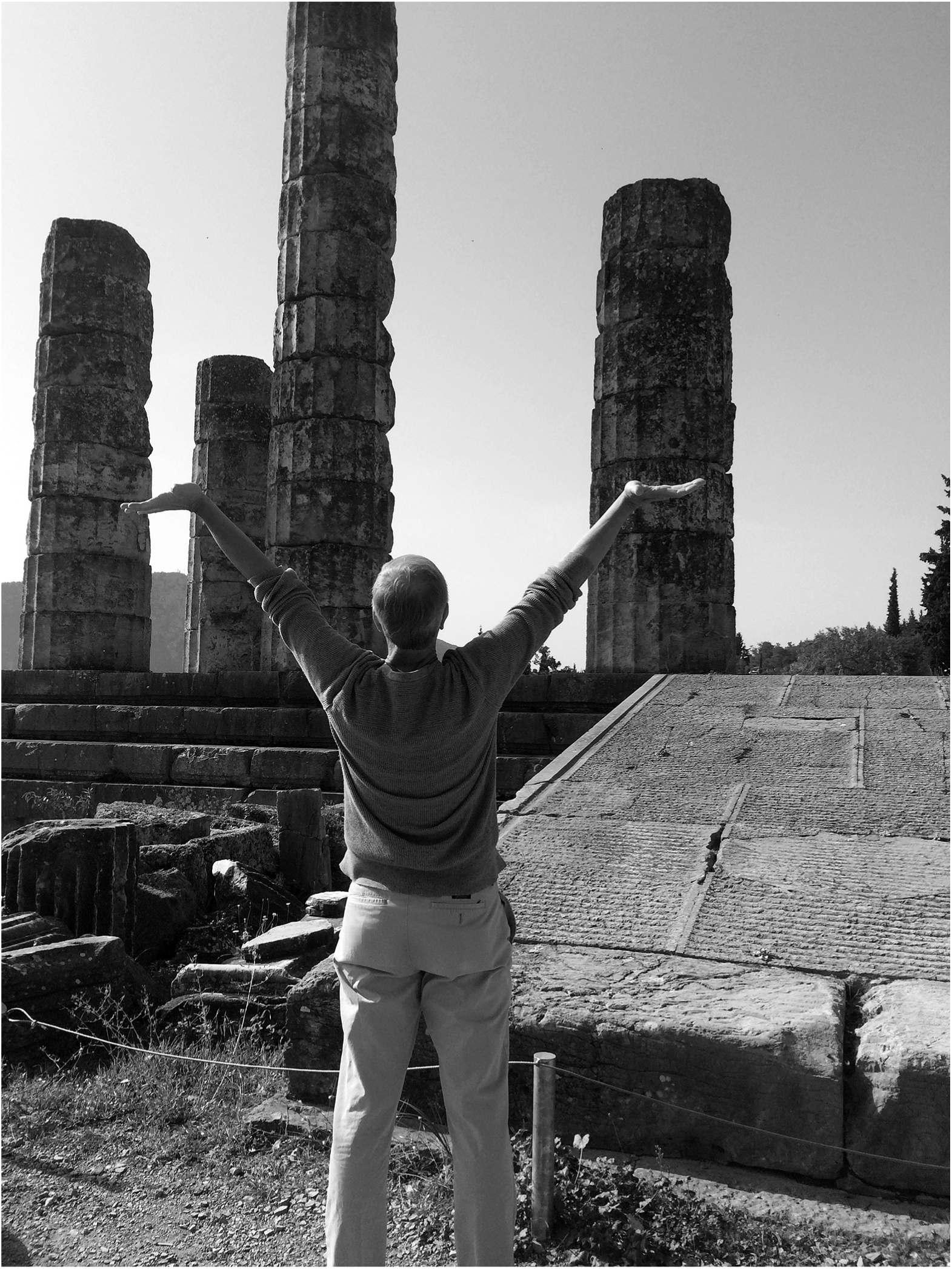
Most contemporary visitors to the famous oracle at Delphi, in Greece, arrive on a tour bus from Athens. As they wend their way up into the mountains from Thebes, perhaps stopping for lunch at the resort town of Arachova, the excitement grows. Around one last bend at the base of Mount Parnassos… there it is! But in that first unforgettable glimpse of the sanctuary, the tourist instantly realizes that it will take a lot of imaginative work to figure out what this place was like. The scene is remarkably incomplete. Only fragments of buildings and walls remain.
Still, people from all over the world come to see these scattered ruins. They come for the same reason that leaders of Greek city-states and other Mediterranean civilizations went to Delphi more than two millennia ago: people go to Delphi for the truth. Long ago, they came for truth about the future; now, tourists come for truth about the past. For my part, I came to Delphi because I wanted to see how ancients and moderns alike made knowledge tangible and believable to their audiences. For over two decades, I’ve been writing about how museums, laboratories, churches and courthouses are places that press upon us their claims to truth.
Delphi is an exquisitely engineered truth-spot, lending credibility to scientific and scholarly assertions about archaic Greek life. The adjacent museum is also designed to persuade visitors today that once upon a time Delphi was thought to be the center of the universe where reliable prophecies about future battles or colonizing expansions could be obtained from a priestess channeling Apollo himself. That historical narrative becomes real for those who visit today, as they walk through the ruins and reconstructions, reading interpretive captions along the Sacred Way and inside a museum full of unearthed artifacts. The place itself makes people believe.
But the museum and sanctuary must work hard to make Delphi an effective modern truth-spot. Even after a century or so of expert archaeological and hermeneutic research, our understandings of historic Delphi are as incomplete as the sections of huge, broken columns that lay scattered about Mount Parnassos. Following its long run as the source of preferred oracular wisdom, Delphi melted into the mountainside after the fourth century AD and slept, unappreciated, for another thousand years. Locals used its stones to build ordinary houses and shops, oblivious to their earlier roles in the construction of the most sacred of spaces.
Because of this historical rupture, everything on view today at Delphi is a recovery and a selective reconstruction based on best guesses about the original designs and purposes of temples, treasuries, and inscriptions. The Delphi encountered by visitors today tries to fill in the huge interpretive gaps that visitors face upon arrival. These residual stones—embellished by innumerable diagrams and scholarly-sounding descriptions—convince most tourists that their investment in a bus ticket from Athens was justifiable: right here is the Real Thing! At the same time, Delphi cannot hide the fact that its alluring narrative about strange, ancient oracular practices at this very spot rests on sketchy evidence. To see Delphi, then and now, as a truth-spot requires occasional leaps of faith.
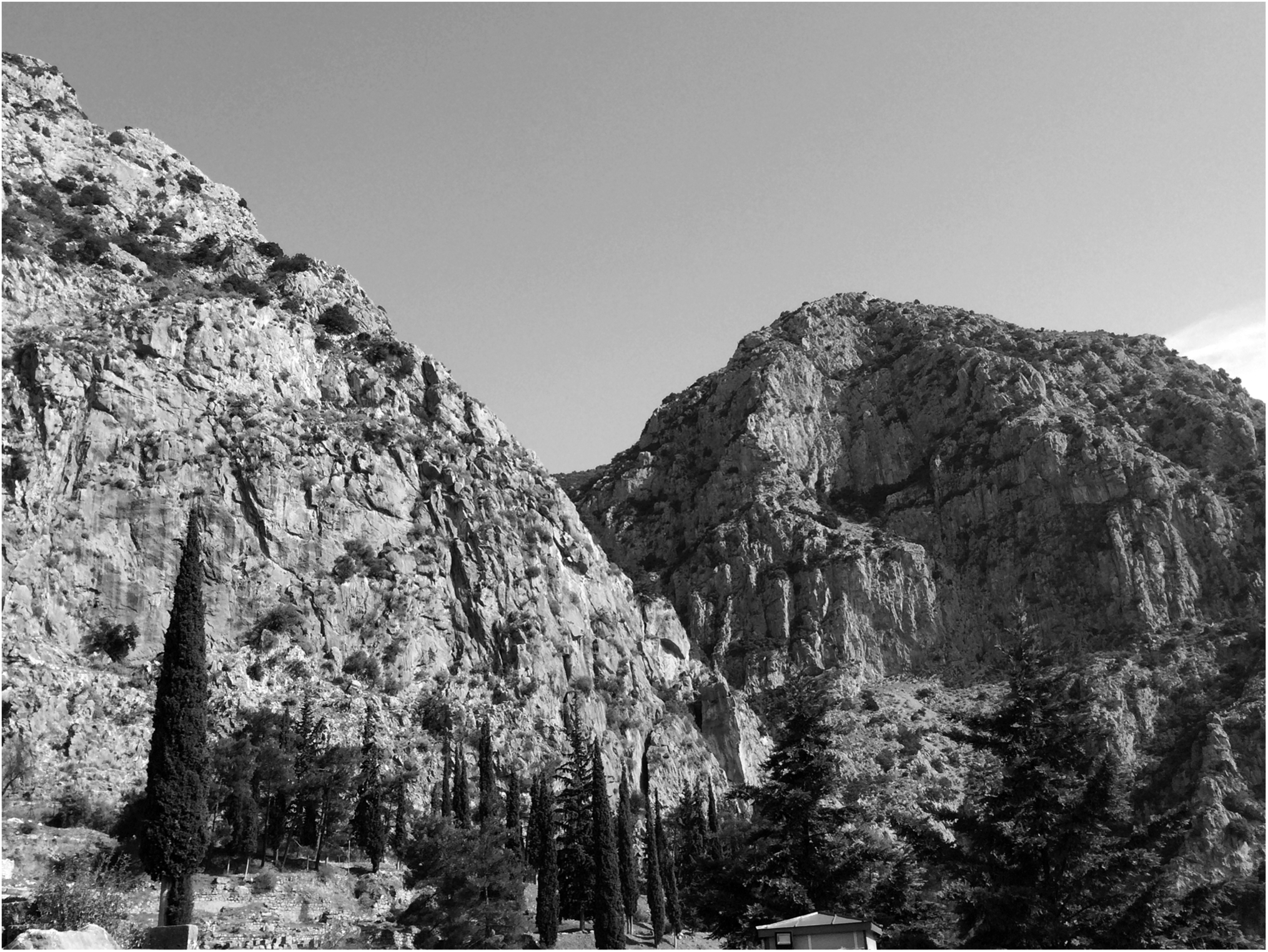
I kept wondering: is this particular cleft in the mountainside any different from the countless other geological formations that I passed by on my way up to Delphi? In the absence of the lingering columns, walls, and buildings that I have purposively cropped out of this image, would I have found this place to be uniquely “awe-inspiring” and “stunningly beautiful,” phrases commonly used by visitors to describe their Delphi experience? Tourists bring sizable expectations to these mountains. They already know, for example, that waters gushing from the Castalian Spring in the fissure were used by supplicants (starting in the sixth century BC) in a ritual cleansing that took place before they approached the Pythia for prognostication. The stories about Delphi that tourists read before they decide to buy a ticket on a tour bus make it difficult to believe, as Mount Parnassos comes into view, that nothing really special happened right here. The place has been annotated well before the tourist comes upon the first signage inside the site.
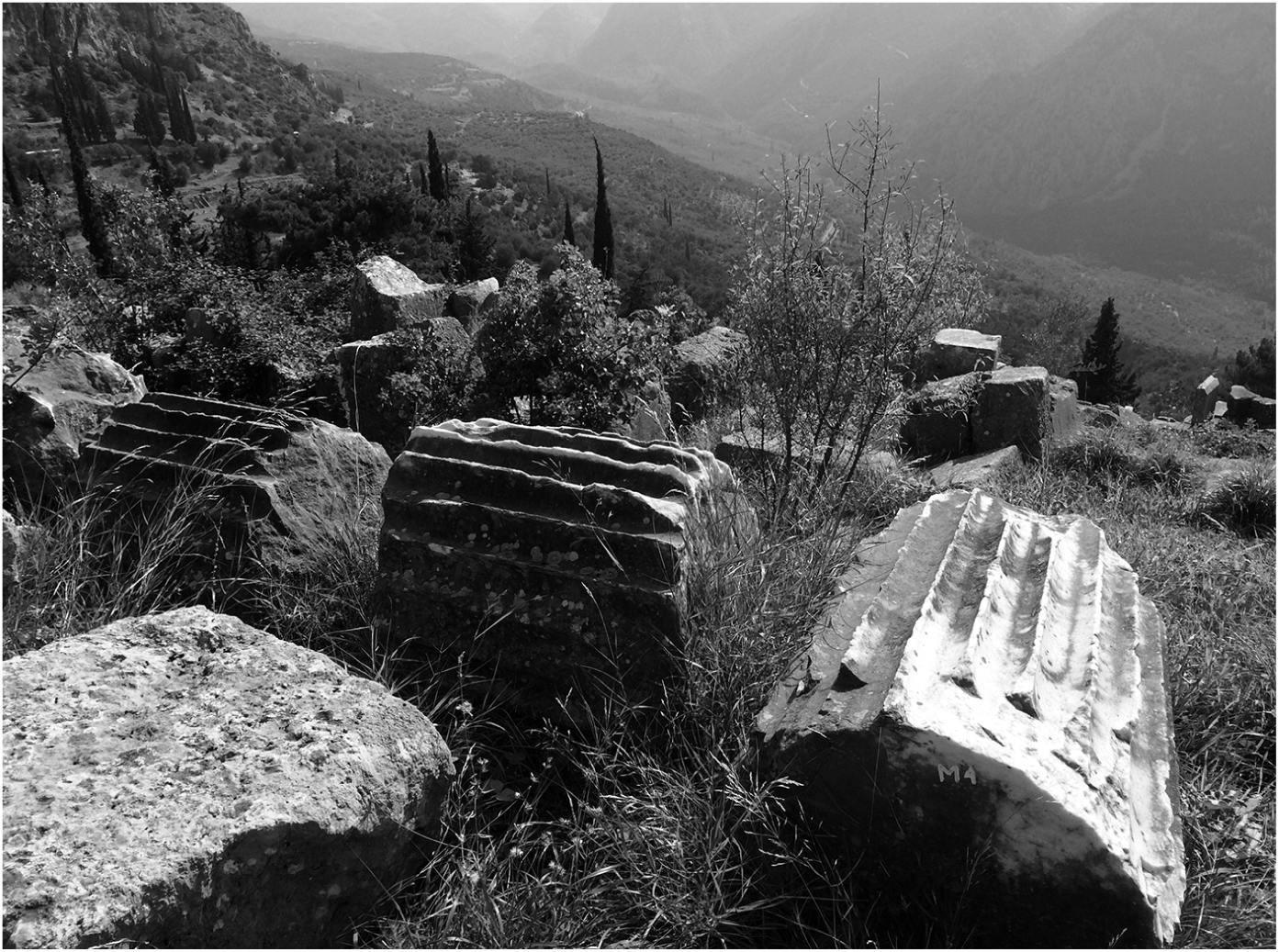
I tried hard to imagine what Delphi would have looked like for the earliest archaeologists who discerned that this was the location of the lost oracle. It might have looked a little like this—but would people really have been so blind to the possibility that something special once happened here, with all those column fragments laying around? Most or all of this beautifully wrought stone was unearthed in excavations beginning in the late nineteenth century, then simply left in place. They mark the site as a ruin, which Georg Simmel described as “the site of life from which life has departed,” affirming the tourist’s supposition that something significant happened here long ago, but ceased. Fallen columns tell credible stories.
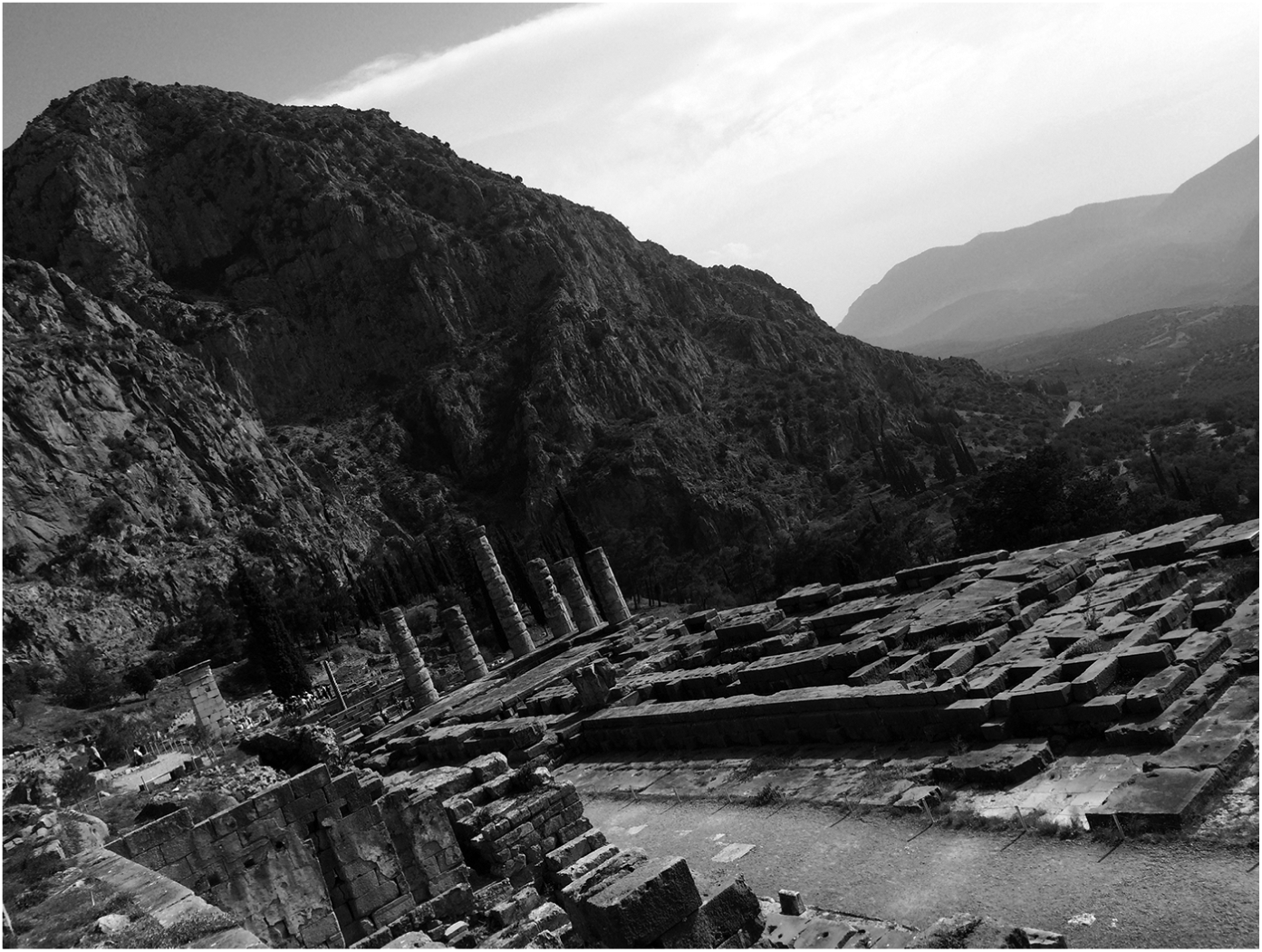
Not all columns were left randomly on the ground. It is fitting that six columns were reassembled at the Temple of Apollo, where the priestess sat upon her tripod and issued enigmatic predictions about the course of future affairs. Why stop at six columns? Some pieces are surely missing, and the costs of stacking them up again must be enormous (especially in cash-strapped modern Greece). But the partial reconstruction also buys authenticity that could be compromised if the entire Temple were reconstructed on-site. Imagine a life-size, fully rebuilt Temple of Apollo, complete with an animatronic Pythia and mysterious vapors emanating from a crack in the floor. Tourists might confuse the sacred site with a theme park, built more for entertainment than edification and honesty.
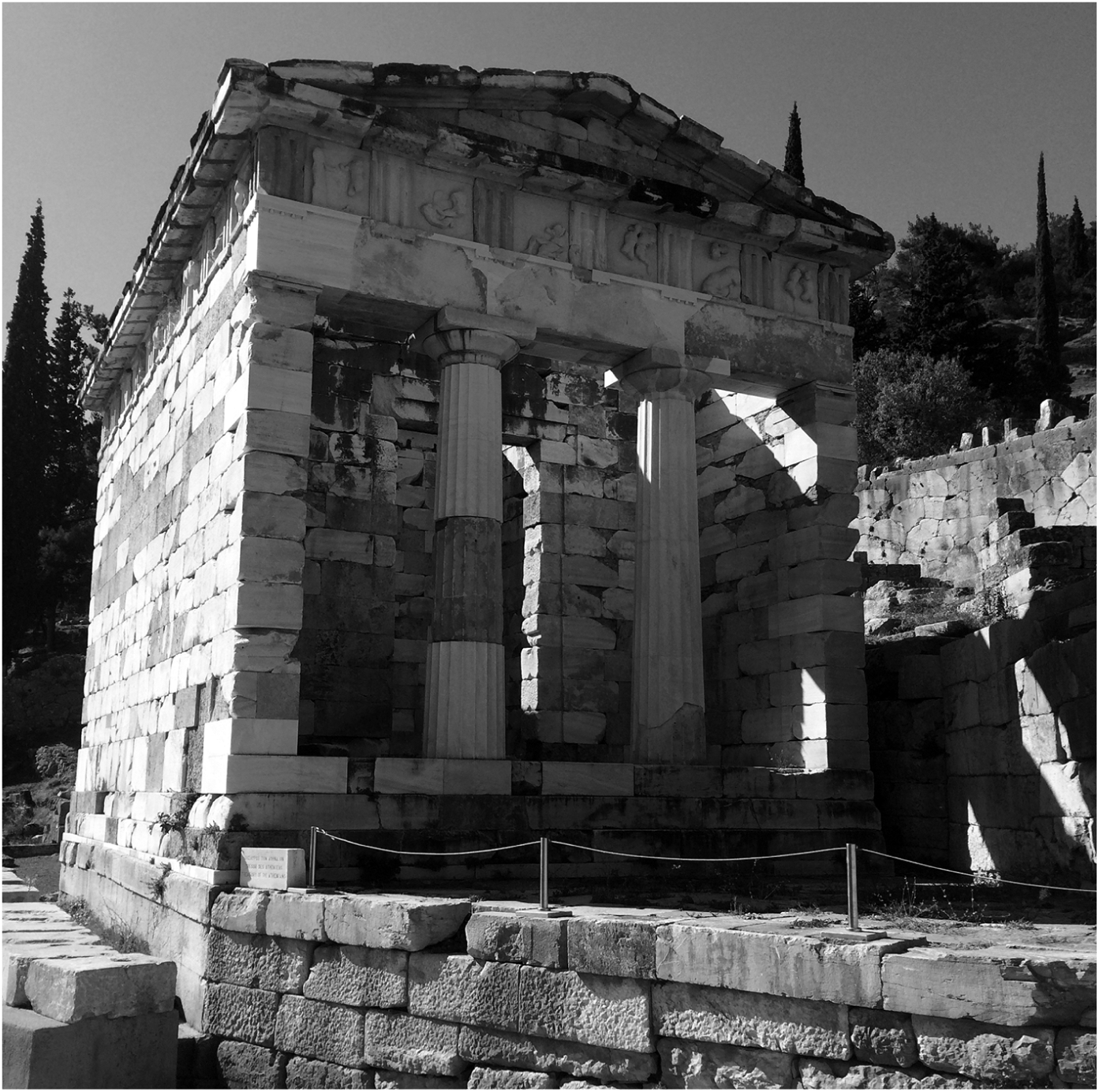
At the same time, tourists need to see at least some of the grandeur that was Delphi in its prime if they are to come away convinced of the site’s importance to archaic Greeks. Otherwise, the site’s ruins might be read as the aftermath of an earthquake (there have been many) with no apparent cultural significance. The Athenian Treasury has been reconstructed almost entirely: four intact walls, finished columns holding up the superb entablature and frieze, and obviously modern fill-ins to complete the look. Grateful city-states built these treasuries and loaded them up with valuables in gratitude for receiving divine insights that helped them to make wise political decisions. Then and now, the treasuries are testaments, in stone, to the prophetic accuracy of the oracle—why invest so much if the advice was bad?
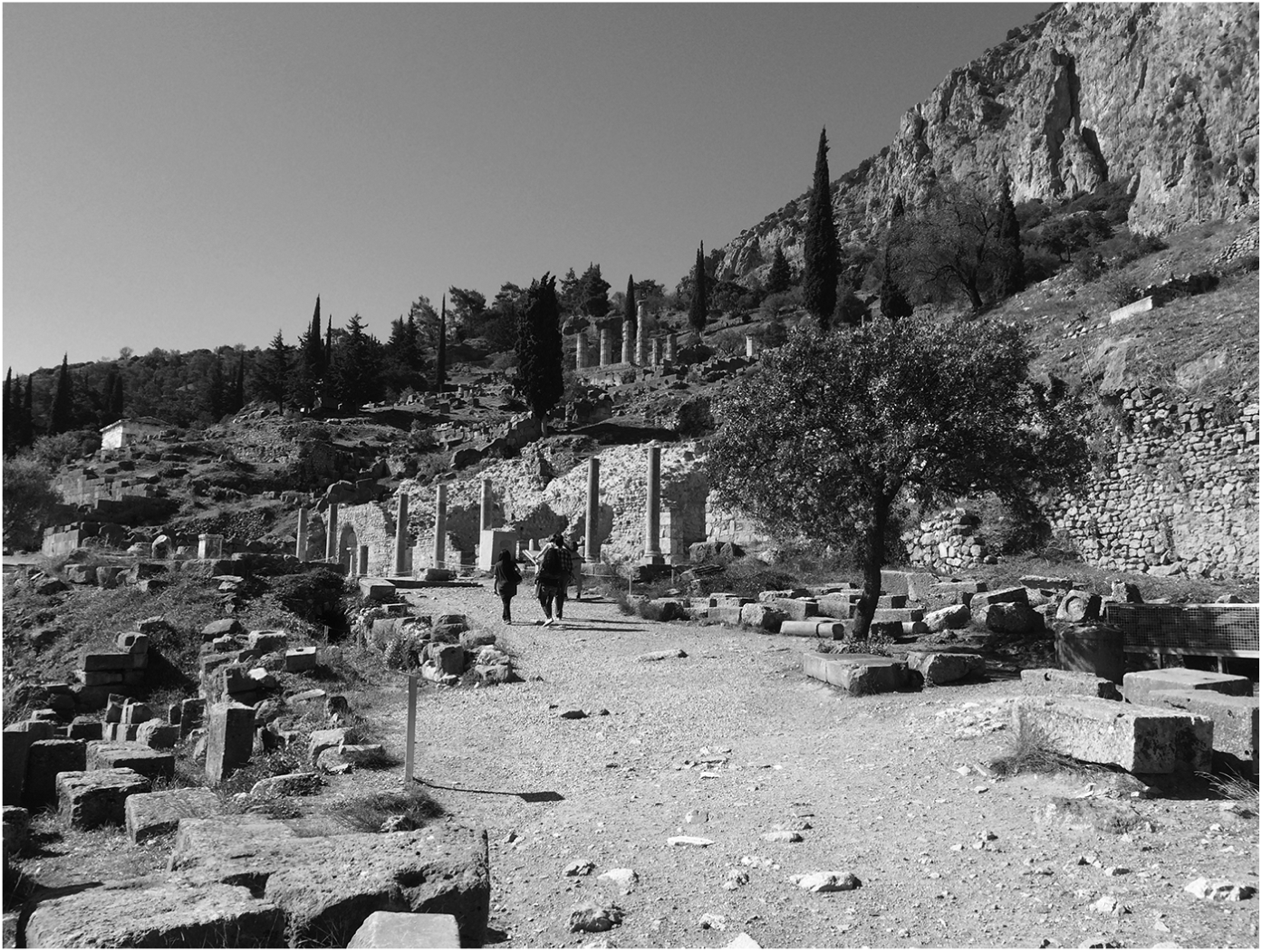
Tourists enter the site from below, and they are marched up the zig-zag Sacred Way to a climax at the Temple of Apollo. Most tourists stay on this appointed path, although side paths allow for meandering on the steep hillside. Many who follow the procession up the Sacred Way probably believe that they are retracing the footsteps of those long ago who came to Delphi on foot rather than in a tour bus, seeking oracular truth. Reenactment of “what it must have been like” is powerfully convincing, but it all rests on a sham. Evidently, the Sacred Way that we are steered along today only began to take shape at the very end of Delphi’s days as the spiritual center of the universe, maybe as late as the sixth century AD. Before then, one could ascend to the Temple via myriad paths and steps. I learned this tidbit only after immersing myself in the scholarly literature on Delphi; I don’t recall seeing it announced anywhere on the site itself.
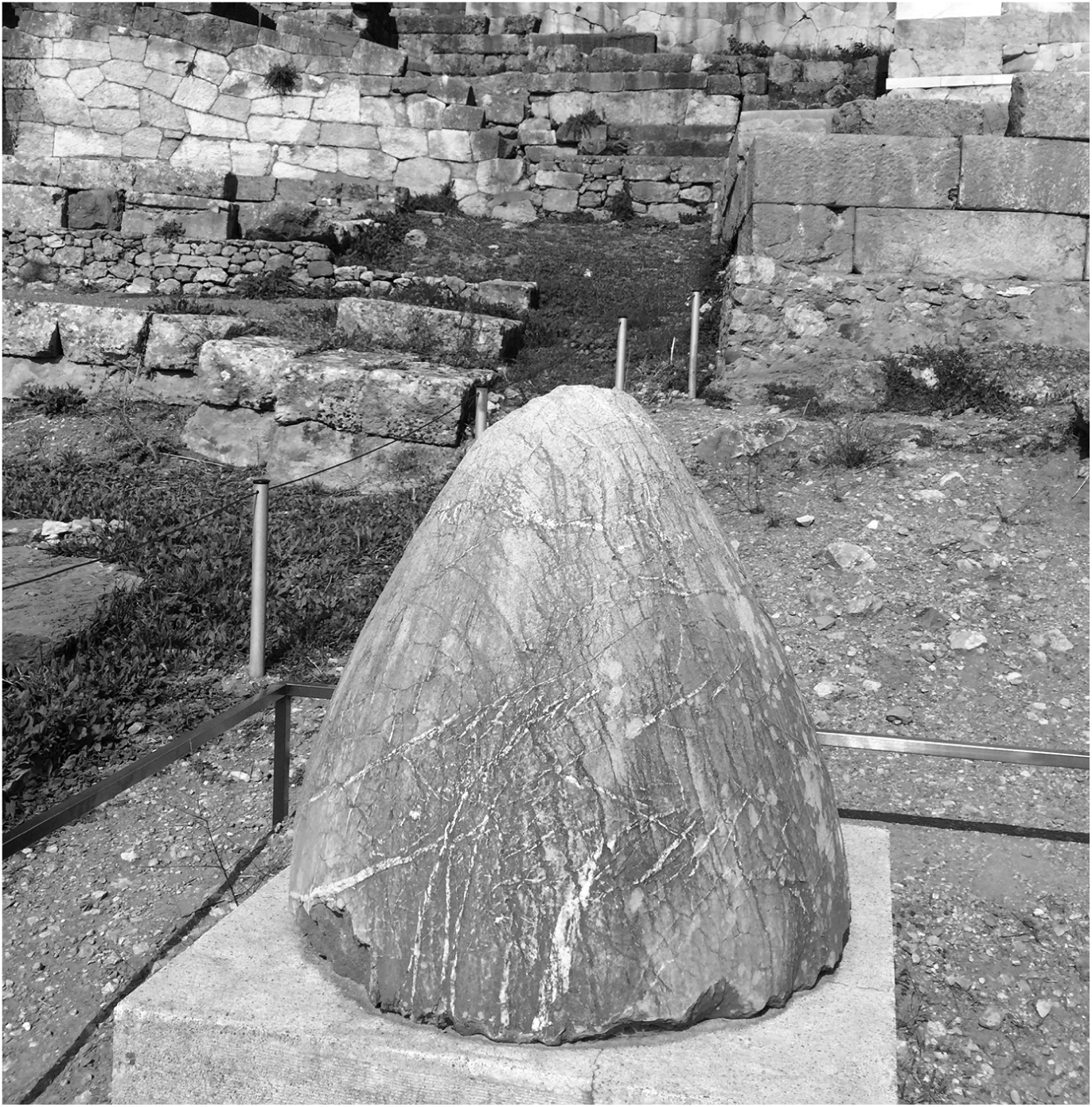
According to legend, the cone-shaped omphalos is a stone thrown from by Zeus from the heavens to mark Delphi as the center of the universe. I came upon the omphalos on the left as I marched up the Sacred Way, and I was impressed. Wow! From the hand of Zeus! Other tourists seemed less captivated by the stone, and reacted as if it were just another piece in a wall. Perhaps they had already read the accompanying annotation: “There were many copies of the sacred omphalos at the sanctuary, among them the one exhibited here.” Copy? I want the original one thrown from the heavens!
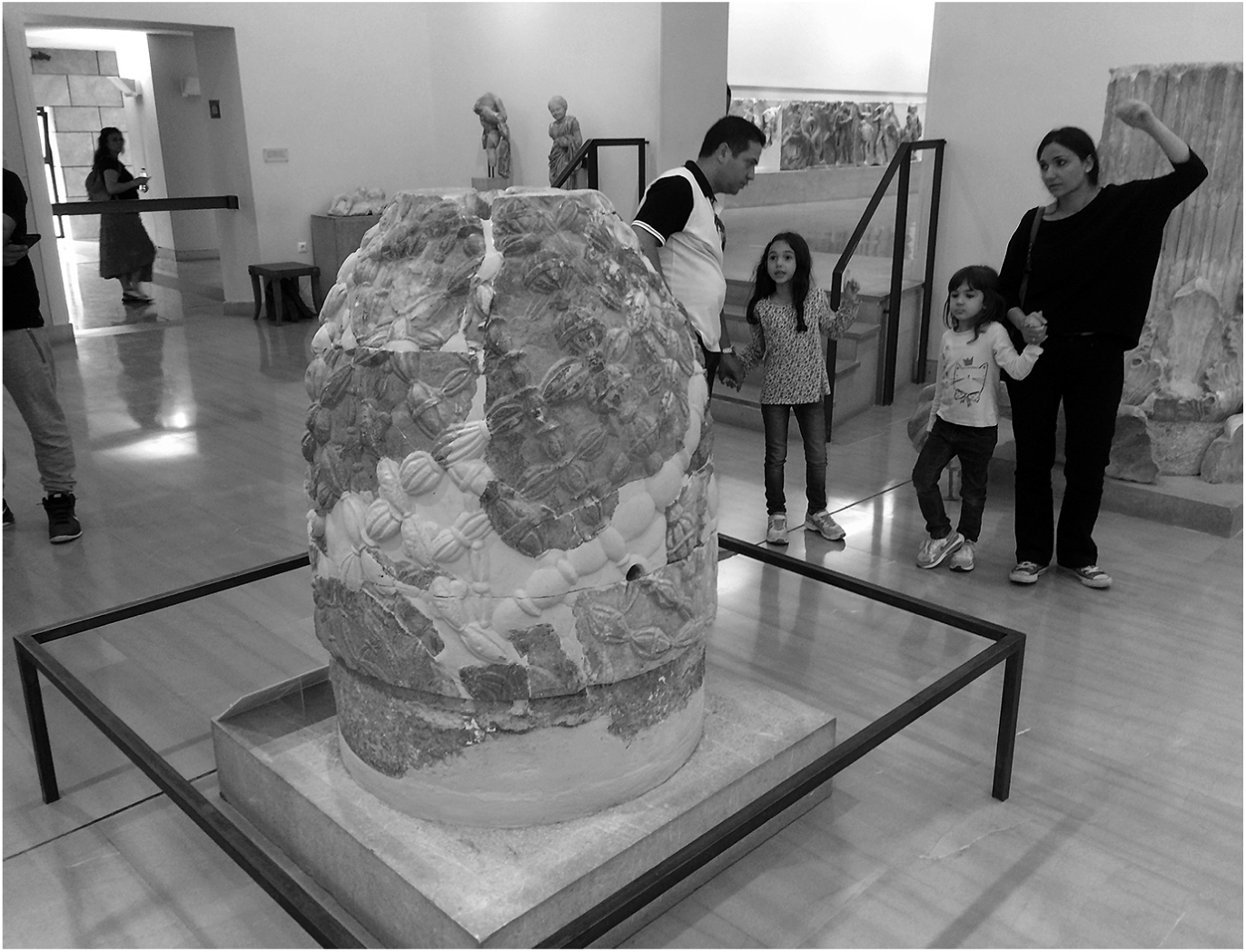
The omphalos on the left is inside the museum that was built around 2003 next to the sacred site—but it appears to be just another copy. I rationalized my disappointment: Zeus is a myth, and all these omphaloses are symbolic representations of what was never really thrown from the heavens, but still… they are really, really old, they were carved (and carved again, repeatedly) as the materialization of a belief that Delphi’s location was chosen by the Gods. The narrative is saved.
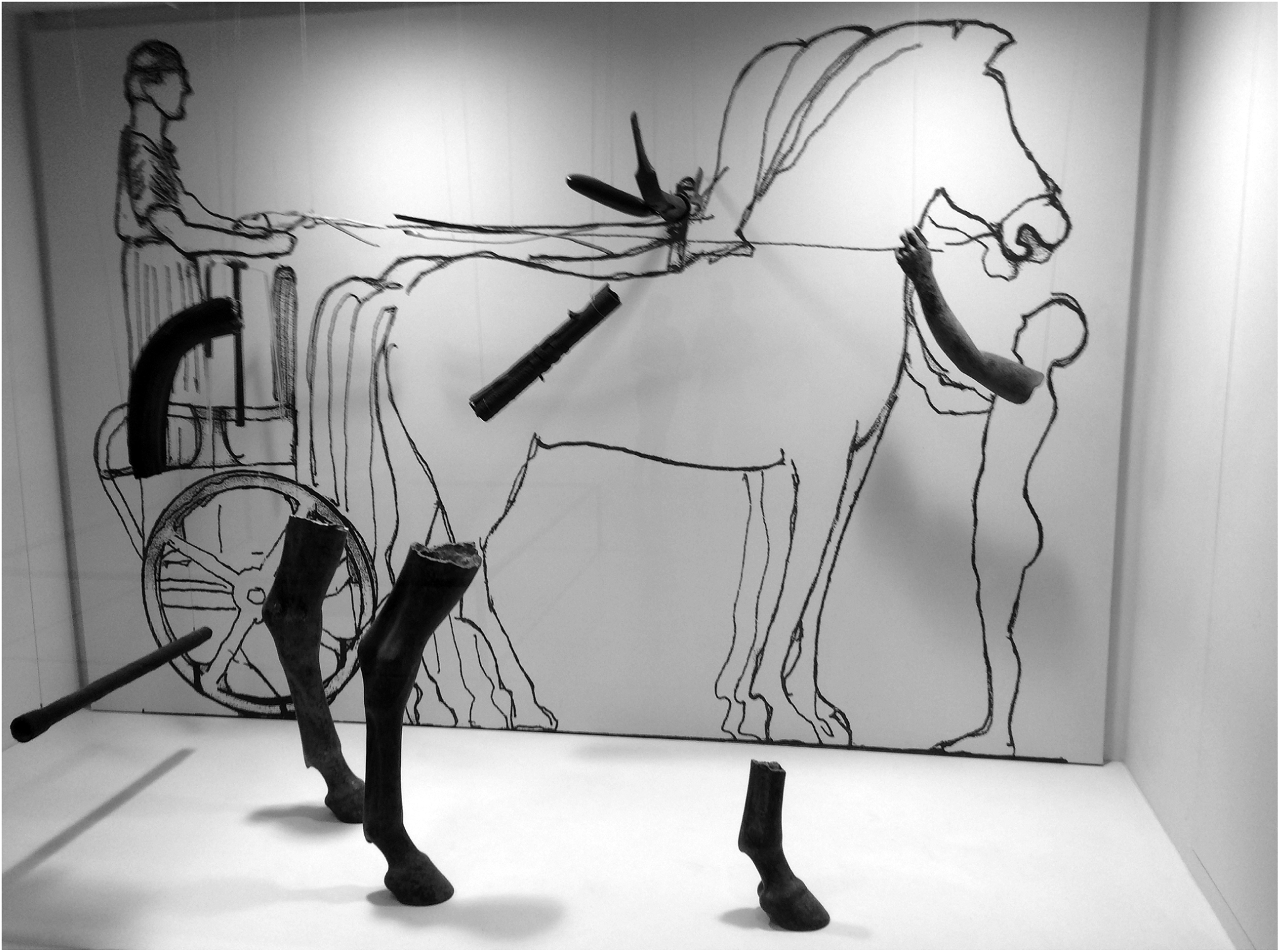
One highlight inside the Delphi museum is this charioteer—or, at least, the sketch of a charioteer with his horse and groom, conjured by curators from the precious few artifacts retrieved from the mountainside and assembled just so in the vitrine. Museums as truth-spots rely on fragments for their persuasiveness: inevitably incomplete artifacts extracted from their original settings get repositioned via the machinery of display and annotation to accentuate an intended meaning and value. The caption next to the charioteer says that “the scholars involved are not unanimous” in their interpretations of what chariots at Delphi might really have looked like, a reminder that our grasp on the distant history of this place is just as fragmentary as those reins and hooves. Sitting in the shade outside the museum after an exhausting day at Delphi, I realized how successfully my understanding of this special place had been worked by the reconstructed materialities I had witnessed—but not for a second did I feel deceived.
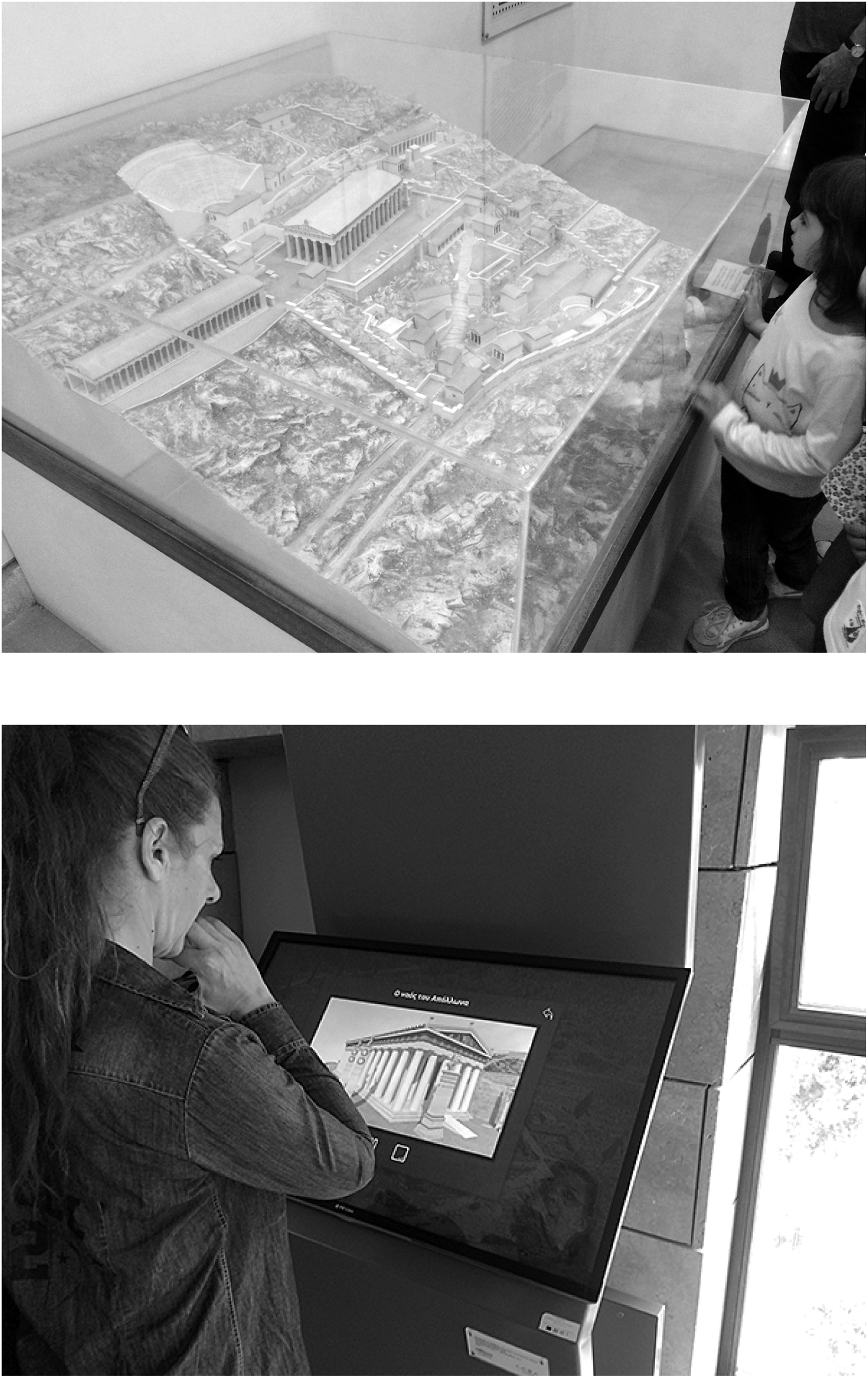
Museums can recreate miniature versions of historical places that would look completely goofy if they were done on-site, in the original size. Curators have rendered Delphi “as it might have looked back then” in a cardboard scale model and with a touch-screen simulation. Delphi vérité leaves little room for skepticism about the veracity of the historical narrative that experts have devised and instantiated.
I was won over, thoroughly persuaded that at the very place where I stood, amid circumstances I could now imagine in considerable detail, people sincerely believed those oracular prophecies about their future—and acted upon them. Being convinced of all that, I decided to ask the priestess about my prospects for writing a book on truth-spots. As I stood by the altar in the Temple of Apollo waiting for a response, I privately found myself hoping for something like “sure-fire non-fiction best-seller.” But instead, the Pythia said: “To be read, the book must be written.” I heeded her advice.