



Abstract
Veronica Terriquez, Randy Villegas, and Roxanna Villalobos on a student-led voter registration drive.
“If not us, then who? If not now, then when?”
—John Lewis, U.S. House of Representatives
Between the 2014 and the 2018 midterm elections, turnout among 18- to 24-year-olds in California’s largely agricultural Central Valley jumped from 32,414 to 85,007 votes, a stunning 262% increase.
The students of CVFS were credible civics mentors to those they hoped to reach: young, low-income voters of color.
This was no accident. It was, in part, the work of local youth activists.
Taking inspiration from John Lewis and other 1964 Freedom Summer volunteers who registered Black voters in Mississippi during the Civil Rights movement, UC Santa Cruz and UC Merced students from the Central Valley felt an urgency to launch their own Central Valley Freedom Summer (CVFS). Drawing lessons from the original voter registration project, which was led by the Student Nonviolent Coordinating Committee (SNCC) and enlisted the help of college students from elite universities, the CVFS students aimed to register and offer civics education to those who had not yet exercised their right to vote. Their target? Low-income young voters of color.
The 2018 election galvanized young people more than any midterm in recent history. The divisive politics of the Trump administration, the activism of the Parkland youth, and the get-out-the-vote messages of celebrities like Taylor Swift effectively motivated young people across the country to register to vote. However, this excitement around voting, largely spread through social media, did not easily resonate with young people in many parts of the Central Valley, one of the most productive agricultural regions in the country. Here, agri-business, oil, and developer interests have exercised significant power over political debates. Older White residents dominate the active electorate even though they are outnumbered by younger residents of color—many of whom are the children of immigrants who work in the fields, packing industries, and other low-wage sectors. It is within this context that youth of color have been subject to anti-immigrant rhetoric by local elected officials; racial profiling by police; the health risks of ongoing exposure to pesticides, poor air, and contaminated water; and substandard educational opportunities.
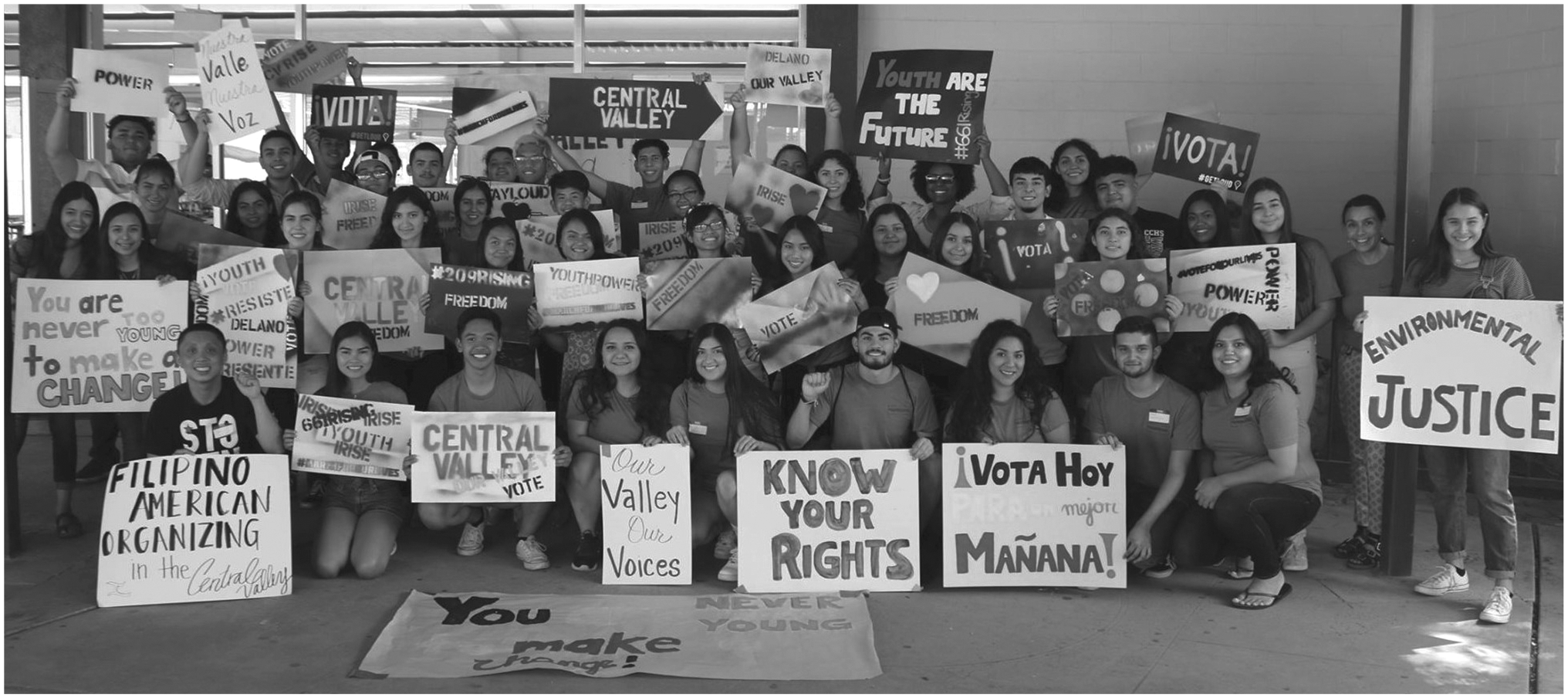
Central Valley Freedom Summer youth leaders gather for a training conference in Delano, CA August 5, 2018.
© Aria Zapata, used with permission
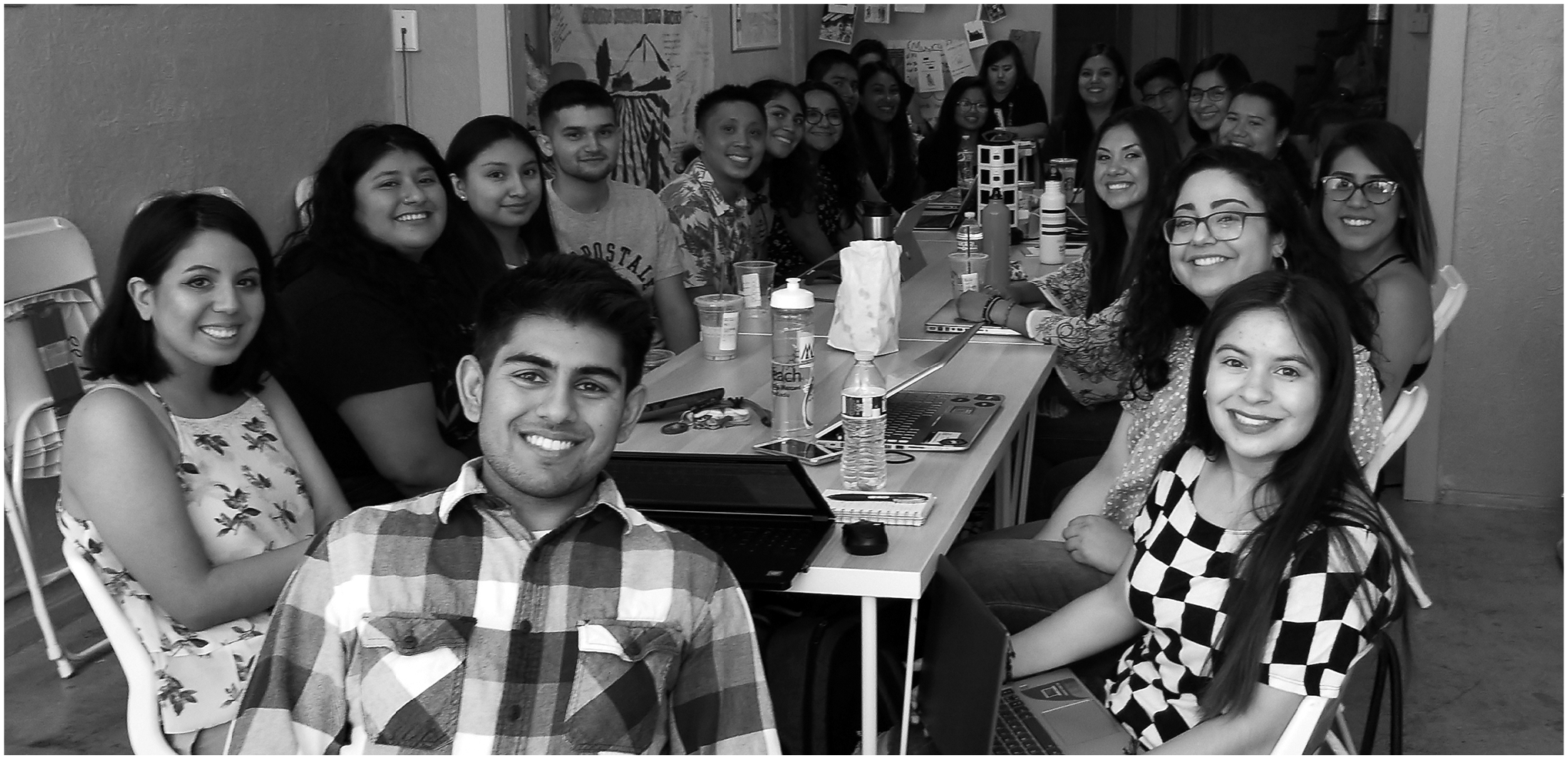
“I felt that sharing my story as an immigrant, first-generation college student allowed current high school students to understand my background and helped establish my credibility as someone who was once in their shoes.” Gary Singh (left front), Punjabi American UC Merced biology student from the City of Merced.
© Aria Zapata, used with permission
The Key Elements
As an approach to addressing a range of community concerns, CVFS sought to bolster the political engagement of low-income voters of color. The project, which received support from UC Santa Cruz, UC Merced, the Irvine Foundation, The California Endowment, the Sierra Health Foundation, and individual donors, included four key elements that may be replicated by others targeting politically marginalized groups. First, CVFS engaged college students who returned to their own communities to register voters and offer non-partisan civics education. As Central Valley natives of Latinx and Asian-Pacific Islander backgrounds, these students tapped into networks at their old high schools, in their communities, and within their own families to build local organizing teams and conduct outreach. Familiar with the local youth cultures and similar in age to those they were trying to reach, the students were credible mentors. They spoke freely of their sense of responsibility to their own communities, particularly since local educational institutions and political parties have failed to activate these extremely low-propensity voters. Exercising this civic leadership in their own communities only strengthened students’ resolve to return after college to do more.
A second central element of CVFS consisted of critical civics education that made voting relevant to young people’s concerns. Using interactive workshops, students introduced the topic of voting by making clear the significant age and racial gaps in voter turnout rates. Specifically, they highlighted the fact that during the 2014 midterm election, senior citizens aged 65-74 voted at seven times the rate of young adults aged 18-24 (57% compared to 8%, respectively). Moreover, student leaders reminded their audiences that young voters were disproportionately people of color, while these politically active seniors were predominately White. Student leaders would encourage discussions around the implications of this racial and age gap in voting for policies that affected young people’s day-to-day lives, including spending on education and local services, racial profiling by the police, and exposure to pesticides and other environmental hazards.
Student leaders reminded their audiences that young voters are disproportionately people of color, while politically active seniors are predominantly White.
Daylong conferences, led by the UC students and the local organizing teams they developed, enabled young participants to build community and deepen their understanding of the potential of their collective power. Addressing the disconnect between what students learn at school and the actual practice of democracy, workshops outlined the roles of local elected officials, including school district, city, and county officials, in shaping local policy. Sessions on local immigrant rights, environmental justice, and education access drew connections between current policies and voting. Additionally, ethnic studies, gender studies, and LGBTQ studies workshops sought to empower youth around their multiple identities, encourage healing and self-care, and increase awareness about local movements by people of color to change society.
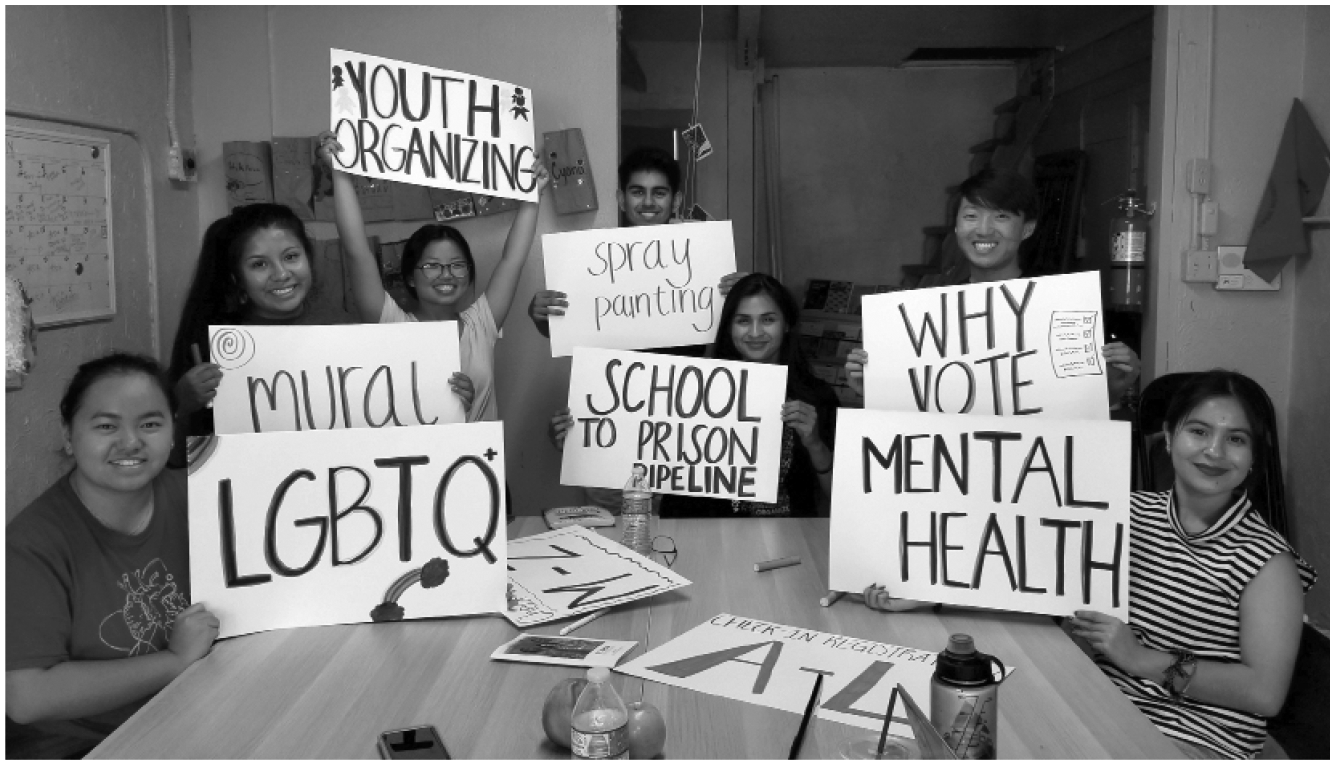
“CVFS was empowering for the youth in my community because we learned about how we could make a difference by voting and getting involved in issues that affect us, like the school to prison pipeline and access to mental health services.” Angelina Santiago (right), Mexican-American UC Santa Cruz student from Atwater.
© Aria Zapata, used with permission
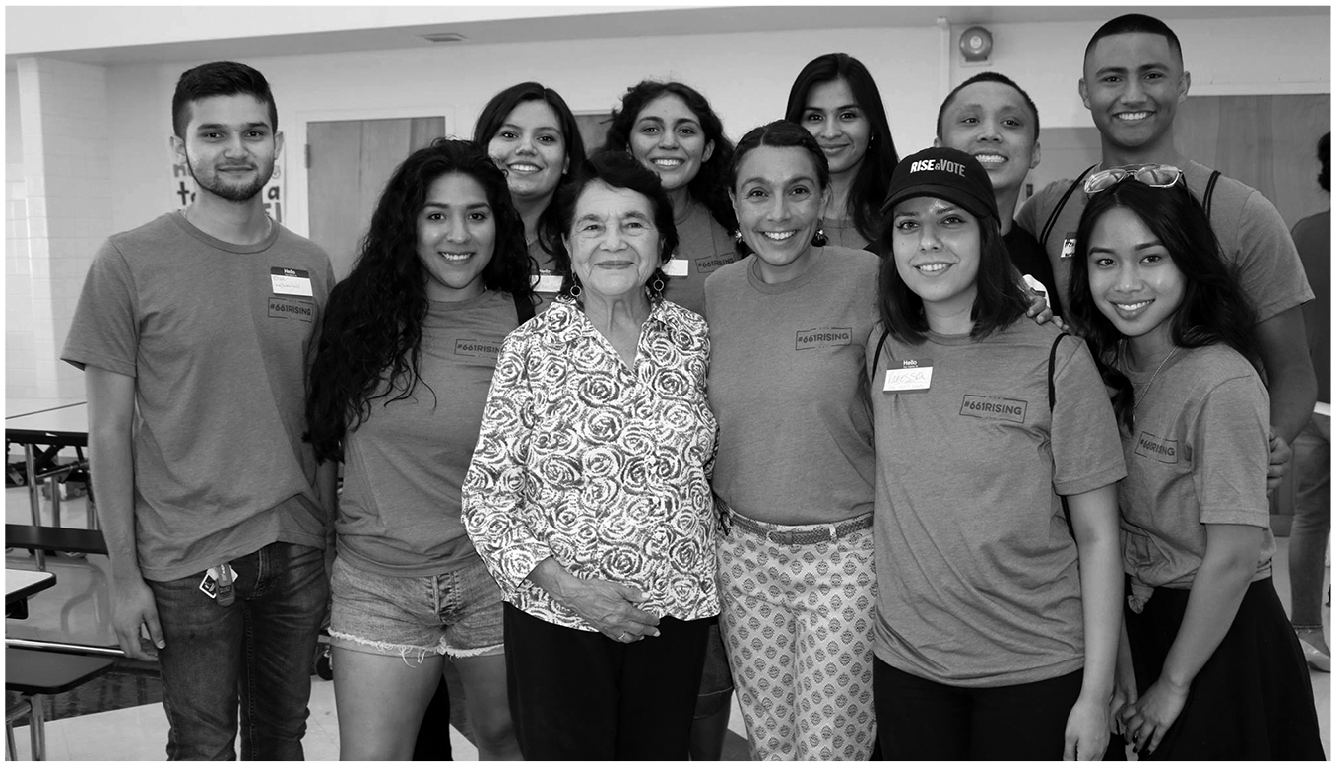
“Dolores Huerta surprised us and showed up to our conference at Delano High School. She gave an inspirational speech that reminded us of why we must continue to fight for change.” Jose Orellana (left), Salvadoran American UC Santa Cruz student from Delano.
© Aria Zapata, used with permission
CVFS students encouraged young participants to share what they learned with broader audiences through social media postings and “artivism”—the production of artwork, murals, and short videos that celebrate youth voice and power. Importantly, these efforts not only targeted eligible young voters; CVFS also targeted critical civics education workshops to those who were not yet 18 (but who could preregister to vote at age 16 per California law), as well as to non-citizens, who have a great deal at stake in elections and who have the power to mobilize others on their behalf.
A third key CVFS element entailed partnering with local grassroots organizations, including 99Rootz; Act for Women and Girls; the Center on Race, Poverty, and the Environment; Mi Familia Vota; Fathers and Families of San Joaquin; Californians for Justice; and the Dolores Huerta Foundation. As novice organizers, students benefited from the mentoring of adult staff who had local connections and understood how to navigate the political landscape. Community organizations also offered students meeting spaces, professional development, and networking opportunities that advanced their efforts. These organizations sought to help counter the “brain drain” of educated individuals who leave the Central Valley for career options elsewhere by exposing students to potential future employers. Additionally, the grassroots organizations worked to sustain the engagement of newly activated youth beyond the summer as they mobilized young voters for the November election.
Participatory action research comprised the fourth key CVFS element. Students—all of whom received research training through required coursework at their respective universities—kept logs of their work, took field notes that described and critically analyzed their efforts, and tracked lessons learned for future replication. Over the course of several months, students registered over 4,000 voters and involved 578 individuals in intensive leadership conferences and artivism activities. The participatory research conducted by the students during this period documents the hard work and problem solving required to effectively engage and conduct civics education in semi-rural and other communities that lack a history of student activism. Youth constituents were sometimes skeptical of CVFS leaders’ claims that change is possible. It took persistence to gain buy-in from some adult allies. For example, even though the state education code permits non-partisan groups to conduct voter registration on high school campuses, high school administrators and staff were at times wary of voter education and registration drives on school grounds. In fact, some schools in Kern, Tulare, Kings, Stanislaus, and San Joaquin counties initially blocked their alumni from conducting voter outreach on campus. In response, students in Delano and Stockton, with support from school board member allies, successfully advocated for school board resolutions that encouraged non-partisan voter registration and pre-registration on high school campuses. Participant observation data and related documentation (including the texts of local resolutions) are being incorporated into publications that can guide civics education initiatives in similar contexts.
Building Youth Voice and Power
While their participation makes a difference in the short term, young and passionate volunteers cannot build broad-based support and sustained power among young voters over one summer or election cycle. As the leaders of both the 1964 Freedom Summer project and the 2018 Central Valley Freedom Summer understood, ongoing voter registration and grassroots organizing can help ensure that elected officials and government institutions remain accountable to their constituencies. Additionally, high schools, community colleges, and other local institutions can play a more deliberate role in providing young people with the civic knowledge and skills to take action in ways that advance their communities’ needs. The CVFS participatory action research project evidences possibilities for promoting low-income youths’ civic engagement and electoral participation using approaches that can be adopted in a range of settings. Given that young people who become politicized at a young age develop a lifelong interest in civic affairs, investing in the civics education of youth in the poorest communities will help ensure that the voices of the most vulnerable are heard as we decide our nation’s future.