Abstract
Emily B. Campbell on using grief to fuel social and political action.
Fatal overdose is a now devastatingly ubiquitous feature of American life. For decades, fatal overdose has increased— claiming over a million lives in the United States since the turn of the millennium. Despite growing attention and resources, deaths have continued to surge, fueled by a drug poisoning crisis, social isolation, and limited access to treatment and harm-reduction options for people who use drugs.
Essayist Susan Sontag writes, “Memory is, achingly, the only relation we have with the dead.” Once someone is gone, our communion with them requires us to reach into the past. But memory is not the only way we commune with the dead. For those lost to fatal drug overdose, and the millions of families and friends they left behind, memory is also a catalyst for action. In this way, their absence is a presence.
Grief, though frequently conceived of as private, is both social and political. It affirms social bonds. It marks what we value. It confesses whom we loved. Philosopher Judith Butler, in her work on “grievable life,” contends that those grieved through national commemorations, monuments, and media features reveal the values of a society and the deceased’s location to social power. In political scientist Benedict Anderson’s seminal Imagined Communities, he characterizes grief as part of the nation-building project, describing the symbolic power of an unmarked soldier’s grave as a deep well of collective identity and nationalism. Butler and Anderson demonstrate grief’s power at the national scale, but what happens at the community level? What about those grieving?
The photographs in this series were taken between 2017 and 2023 in Massachusetts, one of the American states worst hit by the drug overdose crisis. A 2018 survey found that one in four Massachusetts residents knew someone who’d died by overdose, a proportion that has surely grown as each successive year has marked a new grim record. As an ethnographer studying the crisis, I’ve attended community events, forums, support groups, vigils, and rallies, and I’ve formally interviewed 80 people—many of whom lost friends and family to overdose. For them, grief was characterized by social and political action. Their acts of grieving rendered those lost to drug overdose grievable.
On August 31 of each year, mourners and advocates observe International Overdose Awareness Day (IOAD). Started in Australia in 2001, the day has achieved resonance in the United States with hundreds of public events held in all 50 states. In 2022, President Joe Biden declared the last week of August “Overdose Awareness Week.”
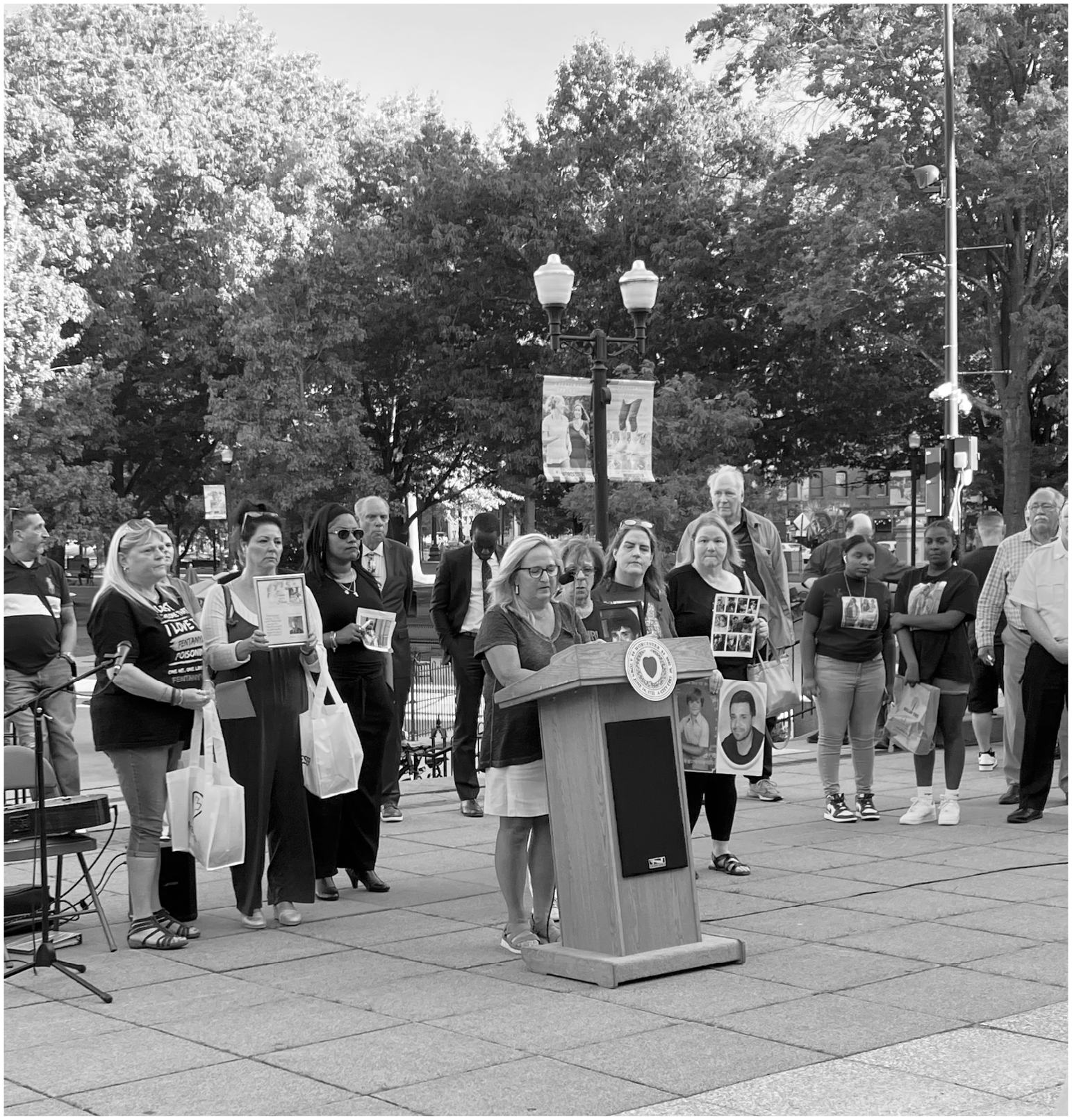
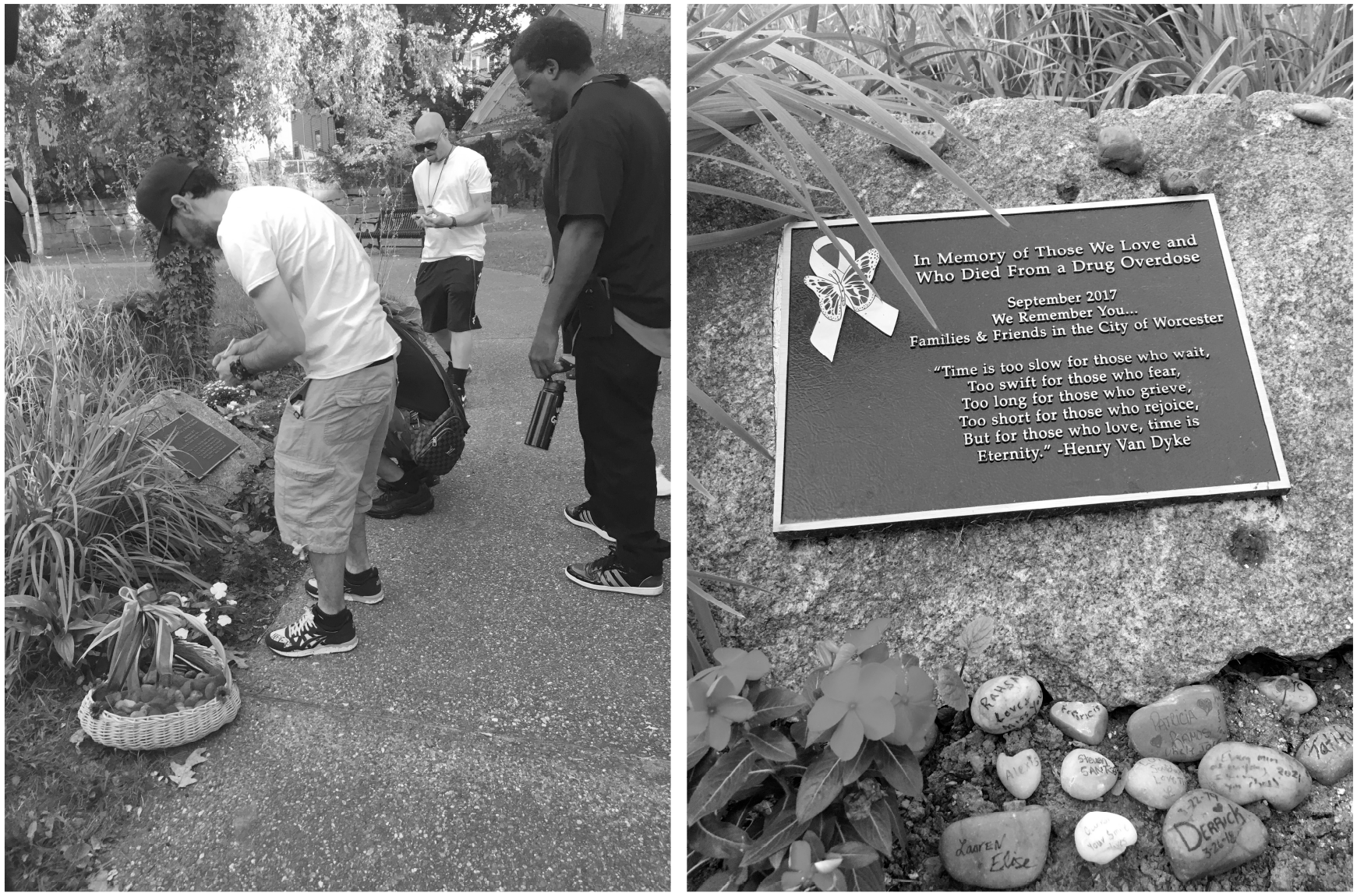
In Worcester, Massachusetts, mourning families, service providers, local politicians, and advocacy groups gathered in front of City Hall for IOAD 2023. A group of women holding photographs of deceased loved ones came forward to offer reflection and memorialization (final photo). Another speaker, harm-reductionist and first-responder Stephen Murray, recounted the pain of telling parents their children had died and the tragic irony of discovering a fatally overdosed person with Narcan (naloxone), the life-saving opioid overdose reversal nasal spray, by their side but with no one there to administer it in time. Of the grief, Murray said, “This simultaneously cripples me and drives me forward.” After speeches, prayers, songs, and a moment of silence with communal candle lighting, people walked nearly a mile downtown to Peace Park—the site of the commemorative plaque “In Memory of Those We Love Who Died of Overdose.” There, led by a rabbi and a priest, mourners marked stones with the names of their deceased loved ones and placed them at the foot of the memorial (the photos on p. 42 show this ceremony in 2021).
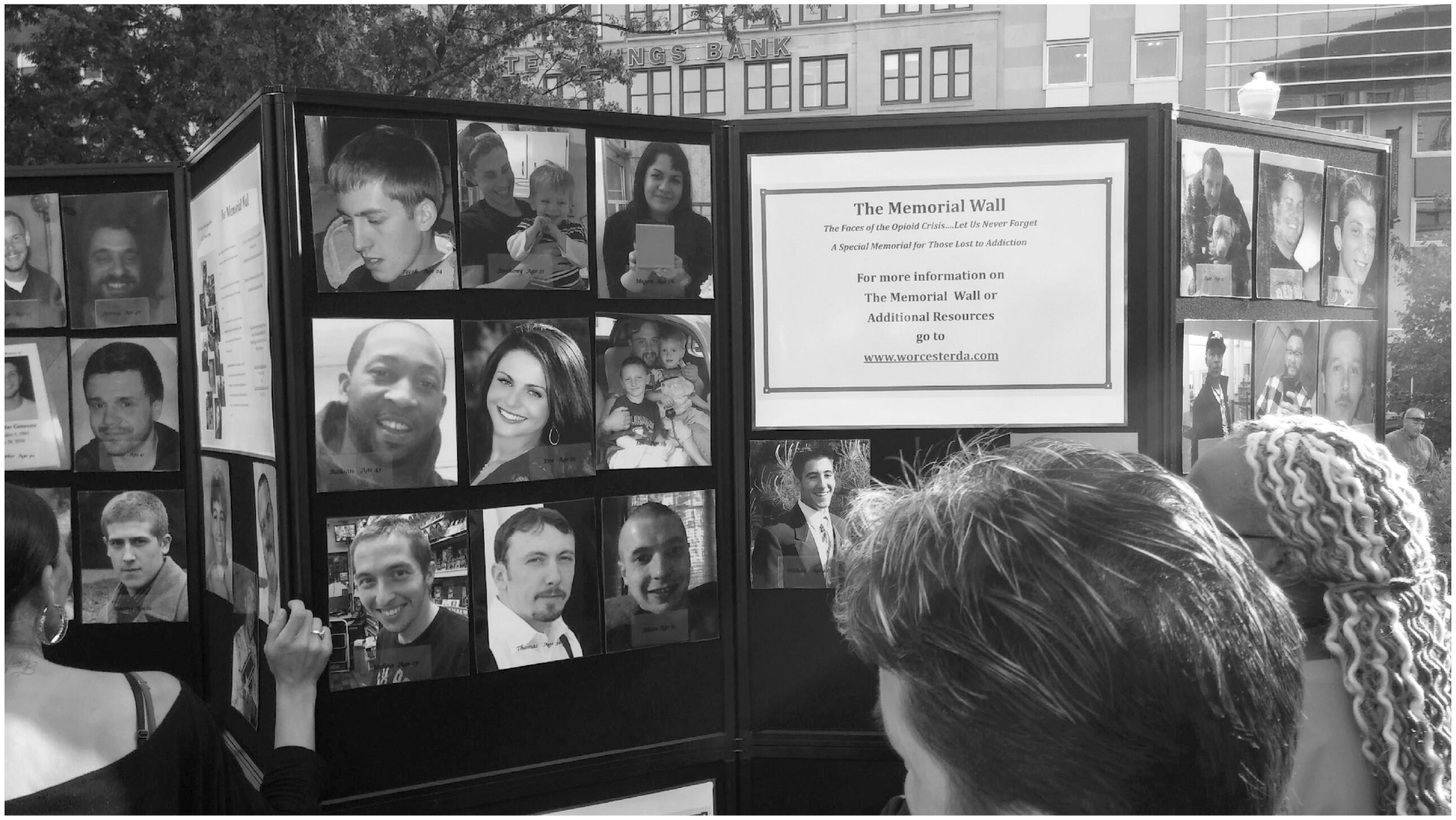
“The Memorial Wall: The Faces of the Opioid Crisis… Let Us Never Forget. A Special Memorial for Those Lost to Addiction,” displayed on International Overdose Awareness Day (IOAD), August 31, 2017 in Worcester, Massachusetts.
All photos © Emily B. Campbell.
Massachusetts has taken steps to ameliorate the crisis, passing Good Samaritan legislation in 2009 (see next page), and rolling out a “never use alone” overdose prevention helpline in 2020 for people to call while taking drugs. The state was the first in the nation to name the Sackler family, owners of now-bankrupt Purdue Pharma, maker of OxyContin, personally in a lawsuit. Families have continued to exert pressure on lawmakers pages 39 (2018) and 40 (2020); show actions in front of the Massachusetts State House. Supervised injection sites, locations that provide health and harm-reduction services and allow people who use drugs to consume under medical supervision, have faced headwinds. Though still pending, Somerville, a city in greater Boston, allocated funds through 2024 to open and run one with the support of harm-reductionists and grieving mothers. This photo essay showcases the work of those grieving, who through memorialization, advocacy, and protest, give overdose death, and in turn, their own lives, new meaning.
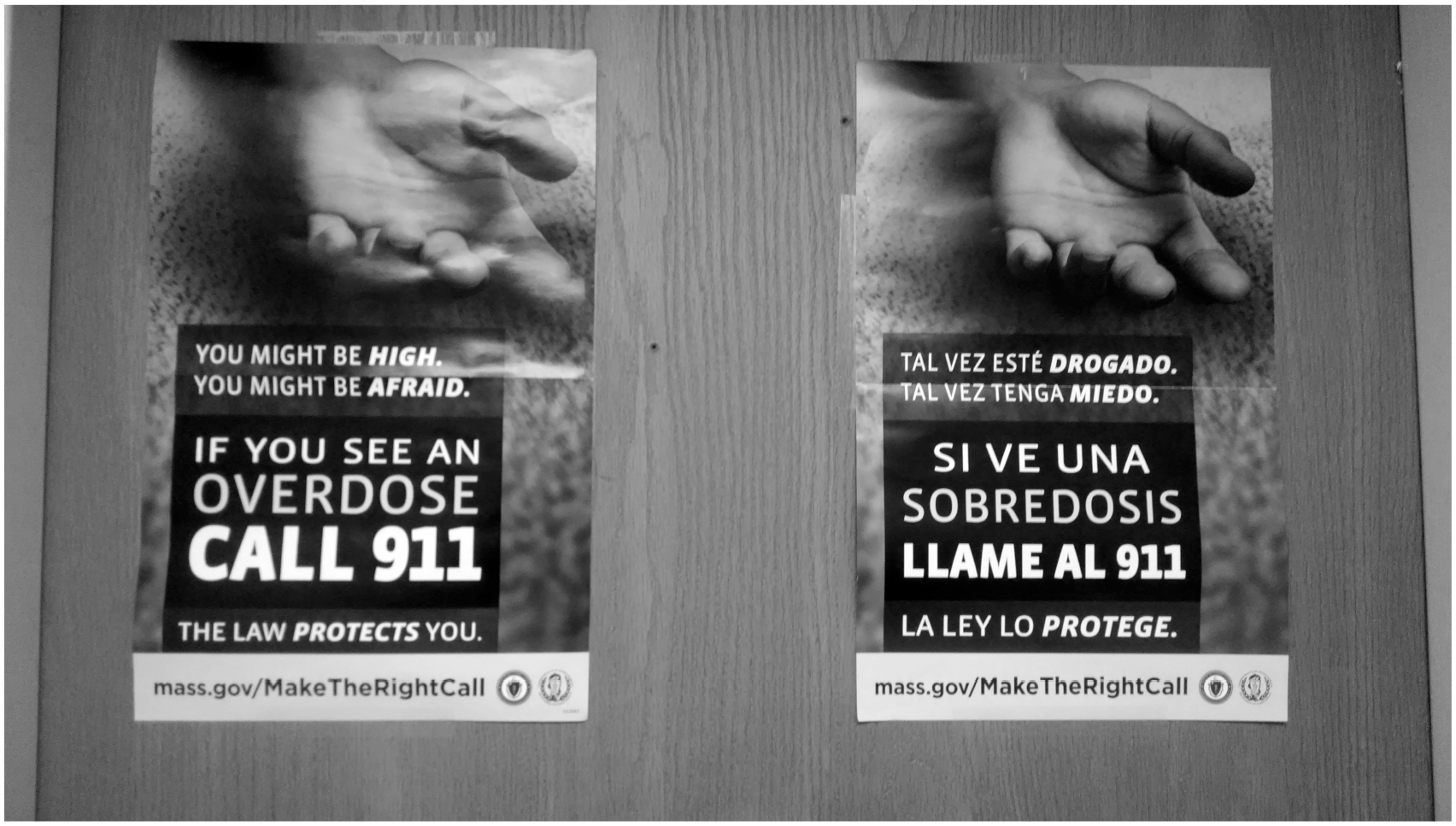
Posters hang in a public bathroom in Worcester, Massachusetts, June 29, 2017. Opioid overdose can be reversed with the administration of nasal spray Narcan (naloxone) and CPR. Many overdoses turn fatal because those present don’t have Narcan and/or don’t call 911 out of fear of arrest. To remedy this, a host of states, including Massachusetts, have introduced “Good Samaritan Laws” that shield those who call 911 from criminal prosecution. Due to the long history of drug criminalization, results have been mixed.
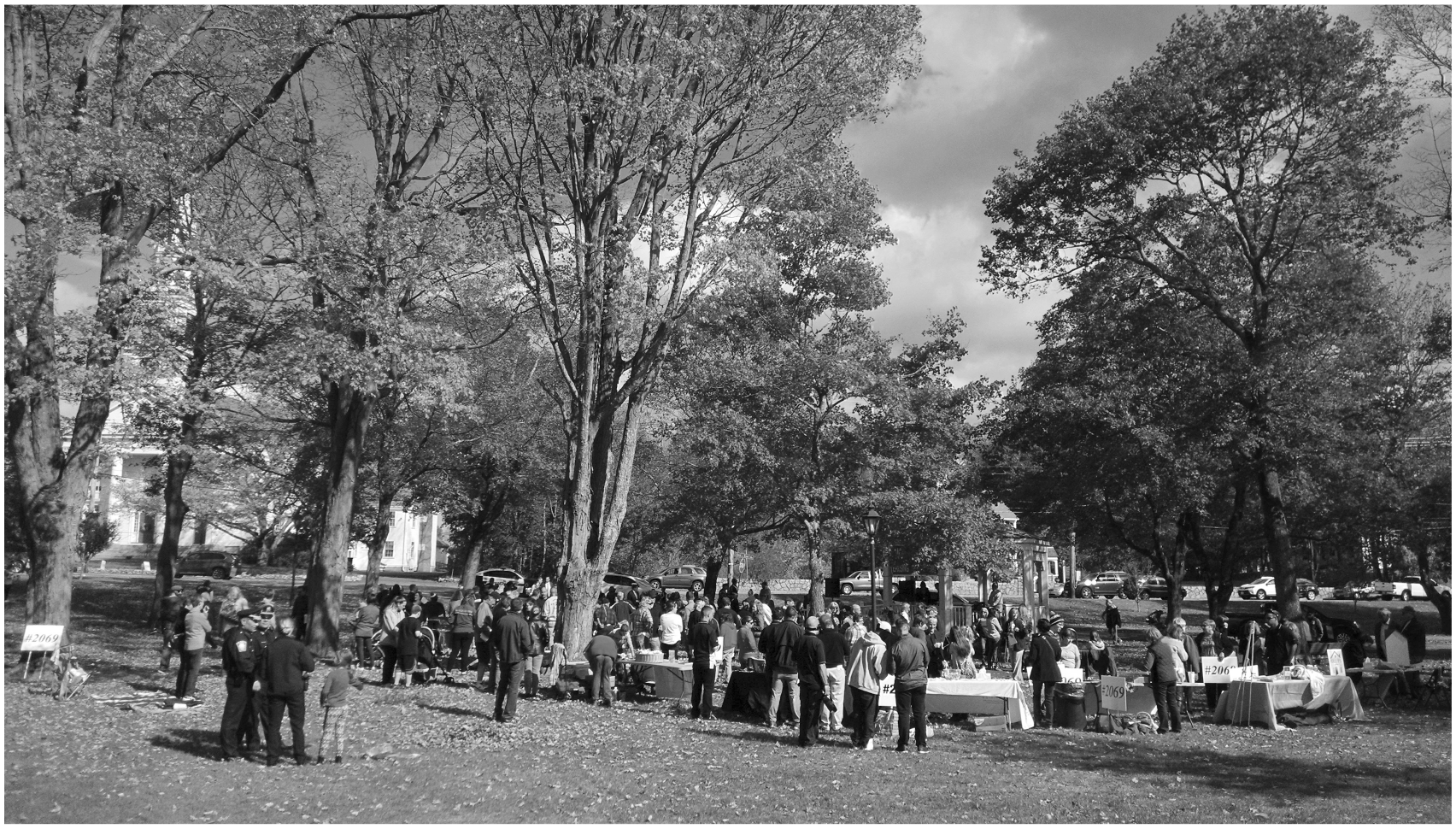
People gather on the town common of Wrentham, Massachusetts for a rally, “No Shame: Erasing the Stigma,” led by the #2069 campaign on October 28, 2017. The campaign was launched by Trinity Episcopal Church of Wrentham after the fatal overdose of a church member and in memory of the 2,069 people who died of overdose in Massachusetts in 2016.
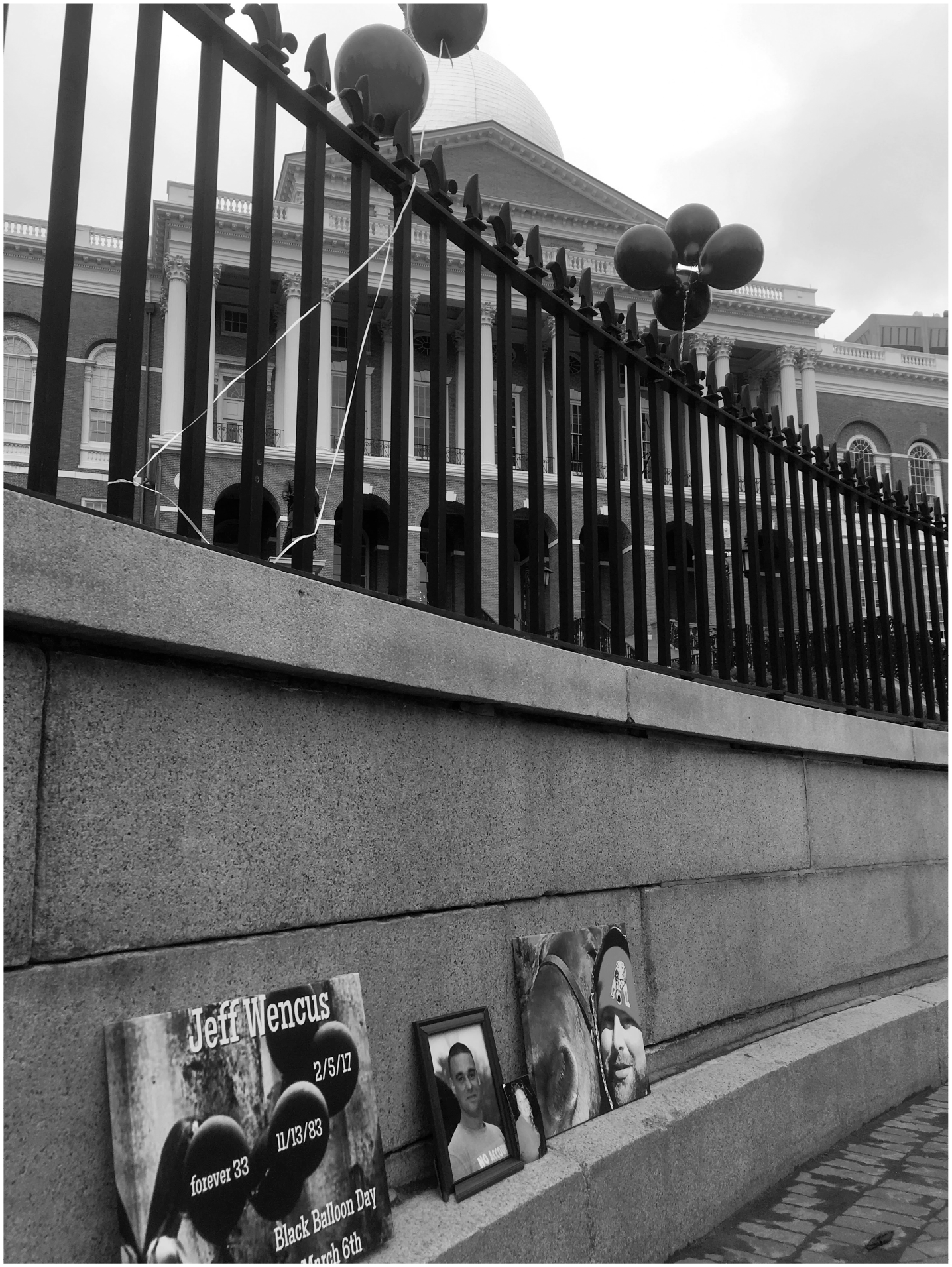
Black balloons and memorial photographs sit in front of the Massachusetts State House in Boston on March 6, 2018. Started in 2016 by a grieving mother and daughter, Black Balloon Day asks those who’ve lost loved ones to fatal overdose to publicly display black balloons in their memory.
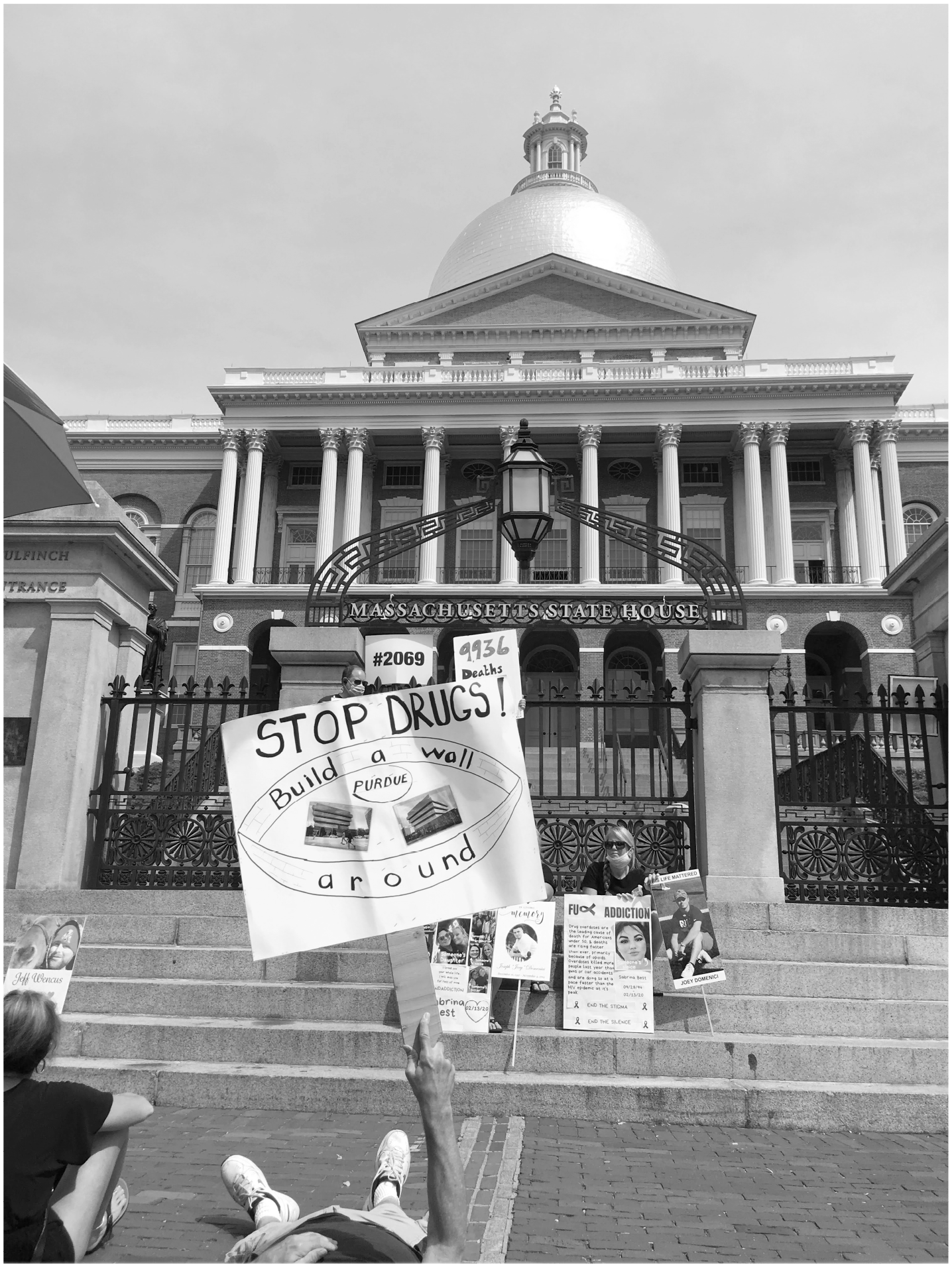
Parents of children lost to overdose protest outside the Massachusetts State House in Boston on July 10, 2020. A father lays on the ground holding a handmade sign that reads, “Stop Drugs! Build a wall around Purdue.” Purdue Pharma, and the Sackler family, have escaped criminal charges–but not public scrutiny–for their role in the overdose crisis. Grieving families have been at the fore of demanding accountability for the company’s deceitful marketing practices. Purdue admitted wrongdoing in a federal lawsuit in 2006. Still under litigation, the Supreme Court blocked a $6 billion settlement that would have given the Sackler family immunity in August 2023.
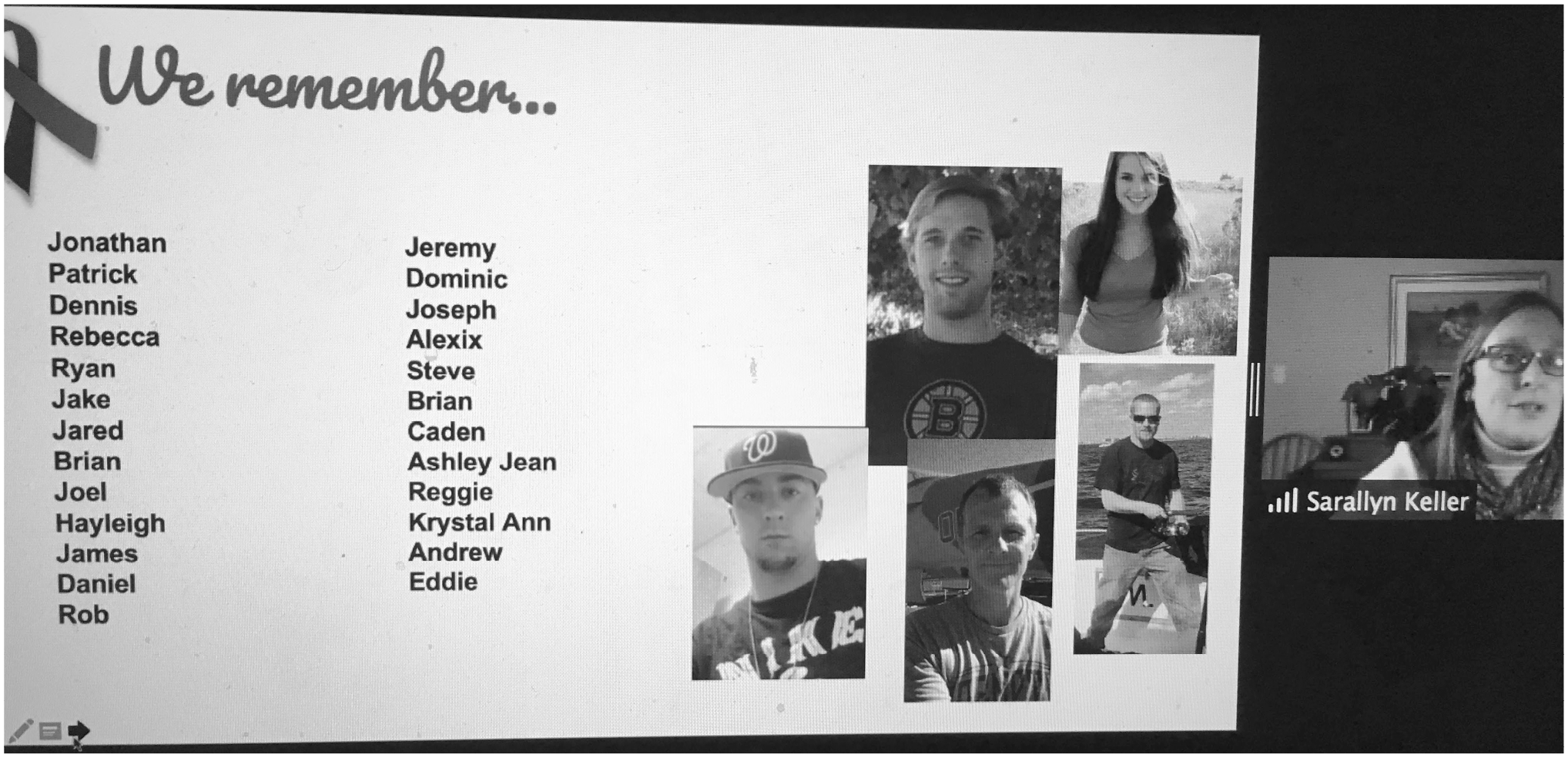
Pastor Sarallyn Keller of the First Congregational Church of Natick, Massachusetts officiates the 7th Annual Natick Interfaith Vigil on December 13, 2020 by reading the names of community members lost to overdose. Faith leaders have offered spiritual solace to grieving community members. During COVID-19 pandemic closures, memorials moved online.
Mourners place stones with the names of deceased loved ones at the foot of an overdose memorial plaque in Peace Park, Worcester, Massachusetts on IOAD August 31, 2021.
Women from the organization Team Sharing memorialize their deceased loved ones on IOAD 2023 in front of City Hall in Worcester, Massachusetts.