




Abstract
Decolonizing sociology, selling broken windows, and yimby politics: New research from the journals.
Yes, Sociology Is Racist, Too
There is no doubt that elitism and power structures exist within the field of sociology. In their 2018 Sociology of Race and Ethnicity article, David Brunsma and Jennifer Wyse emphasize the need to divest in the structure of Whiteness in the discipline. Titled “The Possessive Investment in White Sociology,” their work delineates how elitism, power, knowledge production, and race are interconnecting. As marginalized sociologists have noted for years, Brunsma and Wyse write, the production of knowledge and the reproduction of White supremacy are intimately bound.
White sociology treats knowledge production as an objective process, claiming a “value-free” approach. This, in turn, suggests a moral detachment from social issues and reinforces a separation of social activism from social thought. Yet as White sociology decontextualizes its racialized history, Black sociology analyzes race as a fundamental force, challenging racism and oppression by using knowledge as a tool toward freedom and empowerment.
Further, they write, White collective identity and memory is both colonial and forgetful. By supporting White institutions of knowledge production (like the Chicago School) while excluding sites of explicitly Black radical thought (like the Atlanta Sociological Laboratory), White sociology has practiced erasure. White logic and methods are considered “mainstream” scholarship, dominating in graduate departments, high school classes, and the American Sociological Association. This possessive investment in White sociology reproduces racial inequality in publishing and writing via the peer review and citation practices. Thus, Brunsma and Wyse urge sociologists to read, engage with, and cite the work of Black women and other marginalized scholars of color in order to decolonize their discipline.
To fully understand elitism in our own discipline, sociologists must recognize the racialized history of who gets to produce knowledge and why. Without thinking critically about race in scholarship, sociological scholarship holds little actionable value for public policy and discourse. The field must become committed to decolonizing the racist structure of White supremacy and its exclusionary practices.
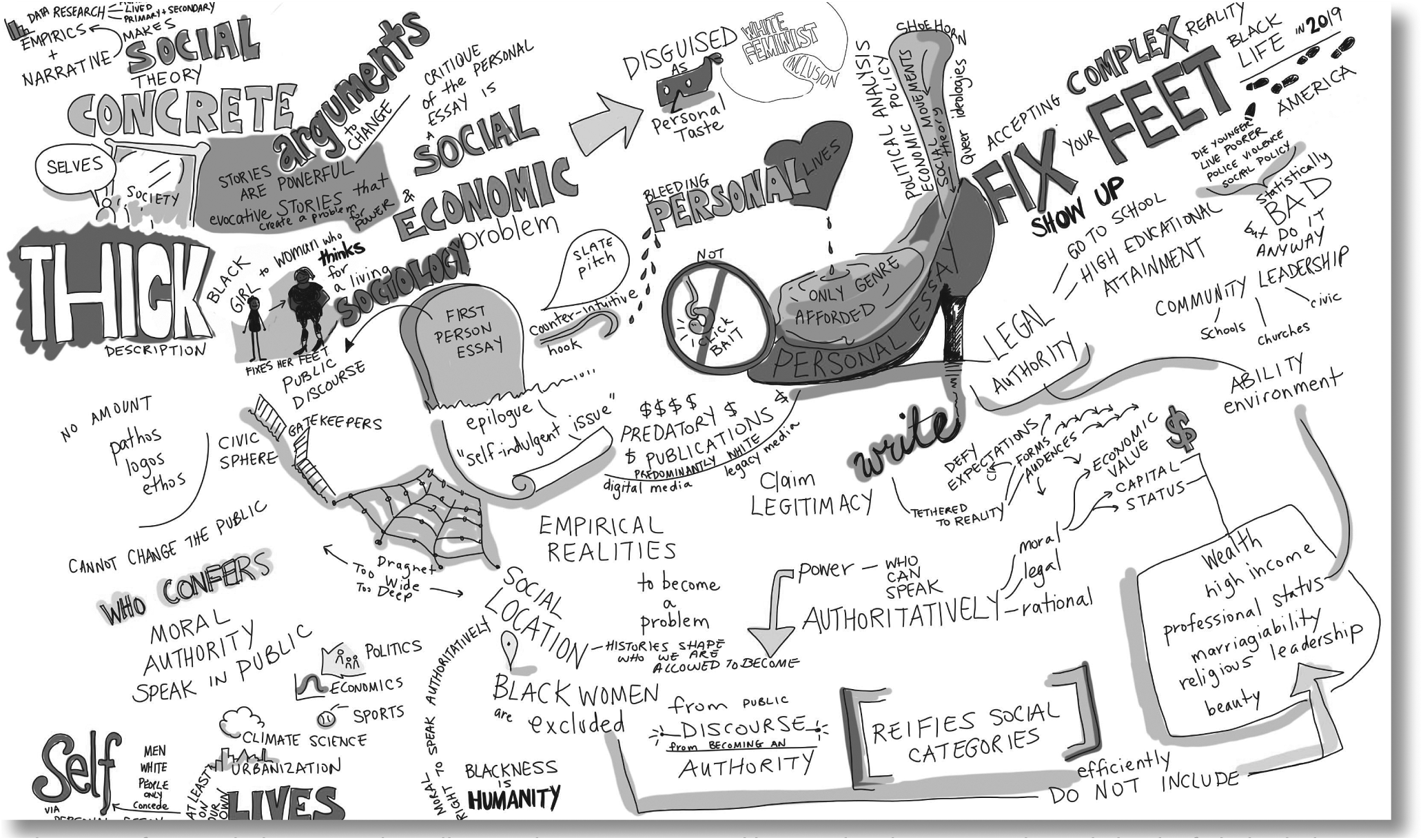
In the spirit of citing Black women, these illustrated notes were created by a student listening to the audiobook of Black scholar Tressie McMillan Cottom’s award-winning Thick.
Giulia Forsythe, Flickr CC
Risk and Resilience on Reservations
American Indian reservations are the result of a brutal history of genocide and forced displacement of Native people by the United States government. Today, American Indian communities face continuing high unemployment, discrimination, and other social conditions that present mental health risks. At the same time, reservation lands may also provide sources of social support that buffer against psychological distress.
How does the length of time living on a reservation affect mental health outcomes among members of American Indian tribes? In Socius, Kimberly R. Huyser and colleagues investigate whether American Indians who have lived most of their lives on reservations are less likely to experience psychological distress than those who have lived off reservations. The researchers use survey data of adult members of two tribal groups—one in the Southwest and one in the Northern Plains—who live on, near, or off reservation lands. They measure psychological distress using a scale on which respondents self-report the frequency of various symptoms of depression or anxiety over the past month.
Women on the Lummi reservation, Washington state.
Don Hamilton for USDA

The results show that those who have lived a vast majority of their lives on reservations are less likely to experience psychological distress than those who live off the reservations at some point. Huyser and her team, analyzing their data, posit that the “tribal-specific social networks” found on the reservations may be a source of positive support and resilience.
Where people live can have important implications for mental health. The authors note that American Indian reservation lands can be a reminder of the trauma of displacement and a site of exposure to ongoing socioeconomic risks that threaten mental health. This research, however, also shows that reservations may be a source of community support that protects psychological wellbeing.
Unintended Consequences
Cleveland protects renters’ access to running water by forcing landlords—none too happy about the situation—to foot the bill. But amid rising water costs, some landlords allege misuse and have begun to shift their housing application screening practices and even consider exiting the rental market.
Wondering what happens when city ordinances designed to protect tenants run up against the dwindling supply of affordable rental housing, Meredith Greif and her research team conducted a two-year study in the Cleveland metropolitan area. The resulting City & Community article draws on interviews with 57 landlords who own small and midsize properties about their perceptions of financial precarity.
Landlords revealed that unemployed tenants were seen as water risks, because they were stereotyped as spending the majority of the day at home using water. Large families made the landlords more wary than smaller families, and many landlords said they believed tenants took advantage of the water regulation, charging friends small fees to use their washing machines or leaving the water running to purposefully raise the bills for landlords.
Nuisance fees, charged by the city for police visits and violations of city regulations, figured into landlords’ calculations, too. Tenants with domestic violence histories were frequently screened out of housing, because it was assumed the police would be called regularly and fines from the city would pile up. Similarly, landlords felt that, under the threat of fines, they must increase their surveillance of tenants, regularly checking on tenants’ recycling and car-washing behavior to ensure compliance with leases and city regulations.
Many city ordinances are designed to protect vulnerable tenants by encouraging landlords to maintain their properties and preventing the denial of basic services like water. But the ordinances have also increased landlords’ perceptions of financial precarity, leading to new, often onerous screening policies that curtail the housing options available to already vulnerable tenants.
Color-Blindness Wrapped with a White Bow
J.D. Vance’s Hillbilly Elegy, a memoir of a poor, White, Appalachian upbringing, focused on a social location and identity that are particularly pressing under the Trump administration. In Sociology of Race and Ethnicity, W. Carson Byrd conducts a theoretical case study of the book, which has achieved wide-reaching notoriety since its 2016 release. In particular, Byrd interrogates how Vance’s use of color-blind framing and White ignorance (the purposeful position of ignorance toward issues of racial inequality) makes his account palatable to Whites, despite targeting a segment of Whites.
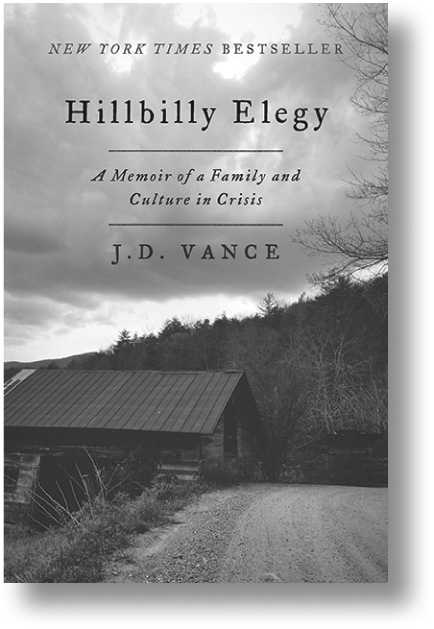
Byrd argues that Vance’s book gained acceptance by presenting racial inequality as the natural result of blending genetic determinism and racial essentialism. Vance even adopts culture of poverty explanations for the position of Appalachian Whites that mimic those used to stereotype inner-city Blacks (since at least the Moynihan Report). Byrd also highlights that Vance explicitly asks readers to avoid using a racial lens as they interpret his story. Combined with its focus on micro-level explanations for pathological behaviors and inequality, Hillbilly Elegy effectively erases the racial makeup of Appalachia (making it seem White and homogenous), thus removing race from the equation to allow space for Vance (and readers) to retain their White ignorance.
Pointedly, Byrd warns that Vance’s color-blind accounts of the plight of Appalachian Whites paint both intraracial and interracial inequality as inevitable by sensationalizing and giving legitimacy to racist and biodeterminist explanations of inequality. Byrd is critical, too, of how rewarding this book and other accounts that are similarly dismissive about structural solutions could negatively impact efforts toward systematic analyses of and potential policy remedies for inequality.
Consuming Diversity in Oregon
There is a mismatch between White attitudes toward racial diversity and equality and the actions and policies they support. Ashley Woody’s recent Sociology of Race & Ethnicity article looks at how Whites enroll their children into a bilingual Spanish immersion elementary school in Oregon to enact selective consumption while excluding the school’s Latinx parents and children.
Consumptive contact describes the intergroup relationships between Whites and non-Whites when Whites perceive a material advantage from social and spatial contact with non-Whites. With that in mind, Woody uses in-depth interviews with parents to glean how these White parents reap the material benefits of their children attending a bilingual school. Diversity becomes a commodity that White parents consume to give their children an “edge” in a globalizing world in which knowing multiple languages is seen as a bonus and interacting with people from different cultures is an everyday occurrence. White parents even cited these material benefits and the value they place on diversity as their main reasons for sending their children to the immersion school. They did not, however, center the inclusion of marginalized Latinx families—which Woody asserts is because, in order to benefit from diversity, White parents must maintain their power and resources through segregation. So, for instance, Woody’s White respondents did not support the busing program, felt resentful that the school’s principal was Latino, and were resistant to the principal’s race-conscious decisions and authority. Parents of color, on the other hand, enrolled their children in the immersion school thinking it would be a safe space promoting cultural connection, only later becoming deeply aware of the racial segregation in the school.
Students with their teacher at a Spanish-language immersion school in the Pacific Northwest.
Rosie Rodriguez, Flickr CC

The paradox of White parents celebrating diversity while making no efforts to integrate non-White parents and students into their social and institutional space, appears to be the result of boundary-making. White norms, social networks, and material privileges must be preserved—and those boundaries are established by pushing back against non-Whites.
Binding Neighborhoods through Co-offending Networks
What explains the unequal distribution of crime across city neighborhoods? Labels are often designated to high-crime neighborhoods and the people who call them home. Countering this notion in the American Journal of Sociology, Andrew V. Papachristos and Sara Bastomski contend that city neighborhood crime is connected through an unobserved network. That is, even if neighborhoods are seemingly unconnected, the authors observe crime’s spread from one neighborhood to another. They find that patterns of co-arrest create a network that transcends neighborhoods’ geographic and social boundaries.
Chris Yarzab, Flickr CC

The researchers use data from surveys of youth and their primary caregivers, the U.S. Census, and the Chicago Police Department to examine the diffusion of crime in Chicago to determine if micro-interactions, such as co-offending, contribute to the diffusion of crime. Co-offending is measured as an instance in which two or more people are arrested by the police for a single offense. To test how co-offending contributes to neighborhood crime patterns, the authors assess such co-arrest events and whether these create a network across neighborhoods. Then, they determine the explanations of co-offense tie formation and sustainment and, finally, test to see whether co-arrest networks predict neighborhood crime patterns better than geographic proximity.
Papachristos and Bastomski find that co-offending networks bind urban neighborhoods in a manner that is made apparent by crime and that crime diffusion patterns persist, even when the individuals who commit crime change over time.
Selling Broken Windows
In 2015, it was announced that the Obama Presidential Center would be built on the South Side of Chicago, the adopted home of former President Barack Obama. Many South Siders expressed joy about this symbolic act, though many also expressed fear that it would mean an exacerbation of gentrification and the resulting displacement of long-standing residents. Others saw the placement of the Obama Center in a “socially disorganized” neighborhood as a welcome investment in an otherwise deteriorating Black neighborhood. In a new article in City & Community, Jeffrey Nathaniel Parker examines the relationship between physical disorder and the process of gentrification.
Travis Swicegood, Flickr CC

Parker’s qualitative study with two groups in the Woodlawn neighborhood brought him into community meetings and neighborhood observations. He also conducted surveys as he interviewed parents, mostly mothers of young children, merchants, and other neighborhood stakeholders. His findings indicated that the two groups interpreted signs of physical disorder, such as abandoned buildings and vacant lots, differently, depending on the objects’ reputation with these different groups and people.
Mothers, for example, saw objects like vacant lots as associated with gangs, crime, and disorder—reminders of the neighborhood’s problems and what it no longer had, while merchants talked about them as potentially lucrative sites for investment. Particularly, many in Woodlawn spoke about how the negative reputation of the neighborhood could be financially exploited by a small number of stakeholders working within it. This article provides a new way of thinking about “traditional” objects of physical disorder by pointing out the people who stand to gain from such sites.
Frack Yes
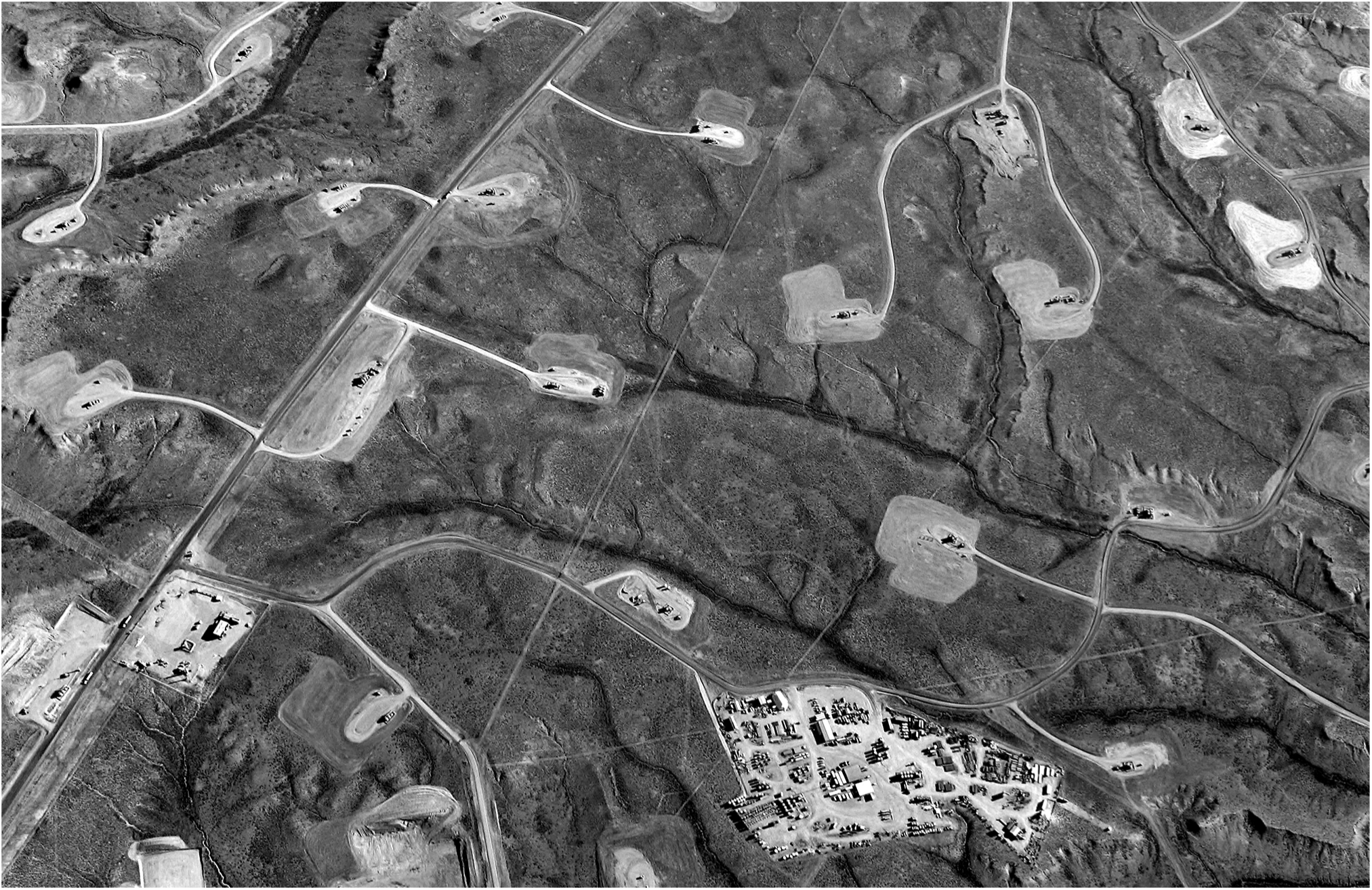
Why do some communities support, and even welcome, disruptive energy industries? Practices such as fracking, drilling underground to extract oil or natural gas, can have extreme environmental impacts, so scholars and activists generally define them as unwanted. Literature has focused on “Not in My Backyard” (NIMBY) mobilization in which privileged communities organize against such dangerous industries, forcing them into more marginalized communities. In the American Journal of Sociology, Colin Jerolmack and Edward T. Walker examine a rural Pennsylvania community where residents welcomed the “unwanted” fracking industry.
Communities like these are typically portrayed as lacking mobilization against such projects, but Jerolmack and Walker find “quiet mobilization” in favor of the industries instead. Rather than using contentious tactics typically associated with mobilization, residents act within the norms of their community to meet political goals. By attending community meetings, joining interest groups, and privately expressing their support, these residents effectively mobilized to attract fracking to their region.
Fracking both promised economic benefits and aligned with the residents’ individualistic political ideologies. Even if they did not personally benefit from or would be harmed by it, residents saw fracking as benefiting the community as a whole. They supported it in solidarity with neighbors, rather than aligning with anti-fracking activists who were viewed as “liberal urban outsiders.”
While these actions might be viewed as an outlier to “Not in My Backyard” politics, such an analysis overlooks the situationally defined desirability of risky industries: What is unwanted by one community is seen as a benefit to another. Jerolmack and Walker’s research reframes a central research question by pointing out that it may be unfair to ask why some communities welcome “unwanted” industries, because they never defined those industries as “unwanted” in the first place.
Jonah Oil and Gas fracking sites in Wyoming.
EcoFlight, ecoflight.zenfolio.com
Health and Romantic Union Dissolution
Poor health is associated with an increased likelihood of romantic union dissolution. But it is still questionable whether this association is gendered and whether married and cohabiting couples are influenced in the same way. In a recent issue of Journal of Health and Social Behavior, Christine Percheski and Jess M. Meyer study these questions among married and cohabiting couples with young children. They divide the question into three parts. First, how are self-rated health, depression, and health-related work limitations associated with union dissolution risk? Second, how do the associations vary according to the marital status of the couple and the gender of the partner with compromised health? Third, does the onset of poor health predict later union dissolution?
Using parental couples from the Fragile Families and Child Well-being Studies, Percheski and Meyer find that poor self-rated health is associated with higher chance of union dissolution only for married mothers and the association between health-related work limitations and union dissolution only holds for married fathers. Developing depression symptoms, over time, predicts a higher chance of dissolution for both mothers and fathers, regardless of their marital status.
Kiersten Smith, Flickr CC

Compared with marriage, the stability of cohabitation is less impacted by poor health. One possible explanation is that cohabitation has weaker institutionalized norms, making the union dynamics less disruptive in the face of poor health. Besides, cohabiting couples may not see dissolution as a necessary way to avoid liability for their partners’ high medical bills. It is also possible that the average duration of cohabiting relationship is too short for poor health to influence dissolution. Gender differences are harder to explain, but the strong influence of work limitation and depression among fathers may owe to gender role norms, gender differences in family responsibilities, and coping behaviors. Policymakers should consider supporting measures that improve population health, especially mental health, as a potential way to bolster family stability.