



Abstract
Capturing belonging as a dynamic social process for Asian Americans in the historically White rural United States.
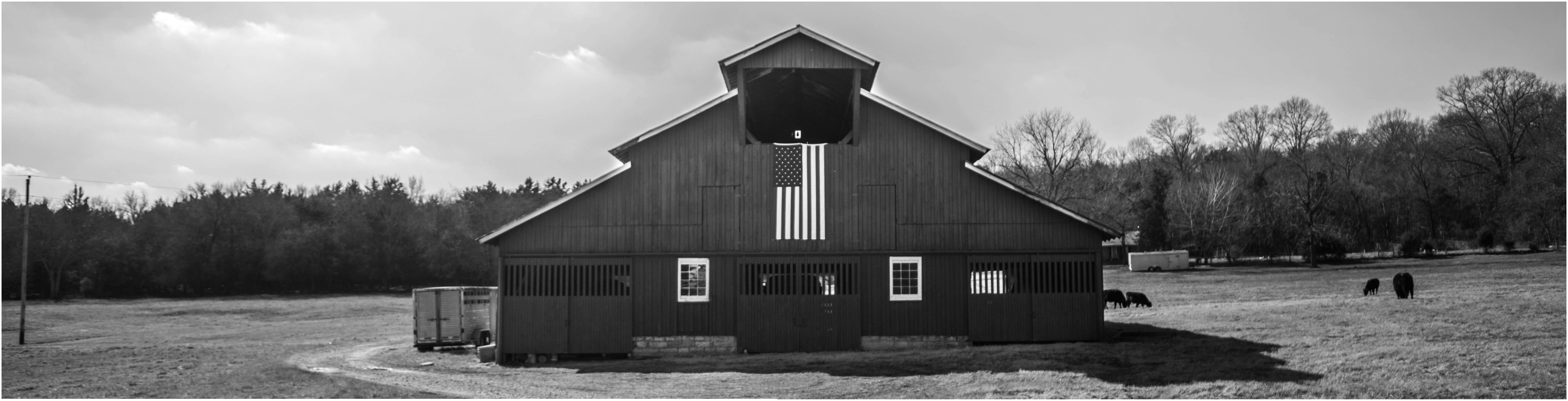
Picturing rural New England, one might conjure an image from a Norman Rockwell painting: rolling green pastures dotted with red barns, steepled white churches, and covered bridges dating back to the Colonial era. When it comes to the Upper Valley, a collection of small towns along the Connecticut River in Vermont and New Hampshire, even today, this image isn’t far from the truth. While the physical place and its institutions have not changed much, the racial demographics of this area have dramatically transformed over the past two decades. Drawn to the area’s unique combination of professional and education opportunities in an idyllic rural setting, Asian Americans are the largest proportion of racialized newcomers in the Upper Valley. As Asian Americans attempt to make the region their home, they encounter a place suffused with a particular White history, a place where local community members’ last names are inscribed on the street signs and where a strong culture of self-reliance is fittingly described by New Hampshire’s state motto “Live Free or Die.”
In my research, I center the voices of Asian Americans as they strive for a sense of belonging in historically White smalltown America, capturing how they make meaning of their daily negotiations of place as visible and stigmatized “outsiders”. I conceptualize belonging not as a state of being, but as the processes related to achieving a sense of home and membership in the community. Belonging is an active and multifaceted process entailing emotions (feelings of belonging), practices (performances of belonging), and structures (policies and institutions enabling or constraining belonging). As a process, belonging occurs as people negotiate claims to space and practice social norms to signal that they are “one of us.” While belonging involves individual emotion and performance, it is also an inherently social process because membership requires legitimation. Migrants facing hostile receptions are often told to “go back home,” received as strangers even as they work so diligently toward belonging and security. Sociologist Pawan Dhingra’s research on Indian American motel owners shows how even middle-class and professional Asian Americans must negotiate belonging within hierarchical racial contexts in which the “master status” of race so often prevents full recognition of their humanity.
Sociologist Mia Tuan raises questions about Asian Americans’ ability to ever fully belong in historically White places. Tuan’s work demonstrates how even after living for two or three generations in the United States, many Asian Americans are still treated as foreign, feeling as if they are “guests in someone’s house,” unable to “really relax and put their feet up on the table.” Similarly, feminist scholar Trinh Thi Minh Hà discusses how Asians are racialized as strangers and aliens in America, often facing a kind of exile and maintaining a “ghost like” presence in White spaces. Ironically, these experiences of marginalization sit alongside a portrayal of Asian Americans as the “model minority” and even “honorary Whites”—signals of a level of acceptance into mainstream society compared to other racialized groups. These multiple understandings of Asian Americans’ social position lead to conflicting expectations about their and their children’s ability to ever call longstanding White rural communities home.
Multiple understandings of Asian Americans’ social position lead to conflicting expectations about their and their children’s ability to ever call longstanding White rural communities home.
My study of belonging in small-town New England sheds light on a little understood, but theoretically important and demographically significant segment of the population while critically pushing the Asian American narrative beyond urban areas in the Pacific Rim. Rural communities may present different challenges compared with urban and suburban gateway experiences, because, compared to the Gemeinschaft in rural places—where socially closed, village-like relationships pre-dominate—urban areas are more disconnected but also more accepting of difference. First-generation Asian Americans settling in traditional urban gateways have also historically resided in immigrant enclaves, which provide emotional and cultural support for those shut out from the American mainstream. A step closer to small towns, Willow Lung-Amam’s research on Asian Americans’ growing suburban presence reveals the sometimes vitriolic pushback in which Asian Americans are characterized as “trespassing” in White suburban space and engender a sense of threat among longstanding residents, who subsequently constrain their expressions of Asian ethnic identity in residential and institutional spaces. Because of its geographic isolation and long-established White history, the Upper Valley exhibits even more social closure than White suburbia; community boundaries are enforced to monopolize resources for one group.
The Upper Valley can genuinely feel like a Norman Rockwell, Americana-style pastoral—and, as in those paintings, it can be hard to imagine let alone forge an Asian identity within its communities.
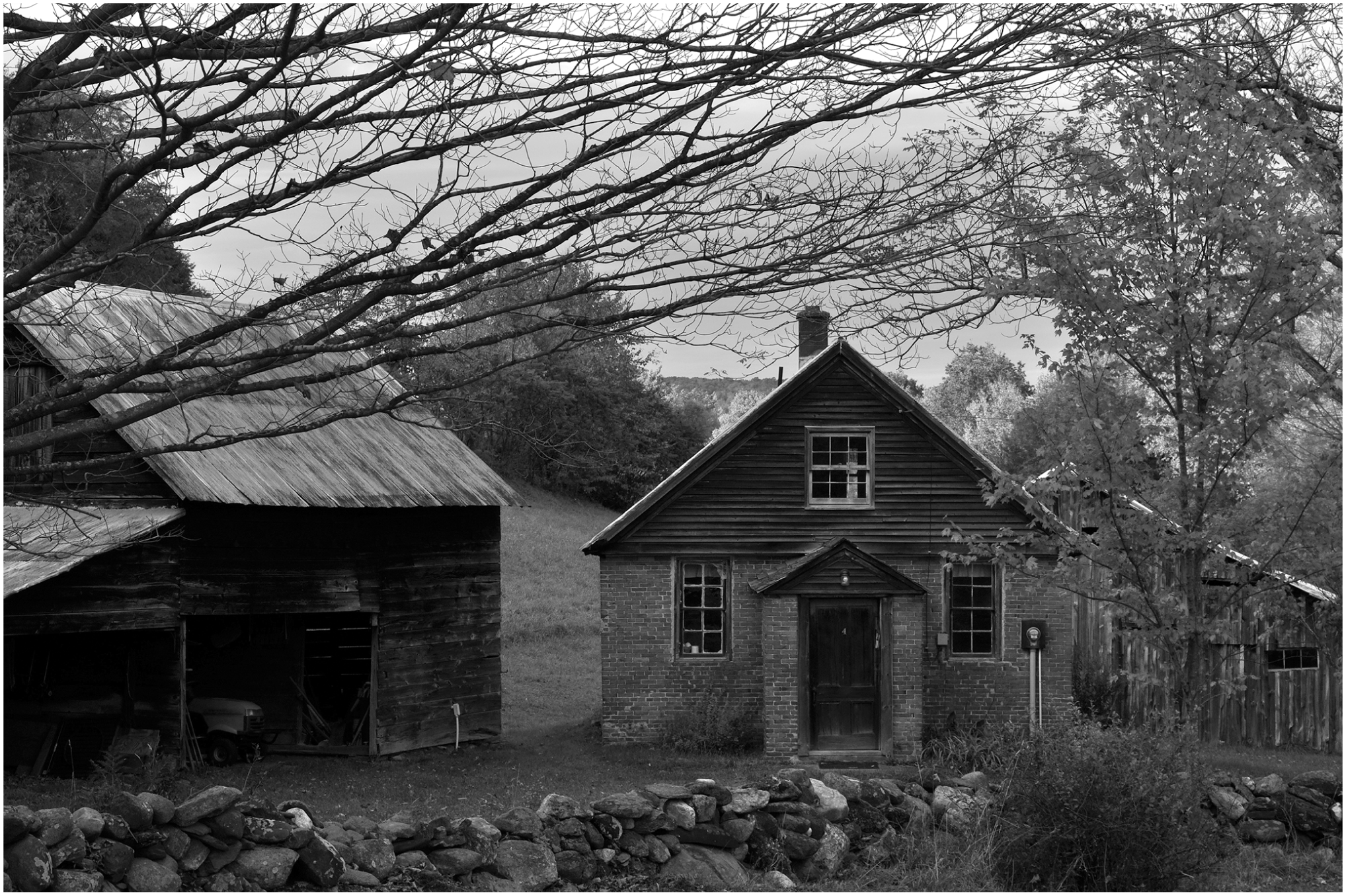
putneypics, Flickr CC
My interviews reveal, too, how Asian Americans’ hopes of belonging to their small town communities in the Upper Valley are dashed as local people treat them with indifference (at best) and rejection (at worst). Despite obvious demographic change, the racial status quo heavily privileges White identity. Even still, desiring the comfort of home and its attendant sense of humanity, the Asian Americans I spoke with are crafting strategies to reimagine belonging.
Feeling like Guests: Stigma and Exclusion
Every single individual I interviewed expressed feeling “different” in these rural towns because they were Asian American. For these respondents, factors such as language, phenotype, cultural heritage, and an intolerant and xenophobic national political climate increase the stigma associated with being Asian American.
Many discussed how limited facility with English hampered their relationships with the broader community. Bao, a young Chinese woman, has a master’s degree in environmental management, but since moving to the area two years ago for her husband’s job, she has stayed at home with her children. Bao is bored much of the time, which she attributes to the lack of amenities and her opinion that the Upper Valley is “a place where people come to retire.” She explains how her limited English ability inhibits the development of relationships and relates to her dissatisfaction with her current role as a stay-at-home mother: “I don’t think I’m that type of person to stay at home. I’m not good at it. If you don’t know how to speak English, you can only speak with your family. You can’t talk to your neighbors or other people, and that’s very boring. Sometimes I take my kids outside to the bus or the park, and people say ‘Oh, how cute is your baby!’ and they try to start a conversation. I see a lot of Western people that I know vaguely, but I always forget their names and get them confused.”
Bao’s failure to connect is not rooted in lack of desire on her part or on the part of those in the community who seem interested in reaching out to her, but in her inability to take the relationships to a deeper level without a shared language. Even Xiu, a young Chinese woman who speaks fluent English, described how language ability is a “major hurdle” for her: “I have a hard time making a deep connection with other people. If I can express myself, I am more confident. Sometimes when I hear other people say the things that I want to say, but in a much better way, I feel so awful. When I’m in a larger group I usually just pull back and don’t engage.” Similarly, Saanvi, a middle-aged physician who grew up speaking English in India, described being treated differently when making phone calls to her patients: “Sometimes when they hear my voice, they hang up. So, I call back, and they say, ‘Oh, Doc, I’m sorry. I didn’t hear your voice correctly the first time. I thought it was customer service.’” Saanvi reflected that these types of experiences shake her faith in her ability to ever belong: “Yes, we come from a different country, but we try to be productive, we try to be good citizens, we try to do the right thing, we try to be part of a community. Sometimes I ask myself, why am I still here?” Language-related prejudice has an exclusionary function with regard to social membership in the Upper Valley, and it has made many Asian Americans question their futures in this community.
Another factor inhibiting belonging is phenotype—looking “exotic” and “different”. Rimi recalled: “I was working and [my boss] brought in her daughter. She commented, ‘She has never seen an Indian person. She wanted to come see you.’ That was the most bizarre thing. Her daughter was there to see me, like [I was] this exotic thing. This was ten years ago, and I still remember the feeling.” To protect herself from the way “Brown people” are treated, Rimi has withdrawn from the community over time. “Now, I know not to have eye contact. Don’t smile at random people. You just need to pretend you are busy. Sometimes I go crazy, because I am a very social person. But, I have grown thicker skin.” Years of racial stigma and being treated as an outsider have made Rimi less open to relationships in the broader community. Eswari, a young Indian physician, discussed how her young patients are less able than adults to conceal their prejudice about her phenotypic differences: “I guess they come in expecting someone else. When one patient saw me, he said, ‘[Gasp!] Another Black one.’” Eswari noted that particular patient’s mother was very embarrassed and admonished the child for his lack of decorum, but this encounter was not an isolated experience: “There is no interaction when the local kids are on the playground. My daughter always wants to play with other kids. Like, if they’re on the swing, she will go stand there hoping that someone will [play with her]. But, the kids usually just run away. I used to feel bad, like why are they not playing with her? In Brooklyn, they would just start playing, but here it’s a different approach. I wonder, is it us having a different appearance, or just the kids are not exposed to that? I wonder if they will always feel uncomfortable.”
Eswari sees her children’s exclusion as stemming from local children’s lack of exposure to racial difference. Her experiences also demonstrate how incorporation processes in cities are likely different in small towns. The “coolness” of the city allows for a certain civility and tolerance of others, unlike the more sheltering, but also more closed and demanding, nature of connections in “village” life.
Many interviewees related how their different backgrounds and cultural heritage can inhibit their sense of belonging. Biyu, a young Chinese woman, discussed her lack of connection with co-workers: “The people I work with are just my co-workers—I do not interact with them outside of work. There are certain times I feel like I do not fit in. For example, when people talk about what they do for the holidays, I do not have input. That is not how I grew up, it is not my tradition. We do put up a Christmas tree every year for our son, because we want him to have the things the other kids have. At Thanksgiving, I try to cook a turkey, even though that’s not our favorite food.” Though Biyu felt excluded from the social scene at work, she has tried to familiarize her son with dominant traditions—even overriding her own preferences—so he will not feel different from his classmates.
Incorporation processes are likely different in small towns. The “coolness” of the city allows for a certain civility and tolerance, unlike the more closed and demanding nature of connections in “village” life.
Visaka, a young South Asian woman, described trying to connect with other parents at school: “They just kind of leave me alone. They are more inclined to talk with another White parent than to me in social settings. Part of that could be my experiences growing up are so different. Like with schooling, I learn a lot as I go along. It is hard to just quickly go into the conversation.” Though she speaks perfect English, Visaka’s dissimilar cultural background encumbered her chit-chat with other parents and this small hurdle ultimately resulted in exclusion from their social networks.
Some expressed how the ever more xenophobic national climate increased the stakes for trying to join the community. They feared rejection, but also outright hostility. Just before she moved here, Eswari had an experience that made her anxious about living in rural New England: “I came at a crucial time where the political scenario changed. I had an incident when I had taken a cab. The driver was an Asian guy; I’m not sure where he was from. The people in the van next to us started hurling abuses at him, saying, ‘go back,’ and they were yelling out profanities and making gestures. It concerned me that if this is happening in a place like New York, how was it going to be in New Hampshire?” Eswari said that this racialized incident changed her interpretation of interactions with locals when she arrived in the Upper Valley; she felt that she was not wanted.
Saanvi agreed that the national climate made a big difference in her level of community engagement, particularly because she is Indian and people assume she is Muslim: “After any incident, people generalize and without any reason [South Asians] are getting killed [in retaliation]. We could be in that position. It makes me realize that, yes, they are welcoming, but at the same time they don’t know me, or what my beliefs are, or how I might react to a situation based on just my features. When incidents like those happen, I fear.” The national atmosphere of tolerance for open demonstrations of hatred and violence has shaken Saanvi’s confidence in her local community. Visaka even pointed out how being American-born was not enough to shield her daughter from the xenophobic climate at school: “She feels a lot of it because she actually identifies as American. One day, she came home crying because one of her friends told her Trump is going to build a wall and she is not going to be able to live here any longer.” Visaka already “feels different all the time”, and it was disheartening to learn that her daughter felt the same. Uncertainties about community members’ possible perceptions amid a climate of intolerance makes Asian Americans question whether they or even their American-born children can ever fully belong.
Encountering exclusion, some Asian Americans reimagine belonging by downplaying difference, reaching out to other marginalized people of color, and engaging in concerted education of White community members.
Putting Their Feet Up: Reimagining Belonging
Encountering exclusion from the predominantly White communities in these rural New England towns, yet yearning for the comfort of home and recognition of their full humanity, some Asian Americans reimagine the meaning of “belonging.” They undertake three main strategies: downplaying difference, reaching out to a multiethnic community of marginalized people of color, and engaging in concerted education of White community members.
Adopting a colorblind ideological orientation has allowed some to downplay the significance of their experiences with difference. Shenqing, a middle-aged Chinese man who has lived in the Upper Valley for six years, used a hunting analogy: “For hunting, blending in to the environment is very important—you don’t want the animals to see you. [Blending in] makes me feel so good. You see, I don’t feel any difference fundamentally between people. No matter [if they are] American, Chinese, Thai, or Vietnamese.” For Shenqing, seamlessly fitting in has meant not acknowledging or giving much weight to racial and ethnic differences. Though he experienced some racial prejudice in rural New England—one time, a passing stranger at a hunting show muttered something under his breath about Asians fishing illegally—Shenqing refused to dwell on the initial hurt. He even told me there was a “grain of truth” to the man’s murmur and excused his prejudice as a relatable, universal human trait: “It is very common… Even in China, people in Beijing and Shanghai look down on people from other places. That is understandable. But, my thinking is, don’t emphasize that too much.” Despite Shenqing’s positive outlook and remarkable inroads with the hunting community, he remains judged as an outsider. His perceived sense of belonging in the larger community comes through what sociologist Sunita Patel calls a “racial performance”: downplaying his difference from others.
Another strategy for creating a sense of belonging is to forge strong bonds with other marginalized communities. This worked well for Visaka, whose street has substantial racial and ethnic diversity. She and her neighbors have developed a village culture, often dropping by each other’s homes unannounced. The social support she receives from this diverse neighborhood facilitates Visaka’s self-assurance in the larger the Upper Valley community: “I’m becoming more vocal and confident to speak about my heritage and my culture. Before, I would not share, for example, something I grew up eating because people might think I’m weird. But now, I’m like: No. This is who I am and this is how I was raised.” Eswari has also cultivated ties with a diverse group of friends at work, which has allowed her to partially overcome her initial trepidation about living in this rural setting: “I feel great, because all the [healthcare] fellows are from different places. I’m very close to my friend who is from Turkey, and she tells me that people always look at her because she wears a hijab. And, my other co-fellow is an African American. So, I don’t feel alone, I don’t feel like it’s just me. We can share our experiences. We talk about how we feel isolated in this place.” Lacking large co-ethnic communities, one strategy Asian Americans in rural areas use to make do is joining forces with other marginalized racial and ethnic groups, where shared experiences of exclusion can create a common bond and allow for a sense of belonging.
A final strategy for reimagining belonging comes through concerted education of the White community. Sensing others are probably benignly curious but feel awkward about explicitly noticing difference, some Asian Americans reach out in advance to explain their backgrounds. Before moving to the Upper Valley, Taraki, a middle-aged South Asian man, lived in an even smaller and more isolated town in New Hampshire. He observed that people there were so uncomfortable with his presence that they acted “suspicious” when they met him: “Their first questions were: Who are you? Where are you from? Sometimes they didn’t talk to me. I think they were uncomfortable. So, now I try to reach out to people who feel uncomfortable with me. I tell them a little bit about myself.” Taraki’s preemptive sharing both creates a connection and eases tension Whites might feel about saying the “wrong thing” when it comes to race. Shenqing advocates this sort of education, too: “That’s what I’ve been telling other Chinese people. It is important for us to let others know Chinese more, to get rid of misunderstandings. I was surprised that most people don’t know China and the United States were allies in World War II.” This way of building relationships, by openly revealing one’s background in order to teach the White community about Asian heritage and history, may allow sense of belonging through creation of a shared story.
Achieving a sense of belonging—the processes through which people feel comfortable and at home in a place or with a group—is vital to one’s humanity. While Asian Americans come to the Upper Valley in search of opportunity—to escape the treadmill of the city, educate their children in good public schools, and work in prestigious jobs that provide meaning and wages to support their growing families—they encounter exclusion. My interviews show that Asian Americans in this region have a hard time belonging to the larger, predominantly White, definition of community, because they are unable to discard their identity as “strangers”. Markers of difference, such as language, phenotype, and culture, coupled with an increasingly xenophobic national climate, accentuate their non-White status. As a result they are still “guests in someone’s house.”
In the socially closed context of small town America, how are Asian Americans overcoming exclusion, finding ways to “put their feet up on the table”? The people I interviewed reimagined belonging by minimizing their perceptions and performances of difference; strategically reaching out to a similarly marginalized, multiethnic community; and proactively educating the White community about their backgrounds. But, reimagining belonging is in many ways a double-edged sword: these Asian Americans’ attempts ultimately reinforce and uphold the racial status quo in which Whiteness is the norm. By illuminating how racialized minorities experience and manage belonging in small town America, this study shows that achieving equitable integration into historically segregated rural places remains a pressing national challenge.