



Abstract
Sociologist Angela Frederick argues the legacy of the Eugenics movement persists today. She explores how mothers with disabilities continue to face pervasive threats to their right to parent.
Through The Looking Glass
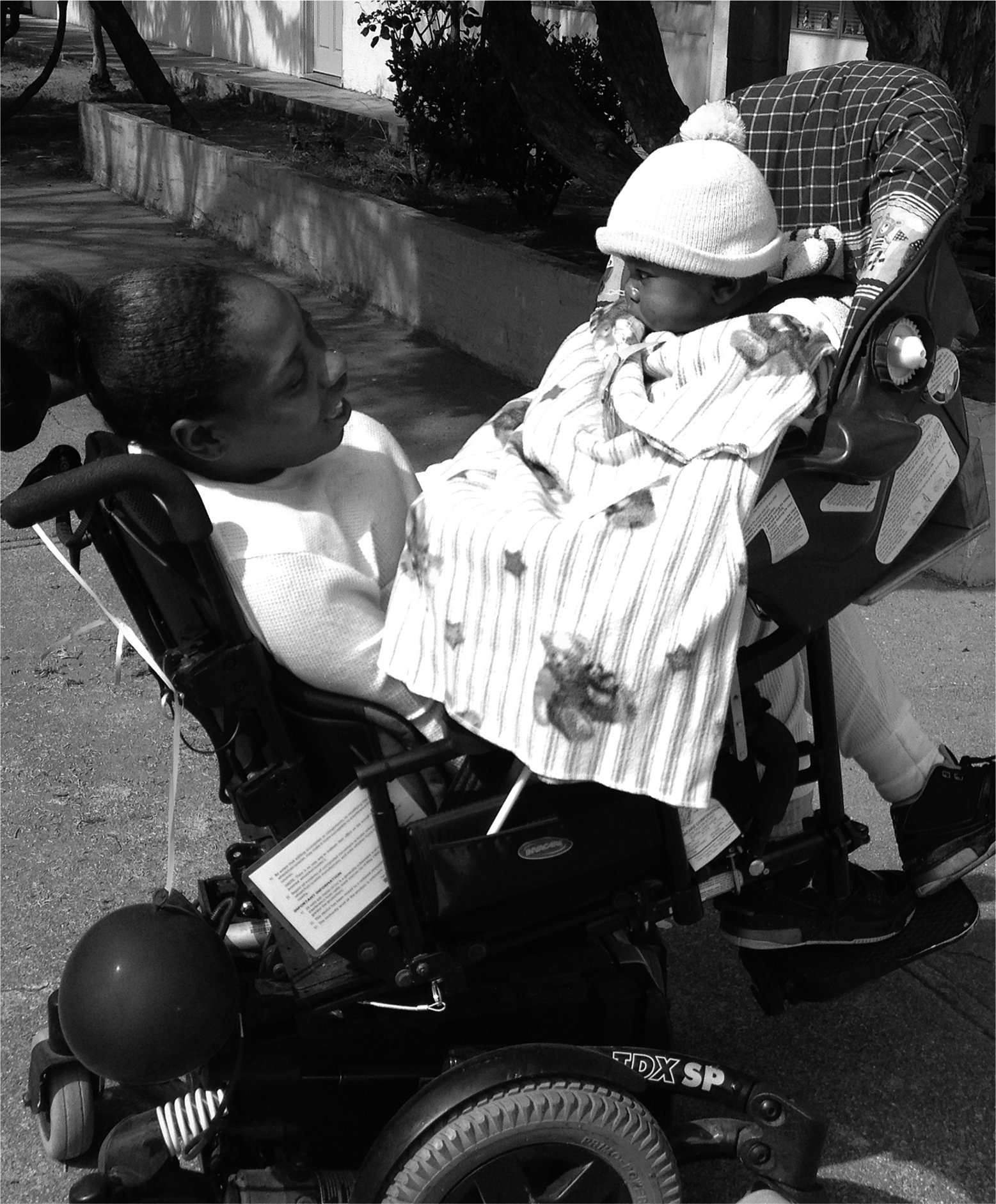
When she was just two days old, Mikaela Sinnett of Kansas City, Missouri, became a ward of the foster care system. The local social services agency took her away from her parents before the family left the hospital. What horrible crime, one might ask, did Mikaela’s parents commit to result in the loss of custody of their newborn daughter? Mikaela’s parents were not guilty of abuse or neglect. Rather, they were blind.
Responding to Mikaela’s mother’s difficulty breastfeeding, a nurse reported the parents to a hospital social worker, setting in motion the bureaucratic machinery of the state’s protective services.
Mikaela’s parents cooperated with the social worker, answering questions about the care they would provide for their newborn. They could take their daughter’s temperature with a talking thermometer; they had access to transportation; and they could take Mikaela to the hospital if she needed immediate medical attention. The one response the social worker wanted, which the parents could not provide, was that someone with sight would be with the child at all times.
According to Erika, Mikaela’s mother, the social worker declared “I can’t in good conscience send this baby home with blind parents.” Erika and her partner were not even allowed to hold their daughter before she was taken into foster care.
It took Mikaela’s parents 57 days to get their daughter back. During this time, Erika and her partner were only allowed to spend two to three hours with their daughter each week, and only with supervision. After two months of court hearings and legal action, child protective services closed the case.
Mikaela is now four years old, but the incident, and the associated trauma, will always be a part of her family history.
I too am a mother—of a two-year-old girl. And I am blind. I followed this story closely as it unfolded. What agony this mother must have endured, I thought, as I read the reportage.
From the moment I contemplated becoming a mother, I began collecting resources and advice on how I would care for my child without sight. As I spoke to other blind mothers, I learned the tricks of the trade: how to track toddlers by pinning bells to their clothes; how to wear babies and pull rather than push strollers to accommodate white canes and guide dogs; how to place tactile markings on syringes to measure medicine.
As a mother with a disability, the chance of being investigated by social services is ominously high.
And I learned much more: that as a mother with a disability, the chance of being investigated by social services is ominously high. “Be prepared,” these women warned me, “You will be visited by a hospital social worker after childbirth.” As a mother, these warnings made me anxious. But as a sociologist I was curious. How much training do social workers and medical professionals receive about disability? What measures are in place to protect mothers with disabilities from discrimination?
A blind mother ties bells to her daughter’s shoes so she knows where she is playing.
Laura Morton

People with disabilities must frequently confront stigmatizing attitudes challenging their right to be in the world, which can have devastating consequences for them and their families.
Legacies of Exclusion
We tend to think of disability as an issue facing a very small segment of the population. In actuality one in five Americans lives with some kind of disability, and one in ten has a severe disability that limits one or more major life activities. Approximately 2.3 million U.S. mothers caring for children have a disability, and almost 10 percent of American children are currently being cared for by a parent with a disability. As historian Kim Nielsen argues, “Disability is not the story of someone else. It is our story, the story of someone we love, the story of who we are or may become, and it is undoubtedly the story of our nation.”
Impairments come in many forms, from physical limitations that limit mobility or stamina, to sensory impairments like blindness or deafness, to cognitive and social disabilities. Some disabilities are easy to identify through one’s appearance or the tools and technology one uses. Other impairments, such as learning or psychiatric disabilities, are invisible, and are not immediately noticeable. Some disabilities involve significant pain or illness. Others do not. Individuals can experience the same impairment in very different ways.
In the 1960s, Americans with disabilities began to cultivate a shared political identity as members of an oppressed group. Activists in the disability rights movement demanded recognition as full citizens with rights to live independently outside of institutions, to access quality education and employment, and to participate fully in their communities free from structural and attitudinal barriers. They argued that disabled people, not professionals or charity organizations, should speak on behalf of their communities.
Armed with new political identities and with the civil rights protections guaranteed by the 1990 Americans with Disabilities Act, disabled Americans are more fully participating in their communities than ever before. Yet, despite this progress, public recognition of the right of people with disabilities to parent has yet to be realized. In fact, Through the Looking Glass, an advocacy organization for parents with disabilities, claims that securing the rights of disabled Americans to parent without unreasonable interference is “the last frontier in disability rights.”
This form of prejudice has been particularly insidious for women with disabilities. During the twentieth century eugenics movement, the state subjected disabled people to forced institutionalization, marriage restriction laws, and compulsory sterilization. Eugenicists primarily targeted women in their efforts to purify the genetic make-up of the population. Justifying their work as necessary to eliminate the danger posed by the “feeble-minded,” the state authorized the forced sterilization of women with a range of disabilities, women believed to be sexually impure, and black, Native-American, and immigrant women.
The legacy of the eugenics movement persists today. Women with disabilities still encounter the widely held belief that they cannot perform motherhood competently and that they will spread “defective genes” by passing their impairments to their children. New cultural values about motherhood, which sociologist Sharon Hays has termed “intensive mothering,” pose particular dilemmas for disabled mothers. Women are now expected to create child-centered homes that shield children from responsibility and hardship.
Jessie, a blind mother, uses a modified stroller and guide dog to safely navigate the subway with her three-year-old child.
Laura Morton

Mothers are expected to devote ample amounts of money, time, and energy to nurturing and overseeing their children’s development. Disabled women pose a threat to the intensive mothering ethos as they can make visible the realities of imperfection, risk, and even pain and suffering—the very hardships from which mothers are now expected to shield their children.
The Child Welfare System and Disability
Safety is the word most often used to question the rights of disabled mothers. After all, how can the human rights of people with disabilities stack up against the public concern for children’s safety? Mothers with disabilities come from all walks of life. They have the same wide range of parenting skills and personal strengths and weaknesses found in the broader community. They experience the same wide range of privileges and hardships as the general population. Some are model parents. Some are not. And, yes, some do abuse and neglect their children.
In cases in which the mother has a disability, however, her status is often used as a proxy for real evidence that she cannot adequately care for her children. Disability communities and advocacy organizations like Through the Looking Glass have a wealth of knowledge about the strategies parents with various disabilities employ to successfully care for children. Frequently, however, the state launches investigations and makes custody determinations without considering these options.
Parents with disabilities often do face barriers, including higher rates of unemployment and poverty, lack of access to transportation, and diminished access to quality healthcare.
They encounter the belief that they cannot perform motherhood competently, or that they will pass their impairments to their children.
Yet, despite these challenges, research shows that these parents are still no more likely to harm their children than parents without disabilities. In other words, parents’ disability status is a poor predictor of child maltreatment. According to Paul Preston, anthropologist and director of the National Center for Parents with Disabilities and Their Families, “The vast majority of children of disabled parents have been shown to have typical development and functioning and often enhanced life perspectives and skills.”
While we can be deeply moved by media accounts of extreme cases of child abuse and child welfare system’s failure to protect children from harm, it is important to remember that these severe cases of abuse actually represent only a small proportion of child welfare cases. Most parents who are involved with child protective services are accused of neglect rather than abuse, and decisions about their cases often entail highly subjective assessments.
In her book Fixing Families, sociologist Jennifer Reich presents findings from observations of child welfare investigations and court hearings. She found that parents’ attitude toward state workers had the biggest impact on case determinations, not the severity of abuse or neglect. Those who acknowledged their shortcomings, and who expressed remorse and deferred to social workers, were more likely to be permitted to keep their children than those who displayed anger and resistance.
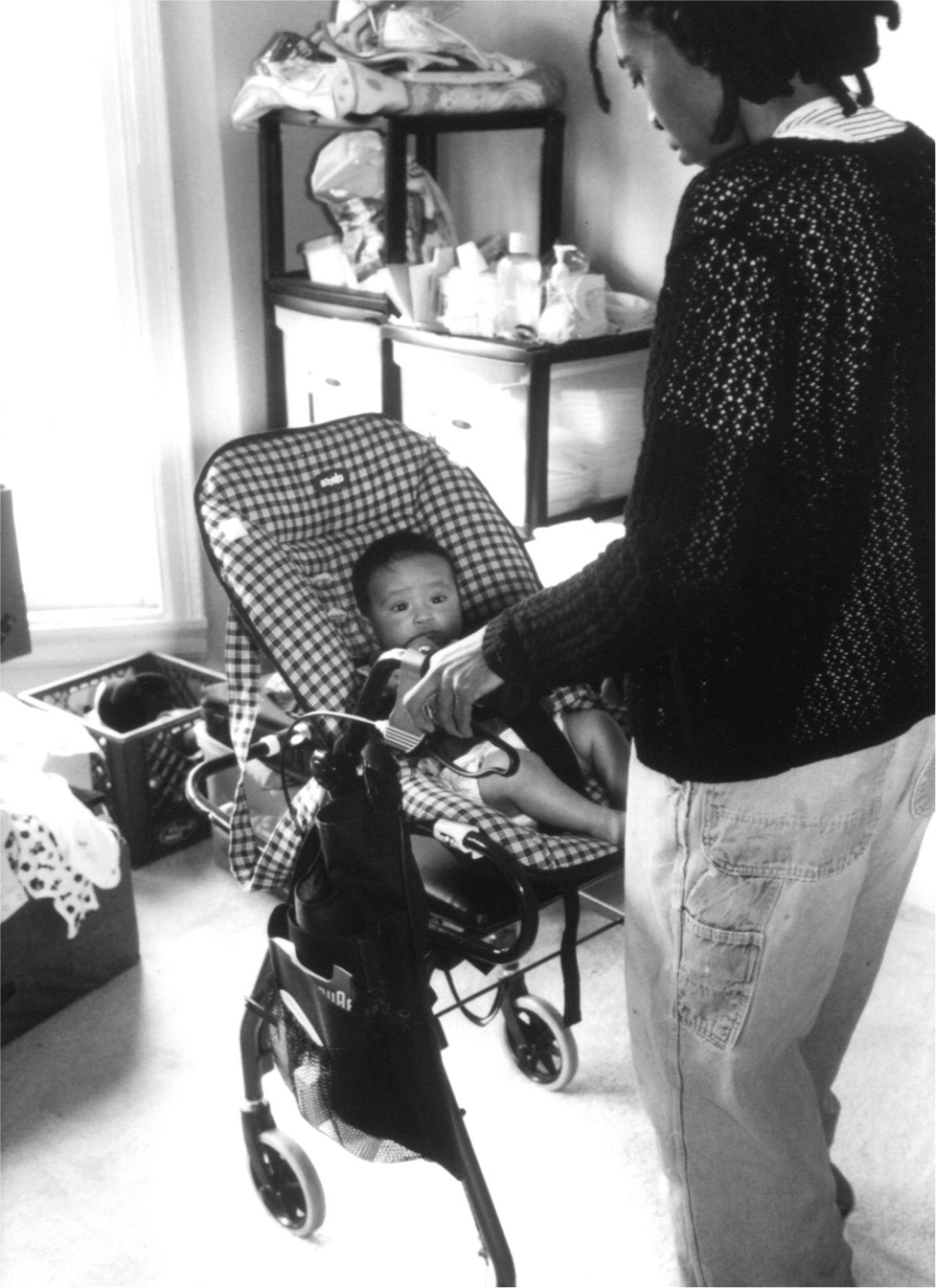
Child carriers can be modified to accommodate both wheelchairs and walkers.
Hunter Lewis Wimmer
Reich reflects on how this research changed her. “Rather than feeling outrage and disgust with bad parents, I instead can more easily imagine how it would feel as a parent to have the state’s gaze upon me,” she says. “I have learned what the public gaze feels like through my own experience with pregnancy and have seen it deployed as I walked into houses with the authority of the state, silently thinking that they were only a little worse than my own.”
Instead of asking whether or not disabled mothers should have children, we should be asking how we can help their families thrive.
In other words, middle-class, married women who meet normative prescriptions of “good mothers” are less likely to experience the gaze of the state.
Misunderstanding Disabled Mothers
The subjective determinations that must be made about children’s welfare create moments of misunderstanding that place the rights of disabled mothers in jeopardy. Social workers, judges, and other professionals have considerable authority to claim expertise about parents and children, and are in fact required to do so. The state asks social workers and medical professionals to make judgments about parental fitness, even though these professionals don’t often know much about disability and are likely to hold the same negative attitudes, which pervade the broader culture. Many mothers with disabilities report living with a sense of fear that they will be scrutinized by medical authorities. At times, when members of the public see a disabled woman out with her children and become concerned, they report the family to child protective services. Mothers with disabilities are at particular risk, as cultural beliefs suggest that mothers rather than fathers are still primarily responsible for their children.
Disability becomes even more daunting for families who have an open case with child protective services. In 37 states, a disability can be legal grounds for termination of parental rights. The focus of child welfare and custody cases in these states easily shifts from considering the actual signs of neglect or abuse, to speculating about potential parenting deficiencies the mother’s disability might pose. In fact, disability is one of the few instances in which parental rights can be terminated on the basis of parents’ identity status rather than their actions. According to advocates from Through the Looking Glass, words such as “obviously” and “clearly” are often used to draw conclusions about disabled individuals’ capacity to parent, and negative language such as “wheelchair-bound” or “afflicted with a disability” often shore up negative assumptions about parents’ capacity to care for their children.
When child welfare agencies remove children from their homes, parents with disabilities have fewer opportunities to reunify their families. These agencies offer disabled parents few supports to ease the effects of structural barriers such as lack of access to transportation and quality housing, and they rarely offer parents the opportunity to acquire the adaptive training and equipment that might help them care for their children.
The Safe Families and Adoption Act, signed into law in 1997, marked a dramatic shift in focus for the child welfare system, as the law now requires agencies to prioritize “permanency” for children over reunification with their parents. The new time limits for reunification, as well as emphasis upon adoption, has created even steeper barriers for parents with disabilities seeking to reunify with their children.
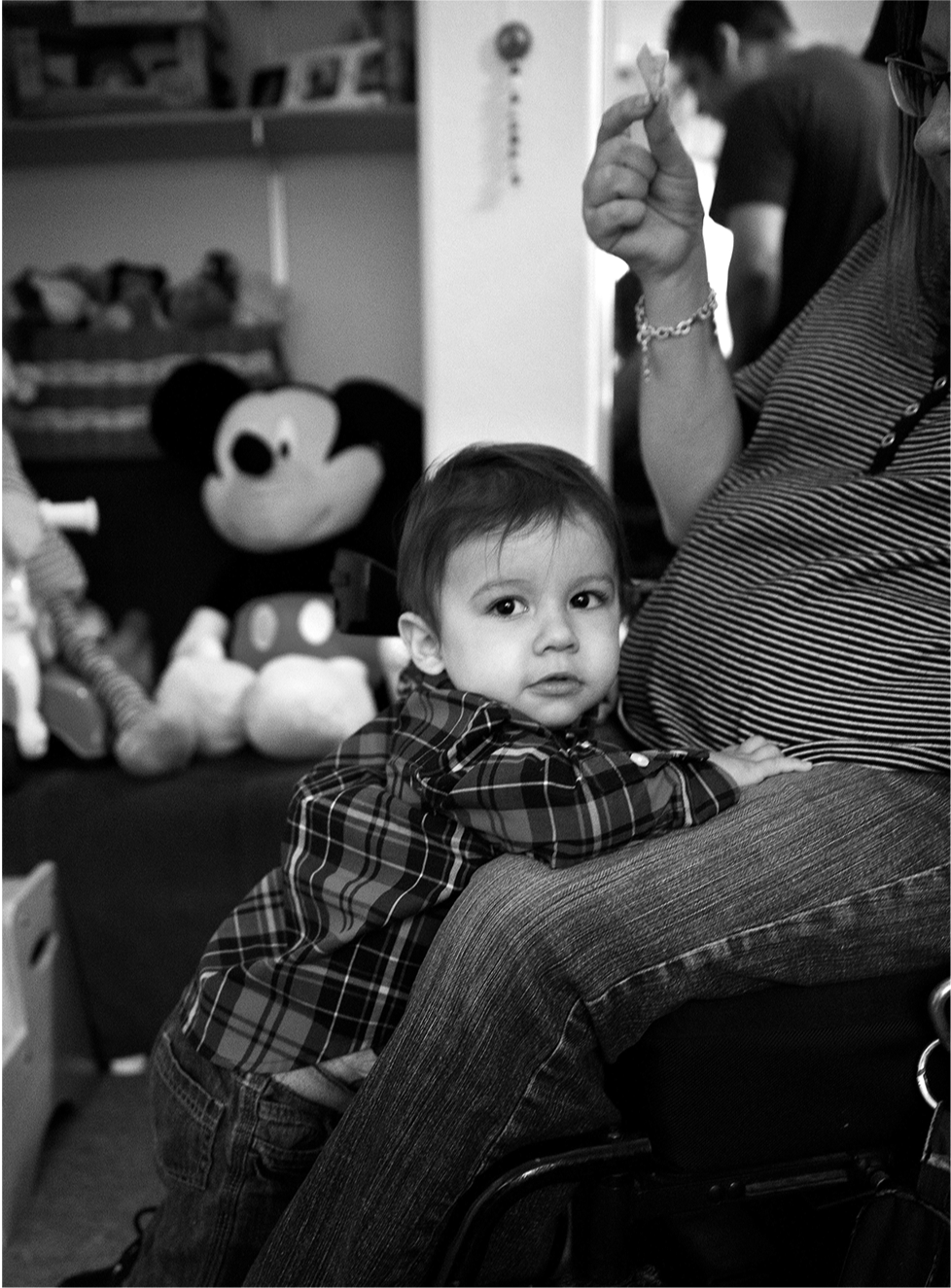
Dina had an extra step added to her wheelchair so her son could easily climb onto her lap.
Laura Morton
Finally, custody decisions in family courts are often particularly difficult for parents with disabilities, as the “best interest of the child” standard for custody determinations in family court leaves even greater room for judges to make decisions based on negative attitudes about disability. Three years ago, a Durham, North Carolina judge awarded full custody of Alaina Giordano’s two children to Giordano’s ex-husband, acknowledging that Giordano’s stage IV breast cancer was a determining factor in her decision. The judge cited the testimony of forensic psychiatrist Helen Brantley, who argued, “Children want a normal childhood, and it is not normal with an ill parent.” Giordano died the following year. She was able to spend the last few weeks of her life with her children only after her lawyer filed an emergency motion in family court.
Protecting the Rights of Mothers with Disabilities
Disabled mothers are more likely to experience unwarranted investigations from social service agencies. They are more likely to have their parental rights terminated, and when children are removed these families receive fewer supports for reunification.
A handful of states have passed legislation to address these problems. In 2011, partly in response to the Mikaela Sinnett case, Missouri passed legislation that prohibits the child welfare system from discriminating against parents with disabilities. Several states now require that courts consider testimony from disability communities, and include information about adaptive equipment and alternative skills that parents with disabilities employ. Other states now mandate that courts must establish a clear causal relationship between a parent’s disability and child maltreatment before disability can be used as grounds for termination of parental rights. Idaho has passed the most comprehensive legislation protecting the rights of disabled parents.
The National Association of Social Workers now recommends that the federal government establish a national fellowship program to train a “disability specialist” from every local and state child welfare agency, who would then participate in investigations and decisions made in cases involving parents with disabilities. A similar model has been used to improve the handling of cases of domestic violence. Other states, including Tennessee, are implementing training programs to educate state workers about disability and parenting, and offer them information about how they can best support struggling parents.
Mikaela Sinnett’s story illuminates the devastating consequences families can endure when stigmatizing attitudes about disability influence child welfare decisions. Despite the gains of the disability rights movement, disabled women’s still receive undue scrutiny about their right to mother. Instead of asking whether or not disabled mothers should have children, we should be asking how we can help their families to thrive.
