




Abstract
This qualitative study examines the advice from 2,131 adoptive parent responses, answering: “What do you believe is important for future adoptive parents to know?” An inductive thematic analysis yielded the following major findings: Various reasons adoption is challenging, strategies to confront challenges, and how adoption is worth the challenges. Parents describe adoption as difficult because (a) parents have unmet expectations, (b) it is time-consuming, (c) emotionally taxing, (d) there are limited resources, and (e) adopted children have behavioral challenges. Strategies for responding to challenges include (a) educating oneself, (b) establishing support, and (c) being patient. These findings suggest there are many absences in information for prospective adoptive parents, indicating the need for increased training, education, and knowledge dissemination. Implications for adoptive parents are delineated.
Keywords
A Qualitative Analysis of Adoptive Parent Advice
The adoption process is often long and arduous which affects and is impacted by various stakeholders, including adoptees, adoptive parents, birth parents, social workers, agencies, and policymakers. Adoptive parents are key stakeholders who experience various challenges across adoption stages (i.e., before, during, and after the adoptive placement). Adoptive parents form expectations pre-adoption, face challenges during adoption, and adjust to a new lifestyle after adoption. There are strategies to form realistic expectations, cope with challenges, and better adapt to the process. As such, the adoption process can be framed as an organization where individuals assimilate.
Organizational Assimilation as a Theoretical Framework
Organizational assimilation will be used as a theoretical framework for reviewing previous adoption research as well as framing the context of this study. Organizational assimilation is the process by which individuals integrate into a new organization and its culture (Jablin, 2001). Proposed by Frederic Jablin (1987), there are three stages: (a) anticipatory socialization, (b) encounter, and (c) metamorphosis.
While organizational assimilation is mainly applied to employees assimilating to a new workspace, this theory and framework have previously been applied to multiple contexts, including parallel audiences and industries (e.g., social workers in nonprofit organizations). Riforgiate and Kramer (2021) found nonprofit social welfare agency employees learned about work–life balance through their peers, demonstrating the value of learning from organizational members with lived experiences. In addition, Davis and Myers (2019) compared for-profit and nonprofit organizational assimilation and found higher levels of job competency and acculturation among nonprofit employees, providing insight into the social work sphere. Other research found reasons for high social worker turnover rates in the child welfare field, exploring the exit stage of organizational assimilation (Mor Barak et al., 2006).
Organizational Assimilation Applied to Adoption
In the context of this study, the adoption process itself functions as the “organization” due to its structured, multi-stage nature and the involvement of external entities (e.g., adoption agencies, governmental regulators, etc.). Prospective adoptive parents navigate this “organization,” engage with professionals, adhere to regulations, and adapt to their evolving roles as parents, much like how new employees acclimate to a new workplace organization. This process of integration into the adoption system and becoming an adoptive parent mirrors the stages of organizational assimilation. As Waldeck and Myers (2007) recommend, assimilation research is crucial not only in organizational contexts but also in various other settings. They found that assimilation models “describe the challenges that individuals confront throughout their efforts to relate to others, behave normatively, and accomplish organizational objectives,” underscoring how this framework is broadly applicable outside of organizational contexts. Understanding the conditions that predict successful assimilation, as well as the dynamic nature of these processes, can provide valuable insights into improving the experiences of prospective adoptive parents and adoptees.
Extending past research on this theory, this study applies the organizational assimilation framework to adoptive parents assimilating into the adoption process, thus contributes research in this field to a new industry (i.e., child welfare and adoption services) and organizational newcomer (i.e., adoptive parents). Utilizing this application of theory, this study seeks to illuminate the process through which adoptive parents integrate into the formal adoption system and their new parental roles. This perspective allows for a structured analysis of the adoption process, highlighting the ongoing nature of adoptive parenting within a complex organizational context.
Literature Review
Anticipatory Socialization Stage of Adoption
During anticipatory socialization, prospective adoptive parents decide to adopt, learn about their child, and set expectations. This first stage is characterized by learning information, forming expectations, and making the decision to enter an organization (Jablin, 1987). Parents are prepared through private agencies and public social services. While services exist, Wind et al. (2007) conducted a survey of 560 adoptive families and found only half received information about the child’s history and psychological test results. Another study found insufficient information led to an inaccurate understanding of the acuity of their child’s needs (Reilly & Platz, 2003). Lee et al. (2018) found lack of information correlated with setting unrealistic expectations and being unprepared to manage the transition and access adequate resources. Research also showed detailed information helped manage pre-adoption fears (McKay & Ross, 2010). According to studies on pre-adoption training courses, prospective parents stressed the importance of support from parents with adoption experience (McKay & Ross, 2010) and from social workers (Denby et al., 2011). Such support helped set realistic expectations (Dance & Farmer, 2014) and modified expectations when they were unmet (Moyer & Goldberg, 2017).
This initial adoption stage has multiple processes which we will explore in more detail. Among the first decisions made is the type of adoption to pursue, with significant different pathways based on whether the choice is adoption from foster care, private domestic adoption, or intercountry adoption. This decision is often made by assessing the differences in eligibility, process, costs, profile of the children available for adoption, length of process, and other factors. For example, if prospective adoptive parents are interested in a newborn or infant, pursuing intercountry adoption or adoption from foster care would be a poor choice, as that does not match the profile of children being placed for adoption. If prospective adoptive parents are looking for a no-cost or low-cost option, pursuing an intercountry or private domestic adoption would be discouraged, as that often costs tens of thousands of dollars, while adoptions from foster care typically do not.
After choosing the type of adoption to pursue, families will begin a process of completing a home study assessment. This process, too, can vary for multiple reasons, including meeting the requirements of the agency, the state where the parent(s) reside, the type of adoption (e.g., a foreign country might have their own requirements), and so on. The process of completing a home study often involves sharing information that is usually not disclosed in professional setting, including information about one’s health history, finances, criminal history, and even discussions about past traumatic experiences.
Concurrent with the home study process, pre-adoptive families are also expected to complete required educational training before an adoptive placement. Similar to the home study requirements, educational training is determined by state requirements, agency policy, and when applicable, by federal and foreign country requirements. It is not uncommon for those pursuing an adoption to go through a training course with others.
At the referral stage, families seeking to adopt are provided information connecting them to a potential placement. For adoptions from foster care, this could involve basic information from a child’s file and may also involve the experience of fostering the child prior to moving forward with an adoption process. For intercountry adoption, referrals often involved the prospective parents receiving limited information including pictures and video, basic social history, and limited medical information. For private domestic adoption, this process is typically very different, with a family being matched to an expectant mother considering adoption and the referral containing limited information about the birth parents, information about prenatal care during the pregnancy, and very limited child-specific information. In all three of these types of adoption, the referral information may be inaccurate and incomplete.
Some adoption processes also include a period of postplacement observation, whereby a child is placed with the prospective parents and is monitored by the appropriate child welfare authority before the adoption is finalized. During this stage, the in-process adoptive parents are often fully functioning in the capacity as the child’s parents but without the final legalization of this relationship.
Encounter Stage of Adoption
During the encounter stage, adoptive parents train, welcome children into their family, and acclimate to a new lifestyle. This stage is characterized by getting acquainted with the organization, training for a role, and seeking more information (Jablin, 1987). In terms of preparation through learned skills, Rushton and Monck (2009) reported 65% of parents believed their training did not equip them with parenting skills to manage difficult behavior, with such difficulties coming as a surprise. Various studies found parenting skills correlated with increased satisfaction, which showed the importance of high-quality preparation (Farber et al., 2003; Hart & Luckock, 2004; Paulsen & Merighi, 2009). Furthermore, Berry et al. (1996) reported 40% of parents felt prepared when adopting through public welfare services, compared to 56% when adopting through private agencies, which highlighted how the adoption pathway impacted perceived preparation level. Unlike the traditional organizational assimilation model proposed by Jablin, the encounter stage in the context of adoption is ongoing and lifelong because the needs of adoptees change across each developmental stage. Adoptive parents continuously prepare, learn, respond, and adapt to their child according to their age and development stage. Hence, while traditional models of assimilation frame each stage as finite, this study extends the existing model to highlight how the encounter stage does not end when the adoption process ends.
The encounter stage of intercountry and foster care pathways contained more difficulties than private domestic adoptions, emphasizing the need for more support in children and parents adapting to change. These two pathways presented more challenges due to more uncertainty and loss, which made adjustment more difficult (Powell & Afifi, 2005). Moreover, foster care adoptions were correlated with a negative influence on attachment (Niemann & Weiss, 2012), which led to challenges such as hyperactivity and emotional difficulties (Rushton et al., 2003). Juffer and van IJzendoorn (2005) found international adoptees utilized mental health services and displayed behavioral challenges more than nonadopted children. Wind et al. (2007) found such needs increased over time, which pointed to the need for postadoption resources and services. Other studies showed access to adoption-specific support and clinical services addressed adoptive family needs (Atkinson et al., 2013; Dhami et al., 2007; Tarren-Sweeney, 2010; Weir & Brodzinsky, 2013). However, access was a barrier for many (Dhami et al., 2007). Outside of professional services, postadoption resources also include support groups, which Miller et al. (2018) found fostered community, resilience, and networks. Research showed support groups aided the final stages of adoption (Denby et al., 2011) and increased satisfaction among special-needs adoptees (Reilly & Platz, 2004). Furthermore, support groups further supported parents in their romantic relationships (Schwartz et al., 2014) and mental health struggles (Clutter, 2014).
Purpose of this Study: Metamorphosis Stage
This study addresses the metamorphosis stage, where adoptive parents reflect on the process and compare their experiences to expectations. In the final stage, individuals adapt to the culture, transition into an insider, and adopt new behaviors or attitudes (Jablin, 1987). In adoption, the encounter and metamorphosis stages should be viewed as ongoing and dynamic processes: adoptive parents and adoptees continuously navigate both these processes throughout their lives. This research and its findings reflect a particular point in time of each adoptive parents’ journey, and, therefore, may not fully represent the continuous and evolving stages of encounter and metamorphosis. While research has found challenges for adoptive parents throughout the anticipatory socialization and encounter stages, few studies have been conducted on the metamorphosis stage (i.e., studying adoptive parents’ reflections on adoption) and few studies have utilized such a large, geographically diverse sample. By qualitatively analyzing 2,131 adoptive parent responses and identifying emergent themes from the information considered “important” for prospective parents, our analysis reveals strategies for prospective adoptive parents to assimilate to their new roles once they become an adoptive family.
Method
Design and Data Collection
A qualitative, inductive approach was utilized due to the exploratory nature of the question. More specifically, the approach utilized grounded theory, defined as a “process of interpretation, carried out for the purpose of discovering concepts and relationships in raw data and then organizing these into a theoretical explanatory scheme” (Strauss & Corbin, 1998, p. 11). This approach was selected for several reasons. Grounded theory avoids making assumptions and approaches human action neutrally (Simmons, 2006). In addition, it is an exploratory method and, therefore, suitable for investigating topics lacking breadth and/or depth (Milliken & Salkind, 2010).
The data used for this analysis came from a national survey of adoptive parents conducted in August 2021, which utilized a cross-sectional, mixed methods research protocol (Hanlon and Quade, 2022). Respondents completed a one-time survey about their demographic information, experiences as an adoptive parent, and information about their adopted child(ren). This analysis focused on the final open-ended question, which has not been reported on previously. The question is as follows: “What do you believe is important for future adoptive parents to know?”
Both the primary research and this secondary analysis were reviewed and approved by Northeastern University’s Institutional Review Board.
Participants
Nonprobability sampling methods (convenience and snowball sampling) were conducted. Participants were recruited via email, social media, and listserv invitations via a national adoption membership organization, its stakeholders, and many adoption-related community contacts. The final sample consisted of 4,212 adoptive parents, which represented 4,135 adoptive households and 6,608 adoptees. Participants were made up of residents of all 50 U.S. states and Washington, D.C.
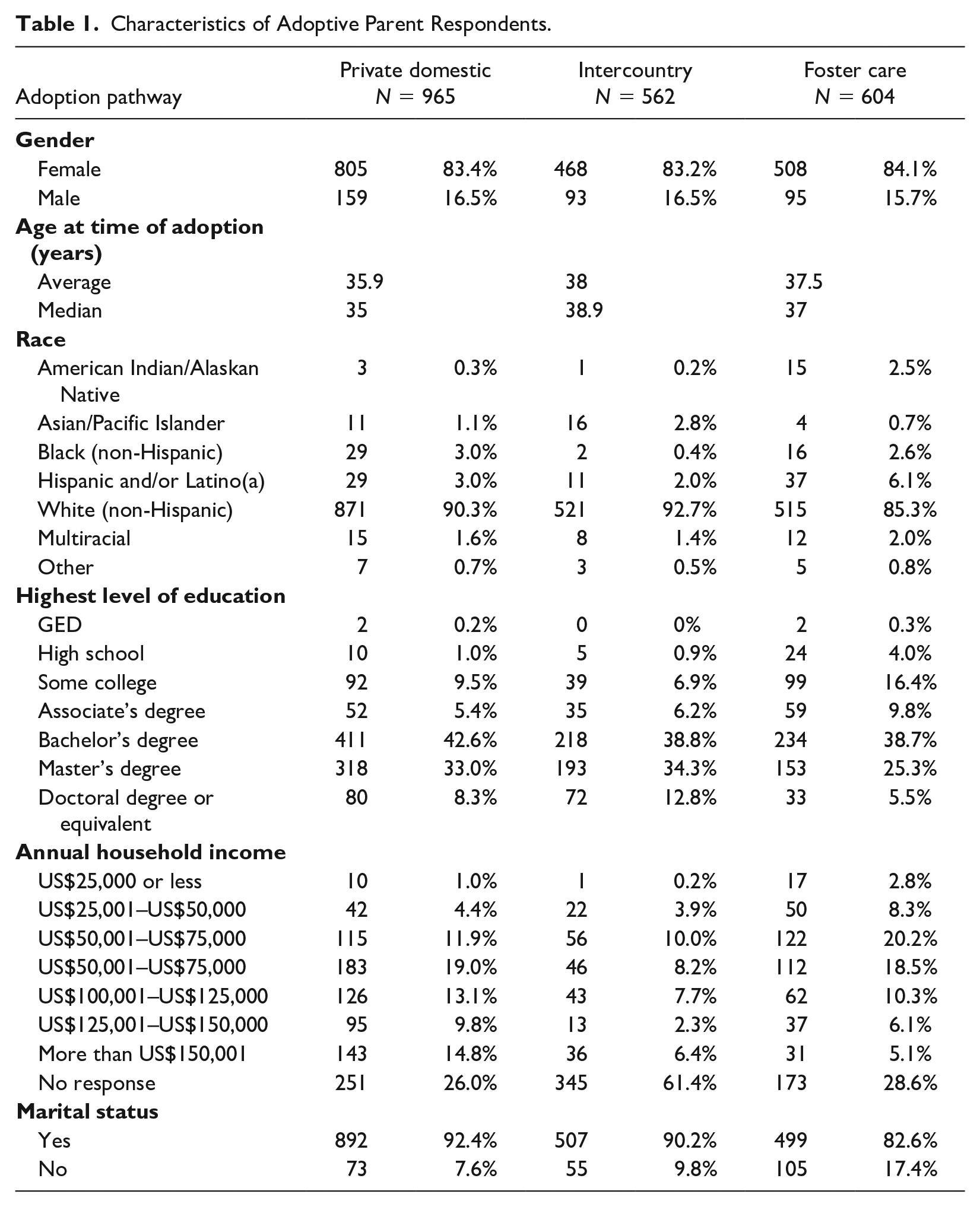
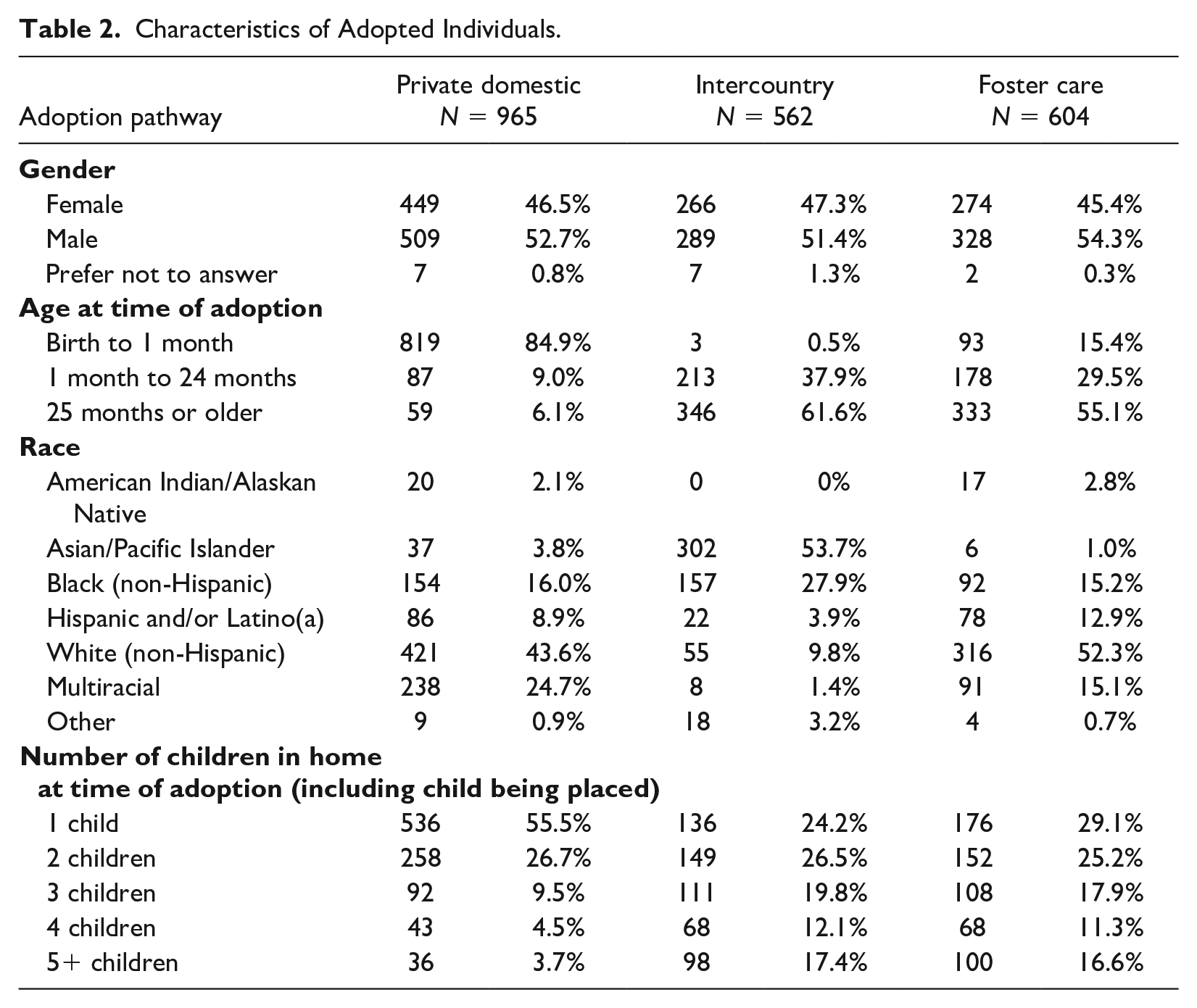
Of the 4,212 survey participants, only 3,861 responded to the question analyzed. Of the 3,861 answer responses, 1,686 cases were unused because those families adopted prior to 2010 and 44 responses were invalid for the NVivo software, leaving a sample of 2,131 responses for this analysis. We limited the timeframe to only responses from 2010 or more recent so as to exclude older cases where recall bias may be a factor and in recognition that the more recent adoptions would better reflect the current situation prospective adoptive parents face. This final sample included 965 private domestic adoptive parents, 562 intercountry adoptive parents, and 604 foster care adoptive parent respondents (see Table 1 for characteristics of adoptive parents). The participants were majority female (83.6%) and white (89.5%). Their age, education level, and annual income vary. In addition, the respondents represented 49 states and Washington D.C. (all U.S. states except for Rhode Island). Data of the adopted children referred to within this study are also outlined (see Table 2 for characteristics of adopted children).
Characteristics of Adoptive Parent Respondents.
Characteristics of Adopted Individuals.
Data Analysis
Prior to analysis, survey data were organized in Excel and de-identified prior to the researchers’ receipt of the data. Responses were then eliminated from adoptions completed prior to 2010 and those without answers to the open-ended question. Due to the large number of responses, the data were clustered into three discrete groups: private domestic adoption, intercountry adoption, and foster care adoption. The analytical process began after the data were uploaded to NVivo 12, a qualitative data analysis software.
Primary coders were a university professor with professional and personal foster care and adoption experience, an adoption researcher based at a nonprofit organization, and an undergraduate researcher. Using a thematic analysis framework (Braun & Clarke, 2006), the coders analyzed the responses separately. First, responses were open coded and segmented into thematic categories of information or “thought units” (Strauss & Corbin, 1998). Then, a coding scheme of broad categories/themes was created, and the coders met to discuss and refine them. Constant comparative analysis was used to further code the data as sub-categories/themes emerged (Glaser & Strauss, 1967; Strauss & Corbin, 1998) based on their recurrence, repetition, and forcefulness (Owen, 1984). This process was repeated until saturation, when no new themes emerged (Miles & Huberman, 1994).
Multiple steps were taken to enhance trustworthiness, including the use of analytic triangulation (Padgett, 2016). Credibility was established by utilizing grounded theory and iterative questioning of the emergent themes. Reliability was established by utilizing two researchers to inter-code the same response set of 70 randomized responses for each pathway. The reliability percentage was calculated by dividing the total number of codes agreed upon by the total number of codes, per each response set. For the private domestic adoption pathway, there were 107 agreed-upon codes among 111 total codes, resulting in a 96.4% inter-coder score. For the intercountry adoption pathway, there were 115 agreed-upon codes among 118 total codes, resulting in a 97.4% inter-coder score. For the foster care adoption pathway, there were 88 agreed-upon codes among 92 total codes, resulting in a 95.7% inter-coder score. Collectively on all 210 responses, there were 321 total codes of which 310 were agreed upon, resulting in a 96.6% inter-coder score.
Results
Due to the large number of responses, the findings were segmented into three categories related to adoption challenges: reasons adoption is challenging, strategies to confront challenges, and how adoption is worth the challenges. There were nuances within each adoption pathway, so responses were further segmented into private domestic adoption, intercountry adoption, and adoption from foster care. Various themes emerged across all pathways and were considered overarching; the reasons adoption is challenging but also worth it were consistent, along with select few strategies. Within each pathway, nuances were mainly found within strategies to confront challenges. Each is supported with verbatim quotes to unpack these broader themes into detailed sub-themes. Refer to the “appendix” section for tables of themes, codes, descriptions, and more quoted examples; numbers embedded in this section correspond to numbers in the tables.
Reasons Adoption is Challenging
Parents Have Unmet Expectations
Parents from all pathways found (1) unmet expectations challenging, with one sub-theme from private domestic responses: (1-1) adoption is more expensive than expected. As one parent stated, “There are many things you won’t know about.” Parents frequently made assumptions about the process and their children, and when unmet, these assumptions presented themselves as challenges. One assumption repeatedly mentioned was bonding quickly, but even a child adopted at birth can present difficulties in attachment. As an example, one respondent communicated, “a child with severe attachment disorders causes an unexpected amount of stress and trauma, and is not noticed by others outside the home, causing the family to become isolated.” Another unmet expectation parents experienced is the high cost of private adoption; more specifically, private domestic adoptive parents were asked to pay high fees that were unclearly communicated in the early stages of the adoption process. There are many other barriers that are “unforeseen” and can feel like “wild cards,” making adoption challenging as parents are “never fully prepared for everything.”
Adoption is a Time-Consuming Process
Parents from all pathways found adoption challenging because (2) both the process and the parenting are time-consuming, with one sub-theme from intercountry responses: (2-1) Attachment is also a time-consuming process. Many parents cited adoption as “slow,” “a long process and wait to bring a child home,” and can take years to finalize. They found it important for prospective parents to know about the timeliness so they can be better prepared. Specifically, intercountry adoptive parents found attachment time-consuming, and advised parents not to expect it “immediately” and that it is “okay” to take it slow.
Adoption is an Emotionally Taxing Process
Parents from all pathways found adoption challenging because it is (3) emotionally and mentally taxing, with one overarching sub-theme: (3-1) Adoption is a hurtful process. Many parents used adjectives like “emotional,” “stressful,” “frustrating,” “mentally exhausting,” “upsetting,” “overwhelming,” and a few analogized that adoption “is a wild rollercoaster of emotions.” Experiencing these challenging and rapidly changing emotions offers little stability, making the process more difficult. Furthermore, many parents had difficult adoptions that made both themselves and their adoptees feel hurt. For example, a participant stated, “There’s so much hurt that comes with it, it’s heartbreaking.”
There are Limited Resources
Parents from all pathways faced challenges due to (4) limited resources, with various nuances in the type of resource needed in each pathway; private domestic adoptive parents stated (4-1) agencies lack resources, foster care adoptive parents had (4-3) limited mental health resources, and both private domestic and intercountry adoptive parents mentioned (4-2) adoption is expensive. Parents adamantly stated that “there needs to be better support for families after adoption,” and for private domestic adoptions, even the “best agencies” cannot support parents to the extent needed. They described existent resources as “laughable,” or that they “do not exist,” and there “isn’t easy access.” These phrases point to an absence of resources, showing a lack of postadoption support. Private domestic and intercountry adoptions are also more expensive than foster care adoptions (as highlighted by the difference between sub-themes), showing a lack of financial support through this costly process.
Children Have Behavioral Difficulties
Parents found it challenging to face (5) children’s behavioral issues, with consistent sub-themes across all adoption pathways: (5-1) many adoptees experience trauma which informs behavioral issues, (5-2) many adoptees have mental health disorders, and (5-3) trauma and mental health illnesses have long-term impacts. Children with behavioral issues can be more difficult to raise and often need therapeutic support, with one parent advising to “prepare for regression and difficult behaviors.” Numerous parents believe adoption “always” involves trauma and emphasized its occurrence among infant adoptions too. As all adopted children experience some form of loss, this often results in trauma-related disorders that manifest itself in behavioral difficulties. One parented mentioned that “attachment disorders cause an unexpected amount of stress.” Furthermore, some parents said trauma had long-term impacts as some children exhibit symptoms later in life, so trauma is “always present.” They mentioned trauma can “surface unexpectedly,” and there can be lifelong “repercussions,” showing how behavioral issues can become a constant in life or even “increase over time.”
Strategies to Confront Adoption Challenges Overarching Themes
Educating Oneself
Not only did parents explain why adoption is challenging, but they also revealed strategies and methods to cope with challenges. Parents from all pathways stressed the importance of (7) educating oneself on the adoption process, with one overarching sub-theme to (7-1) be trauma-educated, informed, and prepared. Intercountry adoptive parents specifically found it important to be educated on (7-2) attachment issues and (7-3) the child’s culture and race (among all adoption pathways: private domestic, intercountry, and foster care, when adopting transculturally and/or transracially). Overall, parents advised others to “research and understand adoption options” and adoption challenges so they are better prepared. Parents also mentioned that learning from adult adoptees, adoptive parents, and adoption communities are beneficial as they have experienced and reflected on the process. Various responses specified the importance of trauma education to learn how to parent in a trauma-informed manner, or as one parent puts it, “parents should research impact of trauma on adoptees at all life stages.” Knowledge on trauma and behavioral issues helped them understand their child’s behaviors and guide them through these hardships, with one parent stating, “you need to understand where they are coming from.” Intercountry adoptive parents specifically mentioned education on attachment issues and their child’s race and culture. Knowing techniques to build attachment and understanding their child’s heritage (when different from one’s own) enabled adoptees to transition smoother. Parents’ knowledge can also help adopted children feel comfortable and connected with their culture. Furthermore, there are unique issues within transracial adoptions such as racism, and educating oneself on how to cope with racism allows parents to better understand their child’s struggles.
Establishing Support
Parents from all pathways believed (8) establishing support systems help when adoption becomes challenging, and various overarching sub-themes were present: (8-1) establish support before adoption, (8-2) actively seek out resources/support, and (8-3) there are financial resources/support. Support systems include professional/therapeutic support, friends, family, other adoptive parents, and adoption communities, and one parent responded, “There is an enormous adoptive community full of support.” Many respondents described the ideal support system as “strong,” highlighting the importance of quality over quantity of support sources, with one parent emphasizing that “one must have a strong support system.” As adoption is an arduous process, support systems allow parents to feel supported, encouraged, secure, and more comfortable. Parents specifically advised others to “get support before you go through the process,” because even the start of the process is difficult to navigate alone. Parents also advised to actively seek resources such as parenting classes, adoptive support groups, online communities, and adoption services. They emphasized putting in extra effort, “[going] beyond” resources from agencies and being “willing to do the work.” Furthermore, while parents noted the high cost to be a challenge, they advised prospective parents, “don’t let the money discourage you,” and mentioned that “there are all sorts of ways to raise the money,” including fundraisers, grants, and support from family and friends.
Be Patient With the Process and Child
Adoptive parents believe it is important to (9) be patient with the adoption process and adopted child. As previously mentioned, the adoption process can be slow and tedious, so it requires patience. Furthermore, children can exhibit behavioral difficulties or struggle to adapt, but it is important to remember these issues require special care and patience. It is important to acknowledge the complexities and challenges faced within adoption, but one of the overarching pieces of advice given from adoptive parents is to practice patience with oneself, one’s child, and the adoption process. In many instances, it is the adopted child who “taught us to become more patient,” illustrating how this challenging journey fosters personal growth. While patience alone does not resolve the many challenges, it plays a role in building a supportive environment where both the child and the parents can grow together.
Adoption is Challenging but Worth it
While various challenges were revealed, parents also stated that adoption is worth it, with two overarching themes: (15) adoption is worth the demanding process (i.e., the time, emotional investment, and high costs) and (16) adoption is worth it because it is beautiful and rewarding. Within a single response, many parents contrasted the “stressful,” “grueling,” “frustrating,” and “scary” experience with adjectives like “joyous” to show how it is worth the emotional experience. As another example, a parent stated that “children are worth all the work that is quired, but it is hard work.” Parents also had overwhelmingly positive responses with descriptors like “beautiful” and “wonderful,” frequently showing gratitude and contentment from adoption. Some even claimed it was the “best decision [they] have ever made” and encouraged prospective parents to adopt despite difficulties along the way.
Private Domestic Adoption Pathway-Specific Themes
Strategies to Confront Adoption Challenges: Mindfully Select an Agency
Private domestic adoptive parents advised others to (10) mindfully select an adoption agency, with two sub-themes: (10-1) research agencies before adopting and (10-2) choose an ethical, caring, and trustworthy agency. Ethical agencies were characterized as those supporting birth parents and educating adoptive parents. Respondents recommended prospective parents to “study and question your agency and adoption providers” prior to selection. Beyond conducting due diligence, one parent added to “make sure they are transparent, supportive, and will provide services for you and your birth family.”
Strategies to Confront Adoption Challenges: Choose Open Adoption
Private domestic adoptive parents also recommended (11) choosing open adoption as it is beneficial for all parties involved, with three sub-themes: (11-1) be open to open adoption, (11-2) open adoption can be intimidating, but parents should not be scared, and (11-3) choose open adoption only when safe. Parents were advised to “be open” to any amount of openness because of its benefits for the adopted child. Open adoption provides children with an opportunity, when ready, to learn about their background. While it is important to be receptive, adoptive parents also recognized the intimidation of open adoption but advised prospective parents not to be afraid because it is beneficial for the child. Some of the reasons explained include providing children with “the fullest, most honest and complete identity possible,” allowing them to “know about any siblings that [they have],” and “get any questions answered as they develop.” Also, while having an open, positive relationship with birth parents may be an untraditional concept, parents emphasized being empathetic toward other stakeholders (i.e., birth parents and adopted children). Safety was repeatedly mentioned, where various respondents stated open adoption is only the goal “if safety is not a concern.” As some open adoptions are dangerous, parents should keep their families safe if/when pursuing this relationship. Furthermore, open adoption was described as difficult (e.g., “messy,” “hard,” “a lot of work,” “tricky,” and “emotionally taxing,”) due to complex relational dynamics in open adoptions. However, for many respondents, the challenges were worth it. In addition, open adoption was described as “wonderful,” “beneficial,” and “beautiful” for various stakeholders (i.e., adoptive parents, birth parents, and children). Overall, openness was described as a “crucial” aspect of adoption and some even stated it as the “most important factor.”
Intercountry Adoption Pathway-Specific Themes
Strategies to Confront Adoption Challenges: Mentally Prepare for Challenges
Intercountry adoptive parents advised prospective parents to (12) mentally prepare for challenges so they are easier to overcome, with three sub-themes: (12-1) be flexible and prepare to change, (12-2) prepare for racial issues, and (12-3) prepare for adoption costs. Parents “need to be flexible and expect that many things are subject to change” in various aspects including employment, knowledge, mental health, relationships, and cultural views when adopting transracially. This shows how adopting outside of one’s race requires more effort because it takes time to learn and adapt to a new culture. Adapting to new cultures can be demanding but is necessary for intercountry adoptive children to feel welcomed and heard. Moreover, parents were advised to prepare for racial issues like racism, oppression, and biases, with one recommending to “reflect on how you will handle the racial and cultural identity issues.” As these can be difficult and upsetting experiences, parents should find ways to guide and support their child and cope as a family. Regarding the high cost of adoption, intercountry adoptive parents also recommended to “be financially secure, it reduces much of the challenges.”
Foster Care Adoption Pathway-Specific Themes
Reasons Adoption is Challenging: Difficulties From the Foster Care System
Foster care adoptive parents found a uniquely challenging reason for adoption, due to (6) the foster care system, where parents have described it as (6-1) unethical and broken. Parents experienced fostering/adopting without knowing all the relevant information about the foster/adoptive children, presenting unexpected challenges. There are unique difficulties in this pathway as children are not adopted through an agency; rather, they spend time in the system and encounter more loss due to constant familial changes and increased instability. The transition from foster to adopt was described as “tough.” Furthermore, respondents mentioned issues within the system, describing the process as “miserable and painful” and the system as “cruel,” “uncaring,” and “broken,” and “hard to navigate.” One parent even expressed, “the system is not designed to protect the children,” while another advised, “don’t trust any agency to disclose issues.”
Strategies to Confront Adoption Challenges: Prepare for Mental Health Challenges
Foster care adoptive parents found it useful to (13) prepare for mental health challenges because various adoptees struggle, with two sub-themes: (13-1) prepare pre-adoption by seeking the child’s mental health records and background information and (13-2) find therapeutic support for the child and/or whole family. Parents believed that before adopting, they should have access to their child’s mental health records and family history because “understanding what it takes to raise a child with severe mental illness is important.” This demonstrates how medical and psychological histories impact an adoptive family’s ability to manage potential challenges (e.g., genetic and socialization-driven behaviors); thus, highlighting one area where adoptive parents feel inadequately equipped for a child’s care, health, and well-being. Due to the prevalence of mental health challenges, parents advised others to seek professional mental health support for the entire family. More specifically, some parents recommended to “find a counselor that has personal experience with adoption and attachment disorder.” Professional support helped parents who were raising a child in difficult circumstances and helped children work through their trauma and/or diagnosed disorders. Foster care adoptees face more mental health challenges, yet parents reported “resources are slim” and some even said there are “zero resources,” making it difficult to rely on the system for support.
Strategies to Confront Adoption Challenges: Stay Connected to Biological Families
Foster care adoptive parents also highlighted the benefit of (14) staying connected to biological families. These relationships allow adoptees to learn about their birth family, family medical history, and can form meaningful relationships for all involved. Adoptive parent respondents mentioned that while initial discomfort exists, it is worth it, echoing the advice of private domestic adoptive parents speaking on the importance of open adoption. Similarly, connections with birth family were said to be important unless there were safety concerns. If parents are unable to connect with biological families, parents advised to “maintain records of the biological family.”
Additional Overarching Themes
In addition, among all three pathways, parents highlighted the importance of treating adopted children equitably by loving them the same as biological children and providing them the same opportunities. For example, one parent emphasized, “Give children a good home environment, good education.” Another communicated “[treating] adopted and their own children equally, there is no difference in heart.” While this is not directly an answer to the question, it emerged as important advice.
Discussion
Organizational Assimilation in Adoption
These findings reveal important ways for prospective adoptive parents to better assimilate to the adoption process (e.g., feel prepared for challenges and experience less surprise) with advice from adoptive parents that explain their experience and adversities in-depth. This study highlights things prospective adoptive parents should know given the structural challenges emerging from the adoption process. While adoption is an enriching and beneficial experience for most families, our results show absences of information adoptive parents wish they knew. This aligns with research which emphasizes the significance of memorable absences, or the crucial information adoptive parents wish they had known, which our results confirm is lacking in current preparation programs (Dallimore, 2003).
The importance of setting realistic expectations for adoptive parents is evident from our findings and underlines the need for credible and thorough adoption education, aligning with Coakley and Berrick’s (2008) assertion that unmet expectations are associated with adoption disruption. The experience and advice of adoptive parents guide prospective parents in understanding the complexity and difficulties of adoption, depicted through solution-oriented responses. This is supported by a systematic review which found a scarcity in validated evaluation measures and a need for new instruments to improve child welfare services (Ayala-Nunes et al., 2014). Similarly, Moore et al. (2000) described the importance yet absence of client (i.e., adopted children and adoptive parents) outcome data evaluation, supporting our finding that agencies need data-driven approaches to improve adoption processes. This article also supports how the adoption process does not end once adoption is legally finalized; it can take decades for families to fully assimilate, with adoptees facing lifelong impacts. This aligns with Atkinson & Gonet’s (2007) research, describing adoption as “lifelong,” creating “unique opportunities and challenges for families” (p. 89).
Common Challenges Faced by Adoptive Parents
Our research identified that adoptive parents experience various challenges throughout the time-consuming and emotionally taxing process, including having unmet expectations, children with behavioral issues from trauma, and limited resources. Lee et al. (2018) supported our finding of insufficient preparation regarding children’s trauma histories, stressing the importance of informing parents on adoption trauma and ways to prepare and cope. Harris and Fallot (2001) similarly emphasized the importance of trauma-informed adoption models to acknowledge trauma-based challenges and methods to avoid re-traumatization. Participants also emphasized the need for preparation, training, and education of strategies to help their children process trauma, consistent with research from Hartinger-Saunders et al. (2016). More specifically, The National Child Traumatic Stress Network reported adoption services should address trauma complexity, facilitate trauma recovery, and help children regulate emotions and be resilient (Ko & Sprague, 2007). Within this study, support systems emerged as crucial, with Atkinson and Gonet (2007) finding adoptive support groups particularly helpful. Waid and Alewine (2018) echo the finding that the need for trauma-based support increases during children’s developmental transitions, indicating the necessity for postadoption resources. In addition, this study found advice differs among adoption pathways, which is discussed below.
Challenges Faced by Private Domestic Adoptive Parents
In this study, private domestic adoptive parents stressed mindfully choosing an adoption agency, the high cost of adoption, and the importance of open adoptions. Regarding the costs of adoption, Barth and Miller (2001) supported our findings, showing how educational and informational services provide a clearer understanding of how to financially plan for an adoption. While support from agencies do exist, Lee et al. (2018) confirmed the importance of selecting comprehensive adoption agencies, whose study on adoptive parent preparation found most respondents desired to have more preparation, and around a third had issues with the agency, social worker, and/or training, revealing a scarcity of services. Regarding open adoption, Siegel’s (2012) study similarly supported openness and found parents should have information on and access to their children’s birth families. She also found despite challenges in open adoption, adoptees view them as “opportunities to develop identity, expand family, and process feelings” (Siegel, 2012). Gross (1993) also had consistent findings, where adoptees and families worked well with openness and viewed it positively.
Challenges Faced by Intercountry Adoptive Parents
Intercountry adoptive parents advised others to prepare for unforeseeable challenges, be patient with the attachment process, and seek cultural resources when adopting from a different race. These findings are supported by research by Davies (2011), who found differences in race and culture initiated unique adoption challenges, including having limited information on their child prior to adoption. Furthermore, Schwarzwald et al. (2015) found issues with neurodevelopmental disabilities, medical conditions, attachment, and cultural transition were common among intercountry adoptees. Attachment issues were prominent in this study, aligning with findings from Rycus et al. (2006) that intercountry adopted children had a higher risk for attachment issues due to institutionalized care. Mounts and Bradley (2019) further supported our research, where their participants identified attachment requires specific education and wanted more ways to address attachment difficulties. This is supported by Bowlby (1982), who found the first and second years of life are the most sensitive to creating primary attachments, so an absence of these bonds (often occurring in orphans) decreased the likelihood of forming secure attachment styles. Participants also emphasized the need for cultural resources, which is supported by Carstens and Juliá (2000)’s finding of the importance of being aware of a child’s culture, which positively correlated with the child’s sense of security and identity formation. Mounts and Bradley (2019) also found half of the participants believed cultural differences were challenging and emphasized the necessity of learning culture and accommodating cultural differences. This study shows how intercountry adoptions pose unique challenges, supported by Katz and Doyle (2013) who found nontraditional, interracial families may receive insensitive responses from others (e.g., racism), pointing to the importance of preparing for such challenges. This finding is also supported by Lee et al. (2018), who found parents desired more preparation for “handling diversity issues” when adopting transracially.
Challenges Faced by Foster Care Adoptive Parents
Foster care adoptive parents emphasized the prevalence of mental health challenges and the difficulty in adopting from foster care. The large number of children’s mental health struggles are likely related to trauma. Consistent with results from this study, McSherry and McAnee (2022) longitudinal case study found most children experienced psychological trauma before they entered foster care, and many experienced complex difficulties from in-utero harm. They recommended local authorities to provide more support to adoptive children, consistent with our finding of insufficient mental health resources and services. Tan and Marn (2013) similarly found foster care adoptees utilized more mental health services than private domestic and intercountry adoptees, aligning with our findings. Moreover, they found older adoption age is associated with a higher need for services, and as foster care adoptees tend to be older, it is critical for them to have continuous support throughout development. Ultimately, increased availability and accessibility of mental health resources may help children ameliorate behavioral difficulties, process trauma, and aid attachment and adjustment. Our finding that the foster care-to-adoption pathway is uniquely difficult is also supported by McCall (2011), who found the U.S. foster care system is inadequately equipped to support children with mental health challenges. This is further supported by Leber and LeCroy (2012), whose study on foster care system perceptions shows that 90% of participants believed “changes and improvements need to be made” in the system, and 60% believed social workers lack adequate training, supporting how this adoption pathway is uniquely difficult.
Limitations and Future Research
The responses utilized for this research were a single question of a large study, which was not designed as a qualitative study. The scope of this qualitative analysis, while illuminative and with generalizability, could be expanded by asking a wider range of qualitative questions to gain more breadth of information. Furthermore, while this was the largest sample size of adoptive parents ever conducted, respondents were from the United States, so the findings cannot be generalized to adoptions in international countries.
Implications
This study has implications for primary (i.e., adoptive parents and adopted children) and secondary stakeholders (i.e., social workers and the child welfare system) who are responsible for disseminating critical and accurate knowledge, as well as anticipating and answering questions of adoptive families. Through utilizing the organizational assimilation framework introduced in the beginning, the advice that emerges from this study shows the value of creating more comprehensive and detailed assimilation processes for adoptive parents to reduce surprise and enhance sensemaking (e.g., set realistic expectations, create support systems, and offer additional resources). The responses utilized in this study are collected from various adoptive parents at the metamorphosis stage, who have already experienced the adoption process, yet most of the advice and comments focus on improvements that can be made to the anticipatory socialization and encounter stages of assimilation. More specifically, this study’s results can enhance formal (i.e., agency interactions and trainings) and informal (i.e., social worker interactions, mentoring systems, and daily conversations) communication methods to guide and allow adoptive parents to individualize their adoption journey. This increases retention and decreases adoption disruption as parents are better prepared for challenges.
The advice can support prospective adoptive parents in planning, decision-making, and problem-solving. In the anticipatory socialization stage of adoption, prospective adoptive parents who are informed of adoptees’ trauma experiences and train to parent through a trauma-informed lens can support their children’s development with empathy and acceptance. Furthermore, parents who seek out resources can understand an adopted child’s unique needs and challenges and embrace them by establishing support systems. Individuals adopting domestically through private agencies who mindfully select an agency can ensure it is ethical, supportive, and informative. Prospective parents who are financially prepared and receptive to open adoptions can assimilate more smoothly as they are less likely to run into financial barriers and have a healthy relationship with their child’s birth parents, which can also help their child transition more comfortably into a new family. Individuals adopting internationally who are culturally open-minded, aware, and engaged in cultural communities can support their children through potential racial struggles. Those adopting from foster care who are equipped to manage mental health challenges can be more mindful and proactive regarding their children’s mental health. With improved services provided during this initial stage of assimilation, prospective parents can reduce uncertainty and challenges faced in subsequent stages.
The child welfare system can benefit from structural changes to serve adoptive families with more individualized and feedback-driven support and services. A system or organization that prepares parents in the anticipatory socialization stage, one that frequently collaborates with researchers in developing informational resources and integrating professional services (i.e., from doctors, psychiatrists, and counselors), can encourage parents to rely on their agency and social worker during the adoption process. Enhanced insights and comprehensive training systems yield greater confidence in decision-making to prevent adoption disruption and child re-traumatization. During the encounter and metamorphosis stages, feedback and assessment tools like quarterly or annual check-ins where parents are asked about their experience during the process can provide insight on adoption struggles and build trauma-informed mentoring systems. As these two stages are lifelong, it is beneficial for both adoptive families and agencies to check in on their experiences because everything continuously changes as an adopted child develops in age. Agencies who are aware of such changes are better able to adapt their future resources to better prepare new prospective parents. Moreover, assessing families’ opinions about adoption services can improve the efficacy and satisfaction of the adoption process, which may increase prospective adoptive parent interest and engagement.
This study also has implications for future research. Findings underscore the importance of future adoptive parents being well-informed about the unique difficulties across the adoption pathway choice they are pursuing. Future studies might examine the long-term effects of adoption on children with minority statuses (e.g., LGBTQ+-identifying and special needs) as they may have unique or challenging experiences. Future studies may also examine adoptees in the metamorphosis stage (i.e., adoptees in their adulthood) so other adoptees can learn ways to confront personal challenges from experienced individuals. Longitudinal studies eliciting information from children and parents can show how advice differs and progresses from adoption to early/middle adulthood. Quantitative and/or mixed-methods research could increase reliability in the differences found in each adoption pathway and explore other nuances, such as overall parenting satisfaction.
Conclusion
Existing adoptive parents’ advice to prospective adoptive parents socialize them into adoption by framing their expectations around challenges, strategizing methods to confront these challenges, and showing how the process is often difficult but rewarding. By doing so, prospective parents have a more realistic and robust understanding of what adoption is like prior to starting the process (anticipatory socialization stage). Moreover, when prospective parents become adoptive parents (encounter stage), the surprise of challenges and unmet expectations is less severe as they have support systems and deeper understandings of the process, thus resulting in successful adoption (metamorphosis stage) instead of adoption disruption (organizational exit).
Footnotes
Disposition editor: Cristina Mogro-Wilson
Declaration of Conflicting Interests
The author(s) declared no potential conflicts of interest with respect to the research, authorship, and/or publication of this article.
Funding
The author(s) received no financial support for the research, authorship, and/or publication of this article.
