




Abstract
The Smorgasbord section offers readers a sampling of sociological thinking about food.
Keywords
The following photographs and captions are from
Not-So-Sweet Charity
The 2013 Farm Bill proposes to cut $8 billion from the Supplemental Nutrition Assistance Program, commonly referred to as food stamps. While the $5-20 monthly reduction per person may seem modest, it would force millions of Americans to turn to charitable food donations such as food banks—which may do more harm than good.
Diverting surplus food to the hungry appears to address both issues of hunger and food waste, but these programs provide unstable, temporary fixes. In their 1999 article in the Canadian Journal of Public Health, scholars Valerie Tarasuk and George Beaton suggest that charitable food sources provide unstable access to food and only short-term help. Sociologist Janet Poppendieck goes even further in her 1998 book Sweet Charity? by pointing out that charitable food sources actually perpetuate poverty and hunger.
Instead of alleviating hunger, by lessening the pressure on governments to address deprivation, these charity sources may weaken much-needed institutional support for food-vulnerable populations.
Why Poor People buy Bottled Water
During the past 15 years bottled water consumption in the United States has doubled—to an average of 30 gallons per person annually. And bottled water is no longer just for yuppies: consumption has skyrocketed among low-income individuals as well. At a time when food insecurity affects about 1 in 7 Americans, according to the United States Department of Agriculture, it may seem surprising to learn that many low-income individuals purchase a food item that is practically free, and one that some experts say is no safer than tap water. So why, then, do poor people buy bottled water?
The short answer is that poor people see it as healthy and affordable compared to other bottled beverages, according to my interviews with low-income Americans.
Natalie, a low-income woman, told me that her daughters are more likely to drink water from a bottle than a cup. “Even though it’s water, it’s something about those little bottles that they’re more apt to picking it up and drinking the whole thing.” Natalie, who wants her daughters to cut down on juice and sugary drinks, considers the money she pays for bottled water money well spent.
When people assess whether bottled water is affordable, they compare it to the other bottled drinks they typically buy—not to tap water. In light of this comparison, bottled water seems economical. Asked what she thought of drinking tap water and spending bottled-water money on food instead, Lauren, another low-income woman, replied, “You cannot beat $2.29 for 24 bottles.” To someone accustomed to paying $1.25 for two liters of soda and $3.29 for juice, $2.29 for 24 water bottles seems cheap as well as healthy.
In other words, people make food and beverage choices in relation to other food items. If we assume that the alternative to bottled water is tap water, purchasing bottled water may seem strange, and even imprudent. But as a way to replace sugary drinks with an affordable alternative, buying bottled water is not nearly as puzzling.
Once again, owning an exotic pet was proving to be nothing but trouble.

Mcdonaldizing Croatia
Formerly a part of Yugoslavia, Croatia has a complex heritage dating back to the seventh century. Because of its diversity, traditional Croatian gastronomy is referred to as “the cuisine of regions.” From the Austro-Hungarian influence of intensive meat consumption in the north, to the Mediterranean-inspired coastal cuisine of the south, culinary traditions differ significantly across the country’s cobblestone streets and pebbled beaches. A typical meal in the north consists of mixed meat and fried potatoes, whereas in the south, seafood risotto is more frequently on the dinner table.
Today, globalizing processes are challenging Croatian food culture—in sociologist George Ritzer’s terms, “McDonaldization,” a process aiming to increase efficiency, calculability, predictability, and control. The end of communism in the early 1990s left a vast and open land of opportunity for McDonald’s and other corporations to take over and rationalize Eastern European eating. The uniformity of fast food and its predictable dining experience are among the reasons why Croats are consuming such food in increasing quantities.
While eating at McDonald’s is rather expensive by Croatian standards, particularly when comparing gross domestic product per capita—$47,200 in the United States versus $17,400 in Croatia—more and more Croats are choosing Americanized foods and dining experiences. Not only is this changing Croats’ taste buds and cultural patterns—American fast food restaurants are facilitating new spaces for socialization, particularly for women and children—it is also altering agricultural and farming systems.
Croatian supermarkets are also McDonaldizing. Until the second-half of the 1990s, Croatia’s retail sector was dominated by socially-owned chains. In the 2000s, foreign direct investment transformed the market and the share of supermarkets in food retail increased from around 25 percent at the end of 2000 to 51 percent two years later.
During socialism, a wealth of natural resources and well-developed manufacturing and service sectors enabled the Croatian government to satisfy food demand. Today, small, family-owned farms are experiencing diminished returns on investment, due in part to Croatia’s entry into the European Union and the enactment of Common Agricultural Policy.
Deep-rooted taste preferences for traditional foods such as pljeskavica (a ground meat patty) are weakening; Western-style fast food restaurants are contributing to Croats’ globalizing palates. According to the Croatia Food and Drink Report of 2013, Croats are also snacking more frequently, and the sale of canned and frozen food items is on the rise. Croatian meals, in contrast, are traditionally prepared with fresh ingredients.
This rapid transformation of food, culture, and economics will lead, some critics predict, to a massive national stomachache.
The Social Life of Leftovers
Thanks to busy schedules, ever-growing food portions, and poor meal planning, many of us find ourselves with a lot of leftovers. Over 36 million tons of food brought home become waste annually, according to the Environmental Protection Agency. But at least some of those reheatables may be finding a second life.
While many of us see leftovers as food that has lost value, that lacks novelty and excitement, and that is less tasty, the act of sharing leftovers can create closer family ties, according to marketing lecturer Benedetta Cappellini in a 2009 article published in the Journal of Consumer Culture. Leftovers are also, at times, a type of sacrifice. Mothers take it upon themselves to finish yesterday’s meal, while preparing something fresh and nutritious for the rest of the family, expressing care for family members, according to Cappellini and Elizabeth Parsons, writing in The Sociological Review in 2013.
So the next time you’re staring down a container of leftovers, remember that they say more about us than just what we ate last night.
It was a record-breaking ascent with neither sherpas or supplemental oxygen.

Food shopping: A Chore or A Pleasure?
Women perform twice as much “foodwork” as men—shopping, cooking, and planning meals. We often think of food shopping as a chore, but it turns out that many women take pleasure in this work—if they’re middle class. In a study of Toronto food consumers we were surprised by the number of women who spoke favorably of food shopping.
One woman we interviewed said, “I do like shopping. I like the tactile experience and determining if something’s good. I don’t think of it as a chore. It’s a pleasure.” Others described trips to the supermarket as “fun,” “exciting,” and even “therapeutic.” Two women in our study made midnight “dates” at a 24-hour grocery store, so they could share the pleasures of grocery shopping without their husbands rushing them along.
This research highlights the emotional element of purchasing food, which has important links to gender. Food shopping allows women to perform a socially valued femininity—to be the woman bringing home a tasty and nutritious bounty. This isn’t the stereotype of the female shopaholic stockpiling purses and shoes. A successful female food shopper is celebrated as a nurturing figure who carefully researches the best values, and brings home healthy, delicious food for loved ones.
Indeed, many women said they derived joy from feeding others, especially when they had enough time and money to savor the process. One woman we spoke with described a sense of “euphoria” when gathering ingredients for a dinner party. For others, food shopping is a way of spicing up their daily tasks.
Beth said: “I do get a little tired of the everyday, you know, we need bananas, but that’s why I go to different stores to make it a bit of an adventure.” Besides seeing grocery shopping as a potential “adventure,” it was also seen as a break from responsibilities women faced at home. “I went shopping to avoid my children,” said Grace, drawing laughter from the other women in the focus group, “I got my ass out of the house so my husband could deal with the children.”
Describing the experience of shopping with her husband, Lois said: “I’ll just cruise the aisles to see what there is, and he just goes bananas. He wants to go in, he wants to get what he wants, he wants to get out.” In addition to being less emotionally invested in the food shopping experience, women saw men as less capable shoppers. Nina joked, “Sometimes my husband is happy to help…but he comes home with lots of unauthorized purchases.”
For women living in poverty, such emotional rewards are harder to find. “It makes me angry if I can’t afford something,” said Nadine. “Everyone should have access to decent food.” Shannon spoke of her struggle: “It frustrates me because I can’t make the best choice that I think is available for my family.” As a single mother living on social assistance, she often felt as though she had failed. “If you could just go in the store and not look at prices and pick up anything and everything you wanted, how much less stressful would life be?”
While for some women, farmers’ markets and high-end grocers like Whole Foods Market are aesthetically pleasing and relaxing, others found such settings stressful and uncomfortable. Judy stated: “to go to the farmers’ market is TRULY a joyful experience for me…How beautiful everything is, just the whole vibe of the other people shopping.”
In contrast, Syd, a low-income participant, described her discomfort at farmers’ markets: “I actually end up feeling really intimidated when I go in those sorts of places… ‘cause money is a huge stress for me at all times.” Vicky felt equally out of place at a gourmet grocery store, but for different reasons: “It was so awful! All these rich people were in there dropping hundreds and hundreds of dollars. All these fancy, way over the top foods…I was totally disgusted.”
It turns out the grocery store can be a place of joy and leisure—but it is also the site of gross inequalities. As women in our study made clear, food and love are deeply connected in our cultural renderings of femininity. To be denied access to good quality food is not only a material deprivation, but a site for emotional struggle and gendered hardship.
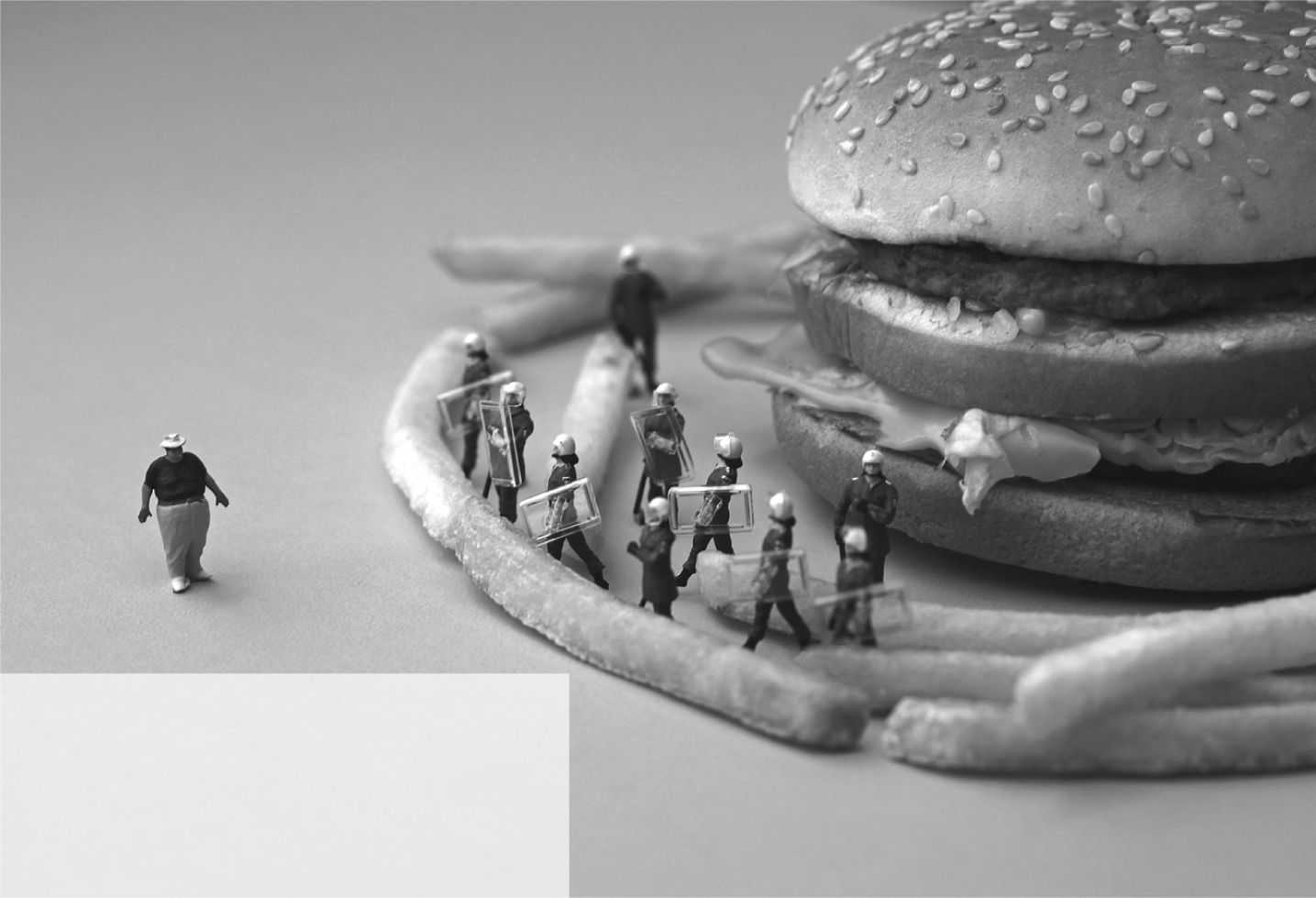
It was the exact moment when Larry knew that those advanced judo lessons were really going to pay off.
To Benny and Lou, every wine seemed to have a big nose.

Irish Food Nationalism
The Great Famine of the nineteenth century killed one million Irish citizens, and forced as many to emigrate. Its legacy continues to be felt today as many continue to leave the country in the wake of the 2008 economic recession. But emerging locavore, organic, and slow food movements are helping the nation renew its farming past and invest in economic recovery for the future.
Since banking and construction went bust in the late 2000s, pride in the “homegrown” has swelled, evidenced by food blogs, food tourism, and organizations such as Good Food Ireland. Geography helps. Ireland is small—approximately the size of South Carolina—making it relatively easy to disseminate successful local food practices nationally. Farmers, market operators, shop owners, and restaurateurs share promotional and production schemes. Food trails and other “gastro tourism” opportunities, artisanal restaurants, family farms, festivals, and regional food specialties—such as Ard Cairn Russet apples, Burren honey, Clare Island salmon, Kerry lamb, or Knockdrinna Farmhouse cheese—reinforce Ireland’s food identity at home and abroad. There is also growing interest in health and sustainability, and in knowing the origin of the food one eats.
Bord Bia, Ireland’s national food board, along with the Department of Food, Agriculture, and the Marine (DAFM), help promote local offerings, providing information on producers, products, markets, and farm shops while raising awareness about the quality and cultural, economic, and nutritional significance of local food. As promoting local food becomes national policy, farmers’ markets, fishing villages, and neighborhood butchers are taking on a “food nationalism” identity—promoting the relatively recession-proof agricultural and food sectors.
Agricultural output and food and drink exports have expanded since the 2008 economic collapse, and government agencies expect local networks, sourcing, and employment, coupled with the growing cultural importance of food in Ireland, to fuel continued economic growth. As Ireland’s largest indigenous industry, valued at over $30 billion, the food sector and growth in agri-food exports are key factors enabling Ireland to move beyond austerity measures imposed by the European Central Bank, the European Commission, and the International Monetary Fund.
Players in the global food system—such as German grocery chain ALDI, British grocery and retail chain Tesco, and U.S. fast food giant McDonald’s—have identified the potential of “Irish food” and food nationalism, and are staking their claims. While some warn that such efforts could co-opt the “Irishness” and threaten authenticity in the homegrown food movement and what constitutes “local,” making local agriculture national has benefited the economy, and helped alleviate pain from the recession—which is good for both economic growth and national pride.
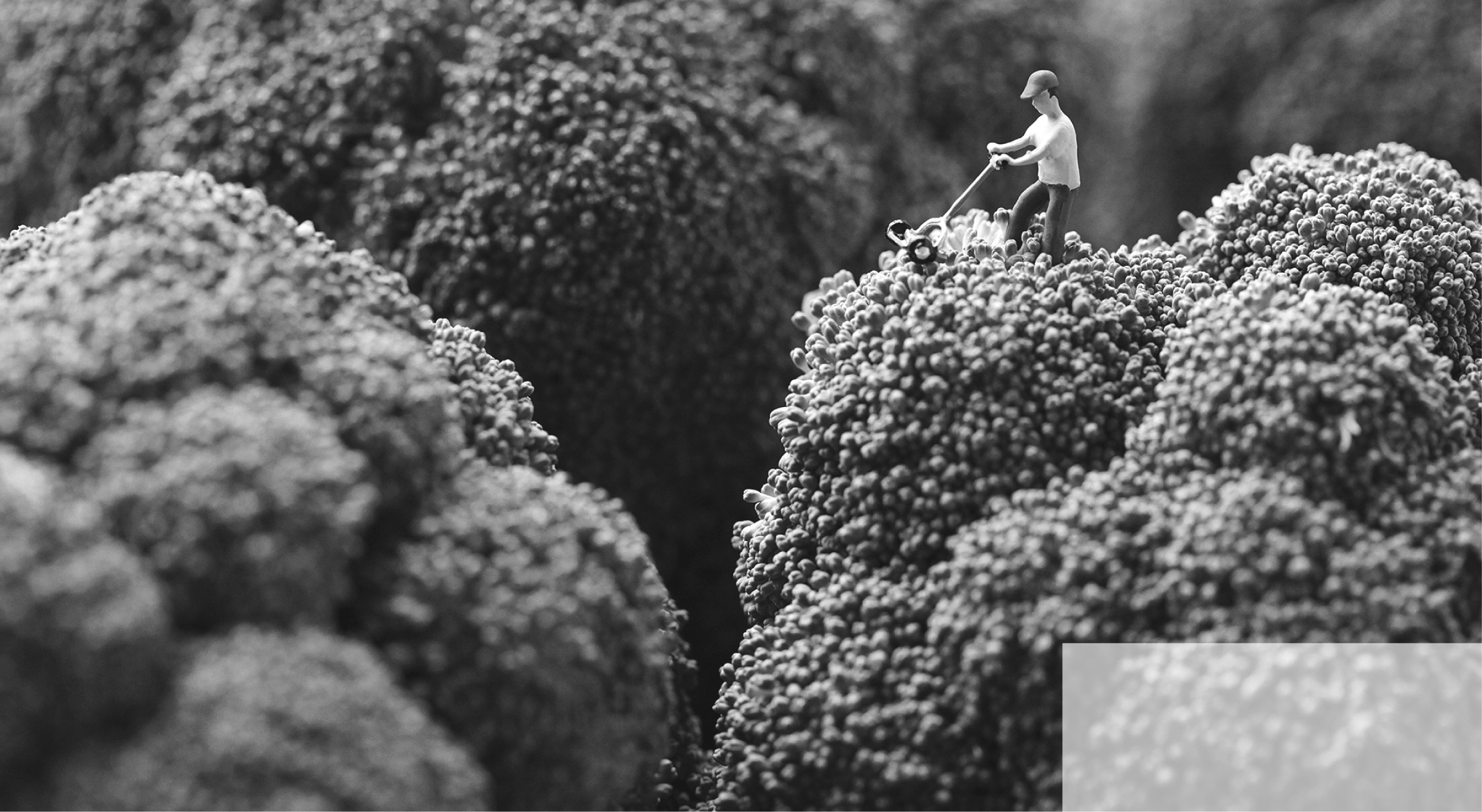
Douglas stubbornly refused to accept his wife’s opinion that he had let the lawn go too long without attention.
Happy Meals
As a child growing up in the city of Chicago, I never gave much thought to where the food I ate came from. While I knew it came from an animal, the meat in the butcher’s glass cases seemed a world apart from the cats and dogs I knew intimately as pets. And I loved my pets very differently than I loved food.
But moving to rural Pennsylvania as an adult challenged the difference between animals I loved and animals I ate. With a grant to interview farm families in western New York and north central Pennsylvania, I met countless families who loved their animals. At a Highland beef cattle farm, steers came running when their names were called, and young calves hurried over to be bottle-fed.
But the farmers never forgot that these animals were ultimately food.
One sociology major, who also happened to be the local “dairy queen” at her county fair, brought me to her family farm and introduced me to Sweet Pea, whom she described as “a big fat pig that has a good life.” As she told me, “We got Sweet Pea from a shelter. He’s our beloved pet.” I sat with Sweet Pea for a while; he was like a big dog.
Later, she informed me that Sweet Pea bit her grandfather. “We slaughtered him and ate him for dinner,” she said.
How could someone eat a pet? On a small farm, it is part of the deal. Livestock may ultimately be food, but they need love to thrive. Again and again farmers told me that their animals led pleasant lives until they were slaughtered—a juxtaposition that may seem strange. Most of us see nurturing and killing as emotionally incompatible with one another.
But as I watched families care for animals that would ultimately end up on someone’s plate, I came to wonder whether a hamburger from a beloved cow was any better—ethically superior, and tastier, than meat from an unloved one?
Some observers, such as food critic Michael Pollan writing in his best-selling book Ominivore’s Dilemma, suggest that livestock which are treated as pets may be healthier and tastier than that which is raised in the crowded anonymity of large-scale farms and ranches. They are less likely to subsist on corn and suffer from diseases, and more likely to get the exercise that develops a better-tasting product. They’re also likely to be free of antibiotics and steroids, which most experts agree is dangerous to consumers’ health.
Livestock that is loved is also more marketable to “green” consumers. Labels like USDA Organic, Third-Party Certified, Hormone-Free, and now “Certified Humane Raised & Handled” help to resolve any potential indigestion a consumer may suffer as they contemplate their meal’s past life. Perhaps that’s why the California Milk Advisory board spent over $18 million to create an ad campaign featuring “happy cows.” In one ad, a herd of Holsteins leaving the Midwest on foot welcome a California earthquake—and the foot massage it will give them—and discuss what they find most attractive in bulls.
For growing numbers of meat manufacturers, it seems, burgers from happy cows go down much, much better.
Growing Concerns
First lady Michelle Obama attracted major media attention when she took a shovel to the White House’s South Lawn in 2009 and pitched the home vegetable garden as one of the solutions to childhood obesity. She was among a growing movement of Americans who promote gardening’s health benefit by emphasizing how it offers greater control over the food we eat.
So why doesn’t everyone pick up the shovel and start digging? For starters, gardening requires space, time, and money—not to mention horticultural knowledge—which are not widely accessible. Julie Guthman, in a 2008 article in The Professional Geographer, notes how the movement’s supporters tend to presume the lack of knowledge and will—not resources—as the key impediment. Many Americans believe that low-income citizens are ignorant about the benefits of fresh produce, and would change their eating behaviors “if they only knew.” Yet this attitude blames those who are most vulnerable to health and financial challenges, she argues.
Alison Hope Alkon and Julian Agyeman, who edited Cultivating Food Justice in 2011, use the concept of “food sovereignty” to describe how poor and minority communities not only lack access to good food, but are often cut out of conversations about what good food actually is. Food justice movements, they argue, empower local communities to gain access to food that is both nourishing and culturally appropriate, rather than “educating” them about what they should do.
So while the first lady’s call for home gardening raises public awareness about food and health, the broader food justice movement goes even further, showing us that improving food access requires us to think about broader social inequality, and not just where one’s food comes from.
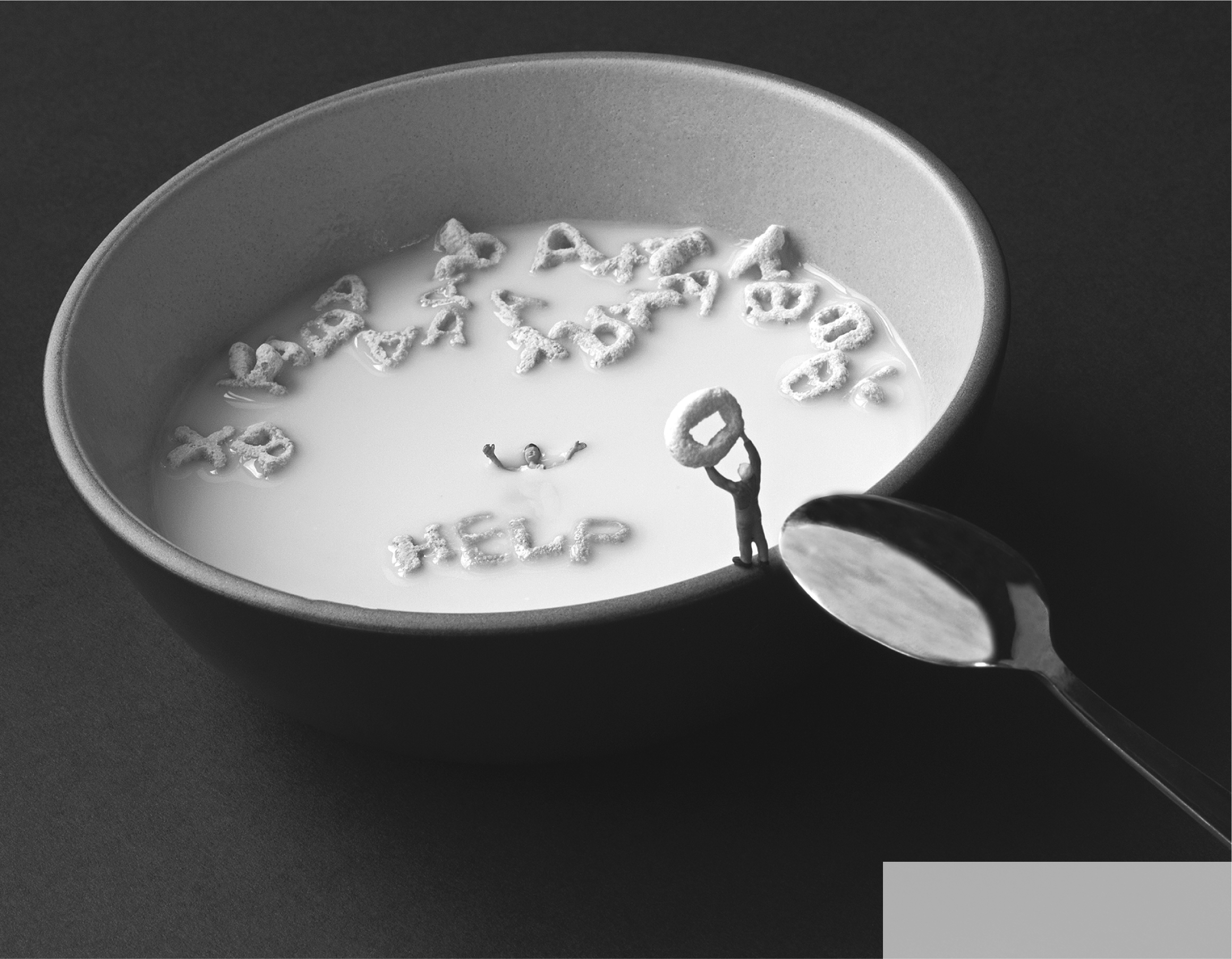
Yet another life saved by a frosted oat vowel.
Labeling to Distract
Vermont, Maine, and Connecticut recently passed legislation requiring companies to label foods that contain genetically modified (GM) ingredients, and roughly half of all state legislatures are also considering doing so. While such labels are appealing, giving consumers the illusion of control when making purchasing decisions, the passage of labeling laws for genetically modified food are likely to have a modest impact on the American food system, which in recent decades has shifted toward genetically modified commodity crops.
According to the U.S. Department of Agriculture, roughly 90 percent of all soybeans, more than 75 percent of cotton, and over 80 percent of corn are genetically modified. Food manufacturers use these crops and their derivatives, such as high-fructose corn syrup, cornstarch, soy lecithin, and vegetable oils, as ingredients in a vast array of processed foods. In addition, more than one-third of sugar used in the United States comes from genetically modified sources. At least 75 percent of all processed foods contain a genetically modified ingredient, according to conservative estimates.
Proponents of labeling note that we label food products even when the ingredients do not pose any health risks. For example, it is common to see religious preferences, such as Halal and Kosher statuses, as well as vegan and vegetarian ingredients, indicated on packages. They say that people have a right to know what’s in their food and that GM labeling gives discerning consumers choices.
But by labeling, people may believe that they have successfully insulated themselves from the problems of modern agricultural practices and may therefore lack motivation for organizing for change. As sociologist Andrew Szasz explains in his 2007 book Shopping Our Way to Safety, if individuals believe that they have shielded themselves from a perceived threat, there is a false sense of security.
With GM food labeling, the “protected” consumers would feel less urgency to push for the kind of regulatory controls needed to address structural issues in the food system, and regulators would have little incentive to defy the powerful influence of agribusiness. Therefore, labeling may impede the development of a significant mass of consumers who are committed to critical thinking about the American food system.
And labeling laws can only do so much. Rather than changing consumer behavior at the point-of-purchase, truly meaningful change must start long before products hit the shelves—in reforms that address the broad availability of diverse and nutritionally adequate sources of food, intellectual property, national sovereignty and colonialism, consolidation in the agricultural chain of production, and the regulation and management of environmental hazards.
A chance taken on a new path led them to swear off pineapple riding forever.

What We Crave
Members of our editorial board share their guilty food pleasures.

Sylvanna Falcón
Inka corn is my guilty food pleasure! It is a delicious Peruvian snack of crunchy and lightly salted giant corn that is perfect to munch on anywhere, anytime.
Gil Eyal
Andre’s Hungarian Bakery in Queens makes a poppy-seed pressburger, traditional Hungarian (but really can be found all over East Central Europe) rolled pastry with a filling of poppy-seeds and raisins inside. I simply cannot resist it. It’s not only delicious, but it also reminds me of the one my grandma (who came from Poland) used to make. It’s sweetness and memory rolled into one!
Karen Sternheimer
Growing up when even health-conscious parents fed children sugary cereals, I developed a life-long taste for Peanut Butter Cap’n Crunch. I don’t eat it for breakfast anymore, but it’s a great dessert (with or without milk).
Monica Casper
At night, when the kids and my husband are asleep, I like to read mystery novels while drinking wine and eating pretzels and chunks of cheddar cheese. Me time.
David Newman
Four-pack Frappuccinos and fake bacon.
Syed Ali
Indo-Chinese food, from Hakka Chinese who started coming to Calcutta in the late 1700s. Chinese food made for Indian tastes. Fusion before there was such a term.
Héctor Carrillo
A good Mexican pan dulce (pastry) dipped in frothy, boiling hot Mexican chocolate. It brings me right back to my grandmother’s kitchen in Mexico City. Pure sweet nostalgia!
Ilene Kalish
Peanut butter. Jif, creamy. (Skippy in a pinch.) On apples, pretzels, bagels, rice cakes or crackers. But better straight out of the jar, on a knife, or (when no one is looking), directly off the end of my index finger.
John Torpey
Ritter dark chocolate with hazelnuts: between the dark chocolate and the nuts, it’s practically health food!
Wendy Chapkis
Hot Italian Sausage. In general, I am a political, as well as culinary, vegetarian; but there are times when I indulge in the pleasures of the flesh, mostly when my vegi-lante girlfriend is out of town.
Kari Lerum
When I see Hot Tamales Candy, I must consume the entire box, either in a dark movie theater or in my car on the way home from the video store.
Laura Carpenter
For my money ($1.19), there’s no lunchtime comfort food like Spaghetti-O’s. Pass the Parmesan!
Matt Wray
You don’t have to be a gluten-free freegan to believe that what you eat affects your soul. Food is the most primal form of medicine and we use it to soothe the aches and pains of battered emotions or a bruised body. When I have a cold or I’m just feeling blue, I crave not chicken soup but barbecued oysters. Recipe: two dozen fresh oysters in the shell. Ten minutes on a hot charcoal grill. Serve until mood elevates.
Sharmila Rudrappa
The South Indian that I am, I can’t do without a bowl of warm rice, cool unsweetened yogurt, and mango pickle for lunch during these Texas summers.
Tom Linneman
My family’s “pink dip”: cream cheese, ketchup, onion salt, garlic salt, and Worcestershire sauce. Unhealthy. Addictive. Perfect. No recipe, but as my mother says: you’ll just know when you have the color right.
Joanna Kempner
I sneak spoonfuls of peanut butter and honey. Don’t tell anyone.
Greg McLauchlan
Perhaps a bit too “new age” for some, but how about massaging your kale into a wonderful salad? Check out the Wilted Kale Salad recipe, from a great food and recipe blog “In My Box”: http://inmybox.wordpress.com/2008/08/13/raw-raw-raw/.
Jessica Streeter
Craft beer. Sweet, glorious, craft beer. There’s a style for every occasion, but I often reserve the strongest ones for those painfully long paper-grading sessions.
Carly Chillmon
Say cheese. This dairy delight is my bad habit. Gorgonzola, Parmesan, Sharp Cheddar, Brie…. I strongly believe humans evolved to eat better food, such as cheese (and drink wine).
Jodi O’Brien
At parties, I can pass by cookies and candy without a glance, but bowls of potato chips—especially salt and pepper crinkle chips—stop me in my tracks. I hover around the chip bowl eating fistfuls and trying to avoid shaking hands with my greasy fingers. Yum.
Arlene Stein
A corned beef sandwich on rye is my messy, unhealthy, cholesterol-rich delicacy of choice—with a pickle or two on the side, of course. (Don’t tell my vegetarian friends, please).