




Abstract
This article explores the implications of conceptualising, designing and implementing experimental sites seeking to support more sustainable home-based eating practices, or HomeLabs for brevity. Building on earlier phases of practice-oriented participatory backcasting and transition framework construction, the HomeLabs involved collaboration with public, private and civil society sectors and with the members of participating households. These collaborations identified a suite of supportive socio-technological, informational and governance interventions that mimicked, as far as possible, the characteristics of promising practices for sustainable eating developed through backcasting and transition planning. The implemented interventions enabled householders to question, disassemble and reconfigure their eating practices onto more sustainable pathways across the integrated practices of food acquisition, storage, preparation and waste management. This process generated manifold insights into household eating practices, and this article focuses specifically on key outcomes of the HomeLabs, and the significance of social context, social relations and micropolitics of everyday life in shaping those outcomes. In particular, the HomeLabs findings reinforce calls to connect, combine and align product, regulatory, informational and motivational supports across the interdependent practices of eating (acquisition, storage and preparation and waste recovery) to optimise transitions towards sustainability. Offering a lens to interrogate interventions for sustainable food consumption in the home, this article provides a novel exercise in operationalising social practice theory.
Introduction
As Arnold Tukker et al. (2010: 13) note, food remains one of ‘the most critical consumption domains from the standpoint of environmental sustainability’. A central reason for this stems from the reported environmental impact of societal food production and consumption on greenhouse gas emissions, soil degradation, air and water pollution, water stresses, biodiversity losses and climatic change (United Nations Environment Programme (UNEP), 2010). From a consumption perspective, vast inequalities in global food security also persist worldwide, with more than 800 million people continuing to suffer from calorie deficiency and a further 2 billion suffering from one or more micronutrient deficiency (Global Hunger Index (GHI), 2014). At the same time, approximately 3.4 million adults die each year as a result of being overweight or obese (World Health Organization (WHO), 2014). Landscapes of food production and consumption are thus far from sustainable in their current configuration.
Individually, food consumption contributes 15%–35% of total greenhouse gas emissions of the average European citizen (Hallström et al., 2015). Changing consumer diets globally intensifies this impact, with rising incomes and an expanding middle class increasing meat and dairy consumption worldwide (Larsen, 2012). Furthermore, structural food wastage accounts for 30% to 50% (around 2 billion tonnes) of food produced (Institution of Mechanical Engineers (IME), 2013). Changes in consumer practice are thus necessary to address these wasteful realities and achieve the global food security agenda such that ‘people, at all times, have physical, social and economic access to sufficient, safe and nutritious food to meet their dietary needs and food preferences for an active and healthy life’ (Food and Agriculture Organization (FAO), 2009: 1). While supply-side debates dominate policy discussions of feeding growing populations under the conditions of climatic change, there is also a pressing need to address demand-side issues if the current unsustainabilities across the food chain are to be addressed (Davies, 2013, 2014).
Recognising that food consumption is shaped by a combination of cultural norms and habits, rules and regulations, modes of provision and infrastructures that together script the ways in which people eat has led to the emergence of a social practice lens for examining the performance and impact of eating (see Davies, 2013, 2014; Sahakian and Wilhite, 2014; Warde, 2013). A social practice approach provides a means through which the socialised performance, but ultimately individual act, of eating can be linked to wider architectures of provisioning and provenance. This is particularly significant in the context of governing processes of change towards more sustainable eating. For it is the case that issues of accessibility and affordability can make attaining a sustainable diet challenging, if not often impossible, for many consumers (Tovey, 2009). Ignoring the complex architecture of factors that influence eating practices, current governing approaches dominated by information provision via on-product labelling or public exhortations to ‘eat better’, are failing to transform substantially the form of eating landscapes. Experimentation with alternative mechanisms to support practice change is urgently required.
Building on important insights of both social practice protagonists and the pragmatic responses of transition management practitioners, this article reflects on the outcomes of implementing such an experimental approach. Extending a practice-oriented participatory (POP) backcasting process that led to the co-production of a transition framework for more sustainable eating (see Davies et al., 2014), the construction and outcomes of in-home experiments for more sustainable eating, or HomeLabs for brevity, are documented (Davies and Doyle, 2015; Devaney et al., 2014). In the absence of one agreed definition of sustainable eating (see Friedl et al., 2006), the HomeLabs focused on interventions that promoted resource efficient food, including greater usage of regional rather than imported food, organically produced food that limits synthetic chemical use, lower amounts of bottled beverages and reduced meat diets.
Specifically, this article aims to deepen current understandings of transitions to more sustainable eating practices by (1) exploring the outcomes of an experimental implementation of a POP backcasting research process, (2) identifying the connections between elements of practices that comprise household eating (acquisition, storage, preparation and food waste management) and (3) detailing the social dynamics and relations evident in the HomeLabs that impacted the nature and scope of practice changes achieved; an understudied arena for sustainability transitions (Hargreaves, 2011; Røpke, 2009).
Before documenting the results of the HomeLabs experiment, the conceptual foundations and design of the HomeLabs approach are outlined. Following this, the article elaborates on the key findings and impacts of the research, with particular attention paid to householder reactions and responses to the socio-technical interventions implemented. The findings highlight that while uniform interventions were provided to each of the participating households, the reactions to, and impacts of, those interventions were as variegated as the households themselves. The concluding section reflects on the implications of such findings for understanding the multivariate nature of eating practices and for policy makers charged with reorienting the performance of them.
Conceptualising and designing HomeLabs
As highlighted by Murcott (1992), ‘[t]he social anthropology of food and eating displays considerable diversity in theoretical approach, research strategy, and substantive focus’ (p. 14). Equally, specific aspects of food consumption – be that purchasing, cooking or waste disposal – have tended to be assessed in isolation from each other leading to a fragmented body of knowledge in the field. Recently, however, there has been a visible social practice turn in examining eating which seeks to coalesce such disparate understanding (Warde, 2013), and as such this practice approach provides an appropriate overarching analytical framework for the aims of this article.
While the literature on social practice theory is large and evolving, in this article practices are understood to represent both entities in themselves and performances (Reckwitz, 2002). As entities, practices are recognisable, describable and shaped by numerous socio-cultural and material elements, but it is in the ‘doing’ of a practice that the pattern becomes meaningful, is reproduced and can be modified (Southerton et al., 2012). As a result, practices steer processes of consumption (Warde, 2005) and often do not operate in isolation (Reckwitz, 2002). For example, the practice of eating requires the performance of a number of interconnected practices such that somebody purchases, prepares and cooks the food (Plessz and Gojard, 2014). These practices are often habitual, sometimes semi-conscious in nature, and thus represent obvious targets for behaviour change.
The experimental HomeLabs challenge was to disrupt the norms associated with the intertwined household practices that shape actual moments of food consumption, that is, acquisition, storage and preparation, and management of food waste. In keeping with established environmental impact assessments of household food choices (Tukker et al., 2010), this included providing households with access to more organic foods and alternative protein sources as well as devices and prompts to help reduce food waste and engage in food waste recovery where appropriate. The relationship between material dimensions of eating practices (e.g. available food options, kitchen appliances and composting facilities) and intangible socio-cultural norms (e.g. meal expectations) was of central concern in the HomeLabs research, which explored with household members how they ‘understand the meanings of their own performances’ (Plessz and Gojard, 2014: 2), both pre- and post-intervention. Attention to the material and social contexts shaping food practices represents a growing area of research internationally. This includes the role of context in shaping food waste practices (Evans, 2012), food-related anxieties (Jackson et al., 2013) and domestic food provisioning practices (Watson and Meah, 2013). This contextual framing was important for the HomeLabs to establish and understand differentiated commitment to various eating practices (Southerton, 2006) and the level of investment that performers of practices embed within them (Warde, 2005).
Designing HomeLabs
The HomeLabs study identified, implemented and evaluated a suite of interventions which mapped closely onto the short-term measures for sustainable eating co-produced through a POP backcasting exercise previously conducted (see Davies et al., 2014). POP backcasting brought together stakeholders from across the food chain to co-create future visions of sustainable eating, with resultant scenarios depicting a combination of lifestyle, technological and governance innovations. Following evaluation with citizen-consumers, the most promising concepts were outlined in a Transition Framework, setting out interventions required for their achievement (see Pape and Davies, 2012). Closing the loop on the backcasting process, the HomeLabs study implemented and evaluated the most promising short-term concepts identified (see Figure 1).
Short-term interventions outlined in the Transition Framework for more sustainable food consumption (Pape and Davies, 2012).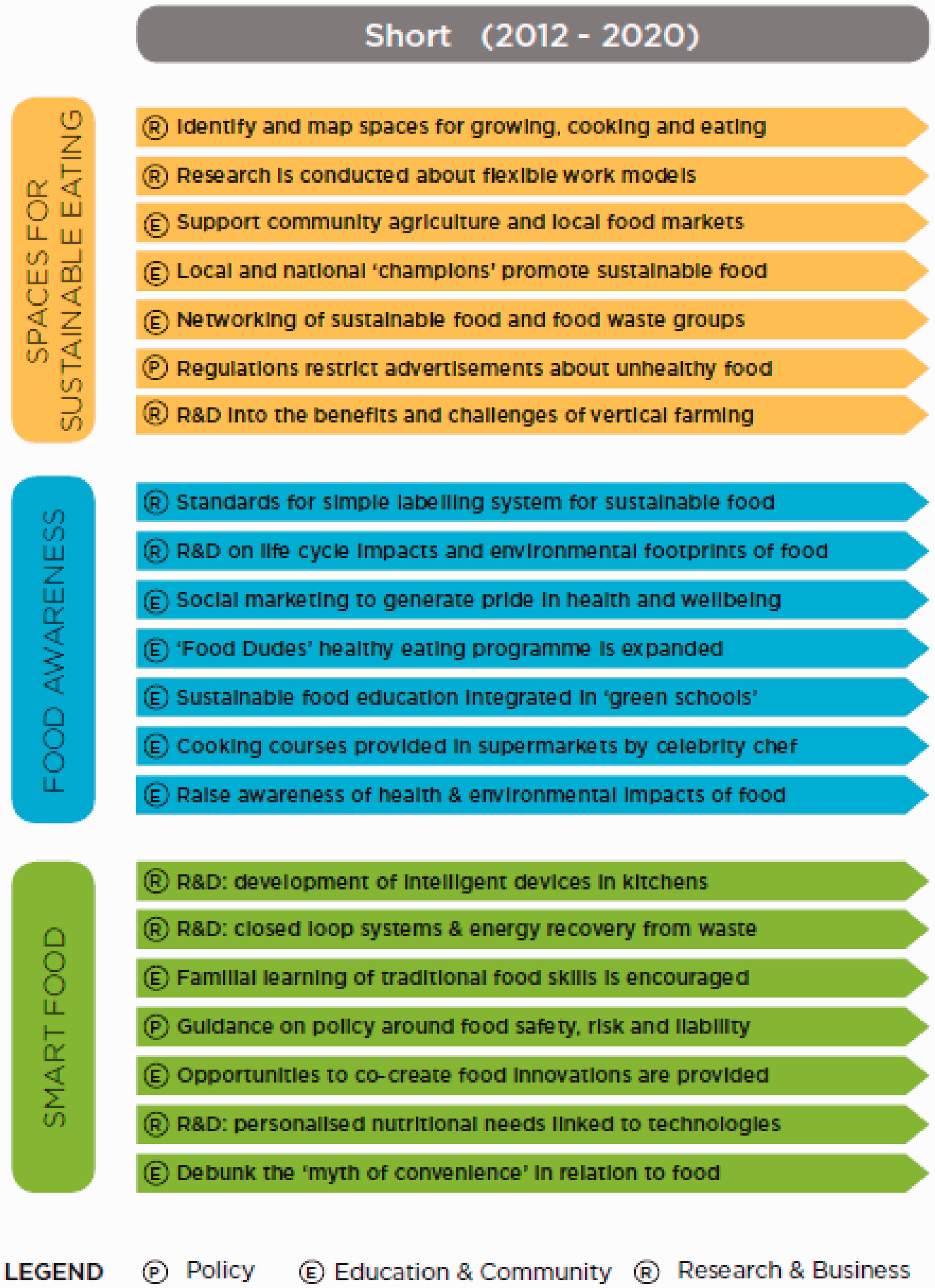
Stakeholders engaged in the final delivery of the Eating HomeLabs.
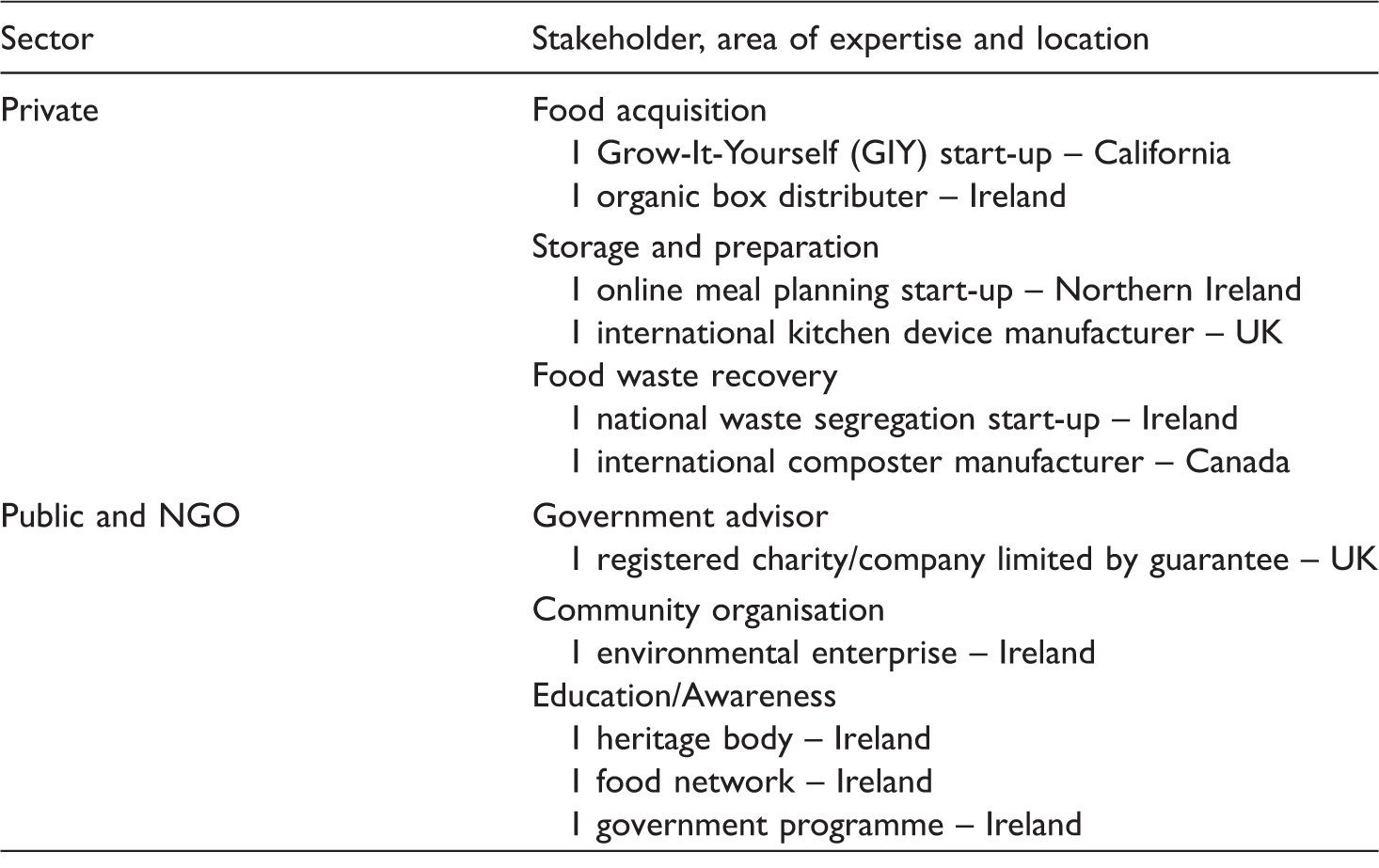
NGO: non-governmental organisation.
Households recruited in the Eating HomeLabs.
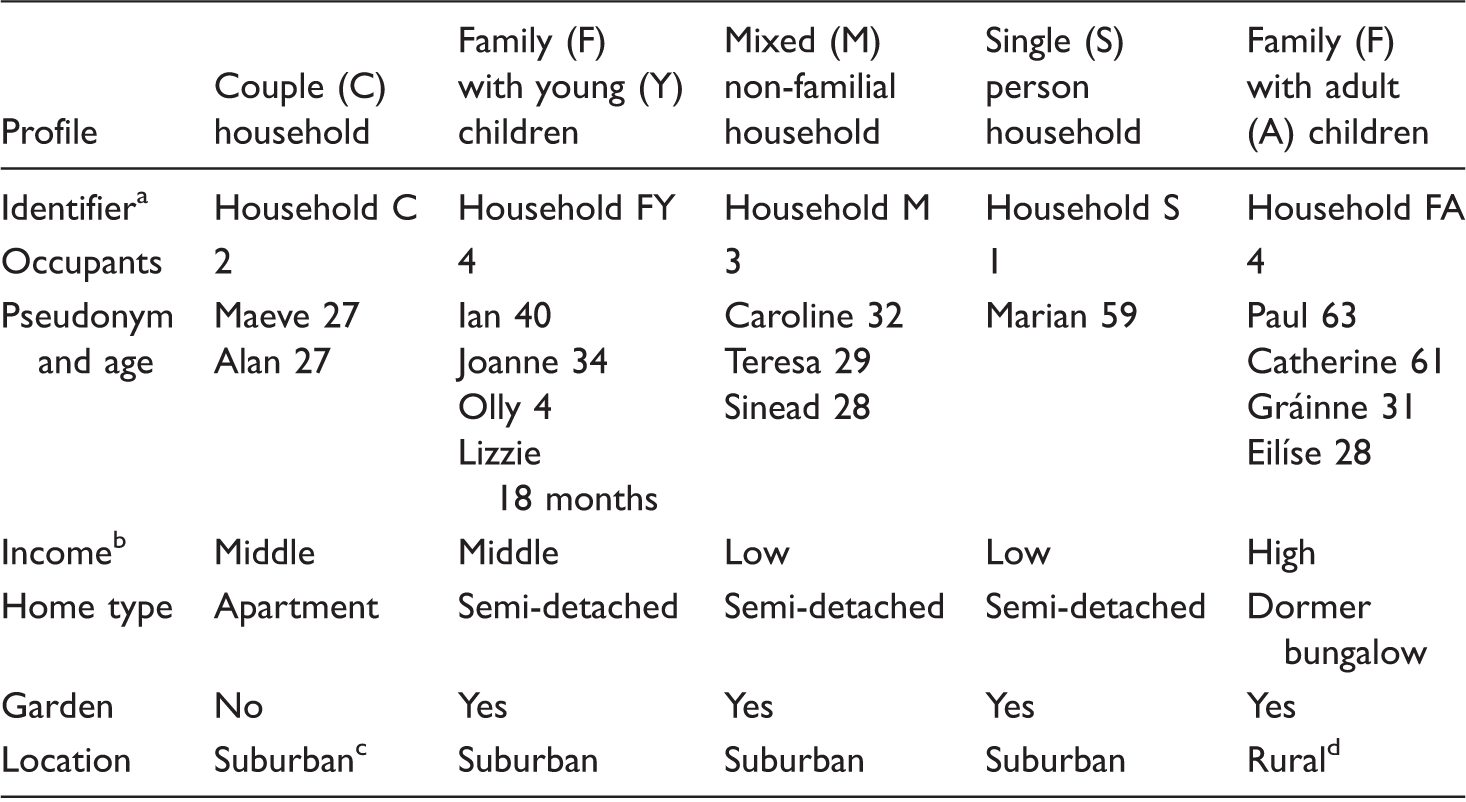
The Household keys outlined here (Households C, FY, M, S and FA) are used as identifiers in the results section along with the name of participants.
Precise definitions of low, middle and high income are absent in Ireland (Collins, 2013), with probing income levels often considered overly intrusive. Income attributes are thus based on participants’ self-reported income ranking and any mention to budgetary constraints throughout the HomeLabs study.
In Ireland, suburbs are defined by the Central Statistics Office (CSO) (2002) as ‘the continuation of a distinct population cluster outside its legally defined boundary in which no occupied dwelling is more than 200 metres distant from the nearest occupied dwelling’ (p. 163).
The CSO (2002) defines aggregate rural areas as places where people reside ‘outside clusters of 1,500 or more inhabitants’ (p. 164).
HomeLabs interventions and impacts
Working with the stakeholders outlined in Table 1, the research team identified a suite of prototype, near-to-market or niche tools, governance and educational interventions that aimed to collectively script and support opportunities for more sustainable eating in the home. Bundles of interventions were phased into households over the study period (see Figure 2). Following initial data collection regarding pre-existing practices in week 1, week 2 focused on sustainable food acquisition and involved experimentation with food growing kits, organic food boxes and sustainable protein sources. A carbon footprint graph meanwhile aimed to connect consumers with the impacts of their food acquisition practices and was supported by informational supports for more sustainable supermarket shopping and seasonal food charts. Week 3 promoted more sustainable food storage and preparation techniques and included the introduction of fridge triage boxes to assist householders with more accurate food circulation, identifying the food due to be eaten next or close to its use by date as laid out in accompanying food storage and safety guidelines. Portion control tools meanwhile aimed to encourage more sustainable cooking practices, while a visit from a chef sought to inspire meal planning techniques and debunk the myth of food convenience with tailored cooking tips. Finally, week 4 focused householders on further reducing their food waste and engaging in appropriate food waste recovery. Targeted product interventions included kitchen caddies to assist with food waste segregation and electronic composters as an alternative to traditional composting heaps. This was supported by information on the economic costs of food waste and home composting. In week 5, participants continued with their preferred practices and reflected on the overall impact of participating in the HomeLabs.
The Eating HomeLabs process.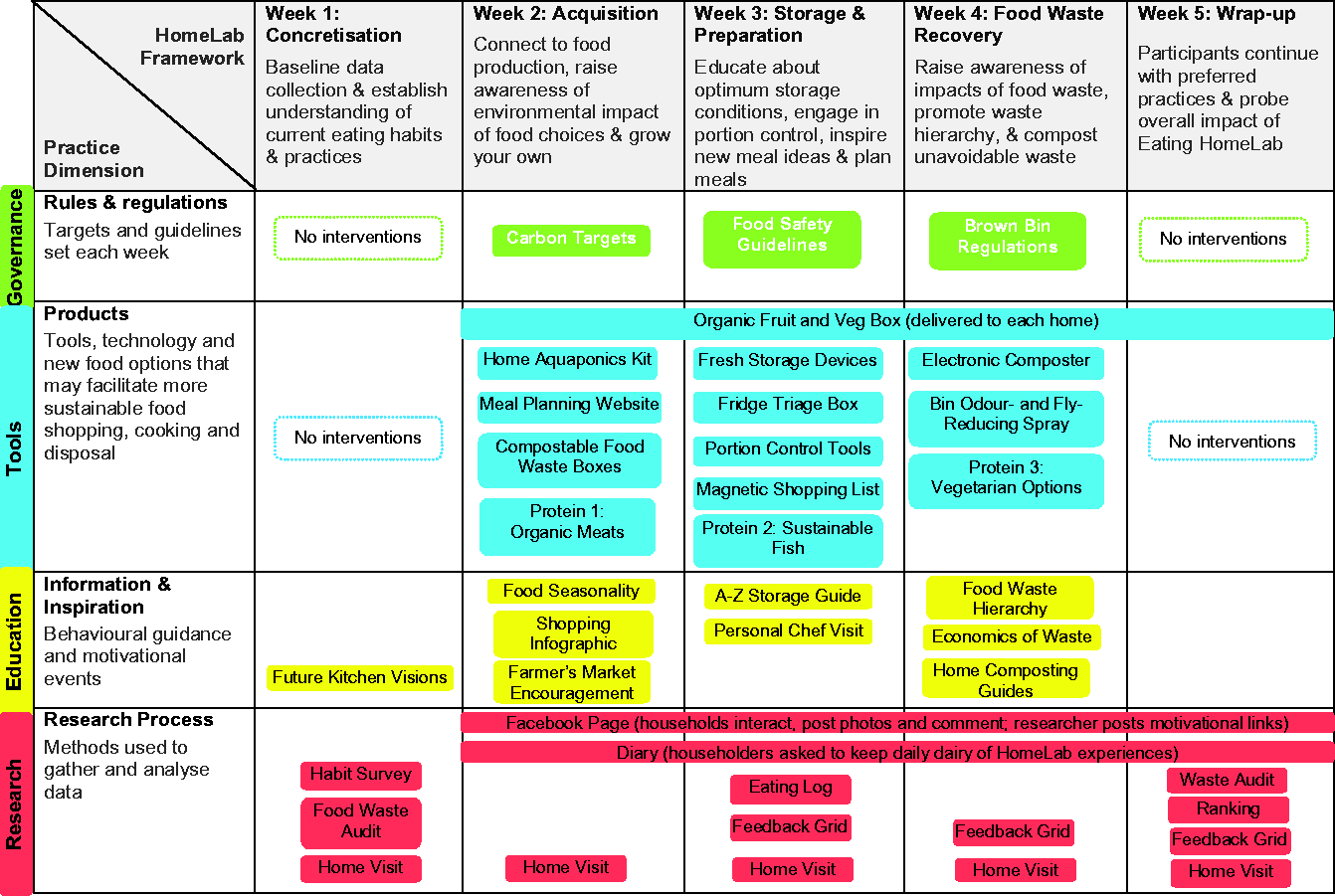
The impacts of the study were evaluated using data from households gathered through a process of mixed method, ethnographic techniques. The foundational core of this data collection comprised a visit to each household once a week to explore the participants’ experiences of that week’s interventions, collect data on the impact of the interventions and brief participants on the interventions to be implemented the following week. Semi-structured interviews conducted during these visits enabled some commonality of data gathering, but also allowed participants to speak freely with the researcher and to raise issues relevant to their experience (Hoggart et al., 2002). To assist with analysis, all interviews were digitally recorded, transcribed and analysed using the qualitative software package NVivo 10. In addition, a group Facebook page supported interaction with the research team beyond the household visits and permitted householders to share photos, thoughts and reactions to their HomeLabs experience. A food waste audit, as similarly utilised by Langley et al. (2010), was conducted in weeks 1 and 5 to assess the impact of HomeLabs participation on the generation and composition of food waste. Food waste was collected by householders for 3 days in advance of their next researcher visit, with participants asked to make a record of the type of food wasted and the reason for wasting it. The gathered food waste was then weighed by the researcher. 1
Experimental HomeLabs: Outcomes, connections and context
During the HomeLabs, changes in eating practices were noted across the participating households highlighting the ability of the interventions to challenge, disassemble and reconfigure eating practices onto more sustainable pathways. For example, over the course of the experimental period, participant households reduced their overall food waste generation by 28% (including reductions of up to 5.25 kg in Household M), with additional shifts towards more sustainable purchasing, storage, preparation and waste recovery practices also identified. This article focuses on the key outcomes of the HomeLabs process as reported by the householders, with particular attention paid to the impact of the interventions in challenging, disassembling and reconfiguring eating practices (Hargreaves, 2011). In doing so, the article highlights the process and outcomes of testing social practice approaches in lived settings and the variegated reactions that this can generate in response to differentiated social contexts.
Key HomeLabs outcomes
Within the food acquisition phase, participants reported an increased awareness of the environmental impact of their purchasing choices, with all households discussing their attempts to acquire foods with a lower carbon footprint as well as more organic produce when purchasing foods outside of the provided HomeLabs products. It was the combination of material and informational interventions that was particularly influential here, with a carbon graph and the provision of new food items providing the initial impetus to try new food provenances. The HomeLabs strategy then aligns directly with the social practice approach proposed by Shove (2003) and Warde (2005) that recognises the complex architecture of material and social constructs influencing the performance of practices. Here, the physical provision of foodstuffs altered the material constructs available to householders while the carbon graph simultaneously provided a form of regulatory frame and learning opportunity for participants to engage in more sustainable eating practices. For instance, after experimenting with the organic fruit and vegetable box, both Household FA and Household FY actively commenced new organic purchasing practices in their wider food acquisition practices, swapping out several conventional items for their organic alternatives (including spaghetti, tinned goods and fruit). Resonating with Evans (2012), identification of the refrigerator as ‘an active participant in the process of devaluation and decay’ (p. 52) and Metcalfe et al.’s (2012) emphasis on the food waste bin as a type of local waste infrastructure, this result highlights the ability of material constructs to disrupt established practices. Nonetheless, while financial constraints undoubtedly also play a role in determining food acquisition choices (Tovey, 2009), participants sought to modify their purchases (outside of the provided HomeLabs products) to incorporate more sustainable options where this was seen as feasible and positive for their overall eating experiences: Every week since I’ve started I’ve bought and replaced a few different things with organic … [it’s] making me think, yeah that I need to look at what’s going into the food and definitely the taste is always better. (Joanne, Household FY) We feel much better eating organic food. Feel it is better for us and better for the earth. (Catherine, Household FA) I certainly got loads of ideas of food storage [despite] … cooking for 50 odd years. Things like not storing the bananas in [the fruitbowl] because they are better kept away from the other [fruit]. (Catherine, Household FA) I’ve put all my fruit now that I wouldn’t normally into the fridge … I used to just keep it out but then it did go … off very fast. (Joanne, Household FY) Previously I would just eat a lot of mince. Now I would be more than happy just to have veggies or … if you eat half mince half beans … they are healthy. They help bulk up your dinner, they give you protein and stuff. But they are not bad for you or expensive. (Alan, Household C) We wouldn’t personally [use the electronic composter], because we have compost going on … we’re in a country house, with the space for composting. (Catherine, Household FA) That [electronic composter] wins out for me … It’s kind of easy. I feel that the [traditional] composter is so far away from the house, I just forget about it! (Joanne, Household FY)
Most notably, the outcomes of the HomeLabs, both in terms of participant reactions and evidenced impacts, highlight the success of integrated or ‘connected’ bundles of product, regulatory and informational interventions for supporting more sustainable eating practices. This theme of connection is fleshed out in the following section.
Connections
Combining information about the impact of current consumption practices – achieved through the food waste audit – with practical tools and tips designed to help reduce that impact ultimately contributed to the degree of practice changes the HomeLabs generated. Indeed, participants noted how many of the interventions would have little efficacy in isolation: The information pack to be honest won’t make sense unless you see the stuff and get it actually working. Because, realistically … you don’t really read things in depth. (Maeve, Household C) To be honest I don’t think we would have gotten as much of an impact or understanding if we hadn’t … [had the researcher’s] interaction … I really don’t think I would’ve understood it as much if I hadn’t been [visited]. I think I changed my behaviour because it was you. (Maeve, Household C) You didn’t just give the stuff, you explained what to do with it. And I’d sit down in my own time and I’d read it properly, and observe and take it in. (Marian, Household S)
Finally, the experimental HomeLabs approach highlighted the need to address and connect multiple interdependent practices of eating (acquisition, storage, preparation and waste recovery) for more holistic transitions to sustainable food consumption. Other studies, policies and campaigns have tended to isolate these connected practices, attempting to encourage practice change in one arena to the neglect of its interconnected elements. For example, multiple studies have focused solely on the drivers behind organic food purchasing (Onyango et al., 2007) or consumer interactions with farmer’s markets (Hunt, 2007). Such studies often fail to acknowledge the complex nature of food consumption that leads consumers to conduct multiple food acquisition practices at different times and according to different needs, wants, preferences, lifestages and financial constraints. Regarding food storage and preparation, a number of studies have also tended to exclusively focus attention on kitchen practices, be it in terms of food safety (Wills et al., 2015) or cooking skills (Lyon et al., 2011; Meah and Watson, 2011; Short, 2006). Others emphasise the pressing need to reduce meat consumption (Garnett, 2011) but in isolation of the impact of other food consumption choices, for example, whether the plant-based substitutes for meat are obtained from a local source or are organic in nature.
Elsewhere, some studies combine elements of the practices connected in the HomeLabs, though none as extensively as in this study. For example, Watson and Meah (2013) explore the trade-offs between food waste and safety agendas connecting kitchen management and wasting practices in the home, while Meah and Watson (2013) examine consumer ethics related to purchasing and provisioning practices. Similarly, Evans (2012) connects food purchasing to household storage and waste generation, albeit with no attention to the organic, local or low carbon qualities of the purchased food. Cappellini and Parsons (2013) likewise highlight the need to look beyond the mere consumption of meals when exploring social relations in the home, to instead examine the ‘series of practices surrounding the business of feeding the family’ (p. 121). This includes meal planning, food shopping, cooking and serving meals as well as the often neglected phases of waste disposal or use of leftovers. Again, however, Cappellini and Parsons (2013) pay no attention to the environmental credentials of the food acquired in the first place, nor the practices of composting performed thereafter.
Indeed, the way in which the themed weeks of the HomeLabs (acquisition, storage and preparation, food waste recovery) came together proved popular with participating households, with members of Household C and Household M specifically highlighting the benefits of the phased approach: At the end, that you can kind of see a cycle of it so it all makes sense. (Caroline, Household M) It was like you weren’t being overloaded … I think definitely having an inch to inch to inch [phasing of interventions]. And then I think stuff starts making sense. (Maeve, Household C)
Contexts
Assessing areas of commonality and divergence between household reactions to identical HomeLabs interventions reveals the importance of social relations and the (micro)politics of everyday life on resultant practice changes; a neglected area according to practice scholars (Hargreaves, 2011; Røpke, 2009). As Hargreaves (2011) notes, a close relationship exists ‘between practices and the power and social relations that they support and uphold’ (p. 93). Such relationships were evident in the HomeLabs with some sustainable eating practice interventions (such as the meal planning techniques and the fridge triage box) more easily adopted in families in which one member assumed responsibility for more sustainable food acquisition, storage and preparation on behalf of the entire household: I know I mainly do the shopping … I don’t think I’ll buy as much as I used to because that’s one thing that I’ve learned. (Joanne, Household FY) Definitely our storage of food has changed. I’ve even noticed that. And that’s with Mam doing most of the storage. (Eilíse, Household FA) I’d say even one [collective] meal a week might be a bit ambitious … Maybe if you had mixed professionals who were teachers and all finished at the same time, it would be different. (Caroline, Household M) I’d say if you knew more veg recipes off hand then it wouldn’t have been such an effort … I wouldn’t know what to have like for lunch. (Caroline, Household M)
Household C, by contrast, was a time-pressed couple leading busy lifestyles with significant work commitments and multiple hobbies. Both participants from this household felt that they had insufficient time to implement all of the practice changes being prompted by the HomeLabs interventions. This aligns with Evans (2012) who highlights the need to acknowledge the socio-temporal context of food practices, with much ‘proper’ food preparation imposing significant and, sometimes unachievable, demands on time. Furthermore, Evans (2012) notes how the passage of food into waste often occurs as a result of householders ‘negotiating the contingencies of everyday life’ (p. 53) when enacting their ordinary domestic practices. Similarly, in the HomeLabs, the female member of the Household C felt obliged to take the lead in implementing the interventions provided, but was thereafter frustrated by a lack of capacity to make significant changes to eating practices: You do need time to be prepared. … chatting [with the visiting chef] about preparing meals and doing soups and stuff and I was like ‘I don’t have time’ [wails] … I’m doing whatever is handiest and that I can get a lot of dinners out of. (Maeve, Household C)
Conclusion
Paying attention to both the ‘internal dynamics and the external conditions’ of practice development (Warde, 2005: 148), the findings of the HomeLabs highlight the importance of understanding the impact of context, social relations, motivating forces and micropolitics in any endeavour to shift food consumption onto more sustainable trajectories. The nuances of everyday life create significant challenges for developing appropriate supports for households to adopt sustainable eating practices. The HomeLabs sought to navigate this challenging environment with its phased introduction, and combination, of motivational, informational, regulatory and product supports.
Focusing on a different eating practice each week further assisted the process of practice change and prevented participants from feeling overwhelmed by interventions. The need for such an individualised and supported approach, however, raises questions in terms of rolling out mechanisms supporting sustainability transformations within the home (Davies and Doyle, 2015). It is not feasible, neither economically or temporally, to provide such concentrated attention to individual households nationwide. Nonetheless, the HomeLabs provide important insights for community-based movements (such as transition towns), product developers (both start-up entrepreneurs and multi-national companies) and government supported initiatives (such as the Green Homes initiative in Ireland), which will play a key role in facilitating societal transformations in the food arena. Specifically, the HomeLabs results indicate that aligning regulatory frames, informational supports, devices, motivational prompts and products in flexible ways is more likely to lead to reconfigured practices than interventions that focus on one element alone. However, bringing these disparate communities of practice together given their different mandates and agendas is no simple task.
Applying a practice theory approach both in the implementation and analysis of the HomeLabs allowed for ‘the social organisation of consumption’ (Halkier and Jensen, 2011: 106) to be acknowledged and assessed in the transition to more sustainable eating practices in the home. Results demonstrate that even with uniform material contexts (applied interventions), differentiated social relations and dynamics in households result in variegated impact and recruitment to sustainable eating practices. Only through reflecting on the social, cultural, infrastructural, contextual and individual reasons for unsustainable eating routines (as through a practice approach), and the micropolitics at play in altering everyday decisions, can practices ultimately be disassembled and reassembled onto more sustainable pathways. Such an approach is not merely a theoretical or conceptual frame, however, and can be used as a springboard for engaging with citizen-consumers in their own homes. The results documented in this article already provide important insights in terms of what it means to operationalise the outcomes of participatory backcasting and transition management techniques through a social practice approach in lived settings.
Certainly, further longitudinal investigation is required to reveal the extent to which the temporally delineated HomeLabs might contribute to enduring and transformative change to eating practices. More generally, the outcomes of the HomeLabs experiments reiterate the challenges inherent in scaling-up and out such practice-oriented interventions for more sustainable eating and flag the importance of building a comparable evidence base of such experiments internationally.
Footnotes
Acknowledgements
The authors would like to sincerely thank all of the HomeLabs participants and collaborators who voluntarily gave their time to improve the research findings, impact and relevance. Thanks also to the reviewers of the article whose comments helped to strengthen the arguments presented.
Declaration of Conflicting Interests
The author(s) declared no potential conflicts of interest with respect to the research, authorship, and/or publication of this article.
Funding
The author(s) disclosed receipt of the following financial support for the research, authorship, and/or publication of this article: This work was supported by the Irish Environmental Protection Agency (grant number 2008-SD-LS-1-S1).