



Abstract
Lisa M. Stulberg reviews two new books on education and the creation of each new generation of American elites.
Keywords
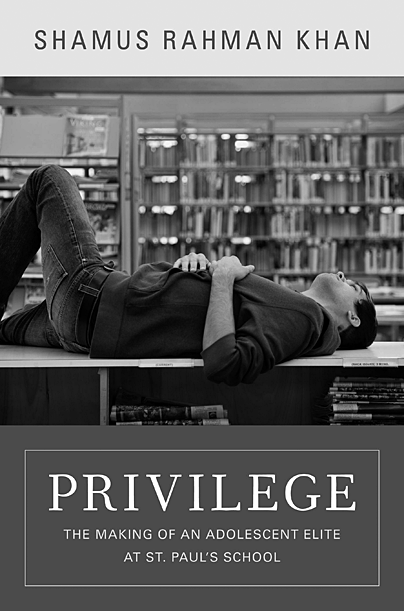
Privilege: The Making of an Adolescent Elite at St. Paul’s School by Shamus Rahman Khan Princeton University Press, 2012 248 pages
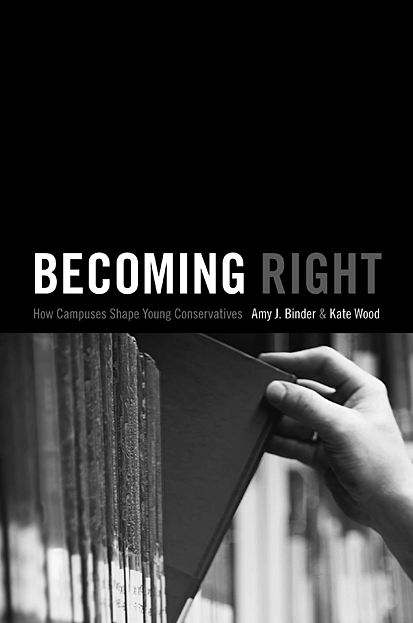
Becoming Right: How Campuses Shape Young Conservatives by Amy J. Binder and Kate Wood Princeton University Press, 2012 422 pages
In Learning to Labor, a classic study of working class “lads” in industrial England, cultural studies scholar Paul Willis asked a seemingly simple question: Why do working class kids end up in working class jobs? What role do schools—and kids themselves—play in building and reproducing the current social order? Willis showed that culture—the values, styles, and everyday habits and practices of working-class youth—stands between individuals and institutions and is the main mechanism through which people actively reproduce social inequality.
Shamus Rahman Khan and Amy J. Binder and Kate Wood, like Willis, understand the importance of culture and study schools as cultural institutions. Their books are excellent, engaging, well-written, and carefully researched studies of the ways culture works in and through schools. Both books provide examples of how the institutions of schools participate in forming and supporting the identities of their students.
Khan’s Privilege is an ethnographic study of St. Paul’s, the real name of an über-elite boarding school that the author himself attended. To study the school, Khan became a teacher and a resident. The book is framed as an historical and sociological puzzle: How, Khan asks, have elite institutions become more inclusive of race and class diversity in recent decades, even as American inequality has increased and become even more entrenched? To make sense of enduring American inequality, he tells us, we need to know what is going on in elite schools like St. Paul’s.
The nature of the elite itself has changed over time, says Khan. The “old” elite hoarded their resources, using mechanisms of distinction and social closure. Khan invokes the metaphors “moats” and “armories” to describe how previous elites defended their spaces of privilege, using inherited wealth and snobbish, exclusionary views of culture. Today’s elite, in contrast, justifies and retains its power through “ease of privilege.” It is a genuinely more open, “omnivorous,” egalitarian approach to culture. “Today,” Khan writes, “what is distinct among the elite is not their exclusivity but their ease within and broad acceptance of a more open world.” Identifying ease as the new mechanism of the production and reproduction of the elite is Khan’s primary theoretical contribution.
This new openness, Khan writes, is real—not “just some delusional fiction invented by the elite to justify their position.” Yet it has had the effect of producing and naturalizing inequality. The presence of some class and race diversity at St. Paul’s allows students to believe that the school truly is open to all who work hard and display talent. This focus on working hard and capitalizing on talent—rather than relying on family name and fortune—allows the new elite to see their own success as earned, and to see the “failures” of others as the result of individual choices, such as laziness or inflexibility. This justifies and hardens inequality. This ideology of meritiocracy “naturaliz[es] socially constituted distinctions” and makes inequalities seem like “a product of who people are rather than a product of the conditions of their making.”
Khan takes us inside the dining halls, classrooms, and dorm rooms of St. Paul’s to examine how ease is taught and learned through school rituals, curriculum and pedagogy, and the “seemingly mundane acts of everyday life.” Khan writes, for example, that the highly-ritualized, twice-weekly formal dinners with faculty members at St. Paul’s teach students ease. Through these meals, students learn “a vital piece of upper-class culture: how to act casually while dressed formally.” So, too, in school work, students come to see their success as earned and come to believe that they are exceptionally talented. Khan writes: “It is only a slight overstatement to say that I rarely saw a student reading during my year at St. Paul’s.” Yet both students and faculty at the school are convinced that students—who do stay very busy, according to Khan—work incredibly hard.
Khan concludes that ease can be taught, but only in elite institutions, where it becomes a mechanism of social closure for the new elite. While hard work can be accomplished by anyone, ease is something the elite can keep for itself, thereby ensuring the continuation of its privilege.
Unlike Khan, Binder and Wood do not explicitly focus on power and inequality. Situating their study of campus conservatism within a very useful discussion of the national conservative movement, they show that although there has been a move away from the political middle (at least since 9/11), more students still identify as moderate than as either left- or rightwing. Yet national conservative organizations suggest that conservatives are isolated, even under attack, on their campuses. To further understand this narrative and the way that conservative students “think and behave politically,” Binder and Wood focus on two case studies, pseudonymously named the Eastern Elite campus and the multi-campus Western Public system.
Becoming Right draws on data from 92 interviews, mostly conducted in 2008 and 2009. The majority were conducted with students, faculty, administrators, and others at Eastern Elite and Western Public. The authors also interviewed leaders of non-campus-based conservative organizations and students and alumni at UC San Diego, the authors’ home institution. Binder and Wood selected Eastern and Western as “extreme cases”—as “prominent examples of campuses that conservative critics often point to as paradigmatically liberal strongholds.”
Eastern Elite is an internationally-renowned, well-resourced, super-selective university that might be the dream destination for many of St. Paul’s graduates. One can easily imagine that one of the students writing for Eastern Elite’s conservative newspaper, the Searchlight, might have been, just a few years before, puzzling through connections between Beowulf and Jaws in a St. Paul’s seminar or trying on multiple outfits as she dressed for a seated dinner at the prep school.
Eastern Elite builds and sustains a “close-knit community” among its relatively few students. Almost all undergrads live on campus for all four years and come to know each other well through meals, shared social experiences, and an incredible array of extra-curricular options. Eastern students enjoy classes taught by professors who are top scholars in their fields. They internalize the sense that they are part of an “exceptional institution” and identify strongly and proudly with it.
Though there has been a retreat from the political middle, more students still identify as moderate than left- or right-wing.
While Western Flagship, a beautiful campus in a cute college town that is “the jewel in the Western Public university system,” is also a top university, it is much less selective. It also has a reputation as “one of the top party schools in the nation.” It is a large, relatively affordable and accessible public school that is “fun but practical,” drawing mostly in-state students. Western Flagship students generally live on campus their first year and then move to off-campus apartments. There are, therefore, few opportunities for them to build community. Classes—especially those taught by faculty—tend to be large, course selection is bureaucratic and impersonal, and students tend to feel they do not have opportunities to get to know their professors or many of their classmates. Western Flagship students, Binder and Wood write, “are plunged into a sea of fellow freshmen, swimming relatively blindly through university bureaucracies and impersonal crowds.” Whereas Eastern Elite students barely have a chance to get lost in the crowd, the academic and social atmosphere at Western is “atomized.”
To their surprise, Binder and Wood found that conservatism looked very different at the two schools. At Western Public, conservative students often felt marginalized and isolated. They constantly felt they needed to defend their politics to other students and to instructors. They often felt “alone in a vast wilderness of liberals run amok.” They worried that their instructors were penalizing them for their politics. Feeling under attack and marginalized, Western Public’s conservative students resisted in visible and confrontational ways, performing their conservatism primarily through provocation. They held “Affirmative Action Bake Sales,” invited Ann Coulter to speak on campus, and sponsored a “Conservative Coming Out Day.” At times, they challenged students and instructors in the classroom, shouting back, both literally and metaphorically, at what they saw as a liberal regime on campus. They did so, according to the authors, by drawing on the school’s “distinctive blend of fun… [and] pragmatism.” As one conservative activist said: “If you wake up and come to school in the morning and someone calls you a bigot, you know you’re going to have a good day.” Western students combined this dominant provocative style with a more traditional campaigning style for Republican candidates and issues.
At Eastern, by contrast, conservative students reported feeling integrated into the social life of the campus and generally had good experiences in the classroom. Unlike their counterparts at Western, they did not feel “embattled” or view their “professors or classmates as frequent verbal assailants,” nor did they worry that their grades suffered because of their politics. Eastern Elite students saw their professors as experts in their field who generally did not bring their politics into the classroom. Because they strongly identified as Eastern Elite students and as members of an elite more broadly, they believed a provocative style was “beneath them.” Instead they embraced a style of conservatism that preserved their elite identification. Their dominant style, civilized discourse, involved hosting and attending “formal events with intellectual content,” engaging in civil “bipartisan dialogue” with friends and dorm-mates, participating in the College Republicans, and contributing editorial content to the campus newspaper, the Searchlight. Students also engaged in campaigning and a few, particularly those who wrote for the Searchlight, engaged in a form of “highbrow provocation” that “grab[bed] the attention of their opponents through the written word and with bemused high self-regard.”
Binder and Wood argue that “the particular university campus plays a highly influential role in shaping the political styles of conservatives on that campus.” The specific way institutions are organized shapes students’ sense of self and their practices and behaviors. Binder and Wood also conclude that the “varying formal and informal organizational arrangements” at Eastern and Western—school and class size, whether students live on- or off-campus, the strength of student relationships with faculty—substantially inform the development of political styles and identities. “Political actors,” they write, “are made, not born, as colleges nurture and enhance particular forms of student conservatism”
Taken together, Privilege and Becoming Right make the important case that if we are to understand how youth, class, race, gender, sexuality, political ideology, religion, and other identities are formed and constantly reshaped, we cannot ignore schools. We also cannot afford to move away from the carefully-researched, qualitative studies that allow us to understand how schools as institutions inform identity, power, and culture in all kinds of intended and unintended ways.