




Abstract
Two books, The New Metaphysicals and The American Soul Rush, are compared and reviewed to show how each addresses the central place that spiritual experience occupies in American culture.
Keywords
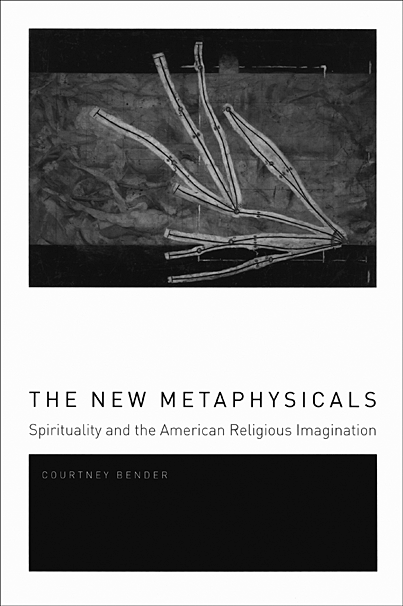
The New Metaphysicals: Spirituality and the American Religious Imagination. By Courtney Bender, University of Chicago Press, 2010, 272 pages.
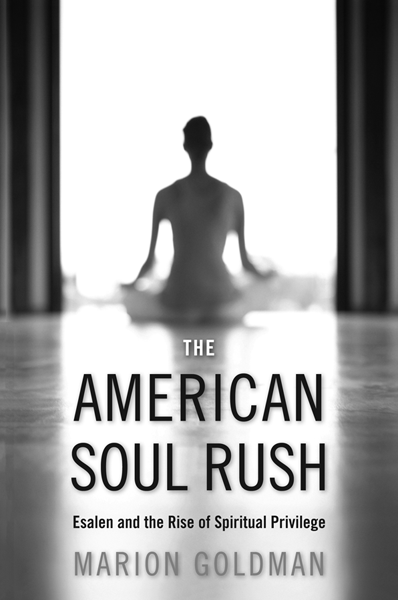
The American Soul Rush: Esalen and the Rise of Spiritual Privilege. By Marion Goldman, New York University Press, 2012, 240 pages
At a time when many Americans’ material reality and future economic prospects are grim, it may seem a bit frivolous to be dipping into the spiritual side of American culture. Yet, sociological interest in spirituality has been steadily growing over the last several years, an outgrowth, in part, of what must be one of the most intriguing trends in public opinion data: the steadily increasing numbers of Americans who identify as spiritual but not religious. The shift toward the spiritual brings a new intellectual vitality to the field, bringing into sharp focus the challenges of researching and understanding the place of metaphysical and non-material realities.
Whatever one might think about spirituality—a word given diverse meanings by scholars and the public alike to refer to a broad array of phenomena and personal experiences—the two books under review, Courtney Bender’s The New Metaphysicals: Spirituality and the American Religious Imagination, and Marion Goldman’s The American Soul Rush: Esalen and the Rise of Spiritual Privilege, provide very interesting, accessible, and convincing accounts of how spiritual desire and practice are interwoven into the American experience.
Bender locates her ethnography in Cambridge, Massachusetts, the iconic place where William James, the Theosophists, the Swedenborgians, and a variety of other mystics and spiritualists reigned in the late nineteenth century, and a vibrant site for spiritual groups and alternative/integrative health activities today. She spends considerable time with what she calls “spiritual practitioners,” a motley group of well-educated, white men and women who lead or participate in a broad mix of spiritual activities including Reiki, chakra meditations, yoga classes, shiatsu massage, spiritual art, homeopathy, and shamanic journeying. Bender participated in several organized group meetings and informal group gatherings and interviewed many of their participants. She empathically listened to and probed their mystical experiences, including near-death experiences and out-of-body encounters. These are not perfunctory summaries. Many of her interviewees see writing (and speaking) as spiritual experiences, and had already prepared extensive spiritual biographies and written reflections prior to being interviewed; for these spiritual practitioners, writing is a spiritual activity that was not “‘merely’ recording past experiences…[but] a practice and site where they tapped into these divine energies.”
Increasing numbers of Americans identify as spiritual but not religious.
From the outset of her book, Bender tackles the phenomenology of “the worlds of experience,” and the dilemmas she faced in generating scientific knowledge—rather than “merely” providing accounts of those experiences. She treats the production and practice of metaphysical experience on its own experiential terms, across multiple fields (for example, in alternative health, religious, and arts organizations), its discourse, its attentiveness to the body (the physical/material and the energetic, the visible and the invisible), and the ordering of space and time—a multi-intersectional totality especially in light of ways the belief in reincarnation and past lives/past identities can complicate current relationships.
When Bender listens to and witnesses how individuals experience the spiritual she is able to see it as a sociological, rather than an epiphenomenal or ineffable, reality. Many of the individuals and groups in her localized study have multiple crosscutting ties, and constitute a veritable community. Given that some interviewees believe in and experience the reality of “past lives,” these intra-community connections are especially intriguing. Commenting on reincarnation experiences, she notes: “Past lives do more than engage their participants in creative philosophizing.” They are, she says, “important social products through which their participants shape current relationships and understand their place in the world…they add another layer of mystical connection…[and] solidify the connections between two or more mystics” (emphasis in original). Emphasizing the communal reality of the metaphysical, Bender is actively drawn “into the space of the [spiritual] experience itself”—reluctantly, at times.
Bender spent considerable time with a motley group of well-educated, white men and women who participate in Reiki, chakra meditations, yoga classes, shiatsu massage, spiritual art, homeopathy, and shamanic journeying.
Marion Goldman approaches her study from within the space of Esalen spirituality, the famed spiritual-humanistic retreat founded in Big Sur, California, in the early 1960s. A long-time participant in Esalen’s various programs, Goldman’s book is more social history than ethnography. Her deep familiarity with Esalen’s core leaders and activities, in addition to interviews she conducted with several of its founding generation, as well her extensive use of Esalen’s archival materials, inform the narrative. Unlike Bender and others, who emphasize the historical continuities between contemporary American spirituality and earlier incarnations, Goldman is less inclined toward historicizing. She boldly declares: “The contemporary soul rush for self-transformation and individualized spirituality began on the central California coast at Esalen Institute.” The Institute, she writes, “democratized spiritual privilege by popularizing options that had once been available to relatively few Americans and made the religious marketplace more diverse and open.”
Whether or not Esalen deserves such credit, its unique place in the cultural landscape is at once fascinating and twee. Its co-founder, Stanford-educated Michael Murphy, whose family owns the enviable, stunningly beautiful coastal property (as Goldman emphasizes with a nod to French sociologist Pierre Bourdieu) embodies the intertwined concentration of economic, cultural and spiritual capital. It is mesmerizing to follow the actualization of Murphy’s desire and disciplined commitment to give life to his belief that “everyone had sparks of divinity that could be connected to a benevolent, distant cosmic force.” Without such capital and its synergy, it is hard to imagine the creation, practically from scratch, of a place that became a magnet for elite figures in humanistic psychology (Fritz Perls, Abraham Maslow, and others), as well as Hollywood celebrities. Clearly, amid the natural beauty of Big Sur, Esalen is a huge draw for those who wish to stoke the spiritual.
Esalen’s philosophy was supported by the sons of staunch WASP families such as billionaire Laurance Rockefeller, who gave millions of dollars to the place. Perhaps it should come as little surprise that within this bubble of privilege, the commitment to “personal and spiritual authenticity” did not show any trace of an emancipatory political spark. Quite the contrary. As Goldman documents, “the Institute was never an egalitarian community.” Hyper-masculinity and heterosexuality were the twin pillars of its culture—notwithstanding the fact that women comprised the majority of Esalen visitors over the years, and the organization of Esalen workshops (as well as its kitchen, gardens and cabins) maintained well-demarcated boundaries between its elite inner circle and its workers—including the body workers and masseuses who were co-creators of its visitors’ spiritual experiences. Goldman suggests that Esalen’s culture has changed somewhat, though the author’s tendency toward empirical and analytical breeziness obscures how this and other changes were accomplished.
Both of these books point to the continuities between so-called “alternative” spirituality and mainstream religious traditions, especially liberal Protestantism, and to the multiplicity of ways and everyday spaces (such as gardens and even commuter bus-rides) in which the spiritual is accessed. They add to an accumulating body of research on the dynamic ubiquity of lived religion and lived spirituality. These two books, especially when read in tandem, also illuminate the rays of unspoiled innocence and hopefulness that shadow American life. They suggest that the rigors of capitalism have not stripped Americans of their spiritual energies.