




Abstract
This paper theorizes the spiritual processes of community entrepreneuring as navigating tensions that arise when community-based enterprises (CBEs) emerge within communities and generate socio-economic inequality. Grounded on an ethnographic study of a dairy CBE in rural Malawi, findings reveal that intra-community tensions revolve around the occurrence of ‘bad events’ – mysterious tragedies that, among their multiple meanings, are also framed as witchcraft. Community members prepare for, frame, cope and build collective sustenance from ‘bad events’ by intertwining witchcraft and mundane socio-material practices. Together, these practices reflect the mystery and the ambiguity that surround ‘bad events’ and prevent intra-community tensions from overtly erupting. Through witchcraft, intra-community tensions are channelled, amplified and tamed cyclically as this process first destabilizes community social order and then restabilizes it after partial compensation for socio-economic inequality. Generalizing beyond witchcraft, this spiritual view of community entrepreneuring enriches our understanding of entrepreneuring – meant as organization-creation process in an already organized world – in the context of communities. Furthermore, it sheds light on the dynamics of socio-economic inequality surrounding CBEs, and on how spirituality helps community members to cope with inequality and its effects.
Introduction
Community-based enterprises (CBEs) – collective enterprises emerging within communities and embedded in them (Peredo & Chrisman, 2006) – play an important societal function for coping with today’s global challenges (Daskalaki, Hjorth, & Mair, 2015). While CBEs are grounded in commonly understood community traditions, members of CBEs invariably organize and build social status and economic advantage in ways that distinguish them from their community peers as they pursue novel opportunities for value creation (Seelos, Mair, Battilana, & Dacin, 2011). Tensions develop as CBE members collaborate with each other (Pret & Carter, 2017) but also compete for resources (Marti, Courpasson, & Barbosa, 2013), especially in contexts of poverty. Multiple authors suggest that research should focus more on the clashes emerging as CBEs develop within their community (Tedmanson, Essers, Dey, & Verduyn, 2015) as well as engage with outside actors to cope with adversities or seize opportunities (Warren, Anderson, & Bensemann, 2018). Given the inherently processual nature of entrepreneurship, a useful lens to understand these organizational dynamics of CBEs involves entrepreneuring (Hjorth, 2014). We see entrepreneuring as a process of organization-creation, meant as ‘not simply the creation of new organizations, but also experiments in new organizational form’ (Hjorth, Holt, & Steyaert, 2015, p. 599). This view highlights how organizations emerge and evolve as their members navigate tensions between organizing and the already organized (Hjorth & Reay, 2018), hence moulding organizations as they co-constitute them (Thompson, Verduijn, & Gartner, 2020).
This paper theorizes community entrepreneuring as the process of navigating tensions between organizing CBEs and the already organized norms and customs of the local community where these enterprises are embedded. We study community entrepreneuring by using a practice lens (Schatzki, 2005), which is suitable for understanding intra-organizational tensions (Le & Bednarek, 2017). While some studies have taken a practice perspective on CBEs (Anderson & Obeng, 2017), their focus has primarily been on the unfolding of practices of ongoing collaboration among community members. Conversely, by studying community entrepreneuring, we zoom into the tensions that emerge within communities and how these tensions are handled by CBE members as part of the collective to which they belong.
Our theorizing about community entrepreneuring stems from an ethnographic study – part of a larger research project focusing on farmer entrepreneurship in African communities – of a Chewa community in rural Malawi where a dairy collective enterprise (the Milk Bulking Group, or MBG) had emerged over time. Members of the MBG are embedded in a local community where egalitarian norms shape the everyday life of its village members, including the lives of dairy farmers who are the focus of the study. The study led to an unexpected discovery: spiritual practices, specifically witchcraft doings and sayings, played a central role in airing and navigating intra-organizational tensions within the CBE, as well as between CBE members and the local Chewa community. We found that, through spiritual practices, tensions within the local community are channelled, amplified and tamed cyclically over time in intertwinement with mundane socio-material practices. At the core of this process, ‘bad events’ occur – tragedies that, surrounded by a veil of mystery and ambiguity – struck CBE members and other community members especially when attracting the jealousy of their peers. Therefore, as practised through witchcraft, spirituality becomes a double-edge sword in community entrepreneuring. On the one hand, it provides a set of ambiguous frames that enable community members to reduce, or at least channel their frustrations, regarding the socio-economic inequalities that result from CBE member activities. On the other hand, spirituality enables CBE members to tentatively restabilize their social and economic status and continue to engage in entrepreneurial efforts despite the ‘bad events’ that occur.
On the basis of these inductive findings, this paper addresses this research question: How do spiritual practices co-constitute and enact community entrepreneuring? In addressing this question, we argue that this paper expands the scope of entrepreneurship as organization-creation (Hjorth et al., 2015) to the community and to the spiritual, thus investigating a novel context and dimension on how members collectively deal with tensions inherent with organizing the new in a world that is already organized (Hjorth & Reay, 2018). Second, this research contributes to the study of CBEs (Hertel, Bacq, & Belz, 2019) and emerging forms of collective entrepreneurship (Williams & Shepherd, 2021) by revealing how intra-organizational tensions are navigated. Finally, this study adds to the literature on organizational spirituality (Ganzin, Islam, & Suddaby, 2020; Suddaby, Ganzin, & Minkus, 2017) by highlighting how spiritual practices provide an avenue, either by transcending or complementing other socio-material doings and sayings, for members to trigger, negotiate and sustain change over time.
Theory
Community-based enterprises
The concept of CBEs remains vague in the literature despite its longstanding appeal, potential for societal impact and wide geographical span. Peredo and Chrisman (2006) refer to CBEs as communities ‘acting corporately as both entrepreneur and enterprise in pursuit of the common good’ (p. 310). Hertel et al. (2019, p. 438) describes them as ‘collectively established, owned, and controlled by the members of a local community, for which they aim to generate economic, social, and/or ecological benefits’. Both of these definitions involve the presence of a collective enterprise within the community. The community represents a group of people bound by a common identity, which is often shaped by the place that they inhabit and its unfolding history (Peredo & Chrisman, 2006). The collective enterprise is embedded in and stems from the community (Williams & Shepherd, 2021) and, according to Hertel et al. (2019), has a ‘community orientation’ as it works to create value for the community.
Yet, current definitions of CBEs do not clarify the boundaries between the local community and the collective enterprise embedded in it, nor the processes that constitute this ‘community orientation’. These unclear boundaries raise important questions: Do community members have ownership, control or influence over the collective enterprise, and how, then, do they exercise it? Who wins and loses within the community as a collective enterprise emerges within its boundaries? These questions are central for understanding what CBEs are, how they emerge and evolve over time, and how they create value and for whom (Kibler & Muñoz, 2020). Ideally, local communities and enterprises support each other (McKeever, Jack, & Anderson, 2015) and enterprises emerge spontaneously from communities’ sense of belonging and place in their business (Farny, Kibler, & Down, 2019), consciously work on their own identity within their local community (Hertel et al., 2019) and collectively adapt to the negative or positive events that they experience (Dentoni, Pascucci, Poldner, & Gartner, 2018).
Yet in contexts of change, particularly in situations of generating significantly higher income than their community peers, clashes between the emerging CBEs and their communities are inevitable. Some authors stressed that these clashes remain under-researched (Slawinski, Winsor, Mazutis, Schouten, & Smith, 2019; Warren et al., 2018), with little insights into how tensions emerging from these clashes are dealt with within communities. As Tedmanson et al. (2015, p. 439) points out, CBEs face ‘expressions of a dynamic tension, which is simultaneously both transformative and exploitative in orientation’. Specifically, these tensions surface in communities seeking to turn themselves into enterprises, in particular, as external actors – such as non-governmental organizations (NGOs) and/or international donors – intervene within communities and purposively alter their structures (Qureshi, Sutter, & Bhatt, 2018; van Wijk, van Wijk, Drost, & Stam, 2020; Venkataraman, Vermeulen, Raaijmakers, & Mair, 2016) as has occurred in the Chewa community in this study. Even to a lesser extent the CBE literature has explored how communities and their members deal with the socio-economic inequalities (Chemouni, 2018) and power dynamics that underpin these tensions (Kleinhans, Bailey, & Lindbergh, 2019).
To address this knowledge gap, this study focuses on community entrepreneuring as organization-creation process of CBEs. We take such a processual view (Hjorth et al., 2015) of community entrepreneuring by analysing how community members navigate the tensions inherent with organizing a collective enterprise in a local community context that already has organized norms and customs.
A practice lens on community
To understand community entrepreneuring with such a processual view (Hjorth et al., 2015), we zoom into the practices that together co-constitute a CBE organization-creation process. As ‘contemporary organizing is increasingly understood to be complex, dynamic, distributed, mobile, transient and unprecedented’ (Feldman & Orlikowski, 2011, p. 1240), CBEs can be seen as constituted of practices and material arrangements (Schatzki, 2006). We see practices as entrenched with the organizations that they inhabit (Schatzki, 2005, 2006). In organizations, practices are informed by rules (i.e. explicit formulations that prescribe or instruct an action needs to be done) and by ‘practical’ and ‘general’ understandings. Furthermore, practices are shaped by their teleo-affective structure (Schatzki, 2005): the ‘normativized and hierarchically ordered ends, projects and tasks, [. . .] emotions and even moods’ (p. 480) informing the individual to enact a practice. Together, these rules and understandings shape the sets of activities that form practices, enabling people to participate in them with shared meaning.
Nevertheless, practices are not just entrenched in organizations: they also constitute them as continually mouldable entities (Schatzki, 2006). In organizations like CBEs, for example, a multitude of everyday practices enacts a collective enterprise emerging from its local community. Hence, practices of CBE organizing are mutually constitutive with the customs and norms of the local community that embed them. Analysing the consequentiality between multiple practices (Le & Bednarek, 2017) involves understanding their temporal dimensions in three ways. First, enacting a practice itself requires movements within time (e.g. in our rural Malawi context, milking takes time from start to finish). Second, practices precede and react to one another (e.g. cleaning utensils, milking and bulking) and change in material arrangements. They can form rhythms or patterns (e.g. planting when the first rain starts to fall). Third, an individual can combine the past (e.g. experiences of famines, poverty, arable farming) and the future (e.g. achieving a sustainable livelihood) by enacting a practice in the present (e.g. dairy farming). In our study, this analysis of the consequentiality between practices helps to understand how people’s everyday activities in a CBE co-constitute processes of navigating tensions arising between a collective enterprise and the local community where it stems from. As discussed in the next section, witchcraft practices in rural Malawian communities – as imbued in mystery and ambiguity – make this analysis of consequentiality of practices inherently equivocal.
Witchcraft as spiritual practice to navigate social tensions
Our study of community entrepreneuring led us to discover that witchcraft doings and sayings play a central role in how members deal with the tensions of organizing a collective enterprise in a local community context that is already organized. Hence, in this study of community entrepreneuring, we see witchcraft in rural Malawi as an empirical example of spiritual practices. Recent organizational studies have challenged Max Weber’s idea that spirituality, encompassing both religion and traditional forms of magic, including witchcraft, play a minor role in modern organizations and organizing (Weber, 1993). Juxtaposing this to the Weberian ‘doctrine of disenchantment’, Suddaby et al. (2017) argue that spirituality plays a remarkable role in shaping contemporary forms of organizing. Similarly, Fotaki, Altman, and Koning (2020) indicate that the ‘intertwinement of the spiritual and the religious with the secular is fast becoming a hallmark of twenty-first-century “post-secular” societies’ (p. 13).
Relative to other forms of spirituality, witchcraft has been often seen and practised as a socially prohibited (Evans-Pritchard, 1937; Kluckhohn, 1944) and occult form of the spiritual (Comaroff & Comaroff, 2018). While early studies constructed witchcraft as a primitive precursor of spirituality (Tambiah, 1990), the claim that witchcraft conceptually differs from other forms of spirituality has been widely rejected for nearly a century (Gershman, 2016; Parish, 2018; Romberg, 2003). Early research focused on witchcraft particularly in traditional, and mostly rural contexts of the Global South (Evans-Pritchard, 1937). Yet, many studies also reported on witchcraft practices in the Global North – in early modern England (Sharpe, 2019) and Haitian urban communities of New York (Brown, 1999) – and in modern settings of emerging economies, e.g. investment banks in Ghana (Parish, 2018), business and political circuits in Puerto Rico (Romberg, 2003) and crime organizations involved with human trafficking across Africa and Europe (Comaroff & Comaroff, 2018). The variety of cases illustrates that witchcraft flourishes particularly when modernity and business interplay and clash with tradition and poverty.
Anthropology research demonstrates that witchcraft plays important roles in addressing social tensions, specifically issues of growing socio-economic inequality. On the one hand, it can be seen as a ‘weapon of the poor’ in some communities (Kluckhohn, 1944). For example, witchcraft allegations, i.e. accusing the rich of witchcraft as a means to accumulate wealth, reflect attempts to promote more equitable forms of integrating a market economy into a community. From this perspective, witchcraft is an avenue to encourage generosity, develop conformity to traditional community values, and level economic differences, as community members seek to avoid accusations of witchcraft (Kluckhohn, 1944). On the other hand, witchcraft can be seen as a sanction meant to maintain the established social order of a community against anyone seeking to accumulate wealth through business endeavors. Businesses are required to redistribute wealth or otherwise face the risk of witchcraft punishment as a result of collective jealousy (Bjerregaard & Lauring, 2012).
Similar to other forms of spirituality, the ambiguous role of witchcraft suggests that witchcraft entangles inexorably with power dynamics in communities (Lewis, 2003). Witchcraft provides feasible explanations for sudden and unexpected health, work and family misfortunes, as it gives answers to those asking ‘Why me? Why now?’ questions that transcend empirical examination (Evans-Pritchard, 1937). The consequent talking that occurs in communities around ‘bad events’ framed as witchcraft can be seen as an approach for gaining power more than for gaining knowledge (Romberg, 2003). Exploiting the mystery that inherently surrounds witchcraft represents a game of collective deception (Lewis, 2003) where power dynamics ‘boil down to words’ (Romberg, 2003, p. 8). This means that witchcraft ‘is not solely about the ability to cause evil to someone, but on creating a misunderstanding about who it is that desires the misfortune of the bewitched.’ (Favret-Saada, 1980, p. 11). Gossiping and rumors about who made use of witchcraft, how witchcraft was used, why it was used and against whom it was used, represent common practices that shape the social orders of communities (Bjerregaard & Lauring, 2012).
Methods
Research context
We studied the practices taking place within a Malawian rural community around the emergence of a CBE, namely the ‘Milk Bulking Group’ (MBG), with the initial purpose of understanding how CBE members dealt with adversities that may arise from within or outside their boundaries. We chose a small trading town in Central Malawi for three reasons. First, as isolated and reachable only through dirt roads, we expected it to represent a community strongly bound by common values and traditions. Most of its inhabitants are Chewa, an ethnic group with communitarian virtues stemming from Ubuntu (Kayange, 2018). Second, we expected this rural community to be subject to market-driven changes, as trade has been growing in the past decade. Third, the MBG was set up to function as a collective enterprise meant to support farmers in moving towards more resilient livelihoods. This emerged as a dairy collective enterprise triggered by the intervention of a development project led by an international NGO. The NGO left full ownership of the MBG to local community members in the late 1980s and that moment marked the start of the CBE.
Having grown from 10 to 300 members from the early 1980s to the late 2010s and becoming the main regional milk supplier, the MBG has been impacting the local economy and changed the socio-economic balance of the community. New MBG members are chosen by its leaders to receive newborn calves on the basis of ‘pass-on program’ conditions: new members must have superior access to land, fodder and resources to build a cow corral relative to other farmers. MBG members have a wide range of benefits over other community members. Having a cow (or cows) guarantees access to nutritious milk and the possibility to use the cows as collateral. Thanks to their monthly dairy income, MBG members can restructure their houses, access manure as fertilizer for their fields, fulfil basic family needs and pay their children’s school fees. While the advent of the dairy enterprise has been beneficial for some, it also brought unprecedented economic disparities within the community. Therefore, an imbalance in socio-economic status between CBE members and their community peers has emerged, which clashes with traditional Chewa communitarian virtues.
Data collection
The field work involved two months of full immersion in the community by the first author and an interpreter in late 2018. We chose to ‘position ourselves in the midst of the scene of action’ (Nicolini, 2017, p. 19) to offer our own accounts of practices. The recurring doings and sayings were listed in a database along its columns, whereas data sources for each practice were ordered along its rows. This helped ensure that constituting practices were interpreted on the basis of a variety of data sources (Table 1).
Empirical data sources.
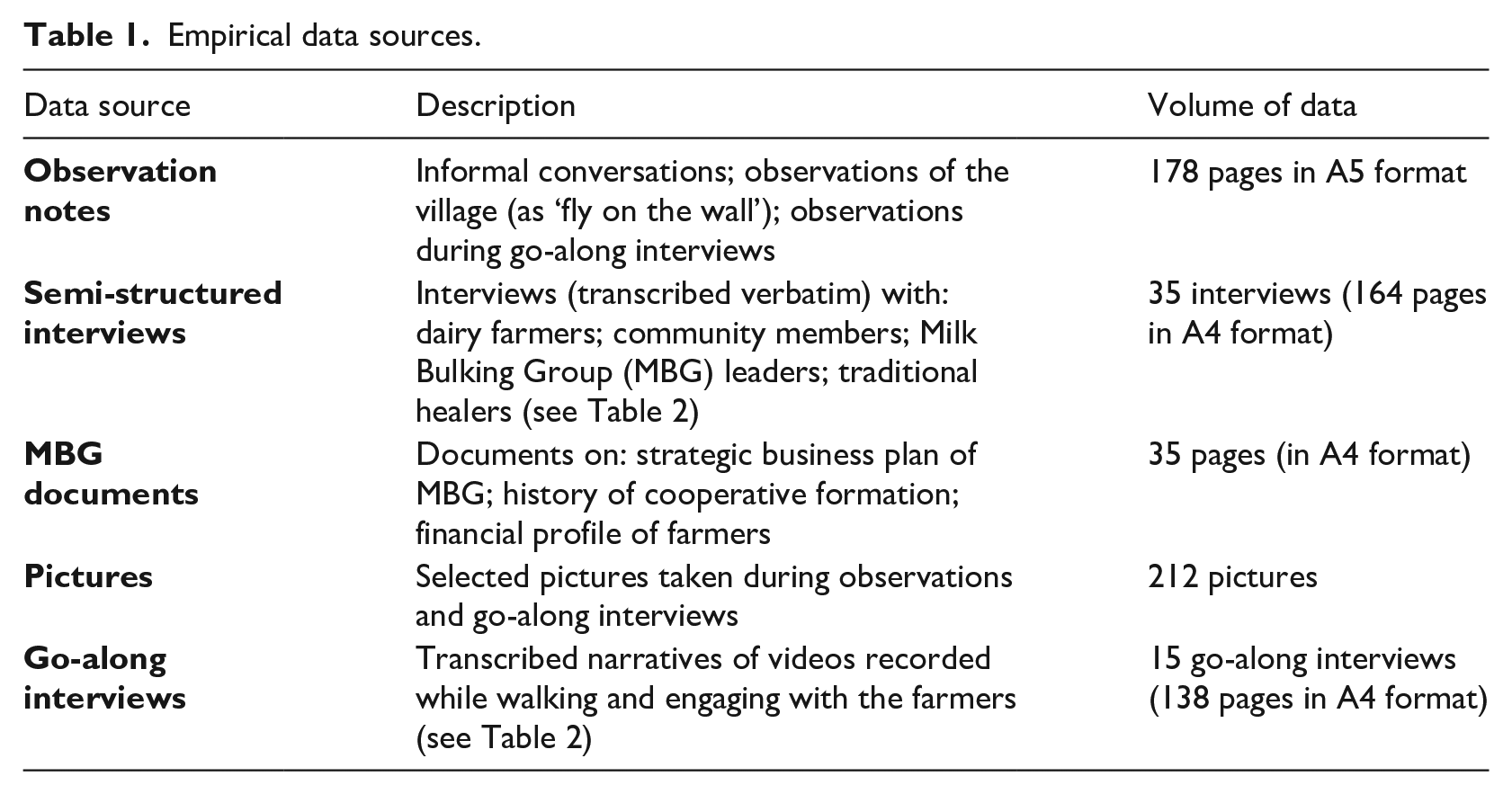
In the first three weeks, the first author engaged in continuous observation within the community. We combined observation and go-along interviews with MBG members to observe their ‘spatial practices in situ while accessing their experiences and interpretations at the same time’ (Kusenbach, 2003, p. 463). This was crucial to understand how they co-constituted the CBE embedded in the community, including its dynamic and messy boundaries (Schatzki, 2006). During go-along interviews, several instances revealed that dairy farmers experienced tensions between their traditional community norms and the MBG rules, and that these were related to witchcraft (ufiti in Chichewa language). The interpreter played a critical role at this stage, as the first author was an outsider, being an academic from Europe. By revealing his Chewa origins to the villagers, the interpreter made it clear that he could understand and relate to witchcraft. Once the role of witchcraft as a form of spirituality came to the fore, the first author and the interpreter engaged in dialogues about whether witchcraft were ‘factual events’ or beliefs, and how to interpret what they saw and heard in the field. From these observations and reflections, field notes were systematically written down in a notebook. Observations were recorded in one column and subjective interpretations and responses in another to stimulate reflection on what we found surprising, intriguing and disturbing (Wolfinger, 2002).
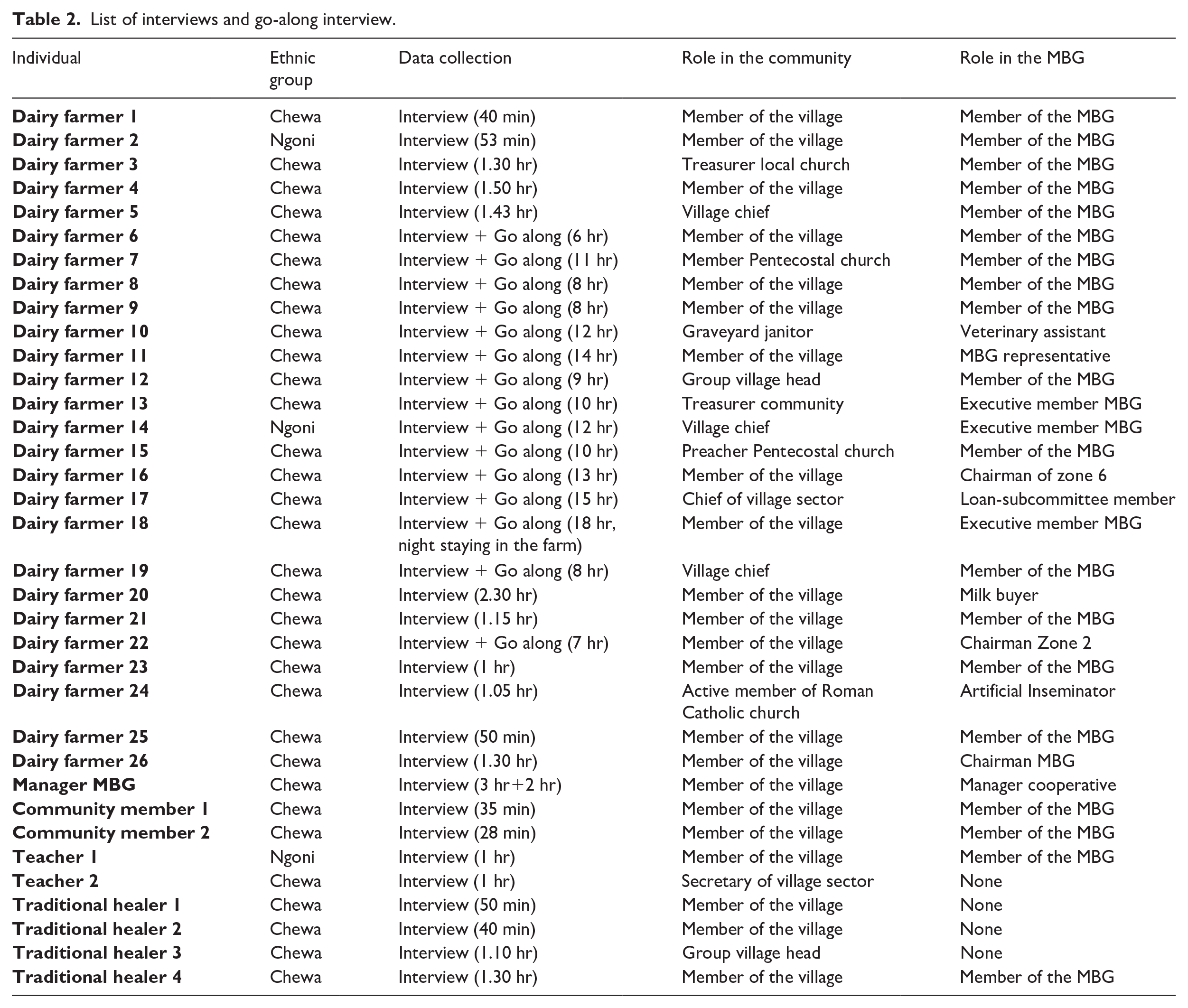
To find out more about the role of witchcraft practices in navigating tensions within the community, in the following five weeks we progressively focused our semi-structured interviews (Table 1) towards the informants involved, with different roles, in these practices: dairy farmers, traditional healers and MBG managers (Table 2). From interviews, we learned about the ‘hard to observe’ (Stake, 2010) and delineated clearer contours of the arising tensions. Witchcraft is a sensitive subject to talk about; the interpreter was sometimes scared to visit traditional healers as they ‘could even follow the first author to his country of origin and see what he was doing’. The first author therefore had to rapidly learn when and how to phrase questions in ways that do not unwittingly disrespect or endanger interviewees and the interpreter.
List of interviews and go-along interview.
Data analysis
We engaged in theorizing starting from empirical data and iteratively moving towards theory. To do so, we confronted patterns emerging from fieldnotes and narratives with several theoretical lenses, going back and forth to find suitable ways to generalize from our empirical case. This iteration involved the following stages.
Zooming into practices
We identified recurring practices that emerged from notes and interview narratives, and graphically represented them in taxonomies. This helped to gauge a common view of patterns within the data, since members of our research team held different distances to the data collection, research experience and theoretical background (Alvesson & Sköldberg, 2018). Following Schatzki (2005), we explored the multitude of practice-material arrangement bundles, including their spatial dimensions, and built a preliminary understanding of how the meanings of community members’ practices were locally interpreted. This analytical process first revealed that witchcraft doings and sayings were frequent among MBG members.
Abstracting from practices
We used Gioia, Corley, and Hamilton (2013) to systematically move from our empirical understanding of practices to higher levels of generalization. 1 In doing so, we realized that CBE members’ doings and sayings could be first generalized as sets of resource accumulation and redistribution practices, including clashes and fears emerging between the two. Second, we noticed that community members interpreted what they referred to as ‘bad events’ through either spiritual or socio-material lenses, or both, also with an intent to make others believe their interpretation. Finally, we noted that CBE members either combined or chose spiritual and socio-material practices to cope with these ‘bad events’ and build collective sustenance in interaction with their CBE and community leaders.
Understanding the consequentiality of practices
We organized these recurring practices and their abstractions into an emerging process by zooming out from each practice to understand their mosaic in terms of consequentiality (Le & Bednarek, 2017). This stage was crucial to grasp the temporality and causality among the practices that we brought together in a process-based model (Figure 1). Through this stage, we realized how the practices interpreted by community members, together, were reflected an underlying substratum of mystery and ambiguity related to ‘bad events’ on one hand; and represented a way to channel, amplify and tame tensions related to socio-economic inequality and the constituted social order in the community on the other hand. The processual narrative that ‘keeps together the variety of practices involved (described in the tables 1 ) constitutes the core of the findings.
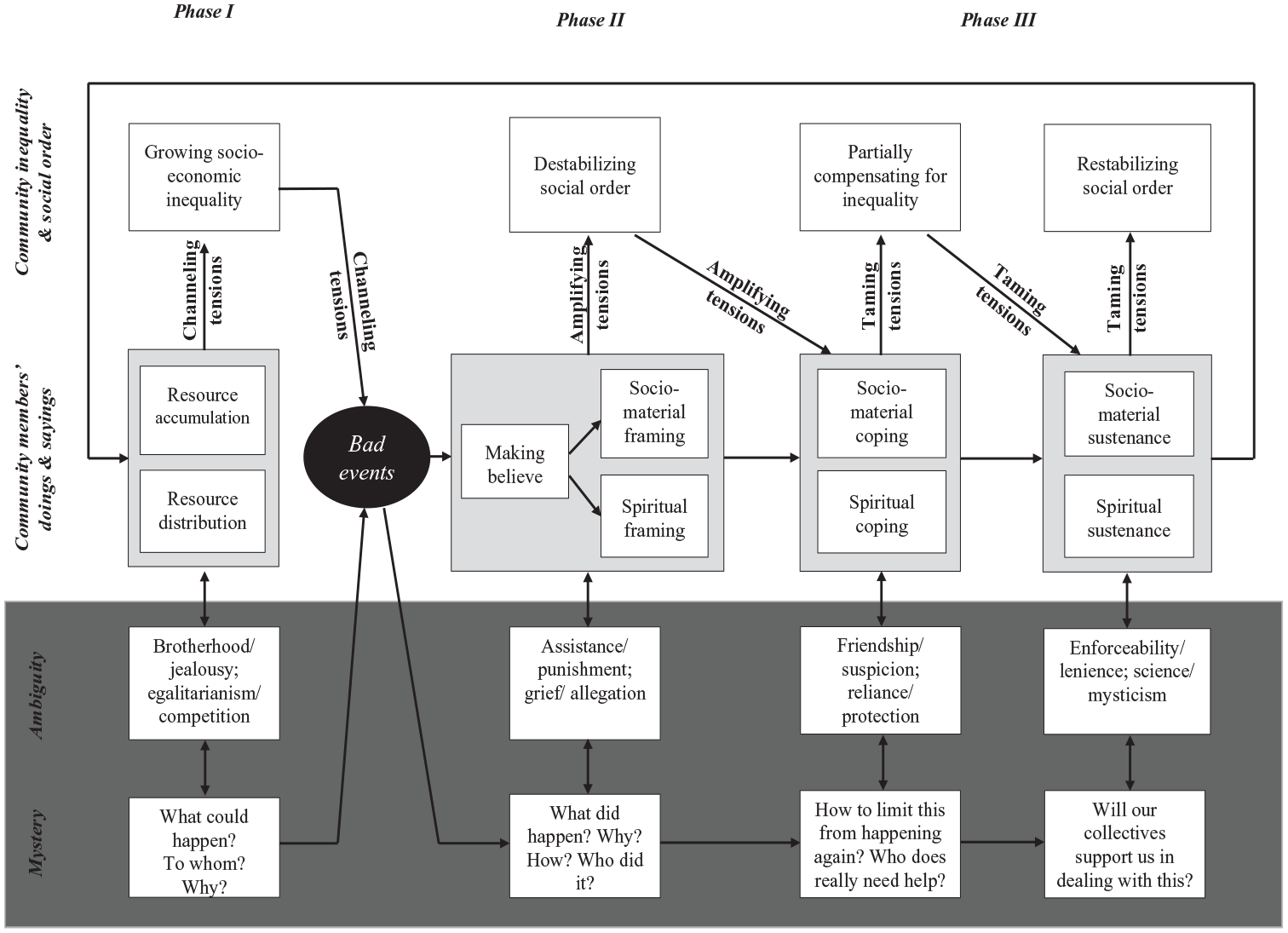
Figure 1: Community entrepreneuring as spiritual process of navigating intra-community tensions.
Reflecting on our own practices
Reflexivity took place throughout data collection and analysis by paying specific attention to elements informed by previous scientific work and in dialogue with our study subjects. The lead researcher and the interpreter organized two workshops – the first with 40 members within the local community, and the second with 20 dairy value chain stakeholders of the community – to inform, discuss and deepen our preliminary understandings of the process of navigating community tensions. Yet, aware of the mystery and ambiguity surrounding witchcraft, the research team did not mention it in collective discussions. Further reflexivity was encouraged through friendly reviews from practice theory, organization and entrepreneurship scholars during a paper development workshop.
Findings
We theorize community entrepreneuring as a spiritual process of navigating intra-community tensions arising from the socio-economic inequality that occurs with the emergence of a CBE. At the crux of this process, ‘bad events’ happen (Figure 1). ‘Bad events’ – overwhelmingly referred to by community members, whether belonging to the CBE or not – take place in an aura of mystery about what exactly happened, who made it happen, why and how. The mystery surrounding ‘bad events’ generates ambiguity among community members about what to believe and who to believe; and at the same time, the presence of mystery helps to deal with the ambiguity that is inherent with organizing a CBE in an already organized community. Community members’ practices reflect this mystery and include a multitude of spiritual doings and sayings that intertwine with mundane socio-material ones. Together, these practices involve preparing for, framing, coping with and building collective sustenance from these ‘bad events’. Through the unfolding of these practices over time, ‘bad events’ reveal fluxes of underlying tensions among community members that relate to increases and partial compensations for socio-economic inequality, as well as temporary disruptions and re-establishments of the community social order. Given their centrality, we begin by outlining the spiritual process of community entrepreneuring by describing these ‘bad events’.
‘Bad events’
‘Bad events’ are tragic, often horrific happenings that could potentially affect any community member. In rural Malawi, for instance, ‘bad events’ include the death of the only livestock supporting a household, a failed calf delivery, the appearance of a sudden disease in a family member, a major or fatal accident. These events occur with regularity in the community, and CBE members live in fear that ‘bad events’ could happen to them: ‘My goat ate something [. . .]. The moment I came back, it was producing a lot of saliva and died on the spot,’ revealed one dairy farmer. And he added: ‘I was hit by a thunder. From there [. . .] my baby started suffering from epilepsy.’ A couple of dairy farmers professed: ‘One day we found a nail on the udder of the cow, and another time our cow’s tail was suddenly wounded.’ Even more inexplicably: ‘One day we were sleeping, and we found some cuts over here [showing her right hand] and my husband had them on the left hand.’
These ‘bad events’ are surrounded by mystery and ambiguity. Based on community members’ knowledge, the causes of these misfortunes are rationally implausible. A cow delivering clothes instead of a calf, thunder coming from a blue sky, or a sudden death without any identifiable disease, are events that they cannot comprehend on the basis of their experiences and understandings. Hence, spirituality, in this community, often takes the form of witchcraft as a way to interpret mystery, that is, explaining what is otherwise unexplainable. Part of the mystery is the widespread acceptance that not all ‘bad events’ can be scientifically understood. On the contrary, these horrific events should be kept under a veil of secrecy to avoid unleashing other malignant spiritual forces.
Specifically, the mystery and ambiguity surrounding ‘bad events’ reinforce each other in the community. Because of the mystery around what happened (e.g. why the ‘bad event’ occurred and who was responsible for it) community members provide conflicting explanations: some may be convinced that the ‘bad event’ was a spiritual form of punishment, and therefore deserved by its victim. Others may accuse a neighbour of having caused the ‘bad event’ through witchcraft. Others might give a non-spiritual explanation for the same event; for example, a jealous neighbour could have secretly added poison to a cow’s feed. Also, to some extent and in fuzzy ways, jealousy and witchcraft relate to each other. This means that the mystery surrounding ‘bad events’ not only generates, but is also needed to maintain ambiguity – for example, between feelings of envy but also of brotherhood among neighbours – that is often an underlying tension as the CBE emerges from the community. For example, in the village, community members act and speak about ‘bad events’ differently in private and in public: they often accuse each other privately, but offer assistance and show grief to each other in public. They may minimize the negative impact of these horrific events in public by espousing a reliance upon God that these events will not happen again, but privately show suspicion and articulate a plan to protect their assets and family through either magical protections (makhwala in Chewa) or through a variety of socio-material tactics and means.
Before and after these ‘bad events’, community members engage in several practices to deal with the tensions that are generated. We understand these processes of community entrepreneuring as co-constituting three consequential phases through spiritual practices: channelling intra-community tensions, amplifying them and taming them. We discuss each in turn.
Channelling tensions by preparing for ‘bad events’ (phase I)
While ‘bad events’ are surrounded by mystery and ambiguity, they are not unexpected. During go-along interviews, community members often expressed fear and anxiety about what could happen. They wonder how these tragedies could take place, to whom, instigated by whom, why and, ultimately, whether they are doing everything possible in their capacities to prevent them. The teenage son of a dairy farmer, for example, referred to other village members that were previously around his mother during an interview: ‘Those people can take the information that we are telling you and can be doing this [witchcraft] to our cow, by maybe poisoning the feed to let the cow die.’ When asked why he built a high fence around his property, another farmer answered, laughing, ‘Those that I fear are the artificial hyenas’, implying that who might cause ‘bad events’ are certainly not hyenas. . . but leaves some mystery into who or what the artificial hyenas are. Later on, we ask him if he feels safe: ‘Now I’m protected. Anything that may happen should fail.’ We continue: even in your house? ‘I don’t know, but when I am inside the house, the thunder cannot reach me.’
Around the mystery surrounding these ‘bad events’, CBE members face several ambiguities. These ambiguities refer, in particular, to ‘normativized ends’ and values that clash as the CBE emerges within the community. CBE members – that is, dairy farmers associated with the MBG – belong to a community grounded on values of egalitarianism and brotherhood, that imposes a redistribute of resources instead of an accumulation. For example, farmers feel morally obliged to share their milk with poorer community members, or to pay for their basic expenses. Furthermore, they are compelled to attend traditional ceremonies, such as funerals or weddings. In relation to these community norms, witchcraft – manifesting itself through ‘bad events’ – could act as social sanction for those who do not redistribute wealth, or dedicate their time, as expected by other community members. More generally, in Chewa culture, being socio-economically equal represents a fundamental value, and those who are enriched relative to the others may be considered as witches themselves, thus accused or suspected of causing ‘bad events’. Hence, the mystery of who might instigate ‘bad events’ or be struck by them entangles inexorably with the ambiguity on how CBE members should behave in relation to their community peers.
Yet, while meant to encourage collective action and improve everyone’s livelihoods according to egalitarianism values, CBE rules promulgate wealth creation among farmers, and the doings of CBE members often foster the jealousy of community peers. CBE members are encouraged to accumulate their resources rather than redistribute them. For example, sharing milk with other villagers is formally prohibited, and conceded only if the milk is sour, thus unsellable in the formal market. CBE members are encouraged to keep their savings in the bank to better tackle the economic shortfall during the cows’ dry period. CBE members should strictly follow training advice on cow husbandry, thus their time competes with their participation in lengthy community ceremonies. If CBE members fail to follow these rules, they risk punishment by CBE management, who can expel CBE members and have their cows expropriated. If they succeed and outperform other farmers, they may win publicly recognized awards and thus be celebrated (and/or envied) as successful dairy farmers.
In this climate of fear and ambiguity, and with the introduction of resource accumulation practices alongside resource redistribution, socio-economic inequality in the community grows. The houses of dairy farmers and milk business people involved with the CBE are easily recognizable by metal gates, fences with iron tops and, inside their courtyards, there are often bicycles or motorbikes. The houses of seasonal subsistence farmers, representing the majority of the village inhabitants, are, instead, without a fence, with grass-thatched roofs and dried mud as opposed to solid bricks. Dairy farmers are also recognized by their distinctive characteristics and symbols: for example, they carry churns on the back of their bikes when they bulk their milk at the MBG tank – instead of sharing it with their neighbours – and, for this reason, they get labelled as greedy, egotistical and bragging. Dairy farmers who visibly invest and improve their livelihoods are publicly celebrated as successful by the CBE, while their community peers who do not own a cow may benefit only marginally and occasionally from their success.
As socio-economic inequality grows, underlying tensions creep into the community. In line with Chewa values, these tensions are rarely expressed overtly: good villagers should not act boastfully, either when they are envious or when they are successful. Hence, there is ambiguity that brings together brotherhood and jealousy, as well as egalitarianism and competition, which manifests itself with people acting cordially to each other in public, yet privately suspecting or accusing each other. Since these tensions cannot be expressed overtly, the expectation and then the occurrence of ‘bad events’ provides a secret opportunity for community members to vent their frustrations and desires for a more equal redistribution of resources. The veil of mystery that witchcraft brings with these ‘bad events’, though, keeps the relationships between community members’ doings and sayings, the community socio-economic inequality and the occurrence of ‘bad events’, ambiguous.
Amplifying tensions by framing ‘bad events’ (phase II)
In their aftermath, ‘bad events’ continue to be surrounded by mystery and ambiguity. Community members wonder what really happened: was it witchcraft, was it a human action, or was it a material accident? Why was this community member affected rather than others? Did (s)he deserve this ‘bad event’? These questions are left without straightforward answers. This mystery fosters equivocal moods and feelings among community peers: publicly, members show grief and provide assistance to those affected. Privately, in bilateral conversations among peers or with traditional healers, they might formulate reciprocal allegations. Some may accuse others of instigating the ‘bad event’. For example, a few minutes after laughing and joking with a young lady we met on the road during a go-along interview, a dairy farmer whispered with a serious facial expression: ‘That one killed my goat, she poisoned it [. . .] I’ve been told by another neighbour. My goat ate something that was given by her. The moment it came back it was producing a lot of saliva and died on the spot. [She did it] because of jealousy. . . that's witchcraft.’ Others, conversely, might interpret the tragedy as supernatural punishment for the peers who were afflicted: ‘To avoid these problems, do not be arrogant [. . .] Otherwise, your cow can be witched.’
The mystery and ambiguity surrounding ‘bad events’ opens the door to multiple frames of what happened, and why. Spiritual frames compete with, but also complement and entangle, social and material interpretations. Some farmers rationalize, for example, their cow’s death as the material consequence of a disease or accident, or as the human outcome of a jealous neighbour. Others combine witchcraft and social frames: ‘There is a connection between ufiti, dairy and jealousy: [. . .] Someone can witch a cow through jealousy.’ Yet in this phase, community members not only speculate, but also engage in subtle efforts to make others believe their interpretation. For example, a dairy farmer revealed: ‘My cow fell down because of lack of calcium in the legs. [But] others told me: no this is witchcraft, people bewitched your cow, what are you going to do with this issue?’ Not only community peers, but also traditional healers impose their witchcraft interpretation over ‘bad events’; moreover, community members often use the subtle means of gossiping about the event, rather than clearly informing each other about the details of what they think happened.
Therefore, forcing interpretations of ‘bad events’ amplifies intra-community tensions: it becomes an overt power play where, along with intrinsic spiritual meaning, community members also aim to gain material advantages at the expense of other community members. Jealous villagers excluded from the CBE crave for a redistribution of resources (e.g. income, milk) and, in general, for less arrogance and boastfulness by the CBE dairy farmers; hence, they push for interpreting ‘bad events’ as a sign of arrogance and a violation of Chewa mores. Traditional healers see it as an opportunity to raise their influence as those that can provide the best protections from ‘bad events’; hence, they push for a spiritual frame that only themselves can fully discern. Dairy farmers affected by ‘bad events’, finally, seek to provide frames that prevent community members from judging them negatively, as they fear that the interpretations of the villagers might hurt them even more than the ‘bad events’ themselves. Hence, this phase of framing ‘bad events’ destabilizes the constituted social order of the community equilibrium. Those affected by these tragedies are often CBE members with higher social status and who have more stable income than their community peers. Yet, instead of enjoying their higher socio-economic status, they live now in fear of ‘bad events’ and of the community stigma of having deserved them.
Taming tensions by coping with ‘bad events’ and building sustenance (phase III)
To deal with ‘bad events’ and the following multitude of hurtful speculations, CBE members engage in a variety of practices meant to respond to these tragedies and build collective sustenance – seeking support from the CBE and the community they belong to – from the risks of ‘bad events’ happening again. Contrasting feelings and moods continue to be displayed in public and privately. In front of the community, CBE members show a friendly behaviour, a helpless attitude and a spirit of reliance upon others – towards other members of the community, towards witchcraft and towards God. In private, they are calculative on how to combine material, social and spiritual tactics to best protect their assets and family life from ‘bad events’ repeating themselves.
Therefore, mystery and ambiguity are reflected by the entanglement of spiritual, social and material doings and sayings of members struck by ‘bad events’. For instance, a couple of dairy farmers freely distributed milk to the children in the village, not as act of benevolence per se, but as an act of fear; in addition, they constantly updated makhwala to combine spiritual and social practices as double protection from the repetition of ‘bad events’. During a go-along interview, when we followed the husband back from the MBG tank station where their milk was rejected as sour, a small group of 15 children had already formed, waiting in the yard and holding a plastic cup. His wife took the milk and distributed one scoop of milk for each child, then she visited her neighbours’ houses to distribute the leftover milk. She explained as follows why she asked for no compensation: ‘Being in a very good relationship with everybody is an essential thing here [. . .] It is a strategy to reduce the jealousy in the village.’ But, per se, being generous and friendly does not suffice: ‘I [also] did the protection at the corral. Though we did it, we are still in doubt. People go deep, beyond that thing.’ Hence, she frequently engages with traditional healers to experiment with new makhwala. Even farmers with big fences and dogs for materially protecting their property and themselves do not forget to share with their neighbours and protect themselves continuously with makhwala.
As individuals face the necessity to cope with ‘bad events’ vis-a-vis their peers, CBE leaders and others with influence in the community develop ways to protect their members. These acts of building collective sustenance – as enacted at the nexus of coping with ‘bad events’ and leading the CBE and the community – also reflect mystery and ambiguity. No CBE or community leader overtly takes a position on how to protect their members from ‘bad events’. For example, MBG zone chairmen discussed in interviews that, as Chewas, while they are aware of witchcraft, they cannot formally acknowledge it: this would clash with their professional role which is supposed to be grounded in science and rule enforceability. One of them revealed: ‘As an MBG manager, I do not know [about witchcraft]. Yet, as an individual, I do know.’ Hence, he provides informal advice – as off-the-book training, aside of the formal cow-rearing prescriptions – on how to prevent the risk of ‘bad events’ socially and spiritually. A dairy farmer revealed that zone chairmen sometimes turn a blind eye when she shares non-sour milk with neighbours. Furthermore, as the need for spiritual protection increases among dairy farmers, traditional healers multiply their offers of makhwalas, generating a visible market for different protection lengths and extents available at different rates.
Together, these spiritual and socio-material practices illustrate the remarkable effort that CBE members take to tame the tensions generated by ‘bad events’ and their subsequent framing. Through their social interactions (milk sharing, displaying generosity, acting humbly) and spiritual doings (buying makhwala, showing reliance on divinities), CBE dairy farmers partially compensate the community for their higher socio-economic status and, reproducing the underlying ambiguity, find subtle ways to dissimulate it. Through the collective sustenance built with CBE and community leaders, CBE members rebuild a tentative sense of safety after experiencing fear and fragility in the aftermath of ‘bad events’.
Despite these attempts at restabilizing social order, the tensions that underlie resource accumulation and redistribution between the CBE and its community continue to recur (see the loop in Figure 1). This persisting challenge is well illustrated by the village chief, who plays a community leader role but also owns a dairy cow – thus, belonging to the CBE. To prevent the escalation of tensions, he organizes meetings and events to deal with interpersonal problems in ways that do not evolve into ‘bad events’. Still, he continues to experience the tension of resource accumulation and redistribution in his own life and business. For example, he feels that he cannot have a second cow or open a shop with the income from his first cow, although he could: ‘All these things [bad events] that are already happening. [. . .] The problem in the village is like, when you are coming up with a certain business, they call you a witch.’ This example shows how influential community leaders with a role in the CBE struggle to tame tensions by purposively choosing not to accumulate more resources to avoid fuelling intra-community tensions.
Discussion
Grounded on this study of a MBG in a Chewa village in rural Malawi, where witchcraft plays an important role in everyday lives of farmers, we theorize the spiritual processes of community entrepreneuring as a way to navigate internal tensions – specifically, tensions between a CBE and the community where it is embedded. First, contrary to what most of the CBE literature suggests (Hertel et al., 2019; Peredo & Chrisman 2006), we found that the rise of a CBE may generate and propagate tensions within communities, which are rooted in, but also shape, a growing socio-economic inequality. Second, we discovered that spirituality – and, in particular, spiritual practices leveraging mystery and reflecting ambiguity in their entanglement with mundane socio-material practices – play a central role in progressively channelling, amplifying and taming intra-community tensions.
Therefore, building upon the notion of entrepreneuring as organization-creation (Hjorth et al., 2015) – and, more specifically, of organizing in worlds that are already organized (Hjorth & Reay, 2018) – we identify two underlying and interrelated factors through which spiritual practices co-constitute and enact community entrepreneuring: mystery and ambiguity. We argue that the mystery surrounding ‘bad events’ generates ambiguity. At the same time, mystery helps to preserve the ambiguity inherent in a CBE that, emerging within a community, creates socio-economic inequality. Hence, in our view, these findings contribute to three literature strands – entrepreneuring, CBEs and spirituality in organizations – as follows.
Contribution to the field of entrepreneuring
We suggest that theorizing the spiritual processes in community entrepreneuring for navigating intra-community tensions enriches our understanding of entrepreneuring as organization-creation (Hjorth et al., 2015) and, more specifically, as organizing in an already organized world (Hjorth & Reay, 2018), in two ways. First, it extends and adapts the notion of entrepreneuring in a novel and relevant context: communities. While we already know that entrepreneuring is inherently collective, as pertains to the ‘creative and social/collective organizing process that materializes in a venture’ (Johannisson, 2011, p. 137), the notion of entrepreneuring has been only recently applied to the context of communities (Jain & Koch, 2020). In the extant literature on entrepreneuring in communities, though, scholars’ attention has focused mostly on communities as unified collectives dealing with tensions generated by the spatial, natural, economic and political constraints that they face. Yet communities are also characterized by other features that produce internal tensions: physical and/or psychological vicinity among their members and strong historical or cultural roots, which exalt the power of traditional values (Chatterjee, Cornelissen, & Wincent, 2021). As our study from rural Malawi revealed, these community features make organization-creation efforts – such as investing in the development of a dairy CBE – in a world that is already organized uniquely challenging. Differently from other settings of organization-creation processes, tensions within communities are not overt, but covert behind displays of brotherhood and mutual reliance among members. As in other organizational contexts (Toegel, Levy, & Jonsen, 2021), this makes the process of navigating tensions particularly subtle and complex, as the practices that co-constitute them reveal growing, yet, to a large extent hidden, clashes in the ‘normativized and hierarchically ordered ends, projects and tasks, [. . .] emotions and even moods’ (Schatzki, 2005, p. 480). Given the relevance, uniqueness and novelty of this context, we encourage future research to refine our theorization by comparing on how processes of organizing in the already organized unfold in other community contexts.
Second, the theorization of community entrepreneuring sheds lights on how spirituality plays an underexplored role in explaining how practices co-constitute processes of entrepreneuring. The nature of communities shapes how tensions of organization-creation in the already organized arise and fluctuate over time; thus, to navigate these tensions, spiritual practices play a central role together with mundane socio-material doings and sayings. Beyond the specific case of witchcraft, we find that spirituality transcendence – ‘a wider cosmological belief system’ (Ganzin et al., 2020, p. 77) that is not based on beliefs that are empirically measurable and falsifiable – offers both an alternative and complementary avenue to scientific reasoning for entrepreneurs as they prepare for, frame, cope with and build collective sustenance from the adversities they face in navigating these tensions. In particular, mystery of what represents ‘God’s will’ – and therefore of why certain events happen and to whom – crucially shapes human practices across several religions and creates room for organizational change over time (da Silva & Quattrone, 2021). In community contexts, mystery generates and legitimatizes a space for ambiguous interpretations and responses to what happened – grounded in both science and spirituality – to co-exist, without members losing coherence regarding their actions and interactions. From this perspective, spirituality turns the process of navigating internal tensions into a game of collective deception (Lewis, 2003). This ambiguity in rules and teleo-affective structures (Schatzki, 2005) challenges researchers’ understanding of the consequentiality of practices (Le & Bednarek, 2017) when processes of dealing with intra-organizational tensions when spiritual doings and sayings intertwine with mundane ones. Therefore, we envision future research in entrepreneuring exploring how different forms of spirituality explain, in different organizational contexts, the in-betweenness of organizational members’ practices.
Contribution to theories of community-based entrepreneurship
Unearthing intra-community tensions that emerge with the rise of CBEs meets the scholarly demands to ‘take the community more seriously’ (Kibler & Muñoz, 2020, p. 722), that is, to address the local social complexity surrounding the context where CBEs are embedded (Slawinski et al., 2019; Tedmanson et al., 2015). To meet this need, we first argue that the notion of community entrepreneuring as a process of navigating intra-community tensions contributes to explaining how and why CBEs may increase or decrease socio-economic inequality in the contexts where they are embedded (Williams & Shepherd, 2021). We suggest that community inequality rises when resource accumulation practices inherent to entrepreneurship emerge. Nevertheless, inequality does not grow inexorably as CBEs emerge from communities; it is counterbalanced by social and spiritual forces that, at least to some extent, cyclically reduce it. Witchcraft, for example, also acts as ‘weapon of the poor’ (Kluckhohn, 1944) because, through mystery and ambiguity, witchcraft generates fearful commitment in CBE members to redistribute wealth within the community and to act humbly towards their poorer neighbours.
In relation to socio-economic inequality, theorizing community entrepreneuring helps understanding of when, how and why disruptions or re-stabilizations of community social order occur. The literature suggests that entrepreneuring provides avenues for the marginalized to disrupt communities’ social order (Haugh & Talwar, 2016); our findings from Malawi add that entrepreneuring also helps to re-stabilize social order by navigating the tensions that arise among socio-economically unequal groups within the community. Spirituality, in particular, plays a critical role for how community social order is disrupted or restabilized: as the rural Malawi context shows, for example, witchcraft helps channel, amplify and tame the tensions that may destabilize the community social order. We encourage CBE scholars to compare how socio-economic inequality and social order disruptions evolve and are brought about in other community settings.
Contribution to theories of spirituality in organizations
The study of witchcraft as an occult spiritual form, which is widespread not only in Africa (Kluckhohn, 1944) but also in the global North (Comaroff & Comaroff, 2018), raises important questions for the flourishing literature on spirituality in organizations. Spiritual forms differ in their belief systems, rituals, sayings and doings across cultures and religions (Luhrmann, 2020); yet, they all potentially shape actions and interactions in organizations (Suddaby et al., 2017). Spirituality supports ‘transmuting agency from a rational-scientific context in which the entrepreneur imposes his or her will on the environment, to a spiritual context in which the entrepreneur perseveres by remaining true to trust in a wider cosmological belief system’ (Ganzin et al., 2020, p. 77). As Ganzin et al. (2020) explain, this “acceptance of lack of agency” is used as strength, self-confidence and motivation for those organizing to engage in future actions. Similarly, witchcraft plays a similar role as people leverage, frame and rely upon the belief system that witchcraft provides – also to gain power and material advantages from the organizations they inhabit. Similar to what we found in witchcraft practices, we know that other forms of spirituality ground their reliance on cosmological beliefs to frame, cope with and build collective sustenance from events that scientific rationality fails to explain (Jalan, Sinha, & Ulus, 2014; Luhrmann, 2020).
This notion of spirituality as an alternative and complementary avenue to scientific rationality to deal with the tensions at the organizing–organized nexus (Hjorth & Reay, 2018) adds to two literature streams that appear quite disconnected. One relates to spirituality supporting ‘the organized’; the other as spirituality supporting ‘the organizing’. On the one hand, a neo-institutionalist stream sees spirituality as an institution that shapes organizational members’ practices (Gümüsay, Smets, & Morris, 2020). From this perspective, spirituality is often seen as a force preserving the already organized (Siebert, Wilson, & Hamilton, 2017; Wijaya & Heugens, 2018). On the other hand, a separate literature strand focuses on organization-creation processes, whereas spirituality has been seen as a resource (Neubert, Bradley, Ardianti, & Simiyu, 2017) and as engine of personal motivation and focus for organizing the new (Ganzin et al., 2020; Smith, Conger, McMullen, & Neubert, 2019). At the nexus of these two strands of the literature, our study in rural Malawi reveals that spirituality brings mystery and ambiguity to the core of the process of navigating intra-organizational tensions. We suggest that these two literature strands, by using an entrepreneuring lens, could further investigate which elements of spirituality support organizational members, and how, in navigating the tensions arising between organizing and the organized. Furthermore, it would be worth exploring how organizational members engage with multiple forms of spirituality – such as, in rural Malawi, Christian and witchcraft beliefs – for navigating intra-organizational tensions.
Conclusion
Based on an ethnographic study in rural Malawi, this paper theorizes the spiritual practices of community entrepreneuring when navigating intra-community tensions that arise as a CBE emerges from a community founded on egalitarian values. We find that spiritual practices of witchcraft, which revolve around the occurrence of ‘bad events’, co-constitute and enact community entrepreneuring through two underlying and interrelated factors: mystery and ambiguity. Specifically, mystery – who may be or was affected by ‘bad events’, why, how and by who – both generates and justifies ambiguity in community members’ teleo-affective structures that underlie their doings and sayings. Ultimately, this process of community entrepreneuring explains changes in socio-economic inequality within communities as CBEs emerge, as well as disruption and maintenance of their social order.
We argue that this theorization of community entrepreneuring as a spiritual process advances the field of entrepreneuring as organization-creation (Hjorth et al., 2015) at the nexus with the already organized (Hjorth & Reay, 2018) in two ways. First, in terms of context: communities represent worlds organized around historically rooted values, in ways that generate unique tensions when ventures founded on principles of resource accumulation emerge. Second, in terms of process: the co-constitution of spiritual practices, and their intertwining with mundane socio-material doings and sayings, represent a peculiar approach to navigate tensions between organizing and the already organized. On the basis of these two contributions to the field of entrepreneuring, we encourage future research to study community entrepreneuring to understand how CBEs deal with socio-inequality issues in other community contexts and, in parallel, how different forms of spirituality enact the navigation of similar tensions between organizing and the already organized.
Footnotes
Acknowledgements
The authors want to warmly thank the Guest Editors of the Special Issue, Professor Trish Reay and Professor Daniel Hjorth, for their guidance and support, as well as three anonymous reviewers for their constructive comments. We would like to extend our gratitude to the Entrepreneurship as Practice 4th (EAP4) conference participants who provided valuable feedback during the early-development stages of this manuscript. We also want to thank Professor Sera Gondwe, and interpreter Mr. Rhodrick Kusamba in particular, for their continued support during the fieldwork, data collection and later stages.
Declaration of conflicting interests
The author(s) declared no potential conflicts of interest with respect to the research, authorship, and/or publication of this article.
Funding
The author(s) disclosed receipt of the following financial support for the research, authorship, and/or publication of this article. This paper was developed as part of the Organising business models for SMAllholder REsilience (OSMARE) project funded by the Netherlands Organisation for Scientific Research (NWO) and the Partnerships for Scaling Climate-Smart Agriculture (P4S) Project. This work was implemented as part of the CGIAR Research Program on Climate Change, Agriculture and Food Security (CCAFS).

Supplemental material
Supplemental material for this article is available online.