



Abstract
The mustang has long been a symbol of the American West: wild, untamed, free, rugged, individual. Today, though, actual wild mustangs are at the center of a civic controversy, and their populations are controlled by the U.S. Bureau of Land Management and contested by ranchers, environmentalists, animal welfare groups, historic preservationists, and others.
Keywords
Imagine a herd of beautiful horses against a gorgeous, austere Western landscape. Conjuring up such an image isn’t hard. The mustang is a powerful symbol of the American frontier, representing free-spiritedness, rugged independence, and possibility. Pop culture, too, reveres the mustang, from Disney movies to muscle cars. Partly because they carry such meaning, the herds of mustangs dotting the West have become an important site of ideological and institutional contention. They can teach us a lot about the challenge of balancing competing symbolic and material interests.
Today there are tens of thousands of mustangs wandering the Western states, owned by no one. Tens of thousands more live in captivity. Identified by a series of numbers branded onto their bodies, these mustangs do not race through the desert, but live in fenced pastures. Still untamed, they’re far from free. They live on these ranches—in parts of Oklahoma, Kansas, and other states—because of compromises made by the U.S. Bureau of Land Management (BLM).
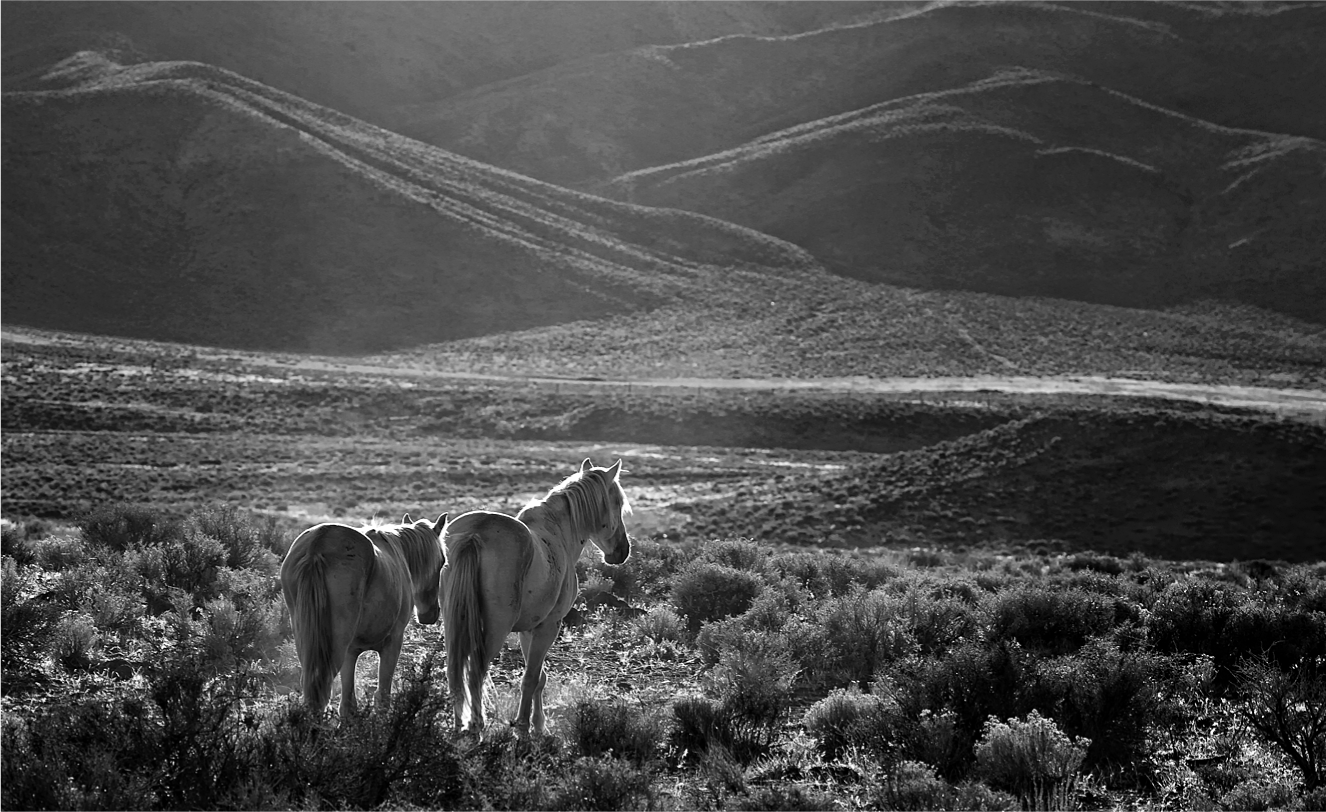
Two wild mustangs, photographed in Nevada.
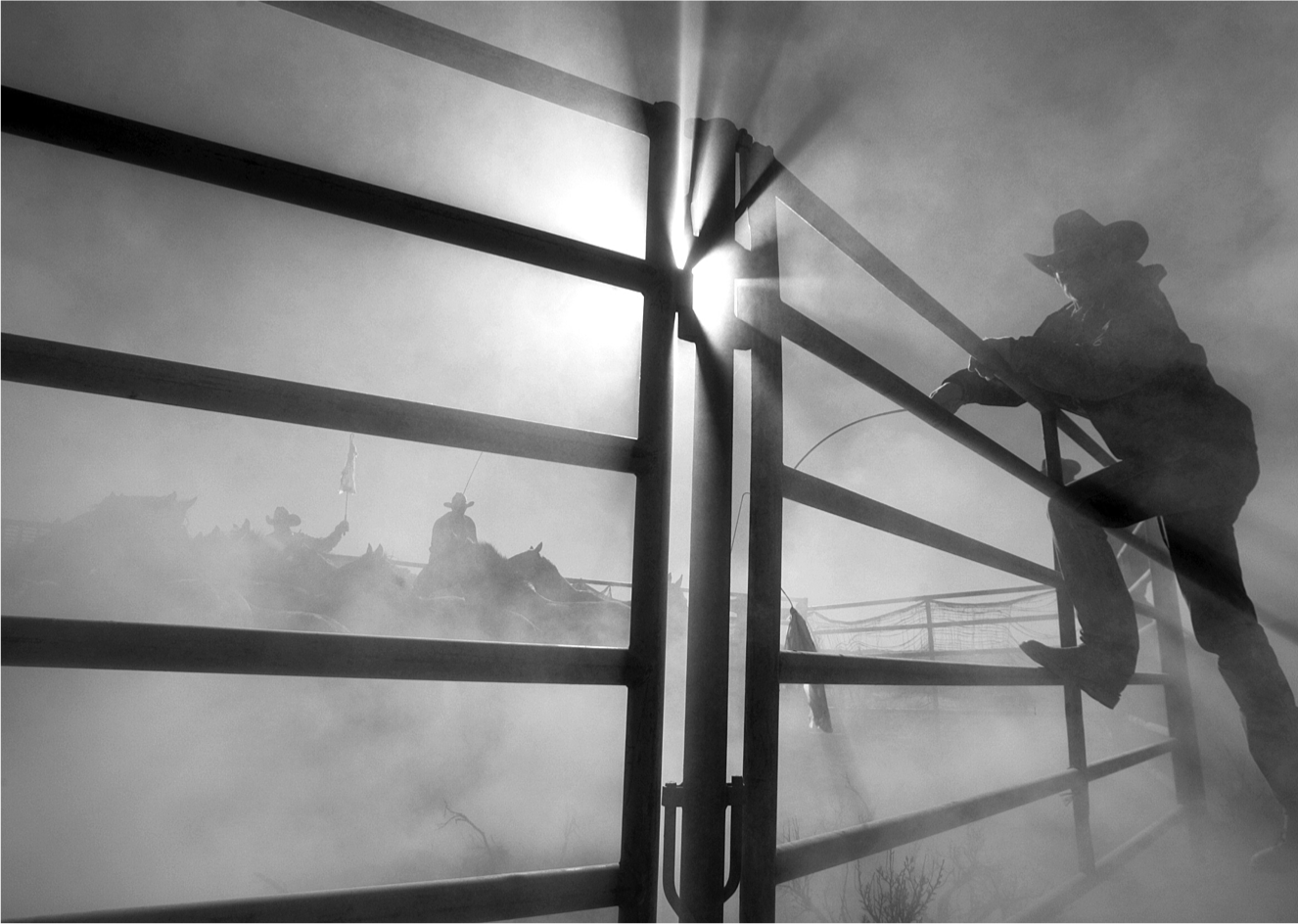
A government contractor embodies the “rugged cowboy” image as he helps wrangle mustangs at a “BLM round-up” near Fallon, Nev.
Mustang herds can grow rapidly, since they lack natural predators. Their unchecked numbers (now about 38,500 horses and burros, according to the BLM) can mean encroachment on native species’ habitats, damage to historical and archeological sites, and less grazing available for sheep and cattle. For many years, the BLM managed this problem by giving private citizens significant freedom to kill mustangs. In 1971, though, activists spurred by the dwindling wild horse population and concerns about mistreatment helped pass the Wild Free-Roaming Horses and Burros Act. For the first time, mustang herds had a federally-guaranteed right to exist. While the law didn’t ban killing horses altogether, it required the BLM to ensure humane treatment and encourage alternatives to slaughter.
To this end, the BLM tried offering mustangs for adoption. Despite how romantic it sounds to own one, though, there’s just not enough demand for untamed, untrained horses to absorb the supply. The BLM also tried fertility control, with limited success. This has left the BLM in possession of about 41,000 horses that they’ve pulled off of public land—more than the number still living “on the range”—and much of the public strongly opposes euthanizing this “quintessentially American” animal.
So, the government turned to the private sector. The BLM now pays private citizens $1.30 per mustang per day, on average, to keep and care for the horses. In 2011, the BLM estimates it will cost roughly $48 million (three-fifths of all funds the BLM allots for horses and burros) to pay for short- and long-term care, much of it paid to contracted private-sector sources.
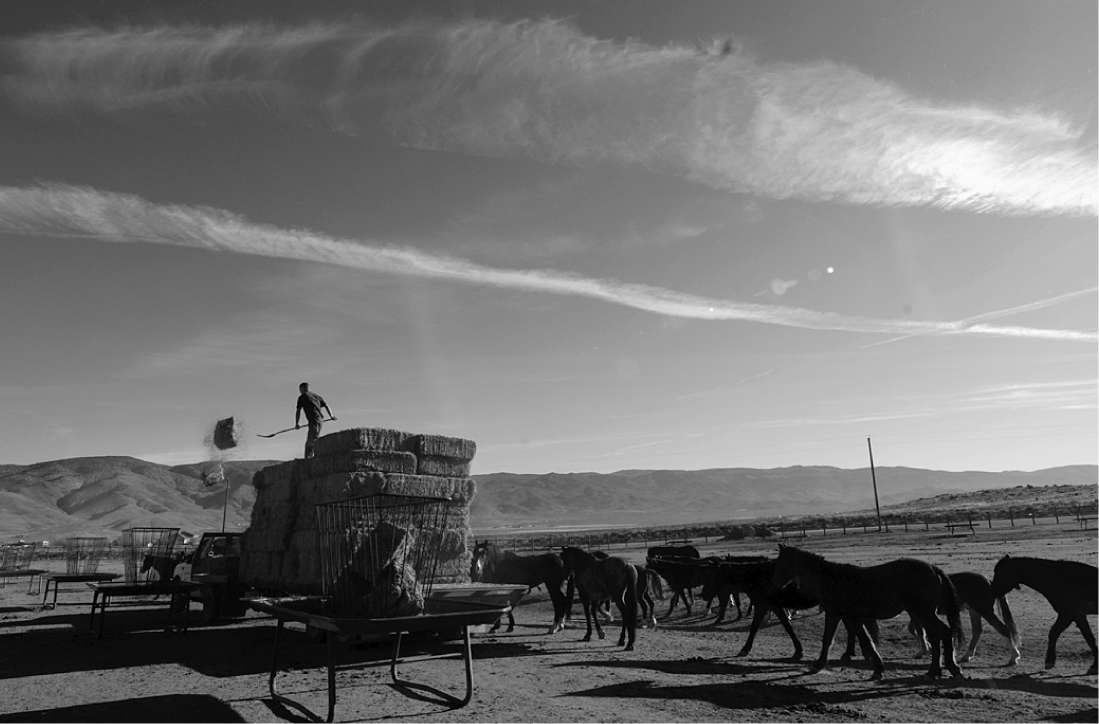
Josh Hindman of Retterath Cattle Co., a BLM contractor, distributes feed at the National Wild Horse and Burro Center in Palomino Vally, Nev.
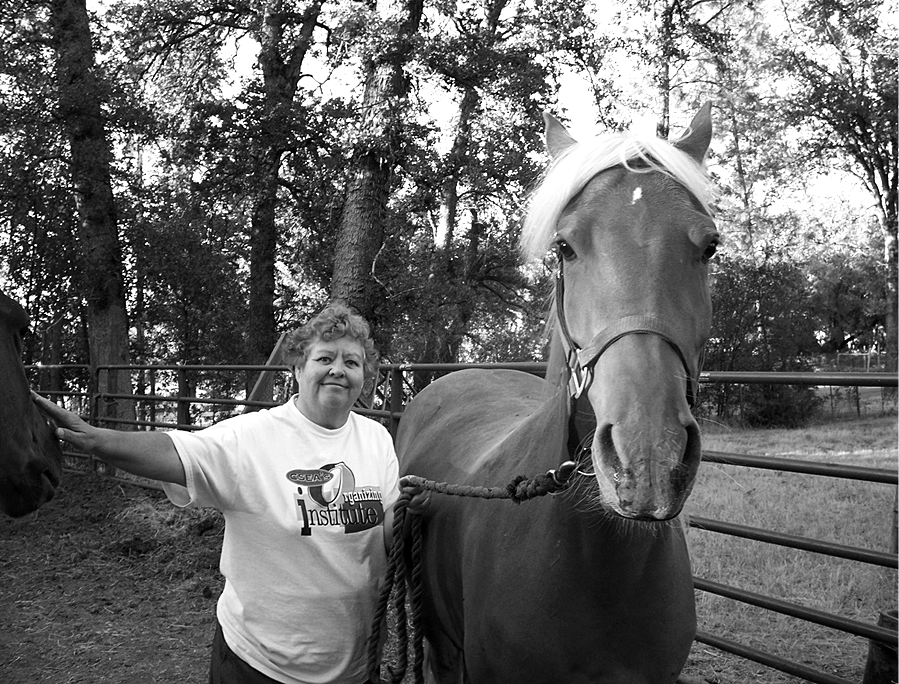
Patricia Carver and her daughter have both adopted wild mustangs through the Bureau of Land Management’s placement program.
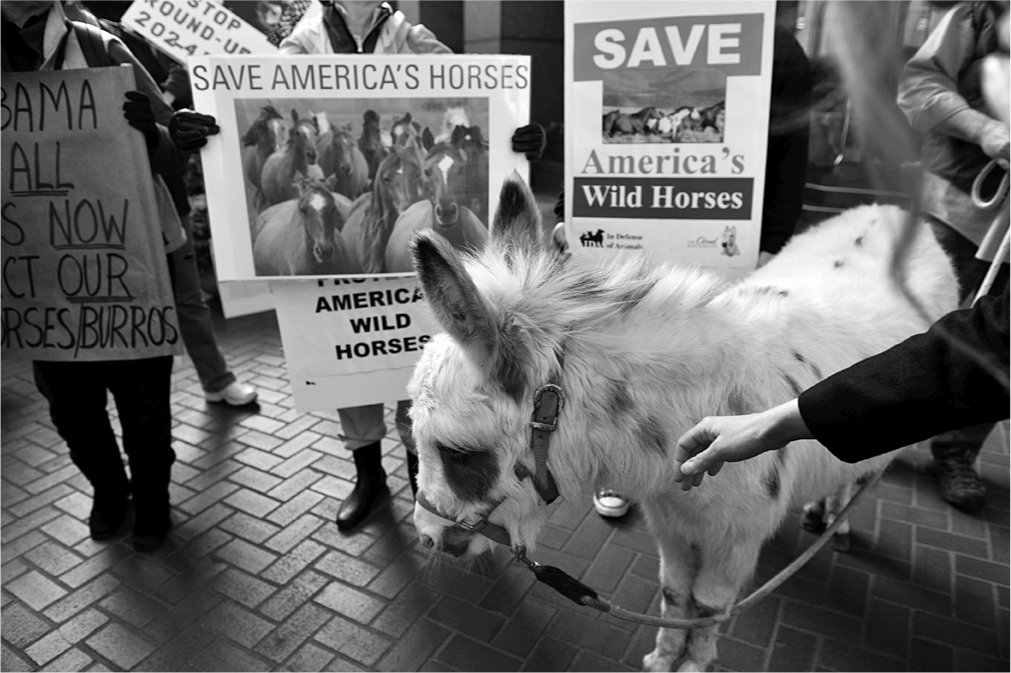
A miniature donkey at a wild horse advocate rally in San Francisco. Advocates were protesting the BLM’s capture and relocation of about 2,500 wild horses.
Contracts like these have become a major source of reliable income for some ranchers. For instance, according to Oklahoma’s Channel 6 News, rancher Ladd Drummond received a contract of over $1 million in 2010; his profit margin is about 10 percent, or $100,000 a year. Perhaps more important than the specific profit, caring for the horses on government contract is a less variable source of income than raising cattle. The price of cattle is always changing and a death means a loss of income, but with mustangs the price is fixed and, if an animal dies, the rancher doesn’t have to pay for a replacement. Ranchers invest time, energy, and money in caring for the horses in return for a stable income source that greatly mitigates the volatility in annual profits so common to agriculture.
Mustang management is, no doubt, a great opportunity to support ranchers and the economies of small, rural communities. Paying ranchers to keep mustangs, however, is also exacerbating existing wealth inequalities in some rural areas. Generally only very large ranches are considered for contracts; it’s easier and more efficient to work with larger operations that can take thousands of horses. Almost all small and mid-size ranches, then, are shut out of the contracts. This has led to an inflow of federal money to ranchers who are already quite prosperous by local standards. These landowners, with the guaranteed revenue from the mustang program to subsidize their large cattle operations, are able to out-bid other local ranchers when land is up for lease or sale. Wealth concentrates in the hands of a few as already-wealthy ranchers keeping mustangs are able to buy or lease more land, more land means the ability to keep more mustangs, keeping more mustangs enables ranchers to buy more land, and the cycle continues as everyone else looks on.
While mustangs still roam free, the BLM’s need to balance competing interests—our symbolic legacy as well as the interests of environmentalists, animal welfare groups, ranchers, mining and logging companies, preservers of historic sites, and the horses themselves—has led to an imperfect solution. Slaughter is unpopular, adoption unrealistic, and fertility control a failure, so our government simply pays to store the horses, and the income goes disproportionately to the already prosperous.
The whole story’s riddled with irony: the mustang is a symbol of freedom all wrapped up in layers of bureaucracy, while, in some areas, that other icon of rugged independence, the rancher, enjoys a guaranteed government payout with unintended consequences for rural communities. This “solution” pleases almost no one, but, in the face of contentious debate over managing mustang herds, a broadly acceptable alternative remains elusive.