



Abstract
By and large, the recent crop of nanny-tales ignores the realities of childcare workers (and their employers), relying instead on messages of racial and cultural superiority and assurances that money cannot buy happiness.
Keywords
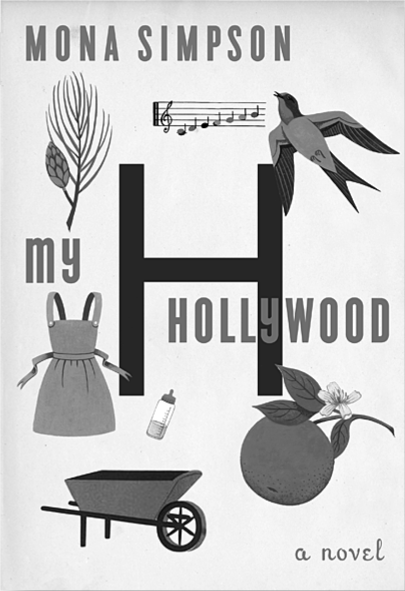
My Hollywood
By Mona Simpson Knopf, 2010, 384 pages
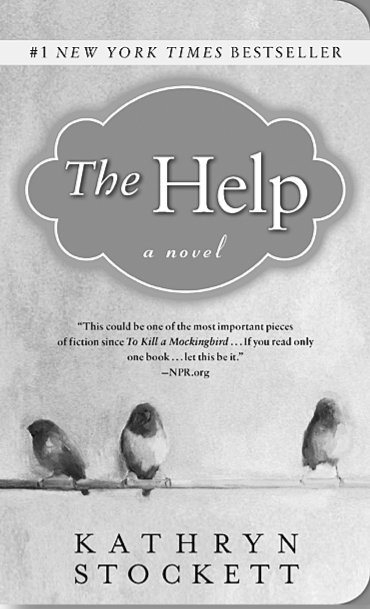
The Help
By Kathryn Stockett Amy Einhorn Books/Putnam, 2009, 464 pages
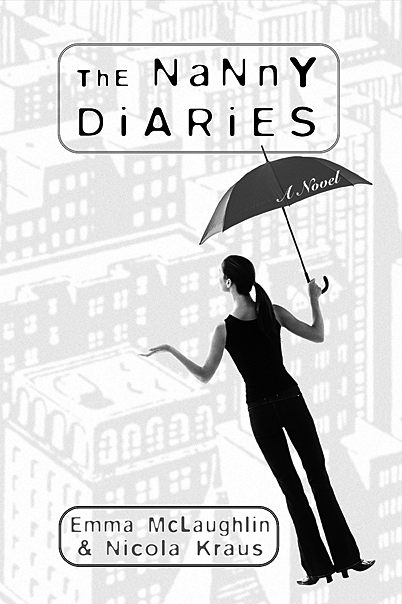
The Nanny Diaries
By Emma McLaughlin and Nicola Kraus St. Martin’s Press, 2002, 320 pages
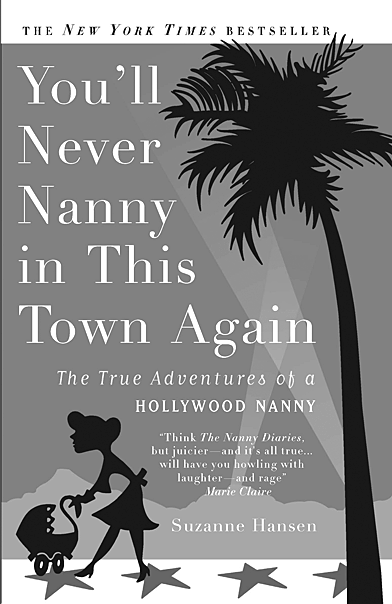
You’ll Never Nanny in This Town Again: The True Adventures of a Hollywood Nanny
By Suzanne Hansen Three Rivers Press, 2006, 304 pages
The figures of the nanny and the mammy have long been symbols of safety and nurturing in an uncertain world. The recent spate of novels and memoirs about these figures is worth considering for what they say about the contemporary family and the role of mothering in it. Such books easily garner high sales and, in some cases, soar to best-seller status, spinning off into popular movies with big stars. The Help, for instance, has been ensconced on major fiction best seller lists since it was published in early 2009. This attention stands in contrast to the low visibility of the many excellent scholarly works on the topic, including studies by sociologists Julia Wrigley, Rhacel Parrenas, Pierrette Hondagneu-Sotelo, and Cameron Macdonald.
The attraction of books about nannies persists even though, statistically, this kind of in-home care by a non-relative is now extremely uncommon among working mothers: the most recent figures offered by the U.S. Census Bureau indicate that only 3.7 percent of all children under five living with their mothers are cared for by a non-relative in the child’s own home. The statistics also demonstrate that this form of care is most prevalent among those with higher education or higher incomes. Although we can count how many children are cared for in this arrangement, it is far more difficult to calculate the number of domestic workers and nannies who provide this care, because so many work “off the books” and because the U.S. Bureau of Labor Statistics does not even consider nannies as a separate worker category. We know, however, from studies by Human Rights Watch, that as many as a third of all private household workers are immigrant women; we know as well that whether or not they are immigrants, most domestic servants differ from their employers in terms of race, ethnicity, and of course, social class. Human Rights Watch mentions the consequences of these differences when it notes that while many domestic workers are treated well by their employer the power imbalance in the employment relationship often leads to extensive violations of workers’ rights. Child care workers in other settings—including workers’ own homes —are more likely to be protected from such abuses. Finally, the available data suggest that no matter who they are or where they are employed, child care workers earn little: according to the Bureau of Labor Statistics the median hourly wage of child care workers was $9.12 in May 2008 and the lowest 10 percent earned less than $7.04. Child care workers who are employed in private homes are likely to be among these lowest paid workers.
Popular nanny books reflect these realities unevenly at best. Although race, low pay, and exploitation are central issues in The Help, it cannot speak to contemporary issues because it is set in the pre-Civil Rights South. Both You’ll Never Nanny in This Town Again and The Nanny Diaries also present issues of low pay and exploitation, but they are told from the point of view of atypical, white, home-grown, nannies. My Hollywood, the newest of the four, features a more common situation, in which a white woman hires an immigrant woman to care for her child.
My Hollywood is the most sophisticated of these books. And it differs from the others in several ways beyond its presentation of contemporary realities. First, unlike the fictional The Nanny Diaries and the memoir, You’ll Never Nanny in This Town Again, both of which are told from the nanny’s point of view, My Hollywood includes both the mother’s and the nanny’s voice in alternating chapters. Second, unlike The Nanny Diaries, You’ll Never Nanny in This Town Again, and The Help, all of which describe ice-cold mothers who cannot bear to be with their children, My Hollywood presents the reader with the angst of a woman who wants to (and actually tries to) love and care for her son, even if she is inexperienced and clumsy in contrast to the nanny. Third, unlike the mothers in the other books, who hire nannies even though they have no independent jobs, Claire, the mother in My Hollywood, has her own career as a composer. Her creative ventures that draw her away from her child remind us of Virginia Woolf’s yearning for a room of her own.
Even with its more complex character depiction, the unusually well-written My Hollywood illustrates well the attractions of nanny books, since it rests on the same well-worn themes that seem to resonate with contemporary readers. Like the other books in this genre, the novel claims you can, indeed, buy love from a nanny. Even if she is badly treated and underpaid, a nanny will care for and adore your child. And she will do so even if that child is unattractive to, or difficult for, the mother. Lola, the nanny in My Hollywood, demonstrates this love twice. First, she refuses to leave Claire’s child, William, for a considerably higher paying job. Later she returns from her home in the Philippines to care for Laura, a child with a possible disability who is the daughter of Judith, a single, employed woman.
By making the nanny noble in her commitment and love, readers find fulfillment of their own yearning for a good mother. They also find reassurance that their children will be loved in whatever child care contexts they are placed. Moreover, in a culture that is mistrustful of nannies—particularly when they represent the racial and class “other” —readers can enjoy the experience of acting more generously by being trustful (albeit only in the imaginary) as they root for the nanny against the pernicious surveillance of nanny cams and other indignities.
These works confirm what everyone wants to hear about those who have more: money can’t buy happiness, faithfulness, or well-behaved children.
Trite as it may seem, these works also reconfirm what everyone else wants to hear about those who have more: money cannot buy happiness, it cannot buy the faithfulness of a spouse (in fact, cheating on wives is legion in these works), and it cannot buy attractive, well-behaved children. (In The Nanny Diaries, money cannot even buy admission to a prestigious private elementary school.) Thus, while these books offer an insider’s view of the rich and famous, they reassure that we need not suffer envy: not only do the rich and famous steal each other’s husbands and nannies, but they fail utterly at the most ordinary tasks of daily living. Not to mention, they are miserably lonely.
On the contrary, the “underprivileged” nannies are represented as having warm, supportive, and loving communities that sustain them even as they deal with exploitation and endure separation from their own children and spouses. This is the case for the atypical, white nannies in You’ll Never Nanny in This Town Again and The Nanny Diaries, whose families represent solid middle- and upper-middle-class virtues. It is also the case for the African-American “mammies” in The Help, who attend church together and provide succor during hard times, and for the Filipina Lola in My Hollywood, who enjoys loving friendships at the home of a woman named Ruth. To be sure, these less privileged lives have disturbing features. Suzy, in You’ll Never Nanny in This Town Again, worries that her home-town boyfriend is but a country bumpkin. Minnie, in The Help, experiences constant domestic abuse. And on her return home, Lola, in My Hollywood, finds that her husband has been making hay with a neighbor. Even so, the basic backdrop is one of good will, sharing, and protection. Much as my students read anthropologist Carol Stack’s iconic study, All Our Kin, as implying that we needn’t interfere in the lives of the poor because they have significant mechanisms for mutual support, so these nanny books can be read as reassuring members of the middle class that even if they, personally, don’t exploit a nanny (because they cannot possibly afford one), the workers they do rely on (e.g., the cleaning women, and caregivers to the elderly) make do. In fact, although the nannies in these books spend their days taking care of and cleaning up after other people’s families, their own children turn out well. Lola might feel displaced in the Philippines, but her children in Manila “wear soft sweaters, slender gold chains with each one a tiny diamond” and they are as Lola “wanted them to be: polite, modest, educated women.”
Still, these books suggest the need for a white savior. My Hollywood’s angst-ridden Claire ventures down to the Philippines to bring Lola, now at loose ends, back to Los Angeles to a new job caring for both Judith’s child Laura and Claire’s own—now-demented—mother. Similarly, in The Help, Skeeter, a white woman who has just graduated from college and has literary ambitions, literally gives voice to the mammies as she publishes their stories. Both Suzy from You’ll Never Nanny in This Town Again and Nan from The Nanny Diaries, because they are white, can free themselves and move on. But women of color, it seems, need white women to solve (even as they have often also created) their problems.
My Hollywood ends with the social order restored. Not only does white Claire rescue the less fortunate Lola, but because Claire has now become a worthy mother, her child returns to her by rejecting his former nanny. “I don’t remember Lola,” William says when asked to rejoice in Lola’s imminent return. But Claire can continue to employ Lola (now for the care of her mother). And another white child (Laura) will continue to have a woman of color to love and nurture her until she, too, is ready to say goodbye and forget that her success rests on the backs of those less privileged than herself.