



Abstract
While globalization has expanded the flow of goods, environmental movements have worked to constrain these flows by constructing local-based networks. Conover traces four routes of globalization, while Berry and Mollard shed light on the environmental challenges these routes create.

For the past sixty years, the global network of roads and associated streams of traffic have expanded rapidly. This expansion occurred first in the affluent market societies of Europe and North America and then most recently in the emerging market societies of Asia, Africa, and Latin America. During this time, sea lanes, flight paths, and rail lines also experienced dramatic increases in traffic. Through trade gains across these transportation routes, some people saw real increases in their income and well-being. But the prosperity brought by the expanded flows of people and goods came at an environmental cost. For example, as the food miles traveled by agricultural goods increased, so did the greenhouse gases emitted to get those products from farmers to consumers. Globalization expanded the flows of goods and brought material comforts to many, but its costs must be measured in terms of climate change, biodiversity losses, and unequal human exposure to environmental pollutants.
If globalizing entrepreneurs expanded the flow of goods, then environmentally concerned people have constructed communities to constrain it.
In response, some have begun to construct and reconstruct communities of resource users to limit the exploitation of natural resources. Networks of producers and consumers organized around locally produced foods have emerged, for instance, while more formal regulatory efforts have created communities of users bound together by common rules about the use of a resource like water. If globalizing entrepreneurs have expanded the flow of goods, then environmentally concerned people have, in a countervailing way, constructed communities to constrain these flows. Two recent books document these dynamics through a series of case studies.
In his widely-read book, The Omnivore’s Dilemma, journalist Michael Pollan explored the global food system through an exhaustive investigation of the origins of four meals. Similarly, in the Routes of Man, another journalist, Ted Conover, describes the expansion of the global system of roads through a study of the human dimensions and physical spaces of six roads. These routes represent signature cases that, as a composite, describe major trends in the global transportation network. In colorful, vividly detailed terms, Conover describes the extension of a road at the margins of the network, down the eastern slope of the Peruvian Andes into the Amazon rain forest. Locals await the arrival of the road with excitement, convinced that it will bring economic prosperity to their region. A similar dynamic, mixed with apprehension about the loss of the younger generation to cities, grips elders in eastern Kashmir as winter foot travel on frozen rivers gives way to trips in the seats of minibuses on recently built roads.
Traffic on roads into continental interiors grows with the volume of imports and exports. Conover describes the round of activities, some criminal and others not, on one route, from Mombasa, Kenya to Kampala, Uganda. The spread of auto-based recreation and tourism in China comes into focus through a 1,000-mile trip with a car touring club from Beijing to the Three Gorges Dam and back. And several weeks with a newly created ambulance squad in Lagos, Nigeria provide a window onto the congested roads and the complicated relationships between police forces and gangs of local boys who prey upon (but sometimes assist) drivers in distress.
Almost as a counterpoint, Conover also profiles a concerted attempt to limit individual mobility through Israeli checkpoints designed to limit travel by Palestinians between Israel and the West Bank. The detailed portrait of a Palestinian population pressing against the walls and checkpoints separating the two territories testifies to an almost irrepressible desire by humans to move around the landscape. Each of these richly drawn vignettes describes the individual freedoms and the constraints on collective action created by transient, road centric communities. The eagerness and anticipation with which people welcome their newfound mobility underscores the challenges of crafting sustainable communities that do not unduly restrict human mobility.
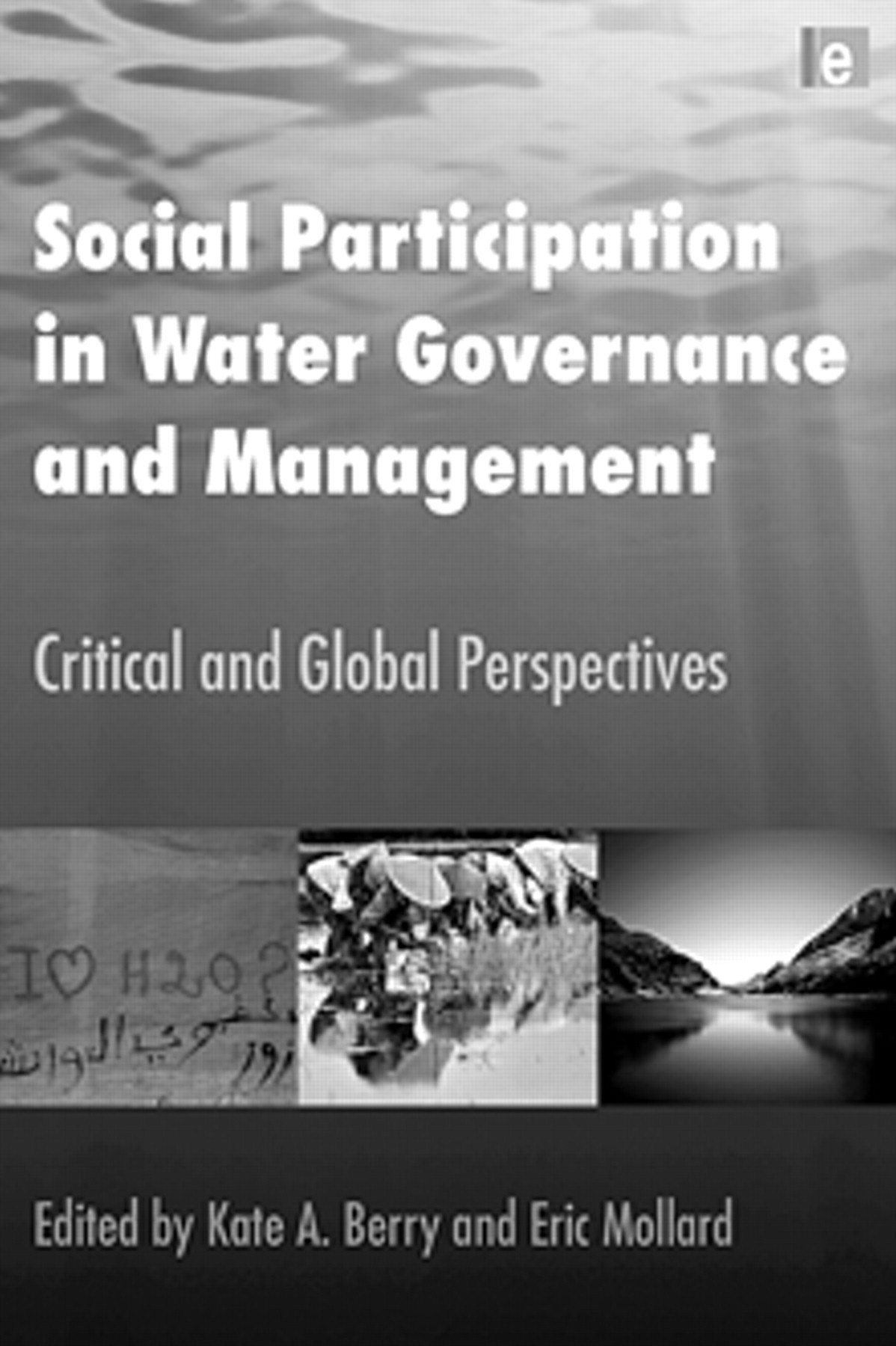
In Social Participation in Water Governance and Management, Kate Berry, a geographer, and Eric Mollard, an environmental sociologist, bring together authors concerned with how people allocate increasingly scarce water supplies. The ongoing, and dramatic, increases in world population require intensified agricultural production, with most of that additional production coming from expanded irrigation of farm lands. In each of these instances, individual water users must curb exploitation and submit to a common regimen of restrained resource use in order to manage water use effectively. The sometimes large power differentials between users make it particularly difficult to get both the powerful and less powerful to agree on a common set of rules.
Berry and Mollard’s volume presents case studies from a wide range of sites and concerning a number of different substantive issues: subsurface water rights in Death Valley, California; dam construction in Turkey and the Brazilian Amazon; community conflicts over irrigation in Yunnan (China), Rajasthan (India), and the Ecuadorian Andes; the exclusion of women from irrigation district management in Nepal and Peru; foreign assistance for irrigation in Sri Lanka; illegal connections for tapping water systems in South Africa; the implementation of new water rules in Mexico; contention over the use of riparian lands in Israel; and processes of watershed planning in Quebec, Canada.
The eagerness with which people welcome mobility underscores the challenges of crafting sustainable communities.
Each case focuses on the politics of creating communities devoted to watershed conservation and the productive, equitable use of water. The politics surrounding the new practices almost invariably have to address local power differentials that threaten to subvert and eventually destroy the new communities of conservationists, and the collected cases in this volume provide readers with a comparative historical record about the ways in which water users have addressed this dilemma. From this record, community organizers may be able to extract valuable lessons about strategies for political leveling that contribute to the construction of durable common property institutions for water and other natural resources.
Where The Routes of Man describes the increased flows of goods and people that accompany the continued expansion of global markets and generate some of our most pressing environmental problems, Social Participation in Water Governance and Management illuminates the various environment-conserving communities that globalization and growth have necessitated. These new communities promise to shelter us from the winds of change, but will they continue to be up to the task? This is perhaps the central question for an environmental sociology of the 21st century. Read together, these volumes describe a major source of our environmental problems, the options for meaningful environmental reforms, and the challenges of implemention. Not a bad accomplishment for two books about roads, water, and people.