




Abstract
While the Tea Party Movement has emerged as a true player in American politics, it has not yet come to be identified with a set of core beliefs. The authors use survey data to discuss the opinions that make up the movement.
The Tea Party Movement (TPM) was the story of the 2010 midterm elections.
On February 19, 2009, CNBC commentator Rick Santelli complained from the floor of the Chicago Mercantile Exchange about the proposed mortgage relief program: “How many people want to pay for your neighbor’s mortgages that has [sic] an extra bathroom and can’t pay their bills? Raise their hand!” He called for “another Tea Party” to protest the policies. In the wake of the 2008 election, in the midst of the economic meltdown and the health care reform debate, local protests loosely organized under the banner of the Tea Party began to emerge nationwide. In December 2009, 41 percent of Americans said they viewed the movement positively.
It’s just that no one can really pin down what the TPM is. We know it fuses populist anger with limited-government politics, conservative social concerns, support for free markets, and a nostalgic loyalty to a vision of Revolutionary America. These various political strands are interwoven with powerful cultural motifs drawn from history and a theatrical use of images, language, and stories.
We set out to determine if general public support for the movement represents a new political and cultural phenomenon, or if it’s simply realignment within the Republican Party. We needed to know the political and cultural dispositions of Tea Party supporters.
“I call it our ‘now and never’ rally. ‘Cause it definitely is now or never.”
Based upon two telephone polls of registered voters in North Carolina and Tennessee and a set of interviews and observations at a TPM rally in Washington, North Carolina, we determined that there are four primary cultural dispositions among people in those states who feel positively toward the TPM: authoritarianism, ontological insecurity, libertarianism, and nativism.
First, TPM supporters (not necessarily members) tend to hold more authoritarian views than others. For example, 81 percent of those who approve of the TPM agree that it’s more important that a child obey his parents than be responsible for his own actions. Only 65 percent of non-TPM supporters agree. Second, they experience “ontological insecurity,” or fear of change. In our poll, 51 percent of people who are very concerned about “changes taking place in American society these days” were TPM supporters, compared to just 21 percent of those who were only somewhat or not at all concerned.
Tea Party supporters were more likely to be libertarian, believing that there shouldn’t be regulations on expressions such as clothing, television shows, or musical lyrics. In our poll, 24 percent of TPM supporters believe fewer rules should regulate what can be posted on the Internet and who can read it; in contrast, 16 percent of non-TPM supporters hold this view. Finally, supporters are more likely to share nativist sentiments: 18 percent feel very negatively toward immigrants compared to 12 percent of non-TPM supporters.
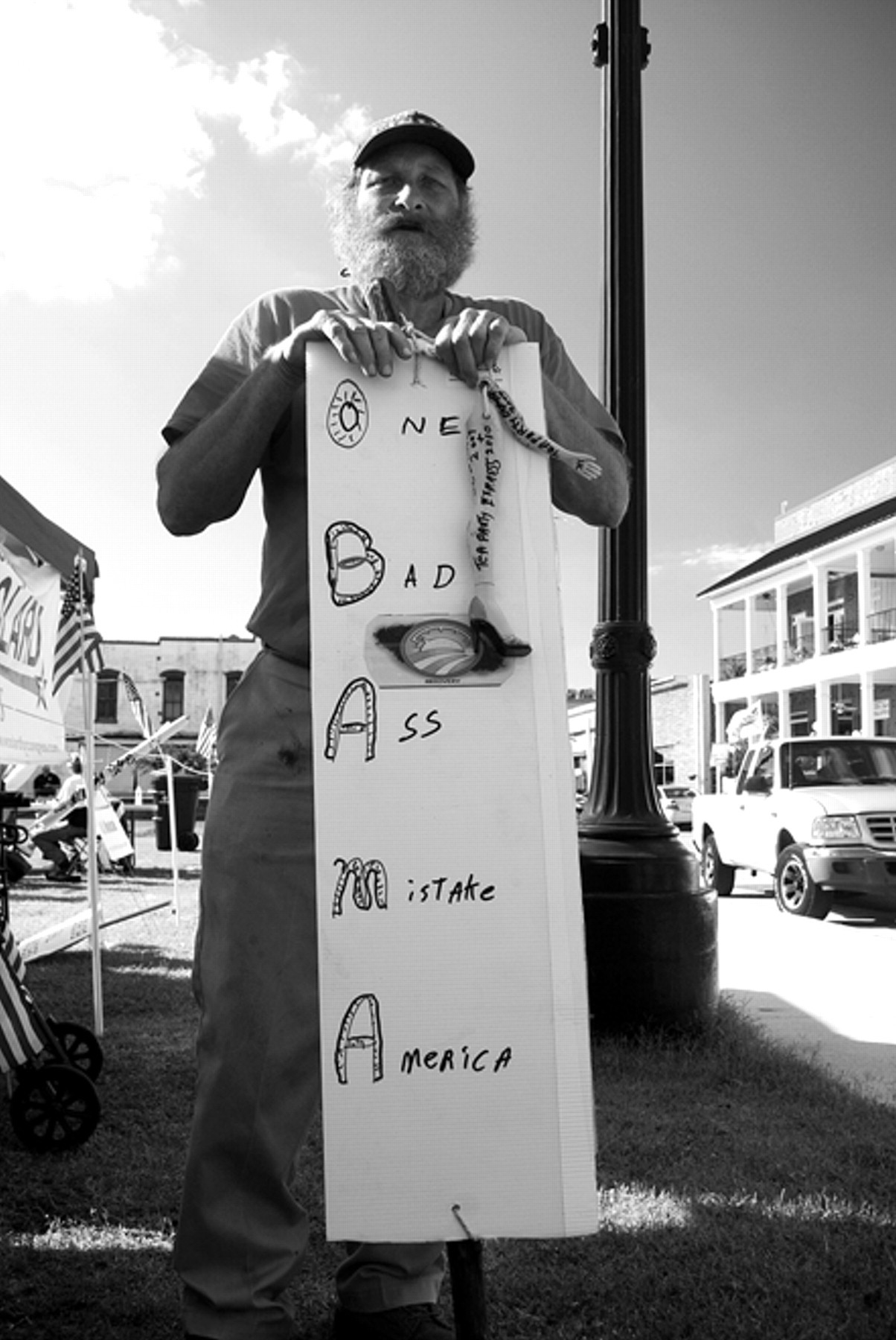
The TPM is best understood as a new cultural expression of the late-20th century Republican Party, reinforcing pre-existing strands of nativism and ontological insecurity, while highlighting libertarian and authoritarian strands.
The TPM’s activation of cultural imagery, metaphor, and history gives this movement its powerful symbolic resonance, animates its activists, and dominates media coverage of the movement. Culture gives people the tools to understand and relate new events to old ones; it gives the past meaning for the present. Culture also provides collective accounts of individual experiences, frustrations, and aspirations.
The TPM’s cultural work begins with the name itself—a nostalgic connection to the American Revolution’s protest against “taxation without representation”—and extends to the recurring cultural theme of a return to the ideals of the Constitution. According to one Tea Party volunteer, “We don’t want the big government that’s taking over everything we worked so hard for… we want to take back what our Constitution said. You read the Constitution. Those values—that’s what we stand for.” Such statements are rooted in ontological insecurity and consistent with expressions of earlier right wing movements based in status defense and organized around traditionalism and desire for a simpler, purer past.
Listening from the crowd at the Americans for Fair Taxation gathering in Washington, NC, in October 2010.

In our follow-up poll, 84 percent of those who felt positively toward the TPM said the Constitution should be interpreted “as the Founders intended,” compared to only 34 percent of other respondents. But this support is not absolute. The Tea Partiers were twice as likely to favor a constitutional amendment banning flag burning; many also support efforts to overturn citizenship as defined by the Fourteenth Amendment. That they simultaneously want to honor the founders’ Constitution and alter that same document highlights the political flexibility of the cultural symbols they draw on.
The TPM supporters’ inconsistent views suggest they are animated more by a network of Constitutional cultural associations than a commitment to the original text. In fact, such inconsistencies around policy, whether on the right or left, underscore what many sociologists see as the growing importance of culture in political life. The Constitution—and Tea Party more generally—take on heightened symbolic value, coming to represent a “way of life” or a “world view” rather than a specific set of laws or policy positions.
The memory of the Boston Tea Party itself, emphasized in press coverage of the movement, is heavily linked to the libertarian cultural disposition that favors limited government. The implied claim is that the tax revolt of the Revolution matches today’s call for lower taxes. One Tea Partier stated, “You have a government which can always tax and tax and tax… and this is just one concept that the Tea Party recognizes as a problem: the greed of centralized government… which takes away the responsibility of individuals to do anything.”
Like the Constitution, then, the Boston Tea Party is a cultural image only loosely connected to the historical record. While the original revolt was about taxation without representation, current complaints are directed at a democratically-elected leaders. Interestingly, the deployment of Tea Party imagery in politics has historically been flexible; in the 1970s, activists drew upon the revolt of 1773 to argue not for lower taxes, but for a more progressive tax system. These are slippery symbols.
While the libertarian strand is strong, the wistful nostalgia of TPM supporters is primarily composed of their blend of ontological insecurity and nativist dispositions. One rally organizer summed up the sentiment at the rally: “And why do you think they [illegal immigrants] wanted to come? They wanted to come because it [the U.S.] is successful. But after they get here, what do they want to do? They want to change it. And see, you can’t change it and be successful. It just won’t work…” This mix of nativism and fear of change is also expressed by the distance TPM supporters feel from President Obama. While 41 percent of TPM supporters felt that former president Clinton was “not at all” like them, 81 percent feel that way about President Obama.
It is a truism of American politics that the first midterm election in a presidential administration results in losses for the President’s party. Recognizing that the Tea Party Movement is one such backlash is key to understanding what’s new here (and what’s not). The coalition of views that makes up the TPM is largely the same set of dispositions that makes up the Republican Party. What’s new about the TPM is its syncretic cultural work melding 21st century discontent to the symbolic memory of 18th century America. One TPM supporter says it all: “We want to save America. We want to see this country go back to the original success formula that made us what we are today.”