



Abstract
The Tea Party trumpets itself as a movement of the people. But who is included in “We the People”? Ruth Braunstein tries to answer.
In the back room of a local restaurant, I stood with thirty members of a New York-area Tea Party group. We placed our hands over our hearts, and our voices rose to recite the Pledge of Allegiance. When we got to “under God, indivisible,” people shouted the words—a small act of resistance against what they see as a steady erosion of core American values.
Linda, the group’s organizer, passed around a worksheet with discussion questions and the text of the preamble to the Constitution. She asked if anyone could recite it by heart, like they used to do in school. Everyone laughed as Pete, who is in his late sixties, raced through the words, his eyes pinched closed. When he finished, he took a dramatic breath, “I guess I still remember it!” Linda turned to John, a longhaired twenty-something, and asked him to read the first passage aloud. He began, “We the People of the United States…”
Around the country, Tea Partiers have dusted off their pocket Constitutions and sought to reclaim their voices as citizens. Like numerous populists before them, they’ve demanded that “we the people” be included in the policy-making process. The question is, who are “we the people?”
In many ways, the people I’ve met in my fieldwork fit the popular image of Tea Party activists. Most are white and middle to upper-middle class. They are equally divided by gender, although many organizers are women. Many are small business owners. Many are veterans. All are concerned about the direction in which our country is headed. All profess a commitment to limited government.
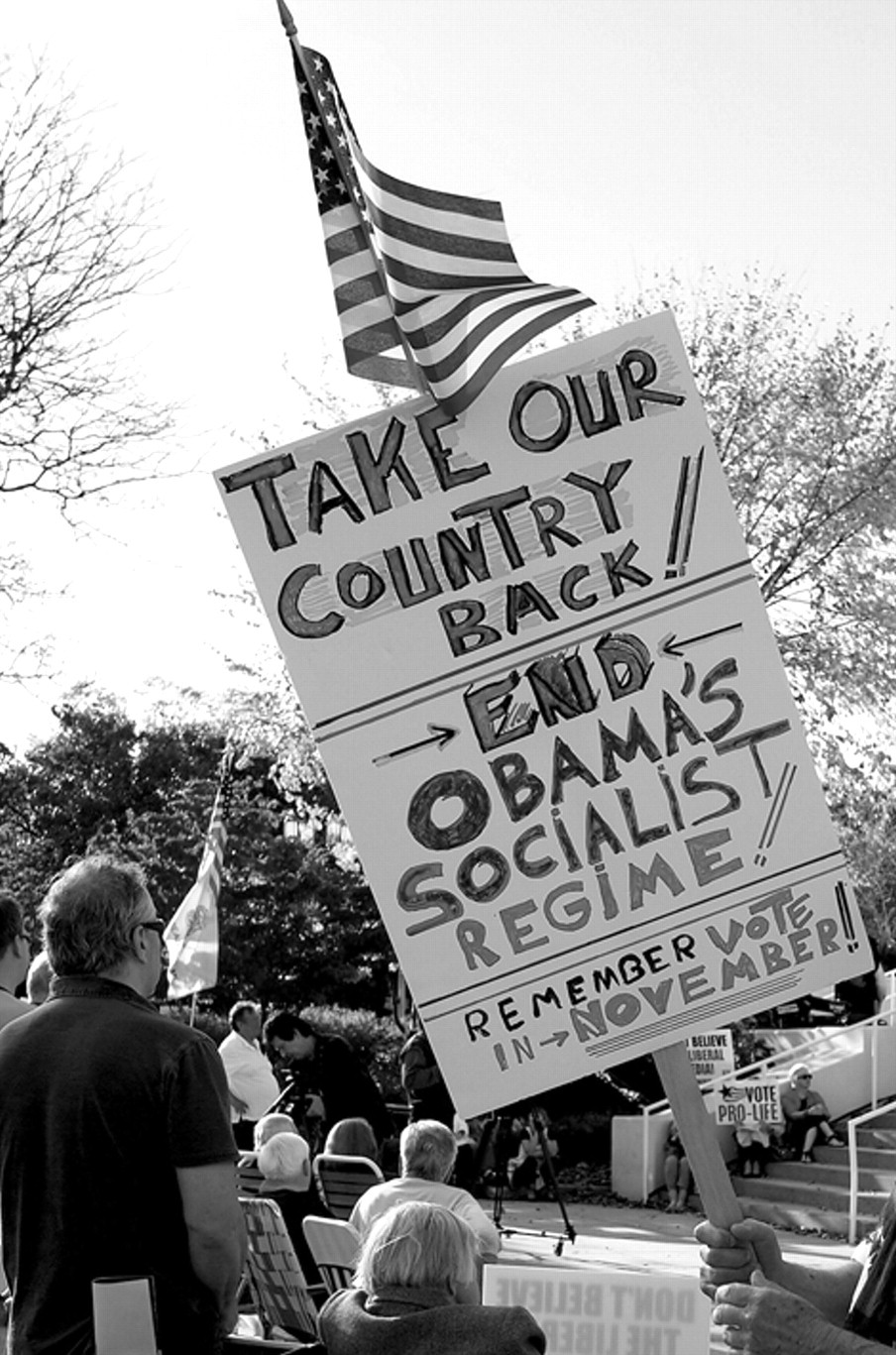
Yet it is necessary to look beyond media stereotypes of angry white racists and right wing extremists. The Tea Partiers I’ve come to know have genuine concerns about a growing government that feels ever distant from the demands of the people.
Linda cites the debate over “ObamaCare” as the moment she took notice. “I was busy living the American Dream,” she explains. “I am sorry for that, because I wasn’t paying attention.” To her, the healthcare reform bill was proof that President Obama would legislate against the will of the people. It signaled a seismic shift: the country was hurtling toward socialism. In the Navy, she’d been taught not to question the Commander in Chief, but she knew she must stand up and demand to be heard now—her children’s futures were at stake.
Others tell similar tales of awakening from decades of complacency and setting about to become informed citizen activists. Although some had previous political experience, many truly were novices who had privately honed their political chops for years—on Internet message boards and around the dinner table—before joining others in public.
The problem was, when they finally stood up together, no one seemed to be listening. They felt marginalized by a society obsessed with political correctness, maligned by a media biased toward the left, and ignored by political elites obsessed with their own power. They were a “silent majority,” but not for long; they were about to become “we the people.”
Indeed, when Tea Partiers speak to one another, the pronoun “we” is often replaced by “we the people.” When they call for “we the people” to become politically educated and hold elected officials accountable, they seemingly speak on behalf of all Americans. Yet when they say, “You bet I put out lawn signs! We the people need to show our neighbors what we believe,” they are, intentionally or not, only speaking on behalf of certain kinds of people (“we the likeminded”), while excluding others (liberal neighbors with their Hillary Clinton signs and their “Happy Holidays”).
Many also conflate “we the people” with another group: “we the taxpayers.” In an auditorium packed for a public county budget hearing, Stan, a Tea Partier and elected local official, spoke in support of proposed budget cuts. He said sternly, “This is $1.78 billion dollars that you were given to spend by we the taxpayers… We are asking you to spend it wisely. …Do not expect another penny from us!” He slammed his fist on the podium.
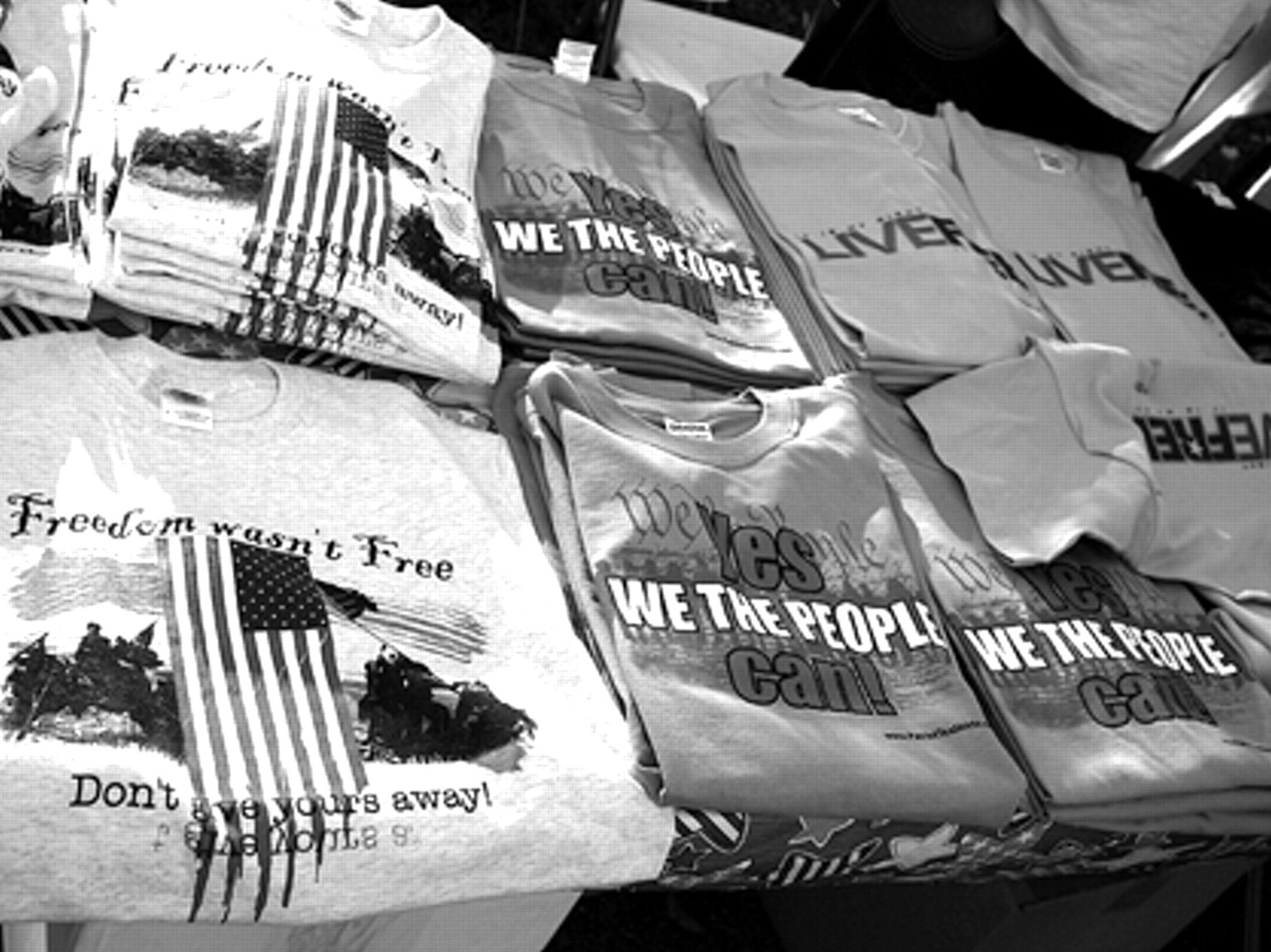
Tea Partiers have rallied around this shared identity as grounds for making policy demands. They slide seamlessly from “we the people” to “we the taxpayers,” as if these were equivalent. However, as taxpayers, they represent only part of the whole (after all, many citizens are not taxpayers). Tea Partiers distance themselves (taxpayers) from “takers” (who burden “the system”) by highlighting the moral value of work. Rebecca, a business owner, proclaimed at an August rally, “There is a difference between those who produce something and provide for themselves, and those who produce nothing and brag about it!”
Yet Tea Partiers don’t identify with all working (and taxpaying) people; for example, they vilify unionized workers as yet another subsidized class. If “we the taxpayers” is implicitly defined as those who are not takers, then this also excludes taxpaying citizens who consume more government benefits than they pay in taxes—net takers. As “we the taxpayers,” Tea Partiers really appear to speak on behalf of those paying the most taxes—net payers. This language justifies privileging the interests of the wealthy and the business owners among them, perhaps even at the expense of other Tea Partiers.
Still, this widely accepted division of “the people” into payers and takers helps explain the group’s fear of big government. Indeed, it suggests that much of their desire to limit the size of government is rooted in concerns about the role of government—namely, its redistributive role. Unlike their libertarian cousins, most Tea Partiers are comfortable with a large defense apparatus; it is entitlement programs that rankle them. Yet everywhere they turn—from debates about healthcare reform to unemployment benefits—they see an ever-expanding welfare state. For many, these are the telltale signs of encroaching socialism. And though they have numerous concerns about socialism, it is primarily as an agent of redistribution that socialist government becomes illegitimate: a tyrannical force that takes money from hardworking citizens and redistributes it against the will of “the people.”
Not simply imagined as a future dystopia, this is also how many existing functions of government are described. At the same hearing where Stan spoke on behalf of “we the taxpayers,” a man named Bob (who introduced himself as “a mere taxpayer”) explained: “When we ask [the] government to do something for us, what we’re generally asking them to do, basically, fundamentally, is to draw their guns, bring their courts and their prisons to bear, on our neighbors, to forcibly take their money from them.”
Tea Partiers felt marginalized by political correctness, maligned by the media, and ignored by political elites.
For Tea Partiers like Bob, any “tax and spend” agenda is a socialist mandate for government to steal from one citizen and give to another. Yet if this is considered illegitimate, what are we to make of Tea Partiers who support government spending on veterans’ benefits, Social Security, and Medicare? Knowing that many beneficiaries of these programs consume more than they paid in, are they not net takers? Are there exceptions for certain groups of entitled takers? I often hear that some programs are justifiable if they serve “average Americans,” whereas those programs that serve “the people” the least must be cut.
The question remains, which people? All Americans? All taxpayers? Perhaps only net payers? Whose voices should be heard; whose interests should be served? The diverse group of Tea Partiers I’ve come to know probably wouldn’t agree on a single, unqualified answer. But if their identification as “we the people” serves as their basis for demanding a voice in these debates, it seems fair to ask who might be excluded, intentionally or not.