




Abstract
In their respective books, Alex Jones and Jack Fuller examine what news is, how traditional journalism has been threatened, and how it can sustain its mission in the future. Lee Konstantinou's novel brings these theories to life, painting a picture of the “mediasphere” in the not-so-distant future.
Traditional American news media are in desperate trouble. Beginning with the era of corporate concentration in the 1980s, managerial priorities have subordinated journalism's public service mission to economic goals, drastically thinning the number of journalists and print and broadcast news outlets, and undercutting credibility in favor of audience-capturing sensationalism. Perhaps more cataclysmic has been the advent of the Internet, forever changing patterns of information exchange, often along sharply drawn generational lines. Audiences seem to be abandoning traditional forms of news, and, in turn, traditional means and standards for newsgathering, reporting, and editorial professionalism have changed or even disappeared. Professional journalism's job—or even its future—is no longer clear.
Many observers have written about the ramifications of such profound changes, warning particularly that the loss of independent and reliable news threatens American democracy itself. Self-government depends on an electorate informed about matters of public interest and, above all, about the activities of elected officials—an essential “watchdog” function protected under the very first amendment to our Constitution. Two recent books, written by veteran journalists well-situated to review the scope and depth of these changes, scrutinize how journalism reached its current predicament and how the profession's survival might be secured. In the process, both authors raise critical questions about what news is, what journalism's “job” is, and how best to sustain journalists' mission.
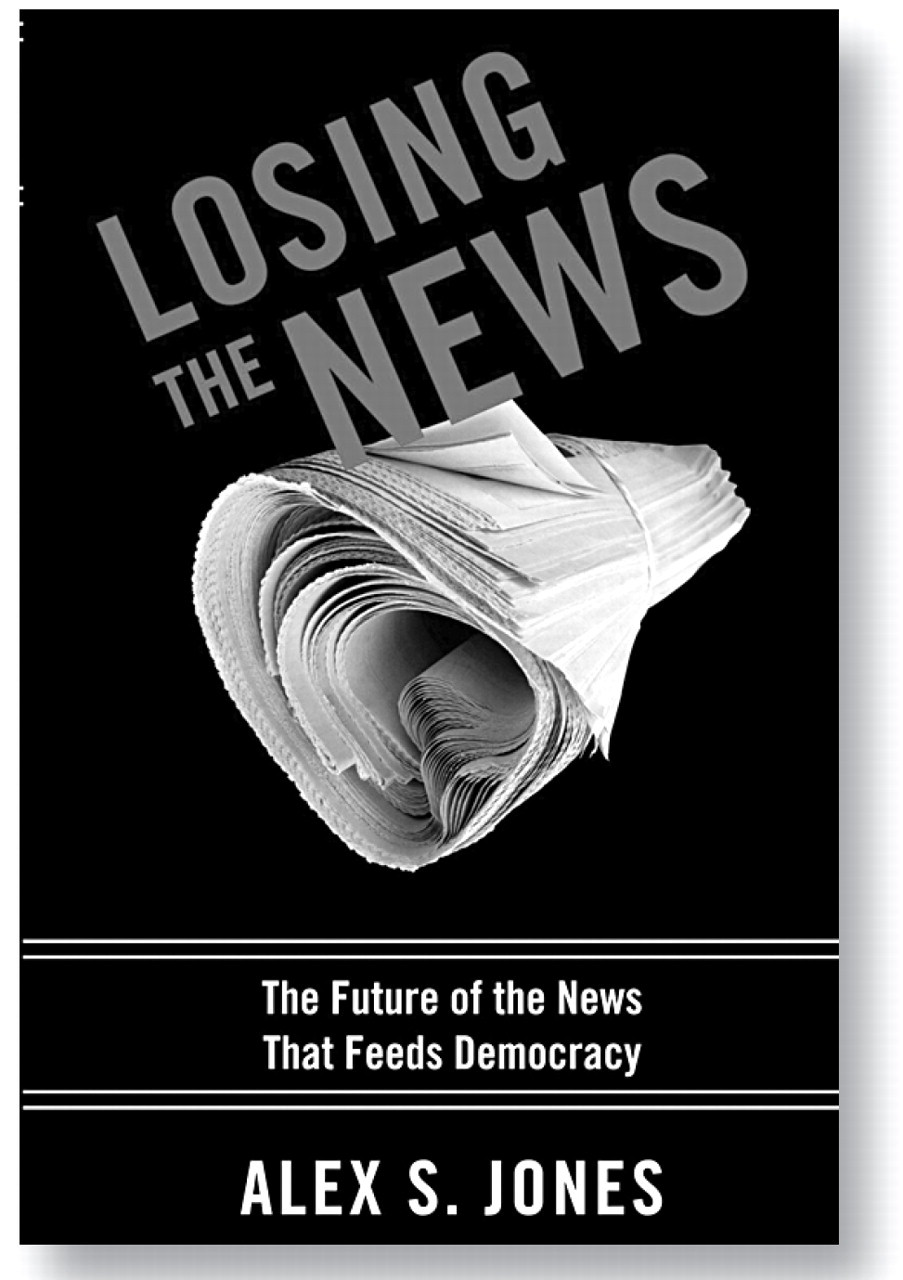
In Losing the News, Alex S. Jones, the current director of Harvard's Center on the Press, Politics, and Public Policy, is both panoramic and personal in his discussion of journalism's past, present, and future. During his career at the New York Times and thereafter, Jones experienced the economic and technological upheavals of the 1980s and 1990s firsthand. His well-researched and well-written exploration covers historical issues, leading easily into the hows and whys of today's crisis, all colored by the relevant perspectives of philosophy, economics, politics, and even serendipity.
Jones distinguishes among various types of news that are expected, by definition, to be “fact-based.” His primary concern is for what he calls the “iron core” of news, comprising both the simple monitoring of events—fires, weather, imminent attack—and more importantly, the actions of those in power. Jones calls the content of this watchdog reporting “accountability news,” and he considers it clearly and severely endangered.
Jones acknowledges the precarious historical balance between the media's public service mission and the economic realities of private ownership as a business—a balance once maintained by strict partition between editorial and managerial functions. Structural changes in the industry dismantled that partition during the 1980s, when the sole determinant of survival became profits (expected to approach 35 percent) derived almost entirely from advertising. Television, moving from broadcast to cable, adapted by eschewing “serious” news and incorporating entertainment, celebrity, and dramatic values welcomed by national-level advertisers. Although some tried, newspapers weren't well-suited to similar adaptations. It's fortunate for the public, Jones points out, because newspapers have endured as sources of “serious,” “iron-core,” and “accountability” news, not only for the public but also for other media, including the Internet outlets. Surviving newspapers have been those known for quality; those managed by “good operators” who can manage adequate (if leaner) profitability without excessive sacrifice of resources, independence, and public stewardship; and those able to effectively meld old and new technologies.
Jones's view into the future of news is, nonetheless, troubled. Journalistic professionalism once entailed objectivity, whose definition has been tortured and misunderstood over time to near collapse in the face of popular skepticism, anti-expertism, and valorization of individual opinion. Uncomfortable with the loss of journalistic independence, Jones considers some alternatives to market-driven ownership, albeit passingly, including conversion to non-profit, local, and/or publically subsidized ownership. Mostly, though, he worries that the public's right to know is no longer accompanied by any desire or obligation to know, and he casts about uncertainly for the spoonfuls of sugar that will entice the public into eagerly devouring the news they need for true self-government.
Alex S. Jones worries that the public's right to know is no longer accompanied by any desire or obligation to know.
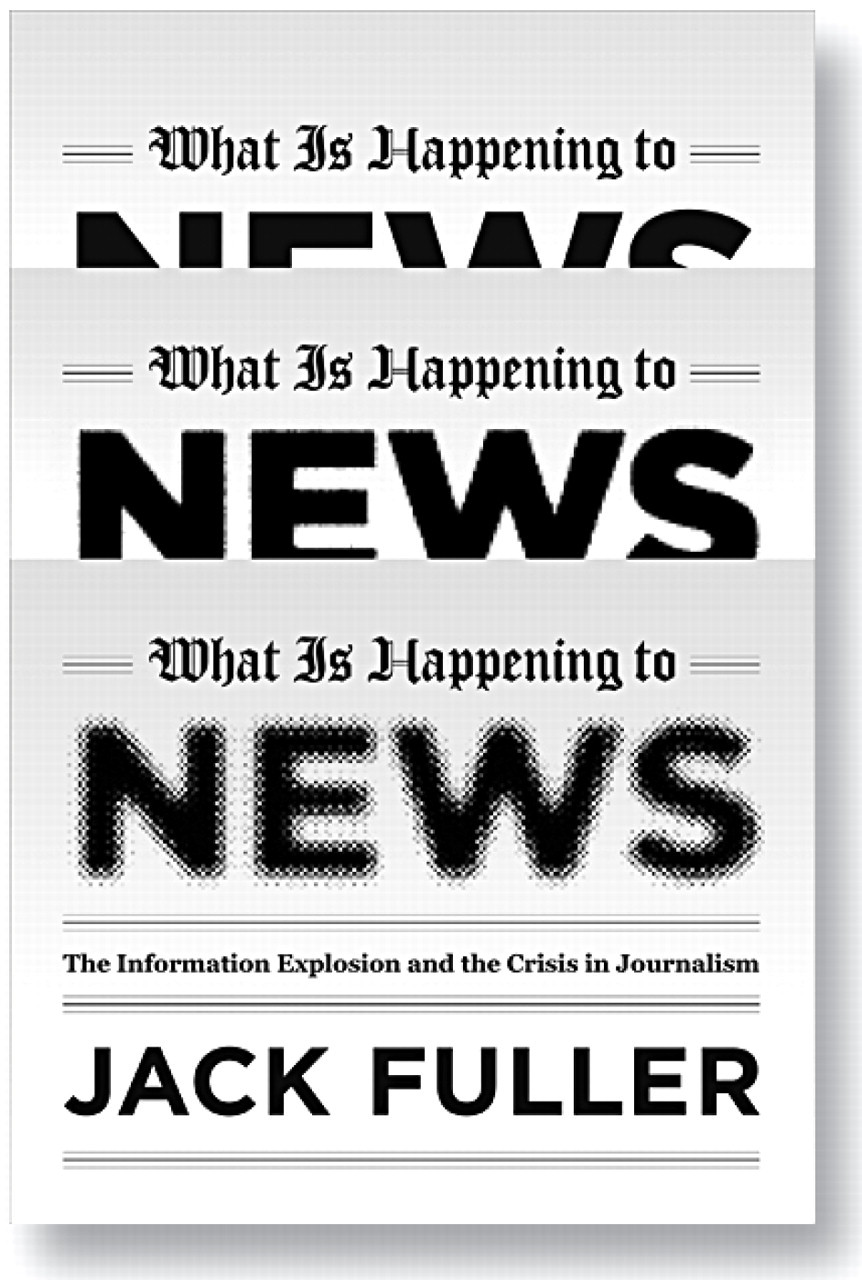
Those very enticements are Jack Fuller's focal quest in What Is Happening to News. Fuller, who served as Chicago Tribune editor and publisher as well as Tribune company president, initially covers much of the same historical and philosophical background as Jones. He draws on many of the same writers, particularly Walter Lippman and Michael Schudson, on the evolution of professionalism and concepts of objectivity, along with the impact of technological change. From there, however, he devotes his attention to changes in audience reception.
In recent decades, he asserts, the human (or at least American) brain has undergone a fundamental change, shifting from reliance on that which is factually known to what is felt—a change that journalism must reckon with. Citing classic dichotomies between objectivity vs. subjectivity and intellect vs. emotion, Fuller catalogues abiding systematic errors in human cognition and dissects changes in cognitive emphasis arising with (and caused by) mass-and electronic-media information-processing—all in intricate, often overwhelming neurological detail. “What is happening to news” turns out to be that news is now, literally, in the mind of the audience, who receive non-editorializing (that is, “iron-core”) news as unreliable, illusory, and even disingenuous. What Fuller describes as the “Standard Model of Professional Journalism,” anchored in expectations of expertise and objectivity, no longer works—if it ever did.
In Fuller's view, less dimensional and less dire than Jones's, journalism should look to a future based on scientific knowledge of how the contemporary audience's brains work. His somewhat off-handed concession to an independent, watchdog mission is to propose savvy branding of “quality” news, aimed at an elite, opinion-leader audience, a rather undemocratic niche approach Jones also recommends. For Fuller, however, journalism's core problem is keeping audience interest; the solution is found in knowing how information appeals and persuades, which he has concluded is mostly through emotion. Future journalistic professionalism will be defined as knowing how to find or create that audience-pleasing spoonful of sugar to help the bitter news go down.
Both Jones and Fuller accept the for-profit business model as journalism's best and perhaps only hope to keep news flowing from media to public—though Jones shows more consideration of the trade-offs. In that acceptance, both largely sidestep the editorial consequences of dependence either on advertising or deep-pocketed owners with vested interests. Moreover, both authors are necessarily caught in the conundrum of getting and keeping audience interest in an era when the right to know has become vastly qualified by audience preference and opinion.
Inevitably, such dependence on profit and audience appeal subjects the future of the news to a troublesome paradox: preserving information flow from media to the public would also require information flow from the audience to the media—in the form of market research, audience-driven news collection, and market-driven editorial choices. Such a reversal in the direction of information flow could conceivably leave journalistic professionalism all but indistinguishable from marketing professionalism, an eventuality Jones prefers not to focus on and Fuller seems to embrace. The reversed information flow also raises unaddressed questions about whether the public should or can decide what it needs to know (if anything) in order to vote, or whether democracy should or can afford to dispense with “experts.”
Lee Konstantinou's novel takes Aldous Huxley and George Orwell into the Internet age. News reporters are merely paparazzi.
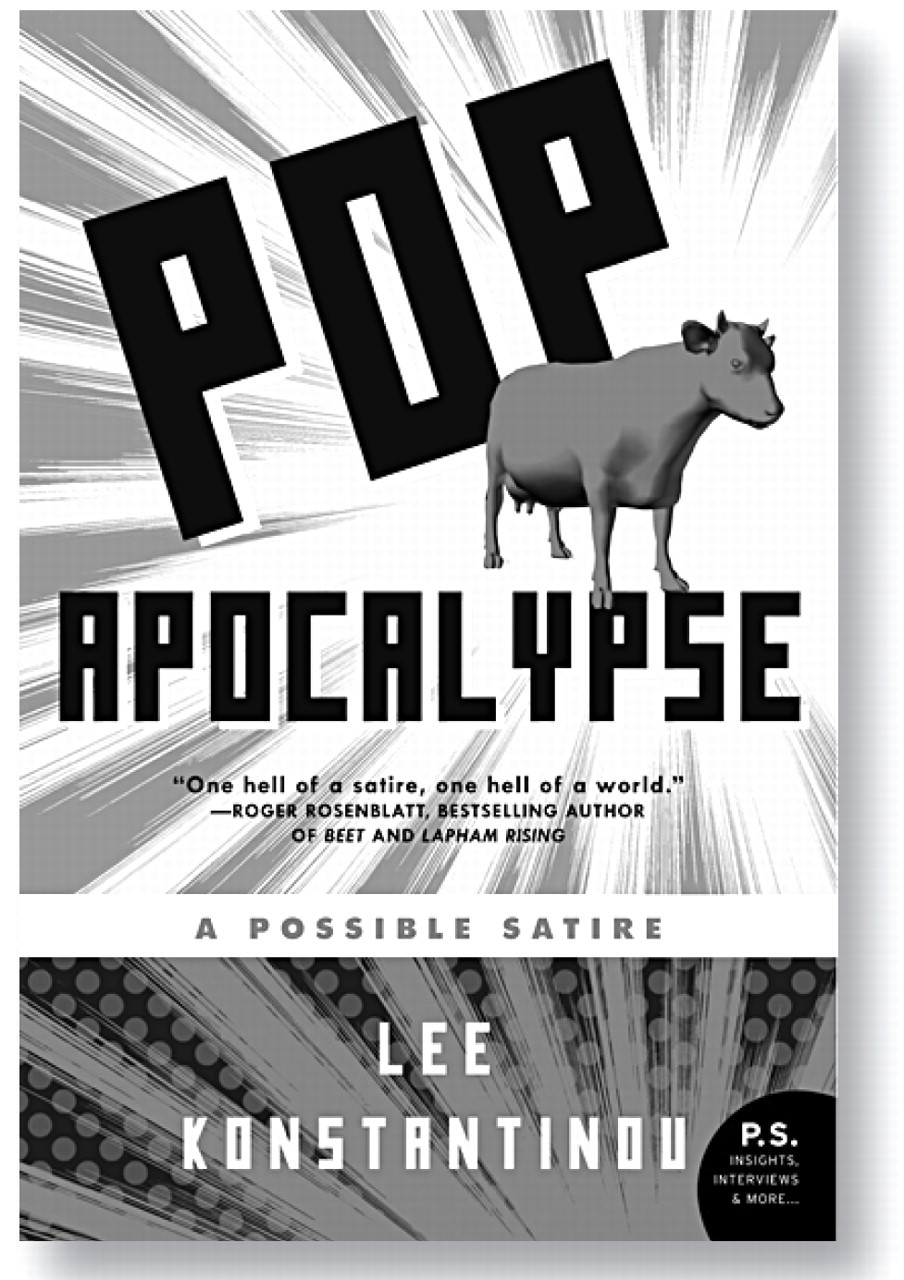
We see the logical trajectory of this paradox played out vividly in the dystopian world of Lee Konstantinou's engaging novel, Pop Apocalypse. A literary scholar and former Oracle employee, Konstantinou presents a near-future imbued with, indeed defined by, the “mediasphere”—an omnipresent summary medium, performing all functions of Internet, television, radio, and print media, plus a few more. Power resides in information control by corporate-government hegemonies; publicly elected officials are well-packaged proxies for corporate interests.
Konstantinou's protagonist is the son of the founder and CEO of Omni Science Corp., which has gained formidable global power by dint of its visual-recognition tracking program. Originally designed for government monitoring of individual activity, the program is made possible by incessant postings of mediasphere-users' own and others' images (sound familiar?). When the Omni system is extended into public and commercial domains (the same thing here), mediasphere users become at once both audience and “branded” celebrities whose public worth is traded as shares on a Reputation Exchange. Discerning the direction of flow of information here is impossible—and meaningless. Indeed, the content of the mediasphere is, ultimately and circularly, itself.
Konstantinou has taken Aldous Huxley and George Orwell into the Internet age, where fact-driven news is rarely more than traffic-condition signs reporting Riot Zone activity and news reporters are merely paparazzi affecting the rise and fall of celebrity share prices. Not surprisingly, this world is drastically polarized, driven into factions by seductive mediasphere controversy, while any focus on matters of public welfare is sparse and capricious. The novel's climax revolves around an international conflict likely to result in global apocalypse but offered for resolution one way or the other via the mediasphere in a muchhyped and branded, real time telethon opinion poll.
In this dystopia, any separation of journalism's civic and business missions has utterly vanished. Journalistic objectivity and independence are archaic, meaningless concepts; news is what the audience wants it to be, what the corporate-government hegemonies want the audience to want it to be, and what will keep audiences tuned to the mediasphere. Media content is a never-emptying spoon of Jones and Fuller's sugar, void of bitter, “serious” news.
Pop Apocalypse seems to take Fuller's proposal, in particular, to its logical conclusion. Yet Konstantinou allows a glimmer of vestigial watchdog journalism in the ironic form of counterculture, protest-group reporting. Jones might be reassured that even a “pop-apocalyptic” future could include some “accountability” news, in or out of the mainstream. Yet in the non-fictional future, how true watchdog news can realistically prevail is an issue that cannot be reduced to mere logistics.