




Abstract
The use of laboratory animals as experimental models of disease has been a critical tool for biomedical researchers for decades. Animal studies allow scientists to discover and understand the mechanism of infection and ultimately to develop effective treatment and prevention modalities. Workers who directly handle infectious microbes or infected laboratory animals are at risk of exposure while performing their assigned duties. A comprehensive biosafety program, led by a biosafety professional, is critical to properly protect workers and the surrounding community. Such a program includes a thorough understanding of the biohazard through formal risk assessment, implementation of effective biohazard controls, and extensive training of all personnel who are at risk of exposure.
The use of experimentally infected animals for research purposes dates back to the 1800s with the work of Louis Pasteur and Robert Koch on the germ theory of disease. Mice, guinea pigs, and sheep were used by the scientists to study the causative agents of anthrax and tuberculosis. Tremendous advancements in understanding the mechanisms of infectious diseases occurred over the 20th century. The use of research animals was key in this progress. Unfortunately, the handling of infected animals proved to be a risky task. Sulkin and Pike 1 identified 139 cases of laboratory-acquired infections that occurred in the early to mid-1900s that were a result of researchers and support staff coming in direct contact with infected animals. Significant advancements in the understanding of laboratory safety and facility design occurred over the second half of the 20th century and continue today. As a result, the risks of exposure to biological hazards in an animal research environment can be significantly reduced with the implementation of an appropriate biohazard control program overseen by a biosafety professional.
Biomedical animal research today involves infectious microbes, modified vector systems, recombinant or synthetic DNA, nanoparticles, and other materials. These activities require proper planning, training, and facilities to ensure safe, secure, and humane animal research. Biosafety is the term most often used to describe the control measures and precautions taken to protect workers and the community from accidental exposure to infectious material. 2 The term biosecurity is sometimes used to describe preventive measures to protect vulnerable crops and livestock in the community from coming in contact with hazardous materials released, accidentally or intentionally, from biomedical research facilities. This article will review the categories and types of biohazardous agents, the processes used to assess and evaluate the biohazard, and the controls and practices used to mitigate the hazard.
Categories/Types of Biohazards in Research Animal Facilities
Naturally Harbored Zoonotic Infectious Agents
Zoonotic diseases are transmissible from animals to humans. Laboratory animal species potentially harbor numerous zoonotic agents, including viruses, bacteria, or parasites. These zoonotic pathogens can pose a risk to laboratory personnel if proper precautions are not taken. For example, B-virus infection of macaques occurs naturally and is difficult to detect, even in commercial research colonies, due to the nature of the shedding and reactivation of this virus. Many other potential zoonotic pathogens can be present in research animals. 3
When possible or prescribed (by a funding agency), animal research programs should procure study animals through commercial vendors or other reputable sources to ensure that animal colonies are free of zoonotic diseases and other animal pathogens that may pose a risk to personnel, other research animals, or the environment (including introducing a possible pathogen to a native animal population). The experimental integrity of a study could also be compromised if an unknown subclinical infection is present in a research animal.
Wild-Type and Attenuated Pathogenic Microorganisms
Intentionally infecting research animals with pathogenic microorganisms (eg, bacteria, viruses, fungi) is a core of many research programs. To understand how infectious diseases work and to explore potential treatments and cures, research animals are infected with the pathogen(s) of interest. Historically, using a wild-type strain of a pathogen was the standard method of infecting an animal. Newer knowledge and technologies have allowed for attenuated strains of certain pathogens to act as surrogates for their wild-type counterparts. This attenuation often reduces the virulence of the wild-type strains, which makes conducting experiments with the microorganisms safer.
Recombinant DNA Technologies
Recombinant DNA (rDNA) technologies can be used to create genetically modified organisms, such as transgenic research animals. This can be achieved by inserting foreign DNA into an animal, combining DNA from different genomes (different organisms) together, or removing all or part of a gene (or disrupting the function of a gene) from an animal. In 1972, Paul Berg used restriction enzymes and DNA ligases to create the first recombinant DNA molecules. He combined DNA from the monkey virus SV40 with that of the lambda virus. 4 Herbert Boyer and Stanley Norman Cohen took Berg’s work a step further and introduced rDNA into a bacterial cell. 5 The first breakthrough occurred in 1974, when Rudolf Jaenisch and Beatrice Mintz showed that foreign DNA could be integrated into the DNA of early mouse embryos. 6 Since then, technology has continued to improve, and the use of recombinant DNA technology is commonly used in research environments.
Altering the DNA of an animal has been used to study human disease models, determine the purpose of a gene, attempt to repair heritable diseases, and is used for commercial applications as well. For example, goats have been genetically modified to produce spider silk protein in their milk, which can be used in manufacturing. 7
Various methods are used for manipulating the DNA of an animal. These methods have historically involved transgenesis (transfer of genetic material from one animal to another, through germ-cell alteration). More recent technologies involve viral vectors being used to introduce foreign DNA into an animal, edit the existing DNA through gene-editing tools (such as CRISPR/Cas9), or introduce silencing RNAs to downregulate genes. The use of viral vectors continues to increase in animal research. 8 Nonviral vectors can be used as well and are usually a safer alternative to viral vectors, but nonviral vectors are typically less efficient at delivering genetic material into cells. 9
Xenotransplantation and Humanizing Animal Cells
Xenotransplantation refers to any procedure that involves the transplantation, implantation, or infusion of live cells, tissues, or organs from a nonhuman (animal) source into a human host. 10 The need for xenotransplantation is driven by the demand for human organs for clinical transplantation exceeding the supply.
There are many benefits of using nonhuman source material, but there are safety concerns to be considered. Human recipients may be exposed to infectious agents that were not detected in the transplant materials, which can possibly lead to disease years after implantation, as well as the possible emergence of a new infectious human disease. 10 For example, the DNA of simian foamy virus (SFV) and baboon endogenous virus (BaEV) have been observed in transplanted tissues of human patients. 11 In a laboratory setting, workers who handle the xenotransplant materials may also be exposed to unknown or undetected pathogens.
To increase the success of a xenotransplantation and reduce immune rejection, animal materials can be humanized. This process has historically been used to alter monoclonal antibodies that are produced in animals and developed for administration to humans (such as anticancer treatments). More recently, transgenes have been used to alter xenograft tissue to protect against immune-mediated rejection. 12
By reducing immune rejection of xenotransplants in humans, the risk associated with an accidental exposure has increased as well. For example, if a lab worker is accidentally exposed to transgenic xenograft materials, his or her immune system may not reject it.
Allergens
Occupationally acquired allergies against laboratory animals are a common problem for laboratory animal workers. Reactions to mice and rats are the most common, but allergies can develop to any furred animals. 13 The source of the allergens can be hair, dander, urine, serum, or saliva. 13 Laboratory animal allergies (LAAs) are reported to occur in 11% to 30% of individuals working with laboratory animals. 14 Allergens from laboratory animals can be potent sensitizers, and even small amounts of allergens can induce symptoms in sensitized individuals. The transfer of allergens outside of an animal research facility by laboratory workers’ hair, clothing, and paper documents has also been documented and can be a source of sensitization in both the laboratory worker and his or her family. 15
Biohazard Risk Assessment
Prior to the use of a known or potentially biohazardous material in animal research, a thorough risk assessment must be performed to determine the likelihood of an exposure event occurring and the possible consequences should there be an exposure. The information in this section provides a guide for the selection of appropriate safety precautions that may be implemented to help mitigate the risk of exposure to an acceptable level.
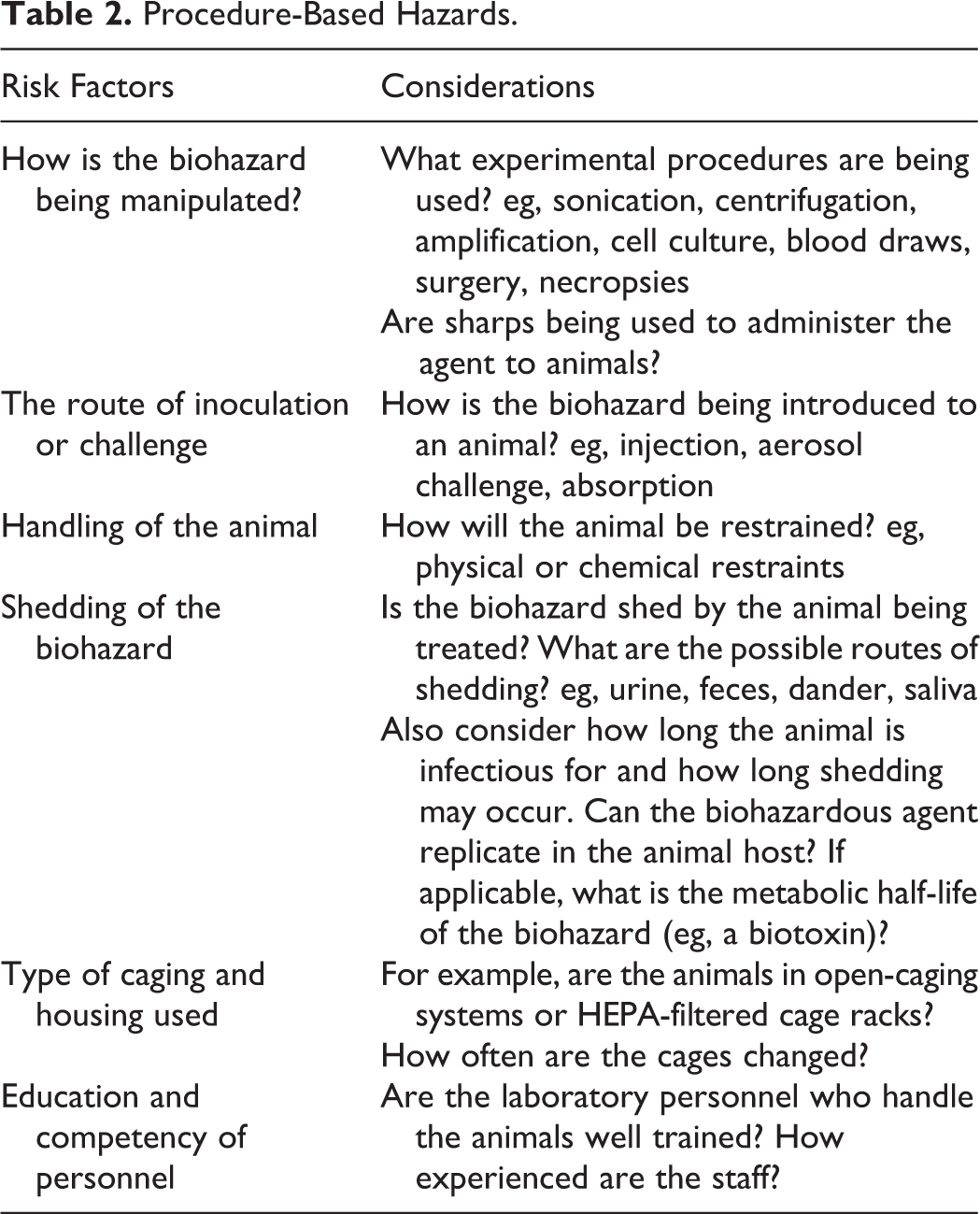
To conduct a meaningful risk assessment, 2 primary areas of risk must be considered: agent-specific hazard (biohazards) and procedural hazards (how the work is conducted). See Tables 1 and 2 for examples of questions to ask to ensure a thorough evaluation of risk. 16
Agent-Specific Hazards.
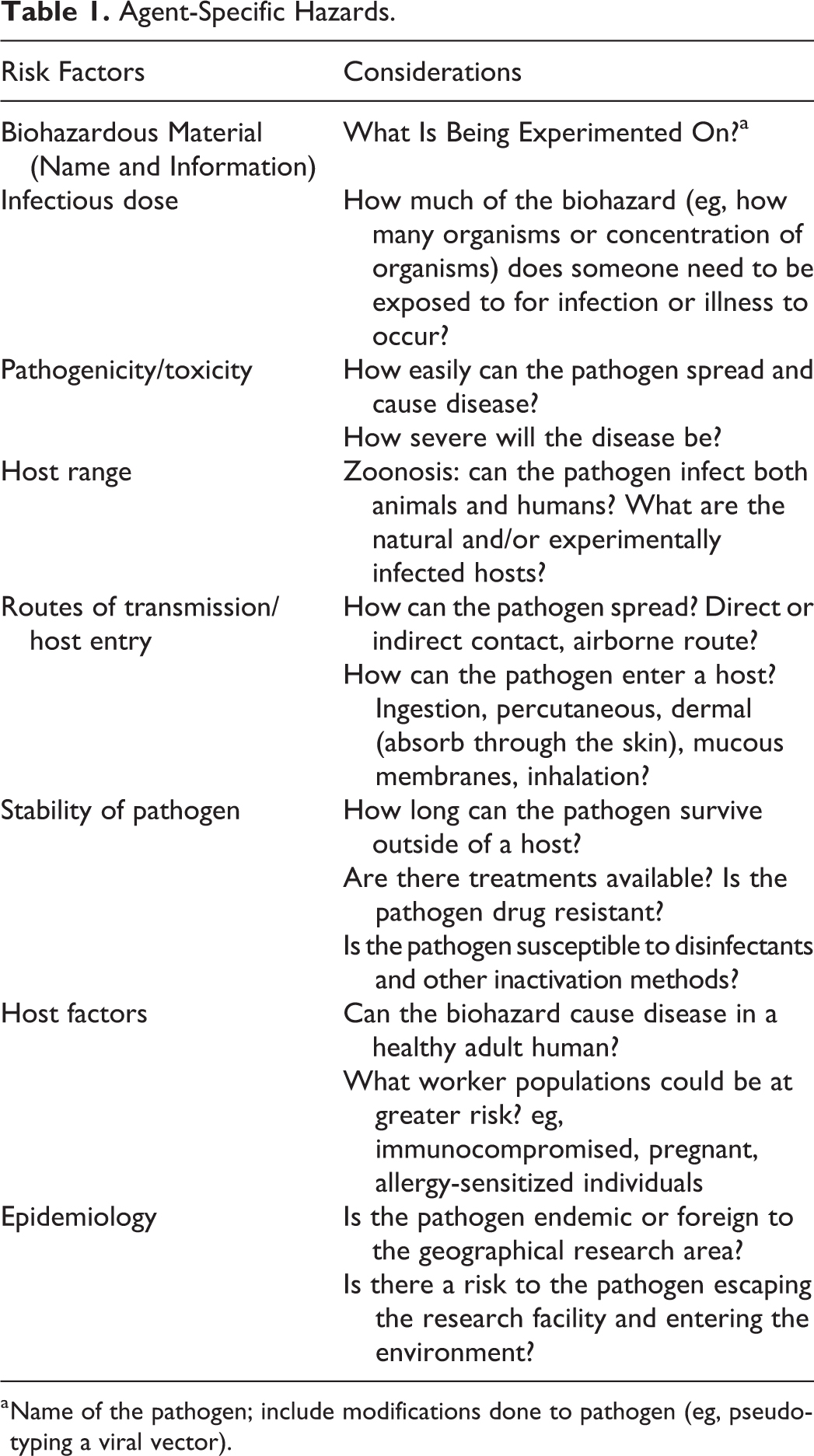
Name of the pathogen; include modifications done to pathogen (eg, pseudotyping a viral vector).
Procedure-Based Hazards.
The process of conducting a risk assessment allows for the opportunity to mitigate risks by identifying alternative or safer options for carrying out the experiment. For example, if using a viral vector to introduce foreign DNA to a mouse, can the vector be pseudotyped to be infectious only to rodents and not humans? Is the use of a wild-type, fully virulent microbe necessary or can a vaccine or inactivated strain be substituted? For example, when conducting research on yellow fever virus (YFV), the use of the 17D vaccine strain may be possible. This vaccine strain is a live, attenuated version of the wild-type virus, which makes it a safer alternative for use in studies. 17
Another example of risk mitigation is to use an approved method of chemical or physical restraint of an animal during inoculation or other procedures using sharp objects to minimize the risk of accidental cuts, scratches, bites, or needle sticks to the research personnel. For example, when handling less docile strains of mice, administering a biohazardous agent may be safer if the animal is anesthetized first.
A risk assessment also allows for the development of a tailored standard operating procedure (SOP), which details the plan for mitigating risk of exposure and ensuring safety and compliance. An experiment-specific training program may then be prepared and delivered to each worker who is involved in the research and also for other personnel who may be at a lower risk of exposure (eg, visitors, housekeeping, maintenance). Hands-on safety training coupled with proficiency demonstrations by the trainees can help to ensure research personnel are properly trained and deemed competent to conduct the work.
Each risk assessment should be a team effort, conducted by the principal investigator (PI) in conjunction with a biosafety professional. The PI is the individual who is designated by the research entity to direct a project or program and who is ultimately responsible to the entity for the scientific and technical direction of that project/program. A safety assessment usually starts at the research proposal development stage when the PI has to ensure that the laboratory can perform the proposed work. In this regard, the PI routinely serves as the subject matter expert for the biohazardous material being used, and a biosafety professional has the training and experience to help assess how to safely work with the biohazard. Once the proposal is funded and prior to the work commencing, the PI will need to work with the appropriate institutional committee(s) (eg, Institutional Biosafety Committee, Institutional Animal Care and Use Committee) to obtain approval to work with the biohazardous agent and animals. A key part of the institutional review process is the safety risk assessment.
Biosafety Standards and Guidelines
United States
Many standards and guidelines govern or outline the safe use of biohazardous materials in research animals. One of the foremost biosafety publications that prescribes biosafety controls and practices in US-based research laboratories is the fifth edition of Biosafety in Microbiological and Biomedical Laboratories (BMBL), which is a joint publication by the National Institutes of Health (NIH) and the Centers for Disease Control and Prevention (CDC). 2 The BMBL includes a description of the essential elements of 4 biosafety levels for activities involving infectious microbes and laboratory animals. The biosafety levels are designated in ascending order (biosafety levels 1-4), by degree of protection provided to workers and the environment. Each level includes details on standard microbiological practices, special practices, and facility design. 2
The NIH has published its Guidelines for Research Involving Recombinant or Synthetic Nucleic Acid Molecules. 18 The purpose of these guidelines is to provide details on the safe handling and construction of rDNA molecules. In the context of the NIH Guidelines, rDNA can be any molecule that is made by joining nucleic acid molecules and that can replicate in a living cell, nucleic acids that are chemically synthesized and can pair with naturally occurring nucleic acids, or molecules that are the result of replication from the previous examples. The guidelines contain information on pathogenic host-vector systems (Section III-D-1), experiments involving whole animals (Section III-D-4), and transgenic rodents (Section III-E-3).
Another area of research that has been highlighted over the past few years is known as dual use research of concern (DURC). DURC refers to research that is conducted for legitimate purposes to advance scientific knowledge but that can also be misused for harmful purposes. This includes research involving animals that can pose a threat to the public, the environment, agriculture, or national security. US DURC policy was implemented in 2015 with the purpose to strengthen ongoing institutional review and oversight of certain life sciences research with high-consequence pathogens and toxins to identify potential DURC and mitigate risks where appropriate. 19
The Federal Select Agent Program (FSAP) is a joint program between the CDC and the Animal and Plant Health Inspection Service (APHIS). The FSAP oversees the use of certain biological agents and toxins that have the potential to pose a severe threat to public safety, as well as animal and plant health or products. The FSAP website maintains a list of select agents, some of which are known zoonotic and animal pathogens of concern. All of the agents and toxins that are considered DURC are also select agents. Examples of animal pathogens that are select agents and DURC include highly pathogenic avian influenza, Francisella tularensis, and the virus responsible for foot-and-mouth disease.
International
The World Health Organization’s third edition of the Laboratory Biosafety Manual 20 provides basic biosafety concepts that can be used to develop national codes of practice for the safe handling of biohazardous materials. Chapter 6 of the biosafety manual provides guidance on best practices for laboratory animal containment facilities. The term ABSL is used here, referring to animal biosafety level. There are 4 ABSL levels (1-4), with ABSL-1 referring to the lowest risk biohazard containment and ABSL-4 referring to the highest risk and highest containment laboratory.
In Canada, there are joint biosafety publications from Health Canada, the Public Health Agency of Canada, and the Canadian Food Inspection Agency. The second edition of the Canadian Biosafety Standards (CBS), 21 which is a harmonized national standard for the use of biohazards and toxins in Canada, also provides containment and operational requirements for conducting biohazardous work with animals. Chapters 3, 4, and 5 contain detailed requirements for animal containment, similar to that found in the BMBL. Animal-specific operational requirements are detailed in Matrix 4.7. A guidance document that provides detailed information on animal biosafety is the second edition of the Canadian Biosafety Handbook (CBH). 22 The CBH provides core information and guidance on how to achieve risk-based biosafety requirements.
The International Federation of Biosafety Associations (IFBA) has a website containing biosafety resource and guidance documentation from many countries and regions worldwide (http://www.internationalbiosafety.org/).
Biohazard Controls
Most published reports of occupationally acquired infections in animal workers occurred years and even decades ago. There are several reasons for fewer cases of workplace-acquired infection in recent years, such as enhanced safety programs and training of personnel. Another significant improvement is the advancement in laboratory facility design.
Facility Design
There are numerous types of animal facilities for conducting research involving animals, including those designed for small animals (eg, mice, rats), large animals (eg, dogs, nonhuman primates), insectaries (eg, mosquitos, bees), and aquatic facilities (eg, turtles, fish). Each animal research facility should be constructed to the needs of the scientific team while ensuring appropriate husbandry care of the animals; thus, the design of the facility requires input from multiple entities. A design team made up of individuals representing multiple professions (eg, engineering, architecture, biosafety, industrial hygiene) must be assembled well in advance of construction to ensure all safety and compliance issues are identified and properly addressed. Input from users of the new laboratory space during the preplanning phase is critical, as they are intimately familiar with the planned use of the new facility. The following are examples of issues that should be considered during preplanning:
Research objectives Types of biological specimens to be manipulated Types of animals being used and their caging Types and quantifies of chemicals to be used (eg, formalin, alcohols) Types of radiological materials or technologies to be used Required diagnostic equipment Required laboratory equipment (eg, freezers, incubators) Standard operating procedures outlining workflow and administrative controls Relevant safety standards and guidelines Relevant security standards and guidelines Heating, ventilation, and air-conditioning (HVAC) requirements
Primary and Secondary Barriers
Primary containment barriers provide the first layer of protection that are usually in direct contact with or immediately surrounds the biohazardous material or an infected animal. Biological safety cabinets (BSCs) and personal protective equipment (PPE) are the most common containment equipment used for protecting workers from exposure to infectious material. Sealed centrifuge cups, inhalation chambers, and ventilated animal caging equipped with HEPA filtration are other examples of equipment that provides a primary barrier between workers and the hazardous material. Containment devices have been used successfully to provide a safe work environment.
Secondary containment barriers include facility design and construction. These components of protection contribute to worker safety and also protect persons outside the laboratory and in the community from exposure to infectious agents used in the facility. 2
Engineering Controls and Other Facility Safeguards
Engineering controls provide secondary containment and is the final containment layer that protects personnel, the general public, and the environment external to the laboratory from exposure to biohazardous agents. Engineering controls is a combination of facility design and operational practices. Secondary containment may include physical separation of the laboratory work area, self-closing doors, access controls, impervious and sanitizable surfaces, and handwashing facilities.
According to CDC guidelines,
23
the basic concept behind engineering controls is that, to the extent feasible, the work environment and the biosafety/biocontainment risk associated with the laboratory procedures should be designed to eliminate hazards or reduce exposure to hazards. Engineering controls should be based on the following principles:
If feasible, design the facility, equipment, or process to remove the hazard. If removal is not feasible, enclose the hazard to prevent exposure during normal operations. Where complete enclosure is not feasible, establish barriers or local ventilation to reduce exposure to the hazard during normal operations.
The basic types of engineering controls include process control, enclosure and/or isolation of source, and ventilation. Building ventilation/exhaust or HVAC must provide a safe and comfortable environment for animals housed in the area and employees, as well as protect the public and environment from exposure to hazardous agents. Many of the agents can be aerosolized, and a properly functioning HVAC system prevents the agents from contaminating the exterior of the laboratory by creating a negative pressure differential between the laboratory and the surrounding space. The negative pressure differential is created with exhaust fans pulling air from the surrounding space into the laboratory or with separate supply and exhaust fans, which operate in tandem. Laboratory air must be directly exhausted to the outside and not recirculated into the room or other areas. The exhausted room air can be HEPA filtered to prevent the hazards from being released to the outside environment. The HVAC exhaust system must be appropriately balanced between the room supply and exhaust and the exhaust requirements of all hard-ducted containment equipment that may be present, such as fume hoods, biosafety cabinets, and down draft tables.
Commissioning and Validation
Initial HVAC design verification must be performed and documented by someone with experience and expertise with the critical mechanical system components prior to operation. This initial design verification ensures proper function of all critical components and that secondary containment is maintained under failure conditions to prevent possible exposure of personnel outside the containment boundary. This is especially important for high-containment laboratories and animal facilities, such as biosafety level 3 (BSL-3) and animal biosafety level 3 (ABSL-3) space.
In addition to initial HVAC verification, the following are the minimum facility verification requirements that an entity is expected to perform and document initially for a BSL-3 or ABSL-3 space and then at least annually thereafter.
24
The means of detecting airflow have been confirmed to accurately reflect observed airflow. It is recommended, but not required, that digital or magnehelic gauges be calibrated annually. Inward directional airflow has been confirmed by observation for the laboratory. Decontamination systems (autoclave, room decontamination systems, digesters, liquid effluent systems, etc) have been confirmed to be operating correctly. If a building automation system (BAS) has the capacity to monitor and record performance measurements (eg, differential pressures), the entity is encouraged to capture and store data from potential failure events, drills, and so on. This information may provide verification of system performance. In addition, any programmed BAS alarms should be verified for proper functioning. All alarms (fire, airflow, security, etc) have been checked and are functioning according to established specifications. Laboratory HVAC HEPA filters, if present, have been certified annually. Exhaust fan motors have been checked and routine maintenance conducted. The laboratory has been checked for unsealed penetrations, cracks, breaks, and so on, and these have been repaired if present. All biological safety cabinets have been certified annually. Seals on centrifuges, Class III cabinets, gloves on Class III cabinets, and so on have been checked and replaced if required. Drench showers, eye wash stations, and hands-free sinks have been confirmed to be operating properly.
Waste Management
Animal facilities generate biohazardous waste in numerous forms (PPE, soiled bedding, carcasses, caging, etc). Regardless of the type of waste, there must be an established flow of the waste from the point of generation to disposal. In facilities that work with animals and infectious agents, the ability to effectively contain and decontaminate the various wastes prior to disposal is critical to protecting personnel and the environment from exposure to contaminated waste. To do this, an organization needs to look at the flow of waste through the facility, from the point it is generated, through decontamination, to final disposition. Ideally, the flow of waste should be analyzed during facility design to maximize efficiency and minimize the potential for an exposure. Most of the contaminated waste will be initially contained using primary containment, such as the animal caging and the biosafety cabinet. When feasible, caging with infected animals should only be opened within a biosafety cabinet or similar device that provides a level of protection for the personnel. The waste will then need to be transferred from the primary containment to an area for decontamination, usually an autoclave. The contaminated waste needs to be contained in a sanitizable container and the exterior wiped with a disinfectant shown to be effective against the infectious agent in use. If the contaminated waste is too large, as in the case of animal racks, then it will need to be disinfected prior to leaving the animal holding room. If the waste is not immediately decontaminated, it will need to be stored, usually in a refrigerator or freezer. Animals, including carcasses that have been exposed to a select agent, will need to be accounted for as if they are infectious until proper treatment/inactivation.
Many disinfectants are used alone or in combinations (eg, hydrogen peroxide and peracetic acid) in the laboratory setting. These include alcohols, chlorine and chlorine compounds, formaldehyde, glutaraldehyde, ortho-phthalaldehyde, hydrogen peroxide, iodophors, peracetic acid, phenolics, and quaternary ammonium compounds. Commercial formulations based on these chemicals are considered unique products and must be registered with the Envirnomental Preotection Agency (EPA) or cleared by the FDA. In most instances, a given product is designed for a specific purpose and is to be used in a certain manner. Therefore, users should read labels carefully to ensure the correct product is selected for the intended use and applied efficiently. 25 In many situations, the label may not indicate effectiveness against the infectious agent being used in the laboratory. In those situations, studies should be run to demonstrate effectiveness prior to use.
Autoclaves, commonly known as steam sterilizers, use high temperature and pressure to sterilize caging, animal carcasses, and infectious waste. Reusable caging and equipment must be constructed of material that can withstand the high temperature and pressure. Cycle run times can vary and should be tailored for the load (type and size) being sterilized. Effective sterilization must be demonstrated for each type of load prior to the material being disposed of as regular waste. The use of biological indicators is important to demonstrate effectiveness and should be placed in different areas of each load. Many institutions maintain the carcasses in refrigerators or freezers prior to autoclaving. It should be noted that frozen waste will take longer to reach effective temperatures to inactivated hazardous agents. Double door autoclaves can serve as an interface between the containment (interior) and noncontainment (exterior) areas. Safeguards should be in place to ensure that a sterilization cycle is run any time the interior door is opened and prior to opening the exterior door.
Effluent decontamination system (EDS) sterilizes liquid and solid waste from biocontainment laboratories. Effluents from downdraft tables, animal room floor drains, and other sources within the room are usually collected in a tank and subjected to pressure and heat before being discharged to the sanitary sewer.
Incineration is a waste treatment process that involves the combustion of organic substances contained in waste materials using high temperature. Incineration has been used for the destruction of animal carcasses, animal waste, and medical waste and has been a standard for the disposal of medical waste. However, incinerators are usually exterior to the containment area, and waste will have to be removed from containment to be incinerated.
Alkaline hydrolysis (tissue digestion) is a water-based chemical resolving process using a combination of water, a strong alkali, and temperature to reduce animal carcasses to liquid waste and soft bone fragments. The addition of pressure accelerates the process. All hazardous agents are also inactivated by the process. The digested material is neutralized, cooled, and discharged into the sanitary sewer at the end of the process, and the remaining residue can be vacuumed out of the container.
Thermal tissue digester (TTD) is an advancement in disposal and sterilization of animal carcasses and waste. TTD uses agitation and heat to break down tissue (with or without alkali), minimizing water and alkaline use in the process. TTD uses less alkaline or water in the breakdown and sterilization process.
Validating Waste Management
In high-containment facilities, factory and onsite acceptance testing along with commissioning of waste management systems needs to be supplemented by adequate validation processes to ensure the effectiveness of decontamination for the types and amount of waste generated in the facility. This is critical to ensure that no material leaves the facility until it is properly decontaminated. 26 For several of the methods (ie, effluent decontamination and alkaline hydrolysis), the finished material is disposed of directly into the sanitary sewer. The inability to test the finished product makes validating effectiveness more challenging.
Effective sterilization must be demonstrated for each type of load prior to the material being disposed of as regular waste. The use of biological indicators is important to demonstrate effectiveness and should be placed in different areas of each type of load and within carcasses. In situations where the finished material goes directly into the sanitary sewer, biological indicators can be placed in containers that allow exposure to heat, liquid, and/or pressure and allow the indicator to be retrieved at the end of the cycle.
Personal Protective Equipment
PPE provides a protective barrier between the individual and the agent or infected animal. In determining what PPE and other safety equipment are needed, considerations include the hazardous characteristics of each agent and the risks associated with working with animals exposed to hazardous agents (Table 3). Ultimately, the choice of appropriate PPE is based on the risk assessment and should include consideration for personnel comfort, correct device fitting, and the containment level for the hazard used.
27
Personal comfort while wearing PPE is important since the protective barriers can impair visibility, decrease dexterity and feel, and make the work environment more strenuous. PPE and other safety equipment should focus on the following:
Breathing or respiratory protection: There are multiple types of units designed to provide respiratory protection and are generally grouped as respirators. Respirators are further categorized based on the level of protection (N95, N100), style (half-face, full-face), or type of protection (passive vs active; ie, positive air purifying [PAPR]). The type of respirator used is determined based on the hazardous agent, the procedure being performed, and the individual performing the procedure. The individual must be medically cleared to wear the respirator and fit-tested to ensure the respirator will provide the necessary protection. Eye and face protection: The face and eyes should be protected from potential splash or airborne agents. Protection could be incorporated into the respirator, such as the full-face respirator or the PAPR. Or protection could be separate in the form of googles or a face shield. In either case, protection should be correctly fitted and be able to prevent liquids from exposing the eyes or mucous membranes. A close fit at the top of the protection is important to prevent a liquid exposure from running down the forehead into the eyes. Head/body protection: Head and body protection is in addition to laboratory work clothes and designed to prevent exposure of the individual to the hazardous agent. Head and body protection could consist of hair nets, smocks, overcoats, or jumpsuits (with or without hoods) and should be made of a material that prevents the hazardous agent from penetrating the material and contaminating the underlying garment or exposing the individual. The body protection should have a solid front without gaps. Hearing protection: Hearing protection is required for exposure to loud or continuous noise levels. The noise could be associated with certain equipment or activities (cage-washing), animal species (canines), or procedures (aerosolization of agents). Individuals should be enrolled in a hearing protection program and have hearing protection that provides adequate noise reduction capability. In the containment situation, hearing protection should not impede other personal protective equipment. Hand/arm protection (gloves, sleeves): Gloves must be worn when working with hazardous agents. The question is what type of glove and how many. Most laboratories have moved away from the use of latex gloves due to allergy concerns and use nitrile gloves. Depending on the activity, double gloving is advisable so that the outer glove can be removed and the inner glove still provides protection. When handling animals or conducting animal-related activities, additional hand and arm protection in the form of puncture-resistant gloves and sleeves may be used. A primary concern is that there is no exposed skin in the interface between the glove and the overcoat. Foot protection: Shoe covers are commonly used in the animals’ housing areas, but their use can be a source of contamination in facilities that work with hazardous agents. Investigators have shown that shoe covers do not improve (and actually may compromise) bioexclusion.
28
Besides the use of standard shoe covers, additional foot protection may be needed. For example, those activities that generate a lot of moisture, such as hosing down caging, will require moisture-resistant footwear.
Biological Safety—Personal Protective Equipment (PPE) Requirements. 23
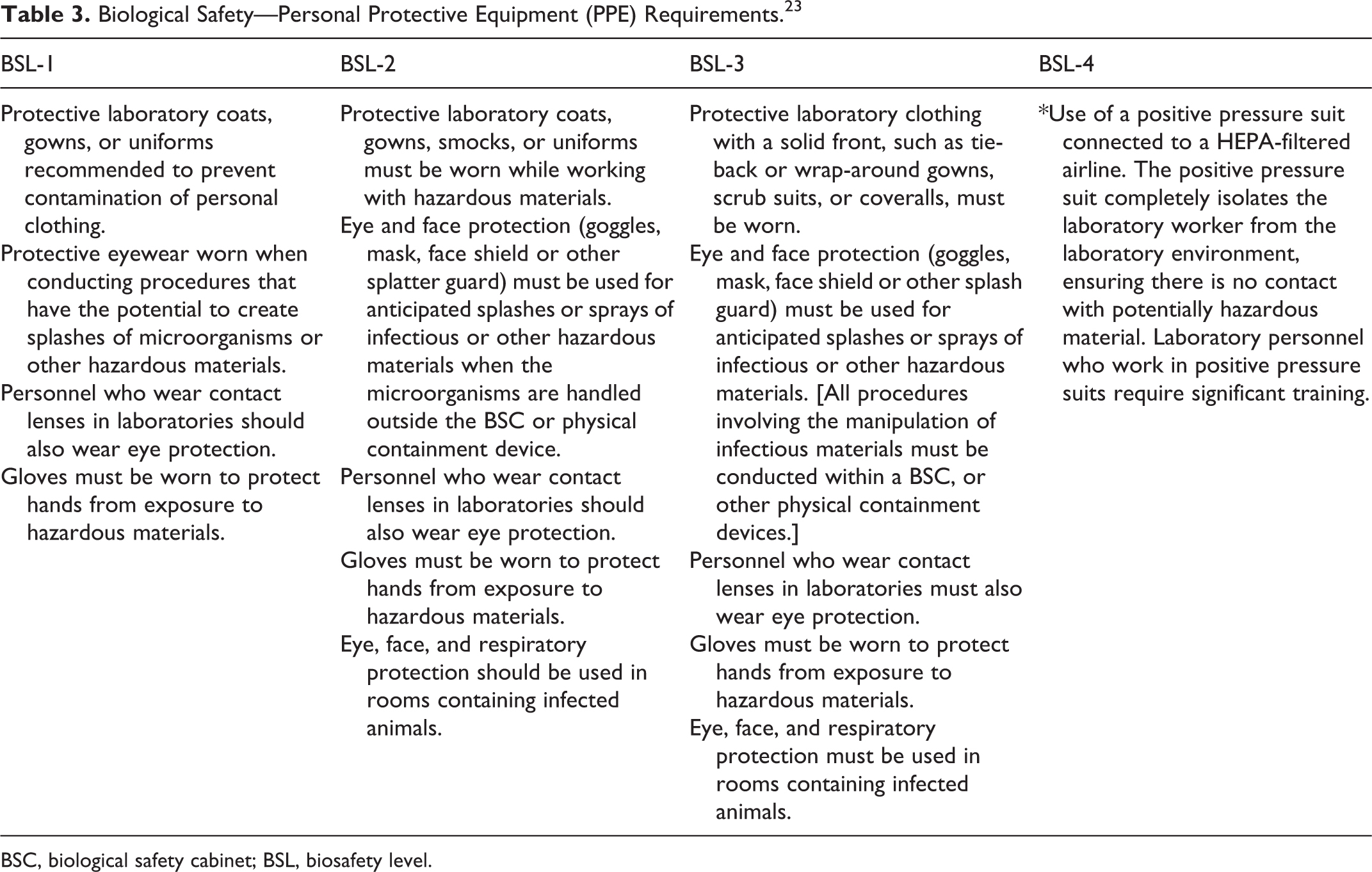
BSC, biological safety cabinet; BSL, biosafety level.
Animal Handling
Husbandry
General caring for and breeding of research animals that have been exposed to biohazardous agents pose unique risks. The animals themselves may generate infectious aerosols (by sneezing, coughing, disrupting bedding, etc) and can bite, scratch, and kick both research personnel as well as other animals. Biohazardous materials may be present in large amounts in animal waste and bedding. Animals can also be unpredictable, especially when they are ill, which increases the risk to personnel of working with them. 22
Avoiding Percutaneous Injuries
The risk of a percutaneous injury can be high when working with animals. Needlestick injuries may be acquired during injections and inoculations of animals. Other sharps exposures to consider may be from animal caging (eg, sharp corners, locks, wire lids) or supplies (eg, broken glassware, specimen slides, surgical instruments). Infected animals can also bite and scratch research personnel. Such percutaneous injuries, which can lead to an occupationally acquired infection when working with infectious microbes, are avoidable if proper precautions are followed.
For example, anesthetizing or physically restraining animals prior to injections can reduce the risk to personnel. Indirect handling of animals should also be considered, such as using forceps to tent an animal’s skin during a subcutaneous injection. Such techniques reduce the risk of a needlestick injury by removing the lab worker’s hand from the immediate area of injection.
Animal Restraint
Physical restraint is the use of a manual, mechanical, or chemical method to briefly restrict movement of the animal during a procedure that is considered high risk for worker exposure. Humane restraint of animals during procedures that require direct handling can significantly reduce the risk of exposure and injury to both research personnel as well as the research animals. This is especially important when injecting an infectious microbe into an animal or when working on an animal that was previously infected with a biohazardous agent.
It is always important to consider the species of animal when selecting an appropriate restraining device. Habituating an animal to a restraint system helps to increase the safety of the experimental procedure, by reducing the stress on the animal, which reduces the chance of unpredictable animal behavior leading to an injury to personnel. Certain animals (such as nonhuman primates) can be trained and conditioned, which can be used in combination with restraints during experimental procedures. 29
Any personnel who are assigned duties that involve the active use of sharps (eg, needles, scalpels) during animal studies should successfully complete a comprehensive safety training that is task specific.
Surgical Procedures and Necropsies
Surgeries and necropsies can create a high risk of generating infectious aerosols, infectious splashes or spills, and gross contamination of work areas. The risk of a percutaneous injury can also increase when surgical instruments are used. Care must be taken to ensure personnel are appropriately protected while conducting any procedures on animals. This could include conducting work in a biological safety cabinet (for smaller animals) or downdraft table (for larger animals) and ensuring all waste produced is thoroughly decontaminated before disposal.
Tissues and carcasses may be stored prior to necropsy, which is often done using cold storage. Care must always be taken to ensure potentially infectious materials are properly labeled, transported, and stored. Necropsies should be conducted in dedicated work areas or necropsy rooms to facilitate containment of infectious materials and minimize spread of contamination. Care should also be taken when selecting the tools to use for necropsies. For example, a manual hand saw may produce less aerosol and gross contamination than an electric saw. 22
Personnel Training
Proper training of all personnel involved in animal research with biohazards is one of the key components to mitigating risk. All personnel with work responsibilities in an animal research facility must successfully complete the applicable portions of a comprehensive safety training program that is managed by a biosafety professional. Such a program is designed to promote each worker’s understanding and knowledge of hazard recognition, potential exposure risks, and proper precautions for avoiding exposure. Scope of training should be tailored to each individual’s assigned job duties. Trained and experienced personnel can reduce the probability that an exposure event will occur. Employing adult learning techniques is a proven method for ensuring trainees retain what they have learned and also that they are proficient at performing their assigned work safely in a research environment.
A blended learning approach, using multiple mechanisms to deliver content, is optimal. Methods that can be used include videos, PowerPoint slides, electronic simulation activities, tabletop drills, case studies, hands-on demonstrations, small-group learning activities, and self-directed learning.
All training participants should be required to demonstrate an ability to execute the necessary work practices to perform work activities while avoiding occupational exposure. This hands-on component of the training should be completed in the actual workplace or a setting that simulates the workplace. Techniques used for delivering course content include a strong emphasis on active participation by each participant and lots of repetition on tasks deemed critical per site-specific safety procedures. Successful completion of the training program requires that each participant demonstrate proficiency in performing such tasks.
A final phase of preparing an individual to work safely in an animal facility is mentoring by an experienced worker with similar assigned tasks. The mentor will provide direct supervision of the worker as he or she transitions into the actual work environment and begins handling potentially infectious material and/or infected animals. Only after the successful completion of a thorough mentorship is the new worker allowed to work without direct supervision. This behavioral-based training method ensures good work practices are learned and remembered, reduces anxiety in new workers, helps the trainees perform tasks by learned instinct, and provides guidance during everyday work procedures. 30
Training updates are delivered to all applicable staff as needed, when a new infectious agent is brought into the facility, and when procedural changes are made that could conflict with established safety protocols. At a minimum, safety updates should be provided to all animal facility workers at least annually.
Occupational Health
According to the Occupational Safety and Health Administration (OSHA), employers are responsible for providing safe and healthy working conditions for their employees. 31 Development of an effective occupational health and safety program (OHSP) requires knowledge of the hazards present and understanding of their relative risk of causing an occupational injury and illness. A successful occupational health program is designed to reduce the risk of infection and complications in employees with access to hazardous agents, such as a Tier 1 Biological Select Agents and Toxins (BSAT), in the event of exposure. The key elements of an effective occupational health program include risk assessment, medical assessment and surveillance, access to clinical health services and management, and hazard communication. 32
Protecting the health and safety of employees engaged in the research or involved with research animals is a joint and collaborative effort that requires the active participation of institutional management, research staff who plan and carry out research, animal care and use program managers, and health and safety professionals. In addition, individual employees share the responsibility both for their own health and safety and for the health and safety of those around them. 33
The extent and level of participation of personnel in the OHSP should be based on the hazards posed by the animals and materials used (the severity or seriousness of the hazard); the exposure intensity, duration, and frequency (prevalence of the hazard); to some extent, the susceptibility (eg, immune status) of the personnel; and the history of occupational illness and injury in the particular workplace. 29 The risk assessment process should look at all individuals who have the potential of entering the laboratory space or could be exposed to the hazardous agents, infected animals or tissue, or infectious waste. Personnel considered include veterinary and animal care personnel, research personnel, regulatory oversight personnel, animal care and use committee members, students, building maintenance personnel, janitorial staff, security personnel, contract personnel, and visitors. All groups of individuals should be risk assessed to determine if they need to be enrolled in the OHSP and what level of occupational services is needed. Level of services could vary from a periodic health questionnaire to the requirements for health screening, diagnostic tests, vaccinations, and enrollment in respiratory protection program.
For those individuals handling or in contact with animals, the level of service should begin with an initial health questionnaire and screening by an occupational health professional. The health status of the individual and the hazards that the individual will be exposed to should be considered during the screening process. Based on the level of potential exposure, the individual should be enrolled in the appropriate hazard protection program, which could include respiratory protection, bloodborne pathogen, and/or hearing protection. If there are vaccinations available for the biohazards, they should be considered.
Vaccinations are commonly offered as part of the occupational health program. It is important to immunize animal care personnel against tetanus, and preexposure immunization should be offered to people at risk of infection or exposure to specific agents such as rabies virus (eg, if working with species at risk for infection) or hepatitis B virus (eg, if working with human blood or human tissues, certain cell lines, or stocks). 29 Vaccinations are recommended if research is to be conducted on animals infected with hazardous agents for which effective vaccines are licensed and commercially available, such as anthrax or influenza. Specific recommendations are available in the BMBL 2 and from the CDC Advisory Committee on Immunization Practices (ACIP). Vaccines that are still in an investigational stage and have not received full licensure may be considered during the risk assessment.
After initial enrollment, individuals should be reviewed on a periodic and regular basis as dictated by the requirements of the program. Certain items may be required annually, such as bloodborne pathogen training or respiratory fit testing. It is advisable to do the health questionnaire to identify changes in an individual’s health status or changes in the hazards the individual is exposed to. Revaccination may be required according to manufacturer or ACIP recommendations. Along with the need for the individual to interact with an occupational health professional on a regular basis, the organization should review the program on a regular basis. Reviews should include updates on the hazardous agents being used, as well as any changes in procedures or equipment that might affect the risk to the individual.
Protocol Review and Approval
The oversight of work activities that involve biohazard agents and animals consists of the initial approval and routine in-process evaluation. Based on the work being conducted, a number of internal and external approvals may be required and can vary between programs and organizations. It starts with the PI and usually begins at the proposal/protocol development stage when the PI has to ensure that the laboratory can perform the work being proposed. For example, if the biohazardous agent is a select agent, does the institution have the federal approvals to work with the agent and perform the work in the laboratory, and are the personnel cleared to do the work? At this point, the PI needs to work closely with the responsible official for select agents and the institutional safety office. The institutional safety office or officer provides oversight of the institution’s safety program as part of the institution’s responsibility to provide a safe workplace for its employees. As part of the safety program, institutions often establish committees to oversee the work being conducted involving hazards.
An institutional biosafety committee (IBC) is required at those institutions that conduct research activities covered by the NIH Guidelines for Research Involving Recombinant or Synthetic Nucleic Acid Molecules. 18 The NIH guidelines place much of the authority, responsibility, and accountability for the safe conduct of the research at the local level. Over time, many institutions have chosen to assign their IBCs the responsibility of reviewing a variety of protocols that involve biological materials (eg, infectious agents) and other potentially hazardous agents (eg, carcinogens). This additional responsibility is assigned entirely at the discretion of the institution.
Once the proposal is funded and prior to the work being conducted, the PI will need to work with the assigned responsible committee (eg, IBC) to get approval to work with the agent and infected material and the Institutional Animal Care and Use Committee (IACUC) to work with animals. The IACUC (or institutional equivalent) is responsible for assessment and oversight of the institution’s Animal Care and Use Program components and facilities. The IACUC is responsible for review of planned work with animals (animal use protocols). As part of the review, the IACUC looks at the use of hazardous materials and for the provision of a safe working environment. Special IACUC consideration is given to the identification of humane end points, the point at which pain or distress in an experimental animal is prevented, terminated, or relieved. Usually, the review process is concurrent and approval is contingent on both committees.
Compliance Monitoring
Compliance audits should be performed routinely to evaluate the effectiveness of facility-specific safety training and standard operating procedures (SOPs). Optimally, these evaluations are performed across all areas of the animal facility over time so work practices and behaviors of as many animal workers as possible may be observed. If multiple biohazardous agents are being used in the facility simultaneously, the goal must be to evaluate all agent-specific SOPs for compliance. Compliance audits should be performed by personnel familiar with all details of the facility-specific safety requirements (eg, personnel training, agent-specific SOPs, facility maintenance). Biosafety professionals, laboratory managers, and facility operations managers are examples of workers who often take on this role.
To ensure consistency of the evaluation process, a site-specific audit checklist should be used. Figure 1 includes a checklist that can be easily tailored to most animal research facilities.
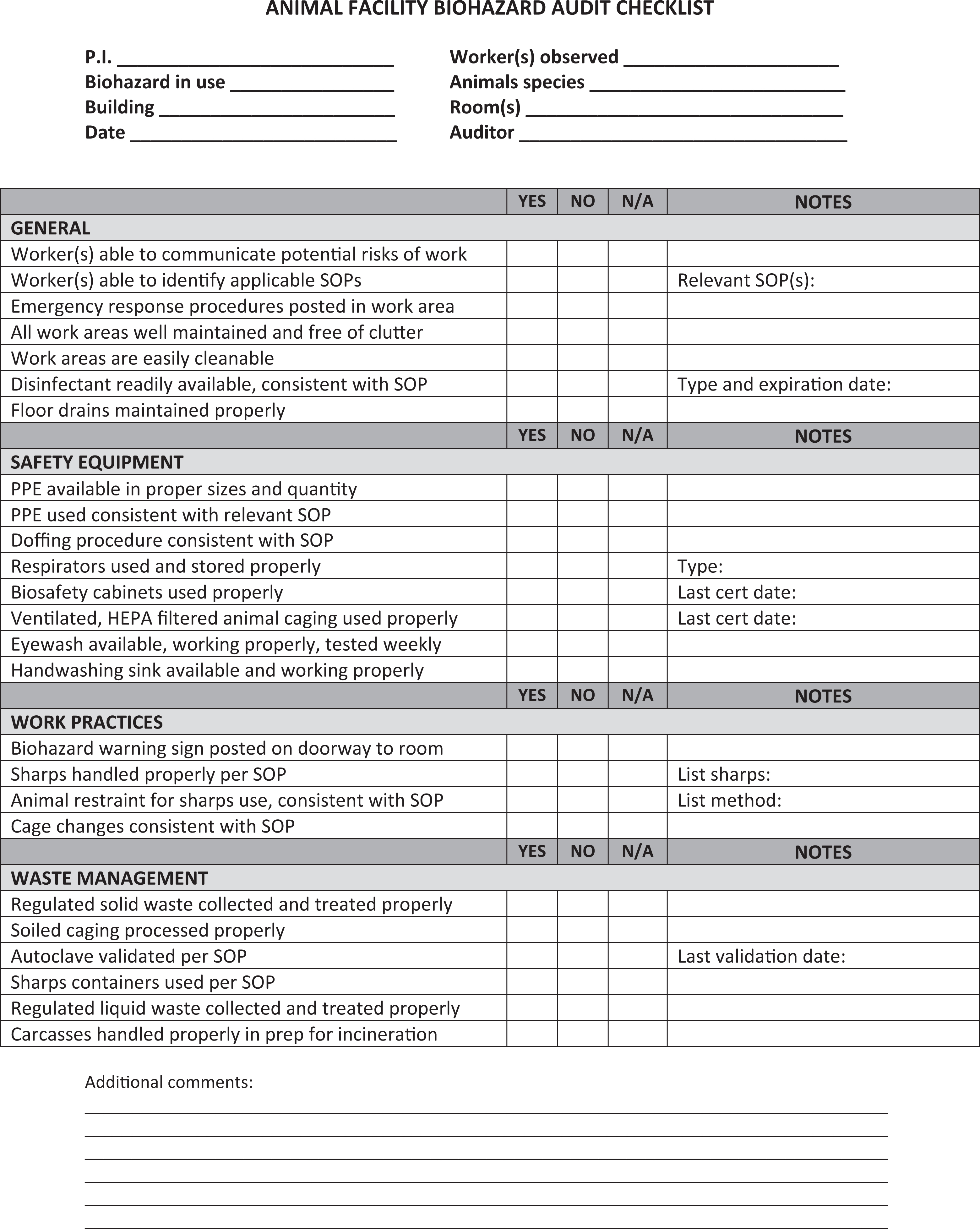
Sample audit checklist for assessing compliance with established biosafety procedures.
External Audits
Depending on the agents being used, the sources of funding, and the animals being used, there is the potential for a number of external audits, inspections, and site visits. If select agents are being used, the institution is subject to routine review by the Federal Select Agent program. If US Department of Agriculture (USDA)–covered species (eg, rabbits, ferrets) are being used, the institution is subjected to routine inspection by the USDA. Funding agencies, such as the NIH or Department of Defense (DOD), have the ability to evaluate programs and work being conducted. In the event of an exposure or release, the entire associated agency has the ability to review and investigate the situation.
Many institutions with animal research activities will seek accreditation of their program by the Association for Assessment and Accreditation of Laboratory Animal Care International (AAALAC International). AAALAC International is a private, nonprofit organization that promotes the humane treatment of animals in science through voluntary accreditation and assessment programs. A significant component of the accreditation process is the demonstration of a comprehensive safety program that ensures proper protection of workers from exposure to hazardous research materials.
Pest Management
The establishment of a facility-specific integrated pest management (IPM) plan is an important component of a properly managed animal research facility. The presence of vermin, such as wild rodents, flies, and mosquitos, creates the perception of an unsanitary environment and potentially could lead to the mechanical transmission of infectious agents involved in research studies. 2 IPM is a comprehensive approach to pest management that combines rigorous housekeeping practices, routine facility maintenance, and professional pest control services.
The practice of applying chemical pesticides as a preventative measure is discouraged. Treatments should be limited to areas of known pest activity. When pests are identified in the facility, a thoughtful review of current housekeeping and maintenance practices offers opportunities to modify and improve.
All facility staff, including research and support personnel, should be trained on the site-specific IPM plan and required to report any pest sightings in a timely manner. Documentation of all pest sightings should be logged and include details of follow-up. Routine (eg, monthly) facility inspections by a professional pest management service should be performed and documented.
Conclusion
This article provides a broad overview of safely conducting animal research activities that involve infectious agents. Information and resources are provided to assist organizations in developing and sustaining their program. It is recognized that each animal research facility and program is unique in its design, construction, and the types of experimental activities performed. Therefore, when infectious agents are used in animals, a site-specific risk assessment must be conducted to identify characteristics of the infectious microbe(s), experimental activities that can result in exposure, likelihood that an exposure will cause an occupationally acquired infection, the probability that an exposure to the microbe(s) will occur, and the consequences of infection. This information provides a guide to selecting the proper biosafety precautions to protect workers and surrounding environment from exposure. Risk assessment in an animal facility is a shared responsibility that is typically led by a biosafety professional and often includes animal care personnel, veterinarians, research lab personnel, and principal investigators.
In addition to assigning proper safety precautions, other challenges must be addressed to ensure all aspects of a comprehensive biosafety program are implemented consistently. Examples include development of site-specific safety policies, development of training that is tailored to each worker population’s needs, managing multiple experiments and multiple users simultaneously, and providing routine compliance monitoring. Recent years have demonstrated that there are challenges with new and evolving pathogenic organisms and technological advancements in the ability to modify and alter microorganisms. Government regulations and oversight continually change in an attempt to address the challenges. There have also been advancements in biocontainment equipment, disinfection practices, and waste disposal methodologies. An organizational biosafety program needs to be adaptable to address these challenges, as well as to incorporate new methods and equipment. Personnel need to be trained and maintain proficiency with new methodologies. The ability to safely work with pathogenic organisms has progressed significantly since the early days of Louis Pasteur and Robert Koch and will continue to evolve to address future challenges.
Footnotes
Declaration of Conflicting Interests
The authors declared no potential conflicts of interest with respect to the research, authorship, and/or publication of this article.
Ethical Approval
This article summarizes the current literature and readily available biosafety standards/guidelines on animal research involving infectious agents. Information from publicly accessible resources and author experiences are included in this article. Proper references are noted throughout the article.
Statement of Human and Animal Rights
There were no human or animal subjects involved in this project.
Statement of Informed Consent
There were no human subjects involved in this project.
Funding
The authors disclosed receipt of the following financial support for the research, authorship, and/or publication of this article: The Duke Regional Biocontainment Laboratory received partial support for construction from the National Institutes of Health, National Institute of Allergy and Infectious Diseases (UC6-AI058607).