




Abstract
The objective of the modeling exercise that is described here was to test the existing procedures of fire alarm and biological material spill response at the same time by qualified and trained staff under a sudden and unexpected stressful condition. The same simulation exercise was conducted in 2 different laboratory facilities: the Kutaisi and Batumi zonal diagnostic laboratories, which are parts of a laboratory network of the National Center of Disease Control and Public Health (NCDC) of Ministry of Labor, Health and Social Affairs (MOLHSA) in Georgia, and this was the first time such an exercise was done at these biosafety level 2 facilities. The reasonably designed scenario of this exercise allowed us to manage all response-related processes to ensure they were done smoothly, effectively, and in a safe manner. Forming a committee, developing scenario and timeline for the event, assigning observers and evaluators, preparing an evaluation checklist, contracting with the Fire Safety and Rescue Service for their response, and planning in-briefing and out-briefing sessions with all participants were done by laboratory directors and biosafety officers under the mentoring of an external biosafety and biosecurity group. The exercise revealed a number of problems with a full building evacuation and subsequent cleanup of the biological spill. The recommendations and planned corrective measures were compiled in the report written with the collaboration of supervising and laboratory responders. Conducting the modeling exercise in addition to trainings is an excellent tool to assess plans and procedures, as well as maintain constant preparedness for accidents/incidents and emergencies under biologically hazardous working conditions.
A comprehensive biosafety management program always consists of a set of training theoretical and practical courses. In addition to these classroom biosafety and biosecurity (BS&S) trainings, having a good fire drill and in-laboratory exercise plan is a key component to having integral biocontainment with all necessary functionality. Simulation exercises provide the opportunity to evaluate actual response, preparedness, and coordination of management and personnel and the proper mobilization of equipment/resources.
The Kutaisi and Batumi zonal diagnostic laboratories (ZDLs) are multifunctional diagnostic facilities and work on both especially dangerous pathogens (EDPs) and non-EDP infectious materials and maintain biosafety level 2 (BSL-2) containment. They have high-quality laboratory equipment; have established good biosafety policies, procedures, and practices; and provide sound guidance for personnel as they encounter, identify, and control for biorisks in the workplace.
The Kutaisi ZDL has about 26 employees in a 3-story building, with the laboratory being on the second and third floors. There is one biosafety cabinet (Class II, type A2) installed in every laboratory room, and none of the area of the facility is under negative pressure in relation to the hall and entryway. The Batumi ZDL has about 15 employees, with the laboratory facilities located on the second and third floors. Both laboratories receive walk-in patients for blood draws, and the presence of these visitors had to be taken into account during the evacuation. The Kutaisi and Batumi ZDL laboratory staff had received regular and consistent BS&S training (that included fire safety) over the years but had never had a “real-time” fire/evacuation drill, especially coupled with biological spill response, or had ever coordinated with the Fire Safety and Rescue Service to respond to such an event.
This article describes how the modeling/simulation exercise was planned and developed, and it provides an example of the assessment of the facility operations and maintenance with regard to preventing accidents/incidents and exposure to biological agents, which is highly significant to managing a good biorisk program.
The simulation exercise was intended to provide an opportunity to test the ability to respond to fire alarms and biological spills simultaneously and to create a stressful environment that was increased by fact that it was totally unexpected for the laboratory staff. The scenario was tailored according to the sequence of the given procedures to imitate the real operations in a determined working area and get a prompt and effective response.
Materials
Human Resources
Scenario developers and participants: Kutaisi and Batumi ZDLs (manager, biosafety officer [BSO], laboratory main staff, technical personnel, actor [technician]) Response partner: Kutaisi and Batumi Municipality Fire Safety and Rescue Service Evaluators: National Center of Disease Control and Public Health (NCDC) BS&S department manager and BSO and NCDC public health regional department manager Mentors/evaluators: External BS&S group
Documents
Standard Operating Procedures (SOPs):
Hazardous Material Spill Preparedness and Response Biological Spill Response Exposure Control Plan Accidents, Incidents, and Emergencies Emergency Response Procedures for Fires Evacuation Plan Evacuation and Spill Response Evaluation Checklist Postemergency Assessment Checklist Attendance and Sign-In Sheet
Supplies
Personal Protective Equipment (PPE) Biological Spill Kit Decontamination solutions and materials Blood sample imitation material (red finger paint) GlitterBug Powder and Ultraviolet LED Flashlight for examination of mock contamination
Methods
All actions and procedures were done on the basis of a risk assessment:
Selecting planners, participants, and evaluators; assigning the duties Arranging working meeting; instructions for conducting the exercises; introducing overall purpose and scope of the exercises1,2 Reviewing all related documents (regulations, SOPs, plans) ensuring that planning procedures are complying with administrative and regulatory requirements3
–5 Assessment of techniques, procedures, existing equipment, and their safe use Planning and conducting refresher training at least 1 month earlier before the scheduled exercise date. The training course covered the related issues such as emergency response and biological spill cleanup to ensure all necessary SOPs are read and understood by laboratory employees. Checking all supplies are available Developing a scenario evaluation checklist based on the existing standards5-9 Scenario writing (establishing an exact date for the exercise, including starting time; determining the site [laboratory room] in the facility that the scenario will occur based on the type of hazard presented; description of all steps in details) Distributing exercise scenarios copies to leading persons and evaluators Contracting with the Fire Safety and Rescue Service to provide response service; this involved payment of 100 GEL (US$37) Preparing the report based on the evaluator’s assessments Reviewing and discussing the report with all participants
4
Planning corrective measures with all participants who were involved
Preparation for Modeling Exercise
The design of the exercise scenario and identification of participants, evaluators, and evaluation standards were developed by laboratory directors and BSOs under mentoring of the external BS&S group. The Kutaisi ZDL did their drill first and then consulted with the Batumi ZDL to help plan their event. Representatives from facility management and security were also included in the development of the scenario. None of the employees of ZDLs were informed of the drill prior to the exercise except the following: facility manager, BSO, technical personnel, actor (technician), evaluators, mentors, and response partner (Fire Safety and Rescue Service).
Observers and evaluators were selected who were familiar with the laboratory facility, the laboratory procedures being done in each laboratory room, and the level of training the employees had already received regarding building evacuation and spill cleanup. Evaluators used the Evaluation Checklist (Table 1) that had been developed specifically for the exercise. The evaluators and planners went over the checklist prior to the exercise to ensure they knew its content and how to score and record each activity.
Exercise Evaluation Checklist.
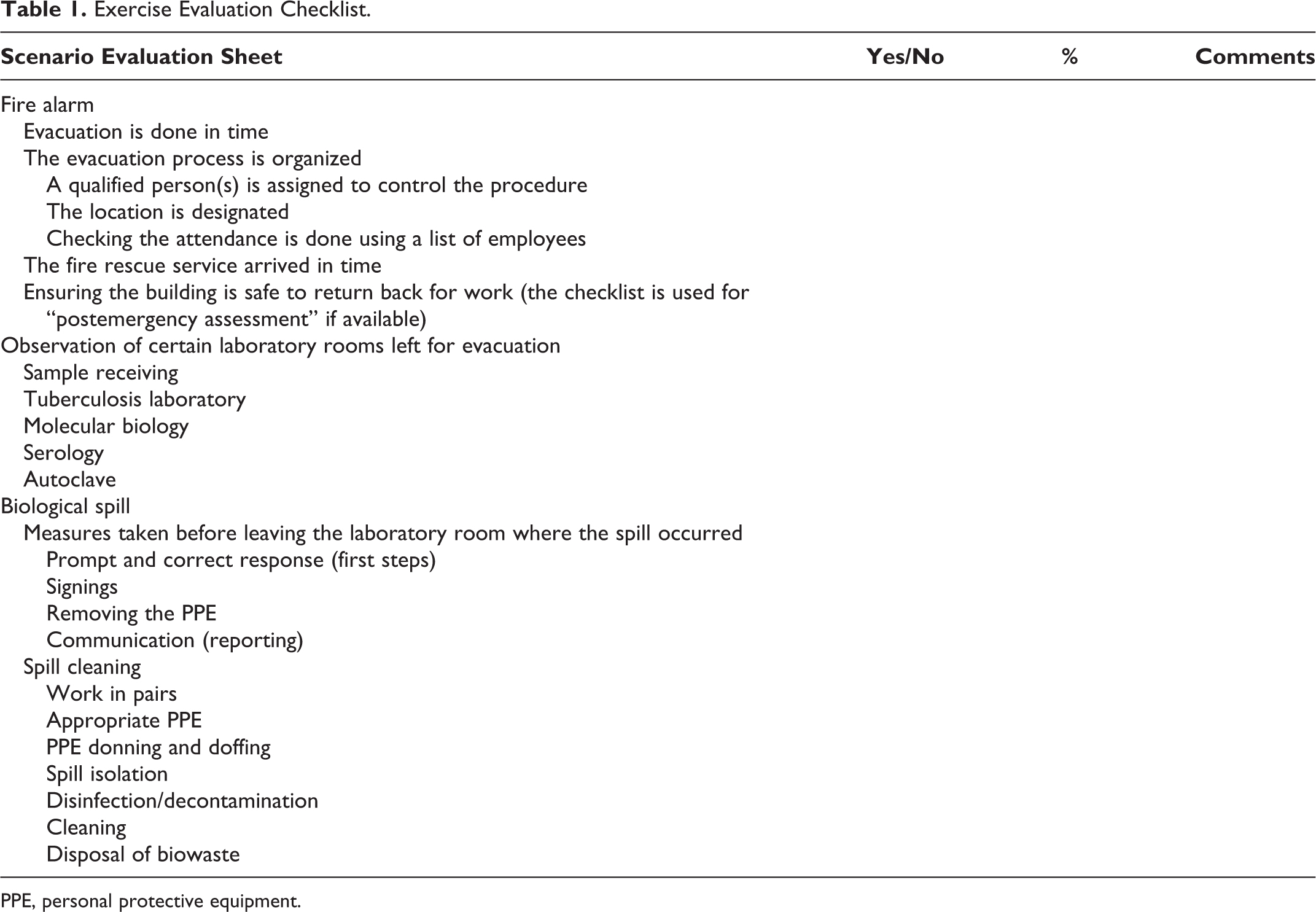
PPE, personal protective equipment.
Although the exercise was unannounced, the date and timeline were chosen to accommodate the working schedule of the employees and not to interfere with the public health services that had to be continued during the exercise. The exercise was planned, however, to include a time when a few patients were onsite so that visitor evacuation and control could be monitored as well. Spill kits were readily available for the responders, and they were stocked sufficiently and located close to the laboratory rooms. All details of the exercise were coordinated between the laboratory management and local Fire Safety and Rescue Service in advance of the exercise. The chief and deputy chief of the Fire Safety and Rescue Service had helped to plan the event, attended the preexercise briefing, and did a walk-through of the facility prior to the exercise.
The actor-employee working in the sample receiving and aliquoting laboratory was selected to play in the scenario of the blood spill and was also tasked to observe the responders’ and employees’ actions in the bacteriology laboratory room after the spill happened and how they performed the spill cleanup. Correspondingly, she was supposed to be familiar with and understand the biological spill and fire response procedures/SOPs. The facility BSO served as an additional observer and evaluator and inconspicuously observed the cleanup activities from the corridor.
Results and Conclusions
The Modeling Exercise/Scenario
The head of local Fire Safety and Rescue Service was informed in advance about the purpose and exact date/time of the exercise. The head of the bacteriology laboratory, who was purposefully unaware of the simulation exercise, received a call from the facility manager and was instructed to be prepared to receive an important blood sample sometime that morning. She was told that the sample was from a patient with unknown etiology and that they needed to keep 1 blood sample tube in the freezer for 1 to 2 hours. The evaluation group and BS&S mentors arrived 2 hours before the exercise to review the plan and ensure that all details related to the exercise were considered and arranged. The actor entered the bacteriology room at a predetermined time holding the imitated blood sample tube in one hand with loosened top screw and intentionally immediately dropped the sample tube as the fire alarm was sounded. The local Fire Safety and Rescue Service received a call from the facility security guard about fire alarm. All employees were immediately evacuated. Evacuation occurred without incident and within 3 minutes; all employees and visiting patients were accounted for within 15 minutes. When the emergency responders arrived at the ZDL territory (6 minutes), they were informed about the fire alarm and the type of hazards they might expect to encounter (Figure 1). Employees were instructed to go back to work by the BSO and safety manager after emergency assessment was done and safe operating condition was ensured.
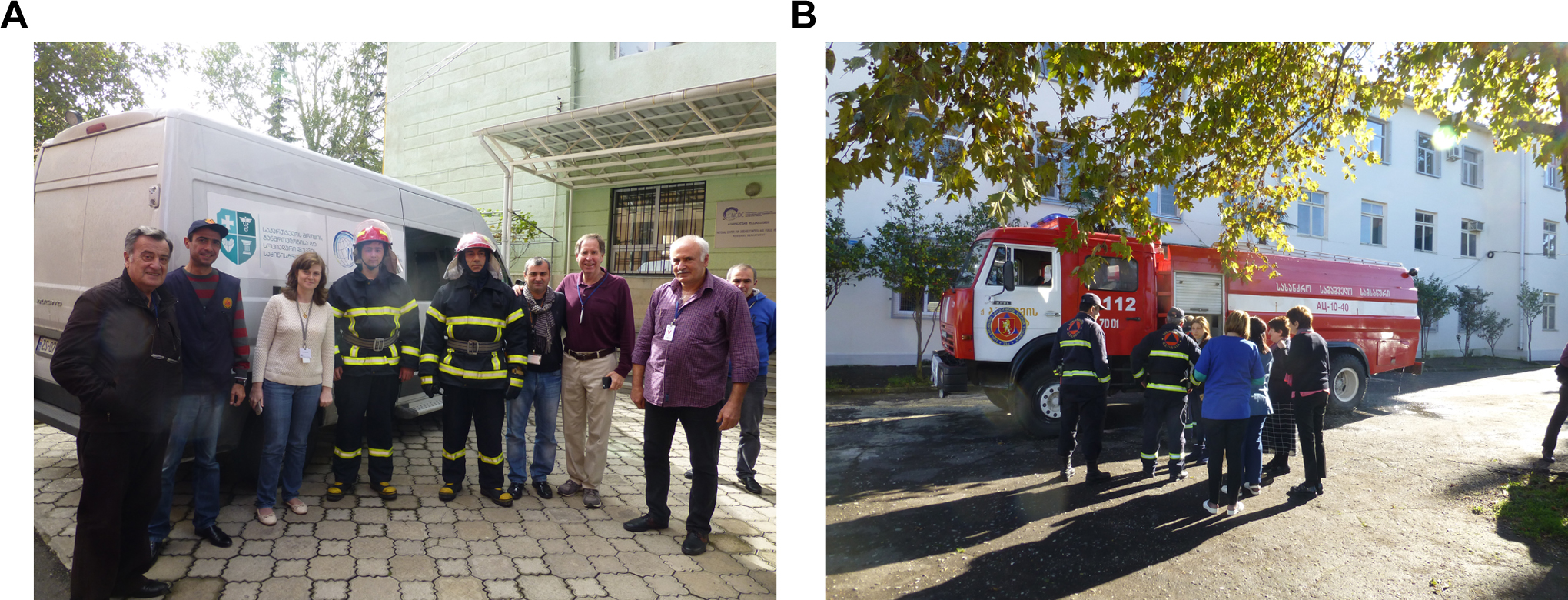
The emergency responders arrived at the zonal diagnostic laboratory (ZDL) territory. (A) Kutaisi ZDL. (B) Batumi ZDL.
Spill Cleanup Procedure
Bacteriology laboratory staff were quite stressed, having both a biological spill in combination with an unannounced fire alarm drill. It caused confusion at first as they automatically followed the actor to evacuate the building and failed to report the spill to the BSO until later when they were outside in the assembly area. The transition of bacteriology laboratory staff to the blood spill cleanup procedure after finishing the evacuation was coordinated by the BSO (Figure 2). A brief risk assessment was done by responding persons under BSO supervision. Although the BSOs were included in planning and conducting the exercise, they were tense and some gaps happened during the spill cleanup procedure.
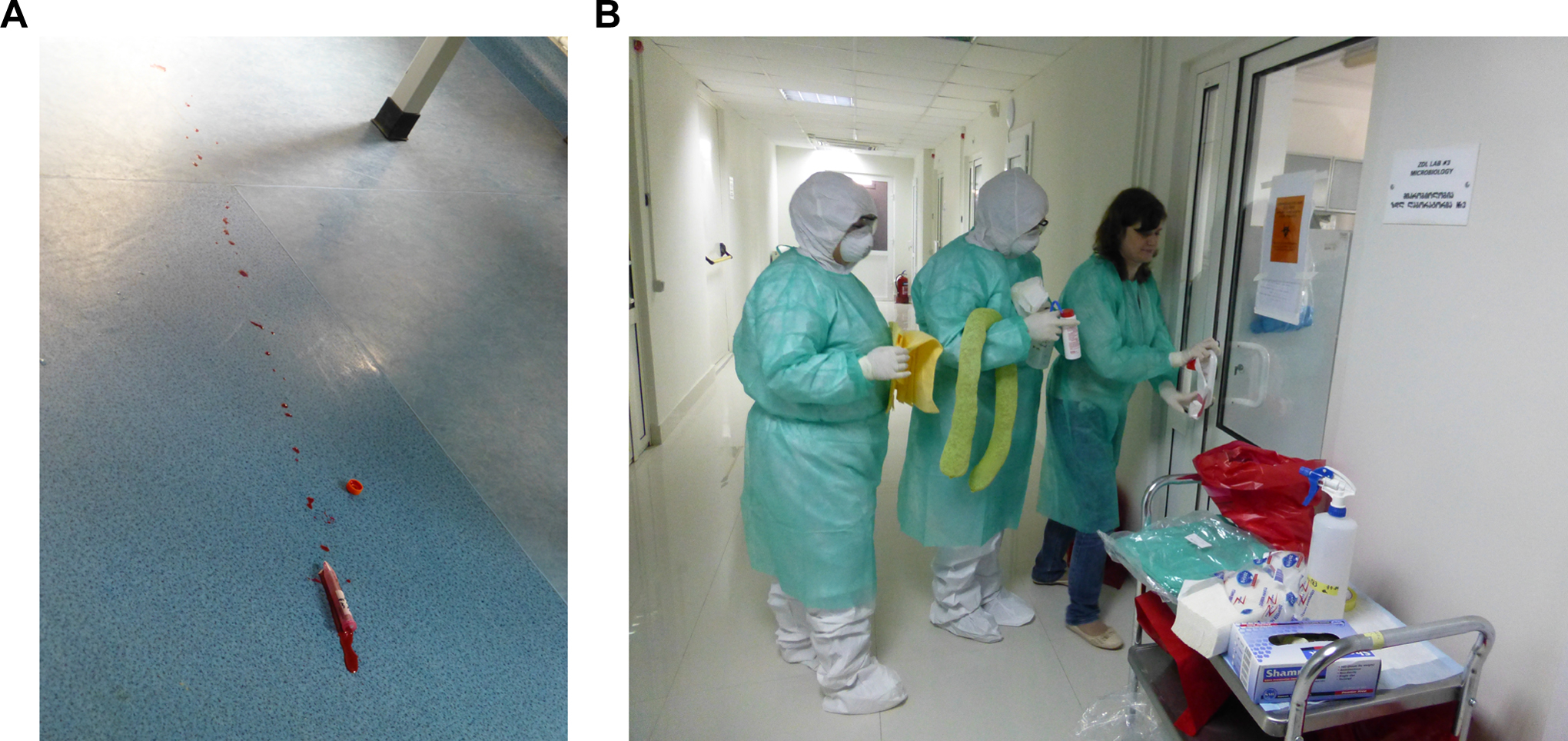
The transition to spill cleanup under supervision of the biosafety officer (Kutaisi zonal diagnostic laboratory). (A) Blood spill. (B) Preparing for spill cleanup.
Reporting and Recommendations
On the whole, the simultaneous evacuation/cleanup response exercise was successfully completed as all related SOPs, plans, rules, and requirements were mostly followed. The response actions between the Fire Safety and Rescue Services and the laboratory supervisory staff and within laboratory responders were well coordinated and performed in a timely manner. Compliance gaps and failures caught by evaluators during the exercise, as well as recommendations for planning and implementing corrective actions, were included in the after-action report:
The list of signed-in work employees was not readily available, which would facilitate taking the attendance. The fire alarm smoke detectors were not installed in the tuberculosis department, and the employees were informed by the BSO. The fire alarm sound was not audible in some laboratory rooms because of noise made by the different equipment installed. The evacuation plans and directional exit sign with arrows were not posted in every corridor. The key-card access failed in one laboratory room, and evacuation was done with a short delay (1-2 minutes). BSO wasn’t reported about biological spill until the employees of bacteriology lab were evacuated from the building. An insufficient amount of absorbent towels and disinfectant solutions were prepared and incorrect cleaning techniques were used (eg, starting at the edges and working toward the center of the spill was not followed) while cleaning up the blood spill. In addition, several points of mock contamination were revealed by using GlitterBug Powder and the ultraviolet LED flashlight after the decontamination and cleanup were completed.
Besides the evaluators, laboratory managers, and BSOs, responder participants were encouraged to give their assessments and recommendations to be contained in the after-action report.
The following recommendations were developed according to the observed gaps and on the basis of postexercise discussions:
Have a complete list of employees who were in the building at the time to ensure accountability of all persons. Install fire alarm smoke detectors in every laboratory room. Install alarm light bubbles. Post the evacuation plan in every corridor. Develop and use a postemergency assessment checklist to ensure the facility is in a safe condition to work in. Maintain a key-card access mechanism for each door in the facility. Further define 2 separate assembly locations for administrative and laboratory employees to gather during fire evacuation. Improve BSO reporting procedures. Modify biological spill cleanup SOPs considering 5 preventive measures; in particular, laboratory coats should be placed in a biowaste container instead of on the floor next to the spill before leaving the room for fire evacuation as the clothes increase fire intensity (Figure 3). Reconstruct the Batumi HZDL entrance gate to ensure that any size of fire rescue vehicles will pass through it more conveniently without any delay. Plan and conduct biological spill cleanup practical trainings using the modified SOP based on the modeling exercise recommendations. Schedule other similar simulating exercises. Arrange workshops/trainings by BSOs to communicate simulation exercise results and recommendations to all ZDL employees and plan/schedule the corrective action plans and control methods.
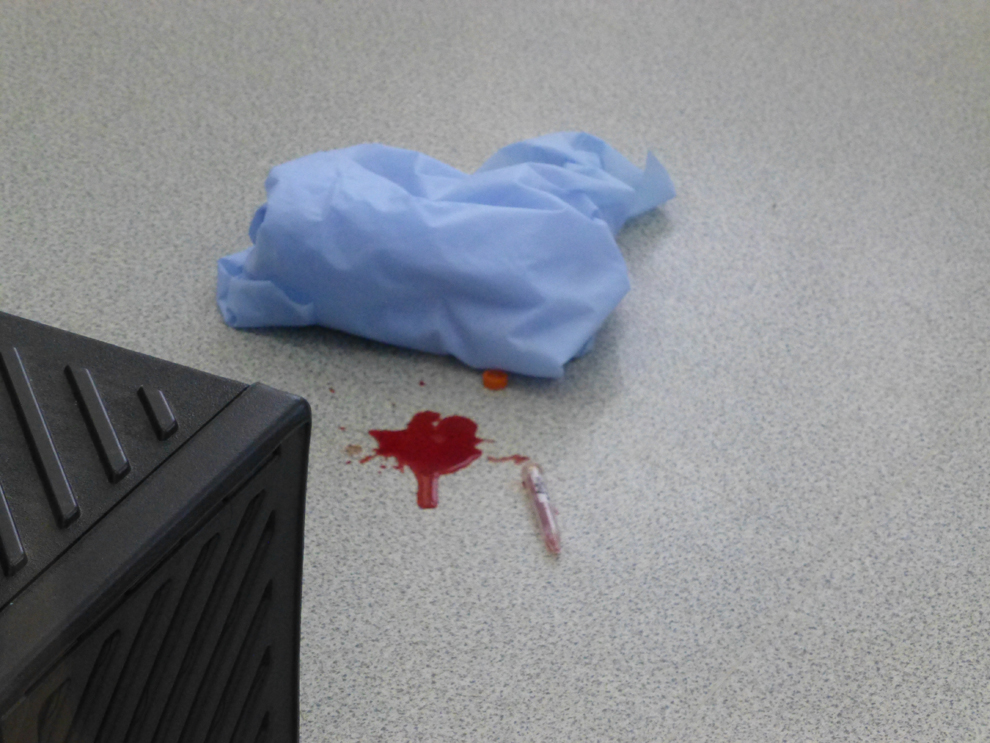
Blood spill cleanup procedure (Batumi zonal diagnostic laboratory).
This simulation exercise was a good example of how a laboratory as a whole facility, including management, BSOs, and staff, can manage an emergency situation and building evacuation; how emergency plans or SOPs are followed and relevant resources/equipment are used; how employees could be trained to be prepared for unexpected events and situations of real emergency; the importance of planning and developing improvement measures based on captured failures/deficiencies; and personnel feedback.
A facility cannot contain biohazards if the personnel are not readily prepared to respond effectively to any biological risk related to accidents/incidents or emergencies any time. Also, the modeling/simulation exercise described here could be used by similar facilities in Georgia or other countries with new or immature biosafety programs.
Footnotes
Declaration of Conflicting Interests
The author(s) declared no potential conflicts of interest with respect to the research, authorship, and/or publication of this article.
Funding
The author(s) received no financial support for the research, authorship, and/or publication of this article.