




Abstract
In December 2014, the National Academies of Sciences convened the first of 2 meetings to discuss the potential risks and benefits of so-called gain-of-function (GOF) research, which was defined by the National Scientific Advisory Board for Biosecurity as research toward increasing the transmissibility, pathogenicity, or ability to evade countermeasures of pathogens with pandemic potential. The symposium was part of a deliberative process undertaken by the United States (US) government to inform in developing guidelines for the safe conduct of GOF research. Participants discussed scientific, technical, and ethical aspects regarding the conduct of research, biosafety measures in the US, and, to a minimal degree, biosafety in other countries. The dearth of information available regarding codified international biosafety requirements and norms, as well as the stringency and verification of their implementation, is particularly troubling as many countries conduct or plan to conduct GOF research. This analysis was conducted to inform policy makers, scientists, and biosafety professionals on a global scale of strengths and potential safety weaknesses by comparing publicly available regulations, laws, guidelines, and published articles describing biosafety processes and measures in other developed countries that may conduct GOF research compared to measures in place in the US. As GOF research has the potential to cause pandemic illness, the findings in this review can be applied to address potential safety gaps by countries with established biosafety capabilities and can serve as a comprehensive guide for countries with nascent or developing biosafety capability working with high-consequence pathogens or contemplating conducting GOF research.
Introduction and Scope
The National Academies of Sciences (NAS) has convened 2 workshops exploring on the potential risks and benefits of “gain-of-function” (GOF) research, as well as biosafety and biosecurity considerations.1,2 The goal was to help inform the deliberations of the National Science Advisory Board for Biosecurity (NSABB) and the design of a risk and benefit assessment commissioned by the National Institutes of Health (NIH). The workshops and risk and benefit assessment document 3 primarily focused on aspects of biosafety and biosecurity in the United States (US). While the workshops also touched on international biosafety practices, few speakers addressed this topic, and due to time constraints and a paucity of data, there was no ability to directly compare biosafety on a global basis. A comprehensive discussion of the state of global biosafety practices, codified biosafety legislation, and implementation could inform US biosafety as well as whether other countries that may perform GOF studies. When considering the human and economic toll resulting from naturally occurring severe acute respiratory syndrome (SARS), Middle East respiratory syndrome (MERS), and influenza viruses, the accidental release into the general population of a virus resulting from GOF research with enhanced communicability, disease severity, or resistance to therapeutics or vaccines could lead to a global pandemic that even the most advanced countries would be ill-prepared to address. Many of these viruses have emerged in countries that understandably need to conduct research on endemic pathogens. That some of these countries have nascent and developing biosafety capabilities creates an urgency to identify best and most effective global safety practices to serve as models and gaps that should be addressed. In this article, we examined how international guidance for biosafety compares to US biosafety guidance, insofar as it informs the conditions under which GOF research may be conducted in countries other than the United States.
Materials and Methods
As most GOF research is conducted in the United States in laboratories operating at biosafety level 3 (BSL-3) with enhancements, this analysis provides a comparison of regulatory biosafety documents, oversight agencies, biosafety practices, and containment requirements for entities operating at BSL-3 as a baseline and then describes enhancements as recommended by the US Department of Agriculture (USDA). The analysis includes documents available on the Internet that were published in English and focused on work at BSL-3 and, where possible, involving GOF experiments. In some cases, sparse country-specific information was available on either biosafety or biosafety specific to GOF research. While not in depth enough to include in comparative tables, that information is included as narrative to provide more context to global biosafety. The authors also contacted colleagues with firsthand knowledge of country-specific practices to add further granularity to the narrative. Biosafety guidance documents (guidelines, laws, regulation) selected for comparison to the recommendations in the United States, Biosafety in Microbiological and Biomedical Laboratories (BMBL), had to be comprehensive in scope, freely available electronically, and published in English.
The following entities’ or nations’ biosafety guidelines were compared to the BMBL:
World Health Organization (WHO) Great Britain (GB) Canada (CA) Australia/New Zealand (AU/NZ) Singapore (SG) European Union (EU)
The most widely adopted biosafety guidelines in countries that do not have a codified national biosafety guideline include the WHO Laboratory Biosafety Manual (LBM); BMBL 1,4; Health and Safety Executive (HSE), Management, Design and Operation of Microbiological Containment Laboratories (DOMCL) 5 ; and Control of Substances Hazardous to Health 6 (COSHH). The CEN Workshop Agreement 15793 7 was drafted and approved in 2011 and describes a management system approach for organizations to “identify, monitor and control the laboratory biosafety and biosecurity aspects of its activities” but does not provide actual guidance on tenets of biosafety itself and hence was not comparable to the other documents. In addition, few if any countries involved in its development have formally implemented it as a standard. On the other hand, EU Directive 2000/54/EC 8 is a widely adopted biosafety guidance document that serves as a starting point for biosafety and biocontainment policy for EU member states (MS) and hence was included in the analysis.
Results
Biosafety Oversight of US Entities Conducting Work with Naturally Occurring Pathogens and Genetically Modified Materials
The United States has a layered approach to oversight for research with biological select agents and toxins (BSATs) to include highly pathogenic avian influenza virus (HPAIV), 1918 H1N1 pandemic strain, and the virus that causes SARS, the SARS coronavirus (SARS-CoV). At the institutional level, work is reviewed and approved by the entities’ Environmental Health and Safety (EH&S) office, Institutional Biosafety Committee (IBC), and, if animals are involved, the Institutional Animal Care and Use Committee (IACUC). Some municipalities also have local committees that are involved in safety review of entities operating at BSL-3 and biosafety level 4 (BSL-4), several of which have regulatory authority granted at the state or local level. At the top of the hierarchy, entities conducting work with BSATs fall under the regulatory jurisdiction of the Federal Select Agent Program (FSAP), 9 administered by the Centers for Disease Control and Prevention (CDC)/Division of Select Agents and Toxins (DSAT) and the Animal and Plant Health Inspection Services (APHIS)/Agriculture Select Agent Services (ASAS). The coronavirus that causes MERS is not currently a select agent, so work with MERS-CoV would not trigger an entity to fall under FSAP jurisdiction.
Work involving genetic modification of an organism also requires approval by the entities’ EH&S and IBC and, if animals are involved, the IACUC. For entities receiving any NIH funding or funding from federal agencies that stipulate that NIH compliance is required, work must be conducted in compliance with the Guidelines for Research Involving Recombinant or Synthetic Nucleic Acid Molecules. 10 Certain experiments require review by the NIH Recombinant DNA Advisory Committee (RAC), which may make regulatory recommendations to enhance safety, and approval by the RAC or NIH director may be required before work can proceed. An example of an experiment requiring the director’s approval would be the use of recombinant or synthetic nucleic acids to introduce drug resistance into a microorganism that could harm people or agriculturally important animals or crops. In addition, if the entity receives federal support for life sciences research and conducts an experiment that requires review for dual-use research of concern (DURC), a risk mitigation plan must also be developed and submitted to the grant management official listed on the notice of the grant award or the NIH Program on Biosecurity and Biosafety Policy. 11 Examples of experiments that are considered to be DURC include those that increase transmissibility or that alter the host range of pathogens such as highly pathogenic avian influenza virus (Table 1). 12
Types of Experiments That Fall Under Dual-Use Research of Concern.
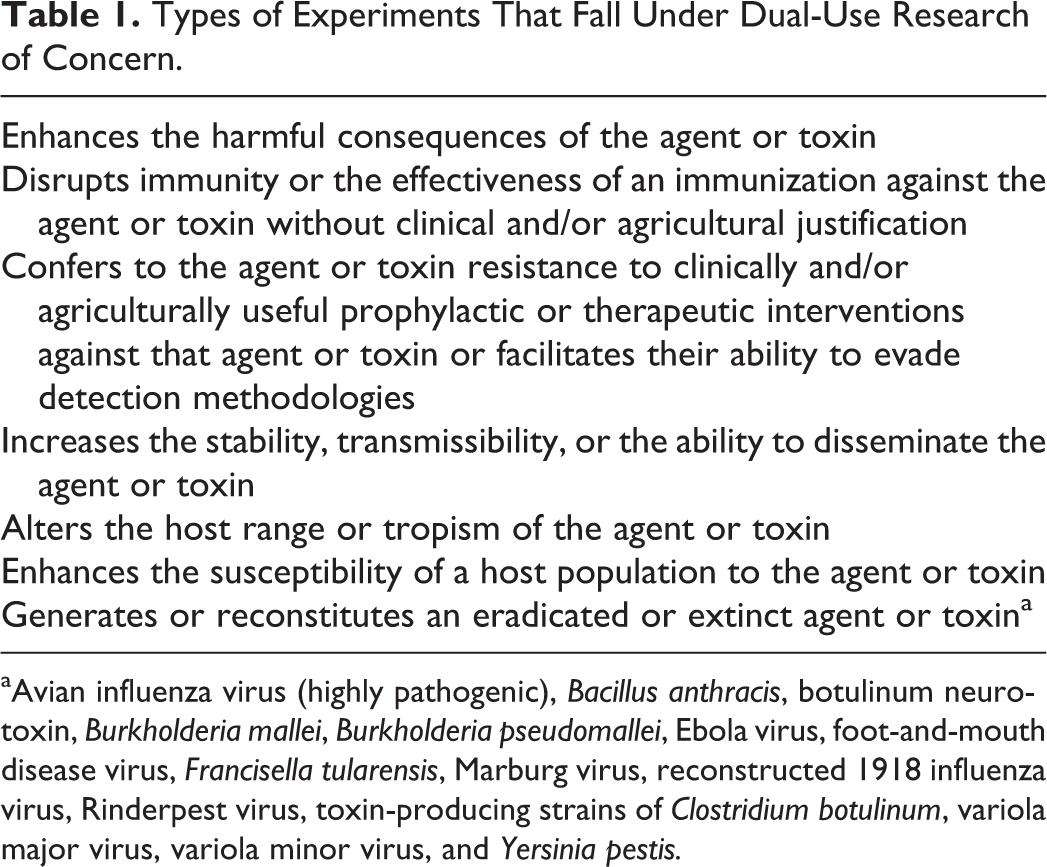
Avian influenza virus (highly pathogenic), Bacillus anthracis, botulinum neurotoxin, Burkholderia mallei, Burkholderia pseudomallei, Ebola virus, foot-and-mouth disease virus, Francisella tularensis, Marburg virus, reconstructed 1918 influenza virus, Rinderpest virus, toxin-producing strains of Clostridium botulinum, variola major virus, variola minor virus, and Yersinia pestis.
Overview of Biosafety Oversight Internationally
Outside of the United States, the robustness of biosafety oversight varies significantly from country to country and region to region. Even inside the EU, significant differences in biosafety among countries in the EU have been documented. A recent inventory made by the European Biosafety Association (EBSA) found that 20 of 27 countries have a body (agency, commission, or committee) regulating or providing advice on the contained use of Genetically Modified Microorganisms (GMM). For the remaining seven countries, no information was available. EU MS [member states] are obliged to implement EU Directives, and all 27 MS have reported to the EU they have adopted and implemented Directive 2000/54/EC. National biosafety regulations and practices derived from EU Directives 2000/54/EC2 and 98/81/EC3 varied from country to country.… There is often no specific biosafety regulation for epizootics except for those microorganisms regulated under the two guidelines mentioned above. Facilities and practices in containment level 3 laboratories throughout the EU are not of a comparable standard, e.g. a large range of different terminologies for “containment level (CL)” were used within the MS.… Moreover, biosafety responsibilities appear often to be attributed to staff in management positions with functional roles that could be in conflict with strict biosafety considerations. Less than half of the respondents were subject to oversight by a biosafety committee. EC legislation on biological agents and GMM is often not specific enough to ensure harmonization of the implementation on the national level. There is a lack of European-wide harmonized practical guidance on how to implement the European Directives on biological agents and GMMs. A few EU Member States have developed their own national guidance based on the EC Directives. In other cases, these gaps are filled by e.g. US Biosafety in Microbiological and Biomedical Laboratories (BMBL) and Canadian guidelines. The varying interpretation of the EU Directives allows different approaches to biosafety and laboratory biosecurity. This and differences in terminology make the exchange of scientists between member states problematic.
13
Biosafety in Germany
To begin this discussion, countries with strong biosafety measures are worth considering. European nations with very strong biosafety legislation and oversight bodies include but are not limited to Germany and Switzerland. As most documents are published in German, the authors contacted a colleague who as a German researcher had strict biosafety responsibilities under German law. In Germany, the GenTSV and GenTG Directives are more stringent and detailed than the EU directives and describe how containment laboratories must be constructed and the safety measures required. The BMBL was a starting point for these directives and additional requirements were added to enhance safety. For example, project leaders are fully responsible for risks and hazards, and as such are given authority by law to enlist all measures needed to reduce risk to staff and the community. Having clear lines of responsibility and the authority to ensure safety has created a culture in which compromises are not made to safety. Both the project leader and biosafety officer are appointed by the government with minimum requirements that they (1) hold a degree in a relevant field, (2) have 3 years of hands-on experience, and (3) complete a course on the content of GenTG and GenTSV. The role of the biosafety officer is to observe project safety and advise project leaders as well as the institution in all questions of biosafety. Typically one biosafety officer is responsible for one or several departments with several project leaders. The annual report of the biosafety officer goes to the institution’s director and the government. All research institutes must be insured to be able to conduct work with pathogens and the facilities must be annually inspected and certified by the government. (Martin Gengenbacher, personal communication, June 2015)
Biosafety in Switzerland
The Ordinance on Handling Organisms in Contained Systems, 15 a federal law in Switzerland, regulates the handling, transport, and release of organisms, particularly genetically modified, pathogenic, or foreign organisms that are manipulated in contained systems. Special containment features are identified for work with agents in 4 risk groups. It stipulates that due care must be taken by individuals working with organisms to ensure that organisms, their metabolic products, or wastes cannot endanger people, animals, or the environment and requires a risk assessment focused on both the organism and activity. The ordinance references numerous additional safety ordinances that must be adhered to and the authorities charged with approving applications before work can commence. Moreover, the ordinance requires “any person who carries out an activity in contained systems with genetically modified or pathogenic organisms of Classes 3 or 4 must guarantee legal liability: (a) of 20 million francs to cover damage to persons and property; and (b) of 2 million francs to cover damage to the environment.” This measure definitively assigns financial responsibility to the entity working with wild-type and genetically modified pathogens in risk groups 3 and 4 should an incident occur requiring remediation or resulting in harm to a worker, the community, or environment.
According to definitions provided in the ordinance, HPAIV, SARS-CoV and MERS-CoV viruses, and HPAIV modified to have increased transmissibility among mammals clearly fit in risk group 3 or 4. The Ordinance on the Protection of Employees From Dangerous Microorganisms further defines which measures must be taken to protect employees working with microorganisms to include risk assessment and communication, medical surveillance, containment features, authorization from federal entities to conduct work, and other safety measures. 16
Biosafety in Asia
In contrast to Germany and Switzerland, biosafety in Asia is often fraught by poor compliance with regulations or their absence. Biosafety capability, practice, and understanding vary greatly among Asian countries and from institution to institution. As Aparna Singh Shah from the World Health Organization Southeast Asia Regional office stated in a recent meeting, “Laboratory facilities vary a lot between countries and the awareness about biosafety is very limited.” 17 Construction of biocontainment laboratories in India has increased significantly in recent years from 14 BSL-3 in 2008, 18 with a current goal of constructing an additional 160 new laboratories by early 2015 (48 have already been established) and 10 more federal laboratories for work with infectious diseases. During the meeting, the fact emerged that while there are various safety guidelines available in India, there is no strict rule enforcing these guidelines. “Even though we have plenty of exhaustive guidelines, how many people are aware of them, how many are following them—that is the main concern,” said Vasantha Muthuswamy, who is with the Indian Council of Medical Research (ICMR). 17
A report issued by WHO in 2008 showed only 2 of 11 countries surveyed in Southeast Asia had any form of biosafety regulations, and 1 had institute-developed requirements; of the 11, only 2 had written laboratory policies and standards.
19
The information is dated as some countries now have polices and standards in place, but some are very basic or incomplete and in other instances are not implemented due to cost or lack of training. From country to country and between laboratories, many of the observations, though, are still accurate, and key among them are the following:
safety awareness and biosafety practices degrade from central to peripheral laboratories, training programs are inadequate, designated biosafety officers are rare, biosafety guidelines are not available or fully implemented, documentation on safety errors and laboratory acquired infections is minimal, and personal protective equipment (PPE) and immunization of staff is absent or inadequate. (Barbara Johnson, personal observation, June 2015)
In some cases, laboratories referred to as “being BSL-3” in actuality barely meet WHO BSL-2 standards. A number of foreign-built BSL-3 laboratories are nonfunctional due to various reasons, including the followinn:
lack of operating funds or replacement parts, the inability to balance airflow as some air handling systems had been turned off to reduce costs, and inappropriate design features, for example, those based on clean room principles (air flows out from the laboratory) as opposed to biocontainment principals (air flows inward to the laboratory).
These overall findings are corroborated by more recent site assessments of 20 BSL-2 and BSL-3 laboratories conducted by the Food and Agriculture Organization (FAO) in 2012 in 9 countries in Southeast Asia. While most laboratories were BSL-2, common major issues cited included “the lack of institutionalized biosafety administration and management, lack of awareness and biosafety practices, improper waste management, workflow, and issues related the biological safety cabinet (BSC) usage and maintenance.” 20
The shortfalls noted above are not fully representative of biosafety in Asia. Singapore has made great strides in biosafety in just a decade to include enacting the Biological Agents and Toxins Act (BATA) to address biosafety and security of pathogens; the creation of a Ministry of Health Biosafety Branch, which has oversight of independent annual certification of BSL-3 containment laboratories and safety programs; and emergency preparedness drills that involve the laboratory and local first responders. 21 The BATA regulates the possession, use, import, transfer, and transportation of biological agents and toxins that are known to be hazardous to human health, including HPAIV, SARS-CoV, and the recently added MERS-CoV. Laboratories and safety programs are on similar footing to those in countries with well-established biosafety legislation and practices.
BSL-3 laboratories and safety programs in Hong Kong are regularly if not annually certified by independent third-party certifiers using criteria established in the BMBL or AU/NZ BSL-3 standards. Biosafety manuals, policies, and training are rigorously applied; safety equipment is maintained and certified; and PPE is abundant (Barbara Johnson, personal observation, June 2015). In the past, mainland China suffered a number of laboratory-acquired infections as a result of poor infrastructure and maintenance, as well as lack of safety practices and appropriate PPE. 22 China has published a national biosafety regulation, but it is available only in Chinese, so it cannot be evaluated for content. The authors contacted a colleague in the United States with knowledge of biocontainment design and construction in China and in discussion were informed, “The construction of BSL-3 and BSL-4 laboratories has increased significantly in China over the past decade, and newly constructed facilities are being built to international biosafety standards similar to those described in the BMBL and AU/NZ” (Joseph H. Wilson, personal communication, July 2015).
“There have been more than 20 high-containment laboratories in China, including one BSL-4 in Wuhan Institute of Virology, Chinese Academy of Sciences, which was constructed with the assistance of the French government. In addition to assisting with providing construction expertise, the staff was also trained and received a certificate of training in France” (Yunxing [Vincent] Hu, personal communication, July 2015). References in the literature and presentations at regional symposia refer to the SARS outbreak and resulting laboratory-acquired infections as the prime motivator for implementing legislation, developing enhanced safety programs, and constructing modern containment laboratories that meet or exceed international guidelines. To avoid the recurrence of biological risks posed by SARS and MERS, China has also learned from the experience of other countries and organizations, with the BMBL being one main knowledge resource. The following publications are relevant to biosafety and identify the year published and entity in charge of the regulation:
State Council of China published Biosafety Management Regulations on Pathogenic Microbiology Laboratory (2004) to guide the management of biosafety laboratories in China. China National Accreditation Service for Conformity Assessment (CNAS) published the national biosafety standard, Laboratories—General Requirements for Biosafety (GB19489-2004), which describes the requirement for biosafety laboratory (biocontainment) facilities, equipment, and biosafety management. This was updated as GB19489-2008 in 2008. CNAS published the regulations, Accreditation Criteria for Laboratory Biosafety (CNAS-CL05:2006), which has implemented legislation for inspection and testing of laboratories to ensure biosafety standards are met and safe practices and equipment are in place. This was updated in 2009 as CNAS-CL05:2009. The Ministry of Construction published Architectural and Technical Code for Biosafety Laboratories (GB50346-2004) and updated it in 2011 as (GB50346-2011). The Ministry of Agriculture, Ministry of Health, and Ministry of Environment Protection have also published their special biosafety regulations and standards for restricting work with highly pathogenic avian influenza virus to high-level biosafety laboratories (BSL-3 and above) as well as transportation of pathogens.
“Genetically engineered HPAI requires additional safety measures, such as 2 staff members must work together with proper PPE in a negative-pressure laboratory, among other requirements.
In each Chinese biosafety laboratory, there must be a Biosafety Committee. The leader is responsible for organizing risk assessment and establishing standard operating procedures (SOPs). Staff working in BSL-3 must attend training on how to operate equipment correctly to avoid creating an aerosol(s) and how to decontaminate equipment and the laboratory space before working with pathogens. Appropriate primary containment (biosafety cabinets) and PPE are routinely used. BSCs are certified annually by an independent third-party professional. Air from BSL-3 laboratories passes through a building high-efficiency particulate air (HEPA) filter, and all wastes are decontaminated by autoclave, an effluent decontamination system, or a tissue digester, or they are carefully packaged before leaving the facility to be transported to an incinerator (Yunxing [Vincent] Hu, personal communication, July 2015).”
Comparison of Biosafety Guidelines
To provide an overview of international similarities and differences in biosafety guidance, tables were developed using the BMBL as a baseline for overarching biosafety guidelines and the USDA guidance for work with HPAIV, specifically. For transparency, 3 aspects are important to note: (1) although some practices are not listed specifically in a guidance document, they may be adhered to as common sense; (2) the guidelines are not all organized the same way, and some countries provide additional topic matter or requirements that are not listed in the BMBL; and (3) in many countries, numerous additional ordinances, acts, and laws supplement the main guideline, and these are not captured in this study. Differences that are pertinent and may inform enhanced biosafety procedures with wild-type, genetically modified pathogens, and GOF experiments are discussed following each section and in the conclusion.
The International Organization for Standardization (ISO) 2-letter country abbreviations listed in the heading of each table correspond to the following guidelines, laws, or directives:
CA: Canadian Biosafety Standard, Second Edition
23
WHO: World Health Organization, Laboratory Biosafety Manual, Third Edition
24
GB: United Kingdom Health and Safety Executive, The Management, Design and Operation of Microbiological Containment Laboratories
25
EU: European Union Directive 2000/54/EC on the protection of workers from risks related to exposure to biological agents at work
26
AU/NZ: Australian/New Zealand, Safety in Laboratories Part 3: Microbiological Safety and Containment
27
SG: Singapore Ministry of Health, Laboratory Certification Checklist and Biological Agents and Toxins Act
28
Standard Microbiological Processes
Standard and special microbiological practices are the first line of defense in protecting workers from pathogens and toxins. Primary and secondary containment barriers are ineffective if not used properly. Table 2 describes standard practices for working in a microbiological laboratory identified in several international resources compared to the US BMBL.
Comparison of International BSL-3 Requirements/Recommendations Regarding Standard Microbiological Practices.
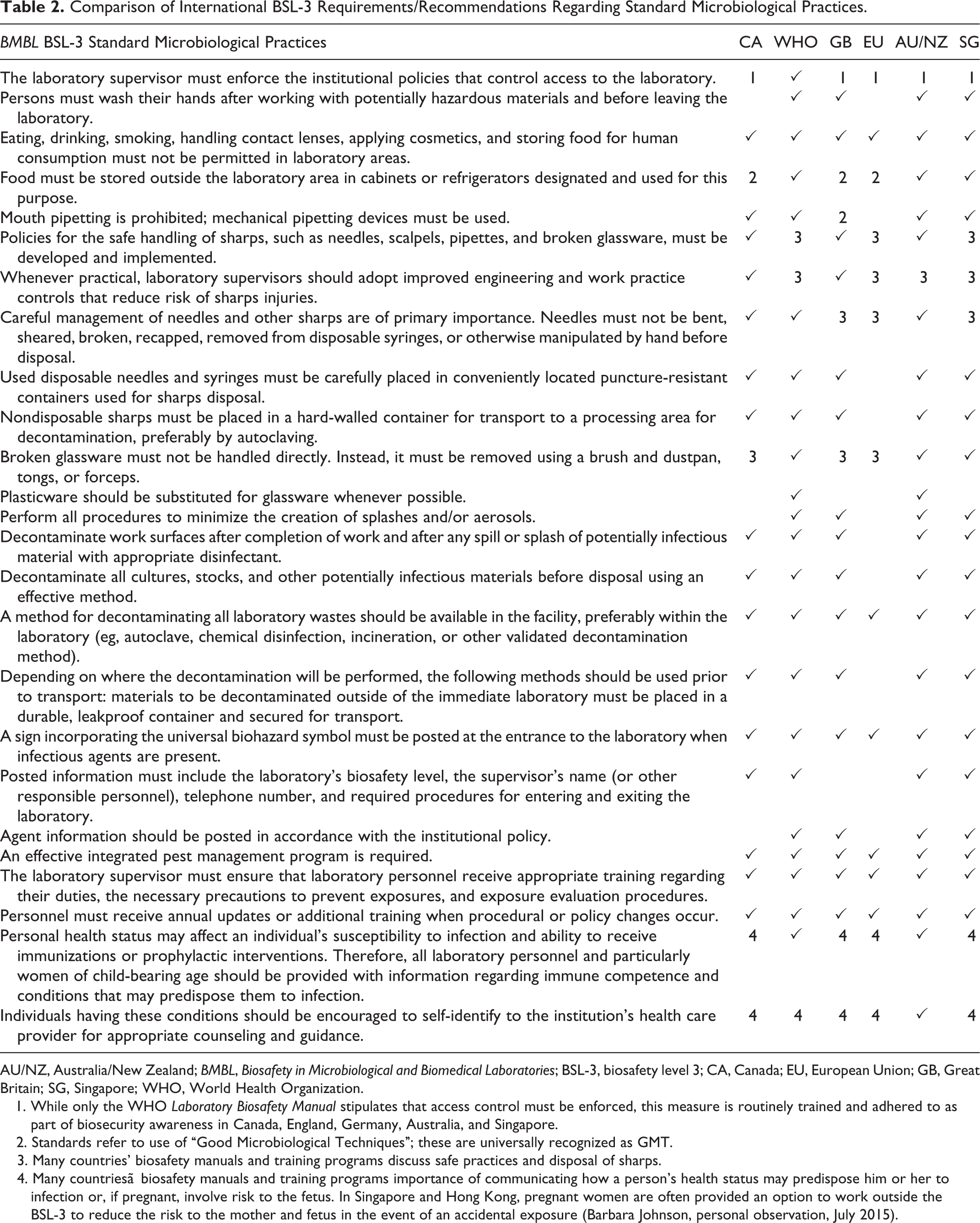
AU/NZ, Australia/New Zealand; BMBL, Biosafety in Microbiological and Biomedical Laboratories; BSL-3, biosafety level 3; CA, Canada; EU, European Union; GB, Great Britain; SG, Singapore; WHO, World Health Organization.
While only the WHO Laboratory Biosafety Manual stipulates that access control must be enforced, this measure is routinely trained and adhered to as part of biosecurity awareness in Canada, England, Germany, Australia, and Singapore. Standards refer to use of “Good Microbiological Techniques”; these are universally recognized as GMT. Many countries’ biosafety manuals and training programs discuss safe practices and disposal of sharps. Many countries’ biosafety manuals and training programs importance of communicating how a person’s health status may predispose him or her to infection or, if pregnant, involve risk to the fetus. In Singapore and Hong Kong, pregnant women are often provided an option to work outside the BSL-3 to reduce the risk to the mother and fetus in the event of an accidental exposure (Barbara Johnson, personal observation, July 2015).
Special Microbiological Processes
Special operating procedures in BSL-3 focus on preventing or mitigating exposures using a combination of medical countermeasures, training and proficiency, primary containment, and strict adherence to decontamination and sterilization of equipment, the laboratory, and materials (Table 3).
Comparison of International BSL-3 Requirements/Recommendations Regarding BSL-3 Special Microbiological Practices.
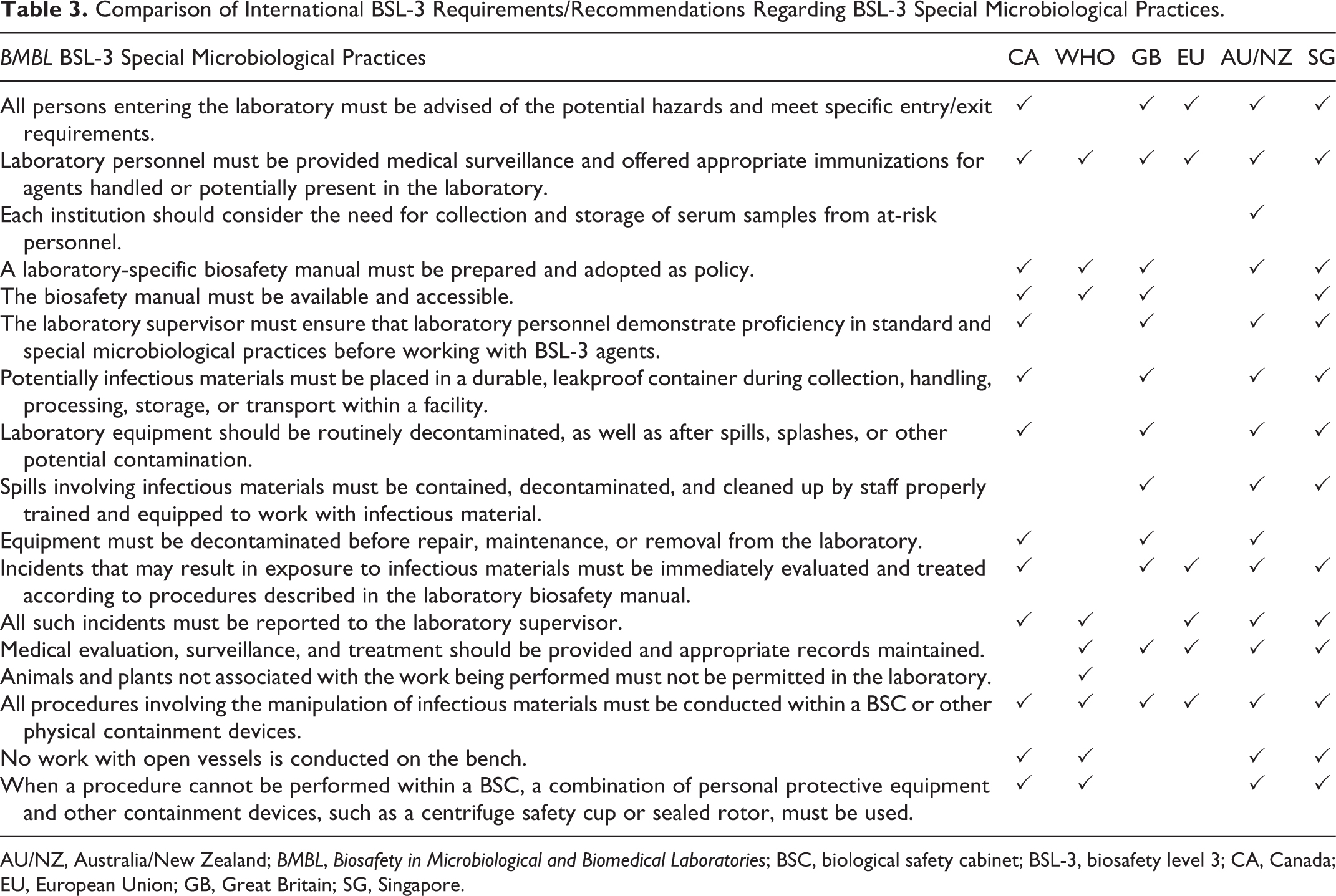
AU/NZ, Australia/New Zealand; BMBL, Biosafety in Microbiological and Biomedical Laboratories; BSC, biological safety cabinet; BSL-3, biosafety level 3; CA, Canada; EU, European Union; GB, Great Britain; SG, Singapore.
While the EU directive does not address many of these practices, they are specified in other country-specific ordinances and regulatory documents with examples previously cited in Germany and Switzerland. Many documents from EU MS are available electronically but are not translated in English, hence preventing their inclusion in this analysis. In Singapore, provisions are in place in SOPs and biosafety manuals at BSL-3 laboratories to comply with each special procedure listed in Table 2. Australia and New Zealand have additional special requirements, which include having plans in place for emergency egress from BSL-3 and preventing entry by people involved with cleaning and repairs until potentially contaminated laboratory surfaces have been decontaminated and authorization is obtained from the laboratory supervisor or the safety officer.
Absent from the BMBL BSL-3 checklist, although present in the BMBL text, is information on risk assessment. Risk assessment is thoroughly described in the GB guideline along with staff training and supervision, roles and responsibilities, and emergency planning. In the CA standard, special attention is given to recordkeeping and documentation, the training program, and overarching biosafety program management.
Safety Equipment
The purpose of safety equipment used in the BSL-3 laboratory is to provide a boundary between the worker and the pathogen, whether this equipment is in the form of primary containment (BSC) or PPE (Table 4). The AU/NZ standard provides supplemental information, such as instructions for doffing used PPE, while the GB standard addresses respiratory protection in greater depth.
Comparison of International BSL-3 Requirements/Recommendations Regarding BSL-3 Safety Equipment.a
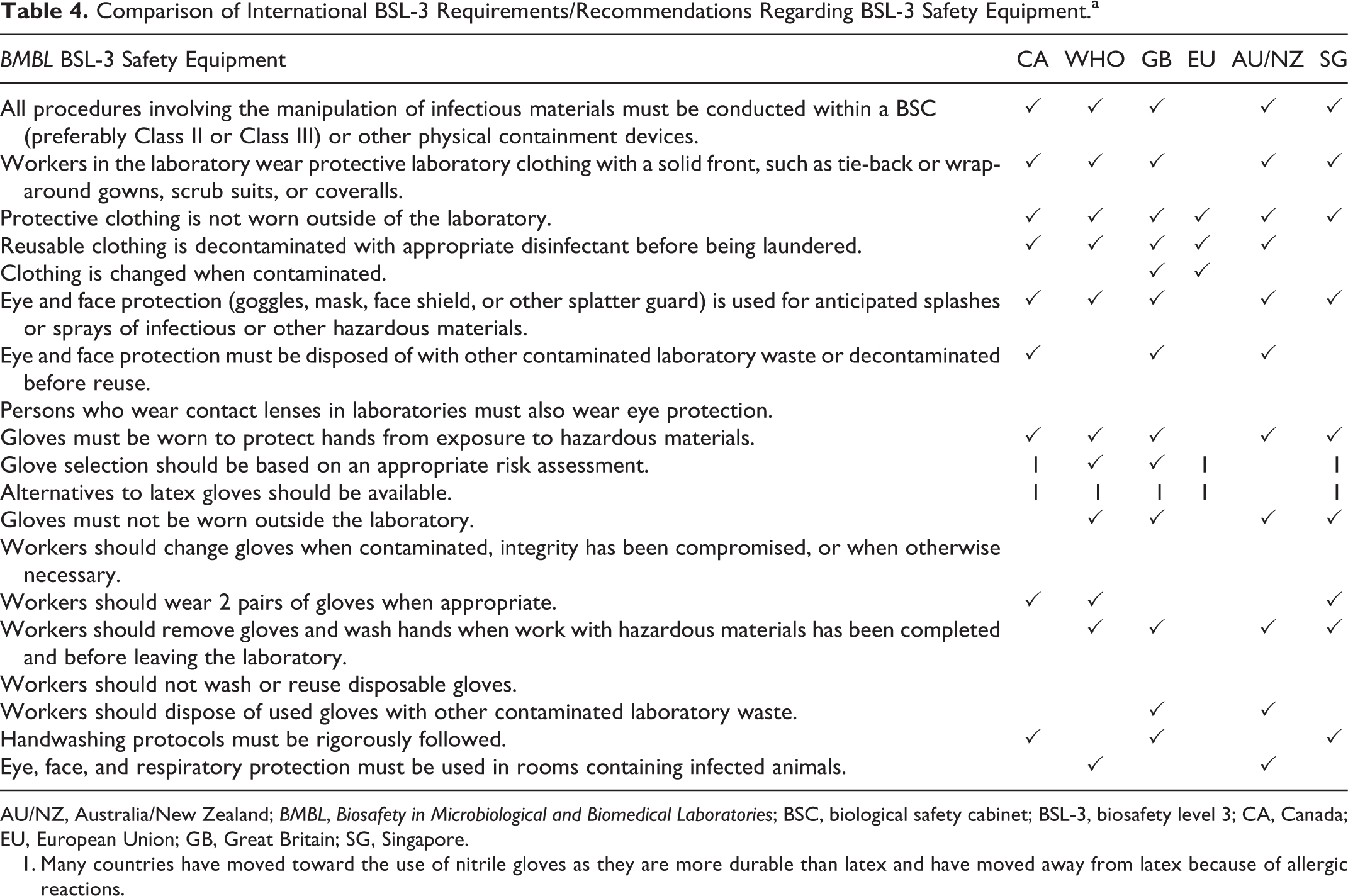
AU/NZ, Australia/New Zealand; BMBL, Biosafety in Microbiological and Biomedical Laboratories; BSC, biological safety cabinet; BSL-3, biosafety level 3; CA, Canada; EU, European Union; GB, Great Britain; SG, Singapore.
1. Many countries have moved toward the use of nitrile gloves as they are more durable than latex and have moved away from latex because of allergic reactions.
A practice that has been observed in a number of entities in Asia is the spraying of gloves with 70% alcohol or the decontaminating agent of choice for the pathogen. This practice may lead to more rapid permeation of material through the outer glove, and resistance to permeation varies between manufacturers and glove type. In some entities, there is resistance to change the practice as it is seen as a way to keep the work cleaner and serves to decontaminate unseen micro-splashes or unanticipated settling of aerosolized droplets. In addition, some guidelines make reference to a sink at the containment barrier (as opposed to the laboratory door), meaning inner gloves may be worn out of the laboratory and hands are not washed until reaching the containment barrier. This factor, coupled with the possibility of permeation through the outer glove, raises concern should unnoticed outer glove contamination occur and a contaminated inner glove is used to open doors and move through the containment area. Recommendations have been made to substitute more frequent glove changes for the use of decontaminants on gloves and, if gloves are to be worn outside the laboratory, to don new inner gloves immediately prior to exiting the laboratory (Barbara Johnson, personal observation, July 2015).
Laboratory Facilities
There is a high degree of similarity in facility requirements among the guidelines, particularly with regard to separation from other areas, restriction of access, ease of cleaning, ability to be sealed for gas decontamination, availability of a change room, the placement of BSCs, ability to monitor and verify airflow, methods for waste decontamination, the verification of performance of engineering systems, and other aspects related to secondary containment (Table 5). Some surprising differences included variation in the requirement for doors to be self-closing, location of the hand washing sink, and a definitive and strict statement that, under failure conditions, the airflow will not be reversed (with a definition of precisely what reversal actually means).
Comparison of International BSL-3 Requirements/Recommendations Regarding BSL-3 Laboratory Facilities.
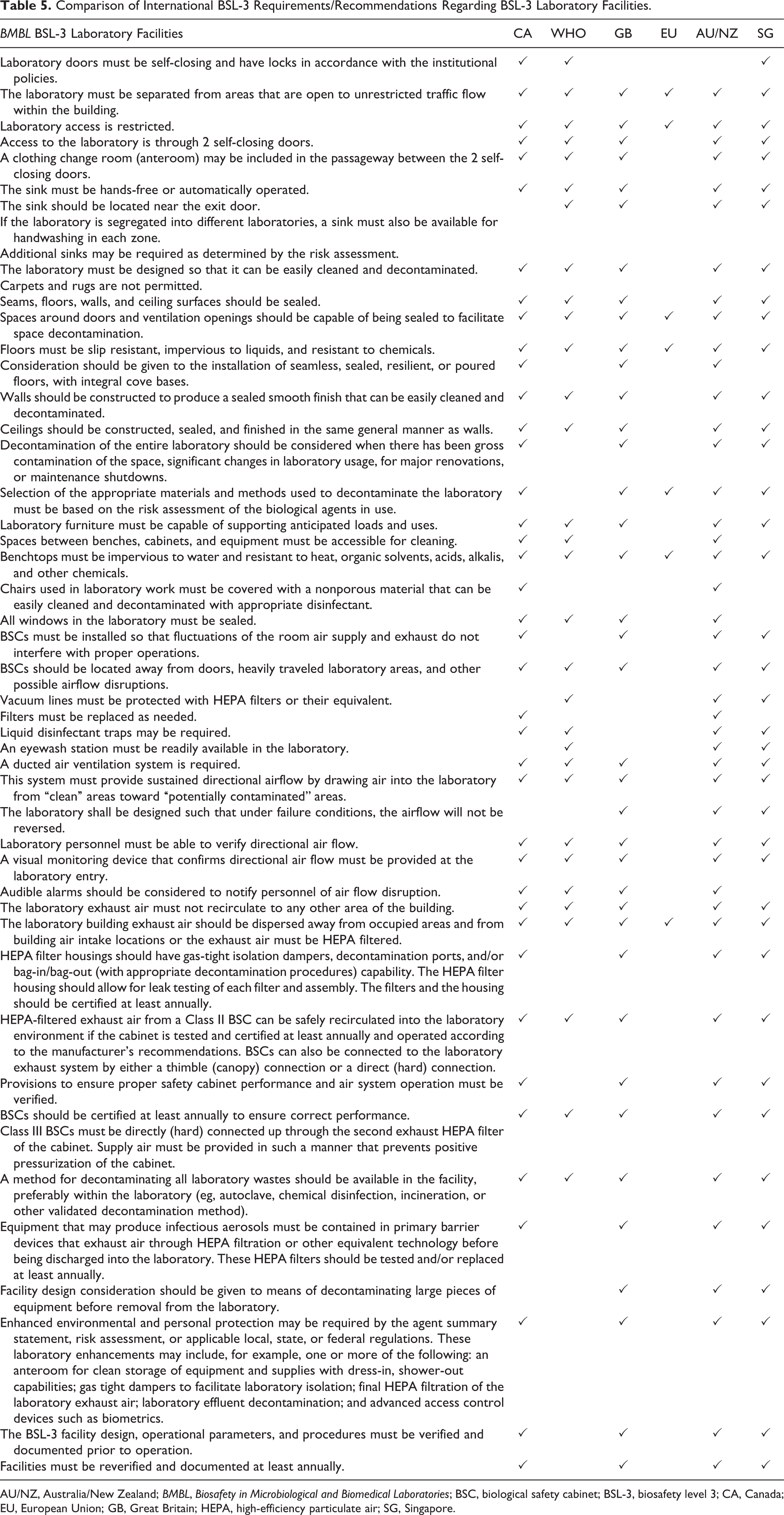
AU/NZ, Australia/New Zealand; BMBL, Biosafety in Microbiological and Biomedical Laboratories; BSC, biological safety cabinet; BSL-3, biosafety level 3; CA, Canada; EU, European Union; GB, Great Britain; HEPA, high-efficiency particulate air; SG, Singapore.
In comparison to the BMBL, the AU/NZ standard contains far more prescriptive information regarding engineering performance, calibration of equipment, presence of viewing panels in doors, construction of walls and ceiling to withstand cracking during air pressurization extremes (upon supply/exhaust fan failures), and having adequate access to services for maintenance. The guidance document from GB points out access to natural light should be provided, validation of key equipment/systems should be repeated on a regular basis, and prescriptive pressurization values need to be provided. Furthermore, this guidance provides charts for calculating the time required for removing log concentrations of particles from the air (90%, 99%, 99.9%, 99.99%) should there be a spill outside primary containment, based on the number of air changes per hour, and a chart of potential airborne particles based on spill size and organism concentration. The CA guidance document dedicates an entire chapter to performance and verification tests for facilities and systems, as well as requirements of the liquid effluent decontamination system in the event it is required for BSL-3 operations per a risk assessment.
Work with HPAIV
The USDA document that specifically addresses work with HPAIV is used as a starting point for considerations of requirements with HPAIV GOF work as well. A comparison of international guidance documents with the recently released USDA guidance document suggests established international practices (along with the BMBL) helped inform the development of the USDA document (Table 6).
Comparison of International Requirements/Recommendations in Relation to USDA Guidance for HPAIV. 34
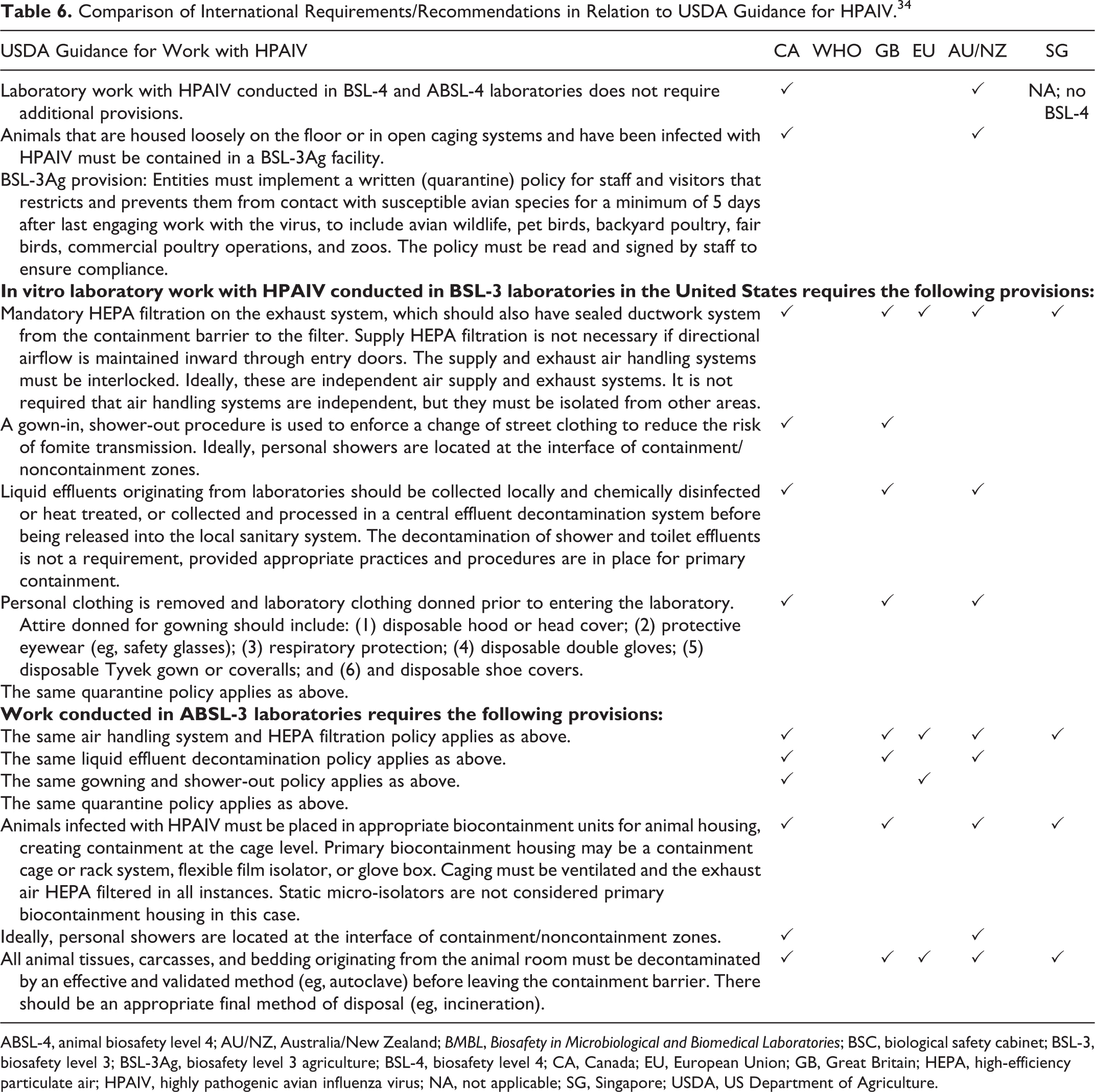
ABSL-4, animal biosafety level 4; AU/NZ, Australia/New Zealand; BMBL, Biosafety in Microbiological and Biomedical Laboratories; BSC, biological safety cabinet; BSL-3, biosafety level 3; BSL-3Ag, biosafety level 3 agriculture; BSL-4, biosafety level 4; CA, Canada; EU, European Union; GB, Great Britain; HEPA, high-efficiency particulate air; HPAIV, highly pathogenic avian influenza virus; NA, not applicable; SG, Singapore; USDA, US Department of Agriculture.
Where available, specific examples of how entities are conducting work with HPAIV or genetically modified strains of the virus are presented below for comparison to the USDA recommendations. Whether other countries implement a written (quarantine) policy for staff and visitors preventing contact with susceptible avian species after working with HPAIV, and for how many days after working with the virus the policy applies, is unknown.
No guidance documents exist for WHO in the context of HPAI precautions for research (just clinical specimens, and this guidance is not applicable). The EU directive, “On the Contained Use of Genetically Modified Micro-Organisms,” provides a good starting place for countries to build specific legislation and informs on safety regarding GMM. 29 It does not, however, provide the granularity to compare with the guidance document provided by the USDA. While documentation from the World Organisation for Animal Health (OIE) 30 is in close agreement with the BMBL and provides useful information regarding elements of BSL-3 laboratory design and operation, much of information is synopsized, so it cannot be directly compared, and no information on GOF or work with HPAI is provided. For these reasons, the 2015 OIE Terrestrial Manual was not included in the comparison. The AU Gene Technology Act of 2000 31 provides regulatory safety oversight but not safety specifics regarding how to conduct work. Presumably, information would be derived from the AU/NZ biosafety guidance document referenced in the tables and safety enhancements made per a risk assessment.
New biosafety standards, specifically addressing GOF will be promulgated by Canada in late 2015 (Richard Pilon, personal communication, July 2015).
In Great Britain, the Department for Environmental Food and Rural Affairs published the Animal Pathogens Guidance on Controls in January 2015, which describes biosafety features for working with HPAIV type A viruses H5 or H7 subtype with multiple basic amino acids at the cleavage site of hemagglutinin or genetically altered forms of the virus. Specifically, if animals are infected with these pathogens, the work is to be conducted per the Special Animal Pathogens Order (SAPO) in SAPO 4 biocontainment with enhanced practices and engineering controls (US BSL-3 enhanced). This document also provides that work on specified animal pathogens must be kept separate at all times from other work in the laboratory. 32
While Dutch biosafety guidelines were not available for review in English, a number of recently published papers describe animal BSL-3 (ABSL-3) enhanced biosafety measures (ABSL-3+) required to conduct work in the Netherlands with genetically modified HPAIV in animals (intentionally generated, mammalian transmissible strains). A slightly edited summary of the biosafety provisions at Erasmus Medical Center was described as including the following:
The ABSL-3+ facility consists of a negative pressurized (–30 Pa) laboratory in which all in vivo and in vitro experimental work is carried out in class 3 isolators or class 3 biosafety cabinets, which are also negative pressurized (< –200 Pa). Air released from the class 3 units is filtered twice by HEPA filters and then leaves via the facility ventilation system, again via double HEPA filters. Only authorized personnel that have received the appropriate training can access the ABSL-3+ facility. For animal handling in the facilities, personnel always work in pairs. The facility is secured by procedures recognized as appropriate by the institutional biosafety officers and facility management at Erasmus MC and Dutch and United States government inspectors.… The facilities, personnel, and procedures are further inspected by the US Centers for Disease Control and Prevention (CDC) every 3 years in agreement with the US select agent regulations for oversees laboratories and by the Dutch government (VROM inspection)…. Although the laboratory is considered “clean” because all experiments are conducted in closed class 3 cabinets and isolators, special personal protective equipment, including laboratory suits, gloves and FFP3 (filtering facepiece with 5% leakage) facemasks, is used and all personnel are offered seasonal and prototype A/H5N1 influenza vaccines with informed consent.… All personnel are given basic training in laboratory safety under BSL-2 conditions. Employees are trained for a further 3 months under standard BSL-3 conditions, supervised by highly experienced personnel. Following initial BSL-3 training and a period of independent work under BSL-3 conditions, employees are trained for a further 3 months in the ABSL-3+ facility, again under the constant supervision of highly experienced personnel. These training programs consist of hands-on work under supervision, following theory components on facilities, procedures and safety drills. Upon completion of the supervised training period, the supervisors judge whether trainees fulfill all requirements for working independently in the facilities. Annual refreshment training sessions on biosafety and biosecurity are provided by the principal investigators, biosafety officers, and facility managers.… Antiviral drugs (oseltamivir and zanamivir) are directly available. Erasmus MC has isolation hospital rooms (negative pressure rooms with interlocks) with trained nursing and medical staff to be used in case of serious incidents and to quarantine the infected individual to prevent further dissemination of the pathogen.
33
Conclusion
Part of the goal of this analysis was to compare US and international biosafety capabilities, program maturity, and practices to better understand in a qualitative manner where gaps in biosafety may exist and introduce risk while conducting research at BSL-3 with naturally occurring or genetically modified pathogens. One predictable finding was that several developing or middle-income countries do not have a means or sustainable means to safely conduct work with these pathogens at BSL-3. When measured in the context of norms described in the WHO LBM, US BMBL, and other internationally accepted and referenced biosafety guidance documents, many countries lack any number/combination of these components required to safety operate at BSL-3: facilities (secondary containment), equipment (primary containment and PPE), supplies, critical infrastructure (reliable power, clean water), site-applicable biosafety training, staffing (dedicated biosafety personnel), and the funding to operate and maintain containment facilities. This shortcoming poses a potential national, regional, and global risk as countries where disease is endemic must conduct diagnostic work and scientific research on diseases with human and animal health implications to protect their populations.
This analysis also provides a comparison of several biosafety guidelines published by organizations with a well-established history of biosafety policy making and practice. There are many similarities among these documents, and often, differences are more due to the fact that granularity (ie, specific location of a hand washing sink) in the BMBL is not found in other country-specific directives, ordinances, and acts. A similarity among guidance documents is that they clearly identify lines of authority for ensuring national biosafety requirements or recommendations are implemented when working with BSL-3 pathogens. Some countries, however, provide additional useful guidance by describing roles, responsibilities, and qualifications required by principal investigators and biosafety professionals, something that is a useful pillar in building an organizational culture of safety.
Finding documents (in English) directly comparable to the USDA recommendations for work with HPAIV was difficult. However, this difficulty was not reflective of the fact that few countries have specific guidance on work with GMM, as many have comprehensive frameworks for oversight and safety principles. The biggest difference is that the USDA guidance is very prescriptive in recommendations, while the approach of other countries appears more performance based and will default to implementing safety based on a risk/hazard assessment-mitigation plan. In many cases, these plans require government review by groups of individuals with the collective ability to truly understand and assess the risk/hazard and adequacy of the plan. Some variation between countries exists in assigning the A/BSL for conducting work that increases mammalian aerosol transmission of HPAIV (through genetic manipulation or natural selectin) as recommendations range from A/BSL-3 enhanced to A/BSL-4. A few require entities conducting such work to secure an insurance policy that could make funds available should an infection or release negatively affect worker, community, animal, or environmental health.
The comparisons in this review of guidelines, information provided by biosafety colleagues during phone interviews, and publicly available reports demonstrate substantial differences in global biosafety capacity. GOF research has the potential to answer important questions that may prevent a future devastating global pandemic but also carries the risk of triggering such a pandemic. The aim of this review is that its findings may be applied to further strengthen biosafety in countries with established capabilities and serve as a comprehensive guide for countries with nascent or developing biosafety capability working with high-consequence pathogens or contemplating conducting GOF research.
Footnotes
Acknowledgments
The authors thank Sakari Ishetiar (Gryphon Scientific), Kelly Fennington and Chris Viggiani (NIH), and Rona Hirschberg (contractor to the NIH) for their editorial assistance.
Declaration of Conflicting Interests
The author(s) declared no potential conflicts of interest with respect to the research, authorship, and/or publication of this article.
Funding
The author(s) disclosed receipt of the following financial support for the research, authorship, and/or publication of this article: This work was funded under contract HHSN263201500002C, awarded to Gryphon Scientific by the National Institutes of Health. The views and conclusions contained in this document are those of the authors and should not be interpreted as necessarily representing the official policies, either expressed or implied, of the National Institutes of Health or the US government.